Adam Thielen is back home with the Vikings and he couldn’t be happier

posted in: All news | 0

The video went viral on social media shortly after veteran receiver Adam Thielen learned that the Vikings had acquired him in a trade with the Carolina Panthers. That meant the local boy from Detroit Lakes was heading back to the Minnesota.

As he celebrated the moment of euphoria with his family, his wife Caitlin immediately took to Instagram, posting a clip of Thielen jumping up and down with their 4-year-old daughter Cora, shouting, “We’re going home! We’re going home! We’re going home!”

The heartwarming exchange has been shared countless times over the past 24 hours.

“That was pretty cool,” Thielen said on Thursday afternoon while standing at a podium and talking to reporters in the Twin Cities. “A memory that I’ll never forget.”

Not long after Thielen was done celebrating with his family, he hopped on a plane, shifting his mindset from getting ready for practice with the Panthers in North Carolina to preparing for a reunion with the Vikings in Minnesota.

As answered questions about the homecoming, smiling form ear to ear, Thielen admitted that he wasn’t sure it was going to happen. He’s pretty active on social media, so he had seen the rumors of the potential move, as well as the reports that negotiations between the Vikings and the Panthers had stalled out.

“I was focusing on what I could control,” Thielen said. “I knew that there was a very realistic possibility that it would not happen.”

The compensation was the sticking point for both sides. How much were the Vikings willing to give up? How much did the Panthers need to make it worth their while?

Eventually, the Vikings came to the table with an offer the Panthers couldn’t refuse, agreeing to a deal that more or less amounted to a pair of picks swaps. It wasn’t worth splitting hairs any longer considering the impact Thielen would make on and off the field.

“I couldn’t be more excited,” Thielen said. “You guys know without me even saying it how much this place means to me.”

As he wandered the familiar hallways at TCO Performance Center, Thielen spotted superstar receiver Justin Jefferson, likening it to how a couple of friends going away to college and reunite back in their hometown like no time had passed.

“That’s how I felt with Justin,” Thielen said. “It was like we’ve never been on a different team.”

As much as Thielen appreciated his time with the Panthers, he couldn’t contain his feelings of joy to be back with the Vikings.

“I’m going to make sure this emotion doesn’t fade away,” Thielen said. “It’s going to be hopefully something that lasts my entire time here.”

The uniqueness of the situation isn’t lost on him. He joked that he didn’t think he’d be standing at a podium and talking to reporters in the Twin Cities until he was announcing his retirement from the NFL.

“This is pretty surreal,” Thielen said. “I’m going to take advantage of every second I’m going to be back in this building.”

Not to mention every second he and his family are back in Minnesota where they belong.

Related Articles


The Loop: Nipsey Russell’s 2025 NFL Preview


Homecoming! Vikings bring Adam Thielen home to Minnesota via trade


Who did the Vikings keep on their initial 53-man roster? Here’s a look


Vikings trade Mekhi Blackmon to Colts, add more picks to their war chest


Who’s in? Who’s out? Our final 53-man Vikings roster projection

Japan uses AI-generated eruption of Mount Fuji to prepare Tokyo for worst-case scenario

posted in: All news | 0

By REENO HASHIMOTO

TOKYO (AP) — Mount Fuji hasn’t erupted since 1707. But for Volcanic Disaster Preparedness Day, Japanese officials have released computer- and AI-generated videos showing a simulation of a potential violent eruption of the active volcano.

Related Articles


Major Russian attack includes rare strikes on the center of Kyiv, killing at least 21


European nations start process to impose a ‘snapback’ of Iran nuclear sanctions at UN


Japan’s chief trade envoy postpones US trip as Tokyo calls for faster action on its tariffs deal


North Korea’s Kim will meet with Xi and Putin at Chinese military parade


Today in History: August 28, Emmett Till’s brutalized body found

The videos, released this week, are meant to prepare the 37 million residents in the greater Tokyo metropolitan area for potential disasters.

The Tokyo Metropolitan Government’s video warns an eruption could strike “at any moment, without warning,” depicting volcanic ash shrouding central Tokyo, about 100 kilometers (60 miles) away, within hours, paralyzing transportation, disrupting food and power, and causing long-term respiratory problems.

The video ends with the message: “We need to arm ourselves with facts and prepare for disaster in our daily lives.” It shows a family’s pantry stocked with canned food and a first-aid kit.

The Tokyo government said in a statement that there are currently no signs of Fuji erupting. “The simulation is designed to equip residents with accurate knowledge and preparedness measures they can take in case of an emergency,” it explained.

But the videos have caused anxiety and confusion among some residents.

“Are there actually any signs of eruption?” said Shinichiro Kariya, a 57-year-old hospital employee. “Why are we now hearing things like ‘10 centimeters of ash could fall,’ even in Tokyo? I’m wondering why this is happening all of a sudden.”

Hiromi Ooki, who lives in Mishima City, which has prime views of Fuji, said she planned to buy emergency supplies the next day. “Nature’s power is so great that maybe it’s better if it scares us a little,” she said.

Representatives of both the Tokyo Metropolitan Government and Japan’s Cabinet Office Disaster Prevention Division said they had not received complaints from Tokyo residents about the videos.

University of Tokyo professor and risk communication expert Naoya Sekiya said the government has for years modeled scenarios for volcanic eruptions and earthquakes, but added that does not mean Fuji is about to erupt.

“There’s no particular significance to the timing,” Sekiya said.

Japan is highly vulnerable to natural disasters because of its climate and topography and is known for its meticulous disaster planning which spans earthquakes, typhoons, floods, mudslides and volcanic eruptions.

The Japan Meteorological Agency last August issued its first-ever “megaquake advisory” after a powerful quake struck off the southeastern coast of the southern main island of Kyushu.

Of the world’s roughly 1,500 active volcanoes, 111 are in Japan, which lies on the Pacific “Ring of Fire.”

Fuji, Japan’s tallest peak, used to erupt about every 30 years, but it has been dormant since the 18th century.

Video journalist Ayaka McGill contributed to this report.

Trump proposed getting rid of FEMA, but his review council seems focused on reforming the agency

posted in: All news | 0

By GABRIELA AOUN ANGUEIRA

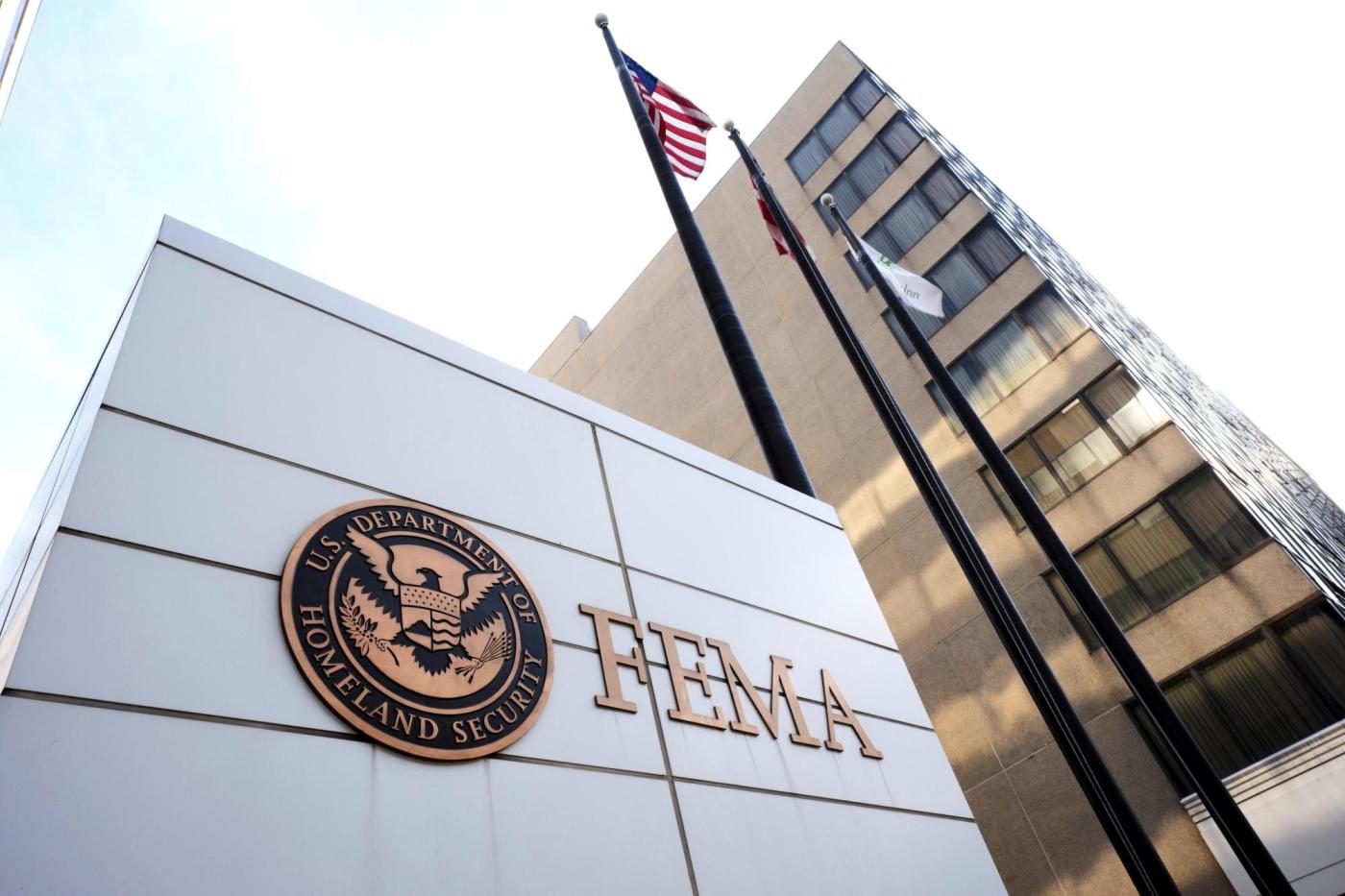
Four days after starting his second administration, President Donald Trump floated the idea of “ getting rid of ” the Federal Emergency Management Agency, which manages federal disaster response. But at a Thursday meeting, the 12-person review council he appointed to propose changes to FEMA seemed more focused on reforms than total dismantlement.

Related Articles


Trump fires Democratic member of Surface Transportation Board ahead of huge rail merger decision


DC Man seen throwing sandwich at agent charged with misdemeanor after grand jury declines indictment


Federal judge blocks Trump administration from removing Voice of America director


ICE will ‘ramp up’ immigration raids in Los Angeles, other ‘sanctuary cities,’ border czar says


Former MLB star Mark Teixeira announces bid for US House seat in Texas

FEMA must be “reformed into an agency that is supporting our local and state officials that are there on the ground and responsive to the individuals that are necessary to help people be healed and whole through these situations,” Homeland Security Secretary Kristi Noem said, who co-chairs the council. But, she added, FEMA “as it exists today needs to be eliminated.”

However, the meeting in Oklahoma City offered hints of what types of reforms the council might present to Trump in its final report. Members mainly focused on conventional and oft-cited opportunities for change, such as getting money faster to states and survivors and enhancing the capacity of local emergency managers.

But some moves by the administration in the last several months have already undermined those goals, as mitigation programs are cut and the FEMA workforce is reduced. Experts also caution that no matter what the council proposes, changes to FEMA’s authority and operations require Congressional action.

A Republican-dominated council

President Donald Trump created the FEMA Review Council through a January executive order instructing the group to solicit feedback from a “broad range of stakeholders” and to deliver a report to Trump on recommended changes within 180 days of its first meeting, though that deadline has lapsed.

The 12-person council is co-chaired Noem and Defense Secretary Pete Hegseth and vice-chaired by former Mississippi Governor Phil Bryant. It is made up of elected officials, emergency managers and other leaders mostly from Republican states.

Trump “believes we should be in a disaster-response portfolio and footprint,” Noem said at Thursday’s meeting, “but the long-term mitigation should not be something that the federal government is continuing to be involved in to the extent that it has been in the past.”

Noem attended virtually, citing efforts toward “bringing some peace to the streets of Washington, D.C.”

Members on Thursday presented some findings collected in listening sessions conducted in multiple states and with Native tribes. Much of the discussion touched on the need to get money to states more quickly and with more flexibility. Trump and Noem have both supported the idea of giving states federal block grants quickly after a disaster instead of the current reimbursement model.

Members have spent “hours, maybe even days, exploring ways to accelerate local recovery through direct funding for public and individual assistance,” Guthrie said.

Making plans beforehand

Several members emphasized improving preparedness and mitigation before disasters hit.

“Mitigation saves lives, it protects property, it reduces cost of future disasters,” said Guthrie, but added that more responsibility should fall on individuals and state and local governments to invest in mitigation.

States like Texas and Florida have robust, well-funded emergency management agencies prepared for major disasters. Members acknowledged that if other state and local governments were to take on more responsibility in disasters, they still needed training support.

Methods for governments to unlock recovery dollars without relying on federal funds also came up, such as parametric insurance, which provides a rapid payout of a previously agreed-upon amount when a triggering event occurs.

The meeting focused less on individual survivor support, but Bryant brought up the need to reform — and protect — the National Flood Insurance Program, calling it “vital.” That program was created by Congress more than 50 years ago because many private insurers stopped offering policies in high-risk areas.

The rhetoric around FEMA is evolving

The conversation signaled a departure from some of the more aggressive rhetoric Trump and Noem have used in the past to describe their plans for FEMA. As recently as June, Trump suggested “ phasing out ” the agency after the 2025 hurricane season.

Michael Coen, who held FEMA posts under three presidential administrations, said after three council meetings, recommendations remain vague.

“Council members provided their perspective but have not identified the challenge they are trying to solve or offered a new way forward,” Coen said.

Coen also cautioned that any significant changes must go through Congress. Lawmakers in July introduced a bipartisan reform bill in the House. The so-called FEMA Act echoes some of the council’s priorities, but also proposes returning FEMA to a Cabinet-level agency.

“Most current proposed FEMA legislation strengthens FEMA,” said Coen.

Actions sometimes contradict words

Some of the administration’s actions so far contradict council members’ emphasis on expediency, mitigation and preparedness.

Noem now requires that she personally approve any DHS expenditure over $100,000. That policy led to delays in the Texas response, according to several reports, though Noem and acting administrator David Richardson have refuted those claims.

The administration halted a multibillion-dollar program for climate resilience projects, and Trump stopped approving hazard mitigation funding requests for major disasters. FEMA abruptly canceled or moved online some local preparedness trainings this spring, though many later resumed.

On Monday, more than 180 current and former FEMA staff sent an opposition letter to the FEMA Review Council and Congress, warning that the agency is so diminished that a major climate event could lead to catastrophe.

At least some of the staff were put on paid administrative leave until further notice on Tuesday.

Trump fires Democratic member of Surface Transportation Board ahead of huge rail merger decision

posted in: All news | 0

By JOSH FUNK

President Donald Trump has fired one of two Democratic members of the U.S. Surface Transportation Board to break a 2-2 tie before the body considers the largest railroad merger ever proposed.

Related Articles


Trump proposed getting rid of FEMA, but his review council seems focused on reforming the agency


DC Man seen throwing sandwich at agent charged with misdemeanor after grand jury declines indictment


Federal judge blocks Trump administration from removing Voice of America director


ICE will ‘ramp up’ immigration raids in Los Angeles, other ‘sanctuary cities,’ border czar says


Former MLB star Mark Teixeira announces bid for US House seat in Texas

Board member Robert E. Primus said on LinkedIn that he received an email from the White House Wednesday night terminating the position he has held since he was appointed by Trump in his first term. The vacancy would allow Trump to appoint two additional Republicans to the board before its decision on the Union Pacific-Norfolk Southern merger though the Senate would have to confirm them.

Primus was the only board member to oppose Canadian Pacific’s acquisition of Kansas City Southern railroad when it was approved two years ago because he was concerned it would hurt competition. He was named Board chairman last year by former President Joe Biden and led the board until Trump, after his election, elevated Board member Patrick Fuchs to Chairman.

This follows Trump’s previous firings of board members at the National Transportation Safety Board, Federal Reserve, Equal Employment Opportunity Commission and Nuclear Regulatory Commission, which are all supposed to be independent agencies.

“Robert Primus did not align with the President’s America First agenda, and was terminated from his position by the White House,” White House spokesman Kush Desai said. “The administration intends to nominate new, more qualified members to the Surface Transportation Board in short order.”

Primus said he doesn’t think the firing is valid because the White House didn’t offer any cause for it, and he plans to fight. He also rejected their explanation for the move because he has long tried to encourage railroads to serve every industry better and help them grow, but he has already been removed from the STB website.

“I’ve been pro growth across the board in terms of encouraging growth in the freight rail network, which in turn will grow our national economy. So if that’s not being in line with America first, then I don’t know what America he’s saying is first,” Primus said to The Associated Press.

He said the firings at all these agencies threaten their independence and credibility. Primus said in his tenure the STB always strove to be impartial and apolitical.

Democratic U.S. Sen. Tammy Baldwin, who serves on the Commerce Committee, said it’s clear that “Donald Trump is trying to stack the deck so the federal government rubberstamps the merger as a huge favor for Wall Street and wealthy railroad owners.” She said Primus has been a fair regulator who worked hard to make sure railroads delivered for their customers and focused on safety.

Every rail worker union and the nonprofit Rail Passengers Association also quickly condemned the firing.

“The explanation provided for this decision — that his position has been “eliminated” — is nothing short of outrageous. Appointed bodies established through federal code are not designed to be erased at the whim of powerful corporate interests,” said the SMART-TD union that represents concductors. “This action is unprecedented, unlawful in spirit, and reeks of direct interference from hedge funds and the nation’s largest rail carriers.”

The board is set to consider Union Pacific’s $85 billion acquisition of Norfolk Southern in the next two years before deciding whether to approve the nation’s first transcontinental railroad and reduce the number of major freight railroads in the U.S. to five.

Primus said the biggest problems in the industry are the lack of growth and poor service after all the deep cuts railroads have made over the last decade in the interest of efficiency and improving profitability. He hasn’t taken a position on the UP-NS deal, but he doesn’t think mergers will necessarily improve competition.

“We don’t need to merge to increase competition. We need to understand that we have to grow,” he said.