Just after Labor Day, movie studios become more serious-minded about the films they are releasing — with the upcoming awards season in mind.
That means titles, directors and actors will start showing up on theater marquees that studios hope will be repeated on Oscar night.
Rian Johnson takes Glenn Close to church in ‘Wake Up, Dead Man: A Knives Out Mystery’
Trump celebrates West Point alumni group canceling award ceremony to honor Tom Hanks
Look out, Hollywood. Video game franchises dominate Gen Alpha’s attention
Column: Teen movies used to be a genre Hollywood took seriously, young audiences too. But good luck finding them in theaters today
‘Unholy Communion,’ a murder mystery shot in St. Paul, is coming to home screens
Not that the popcorn season has popped its last kernel. Plenty of potential blockbusters will be hitting theaters this season along with expected “prestige” films.
This fall season is no exception, with awards contenders getting carted out amongst the crowd-pleasers.
And, of course, plenty of sequels, reboots and remakes will be in the picture. This fall, for example, brings the hard-luck rockers from “Spinal Tap” back to the big screen in a much-anticipated sequel. “Downton Abbey” gets a “Grand Finale.” Bill Condon offers a new take on “Kiss of the Spider Woman.” And Oscar Isaac and Jacob Elordi star in Guillermo del Toro’s new adaption of Mary Shelley’s “Frankenstein.”
In short, film fans can look forward to a rich assortment of new and time-honored cinematic stories this fall.
We took a look at a few (44!) of the most promising titles hitting theaters from Sept. 5 to Nov. 14. Note: Release dates are subject to change.
September
“Twinless”: A single-for-a-reason guy (director/screenwriter James Sweeney) enters a support group and gets cozy with a straight twin (Dylan O’Brien, in a dual role). Confused? Not to worry; this hot, cringey jaw-dropper makes sense out of an increasingly outlandish situation. (In theaters Sept. 5.)
“The Conjuring: Last Rites”: The Smurl brood from Pennsylvania hire paranormal-busters Ed (Patrick Wilson) and Lorraine Warren (Vera Farmiga) to remove a most unwelcome demonic houseguest. Billed as the final in the franchise. (In theaters Sept. 5.)
“Spinal Tap II: The End Continues”: Hollywood’s insatiable appetite for late-blooming nostalgic sequels (“Beetlejuice,” “Happy Gilmore”) continues with director/co-screenwriter Rob Reiner’s ADU to his 1984 mockumentary classic. It takes place 41 years after with those estranged metalheads and documentarian Marty Di Bergi (Reiner) prepping for one last boisterous concert. Paul McCartney and Elton John crash the party. (In theaters Sept. 12.)
“Paper Bag Plan”: Oakland native Anthony Lucero’s big-hearted follow to his Oakland-set “East Side Sushi” follows a terminally ill father (Lance Kinsey) as he shows disabled son (Cole Massie) the ropes on bagging groceries so he’ll thrive independently. Both performances are phenomenal. (Opens Sept. 12 at the Grand Lake Theater, Oakland; Sept. 19 at Cinelux Almaden Cafe & Lounge, San Jose.)
“The Long Walk”: Some Stephen King diehards consider his 1979 dystopian psychological thriller, written as Richard Bachman, to be his bleakest. That’s saying somethin’. This one is about teen boys in an authoritarian America participating in a brutal and lethal walking contest. (In theaters Sept. 12.)
“Downton Abbey: The Grand Finale”: The 1930s prove a topsy-turvy time for the Crawleys as they weather scandal and money woes, all of which disrupt the lives of the people who work for them. (In theaters Sept. 12.)
“Demon Slayer: Kimetsu No Yaiba — The Movie: Infinity Castle”: Anime fans are already queuing up for the latest outing that’s based on the insanely popular fantasy manga and series. (In theaters Sept. 12.)
“HIM”: Executive producer Jordan Peele hands the big-league ball over to talented El Cerrito-born filmmaker Justin Tipping (“Kicks”), who directs/co-writes a sports horror story about a gifted young athlete (Tyriq Withers) training at a freaky football camp overseen by a sunsetting game veteran (Marlon Wayans). (In theaters Sept. 19.)
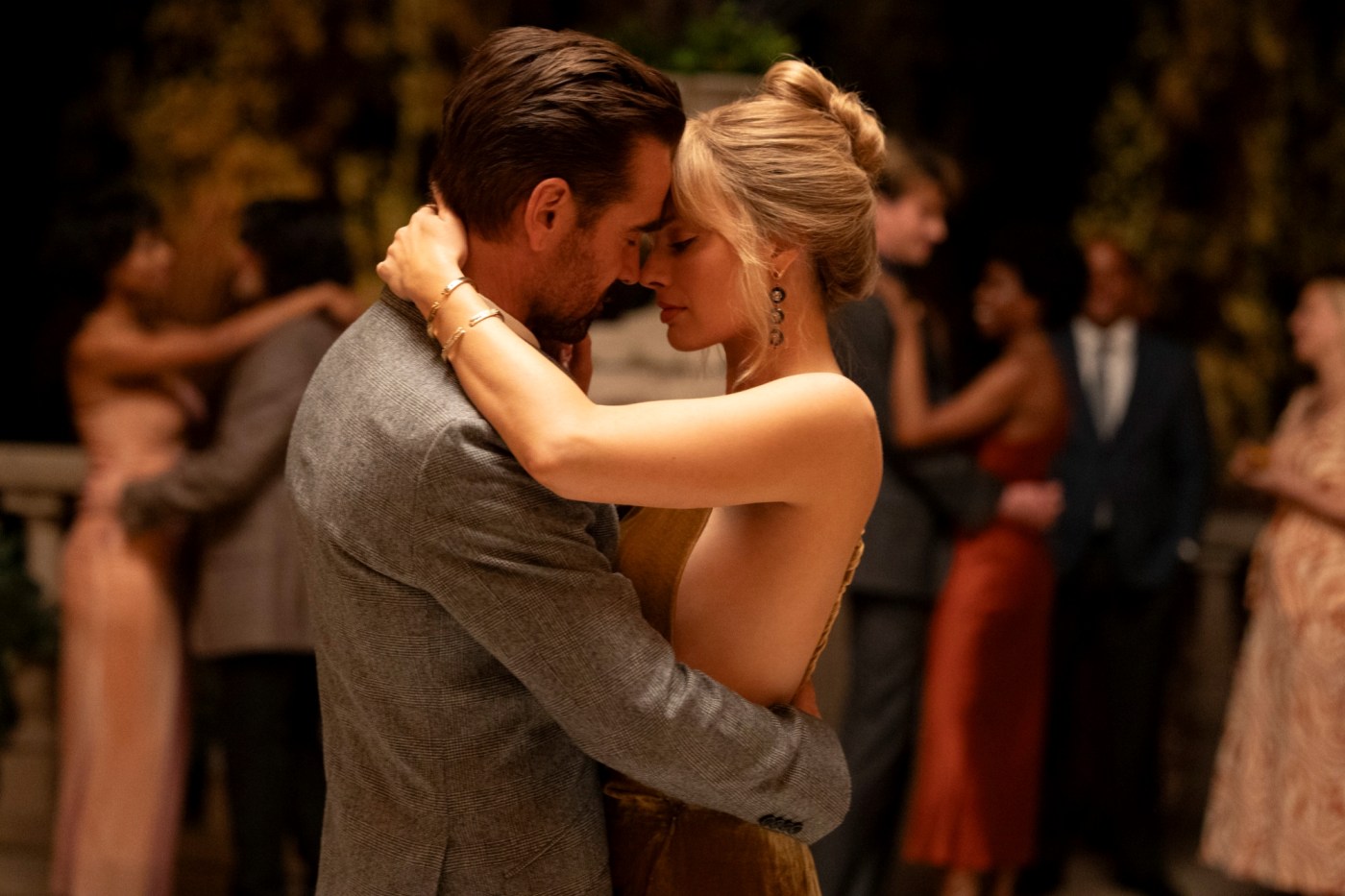
“A Big Bold Beautiful Journey”: Two of today’s most beloved actors — Margot Robbie and Colin Farrell — unite for a romantic fantasy wherein strangers get a chance to revisit their pasts. Kogonada (he of the the criminally underrated “After Yang”) directs. (In theaters Sept. 19.)
“The Lost Bus”: Matthew McConaughey is a school bus driver and America Ferrera is a teacher who team to save schoolchildren during the horrific 2018 Camp Fire in Butte County. Director Paul Greengrass co-wrote the screenplay. (In select theaters Sept. 19; streaming on Apple TV+ Oct. 3.)
“One Battle After Another”: Paul Thomas Anderson attempts the near-impossible again, adapting another wily Thomas Pynchon tome. (He had limited success with “Inherent Vice.”) Leonardo Di Caprio, Benicio del Toro, Regina Hall, and Sean Penn hop aboard for this wild ride wherein a pack of quirky ex-revolutionaries queue up to save one of their daughters. (In theaters Sept. 26.)
“Eleanor the Great”: In Scarlett Johansson’s directorial debut, June Squibb portrays a longing-for-connection 94-year-old who sparks the attention of a journalism student after she shares a story that’s not her own. (In theaters Sept. 26.)
October
“The Smashing Machine”: Will Hayward native Dwayne Johnson score an acting nom for his portrayal of real-life MMA fighter Mark Kerr? With Benny Safdie helming this bio-pic, it wouldn’t surprise us. (In theaters Oct. 3.)
“Anemone”: One of our acting greats — Daniel Day-Lewis — comes out of retirement for a drama he co-wrote with son, Ronan — who directs. The Oscar winner plays a hermit who reconnects with his brother decades after a traumatic incident. (In limited release Oct. 3; expands Oct. 10.)
“Shelby Oaks”: A horrifying videotape propels a woman on a hellish odyssey to pinpoint her long-missing sister. It’s YouTube sensation Chris Stuckmann’s horror debut. (In theaters Oct. 3.)
“Good Boy”: Some might well shout out “nepo puppy!” upon hearing that the doggie hero in this horror film is played by director Ben Leonberg’s retriever Indy. Don’t. Word is this effective horror ditty set in a haunted country home features star turns from its director, canine star and others in the cast. (In theaters Oct. 3.)
“Bone Lake”: Wicked and kinky games between two couples turn bloody in a cabin in the woods. This erotic horror film has been shocking early audiences. (In theaters Oct. 3.)
“Tron: Ares”: After the meh “Tron: Legacy” (2010), Disney hopes to rev up the engines of this franchise. Jared Leto is in the driver’s seat in an AI-themed actionfest set in the real world. Original star Jeff Bridges gives it gravitas. (In theaters Oct. 10.)
“Roofman”: In this film based on a true story, a robber (Channing Tatum) camps out for six months in a Toys “R” Us store but finds that double-life challenged when he meets a customer (Kirsten Dunst). Derek Cianfrance
(“Blue Valentine”) directed and co-wrote this comedy-drama. (In theaters Oct. 10.)
“Kiss of the Spider Woman”: Both the Tony-winning musical adaptation and the 1976 novel it was based on, which also begat an award-winning 1985 feature, serve as the inspiration for Bill Condon’s music-infused version with Diego Luna, Tonatiuh and Jennifer Lopez. It’s centered on a relationship between two people in prison. (In theaters Oct. 10.)
“If I Had Legs I’d Kick You”: Rose Byrne’s gaining buzz for her committed performance as a stressed-to-the-breaking-point mom who leaps from one crisis to another. Conan O’Brien plays her not-so-helpful therapist. (In select theaters Oct. 10.)
“After the Hunt”: The past of college professor Alma Olsson (Julia Roberts) and academic egos collide when a brilliant student (Ayo Edebiri) lobs a sexual abuse accusation the way of Alma’s colleague (Andrew Garfield). Luca Guadagnino (“Call Me By Your Name,” “Challengers”) directs this conversation-starter, which sparked a vigorous post-screening convo after its Venice Film Fest screening last weekend. (Opens Oct. 10 in Los Angeles and New York; Oct. 17 elsewhere.)
“It Was Just an Accident”: Acclaimed Iranian filmmaker Jafar Panahi’s intense drama continues to gobble up awards on the festival circuit, including the coveted Palme d’Or at Cannes. The premise is a grabber: A mechanic believes he’s run into the cruel jailhouse captor from his past and takes matters into his own hands. (In select theaters Oct. 15.)
“Ballad of a Small Player”: “Conclave” director Edward Berger jumps from bishops to gamblers for this adaptation of Lawrence Osborne’s much-praised novel set in Macau. Colin Farrell rolls the dice in the lead. (In select theaters Oct. 15; available on Netflix Oct. 29.)
“Good Fortune”: The trailer alone promises huge laughs, as a bungling angel (Keanu Reeves) becomes too involved in the lives of a down-on-his-luck gig worker (Aziz Ansari, who also directs and stars) and an obscenely rich venture capitalist (Seth Rogen). (In theaters Oct. 17.)
“Frankenstein”: Mary Shelley’s Gothic classic comes to life again, this time with Oscar Isaac as Victor Frankenstein, Jacob Elordi as The Creature and Mia Goth as Elizabeth and Guillermo del Toro directing. (In select theaters Oct. 17; on Netflix Nov. 7.)
“Black Phone 2”: Villains never stay dead and buried, at least in the horror film world. Case in point: The Grabber (Ethan Hawke) who haunts the living daylights once again out of a now-17-year-old Finn (Mason Thames) and his sister at a snowed-in winter resort. Scott Derrickson returns to direct.
“Hedda”: Nia DaCosta (“Candyman”) gives Ibsen’s classic story and iconic character a modern revival with Tessa Thompson portraying Hedda, who’s confronting harsh societal expectations and demands. (In select theaters Oct. 22; available on Amazon Prime Oct. 29.)
“Regretting You”: Colleen Hoover’s tearjerker of a best seller about a mom (Allison Williams) and daughter (Mckenna Grace) and the fraught relationship between the two that settles in after a tragic accident stars Palo Alto native Dave Franco and Monterey native Scott Eastwood, as well Mason Thames. (In theaters Oct. 24.)
“Springsteen: Deliver Me From Nowhere”: Director/screenwriter Scott Cooper hones in on a pivotal period in the career of The Boss (Jeremy Allen White): the making of his brilliant 1982 acoustic album “Nebraska.” Will the smoldering star of “The Bear” land an Oscar nod like Timothée Chalamet did for playing Dylan? Looks hopeful. (In theaters Oct. 24.)
“Bugonia”: In yet another bizarre head trip from filmmaker Yorgos Lanthimos, two “worker bees”(Jesse Plemons and Aidan Delbis) become convinced a CEO (Emma Stone) is intent on obliterating our world. So they kidnap her. Will Tracy’s screenplay uses the 2003 Korean comedy “Save the Green Planet!” as its jumping off point. (In New York and Los Angeles Oct. 24; opens wide Oct. 31.)
“Blue Moon”: The often-inebriated lyricist Lorenz Hart (Ethan Hawke) hangs out at a New York bar on the eve of the premiere of his collaboration with Richard Rodgers (Andrew Scott), the musical “Oklahoma!,” and becomes smitten with an enchanting woman (Margaret Qualley). Richard Linklater directs. (In theaters Oct. 24.)
“Nouvelle Vague”: What transpired during the making of Jean Luc-Godard’s French New Wave classic “Breathless”? Richard Linklater’s black-and-white film imagines it. (In select theaters Oct. 31; on Netflix Nov. 14.)
“A House of Dynamite”: Director Kathryn Bigelow’s thriller with Idris Elba and Rebecca Ferguson focuses on a missile getting aimed at the U.S. and the countdown over what to do next. (Available on Netflix Oct. 24.)
November
“Train Dreams”: The Sundance crowd embraced Clint Bentley’s adaptation of Denis Johnson’s novella about an early 20th century logger and railroad worker portrayed by Joel Edgerton. (In select theatres Nov. 7; on Netflix Nov. 21.)
“Predator: Badlands”: Dan Trachtenberg revitalized the “Predator” franchise in 2022 with the Indigenous-themed “Prey” and he looks to be carrying on that tradition with a futuristic rejiggering in which a Predator that’s been rejected from his clan teams with a female robot (Elle Fanning) and takes on a new nemesis. (In theaters Nov. 7.)
“Sentimental Value”: The Cannes crowd gushed over Joachim Trier’s latest drama, which reteams the director with the iridescent Renate Reinsve (“The Worst Person in the World”). She plays one of two daughters sucked into her father’s filmmaking world. (In theaters Nov. 7.)
“Nuremberg”: Pressure reaches the boiling point for a psychiatrist (Rami Malek) determining whether infamous Nazi leader Hermann Göring (Russell Crowe) is mentally sound to stand trial. Director James Vanderbilt adapts author Jack El-Hai’s “The Nazi and the Psychiatrist.” (In theaters Nov. 7.)
“I Wish You All the Best”: When their parents kick them out for revealing they’re nonbinary, Ben (Corey Fogelmanis) moves in with their estranged sister and finds connection and friendship at a new school. Tommy Dorfman steps into the director’s and producer’s chair and adapts author Mason Deaver’s heralded YA novel. (In theaters Nov. 7.)
“The Running Man”: Edgar Wright put his electrifying directorial skills to work with his take on a 1982 Richard Bachman (aka Stephen King) novel that was turned into a 1987 movie with Arnold Schwarzenegger. Glenn Powell enters the danger zone as a contestant participating in a deadly game. Colman Domingo looks to be a scene stealer as the host of “The Running Man” show. (In theaters Nov. 14.)
“Keeper”: Prolific Osgood Perkins (“Longlegs,” “The Monkey”) gives us another multi-layered horror story, this time penned by “Dangerous Animals” screenwriter Nick Lepard. It’s set in a cabin in the woods where a couple (Tatiana Maslany and Rossif Sutherland) gets sucked into a vortex of terror. (In theaters Nov. 14.)
“Now You See Me, Now You Don’t”: A diamond heist brings veteran and newbie illusionists together in the latest installment of a franchise that again boasts a killer cast (Jessie Eisenberg, Woody Harrelson, Dave Franco, Rosamund Pike, Morgan Freeman and more. (In theaters Nov. 14.)
“Jay Kelly”: With his longtime manager (Adam Sandler) by his side, an introspective 60-year-old actor (George Clooney) considers his place in the world while attending an Italian film festival honoring him. Noah Baumbach’s dramedy costars Billy Crudup, Laura Dern and Greta Gerwig. (In theaters Nov. 14.)
“Sirat”: The search for a young woman brings a father and son to a rave in Morocco in this twist-filled, genre-defiant feature from Oliver Laxe.
Contact Randy Myers at soitsrandy@gmail.com.