Judge temporarily blocks US efforts to remove some immigrant Guatemalan and Honduran children

posted in: All news | 0

By JACQUES BILLEAUD and MORGAN, LEE Associated Press

TUCSON, Ariz. (AP) — An Arizona judge temporarily blocked the Trump administration’s effort to remove Guatemalan and Honduran children living in shelters or foster care after coming to the U.S. alone, according to a decision Thursday.

Related Articles


Senate Republicans poised to change rules to speed up Trump’s nominees


A college campus, a fiery speaker — and then a single gunshot


Senate Republicans defeat Democrats’ effort to force the release of Epstein files


Reagan Foundation cancels Ben Shapiro speaking event, after fatal shooting of Charlie Kirk


Trump’s plan for a drug advertising crackdown faces many hurdles

U.S. District Judge Rosemary Marquez in Tucson extended a decision made over the Labor Day weekend.

Lawyers for the children said their clients have said they fear going home, and that the government is not following laws designed to protect migrant children.

A legal aid group filed a lawsuit in Arizona on behalf of 57 Guatemalan children and another 12 from Honduras between the ages 3 and 17.

Nearly all the children were in the custody of the U.S. Health and Human Services Department’s Office of Refugee Resettlement and living at shelters in the Phoenix and Tucson areas. Similar lawsuits filed in Illinois and Washington, D.C., seek to stop the government from removing the children.

The Arizona lawsuit demands that the government allow the children their right to present their cases to an immigration judge, to have access to legal counsel and to be placed in the least restrictive setting that is in their best interest.

The Trump administration has argued it is acting in the best interest of the children by trying to reunite them with their families at the behest of the Guatemalan government. After Guatemalan officials toured U.S. detention facilities, the government said that it was “very concerned” and that it would take children who wanted to return voluntarily.

Children began crossing the border alone in large numbers in 2014, peaking at 152,060 in the 2022 fiscal year. July’s arrest tally translates to an annual clip of 5,712 arrests, reflecting how illegal crossings have dropped to their lowest levels in six decades.

Guatemalans accounted for 32% of residents at government-run holding facilities last year, followed by Hondurans, Mexicans and Salvadorans. A 2008 law requires children to appear before an immigration judge with an opportunity to pursue asylum, unless they are from Canada and Mexico. The vast majority are released from shelters to parents, legal guardians or immediate family while their cases wind through court.

The Arizona lawsuit was amended to include 12 children from Honduras who have expressed to an Arizona legal aid group that they do not want to return to Honduras, as well as four additional children from Guatemala who have come into government custody in Arizona since the lawsuit was initially filed on Aug. 30.

What did NYC know about the 9/11 toxins at ground zero? After 20 years, the truth may soon come out

posted in: All news | 0

A 20-year battle to unearth what NYC knew about the dangers of the 9/11 toxins swirling around Ground Zero in the weeks after the terror attacks is reaching a major turning point.

Eight weeks after being ordered to launch a detailed review, the city’s Department of Investigation is now preparing to receive “volumes of data” on the subject from city agencies, the Daily News has learned. Once the City Council mandated the DOI to hunt for documents on 9/11 toxins in mid-July, the agency sent out letters to every agency, asking them to identify and turn over any relevant documents they had.

The response they received has been so overwhelming that the DOI may need to contract with an outside investigations agency to parse through all the data.

Nearly all of the agencies contacted have responded to the DOI’s request to identify any documents they have concerning 9/11 toxins, DOI officials said. Some agencies will be providing information that will be specific to the request. Others will be providing “more general” information about the aftermath of the 9/11 terror attacks, the DOI said.

It was not immediately disclosed exactly which agencies have responded.

Workers work to save any survivors from the rubble of the WTC on Sept. 13, 2001. (Craig Warga for New York Daily News)

Once they come in, the real challenge begins, DOI Commissioner Jocelyn Strauber said.

“We’re in the preliminary stages of determining the complement of relevant records, which we know will be voluminous and require rigorous assessment of what the City knew and when it knew it as well as interviewing witnesses and consulting with environmental experts,” Strauber said.

“Once we have a better understanding of the scope of records, DOI can provide a more exact map of the necessary resources needed.”

Strauber admitted that this “complex investigation will exceed DOI’s existing resources, requiring that we engage an outside investigative firm to assist.”

“I am confident that with appropriate resources DOI will find the facts and lay them out in a public report,” she said.

The council has tasked the DOI with providing a report in two years.

DOI Commissioner Jocelyn E. Strauber. (Barry Williams for New Daily News)

The quick and positive response marks a sea change in the two-decade long quest to get this information from the city.

The Adams administration as well as its predecessors, have foguht the release if those documents, claiming they couldn’t find them and that the documents could lead to a barrage of lawsuits from survivors and first responders suffering from 9/11 illnesses.

Multiple FOIL requests from attorneys representing survivors suffering a 9/11 illness turned up nothing. When attorneys went to court demanding the information, they were repeatedly told that the agencies like the city’s Department of Environmental Protection had nothing to give.

Just last year, the city tried to squash a lawsuit demanding these documents, claiming it didn’t have them and that the search for the long-sought records is nothing more than a “fishing expedition.”

“After a diligent search was performed of DEP’s records, no responsive records were found,” city attorneys claimed in court papers.

The fact that the DOI investigation is turning up so many documents was “just remarkable,” said Andrew Carboy an attorney who represented 911 Health Watch, a responder and survivor advocacy group which filed the FOIL and then filed a lawsuit when the city refused to respond.

2001

Massive amount of rubble still remains at Ground Zero more than a month after the destruction of the World Trade Center in a view from the Woolworth Building. (Mike Albans/New York Daily News)

“It should not take unprecedented Department of Investigation action for the City to comply with the FOIL requests our clients made, two years ago,” Carboy told the News, adding that City Hall also defied earlier requests of New York’s Congressional delegation.

“But for the City Council’s resolution and the DOI investigation, the city would either continue to deny the existence of the secret 9/11 archive or, equally outrageously, claim that the records of its response to the attacks were destroyed in the collapse of the World Trade Center,” he said.

City Councilwoman Gale Brewer wrote the resolution that the full council unanimously passed on July 14, ordering the DOI to probe what information the city had on Ground Zero toxins after the 9/11 attacks and when they had it. It marks the first time a provision of the City Charter allows the Council to order the DOI to undertake an investigation with a bill.

A lone American flag waves in the smoke on Liberty St., overlooking the debris of the World Trade Center on September 11th, 2001. (Michael Schwartz for New York Daily News)

More than 140,000 first responders and survivors are enrolled in the U.S. Center for Disease Control’s WTC Health Program, which provides health care benefits for medical conditions related to exposure to the toxins that hung over Ground Zero. Out of that number, about 81,000 have a certified condition linked to the toxins that hung above Ground Zero.

Charlie Kirk’s shooting death exposes security gaps at political events

posted in: All news | 0

By JIM MUSTIAN and MICHAEL BIESECKER

The assassination of Charlie Kirk offers the latest example of how ordinary security measures can be defeated in an era of escalating political violence, when anyone associated with the political process is a potential target, including influencers.

Related Articles


Income inequality dipped and fewer people moved, according to largest survey of US life


Average rate on a 30-year mortgage falls to lowest level in nearly a year


Assassination of Charlie Kirk adds to America’s roll call of public violence


South Korean workers detained in immigration raid leave Atlanta and head home


What we know so far about the Colorado high school shooting

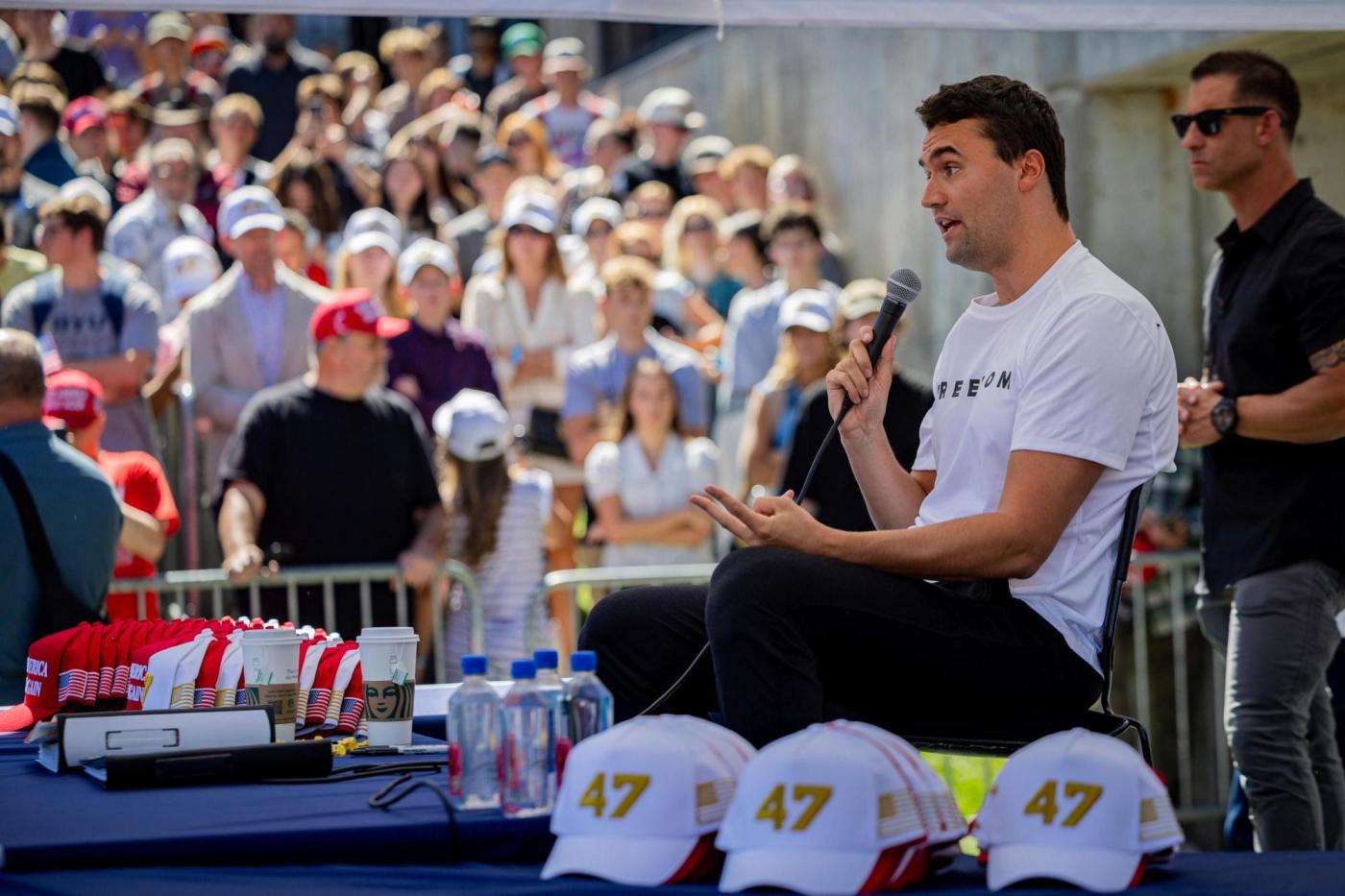
Kirk was in a familiar setting Wednesday before a large crowd at a university in Utah, a red state where voting trends largely aligned with his pro-MAGA politics. The conservative firebrand appeared with his own security team, as he has at scores of events on other campuses.

In hindsight, those with experience protecting high-profile public officials and dignitaries say more could have been done to prevent the fatal shooting.

Security experts interviewed by The Associated Press questioned whether the event was sufficiently staffed but also acknowledged the limitations of both campus police forces and outdoor venues. They said only the inner ring closest to Kirk appeared to be secure, leaving the outer and middle rings exposed.

The killing, apparently carried out from a nearby rooftop, had eerie parallels to the assassination attempt last year against Donald Trump in Pennsylvania, where a 20-year-old gunman managed to climb on top of a nearby building and open fire during a campaign stop.

Law enforcement officials were still searching for the shooter Thursday. Authorities said the assassin used a high-powered, bolt-action rifle and jumped off that building as spectators fled the scene. The FBI released two photos of a “person of interest.”

This undated combination of images provided provided by the Federal Bureau of Investigation shows a person of interest in connection with the fatal shooting of Charlie Kirk at Utah Valley University on Wednesday, Sept. 10, 2025, in Orem, Utah. (Federal Bureau of Investigation via AP)

Security seemed consistent with other engagements

Many details remained unclear, including what precise security measures were taken ahead of the debate hosted by Kirk’s nonprofit political organization, Turning Point USA. The event at Utah Valley University drew more than 3,000 people.

Hours after the attack, Jeff Long, the campus police chief, told reporters that six of his officers staffed the debate, and that his department had coordinated with Kirk’s own security team. He noted that Kirk had been speaking “in a lower area surrounded by buildings” but did not say whether officers had inspected nearby rooftops.

“This is a police chief’s nightmare,” Long said. “You try to get your bases covered, and unfortunately today we didn’t, and because of that we had this tragic incident.”

Students told AP they saw no metal detectors or bag checks, though the level of security appeared consistent with other speaking engagements on Kirk’s national tour. As Kirk was not an elected or government official, he or his organization likely would have had to pay for security beyond what the university provided.

“They probably didn’t have enough security personnel there,” said Ron Williams, a former U.S. Secret Service agent who now works as a private security consultant. “And the reason is because they really didn’t see the need, especially in Orem, Utah, which is a low-crime area.”

Videos posted to social media show Kirk speaking into a handheld microphone while sitting under a white tent. A single shot rings out, and Kirk can be seen reaching up with his right hand as a large volume of blood gushes from the side of his neck.

The debate had been met with divided opinions on campus. An online petition calling on university administrators to bar Kirk from appearing received nearly 1,000 signatures. Kirk, 31, had taken note of the rising temperature last week, posting on X images of news clips showing that his visit to Utah was sparking controversy. “What’s going on in Utah?” he wrote.

Still, it was unclear whether Kirk had received specific death threats or other indications he was in danger. Even if he had, experts said it can be difficult to provide airtight protection for a private individual without a presidential-level security detail.

An example is “The Satanic Verses” novelist Salman Rushdie, who drew death threats from Iranian leaders for decades before he was nearly stabbed to death in 2022 by an assailant who rushed the stage as he was about to give a lecture in western New York.

Donald Trump Jr. acknowledged the inherent security risks of political events in July as he spoke alongside Kirk at a Turning Point USA summit in Tampa, Florida. The younger Trump recalled a 2016 campus event in which he said he appeared with Kirk even after Michigan state police warned that they could not guarantee the two men’s safety.

“I literally said I’d rather get my ass kicked right here, right now, than capitulate to the woke mob,” Trump Jr. said.

The map above shows the site on the Utah Valley University campus where conservative activist Charlie Kirk was shot. (AP Digital Embed)

High ground offers ‘direct line of fire’

Kirk was an ardent supporter of Second Amendment rights and had long argued that an armed populace makes everyone safer. Utah is one of 14 states that allow some level of concealed carry of firearms on public college and university campuses. In May, a law took effect allowing anyone at least 18 years old with a valid Utah concealed weapon permit to carry a weapon on campus.

Williams said a uniformed officer should have been posted atop the university’s Losee Center, about 142 yards (130 meters) from the tent where Kirk was shot. Authorities believe the gunman fired from that rooftop.

“If you have a high ground issue, you’ve got to take care of that first,” said Williams, who protected four presidents and visiting foreign dignitaries during 22 years with the Secret Service. High ground gives a shooter “a direct line of fire.”

Williams also questioned the decision to hold the event outdoors. An inside venue, he said, would have allowed for security checkpoints.

Another former Secret Service agent, Joseph LaSorsa, said it was impossible “to secure 3,000 people” with half a dozen officers. “They didn’t have perimeter security. They didn’t have counter-sniper. They were wide open,” said LaSorsa, who protected three presidents during a 20-year-career with the Secret Service.

Kirk’s security team was likely most concerned “with people rushing the stage” or bothering him as he returned to his vehicle, said Bobby McDonald, a former Secret Service supervisory agent who is now a criminal-justice lecturer at the University of New Haven. A longer-range shooting, he said, was likely not even on the radar.

“I’m not sure if there were 20 police officers there that this type of event wouldn’t happen at that college setting,” McDonald said. “This person knew what they were doing with that firearm.”

Campus security challenges

Events at colleges can be exceedingly difficult to secure, especially when they involve a controversial figure, said David B. Mitchell, the chief of the University of Maryland Police Department. Student groups like to showcase such speakers because they draw big crowds.

“This is going to send shock waves across college campuses,” Mitchell said, because there are many similar events “happening all the time.”

Mitchell’s 100-officer force helps secure events involving high-profile politicians and other figures due to the school’s proximity to Washington. Former President Barack Obama has attended at least two University of Maryland basketball games. Such events require extensive preparation.

“It’s the Charlie Kirks of the world who don’t have large security details like that — certainly not to the level of the president or other elected officials — and yet they can still be a target,” Mitchell said. “There is really only so much you can do, given the circumstances.”

Associated Press journalists Hannah Schoenbaum in Orem, Utah, Del Quentin Wilber in Washington and Christopher Keller in Albuquerque, New Mexico, contributed to this report.

Americans still give awards shows consideration, a new AP-NORC poll finds

posted in: All news | 0

By ANDREW DALTON and AMELIA THOMSON-DEVEAUX

LOS ANGELES (AP) — Many Americans still want to thank the academy, at least a little.

Related Articles


Reader alert: Send us your organization’s booya information!


Inside the newest hotel in Ojai, which is also the oldest


‘Only Murders in the Building’ review: In Season 5, the future of the building itself is at stake


Recipe: Make this tropical fruit salsa to serve on chicken or pork chops


Polly Holliday, theater star famous as the tart waitress Flo on sitcom ‘Alice,’ dies at 88

About half of U.S. adults say they’ve watched all or most of an awards show on TV or streaming in the past year, according to a new poll from The Associated Press-NORC Center for Public Affairs Research, while just over half say they’ve watched clips from an awards show. About 6 in 10 say they’ve watched an awards show, clips or both in the last year.

The results suggest that some vitality remains in the seemingly stodgy old tuxedo-and-gown world of the Emmys, Grammys, Oscars, Tonys and Golden Globes, whose makers have fought to make them relevant when Americans have more entertainment and engagement choices than ever.

And they come at a moment when the Oscars and the Emmys have seen a short-term uptick in viewers after cultural shifts that brought a huge long-term drop in people gathering around a television to watch an awards show together.

“These days, it’s more focused on the performances,” said Walter Hanley, 69, who used to work in the music industry and still watches most music awards shows. “Back in the ’70s and ’80s when I would attend regional Grammys in person, it was more about the awards — sound engineering and producers and that kind of thing.”

Hanley thinks the pivot has helped awards shows keep up with the times. “You have to cater to what the viewers want,” he said.

Some awards shows have rebounded

The Oscars, which remain the most viewed and most engaged-with awards show, are coming off a five-year high in viewers. Nearly 20 million people watched “Anora” win best picture and four other top trophies in March.

But that’s down from the more than 55 million who watched “Titanic” win 11 in 1998, when awards shows truly were the king of the world.

Some, like Christine Steingraber, 64, watch most of the awards shows that air on TV. The Oscars are her favorite, but she watches the Emmys and the Grammys, too, even when she’s not familiar with the shows or the artists up for awards.

“It opens up another perspective as to whether I want to see that show or hear that artist,” she said.

The biggest awards shows — like the Oscars, the Grammys and the Emmys — have streaming partners, but they generally don’t appear there until the following day. By that point, viral moments and winners’ reactions have already been plastered online in short clips.

The poll suggests that awards shows may be appealing to a new generation. People under the age of 45 are more likely to say they have watched both an awards show and clips in the past year, compared with people age 45 or older.

Clips help extend awards shows’ lives

Meme-able moments like the “La-La Land” fiasco or Will Smith’s slap at the Oscars or the hits and misses of Golden Globes monologues have shown the shows can still have life after social media took over for TV for many.

The survey found that the people who watched full awards shows largely overlap with clip viewers, although people are slightly more likely to say they’ve just watched clips rather than just watching shows. About 4 in 10 say they haven’t watched clips or shows.

Awards shows — whether they’re consumed through clips or live viewing – are more popular among Black and Hispanic adults than among white adults. About 7 in 10 Black and Hispanic adults say they’ve watched clips or at least most of a show in the past year, compared with just over half of white adults.

Shows including the BET Awards and the Latin Grammys have reached more targeted audiences, just as the MTV Video Music Awards became a way to bring young viewers into the awards audience starting in the mid-1980s.

Rose Lucas, 77, says she used to watch the BET Awards, because she enjoyed the R&B and hip-hop performances. She enjoys music awards shows, but she doesn’t typically watch the full show live. She’s more likely to watch short clips of performances the next day.

“I don’t watch any of them live anymore. I don’t tune in to them,” Lucas said. “(They are) too long. I’m not as interested anymore.”

Most people aren’t watching frequently

When the Emmys return on Sunday, all eyes will be on the winners — and the ratings. The last Emmys got a much bigger boost than its predecessor, held in January 2024 because of Hollywood’s strikes — one of several challenges including the coronavirus pandemic and this year’s wildfires that have thrown awards show norms out of whack.

Television has in some ways overtaken movies as a prestige screen art, but that hasn’t translated into similar awards prestige. The Emmys audience is less than half that of the Oscars.

The long-term awards ratings decline closely tracks with real-time broadcast and cable television viewing across the board for virtually everything in the U.S. but football.

And while there are dozens of awards shows each year, only a handful have a significant audience. The poll found that about 3 in 10 Americans said they had watched awards shows at least “several times” in the past year.

That could be a result of Americans having more options than ever in what to watch — and many being too busy to tune in.

Inez Parker, 88, said she watches awards shows on live TV, and she expects she’ll tune into the Emmys this weekend. But she doesn’t stream the show again or watch clips after the fact — she’s too busy for that.

“I usually watch all of it,” she said. “I’ll watch it live, and that’s it. I don’t watch it again.”

Thomson-DeVeaux reported from Washington. AP polling reporter Linley Sanders contributed to this report.

The AP-NORC poll of 1,182 adults was conducted Aug. 21-25, using a sample drawn from NORC’s probability-based AmeriSpeak Panel, which is designed to be representative of the U.S. population. The margin of sampling error for adults overall is plus or minus 3.8 percentage points.