Here are readers’ pets (and wildlife) we featured in our October newsletter

posted in: All news | 0

In October, we featured nine cats, 15 dogs, two rabbits and two deer in our Morning Report newsletter.

Sign up for our free newsletter at twincities.com/newsletters.

For more pet photos, check out another pet slideshow from September.

Friday, Oct. 31

Luna dressed as Luna Lovegood from “Harry Potter.”

“This is Luna, a 9-year-old rescue,” Claire writes. “She was left at the shelter with little information, so we don’t know her story. She is the snuggliest, chattiest little cat. She’s named after Luna Lovegood from ‘Harry Potter,’ so it’s only fitting she dressed as her for Halloween.”

Thursday, Oct. 30

Missy

“Our 18-year-old kitty, Missy,” write Diane and Jim. “Yes, that is a cardboard scratching piece she is sitting on near the fireplace.”

Wednesday, Oct. 29

Carly

“This is Carly, she was a rescue in the middle of below-zero weather,” John and Candy write. “She was a consummate hunter who saved us from being knee deep in rodents at the lake. Here she is enjoying the crisp fall weather in a blanket of leaves.”

Tuesday, Oct. 28

Jack

“This is my ‘grand dog’ poodle, Jack, who lives in Colorado,” Pat writes. “Poor guy had some dental work done and had some top teeth removed … he is very self-conscious of his smile now. But we still think he is very handsome.”

Monday, Oct. 27

Misu tries to “help.”

“Good morning,” Jimmy writes. “My attempts to avoid cushion cat hair were thwarted by Misu! I was gone no longer than two minutes before he took over!”

Friday, Oct. 24

Lulu and Tommy.

“Here’s Lulu (gray) and Tommy (black) absolutely ‘thrilled’ to take their fall photos from the Romp and Spa hosted by Rabbit Rescue of MN,” Laura writes.

Thursday, Oct. 23

Mr. Juice

“Please find the image of my cat attached,” writes Siyu Qi. “The story behind this picture: Mr. Juice the orange cat proclaims his accession to the sofa throne.”

Wednesday, Oct. 22

Clover

“Hello again. This is Clover, the cat of Diane‘s nephew, showing off my fabulous tail.”

Tuesday, Oct. 21

Scooter after catching and releasing a mouse.

“My lovely rescue dog, Scooter, is a 4-year-old Terrier mix,” Jackie writes. “We were surprised when he caught a field mouse out in the yard and dropped it at the feet of his dog sitter, Emily. Mouse was disposed of and Scooter felt bad he scared Emily! All is good! We love him!!”

Monday, Oct. 20 (Memorial Monday)

Roman and Gordy.

“This is Roman and Gordy, our grandcats from Eagan,” Jeffrey writes. “Unfortunately, Roman (the elder) recently passed away, but he had a charmed life with his little cousin Gordy!”

Saturday, Oct. 18

Sookie in Seattle.

“Sookie, a rescue dog, going for a walk on the Seattle waterfront with her owner Karen for the American Cancer Society,” Geri writes.

Friday, Oct. 17

Angelo is available for adoption through pupmn.org.

Jeanne Weigum of Pooches United with People (PUP) wants Morning Report readers to know about Angelo, a special needs puppy available for adoption. Found in someone’s yard, not moving, his health issues were sorted out but his detached retinas mean his vision is impaired: “He will need a very special adopter to be his seeing eye person,” Jeanne says. Learn more at pupmn.org or via Petfinder.

Thursday, Oct. 16

Friends hang out in Lori’s backyard in Columbus, Minn.

“Since we can also share our wildlife   pictures, here is my Daily Deer photo!” writes Lori of Columbus, Minn. “Just hanging around enjoying the apples and salt block.”

Wednesday, Oct. 15

Happy Birthday, Lewis!

“Here’s a photo of Lewis, our Australian Labradoodle, who turned three on Sunday,” writes Les of Stillwater. “He is excelling at agility classes and trying out flyball (look it up on YouTube!). Maybe he’ll be a therapy dog someday. We live in hope. He is a quirky, intelligent guy, and we love him to pieces. Except he eats Kleenex whenever he can find them.”

Tuesday, Oct. 14

Penny and Sophie on the boat.

“Our dogs Penny (white/brown) and Sophie (black) are seen here enjoying the last bit of summer on one of Minnesota’s 10,000+ gorgeous lakes,” Lindsey writes. “Thank you for highlighting pets in your emails!”

Monday, Oct. 13 (Memorial Monday)

Koshka

“In honor of World Cat Day, gone 37 years but not forgotten, the world’s best cat, Koshka,” Jerry writes.

Friday, Oct. 10

EllieB, then and now.

“I had sent this picture of EllieB when she was a new member of our niece’s family late last summer,” writes MaryPav of Stillwater. “Here she is now at one year old! She is the family herder of a 4-, 7- and 11-year-olds. She runs with them and keeps them in the yard playing all sorts of sports! Her favorite toys are all and any sort of balls. She is smart, fun and totally lovable. Always fast and furious and super friendly in the neighborhood. Totally loved by all.”

Thursday, Oct. 9

Welcome to Minnesota, Nola!

“My wife and I lost our last dog in January 2020,” writes George of Minneapolis. “We agreed to wait several months to get our next dog. But by early March, my wife found Nola, a rescue hound/bulldog/terrier from Kentucky. Nola keeps us active with walks around and near Lake Harriet. She is a happy, fun girl. Here, she poses at Hawk Ridge in Duluth.”

Wednesday, Oct. 8

Virgil and Djangers at Bear Lake

“Here is last weekend’s photo of brothers, Virgil and Djangers, visiting the Bear Lake overlook near Silver Bay, ” Lisa writes. “Even though we got caught in an unexpected shower, the view was worth it!”

Tuesday, Oct. 7

Titan

“Swimming in October!” Gina wrote last week. “Titan enjoys the unseasonably warm Minnesota weather.”

Monday, Oct. 6 (Memorial Monday)

Sheba

“Dogs can feel grief just like their owners,” Matt wrote recently. “Our dog, Jazzmin, passed away in June and we felt a loss in our house. Then in August, my wife suffered a stroke and passed away last week. Our dog Sheba has felt the same kind of loss and now sits on my wife’s recliner as if to say, ‘Where did my mama go?’”

Friday, Oct. 3

Raven and Maeve rested with Aunt Peggy after hiking.

“Here are my dog nieces, Raven and Maeve, who love hiking with us!” Peggy writes. “Then I love when we get home and they crash in my lap. Raven is older and gets priority but Maeve makes sure she wiggles her way up, too.”

Thursday, Oct. 2

Jack and Betty.

“My Colorado grand dogs are very sad,” Pat writes. “Jack the Poodle and Betty the Labradoodle said, ‘Our family went on vacation … without us. We had to stay home with Grandma.’ They survived nicely.”

Wednesday, Oct. 1

Dennis the Menace

Dr. Kelly Lessard, a veterinary contact of the Morning Report, reached out to tell us about a young, rescued Pomeranian (or Pomeranian mix) called Dennis the Menace who received potentially life-saving surgery by Dr. Missy Carpentier of Minnesota Veterinary Neurology. Breaking news: Dennis the Menace has recovered nicely and Kelly tells us he is now available for adoption through Coco’s Heart Dog Rescue. More info at cocosheartdogrescue.org/teenagers#/dennis.

Related Articles


Wearable tech for your dog? Life360 releases a new pet tracker


Without leads, investigators call off search for missing 33-year-old Farmington horse


A wallflower blooms: After weeks in a shipping container, Chinese stowaway cat getting ready for adoption


No news or new sightings after reward offered for missing Farmington horse


19 cats, 10 dogs and 1 doe featured in the Morning Report in September


A PRAYER for Brody & Rhys

posted in: All news | 0

May the world not die of bread 
or a lost Messiah 
or the oil smeared desert 
or a fire washed sky 
but ripen into childhood— 
the heart’s crocodiles turned 
cinnamon shops 
and love 
and love 


Bruno Schulz was a Polish writer and visual artist regarded as one of the great writers of his century. His collection of stories, Sklepy cynamonowe (Cinnamon Shops), known in English translation as The Street of Crocodiles, was published in 1934. During the German occupation of Drohobycz, Poland, Schulz’s life was spared temporarily by SS officer Felix Landau who admired Schulz’s artistic talent and brought him into his home to paint murals of Grimms’ fairytales on the walls of his son’s nursery. The phrase ripen into childhood is my translation of Schulz’s line, dojrzeć do dzieciństwa.

Poems are selected by Poetry Editor Lupe Mendez, the 2022 Texas poet laureate and author of Why I Am Like Tequila. To submit a poem, please send an email with the poem attached to poetry@texasobserver.org. We’re looking for previously unpublished works of no more than 45 lines by Texas poets who have not been published by the Observer in the last two years. Pay is $100 on publication.

The post A PRAYER for Brody & Rhys appeared first on The Texas Observer.

Minnesota’s federal workers plead for resolution of government shutdown

posted in: All news | 0

Union leaders told state senators on Thursday that Minnesota’s federal workers are now missing rent and are taking home boxes of food at the end of their shifts.

The sobering testimony on Thursday comes as the federal government shutdown nears a month. It was the latest meeting of the Minnesota Senate’s Subcommittee on Federal Impacts.

Mark Johnson, of Duluth, representing Transportation Security Administration agents with the American Federation of Government Employees, said roughly 1,000 of Minnesota’s 18,000 federal employees are TSA agents.

“I’ve got officers that have come to me that say my rent is due on Nov. 1. I don’t have the funds for that. My landlord is unwilling to work with me. And, ‘Oh, by the way, they told me there was going to be a $50-per-day late fee.’ How do people sustain that when you are … paycheck to paycheck?” Johnson said.

Johnson has been with AFGE for 18 years and said this isn’t his first rodeo. At day 30, with the longest shutdown on record at 35 days, he said he would “like to hope” another record isn’t set, but that he’s “just not sure.”

“It’s time for our leaders to start focusing on how to solve problems for the American people, rather than on who is going to get the blame for the shutdown,” he said. “There’s no partisanship in this. We need our elected officials to please, please get together and hammer this out.”

Neal Gosman, an AFGE leader and a TSA agent at Minneapolis-St. Paul International Airport, said his employees took home donated food boxes after their shifts on Wednesday.

Members of the Minnesota Department of Agriculture who have partnerships with the U.S. Department of Agriculture also testified. Dr. Nicole Neeser, director of the Dairy and Meat Inspection Division, said their services in testing meat are considered essential since processing plants can’t sell products without inspectors.

Dr. Brian Hoefs, director of the state Board of Animal Health, who oversees animal disease, said Minnesota is already the state most affected by avian flu, with 208 confirmed cases. He said if a new disease emerges, he’s not sure how his staff would respond.

Hoefs said his communication with the USDA, which provides 20% of his staff’s budget, is “not where it used to be.”

“The USDA contingency plan for the federal shutdown has also been removed from the website … we don’t know why, but that’s kind of the … status of where we’re at with communications,” he said. “We don’t get a lot of direct communication like we used to. There’s … decisions being made that we aren’t always privy to, and we find out about them after the fact.”

Alex Fitzsimmons, with the Children’s Defense Fund, testified about her concerns with the federal nutrition program Women, Infants and Children. Minnesota receives roughly $9 million a month for WIC, and funds are expected to last through the third week of November, according to reports from Minnesota Management and Budget on Wednesday.

“Oftentimes, we’re concerned about being hyperbolic as advocates; in this situation, this isn’t hyperbole,” she said. “Losing access to WIC would result broadly in increased hunger, poorer health outcomes, and greater financial strain for thousands of pregnant women, infants and young children in Minnesota.”

Attorney General Keith Ellison testified before the subcommittee regarding a 25-state lawsuit against the USDA that argues the halt in food stamp benefits during the shutdown is illegal and that a $6 billion contingency fund should be tapped. Ellison reported that a federal judge was expected to make a ruling on the case soon.

“It’s intolerable that nearly one half-million Minnesotans could go hungry when the law clearly provides for funding to help it across previous federal government shutdowns,” Ellison said of the Trump administration’s decision to stop paying food stamps during the shutdown. “SNAP benefits have never been interrupted by a lapse on appropriations, until now.”

It’s unclear what state lawmakers could do to mitigate the effects of the federal shutdown.

Sen. Erin Maye Quade, DFL-Apple Valley, said she’s looking for legislative fixes that could “backfill” the loss in federal funds. The state’s budget for the next two years was already passed in the 2025 session, with the hopes of curbing a $6 billion projected deficit for 2028.

She mentioned Minnesota’s rainy day funds, but said she hasn’t “been around long enough to know what constitutes a rainy day.” DFL Gov. Tim Walz said Monday those funds are untouched and that the Legislature would have to come back to approve their use.

“This is not something that a state should be having to figure out. Like, this is why we pay federal taxes,” Maye Quade said. “This is why we have federal partners, having 50 different governors and, you know, D.C. and then Puerto Rico trying to figure out, how are we going to backfill and figure this out with 50 different solutions? That’s dire.”

Related Articles


Special elections to decide whether DFL, GOP control MN Senate


As salaries of St. Paul city leaders stagnate, concern grows over losing talent


Tim Walz orders audit of Medicaid billing as fraud prosecutions continue


Capitol security: Threats to MN officials increase in 2025


St. Paul Public Schools using taxpayer funds on special levy. But is it advocacy?

St. Paul: Administrative citations amendment is on the ballot. Here’s what you need to know.

posted in: All news | 0

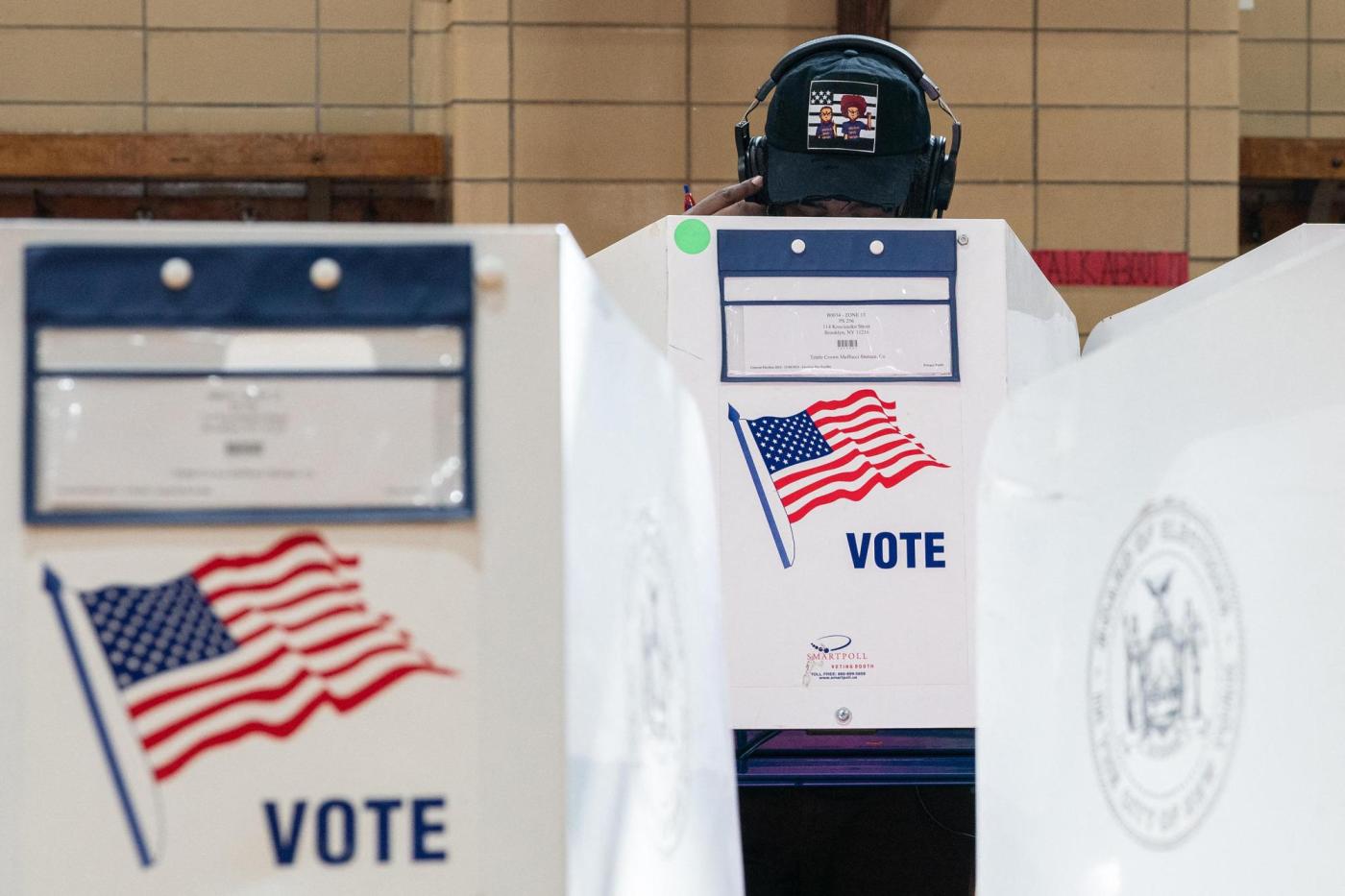
When St. Paul residents go to the polls on Tuesday, they’ll find a question on their ballot asking them whether to amend the city’s charter — which is akin to a municipal constitution — to allow for new forms of non-criminal penalties known as administrative citations.

If approved, the city council would have the authority to propose fine ladders for violations of city ordinances. The charter amendment does not spell out any particulars around the size of the penalty or the type of ordinance violation that would trigger a civil fine.

Instead, each type of administrative citation would be presented as its own ordinance amendment to city code, and get its own individual public hearing prior to a council vote in the months to come.

Officials with the mayor’s office, the city council, St. Paul Public Works, the Department of Safety and Inspections and other areas of city government have highlighted 15 areas where enforcement is lacking and the city could potentially impose administrative citations to improve quality of life for everyday residents.

Those areas include animal-control violations, neglected construction sites, errant landlords who fail to respect building codes or rent control requirements, illegal discharges to storm and sanitary sewers, and employers who sidestep the city’s minimum wage or sick and safe time rules.

Given the city’s difficult finances and aging housing stock, critics have expressed concern that the city could use administrative citations to help balance its budget by fining homeowners for chipped paint, weeds, tall grass and other mundane property issues common to century-old houses and low-income neighborhoods. They say that rather than protect the vulnerable, the fines could amount to a tax on the poor.

Here’s what voters need to know:

The ballot question wording:

“Referendum on Ord 25-2 amending the City Charter.

“Should Ordinance Ord 25-2, amending Chapter 6.03 of the St. Paul Charter, regarding Administrative Citations take effect? Ordinance Ord 25-2 amends the City Charter to authorize the issuance of Administrative Citations that may result in the imposition of civil fines for violations of City Ordinances. Administrative Citations are not Criminal Citations. A ‘Yes’ vote is a vote in favor of amending the City Charter to allow the City to issue administrative citations. A ‘No’ vote is a vote against amending the City Charter and against administrative citations.”

Who is on board:

The charter amendment is backed by St. Paul Mayor Melvin Carter and challenger Rep. Kaohly Her, the seven members of the city council, the city’s charter commission, city department leaders and a wide coalition of labor groups and progressive advocates. They include ISAIAH, SEIU Healthcare MN, the St. Paul Regional Labor Federation, AFSCME Council 5, Unidos St. Paul, Faith in Minnesota, TakeAction Minnesota, Housing Justice Center, Sustain St. Paul and members of local DFL groups backing the “Vote Yes For a Fairer St. Paul” campaign.

Opposition:

While the ballot question has not drawn heavily organized opposition, it failed to pass the city’s charter commission or win unanimous city council approval in 2018 and 2021. Former city council member Jane Prince has written at length about her concerns. Arguing that the public should have the right to weigh in, former City Hall employee Peter Butler gathered enough petition signatures this year to block council approval from amending the charter without first going to public ballot. Mayoral candidates Yan Chen and Mike Hilborn have said they’ll vote “no” on the question, which has drawn mixed reviews from some leaders of neighborhood district councils.

Arguments for:

Proponents have noted that if a landlord fails to fix a broken toilet, an employer refuses to pay out sick time or a dog repeatedly terrorizes the neighbors, the city’s options generally amount to one of two extremes: a strongly worded letter of warning, or criminal charges.

In the case of housing or building code violations, the city can revoke a certificate of occupancy, leaving residents homeless, or cancel a business license, closing the business entirely. Minneapolis and other large cities in Minnesota have intermediate powers to impose non-criminal penalties on rule-breakers, which can roll out more quickly than criminal charges without the long-term consequences of creating a criminal record.

As St. Paul has delved into a progressive agenda, including paid sick and safe time, a $15 minimum wage, rent control, a wage theft ordinance and other rules, the city has found it tough to keep up with enforcement.

To ensure fairness in execution, the city council voted to establish a temporary advisory committee that would spend up to a year crafting an “equitable implementation framework” around administrative citations as they roll out. The committee would be expected to issue written recommendations focusing on the potential disparate impacts of administrative citations on vulnerable groups protected by the city’s Human Rights Ordinance.

“Administrative citations are a necessary tool for St. Paul to have what it needs to keep its residents safe, for the city to run well,” said Matt Privratsky, a former city council member and chair of the Vote Yes For a Fairer St. Paul campaign.

“Right now, the city is forced to over-criminalize penalties because it does not have the ability to use civil fines or administrative citations,” Privratsky said. “And at the time when federal uncertainty has never been greater, the community needs stability, it needs its common-sense tools in place.”

Arguments against:

If city inspectors were empowered to fine everyday residents over mundane property issues, they wouldn’t have to look far. Well more than half of the city’s single-family homes, duplexes and triplexes were built before 1930, and the likelihood of finding peeling fence paint on a century-old property is high.

Even if used judiciously by the current administration, a charter amendment raises the possibility that the next city council — or the one after that — could increase fines, in both size and volume, to help balance departmental budgets, a burden that could land disproportionately on low-income and middle-income communities of color.

Butler has noted that a charter amendment may not be necessary. To institute non-criminal penalties, some cities cite a section of state statute allowing them to impose civil fines of up to $1,000.

Critics have said that administrative citations fly in the face of the Carter administration’s previous commitment to reducing fines and fees, including library fines, in the name of equity. Chen has called the effort overly bureaucratic and Hilborn called citations another burden for small businesses in a city already struggling to attract commerce.

Related Articles


Dakota County elections: Three districts with school boards on the ballot


Election 2025: Five candidates running for mayor of St. Paul


St. Paul: What you need to know about the school levy question

Prince, the former council member, has noted that the city already charges property owners for abatement — the cost of sending out a city work crew — if they fail to shovel snow and ice from their walk or cut tall grass. The charter amendment proposes no upper limit on fines.

“There are fines and fees when you violate things, but it can’t exceed the city’s cost of enforcement,” said Prince on Tuesday. “In 2022 when they brought (administrative citations) forward, they wanted to cap it at $2,000 and the charter commission voted it down because they thought it was too high. Now they’ve brought it back with no cap.”

For complete coverage of area elections as well as how to vote, visit twincities.com/elections.

Imani Cruzen contributed to this report.