‘Minnesota is drowning in fraud’: Initial charges announced in housing stabilization probe

posted in: All news | 0

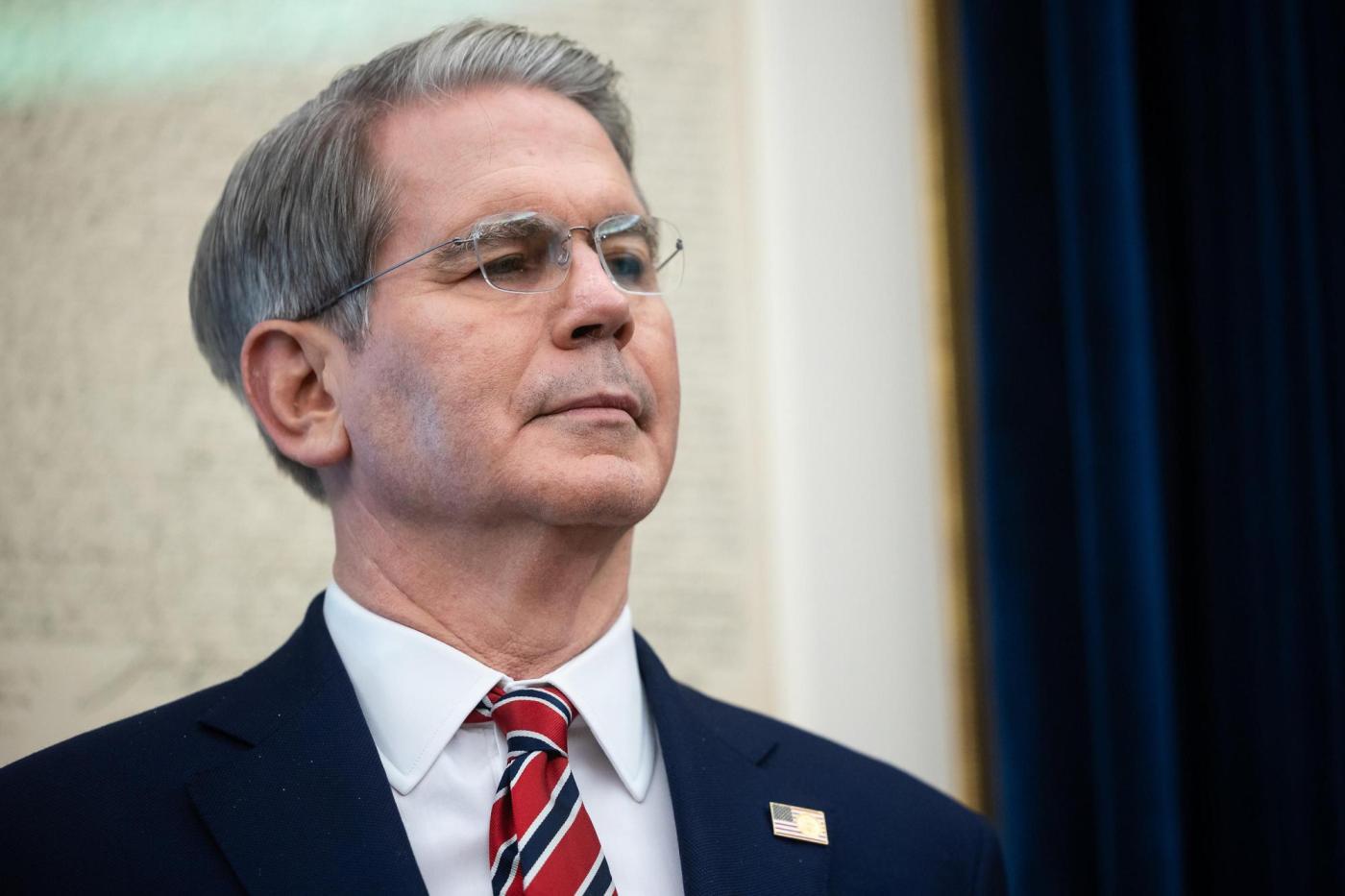
Acting U.S. Attorney Joe Thompson announced initial charges on Thursday, Sept. 18, for what he said is a “massive” fraud scheme coming out of the state’s housing stabilization program.

On July 16, the FBI raided companies suspected of providing fraudulent services under the 2020-established Housing Stabilization Services program, designed to help seniors and people with disabilities, including mental illness and substance use disorders, find and maintain housing. On Aug. 1, the Minnesota Department of Human Services announced it was moving to terminate the program altogether.

Initially, HSS was expected to cost $2.6 million annually. The program has ballooned in cost to $310 million in total since 2020, according to reports from DHS as of Aug. 22. Thompson said Thursday that of the hundreds of millions of dollars, “most of it’s fraud, as far as I can tell.”

“Minnesota is drowning in fraud. Many of the owners of housing stabilization services companies had one or more other companies through which they billed other Medicaid programs,” he said. “The level of fraud in these programs is staggering. Unfortunately, our system of ‘trust but verify’ no longer works. These programs have been abused over and over to the point where the fraud has overtaken the legitimate services.”

The charges, which Thompson said would be filed Thursday, are against Moktar Hassan Aden, 30; Mustafa Dayib Ali, 29; Khalid Ahmed Dayib, 26; and Abdifitah Mohamud Mohamed, 27. All four are allegedly affiliated with Brilliant Minds LLC.

Also charged are Christopher Adesoji Falade, 62; Emmanuel Oluwademilade Falade, 32, with Faladcare Inc.; Asad Ahmed Adow, 26, with Leo Human Services LLC; and Anwar Ahmed Adow, 25, with Liberty Plus LLC.

“They identified vulnerable individuals, Medicaid-eligible individuals, many of whom were being released from drug or alcohol rehab facilities, they signed them up to receive housing stabilization services … purportedly to help them find stable housing, and then they … billed Medicaid for services they did not actually provide,” Thompson said.

Of those who have received services from HSS between July 2020 and June 2024, DHS reports 85% lived in the seven-county Twin Cities metro area, 37% or 12,242 individuals identified as Black, with 35% or 11,564 individuals identifying as white.

Thompson said the eight charges announced Thursday are just the beginning, and that his office and other partners are investigating “hundreds” of companies. He added that the overlap in this investigation with Feeding Our Future is “significant.”

“I think it’s fair to say that most of these health care fraud investigations, including the autism one and this one, essentially grew out of the Feeding Our Future investigations, through which we saw bank records routinely where people were purporting to serve meals to 1000s of kids a day, and they’re also purporting to run an autism clinic,” he said.

Related Articles


Avian influenza detected again in Minnesota commercial turkey flock


Duluth cannabis dispensary is state’s first licensed seller to open its doors … at 4:20 p.m. no less


New Tribal Flag Plaza at Capitol highlights Minnesota’s past, present


Ramsey County receives $1.4M state grant for winter warming centers


‘Coolest Thing Made in Minnesota’: A look at this week’s matchups

In coastal Ghana, female oyster farmers try to save an old practice threatened by climate change

posted in: All news | 0

By NAA ADORKOR CUDJOE and OPE ADETAYO

TSOKOMEY, Ghana (AP) — Beatrice Nutekpor weaves through the mangroves in Tsokomey community, just outside of Ghana’s capital of Accra, every day to harvest oysters for sale. It’s a family tradition she’s been doing since she was 15. Now 45, she is struggling to sustain the practice and pass it to her daughter. —

Related Articles


Hurricane Helene hit North Carolina a year ago. Some students never returned to school


National Academy of Sciences rebuffs Trump EPA’s effort to undo regulations fighting climate change


Endangered pink river dolphins face a rising mercury threat in the Amazon


DNR: Zebra mussel larvae reported in Phalen chain of lakes in Ramsey County


New England’s shrimp industry is struggling, with fishermen catching few in 2025

In Ghana’s coastal mangroves, oyster farming has been a key source of livelihood dominated for ages by women. Hundreds of women were trained in eco-friendly farming methods for oysters, including mangrove planting and preservation, and selective oyster harvesting, to lessen the impact of climate change.

Mangroves, trees or shrubs that grow along coastlines serve a critical multifunctional purpose in the aquatic ecosystem, ranging from being a home to fish to providing a buffer for coastal erosion from rising sea levels, and protection to land during storms and cyclones.

However, training by the Development Action Association nonprofit has ended after it lost its U.S. aid as a result of U.S. President Donald Trump’s decision to cut foreign aid contracts. It left the women to try what they can to keep their generational practice and sustain their families as Ghana emerges from its worst economic crisis in a decades.

Their efforts to protect the mangroves from encroachment and preserve them for a longer period of up to six months are gradually paying off. “The oysters have started attaching themselves to the mangroves we have planted,” Nutekpor says.

A key source of living challenged by climate change

Oyster farming involves breeding oysters in a controlled aquatic environment for commercial purposes.

Much like the rest of coastal West African nations, Ghana has lost a significant portion of its mangroves to climate change and development. There is no available data on recent depletion, but over 80% of the original mangroves have been lost since the last century.

Mangroves are also increasingly threatened by climate change as global temperatures and sea levels rise.

A single basin of oysters sells for roughly 47 Ghanaian cedis ($4), and Nutekpor sells just enough to feed her family and put her daughters through school.

As mangroves are depleted by people in search of firewood, development has crept into the coastal areas and authorities release water from overflowing dams, endangering the forests. Nutekpor’s worst nightmare is already manifesting: This year saw less oysters compared to last year, according to Lydia Sasu, the executive director of the Development Action Association.

For farmers like Nutekpor, the loss of mangroves means risking drowning by free diving 30 feet (9 meters) or deeper for hours, in search of oysters that migrate to deeper water in the absence of mangrove roots.

“When you have a situation where the water body, which is already dynamic, becomes more dynamic than before, the oysters cannot grow,” said Francis Nunoo, a professor of fisheries science at the University of Ghana.

Doing it all for family, and future generations

Although replanting the mangroves have paid off for the women, it is a back-breaking job that keeps them in the harsh sun for hours.

For the sake of family, it is worth it, they say.

“We keep doing it for the sake of our children and generations to come,” said Bernice Bebli, 39, another oyster farmer. “The water is our livelihood.”

In a group called the Densu Oyster Pickers Association, they have set out guidelines, including punitive measures for those who cut the mangroves outside of the allowed timeline.

According to Bebli, first-time offenders will lose their oysters, while repeated offenders are reported to the police.

“The reliance of the coastal people on these ecosystems is heavy. … The rate of destruction is always higher than the rate of repopulation, so we are going to lose some species and we are going to lose some lives,” said Nunoo.

For Nutekpor, keeping her family’s heritage is key.

“Just as my mother taught me this business, I also want to teach my daughter so she can teach her child. Then oyster farming will remain our family business,” Nutekpor said.

Adetayo reported from Lagos, Nigeria.

For more on Africa and development: https://apnews.com/hub/africa-pulse

The Associated Press receives financial support for global health and development coverage in Africa from the Gates Foundation. The AP is solely responsible for all content. Find AP’s standards for working with philanthropies, a list of supporters and funded coverage areas at AP.org.

An immigration judge ordered Mahmoud Khalil deported. What happens now?

posted in: All news | 0

By JAKE OFFENHARTZ, Associated Press

NEW YORK (AP) — Three months after his release from an immigration jail, Palestinian activist Mahmoud Khalil is facing the growing threat of deportation for his role in campus protests against Israel.

In court documents made public Wednesday, an immigration judge in Louisiana ruled that Khalil should be deported for failing to disclose information on his green card application.

The decision marked a setback for Khalil, a lawful U.S. resident and recent Columbia University graduate student who became the first person targeted by President Donald Trump’s aggressive crackdown on pro-Palestinian activists. But while the ruling puts him one step closer to a final order of removal, it is far from the last word in the case.

For now, Khalil remains protected from detention and deportation under a separate judicial order. His legal team has said they intend to appeal the immigration judge’s ruling, which Khalil has characterized as “further evidence of retaliation” from a “kangaroo court.”

Here’s a look at where things stand in the ongoing legal battle:

What did the immigration judge in Louisiana decide?

The Sept. 12 ruling by the immigration judge, Jamee Comans, builds on her previous order issued in April, which found Khalil could be forced out of the country as a national security risk.

Khalil’s attorneys had challenged that decision, citing his lack of criminal history and close ties to the United States. His wife is a U.S. citizen, as is his 5-month-old son, who was born while Khalil was in federal custody.

Related Articles


Reactions pour in about ABC’s suspension of Jimmy Kimmel’s show


Gen Z leads biggest drop in FICO scores since financial crisis


Immigration judge denies bond for man detained by ICE after nearly dying in Iowa shooting


‘Inhumane’: Trump’s mass deportations ensnare noncriminal immigrants from all walks of life


They bought a house to ‘grow up.’ Now they can’t afford to start a family.

Khalil was a prominent figure in protests at Columbia University against the war in Gaza, which spread to campuses nationwide. He was arrested inside his campus apartment building this past March and accused by the Trump administration of supporting “pro-Hamas” activity, referring to the Palestinian militant group that attacked Israel on Oct. 7, 2023. Khalil has repeatedly denied the charge and the federal government has not provided evidence for it.

Khalil has argued he is being targeted for exercising his free speech, pointing to a memo by Secretary of State Marco Rubio that justified his arrest on the grounds that his pro-Palestinian beliefs could undermine U.S. foreign policy interests.

In her latest decision, Comans said she lacked the authority “to question foreign policy determinations” and that Khalil’s “limited family ties” to the country did not amount to a compelling reason to waive her prior ruling.

Comans then sided with the government on a separate claim, finding that Khalil had “willfully misrepresented” facts about his background on his green card application, including his role in a United Nations agency that provides services to Palestinian refugees.

Khalil has maintained that any omissions on the application were unintentional.

What happens now?

Khalil’s attorneys said Wednesday that they intend to appeal the decision. But they also expressed concern about their odds of success in the reliably conservative federal appeals court with jurisdiction over the case.

If he were to lose his appeal, Khalil would be stripped of his permanent residency status, further restricting his ability to work and travel, according to his attorneys. But the government would still be prohibited from removing him under a June 11 order from a federal judge in New Jersey, Michael Farbiarz.

That order will remain in place while his civil rights case plays out in New Jersey. It may soon be “the only meaningful impediment” to Khalil’s deportation, according to a letter that his attorneys sent Wednesday to Farbiarz.

Oral arguments in that case could begin as soon as next month.

Where would he be deported?

Judge Comans has said Khalil would be deported to Algeria, where he maintains citizenship through a distant relative, or “in the alternative” Syria, where he was born in a refugee camp to a Palestinian family.

Attorneys for Khalil have said the publicity surrounding his case would leave him in mortal danger if he were forced to return to either country.

Khalil, 30, fled Syria for Lebanon in 2013 after joining protests against then-President Bashar al-Assad. His family has roots in Tiberias but were displaced during the mass expulsion of Palestinians from what is now Israel, according to court documents.

Khalil has said he will continue advocating for Palestinians as his legal battle plays out. He is also currently suing the Trump administration for $20 million in damages, alleging that he was falsely imprisoned, maliciously prosecuted and smeared as an antisemite.

Emailed inquiries to the State Department, the White House and the Department of Homeland Security were not returned.

Byron Buxton’s big season is paying off, quite literally, for Twins star

posted in: All news | 0

His first at-bat Wednesday was the 500th this season for Byron Buxton, the second time he had done so in 11 major league seasons. It was a nice, round number, and one was significant to the Twins’ center fielder.

“That’s a big number,” Buxton said. “That means you’ve been on the field and you’ve been in the lineup. I kind of look at it on that end of the scale, like I’ve been in the lineup, been able to post up every day, not DHing, and in center. That’s a positive for me.”

Minnesota Twins’ Byron Buxton (25) reacts after hitting a single during the third inning of a baseball game against the Detroit Tigers Thursday, Aug. 14, 2025, in Minneapolis. (AP Photo/Abbie Parr)

No. 502 was a pretty important one for him, too, triggering an incentive in his contract that will pay him an additional $500,000.

There could be more coming. His big season has him in line to reach incentives in his contract — a seven-year, $100 million extension he signed in 2021 — that he has not yet reached in his career. Buxton’s next target number is 533 plate appearances for another $500,000. He can earn more with 567 and 625 at-bats, but with 10 games remaining, 533 is the milestone within reach; Buxton has averaged 4.31 plate appearances a game this season and there are 10 games left.

Another trigger in his contract could come into play this offseason.

Buxton’s contract takes both his talent and his injury history into account. His deal was structured to reward him for playing time and performance, and for an all-star season in which Buxton is hitting .270 with a .884 OPS and has a chance to become the Twins’ first 30 home run, 30 stolen base player in team history — he needs six stolen bases to reach the milestone — he could be heavily rewarded.

If Buxton finishes between sixth and 10th in American League MVP voting, he will be paid an extra $3 million dollars. He’d earn even more for a higher finish. Voting is conducted before the postseason begins and the final tally will be revealed in November. Entering Thursday, Buxton was 10th in fWAR (Wins Above Replacement per FanGraphs) in the AL and likely to earn some down-ballot votes.

Regardless, the longtime Twins center fielder was excited about reaching plate appearance No. 500, a number that signifies his ability to stay on the field this season. Buxton’s 117 games played are third on the team behind Trevor Larnach and Brooks Lee, and while he has landed on the injured list twice — once for a concussion, once for ribcage inflammation — it’s already the second-most games he has played his career.

“I don’t know what’s going to end up meaning the most to Buck when the time comes and the season wraps up, what he’s going to be most happy about,” manager Rocco Baldelli said. “I think it’s going to be just the fact that he woke up every day, showed up to the field and he was out there. And that means way more to him than statistics because he loves to play.”

Related Articles


Taj Bradley falters as Twins lose to Yankees, drop series


Twins nearly claw all the way back but fall to Yankees


Twins Bailey Ober looks to get back to his ‘old self’ in offseason


Simeon Woods Richardson, Austin Martin shine as Twins beat Yankees


Twins catchers progressing toward potential returns