In Twins clubhouse, starter Pablo López serves as ringleader of fun

posted in: News | 0

Royce Lewis had no idea what Pablo López had in store when the starter told him before Thursday night’s game that somebody had to hit a home run.

But, Lewis said, “I figured it would be something cool.”

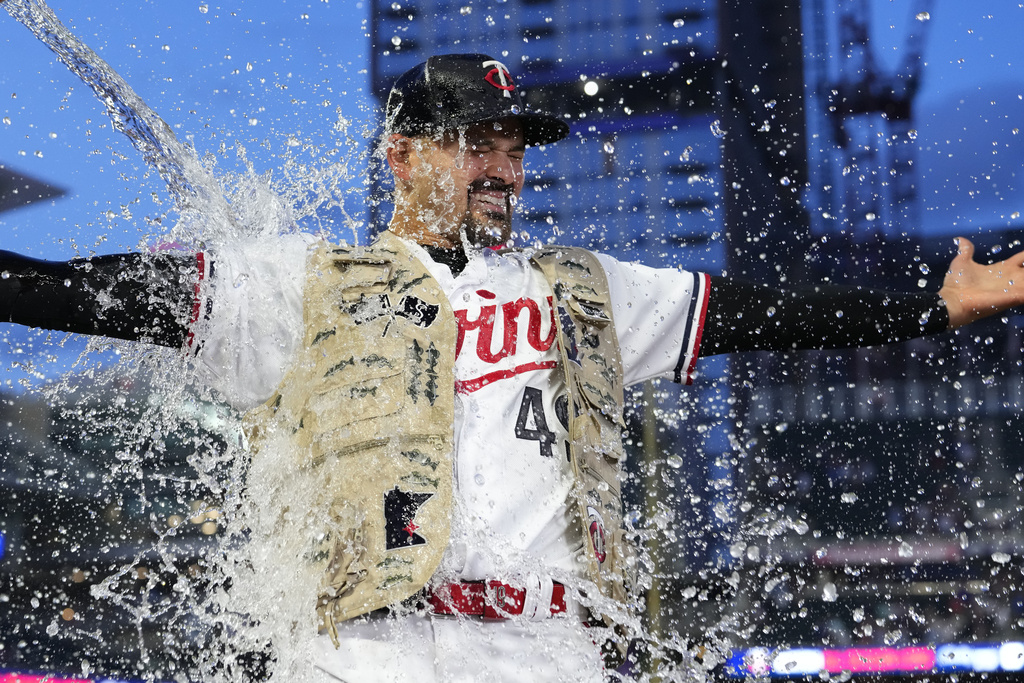
When Carlos Correa finally did go deep in the seventh inning, Lewis had a chance to see what the starter had been planning for the past few months. After Correa returned to the dugout, he was greeted López at the top step, holding a custom-made Prince-themed vest for him to slip on. It was accompanied by an inflatable guitar and a purple fedora.

It was the latest in the long line of creative and fun things that López has introduced to the clubhouse. For the veteran right-hander, introducing new ideas to help promote team bonding has become important to him as a team leader.

The 2023 season’s home run vest, now retired and behind glass in the Twins’ clubhouse, was bought by starter Pablo Lopez at a local sports store. (John Shipley / Pioneer Press)

“I’m all for doing activities for the team,” López said. “I’m all for finding things sometimes not related to baseball that can bring us closer not only as players but also as people, as friends, as brothers. I always like finding little things, little opportunities to make something cool happen.”

López was the one behind the celebration fishing vest that the Twins wore last year, heading out to a sporting goods store to purchase the vest during his free time and also providing a toy rod. Twins home run hitters wore that from May on before retiring it, sending López back to the drawing board.

He contacted a website this spring to have the Prince vest custom made, then waited. It arrived when the Twins were in the middle of the rally sausage craze, so he held off on bringing it out until Thursday, which was appropriately Prince Night at the ballpark.

Last year, López played a big role in helping plan the team’s rookie dress up, gathering knowledge about his teammates throughout the season and then thinking up costumes that would be specific to them. Earlier this season, when the team had a free night in Detroit, he hosted Bingo Night at the team hotel, planning and catering the event, which was attended by nearly the entire traveling party.

And at the beginning of the homestand, López introduced his new Wheel of Fortune. It sits in between the empty locker next to his, under a sheet when not in use. After Twins wins, it comes out. A player and pitcher of the game are identified and then play rock paper scissors for their chance at spinning the wheel. The winner then gets a prize. Chris Paddack, the first winner, took home a pair of eye massagers, which he said were “legit.”

“I think it just brings us together a little bit, closer as a group,” Paddack said.

That’s exactly what López intended when he introduced the idea.

As a young player in Miami, he was around veterans like Martín Prado, Curtis Granderson and Neil Walker, who he said helped teach him about developing winning cultures within the clubhouse. He took notes.

“Those guys were all about doing things that would involve the entire team, the entire staff, bringing everyone together,” López said. “I would sit down, participate and then just (think), ‘It’d be cool to do those things one day. It’d be cool to be that guy.’ ”

The Twins (40-32) have won five straight, and 7 of 9 overall, heading into a three-game series against Tampa Bay (34-38) starting Tuesday night at Target Field.

It’s no surprise to manager Rocco Baldelli that López has become that guy within the Twins’ clubhouse. He’s both thoughtful and organized, Baldelli said, and in a lot of ways “he’s like the team director.”

“He’s a guy that gets ahead of it all and then executes, just like he does on the mound,” Baldelli said. “That’s kind of the way he approaches stuff off the field, too. … There’s nothing shocking about Pablo López taking the time to set something up that he thinks is going to be fun and help the group and be a blast. He’s a good party planner.”

And his efforts certainly don’t go unnoticed.

Within the clubhouse, his teammates appreciate him for not just for what he does on the mound, but for what he does off it.

“He’s a special human being,” Correa said. “The fact that he goes out of his way to bring the team together means so much. You need guys that not only pitch well, but also bring the team together. He’s definitely one of those.”

Related Articles

Minnesota Twins |


Twins’ Ryan Jeffers debuts new painted helmets: “Like artwork”

Minnesota Twins |


Carlos Correa, Royce Lewis, Twins blast past Athletics in doubleheader sweep

Minnesota Twins |


Saints complete six-game sweep with win in Louisville

Minnesota Twins |


Dobnak strikes out 10 as Saints stop Louisville

Minnesota Twins |


Twins, Athletics postponed; to play doubleheader on Sunday

St. Paul city planners weigh ban on new restaurant drive-thrus

posted in: News | 0

St. Paul city planners are considering further restrictions on fast food drive-thrus, which critics say make neighborhoods more hostile to pedestrians and cyclists.

A city study released for public comment in March drew a wide range of reactions. Proposed zoning amendments would limit where future drive-thrus can be installed while also heightening design standards.

Among the questions pitched to the public: Should St. Paul prohibit future fast food drive-thrus altogether? Or perhaps the city could just ban them downtown and in mixed housing and retail “T2 traditional neighborhood” zoning districts, with the goal of promoting walking over driving in mixed-use areas.

Those options, still being considered by the St. Paul Planning Commission, are opposed by the St. Paul Area Chamber of Commerce and Hospitality Minnesota, the state’s lodging and restaurant association, as well as individual restaurant owners. During a June 7 hearing before the Planning Commission, a representative of Border Foods, which operates almost every Taco Bell in the state, said drive-thrus account for up to 80% of their business.

Some retailers say that given crime and safety concerns, the alternative to a late-night or all-night drive-thru isn’t a more pedestrian-friendly, walk-in experience — it’s to add parking and close their fast-food eatery earlier.

They also recalled that drive-thrus were integral to surviving the coronavirus pandemic, when the state imposed restrictions on on-site dining.

“The reason I’m sitting here today and still in business is because of the carry-out business I had,” said Eddie Sharif, a proprietor of Burger Moe’s on West Seventh Street, addressing the Planning Commission.

In order to encourage business growth, real estate attorney Brian Alton said, “just like we’ve done with housing choices, we should be less restrictive, not more restrictive.”

St. Paul already limits new drive-thrus by requiring eateries in most zoning districts to seek city approval, through a conditional use permit.

Bill Lindeke, a former planning commissioner, said what makes retail areas like Snelling-Selby and Grand Avenue distinct from the suburbs is pedestrian access between bakeries, coffee shops and other retailers. Once a drive-thru business is installed, it bisects pedestrian foot traffic, he said.

“It almost becomes an island,” he said, recalling a drive-thru that created infamous traffic backups from a Selby Avenue Starbucks into the busy intersection at Snelling Avenue. Former Minnesota Senate Majority Leader Amy Koch required wrist surgery in October 2019 after getting hit by an SUV outside the location. After years of controversies, the drive-thru was replaced with a patio.

Some business advocates argue drive-thrus benefit the disabled, as well as parents with small children and others with mobility challenges. Lindeke argues just the opposite. “Drive-thru curb cuts, once cars start going over the sidewalks with snow and ice, it’s almost impossible to get the ice off the sidewalk,” he said. “It becomes the slipperiest part of anyone’s trek.”

Planning Commissioner Simon Taghioff echoed that sentiment. “I am a young parent,” he said. “I often hear in these debates young parents co-opted into this assumption that we can’t walk. … In Manhattan, they seem to have a bunch of Taco Bells and other fast food joints. And none of them have drive-thrus. I wonder how those operate?”

Minneapolis in 2019 banned new drive-thrus, calling them unfriendly to pedestrians and the environment.

St. Paul officials counted 77 drive-thrus in the city, mainly at restaurants and banks but also several pharmacies and two coffee shops.

The Planning Commission is likely to revisit the drive-thru zoning study this summer before the issue goes before the St. Paul City Council around August.

Related Articles

Business |


Business People: Xcel Energy fills key compliance position

Business |


Real World Economics: The social Darwinism of climate change

Business |


Stores are more subdued in observing Pride Month. Some LGBTQ+ people see a silver lining in that

Business |


St. Paul family-run locksmith looks back on 100 years in business

Business |


Working Strategies: Next steps for ‘non-trad’ grads

January 6 investigation lingers as 2024 election nears

posted in: News | 0

Chris Joyner | The Atlanta Journal-Constitution (TNS)

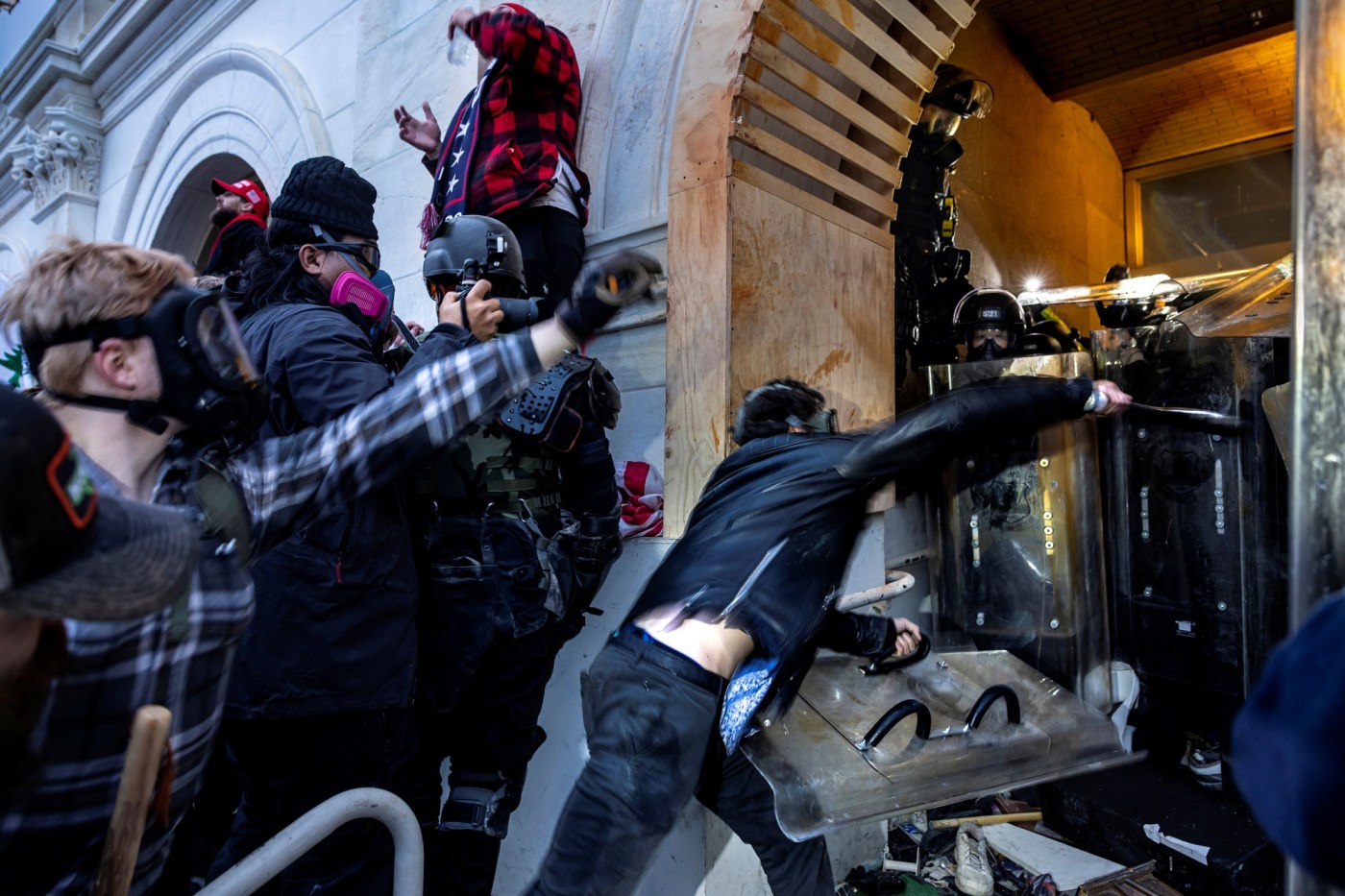
It’s been 3 1/2 years since thousands of people marched from a rally by then-President Donald Trump to the U.S. Capitol, where many of them stayed for hours, fighting with police and parading through the building, delaying the certification of the presidential election and forcing members of Congress to flee.

But even as Americans prepare for another presidential election in November, the sprawling investigation into the Jan. 6, 2021, riot that followed lingers on.

According to the U.S. Department of Justice, at least 1,457 people have been charged with crimes ranging from misdemeanor trespassing to serious felonies, including assault on a police officer and seditious conspiracy. Among those are 33 defendants with ties to Georgia, two of whom are scheduled to go on trial Monday.

Phillip “Bunky” Crawford, 48, and Dominic Box, 34, are scheduled for separate trials Monday in U.S. District Court in Washington on felony charges related to their alleged actions in the riot.

Crawford pleaded guilty last month to one count of felony civil disorder, four counts of assaulting police and one count of violent and disorderly conduct on the Capitol grounds. But he chose to take the remaining five criminal charges against him to trial. Four of those remaining charges involve allegations that he used a dangerous or deadly weapon and could bring even more time in prison.

Unlike many of his fellow defendants, Crawford did not enter into a plea deal with federal prosecutors, which would have avoided a trial. In a lengthy May 31 interview on the streaming platform Rumble, Crawford described his decision as both a principled and strategic decision.

“I pled guilty to six counts because I realized (prosecutors) are not following the Constitution and people aren’t winning. I’m looking at the previous cases, and it don’t look good,” he said. “I took the plea to take responsibility for my actions, because I did put my hands on officers and they can hold me accountable for that. By the same token, (the officers) should be held accountable for their actions.”

Related Articles

National Politics |


New voter registration rules threaten hefty fines, criminal penalties for groups

National Politics |


AI experimentation is high risk, high reward for low-profile political campaigns

National Politics |


Biden’s campaign announces a $50 million advertising blitz highlighting Trump’s conviction

National Politics |


Tobacco-like warning label for social media sought by US surgeon general who asks Congress to act

National Politics |


Biden plan to save Medicare patients money on drugs risks empty shelves, pharmacists say

Crawford was among dozens of rioters who fought with police guarding a tunnel on the Capitol’s Lower West Terrace while members of Congress evacuated the building. The hand-to-hand combat between rioters and police was among the most violent moments of the day. Crawford defended his actions by saying he was attempting to reach a woman at the front of the police line whom he said was being beaten by police.

“I took action because what I saw was officers using excessive force. I’m not going to steer away from that,” he said. “When it is all said and done and my jail time is over, I can live with my head up.”

In court documents, federal prosecutors have repeatedly told the court that Crawford is unrepentant and believes in the “righteousness of his actions.” While Crawford portrays himself as a family man and a patriot, prosecutors also pointed to his history of arrests that include lying to police and violating parole as evidence of his poor character.

In the other trial scheduled Monday, Box faces charges of obstruction of an official proceeding and two counts of civil disorder, all felonies. Prior to the 2020 election, Box was known in Savannah as a prominent member of a group that spread conspiracy theories associated with the QAnon movement. On Jan. 6, Box livestreamed his march to the Capitol and portions of his time inside the building.

Box has a long history of drug and alcohol problems and was arrested in August on charges including DUI in Jacksonville, Florida, after police reportedly found him passed out in the driver’s seat of his car in the parking lot of a Mexican restaurant. He has been in jail in Jacksonville since his arrest awaiting trial on those charges.

Since the riot, two dozen Georgia defendants have either entered into plea deals or been found guilty at trial on Jan. 6 charges, receiving sentencing ranging from probation to years in prison. They join nearly 900 others from across the nation who have met the same fate.

“I think it’s safe to say that almost everyone who went to the Capitol that day knows someone who was arrested or got a door knock from the FBI,” said Jon Lewis, a research fellow at George Washington University’s Program on Extremism.

At the same time, Lewis said it is hard to see whether the investigation and prosecutions will have the effect of deterring more political violence in this coming election cycle. Lewis pointed to the recent example of convicted Jan. 6 rioter Brandon Fellows — sentenced to 3 1/2 years in prison for his role in the riot — who not only returned to the Capitol, but sat behind Dr. Anthony Fauci during a congressional hearing this month, making faces at the cameras.

“You have individuals who are looking at these arrests and these prosecutions and see it as nothing more than politically motivated theater,” Lewis said. “And yet we are still here just talking about the 1,400th low-level defendant who probably will not get jail time and whose statute of limitation will run out if they aren’t pardoned by a new Trump administration.”

Holding the rioters accountable in court is admirable, Lewis said. But the root causes of the unrest remain largely unaddressed.

“We can’t confuse that with strategic success,” he said.

Lewis said the rise of far-right “influencers” on social media over the past four years has kept alive many of the same conspiratorial themes that led to violence on Jan. 6. The “most damning part” is the lack of outrage from congressional Republicans who were evacuated on Jan. 6 as rioters breached the building, he said.

“We’re still talking about the same challenges we were four years ago,” he said.

©2024 The Atlanta Journal-Constitution. Visit at ajc.com. Distributed by Tribune Content Agency, LLC.
New voter registration rules threaten hefty fines, criminal penalties for groups

posted in: News | 0

Matt Vasilogambros | (TNS) Stateline.org

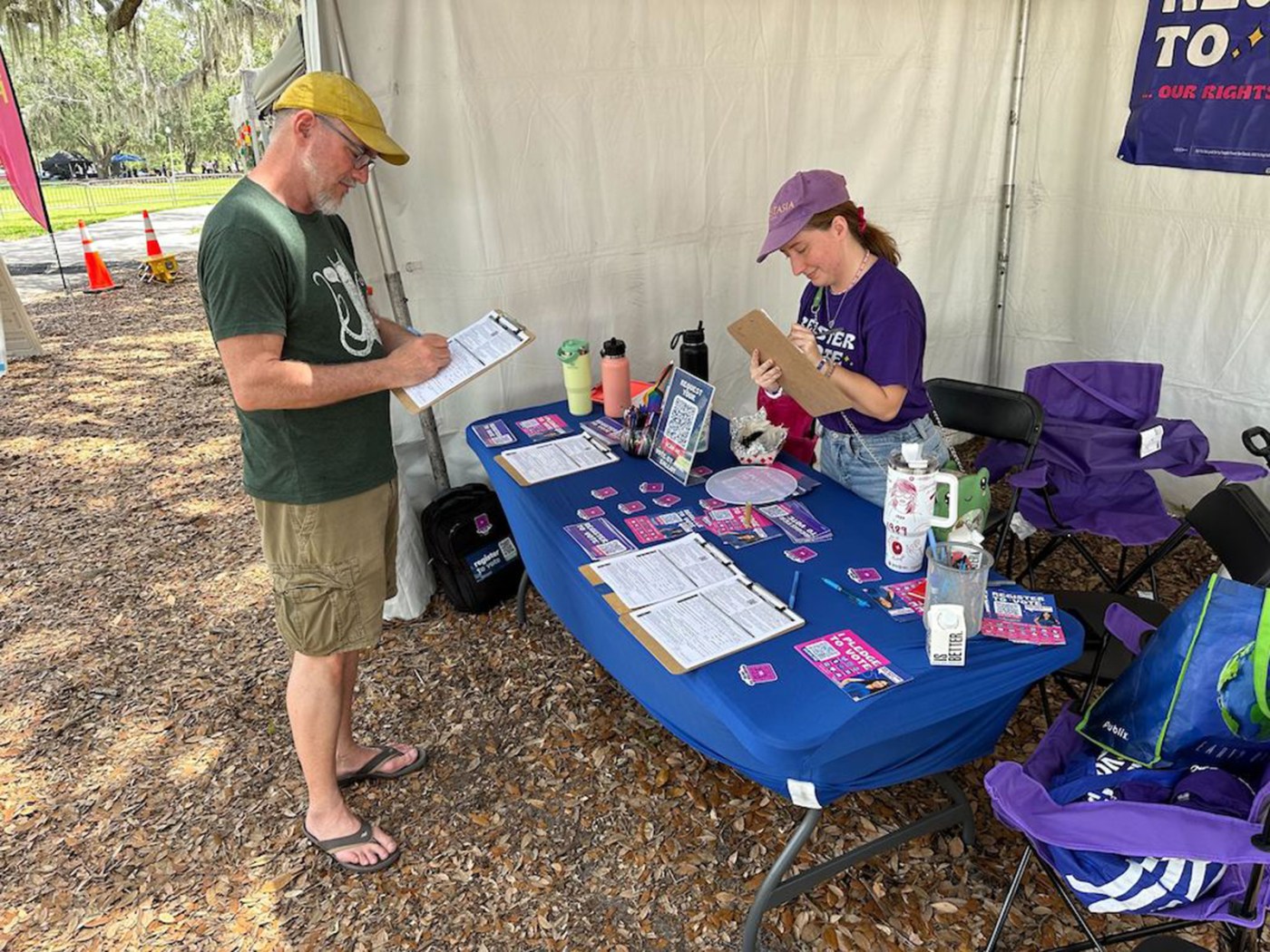
ORLANDO, Fla. — On a sticky Sunday afternoon in late May, Mark Wendell ambled through Loch Haven Park, a mossy, oak-covered green space wedged between a trio of lakes and the Orlando Science Center.

Among the two-dozen food and vendor tents lining the sidewalks at the Orlando Fringe theater and arts festival was People Power for Florida’s table, cluttered with voter registration forms, stickers and about 50 mismatched pens.

As Wendell, wearing flip-flops and a baseball cap, walked by, he noticed the civic engagement group’s purple “Register to Vote” sign.

“Are you registered to vote?” asked Roxanne Perret, one of the four organizers at the white tent, holding a clipboard and raising her voice over a nearby funk band.

“I am,” he said, “but in another state. I just moved here.”

After Wendell, 62, finished filling out the form, Perret recited a well-rehearsed disclaimer: She would turn in the paper to Orange County’s supervisor of elections within 10 days. He should get his new voter ID in the mail within 30 days.

Perret also handed him a slip of paper with her name and her group’s state registration number — an official receipt that is now required by law.

Without it, the organization could have been liable for hundreds of dollars in legal penalties under a law that Florida passed last year.

Republican lawmakers here and in Alabama, Georgia, Kansas, Missouri, Montana and Texas have enacted a variety of voter registration laws over the past four years. The measures add new requirements around registering and communicating with voters and threaten hefty penalties for violations.

The stated goal of the new laws is to prevent fraud, but some voting rights groups contend their real purpose is to dampen participation by likely Democratic voters.

“It’s a huge chilling effect on the organizations who are doing this work, and on voters,” said Jonathan Diaz, director of voting advocacy and partnerships at the Washington, D.C.-based Campaign Legal Center, which has led lawsuits on behalf of the League of Women Voters chapters and other groups in Florida, Alabama and Missouri.

Diaz thinks the recent state restrictions are a response to robust registration efforts during the COVID-19 pandemic, which contributed to one of the highest turnouts in a presidential election in decades.

For a century, third-party voter registration groups have been a mainstay in broadening participation in the American political system, seeking out potential voters at festivals, parades or outside grocery stores. These efforts date back to the women’s suffrage movement, and many groups played a pivotal role during the Civil Rights Movement.

Over the past five years, more than 350 groups have signed up as third-party voter registration organizations with the Florida Division of Elections, including county political parties, individual residents, candidates, and religious and social groups.

Many whose focus is on young people or historically marginalized communities say they’ve had to change their operations to avoid fines or felony charges. Some have stopped registration drives altogether.

However, not every grassroots group finds the state law burdensome.

Seeing a gap in registration efforts for Republican voters, Barbara Casanova last year launched Citizens First, a Miami-based nonprofit that also helps people run for office.

The state law means extra costs for printing receipts, and she has some concerns about vague language in the statute, but her father — the highest-ranking Cuban American in President Ronald Reagan’s administration, according to her biography — always told her the GOP had two missions: Grow the party and get good people elected.

“It’s one of the prices we pay to be able to carry out our civic duty,” said Casanova, who serves as Citizens First’s president. “I think it’s worthwhile.”

‘Those fees can stack up’

Under the Florida law, third-party voter registration groups that employ noncitizen volunteers are subject to a $50,000 fine for each one — even those with green cards. They also are barred from using volunteers with certain felony convictions on elections-related charges, or for crimes such as fraud, forgery or perjury.

The state can fine groups as much as $2,500 for each voter registration application that is turned in late. There are fines for turning in forms to the incorrect county. Total annual fines could reach $250,000 per organization. It also is a felony to hold on to registrants’ personal information for future outreach or other purposes.

Last month, a federal judge ruled it was unconstitutional for Florida to ban noncitizens from registering people to vote — finding the effort discriminated against Latino outreach — and blocked the state from enforcing the ban. Still, voter registration groups remain under immense pressure, said Democratic state Rep. Anna V. Eskamani, the founder of People Power for Florida.

“Those fees can stack up a lot more aggressively and just bankrupt your organization,” Eskamani said in an interview a week before the Orlando event.

Last year, the state fined her group $2,000 for missing a registration deadline to turn forms in for the August primary. But Eskamani called the fines “silly,” arguing those voters weren’t planning on voting until November. The state also fined People Power for Florida $3,000 for filing forms with the wrong county; the group said the state had made a mistake, and the fine was rescinded.

“Every day, I’m bracing for some sort of incorrect and burdensome fine,” Eskamani said.

Other Florida-based groups have had to reconsider whether it’s worth the fines or possible criminal penalties to conduct voter registration drives anymore.

The nonpartisan League of Women Voters of Florida, for example, decided last year to stop registering voters using paper applications for the first time since the organization began such efforts a century ago.

To avoid legal liability, the league instead directs potential voters to scan a QR code with a smartphone and register on their own. The league has spent thousands of dollars on mobile hot spots so festivalgoers can use the internet at the league’s booths.

“All of these penalties and prohibitions and difficulties and threats to us have just been extremely painful,” said Cecile Scoon, the Florida league’s co-president. “Under the latest set of laws, which are just so ruinous and prohibitive, we’ve had to protect our members and protect the league.”

The state’s new cap, now raised to a quarter of a million dollars in maximum yearly fines, is basically the group’s annual budget, she said.

For 70% of the 110 or so small, grassroots organizations in the state receiving resources and training from the national advocacy group Black Voters Matter, the new law has pushed them to stop voter registration drives, said Jamil Davis, the nonprofit’s Florida state organizing manager. He said the law is working as intended.

“People who support this bill think, ‘We get enough Black and brown voters out of the way for this election, it gives us a better opportunity to continue being in the seats that we’re currently in,’” Davis said.

He pointed to a 2021 report from Daniel Smith, a professor of political science at the University of Florida, which showed that Black and Latino Floridians are five times more likely than white residents to register to vote through a third-party voter registration organization.

Overall, more than 760,000 Floridians had registered to vote through these groups, according to the report. Smith, the chair of the university’s political science department, wrote it on behalf of voting rights groups during a court case over a separate bill Florida Republicans passed in 2021. That law added fines for returning forms late to election offices.

Behind the GOP effort

Republican lawmakers argued that Florida’s 2023 law was necessary to protect voters who trust outside groups to safeguard their personal information and submit their applications on time.

“Every cycle … there’s additional issues that arise with these organizations, which is prompting the additional need for enhanced measures of protection,” Republican state Sen. Danny Burgess, who chairs the Ethics and Elections Committee, told a local NBC affiliate in south Florida in April 2023, after he and his colleagues passed the measure.

Officials in the office of Florida Republican Secretary of State Cord Byrd declined an interview request, and instead pointed to its January report describing problems that “have plagued the state for years.” The report outlines how groups have at times altered political parties on registration forms without consent, registered dead or fake people, or forged application dates to avoid fines.

In April 2023, after the law passed, Byrd announced$34,400 in fines against Hard Knocks Strategies, a Democratic political strategy firm and third-party voter registration organization. Byrd said the firm showed “blatant disregard” for state laws by failing to return voter registration applications on time or to the correct county. The fines coincided with criminal charges against several members of the group on suspicion of turning in fraudulent applications, which have led to prison sentences.

Republicans in other states have cited similar fraud concerns when enacting voter drive restrictions.

In March, Alabama Gov. Kay Ivey, a Republican, signed into law a measure that in part makes it illegal for groups to pre-fill a voter’s name or other information on an absentee ballot application. It also is a felony subject to 10 years in prison for someone to be paid by a group to assist voters with absentee ballot applications.

The Campaign Legal Center, along with the League of Women Voters of Alabama and a coalition of other voting rights and disability access groups, sued the state in April to block the law, arguing that it targets Black political engagement. The center also has argued that instances of bad actors submitting faulty forms are rare and have not led to many ineligible voters being registered.

Missouri Republicans in 2022 passed legislation that made it illegal for people to be paid to register voters. The legislation also required any person helping more than 10 residents with their voter registrations to register with the secretary of state.

However, a Cole County Circuit Court judge blocked parts of the law later that year, putting them on hold until the trial, which is set to start in August. The Campaign Legal Center represented the League of Women Voters of Missouri and the NAACP of Missouri in that suit.

‘This is definitely new’

Back at Orlando’s Loch Haven Park, organizers and volunteers with People Power for Florida scanned the lawn full of Adirondack chairs and yard games. The smoky smell of a nearby BBQ pit filled the humid air.

“Hey there, are you registered to vote?” Allison Minnerly, the group’s communications director, asked passersby. “Is your address up to date?” “Do you need help requesting a mail ballot?”

The crowd seemed politically engaged — volunteers only snagged a handful of takers, including local resident Crissie Auguste, 28, who updated the address on her voter registration.

“My parents are telling me I finally need to change my address,” she told Minnerly, signing the form as she clasped an umbrella under the other arm to block the intense sun.

The group updated several other registrations and talked through questions people asked about upcoming elections. They handed out dozens of purple-and-pink pamphlets and stickers.

The registration drive at the festival also gave the group a chance to train new volunteers.

Earlier in the day, Minnerly walked Jackie Stealey through an affidavit, asking her to sign that she attests under penalty of perjury that she is not a felon and is a U.S. citizen. The federal court had just ruled the latter requirement unconstitutional, but the organization had not discussed it with their legal team yet.

The new restrictions have made it difficult to recruit volunteers — not everyone is comfortable giving their personal information to people they help register to vote, Minnerly said. The restrictions also mean it takes more time to train new volunteers.

“This is definitely new,” she said. “We have to do a lot more to not expose ourselves to increased risk.”

Stateline is part of States Newsroom, a national nonprofit news organization focused on state policy.

©2024 States Newsroom. Visit at stateline.org. Distributed by Tribune Content Agency, LLC.