Canada loses measles elimination status after ongoing outbreaks

posted in: All news | 0

By DEVI SHASTRI, AP Health Writer

Canada is no longer measles-free because of ongoing outbreaks, international health experts said Monday, as childhood vaccination rates fall and the highly contagious virus spreads across North and South America.

The loss of the country’s measles elimination status comes more than a year after the highly contagious virus started spreading.

Canada has logged 5,138 measles cases this year and two deaths. Both were babies who were exposed to the measles virus in the womb and born prematurely.

Measles elimination is a symbolic designation, but it represents a hard-won battle against the infectious disease. It is earned when a country shows it stopped continuous spread of the virus within local communities, though occasional cases might still pop up from travel.

Measles typically begins with a high fever and also causes a rash on the face and neck. While most people who get measles recover, it’s one of the leading causes of death among young children, according to the WHO.

Serious complications, including blindness and a swelling of the brain, are more common in young children and adults over age 30.

Canada eliminated measles in 1998, followed by the United States two years later. After hugely successful vaccination campaigns, the Americas became the first region in the world to be free of measles in 2016. Health officials estimate the measles vaccine prevented 6.2 millions deaths in the Americas between 2000 and 2023.

But vaccination rates have since slipped across the Americas, falling below the 95% coverage rate needed to stop outbreaks. Large outbreaks in Venezuela and Brazil in 2018 and 2019 cost the region its elimination status. It was reclaimed in 2024, but ends again with Canada’s loss.

Experts from the Pan American Health Organization, an independent health agency, made the determination after analyzing data on Canada’s outbreaks that showed the virus has spread continuously for a year.

The United States could be next.

Its elimination status, won in 2000, is at risk even though the large outbreak that killed three and sickened nearly 900 across Texas, New Mexico and Oklahoma is over.

Current outbreaks in the U.S. include 34 cases in South Carolina and one hitting towns on the Arizona-Utah border that has sickened more than 150 since mid-August.

That has made for the worst year for measles in the U.S. in more than three decades. Only nine states haven’t confirmed cases, according to the Centers for Disease Control and Prevention. The CDC has confirmed 1,681 cases this year and 44 outbreaks.

Related Articles


UN climate talks start with a call for faster action but the US is absent


U.S. officials in Israel to press truce forward as first phase of Israel-Hamas ceasefire winds down


Today in History: November 10, storm sends freighter to the bottom of Lake Superior


Today in History: November 9, Holocaust begins with looting of Jewish stores, homes


Today in History: November 8, Florida election recount begins

A large outbreak also continues in Chihuahua, Mexico, where health officials have confirmed 4,430 cases as of last week and 21 deaths, according to state health data.

Mexican and U.S. officials have said the genetic strains of measles spreading in Canada match those in the Texas and Chihuahua outbreaks. All those outbreaks affected certain Mennonite Christian communities who trace their migration over generations from Canada to Mexico to Seminole, Texas.

In August, officials said Mennonite communities in Belize, Argentina, Bolivia, Brazil, and Paraguay had outbreaks of the same type of measles virus.

Mennonite churches do not formally discourage vaccination, though more conservative Mennonite communities historically have low vaccination rates and a distrust of government.

Last month, the Pan American Health Organization confirmed more than 12,000 cases this year across at least 10 countries. Most are in Canada, the U.S. and Mexico. Bolivia recorded almost 400 measles cases, according to the group’s report.

The Associated Press Health and Science Department receives support from the Howard Hughes Medical Institute’s Department of Science Education and the Robert Wood Johnson Foundation. The AP is solely responsible for all content.

FDA will remove long-standing warning from hormone-based menopause drugs, citing benefits for women

posted in: All news | 0

By MATTHEW PERRONE, AP Health Writer

WASHINGTON (AP) — Hormone-based drugs used to treat hot flashes and other menopause symptoms will no longer carry a bold warning label about stroke, heart attack, dementia and other serious risks, the Food and Drug Administration announced Monday.

U.S. health officials said they will remove the boxed warning from more than 20 pills, patches and creams containing hormones like estrogen and progestin, which are approved to ease disruptive symptoms like night sweats.

The change has been supported by some doctors — including FDA Commissioner Marty Makary, who has called the current label outdated and unnecessary.

The labeling change reflects a “more nuanced, evidence-based communication of hormone therapy risks,” Makary and other FDA officials wrote in a commentary published Monday in the Journal of the American Medical Association.

FDA officials justified the new label by pointing to studies suggesting hormone-therapy has few risks when started before age 60 or within 10 years of menopause symptoms.

“We’re challenging outdated thinking and recommitting to evidence-based medicine that empowers rather than restricts,” Health Secretary Robert F. Kennedy Jr. said introducing the change.

The long-standing FDA warning advised doctors that hormone therapy can increase the risk of blood clots, heart problems and other health issues, citing data published more than 20 years ago.

Many doctors — and pharmaceutical companies — have called for removing or revising the label, which they say discourages prescriptions and scares off women who could benefit.

But other experts have vigorously opposed making changes to the label without a careful, transparent process. They say the FDA should have convened its independent advisers to publicly consider any revisions.

Current medical guidelines generally recommend the drugs for a limited duration in younger women going through early or mid-stage menopause who don’t have complicating risks, such as breast cancer or heart problems. FDA’s updated prescribing information mostly matches that approach.

But Makary and some other doctors have suggested that hormone therapy’s benefits can go far beyond managing uncomfortable mid-life symptoms. Before becoming FDA commissioner, Makary dedicated the first chapter of his most recent book to extolling the overall benefits of hormone therapy and criticizing doctors unwilling to prescribe it.

In Monday’s commentary he reiterated that viewpoint, citing figures suggesting hormone-therapy may help reduce heart disease, bone fractures and Alzheimer’s.

“With the exception of antibiotics and vaccines, there may be no medication in the modern world that can improve the health outcomes of older women on a population level more than hormone therapy,” Makary wrote.

The veracity of those benefits and whether they outweigh the drugs’ risks remains the subject of intense debate. Experts — including those whose research led to the original warning — have disputed overall health claims for the drugs.

In the 1990s, millions of U.S. women took estrogen alone or in combination with progestin on the assumption that — in addition to treating menopause — it would reduce rates of heart disease, dementia and other issues.

But a landmark study of more than 26,000 women upended that idea, linking two different types of hormone pills to higher rates of stroke, blood clots, breast cancer and other serious risks. After the initial findings were published in 2002, prescriptions plummeted among women of all age groups, including those in earlier stages of menopause.

Since then, all estrogen drugs have carried the FDA’s boxed warning — the most serious type. National health data shows prescribing of the drugs has not increased over the last 20 years.

But continuing analysis has shown a more nuanced picture of the risks.

Related Articles


Canada loses measles elimination status after ongoing outbreaks


Fruitful advice for getting the most from a refrigerator and making groceries last longer


From a few to more than 350, children and parents ride together to school as a ‘bike bus’


The quiet collapse of America’s reproductive health safety net


Many fear federal loan caps will deter aspiring doctors and worsen MD shortage

A new analysis of the 2002 data published in September found that women in their 50s taking estrogen-based drugs faced no increased risk of heart problems, whereas women in their 70s did. The data was unclear for women in their 60s, and the authors advised caution.

Additionally, many newer forms of the drugs have been introduced since the early 2000s, including vaginal creams, rings and tablets which deliver lower hormone doses than pills, patches and other drugs that circulate throughout the bloodstream. Those products will receive their own label, reflecting their unique risks and benefits, the agency said.

The original language contained in the boxed warning will still be available to prescribers, but it will appear lower down in the prescribing information. Additionally the label will retain a boxed warning that women who have not had a hysterectomy should receive a combination of estrogen-progestin due to risks of cancer in the lining of the uterus.

Hanging over Monday’s announcement is the way the agency laid the groundwork for the decision.

Rather than convening one of the agency’s standing advisory committees on women’s health or drug safety, Makary earlier this year invited a dozen doctors and researchers who overwhelmingly supported the health benefits of hormone-replacement drugs.

Many of the panelists invited to the July meeting consult for drugmakers or prescribe the medications in their private practices. Some also had ties to a pharmaceutical-sponsored campaign called Unboxing Menopause, which lobbied the FDA to remove the warning.

Nearly 80 researchers later sent a letter to the FDA calling for an official advisory committee meeting.

Diana Zuckerman of the nonprofit National Center for Health Research, which analyzes medical research, accused Makary of undermining the FDA’s credibility by announcing the change “rather than having scientists scrutinize the research at an FDA scientific meeting.”

The Associated Press Health and Science Department receives support from the Howard Hughes Medical Institute’s Science and Educational Media Group and the Robert Wood Johnson Foundation. The AP is solely responsible for all content.

The highest and lowest PFF grades from the Vikings’ loss to the Ravens

posted in: All news | 0

Everybody loves player grades courtesy of Pro Football Focus, right?

Though it’s become commonplace for some people in NFL circles to criticize Pro Football Focus for its process, the player grades offer some easily digestible insight into who played well and who played poorly in a game.

Here’s a look at the player grades from the Vikings’ 27-19 loss to the Baltimore Ravens:

Top 3 on offense (minimum 20 snaps)

Jalen Nailor … 87.5

Brian O’Neill … 66.2

Christian Darrisaw … 65.5

Analysis: This makes sense for Nailor considering he had a breakout game with five catches for 124 yards and a touchdown. Though it might seem surprising that O’Neill scored as well as he did considering he had three false start penalties, he held up well in pass protection, and was a big part of establishing the run. The same goes for Darrisaw on the other side of the offensive line.

Bottom 3 on offense (minimum 20 snaps)

T.J. Hockenson … 46.5

Blake Brandel … 53.3

J.J. McCarthy … 53.4

Analysis: The lack of production from Hockenson is starting to become a concerning trend. He only logged two catches in the game. Some of the falls on Hockenson for not making himself more available. Some of that falls on the shoulders on the McCarthy for not finding him underneath. The latter is a part of a bigger issue as McCarthy’s inaccuracy has significantly hindered the offense as a whole.

Top 3 on defense (minimum 20 snaps)

Jalen Redmond … 74.5

Dallas Turner … 71.0

Javon Hargrave … 69.8

Analysis: It was another impressive performance from Redmond as he continues to establish himself as a force in the trenches. He finished with eight combine tackles in the game. That effort from Redmond was instrumental in slowing down running back Derrick Henry. As for Turner, he made the most of his 27 snaps, and likely would have scored even higher had his sack not be nullified due to a roughing the passer penalty.

Bottom 3 on defense (minimum 20 snaps)

Jonathan Greenard … 36.2

Josh Metellus … 37.2

Harrison Smith … 38.1

Analysis: The impact of Greenard was felt in his absence as the defense slowly waned in its ability to stop the run. That said, Greenard got docked points even before he left the game with a shoulder injury, namely because of his tackling at the point of attack. Meanwhile, Metellus was deemed to have struggled in coverage, while Smith was deemed to have struggled in tackling, as well.

Related Articles


Takeaways from the Vikings’ 27-19 loss to the Ravens


Frederick: The J.J. McCarthy experience is going to get better … right?


Why did the Vikings false start so much against the Ravens?


Vikings get a humbling dose of reality in loss to Ravens


Vikings picks: ‘Experts’ evenly split on Sunday’s game vs. Ravens

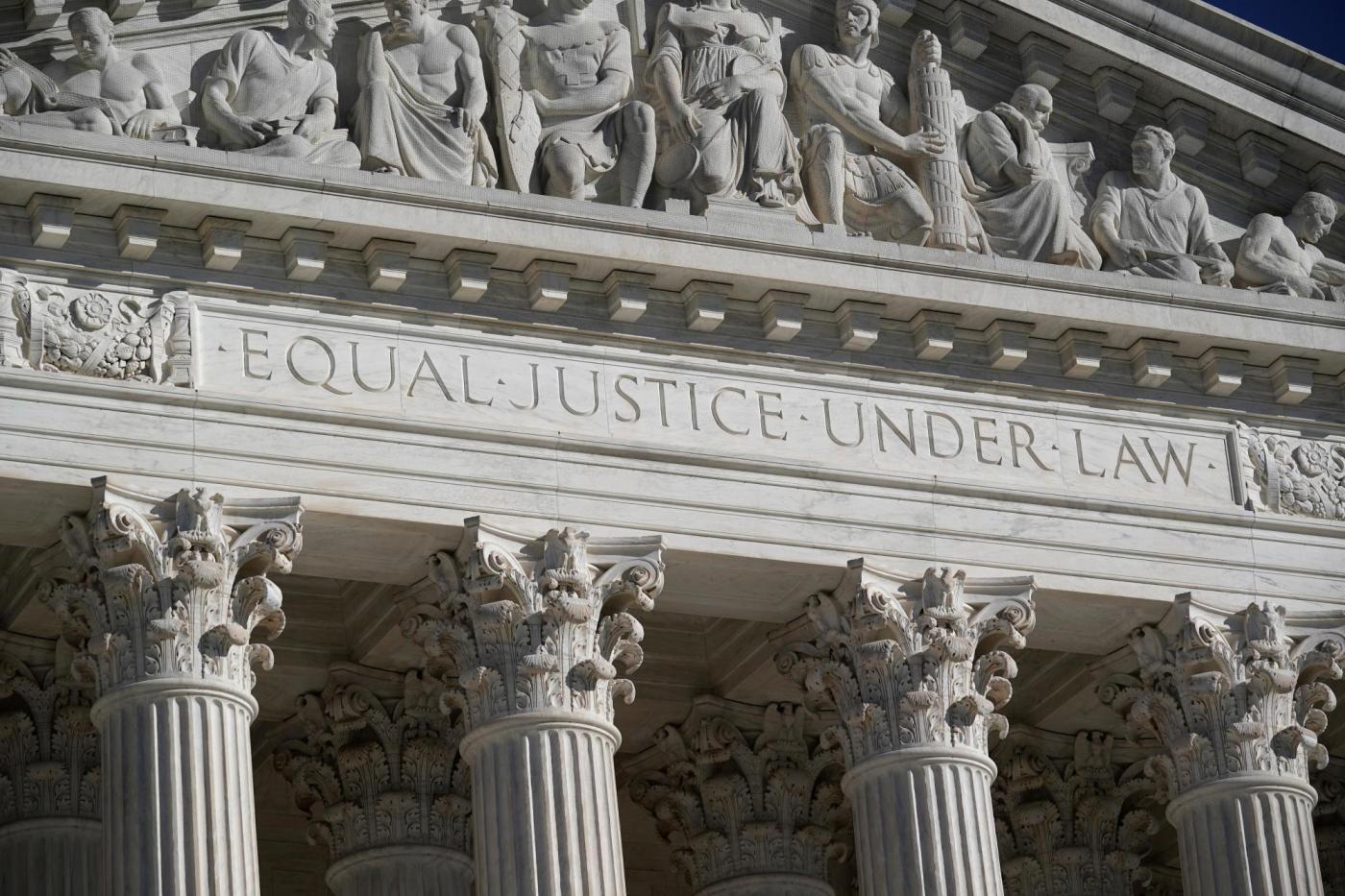
Supreme Court will decide whether states can count late-arriving mail ballots, a Trump target

posted in: All news | 0

By MARK SHERMAN

WASHINGTON (AP) — The Supreme Court on Monday agreed to decide whether states can continue to count late-arriving mail ballots, which have been a target of President Donald Trump.

Related Articles


Nvidia and other tech stocks help Wall Street recover much of last week’s losses


Air Force Academy’s accreditation under review after cuts to civilian faculty


Supreme Court rejects call to overturn its decision legalizing same-sex marriage nationwide


The latest US strikes on alleged drug boats kill 6 in the eastern Pacific


US flight cancellations expected to drag on even after the government shutdown ends

The justices took up an appeal from Mississippi after a panel of three judges nominated by the Republican president on the 5th U.S. Circuit Court of Appeals ruled last year that the state law allowing ballots that arrive shortly after Election Day to be counted violated federal law.

Mississippi is among 18 states and the District of Columbia that accept mailed ballots received after Election Day as long as the ballots are postmarked on or before that date, according to the National Conference of State Legislatures.

The list includes swing states such as Nevada and states such as Colorado, Oregon and Utah that rely heavily on mail voting.

An additional 14 states allow the counting of late-arriving ballots from some eligible voters, including overseas U.S. service members and their families, according to a filing from Democratic-led states that urged the justices to reverse the appellate ruling.

The case will be argued in the late winter or early spring. A final ruling almost certainly will come by late June, early enough to govern the counting of ballots in the 2026 midterm congressional elections.

Mississippi Attorney General Lynn Fitch, a Republican, told the Supreme Court that the appellate ruling “will have destabilizing nationwide ramifications” if left in place.

“The stakes are high: ballots cast by — but received after — election day can swing close races and change the course of the country,” Fitch wrote.

Trump has claimed that late-arriving ballots and drawn-out electoral counts undermine confidence in elections. In March, the Republican president signed an executive order on elections that aims to require votes to be “cast and received” by Election Day. The order has been challenged in court.

The Republican National Committee and the Libertarian Party of Mississippi led the challenge to the Mississippi law. A federal judge dismissed a similar challenge to Nevada’s law, but the decision has been appealed.

The Supreme Court is separately considering reviving a lawsuit filed by Rep. Mike Bost, R-Ill., and backed by the Trump administration that challenges Illinois’ ballot receipt law. The issue is whether the congressman has the legal right to sue.

Some Republican-led states, including Kansas and North Dakota, have taken steps to stop counting late-arriving ballots. In Ohio, Republican lawmakers are advancing legislation that would require ballots to be received by Election Day, closing the window for mailed ballots. The measure has passed the state Senate.

In the Mississippi case, Judge Andrew Oldham wrote for the appellate panel that Congress established a “singular” Election Day for members of Congress and presidential electors, “by which ballots must be both cast by voters and received by state officials.” Judges James Ho and Stuart Kyle Duncan joined Oldham’s opinion invalidating the Mississippi law.

The ruling reversed a decision by U.S. District Judge Louis Guirola Jr., who had held that there was no conflict between the state and federal laws. “All that occurs after election day is the delivery and counting of ballots cast on or before election day,” wrote Guirola, who was nominated by President George W. Bush, a Republican.