Veterans Day: What’s open, what’s closed

posted in: All news | 0

Associated Press

WASHINGTON (AP) — The Veterans Day holiday began more than a century ago, albeit under a different name, as a celebration of the end of World War I. Over time its name and purpose evolved into a day of recognition for U.S. veterans of all wars as well as those currently serving in uniform.

Related Articles


FDA will remove long-standing warning from hormone-based menopause drugs, citing benefits for women


Supreme Court will decide whether states can count late-arriving mail ballots, a Trump target


Nvidia pulls Wall Street higher while many other stocks struggle


Air Force Academy’s accreditation under review after cuts to civilian faculty


Supreme Court rejects call to overturn its decision legalizing same-sex marriage nationwide

It’s also day off for U.S. postal workers and federal government employees, though most of them are not reporting to work right now during the longest government shutdown in U.S. history.

Many Veterans Day celebrations have been canceled due to the government shutdown.

Veterans Day began as Armistice Day to celebrate the agreement between the Allied nations and Germany to cease all fighting during World War I that took effect at 11 a.m. on Nov. 11, 1918.

The U.S. marked its first Armistice Day under President Woodrow Wilson in 1919. Congress made Nov. 11 an official federal holiday in 1938.

Here’s what is open and closed this year on Veterans Day:

GOVERNMENT

Government offices, post offices and courts are closed. Many public and private schools operate as usual. However, depending on location, some choose to close for the holiday.

BANKS AND MARKETS

U.S. stock markets are open for trading as usual, however the bond market and most banks are closed.

RETAILERS

The vast majority of major retailers — including Walmart, Home Depot and Target — will be open, with many trying to lure customers with promotional sales. Hours may vary by location.

TRAVEL

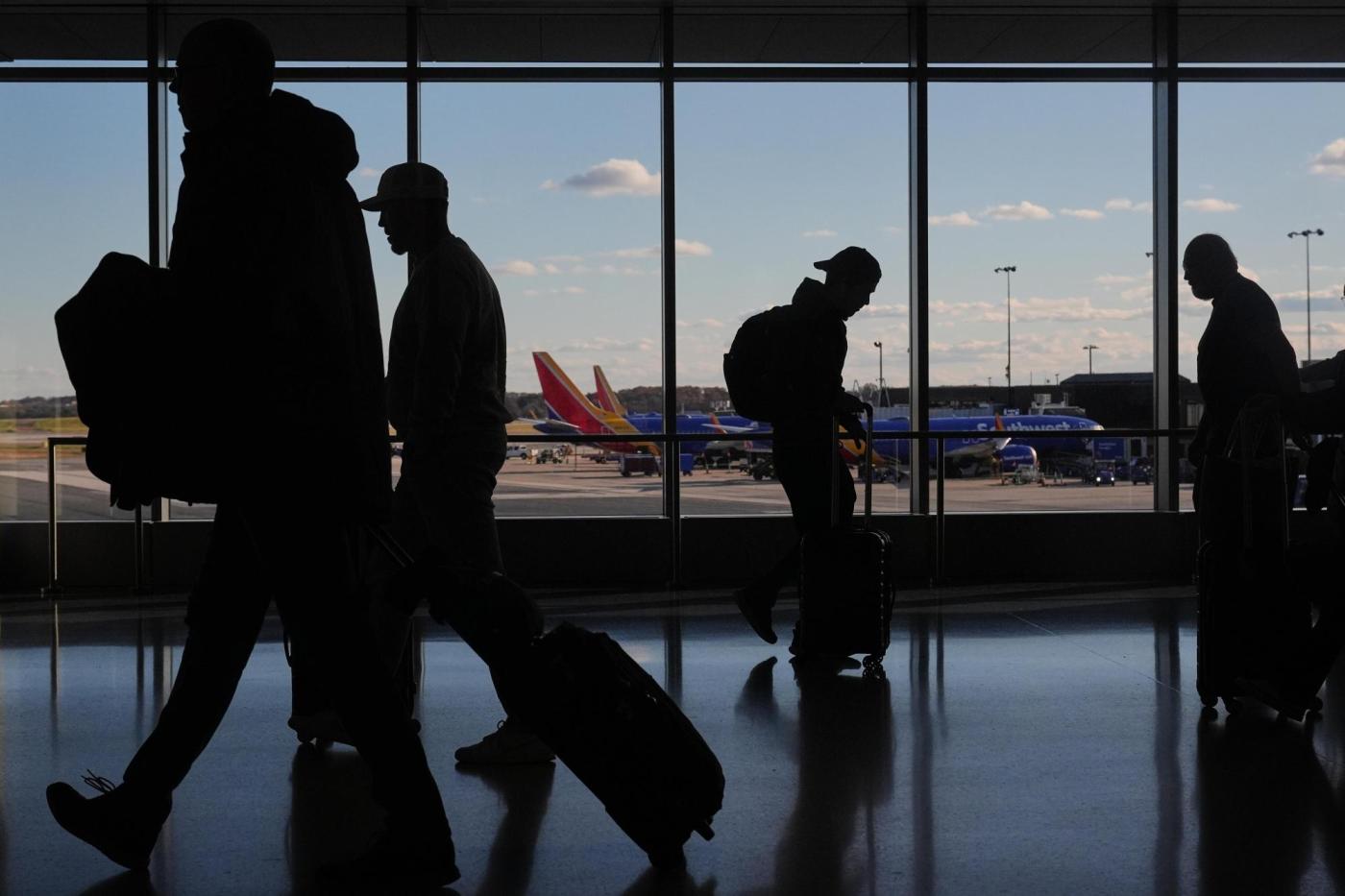
Veterans Day is not considered a major travel day, however this year air travelers could find their plans upended by the federal government shutdown.

U.S. airlines canceled more than 1,500 flights Saturday and more than 2,900 Sunday to comply with an FAA order to reduce traffic as some air traffic controllers, who have gone unpaid for nearly a month due to the shutdown, have stopped showing up for work.

As of early Monday, airlines had already canceled nearly 1,600 flights for Monday and nearly 1,000 for Tuesday.

The Senate took a first step toward ending the shutdown Sunday, but final passage could still be several days away and experts have said it will take time for flight schedules to return to normal even after the government reopens.

Women’s basketball: Gophers lose Taylor Woodson to second knee injury

posted in: All news | 0

For the second straight season, the Gophers have lost Taylor Woodson before their season really got started.

A 6-foot, junior forward from Minnetonka, Woodson suffered a season-ending injury to her right knee during a 99-36 victory over Manhattan last Friday. In two games off the bench for the Gophers, Woodson averaged a point and two rebounds in 22 combined minutes this season.

Last season, her first back in Minnesota after transferring from Michigan, Woodson blew out her left knee after playing 12 games and spent the next several months rehabbing to be ready for this season.

“This is one of the hardest parts of collegiate athletics, to see someone who has worked so hard now face another significant injury, this time to her other knee,” coach Dawn Plitzuweit said in a statement.

Woodson is the second lost Gophers (2-0) player this fall. On Oct. 22, 6-1 forward, one of the team’s best players since her freshman year, announced she was leaving the program and would use her final year of eligibility at a different school.

“Taylor not only attacked her rehab with incredible consistency and effort, but she grew her knowledge of the game, her voice as a leader, and she worked diligently to grow her ability to become a consistent shooter throughout her recovery,” Plitzuweit said.

Losing Woodson isn’t as devastating for the team as losing 6-2 power forward Mallory Heyer, a three-year starter who played a major role in the team’s WBIT championship last spring, but it is a loss of additional size off the bench for a team otherwise dominated by guards.

Senior Sophie Hart, an efficient post who has found a large role since transferring from N.C. State, might be asked to do even more — although the Gophers have solid hopes for graduate transfer Finau Tonga, who had 14 points and seven rebounds in just 11 minutes in a season-opening victory over North Dakota.

Plitzuweit said the Gophers will petition the NCAA for a medical waiver that would allow Woodson to retain three years of eligibility.

“I have no doubt that she will come back from this injury as an even more developed player and person and that all of her teammates, coaches and our medical staff will be there to support her every step of the way,” the coach said.

Minnesota, which received 15 points in this week’s Associated Top 25 poll, plays Tuesday against Marquette at Williams Arena. Tipoff is set for 7 p.m.


Speaker Johnson says House will return to Washington for voting on shutdown deal

posted in: All news | 0

By MARY CLARE JALONICK and LISA MASCARO, Associated Press

WASHINGTON (AP) — Speaker Mike Johnson said Monday that House lawmakers should start returning to Washington “right now” after a small group of Senate Democrats broke a 40-day stalemate late Sunday evening and voted with Republicans to move forward with legislation that would end the government shutdown.

Related Articles


Supreme Court rejects call to overturn its decision legalizing same-sex marriage nationwide


Treasury Secretary Scott Bessent says Trump’s $2,000 ‘dividend’ may come via tax cuts


What’s in the legislation to end the federal government shutdown


Trump is hosting Syria’s al-Sharaa for a first-of-its-kind meeting at the White House


U.S. officials in Israel to press truce forward as first phase of Israel-Hamas ceasefire winds down

It is unclear when the Senate will hold final votes on the legislation. But Johnson said the “nightmare is finally coming to an end” after the Senate voted 60-40 to consider a compromise bill to fund the government.

“We have to do this as quickly as possible,” Johnson said at a news conference Monday morning. He has kept the House out of session since mid-September, when the House passed a bill to continue government funding.

After weeks of negotiations, the moderate Senate Democrats agreed to reopen the government without a guaranteed extension of health care subsidies, angering many in their caucus who have demanded for more than six weeks that Republicans negotiate with them on the Affordable Care Act tax credits that expire Jan. 1. Senate Majority Leader John Thune, R-S.D., promised a mid-December vote on the subsidies, but there was no guarantee of success.

Senate Democratic leader Chuck Schumer of New York voted against moving ahead with the package, along with all but eight of his Democratic colleagues.

“We will not give up the fight,” Schumer said, adding that Democrats have now “sounded the alarm” on health care.

An end to the shutdown could still be days away if any senators object and drag out the process. Thune said Sunday evening that he was still working out concerns within his Republican conference about individual provisions in the underlying spending bills.

One of those Republicans, Kentucky Sen. Rand Paul, had threatened to object to a provision championed by his home state colleague, Sen. Mitch McConnell, to prevent the sale of some hemp-based products.

“We’ll revisit that tomorrow after we have more clarity on where things stand,” Thune told reporters after the vote on Sunday night.

President Donald Trump has not said whether he will sign it, but told reporters at the White House Sunday evening that it “looks like we’re getting close to the shutdown ending.”

Five Democrats switch votes

A group of three former governors — New Hampshire Sen. Jeanne Shaheen, New Hampshire Sen. Maggie Hassan and Independent Sen. Angus King of Maine — broke the six-week stalemate on Sunday when they agreed to vote to advance three bipartisan annual spending bills and extend the rest of government funding until late January in exchange for the mid-December vote on extending the health care tax credits.

The agreement also includes a reversal of the mass firings of federal workers by the Trump administration since the shutdown began on Oct. 1 and would ensure that federal workers receive back pay.

Senate Majority Leader John Thune quickly endorsed the deal and called an immediate vote to begin the process of approving it as the shutdown continued to disrupt flights nationwide, threaten food assistance for millions of Americans and leave federal workers without pay.

“The time to act is now,” Thune said.

In addition to Shaheen, King and Hassan, Democratic Sen. Tim Kaine of Virginia, home to tens of thousands of federal workers, also voted in favor of moving forward on the agreement. Illinois Sen. Dick Durbin, the No. 2 Democrat, Pennsylvania Sen. John Fetterman and Nevada Sens. Catherine Cortez Masto and Jacky Rosen also voted yes.

The moderates had expected a larger number of Democrats to vote with them as 10-12 Democratic senators had been part of the negotiations. But in the end, only five switched their votes — the exact number that Republicans needed. King, Cortez Masto and Fetterman had already been voting to open the government since Oct. 1.

A bipartisan agreement

Democrats had voted 14 times not to reopen the government as they demanded the extension of tax credits that make coverage more affordable under the Affordable Care Act. Republicans said they would not negotiate on health care, but GOP leaders have been quietly working with the group of moderates as the contours of an agreement began to emerge.

The agreement includes bipartisan bills worked out by the Senate Appropriations Committee to fund parts of government — food aid, veterans programs and the legislative branch, among other things. All other funding would be extended until the end of January, giving lawmakers more than two months to finish additional spending bills.

The deal would reinstate federal workers who had received reduction in force, or layoff, notices and reimburse states that spent their own funds to keep federal programs running during the shutdown. It would also protect against future reductions in force through January and guarantee federal workers would be paid once the shutdown is over.

Democrats call the vote a “mistake”

Schumer, who received blowback from his party in March when he voted to keep the government open, said he could not “in good faith” support it after meeting with his caucus for more than two hours on Sunday afternoon to discuss the proposal.

Independent Sen. Bernie Sanders of Vermont, who caucuses with the Democrats, said giving up the fight was a “horrific mistake.” Sen. Chris Murphy, D-Conn., agreed, saying that voters who overwhelmingly supported Democrats in last week’s elections were urging them to “hold firm.”

House Democrats swiftly criticized the Senate.

Texas Rep. Greg Casar, the chairman of the Congressional Progressive Caucus, said a deal that doesn’t reduce health care costs is a “betrayal” of millions of Americans who are counting on Democrats to fight.

“Accepting nothing but a pinky promise from Republicans isn’t a compromise — it’s capitulation,” Casar said in a post on X. “Millions of families would pay the price.”

Rep. Angie Craig of Minnesota posted that “if people believe this is a ‘deal,’ I have a bridge to sell you.”

House Democratic leader Hakeem Jeffries blamed Republicans and said Democrats will continue to fight.

“Donald Trump and the Republican Party own the toxic mess they have created in our country and the American people know it,” Jeffries said.

Health care debate ahead

It’s unclear whether the two parties would be able to find any common ground on the health care subsidies before a promised December vote in the Senate. House Speaker Mike Johnson, R-La., has said he will not commit to bring it up in his chamber.

On Monday, Johnson said House Republicans have always been open to voting to reform what he called the “unaffordable care act” but again did not say if they would vote on the subsidies.

Some Republicans have said they are open to extending the COVID-19-era tax credits as premiums could skyrocket for millions of people, but they also want new limits on who can receive the subsidies and argue that the tax dollars for the plans should be routed through individuals.

Other Republicans, including Trump, have used the debate to renew their yearslong criticism of the law and called for it to be scrapped or overhauled.

Shutdown effects worsen

Meanwhile, the consequences of the shutdown have been compounding. U.S. airlines canceled more than 2,000 flights on Sunday for the first time since the shutdown began, and there were more than 7,000 flight delays, according to FlightAware, a website that tracks air travel disruptions.

Treasury Secretary Sean Duffy said on CNN’s “State of the Union” that air travel ahead of the Thanksgiving holiday will be “reduced to a trickle” if the government doesn’t reopen.

At the same time, food aid was delayed for tens of millions of people as Supplemental Nutrition Assistance Program benefits were caught up in legal battles related to the shutdown.

And in Washington, home to tens of thousands of federal workers who have gone unpaid, the Capital Area Food Bank said it is providing 8 million more meals ahead of the holidays than it had prepared for this budget year — a nearly 20% increase.

Associated Press writers Stephen Groves and Kevin Freking contributed to this report.

These 8 Democrats voted with Republicans on the government shutdown deal. Here’s how they explain it

posted in: All news | 0

By STEPHEN GROVES, Associated Press

WASHINGTON (AP) — The Democratic senators — eight in total — faced almost instant blowback from members of their own party as they voted to allow the Senate to move forward on compromise legislation that would reopen the government.

Related Articles


Supreme Court rejects call to overturn its decision legalizing same-sex marriage nationwide


Treasury Secretary Scott Bessent says Trump’s $2,000 ‘dividend’ may come via tax cuts


What’s in the legislation to end the federal government shutdown


Trump is hosting Syria’s al-Sharaa for a first-of-its-kind meeting at the White House


U.S. officials in Israel to press truce forward as first phase of Israel-Hamas ceasefire winds down

Their decision Sunday night was labeled a “betrayal” and “pathetic” by some of the most prominent voices in the Democratic Party.

“To my mind, this was a very, very bad vote,” said Sen. Bernie Sanders, a Vermont independent who caucuses with Democrats.

The group of defectors consisted of several senators who are retiring next year, as well as a number of former governors. Republican House Speaker Mike Johnson of Louisiana praised them Monday morning, saying they “decided to put principle over their personal politics.”

The group of moderate Democrats surely knew the criticism that was coming when they broke with the rest of their party on the 40th day of the government shutdown. But after huddling for hours — often in the Senate basement — over the last week, each senator reached the same conclusion: It was time for the government shutdown to end.

Sen. Jeanne Shaheen of New Hampshire

Shaheen, a senior Democrat who will be retiring from the Senate, often took the lead in negotiating the compromise legislation to end the shutdown. She had made it a priority to extend subsidies for health plans offered under the Affordable Care Act, but she had also expressed reservations about voting to shut down the government.

In the end, she settled for a pledge from Senate Majority Leader John Thune of South Dakota to hold a vote in December on the health subsidies.

“This was the only deal on the table. It was our best chance to reopen the government and immediately begin negotiations to extend the ACA tax credits that tens of millions of Americans rely on to keep costs down,” she said at a news conference following the Sunday night vote.

Sen. Dick Durbin of Illinois

Durbin is another senator who will be retiring after a long Senate career. Durbin holds the No. 2 position in Democratic leadership and broke ranks with Senate Democratic Leader Chuck Schumer of New York after saying that the shutdown had caused too much pain for the American people.

In a statement before the vote, Durbin, who argued that Republicans are still to blame for the shutdown, said, “This bill is not perfect, but it takes important steps to reduce their shutdown’s hurt. Not only would it fully fund SNAP for the year ahead, but it would reverse the mass firings the Trump Administration ordered throughout the shutdown.”

Sen. Tim Kaine of Virginia

Kaine, a former Virginia governor, was one of the last Democrats to join the group willing to vote to advance to the bill. He said that, as late as Sunday evening, he was checking over the legislation with his staff. For him, the deciding factor was language in the funding bill that prevents President Donald Trump’s administration from conducting more mass layoffs — an issue that is particularly important for his state.

He called the agreement a “moratorium on mischief” and said he was only able to get the agreement as negotiations reached a crucial juncture.

“The kinds of just non-strategic mass firings and (reduction in force actions) that have traumatized federal employees since Inauguration Day, they can’t do them anymore,” Kaine said.

Sen. Maggie Hassan of New Hampshire

Hassan, a former governor, had been involved with negotiations from early on and emphasized that the threats to federal food aid had made the situation more urgent.

Hassan said she “heard from families about the deep pain that the government shutdown has caused, made worse by a president who illegally and repeatedly chose to cut off help for families who are just trying to buy groceries.”

“After weeks of bipartisan conversations,” she said Sunday, “I voted today to reopen the government so that we can get back to the work of helping Granite Staters.”

The government funding bill refills funds for the Supplemental Nutrition Assistance Program, as well as ensuring that states that spent their own funds to keep it running during the shutdown will be reimbursed.

Sen. Angus King of Maine

King is an independent who caucuses with the Democratic Party and is a former governor. He had been voting since the outset to reopen the government, yet he also played a key role in the negotiations, including often hosting senators for talks in his Capitol basement office.

He has consistently said that he is opposed to using a government shutdown as a negotiating tactic, yet he also wanted Congress to extend the health care subsidies. After Republicans rejected a proposal from Schumer to extend the ACA tax credits for one year, King said it showed that the shutdown was not working.

“The question was: Does the shutdown further the goal of achieving some needed support for the extension of the tax credits? Our judgment was that it would not produce that result,” King said.

Sen. Jacky Rosen of Nevada

Rosen has grown increasingly irate as the shutdown has worn on and Republicans refused to give in to Democrats’ demands on the ACA credits. As air travel was increasingly affected by the shutdown, the economy of her home state of Nevada, a political swing state, was also under threat.

In a statement, Rosen said that Trump and fellow Republicans “are weaponizing their power in alarming ways to inflict unimaginable pain and suffering on working people, like fully withholding SNAP benefits and gutting our tourism industry by grinding air travel to a halt.”

Sen. Catherine Cortez Masto of Nevada

Cortez Masto is another Democrat who has been voting to reopen the government. She also emphasized that the impact to travel had been particularly harmful to Nevada and that the impacts to food assistance programs provided a new sense of urgency. She said that lines at food banks were the longest she has seen since the coronavirus pandemic.

“The stories were horrific,” she said.

Sen. John Fetterman of Pennsylvania

Fetterman, who was elected in 2022, has also been voting to reopen the government, breaking with his party as he does on many other issues. He has criticized Democrats for using the shutdown to demand concessions on health care.

“I’m sorry to our military, SNAP recipients, gov workers, and Capitol Police who haven’t been paid in weeks,” he said on social media. “It should’ve never come to this. This was a failure.”

Follow the AP’s coverage of the federal government shutdown at https://apnews.com/hub/government-shutdown.