Skyway 5K on Saturday to lead runners through 3 miles of downtown St. Paul from 2nd floor

posted in: All news | 0

Imagine running 3.1 miles without ever touching the ground floor. St. Paul’s first-ever “Skyway 5K” on Saturday dares runners to traverse downtown St. Paul mostly from the second floor skyway system, moving between some of the city’s oldest commercial buildings without leaving them.

So far, at least 700 participants have signed up for the challenge, including St. Paul City Council President Rebecca Noecker and Council Member Saura Jost.

“The tag line is ‘Run where no one has run before (Literally. They don’t let people do this.),’” said Noecker on Wednesday, addressing the council. “This is all being planned by folks who just love downtown and want to bring vibrancy to the skyways.”

Unlike a traditional 5K, the climate-controlled race — which will be chip-timed with staggered heats throughout the morning — features stairs, sharp turns and changes in flooring. It’s still compliant with the Americans with Disabilities Act, as those who need to use an elevator will have access to one, and walkers and children in strollers are welcome.

As with any physical competition, there’s at least a modicum of danger along the course. How will runners share the road when there isn’t one? How many racers will suffer bruised knees on walls and skyway windows? If you abort the course or need a breather, where do you pull off?

“I’m very interested to see what it’s going to be like,” said Jost, a seasoned 10-mile and half-marathoner who plans to stick to her 7-year-old son’s running pace. “It’s going to be warmer running inside.”

It’s little secret that St. Paul’s downtown skyway system has taken its share of hits, even before the pandemic and remote work sent customers and then skyway vendors packing, and some long sections remain off-limits to the general public or have since closed entirely. The route map, for instance, avoids the shuttered Alliance Bank Center.

Still, downtown’s tilt toward residential living continues to draw skyway walkers, including a group of seniors who meet at U.S. Bank Center every Tuesday morning at 9 a.m. to explore the skyways together for camaraderie and exercise. A skyway run elevates the same concept to another level.

The Skyway 5K aims to “highlight the beauty and uniqueness of the St. Paul skyway system while giving runners an unforgettable experience to run through one of the things that makes Minnesota so ‘one of a kind,’” reads the marketing materials, which include offers of event t-shirts. Every runner will receive a branded winter beanie.

Sponsors and fundraising partners include Anderson Race Management, Summit Brewing Co., the District 17 CapitolRiver Council and the St. Paul Union Depot.

The event starts and ends at the Union Depot transit hub in Lowertown, with the first heat around 8 a.m. Admission is $39 to $52. More information is online at skyway5k.com.

Related Articles


St. Paul: Aldi confirms plans to open downtown store by summer


In downtown St. Paul, Aldi seeks permits to move into former Lunds & Byerlys


Maintenance barge on the Mississippi River is partially submerged


St. Paul: I-94 closure scrapped Saturday as workers struggled with bridge beam


Concert review: Eric Church stuns Grand Casino Arena with wall of sound

FedEx says it will return to customers any refunds it gets back from Trump’s illegal tariffs

posted in: All news | 0

By MAE ANDERSON, Associated Press

NEW YORK (AP) — Delivery company FedEx said in a statement on Thursday that it will return any tariff refund it might get to shippers and customers who paid them.

The statement came after FedEx filed suit in the U.S. Court of International Trade to request a refund on what it paid for tariffs set by President Donald Trump under the International Emergency Economic Powers Act. On Friday, the Supreme Court ruled that the IEEPA tariffs are illegal.

Related Articles


Burger King is testing AI headsets that will know if employees say ‘welcome’ or ‘thank you’


Stillwater planning commission advances 108-unit townhome development


Weber recalls 3.2 million wire-bristle grill brushes


Walmart to pay $100 million to settle FTC allegations over deceptive practices for delivery drivers


Gas-guzzler revival risks dead-end future for US automakers

More than 1,000 companies have filed suit in the U.S. Court of International Trade in efforts to recoup costs from the illegal tariffs, including large U.S. corporations like Costco and Revlon.

“If refunds are issued to FedEx, we will issue refunds to the shippers and consumers who originally bore those charges,” FedEx said in a statement on Thursday. “When that will happen and the exact process for requesting and issuing refunds will depend in part on future guidance from the government and the court.”

The Supreme Court ruling did not address implementation of any system by which the companies and individuals who paid those tariffs could be refunded.

Setting up a system for refunds will likely be a lengthy process. On Tuesday, the libertarian-leaning Liberty Justice Center, which represented some of the original plaintiffs that were part of the Supreme Court decision, said it, along with co-counsel Neal Katyal, filed coordinated motions in the U.S. Court of Appeals for the Federal Circuit as well as the U.S. Court of International trade, to help set in motion a process for refunds. A response from the government is due Friday.

“We are committed to transparency and will communicate clearly as additional direction becomes available from the U.S. government and the court,” FedEx’s statement said.

Soaring cost of food and other staples squeezes Iranians as threat of US attack looms

posted in: All news | 0

By NASSER KARIMI and MEHDI FATTAHI, Associated Press

TEHRAN, Iran (AP) — Every day, Iranians go to stores and find prices rising. Some post photos on social media of the shrinking contents of their shopping carts as they struggle to buy enough basic staples for their families. The mounting cost of living is an extra weight bearing down as Iranians prepare for a possible war with the U.S. and wrestle with the aftermath of protests that swept the country last month.

“Everybody is under pressure: merchants, civil servants, laborers,” said Ebrahim Momeni, a 52-year-old retired civil servant. “The weaker class of people is being crushed.”

Iran’s economy has struggled for years because of international sanctions and mismanagement.

It experienced some relief under a 2015 nuclear deal that lifted many sanctions, until U.S. President Donald Trump unilaterally withdrew from the accord in 2018. Since coming back into office more than a year ago, Trump revived a “maximum pressure” campaign, expanding sanctions that target Iran’s financial sector and energy exports. On Wednesday, his administration imposed new sanctions on 30 people and companies accused of enabling Iran’s production of ballistic missiles and drones, and illicit oil sales.

The pressure has accelerated the devaluation of Iran’s currency, the rial. In 2015, when the nuclear deal was signed, the rial traded at about 32,000 to the dollar. In late December, it was at 1.3 million to the dollar. On Wednesday, it had reached a new low at 1.65 million rials to the dollar — worsened by fears of a U.S. attack.

Women walk past a mural at a girls school at Enqelab-e-Eslami, or Islamic Revolution Street in downtown Tehran, Iran, Wednesday, Feb. 25, 2026. (AP Photo/Vahid Salemi)

Lower classes desperate for relief as prices jump

Inflation has surpassed 46% compared with January of last year. Economists warn that the rial’s accelerating decline risks feeding a vicious cycle of higher prices and reduced purchasing power. They expect double-digit inflation to plague Iran’s economy — which also suffers from high unemployment among younger people — for years to come.

People walk on a sidewalk at Enqelab-e-Eslami, or Islamic Revolution, square in downtown Tehran, Iran, Wednesday, Feb. 25, 2026. (AP Photo/Vahid Salemi)

The plunging value of the rial was one trigger for protests that began in late December in Tehran’s main bazaar and then spiraled nationwide.

Prices for everyday items, from groceries to toiletries, are soaring.

Related Articles


FIFA’s Infantino has ‘complete confidence’ in Mexico to host World Cup games despite cartel violence


Mexico’s Diving World Cup canceled after violence surge in Jalisco


EU expands funds for abortion access in response to a citizens’ campaign


Iran would be outgunned in any war with the US but could still inflict considerable pain


UN World Food Program head Cindy McCain says she will step down for health reasons

Momeni said he makes about 700 million rials (about $540) a month. Just in the past month, a kilo (2.2 pounds) of red meat increased from 13 million rials ($10) to 22 million rials ($17). In the same period, the price of a liter of milk (a quarter of a gallon) doubled from 520,000 rials to 1.1 million rials, and a box of pasta rose from 340,000 rials to 570,000 rials.

“Those with lower incomes and fixed salaries are suffering because of the price hikes,” said Farhad Panahirad, a 44-year-old taxi driver. Together, he and his wife make about 600 million rials (about $460) a month, he said.

Several people in the markets on Wednesday explained how they try to deal with rising financial pressures — they check social media every day to see news about the latest prices, or go shopping at night, when some produce is marked down to half price to get rid of inventory before it spoils.

Fearing the U.S. could launch strikes at any time, Iranians are also scrambling to purchase emergency supplies. That includes flashlights, small gas ovens, and tape for securing windows against explosions, said the owner of a tool shop in central Iran, who spoke on condition of anonymity for fear of retaliation.

Some try to purchase bulk amounts of beans, bread, rice and canned food despite the high prices. “I am not happy to buy this much stuff, but my wife said we had to be prepared for uncertainty in the coming days,” said Saeed Ebrahimi, 43, an electrical technician and father of two.

Even items such as washing machines, vacuum cleaners, and refrigerators have doubled in price, according to Iranian media.

Women walk past an Islamic-themed painting on a wall at Enqelab-e-Eslami, or Islamic Revolution, street in downtown Tehran, Iran, Wednesday, Feb. 25, 2026. (AP Photo/Vahid Salemi)

War fears hang over the economy

Tehran-based economist Farbod Molavi wrote in the independent Dona-e-Eghtesad newspaper that prices are higher because of uncertainty in the market and the rising costs of raw materials. Iran is suffering from both a recession and high unemployment, he added.

Unemployment was officially around 7.8% in October, up from 7.2% for the same period in 2024, and runs as high as 20% among young people. About 24 million Iranians are between 15 and 34 years old, according to official statistics.

Vehicles drive past the Saint Sarkis church and a painting of the late Iranian revolutionary founder Ayatollah Khomeini in downtown Tehran, Iran, Wednesday, Feb. 25, 2026. (AP Photo/Vahid Salemi)

Acknowledging the suffering, the government in January began distributing payments of 10 million rials a month each to some 70 million people, about 75% of the population, to spend on food. It has promised to increase the payments if prices go higher.

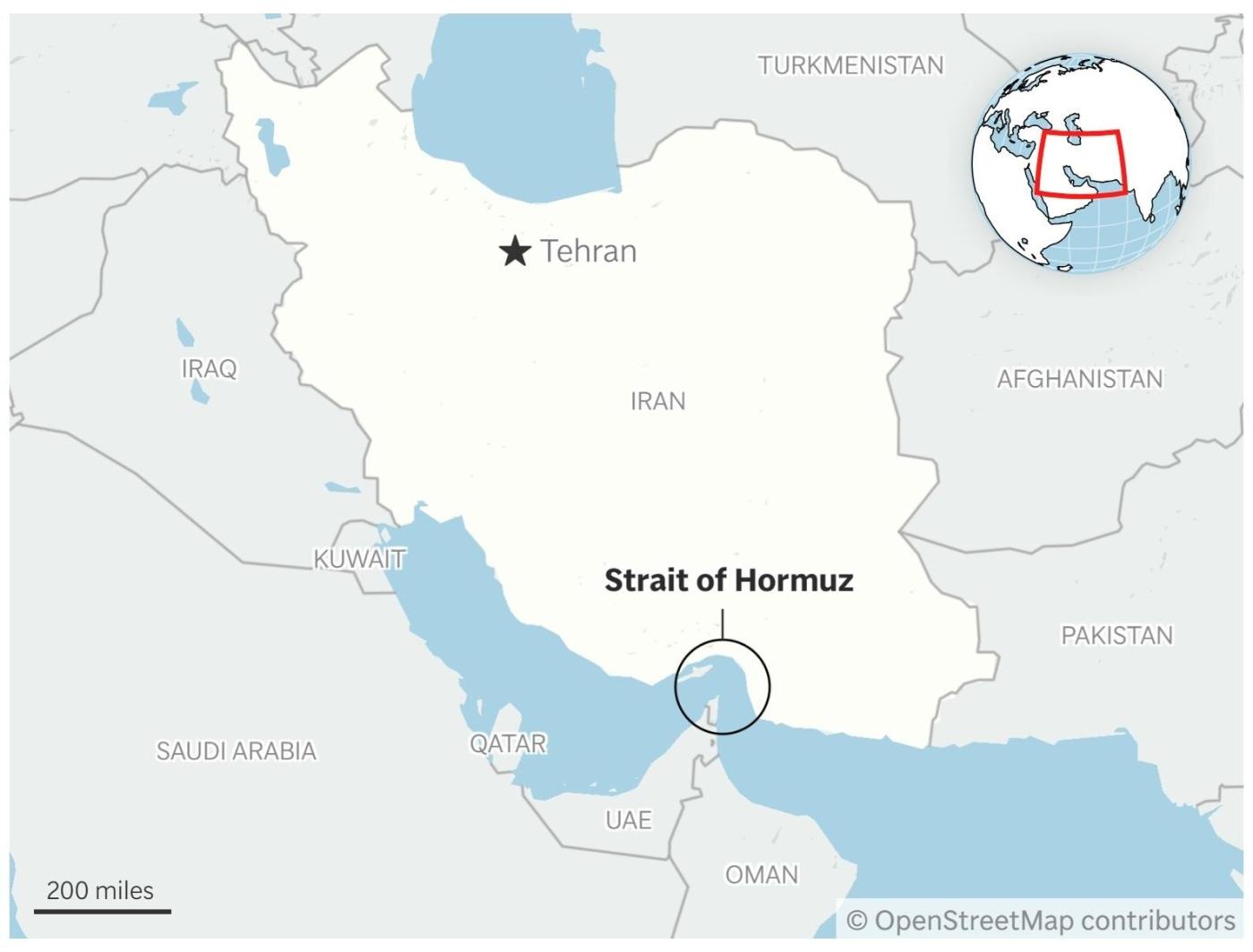
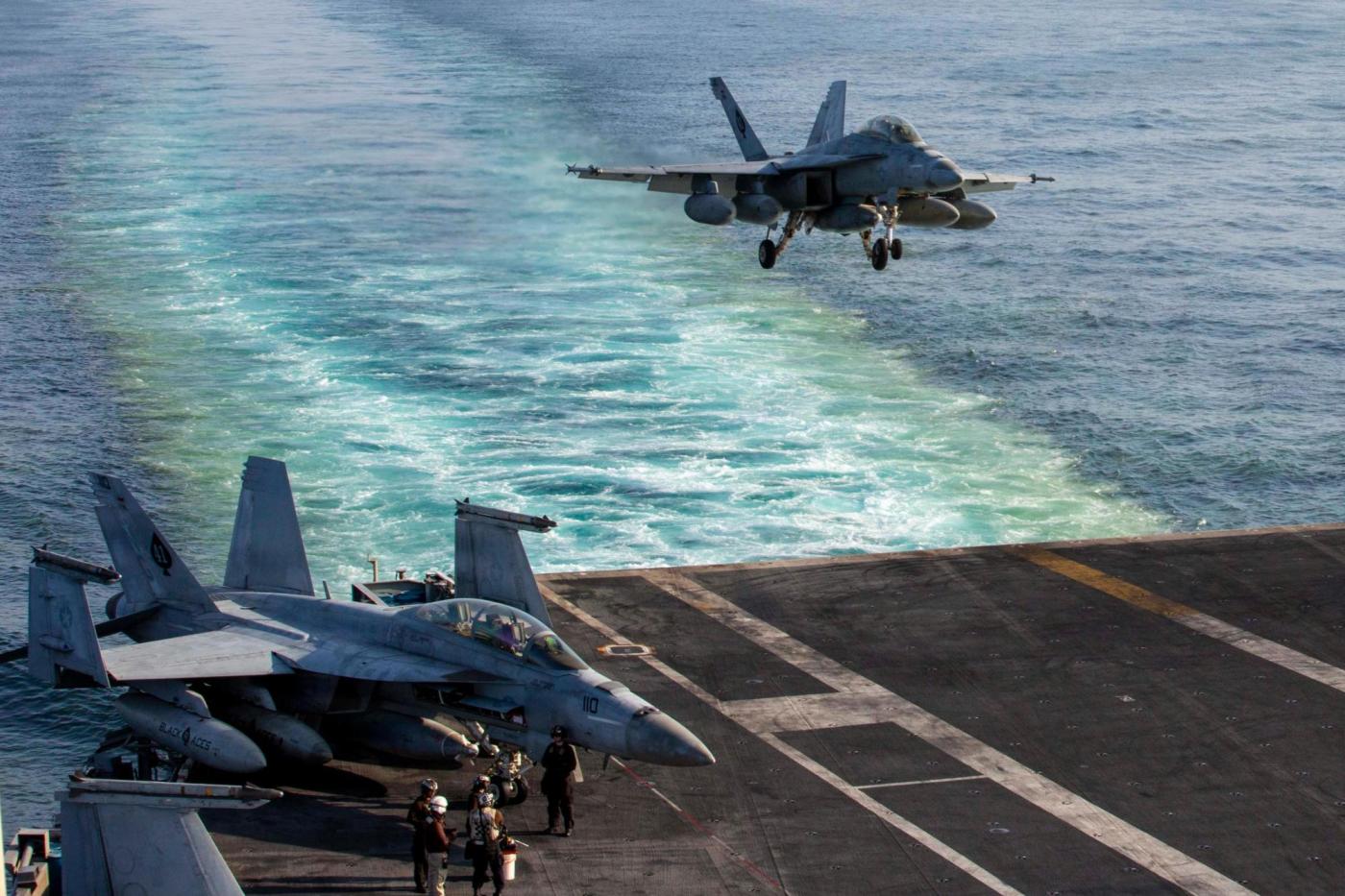
But the strain appears likely to continue. Trump has threatened strikes on Iran if it doesn’t agree to a new accord curtailing its nuclear program. He has massed the largest buildup of warships and aircraft in the region in decades. The two sides have held two rounds of negotiations in recent weeks and a third in Geneva on Thursday.

Panahirad, the taxi driver, said he is pessimistic the negotiations will bring any relief for those struggling to buy food. “(Trump) is bullying them, to some extent. After all, he is a superpower and says what he wishes must be done,” he said,

“Wherever you go now people are talking about war. If you go to a bakery to buy bread you see people talking about war,” said Momeni. “This state of limbo is worse than war.”

Here’s how the Vikings can create more than $40 million in cap space

posted in: All news | 0

INDIANAPOLIS — After spending more money than any team in the NFL last offseason, the Vikings find themselves in a pinch heading into this offseason, more than $40 million over the salary cap with free agency starting March 11.

Only the Dallas Cowboys currently have less cap space than the Vikings.

That will be the first order of business for Rob Brzezinski as the acting general manager of the Vikings. Not that he seems too concerned; there aren’t many people better when it comes to manipulating the cap.

“Our goal is going to be to keep our core in place,” Brzezinski told reporters this week at the NFL Combine in Indianapolis. “That’s going to involve making some difficult decisions.”

Although the Vikings must confront the reality cutting some players, they also have some other levers they can pull to free up cap space, such as restructuring contracts or negotiating extensions with specific players to lower their cap hits.

Some candidates for restructuring include receiver Justin Jefferson, tackle Christian Darrisaw, edge rusher Andrew Van Ginkel and safety Byron Murphy Jr. Candidates for extensions include tackle Brian O’Neill, rush end Jonathan Greenard and linebacker Blake Cashman.

It’s likely the Vikings use both of those options. That alone won’t be enough to get them out of the red and into the black, however, so they will also be forced to say a number of hard goodbyes. Free agency officially begins at 3 p.m. CST on March 11. The draft is set for April 23-25.

Here are some players that could be in danger of being released.

Aaron Jones

Age: 31

Position: Running Back

Analysis: There’s virtually no chance that Jones plays out his current contract given the fact that he carries a $14.5 million cap hit in 2026. The Vikings love everything Jones brings on and off the field; they simply can’t afford to commit that much to him. The decision to release Jones would be create $7.7 million in cap space, enough for the Vikings to stomach the resulting $6.8 million in dead cap space.

Minnesota Vikings tight end T.J. Hockenson celebrates a 31-0 win against the Washington Commanders following an NFL football game Sunday, Dec. 7, 2025 in Minneapolis. (AP Photo/Stacy Bengs)

T.J. Hockenson

Age: 28

Position: Tight End

Analysis: It’s fair to say Hockenson’s recent production hasn’t been enough to justify his $21.3 million cap hit in 2026. If he wants to stick around in his current role, he could try to restructure his contract and agree to take a pay cut. That’s only an option if the Vikings want to keep Hockenson. Simply releasing him would create roughly $8.9 million, but would come with a $12.4 million dead cap hit.

Ryan Kelly

Age: 32

Position: Center

Analysis: There’s a pretty good chance Kelly decides to retire after navigating a series of concussions. If he for some reason decides he wants to keep playing, the Vikings will almost certainly cut him to create roughly $8.3 million in cap space. There isn’t really a drawback in doing so, as his current contract only carries $3.4 million in dead cap.

Javon Hargrave

Age: 33

Position: Defensive Tackle

Analysis: It would be a shock if Hargrave isn’t playing elsewhere this fall given his $21.4 million cap hit in 2026. If the Vikings release him, they would create nearly $11 million in cap space. But If they can find a trade partner, the Vikings would create nearly $15 million in cap space. Will anybody will be willing to acquire Hargrave and his current contract? That remains to be seen. He could still be effective as a rotational pass rusher if he lands in the right situation.

Minnesota Vikings defensive tackle Jonathan Allen (93) lunges after a scrambling Chicago Bears quarterback Caleb Williams (18) in the fourth quarter of a NFL football game at U.S. Bank Stadium in Minneapolis on Sunday, Nov. 16, 2024. (John Autey / Pioneer Press)

Jonathan Allen

Age: 31

Position: Defensive Tackle

Analysis: This is much less likely because the cap savings generated by releasing Allen wouldn’t be nearly as substantial. If the Vikings opt for a youth movement in the trenches, however, they could free up roughly $6.5 million in cap space by releasing Allen. But given the current structure of his contract, they would take on roughly a $17.3 million dead cap hit. That’s probably a large enough number to deter the Vikings from going down this path.

Related Articles


Who’s calling the shots for the Vikings in the short term?


Do the Vikings still believe J.J. McCarthy can be a franchise quarterback?


Vikings receiver Rondale Moore dies at 25


Walters: We’ll learn soon how comfortable the Vikings are with J.J. McCarthy


Frederick: Hopefully, Kevin O’Connell learns from Mike Macdonald