Building more apartments near public transit can help address the housing crisis and climate change

posted in: All news | 0

By MICHAEL CASEY, Associated Press

BOSTON (AP) — After years of living on the street and crashing on friends’ couches, Quantavia Smith was given the keys to a studio apartment in Los Angeles that came with an important perk — easy access to public transit.

Related Articles


The body of a coal miner has been found in a flooded West Virginia mine, the governor says


Takeaways from the newly released Epstein documents


Judge to hear arguments challenging appointment of prosecutor who charged James Comey, Letitia James


Starbucks workers kick off 65-store US strike on company’s busy Red Cup Day


Today in History: November 13, Hundreds of men and boys killed in coal mine fire

The 38-year-old feels like she went from a life where “no one cares” to one where she has a safe place to begin rebuilding her life. And the metro station the apartment complex was literally built upon is a lifeline as she searches for work without a car.

“It is more a sense of relief, a sense of independence,” said Smith, who moved in July. She receives some government assistance and pays 30% of her income for rent — just $19 a month for an efficiency with a full-market value of $2,000.

“Having your own space, you feel like you can do anything.”

Metro areas from Los Angeles to Boston have taken the lead in tying new housing developments to their proximity to public transit, often teaming up with developers to streamline the permitting process and passing policies that promote developments that include a greater number of units.

City officials argue building housing near public transit helps energize neglected neighborhoods and provide affordable housing, while ensuring a steady stream of riders for transit systems and cutting greenhouse gas emissions by reducing the number of cars on the road.

“Transit-oriented development should be one of, if not the biggest solution that we’re looking at for housing development,” said Yonah Freemark, research director at the Urban Institute’s Land Use Lab, who has written extensively on the topic.

“It takes advantage of all of this money we’ve spent on transportation infrastructure. If you build the projects and don’t build anything around the areas near them, then it’s kind of like money thrown down the drain,” Freemark said.

Transit housing projects from DC to LA

The Santa Monica and Vermont Apartments where Smith lives is part of an ambitious plan by the Los Angeles County Metropolitan Transportation Authority to build 10,000 housing units near transit sites by 2031 — offering developers land discounts in exchange for affordable housing development and other community benefits.

A family arrives at a metro station next to the Santa Monica and Vermont Apartments in Los Angeles, Monday, Nov. 10, 2025. (AP Photo/Jae C. Hong)

In Washington D.C., the transit authority has completed eight projects since 2022 that provided nearly 1,500 apartments and a million square feet of office space. About half were in partnership with Amazon, which committed $3.6 billion in low-cost loans and grants for affordable housing projects in Washington, as well as Nashville, Tennessee, and the Puget Sound area in Washington state. Almost all are within a half-mile of public transit.

“Big cities face the greatest challenges when it comes to traffic congestion and high housing costs,” Freemark said. “Building new homes near transit helps address both problems by encouraging people to take transit while increasing housing supply.”

Among projects Boston has built, the Pok Oi Residents in Chinatown is a 10-minute walk to the subway and a half-dozen bus stops. That’s a draw for Bernie Hernandez, who moved his family there from a Connecticut suburb after his daughter got into a Boston university.

“The big difference is commuting. You don’t need a car,” said Hernandez, who said he can walk to the grocery story and pharmacy. His 17-year-old daughter takes the subway to school. Now, his car mostly sits idle, saving him money on gas and time spent in traffic.

“You get to go to different places very quickly. Everything is convenient,” Hernandez said.

States take aim at zoning regulations

States from Massachusetts to California are passing laws targeting restrictive zoning regulations that for decades prohibited building multifamily developments and contributed to housing shortages.

Last month, California Gov. Gavin Newsom signed a state law allowing taller apartment buildings on land owned by transit agencies and near bus, train and subway lines.

Land owner Ricky Cannizzo drives a backhoe through his property, which was approved to be developed into residential units and commercial space, Jan. 28, 2025, in Lexington, Mass. (AP Photo/Charles Krupa)

“Building more homes in our most sustainable locations is the key to tackling the affordability crisis and locking in California’s success for many years to come,” said State Sen. Scott Wiener, a Democrat who authored the bill.

California joins Colorado, which requires cities to allow an average of 40 housing units per acre within a quarter-mile of transit, and Utah, which mandates about 50 units per acre. In Washington, the governor signed a bill this year allowing taller housing developments in mixed-use commercial zones near transit.

“We want to ensure that there are mixed-income, walkable, vibrant homes all around those transit investments and that people have the option of using cars less to improve the environmental health of our communities,” said Democratic Rep. Julia Reed, who authored the Washington bill.

“It’s about giving people the opportunity to drive less and live more.”

Housing takes center stage in Massachusetts

Massachusetts Democratic Gov. Maura Healey has made housing a priority.

Among her most potent tools is a 2021 law that requires 177 towns or communities nearby to create zoning districts allowing multi-family housing. The state provided nearly $8 million to more than 150 communities to help create these zones, while threatening to cut funding for those that don’t. More than 6,000 housing units are in development as a result.

“You put housing nearby public transit” Healey said. “It’s great for people. They can literally get up, leave their home, walk to a commuter rail and get to work.”

Bernie Hernandez, who lives at the Pok Oi Residences, poses in his Chinatown neighborhood, Oct. 17, 2025, in Boston. (AP Photo/Charles Krupa)

Among the first to comply was Lexington, which has approved 10 projects, including a $115 million complex with 187 housing units and retail space.

Walking past earth-moving equipment and dump trucks at the construction site earlier this year, project manager Quinlan Locke said: “This is a landscape yard. It’s commercial. It’s meant for trucking.”

But, he added, in “two years from now, it’s going to be meant for people who live here, work here and play here. This is going to become someone’s home.”

Opposition to zoning changes

Some advocates argue the lofty goals of transit housing are falling short due to fierce local resistance and lack of funding and support at the federal and state levels.

Higher mortgage interest rates, more government red tape, rising construction costs and lack of investment at transit stations also have contributed to a troubling trend — nine times more housing units built far from public transit versus near it in the past two decades, according to a 2023 Urban Institute study.

In Massachusetts, 19 communities still haven’t created new zones. Some unsuccessfully sued the state to halt the law, while residents rejected new zones in others. Lexington eventually shrank its zone from 227 acres to 90 acres after residents complained.

“If we allow the state to come in and dictate how we zone, what else are they going to come in and dictate?” said Anthony Renzoni, a selectman from the town of Holden, which sued the state and is drawing up a new zoning map after residents rejected the first one.

New housing, a new life

In Los Angeles, the six-story complex where Smith lives in East Hollywood is home to 300 new residents since opening in February. It’s revitalizing the area around the metro site, with a Filipino grocery, medical clinic and farmers market opening early next year.

Half the 187 units are reserved for formerly homeless residents like Smith, who had been living in a rundown motel paid for with a voucher and before that on the street. She’s been assigned a case worker and is getting help with basic life skills, budgeting and finding work.

Equally important: Smith, who can’t afford a car, doesn’t need one.

“I’m very very fortunate to be somewhere where the transit takes me where I want to go,” she said. “Where I want to go is not that far.”
Israeli settlers torch a mosque and scrawl hateful messages after condemnation from military leaders

posted in: All news | 0

By AREF TUFAHA and JULIA FRANKEL, Associated Press

DEIR ISTIYA, West Bank (AP) — Israeli settlers torched and defaced a mosque in a Palestinian village in the central West Bank overnight, scribbling hateful messages in a show of defiance a day after some Israeli leaders condemned a recent attack by settlers against Palestinians.

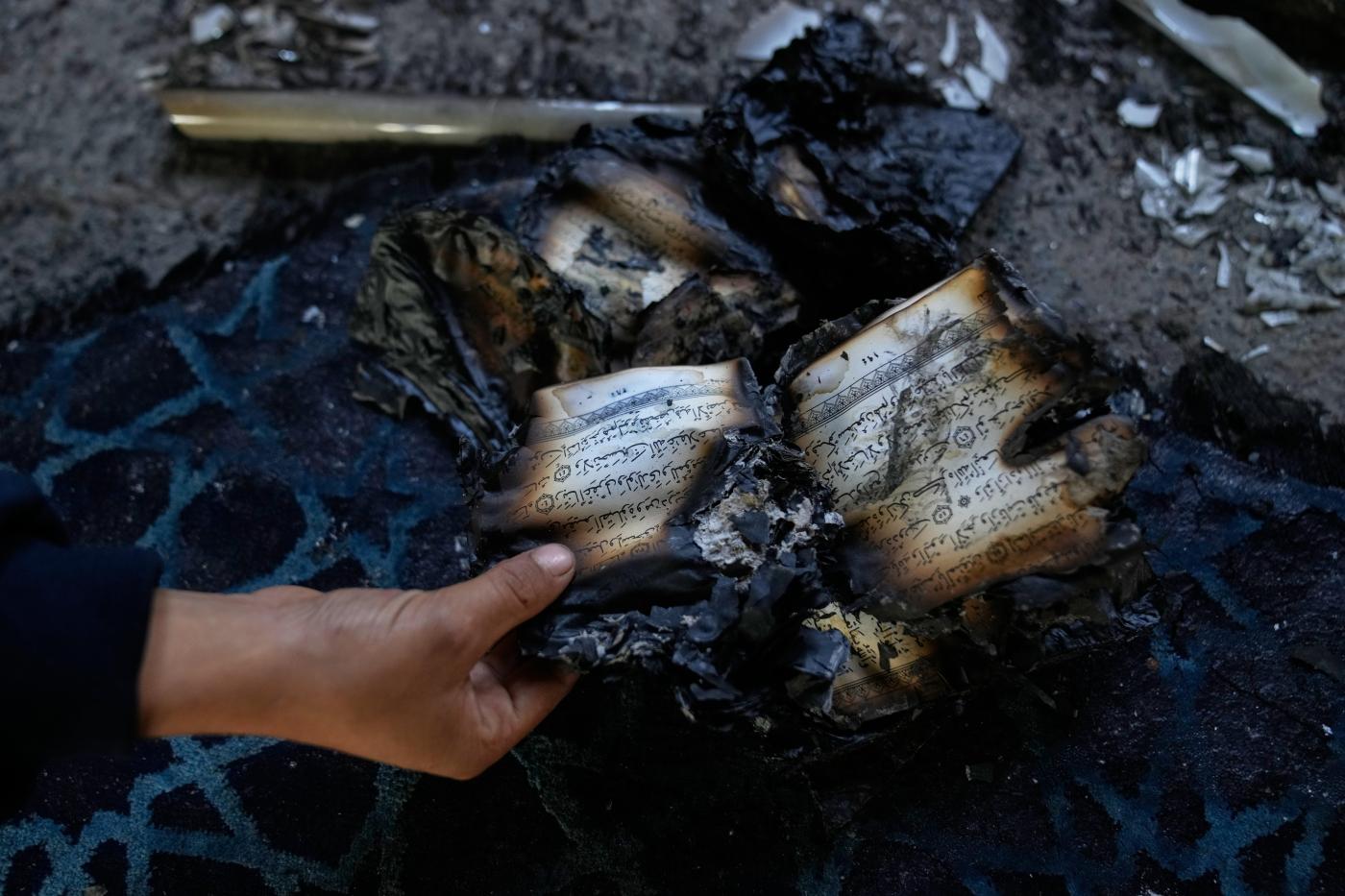
One wall and at least three copies of the Quran and some of the carpeting at the mosque in the Palestinian town of Deir Istiya had been torched when an AP reporter visited Thursday.

On one side of the mosque settlers had left graffitied messages like “we are not afraid,” “we will revenge again,” and “keep on condemning.” The Hebrew scrawl, difficult to make out, appeared to reference Maj. Gen Avi Bluth, the chief of the military’s Central Command who issued a rare denunciation of the violence Wednesday.

Soldiers from Israel’s military, which did not immediately respond to a request for comment, were present at the scene.

It was the latest in a string of attacks that have provoked expressions of concern from top officials, military leaders and the Trump administration.

Speaking at a press conference Wednesday, U.S. Secretary of State Marco Rubio said there was “some concern about events in the West Bank spilling over and creating an effect that could undermine what we’re doing in Gaza.”

Israeli officials have sought to cast settlers violence as the work of a few extremists. But Palestinians and rights groups say the violence is widespread and carried out by settlers across the territory, with impunity from Israel’s far-right government, lead by Prime Minister Benjamin Netanyahu. Netanyahu has not commented on the surge in violence.

Officials issue rare denunciations

The round of recent denunciations were in reaction to a particularly brazen attack Tuesday that saw dozens of masked Israeli settlers set fire to vehicles and other property in the Palestinian villages of Beit Lid and Deir Sharaf.

Related Articles


Today in History: November 13, Hundreds of men and boys killed in coal mine fire


More than 80 nonprofits receive $250M for global women’s health from Melinda French Gates


Sotheby’s says a diamond brooch lost by Napoleon as his forces fled Waterloo sells for $4.4 million


Zelenskyy seeks dismissal of justice and energy ministers in Ukrainian corruption probe


UK’s Starmer refuses to say whether he will urge Trump to drop his $1 billion BBC threat

The army said the settlers then fled to a nearby industrial zone and attacked soldiers responding to the violence, damaging a military vehicle. Four Israelis were arrested, and four Palestinians were wounded, authorities said.

President Isaac Herzog described the attacks as “shocking and serious.” Herzog’s position, while largely ceremonial, is meant to serve as a moral compass and unifying force for the country.

Herzog said the violence committed by a “handful” of perpetrators “crosses a red line,” adding in a social media post that “all state authorities must act decisively to eradicate the phenomenon.”

The Israeli army’s chief of staff, Eyal Zamir, echoed Herzog’s condemnations of the West Bank violence, saying the military “will not tolerate the phenomena of a minority of criminals who tarnish a law-abiding public.”

He said the army is committed to stopping violent acts committed by settlers, which he described as contrary to Israeli values and that “divert the attention of our forces from fulfilling their mission.”

On Wednesday, police said three of the suspects were released. The fourth suspect, a minor arrested on suspicion of arson and assault, will remain in custody for six more days, as ordered by a judge. Police said the actions of the three who were released are still under investigation “with the goal of bringing offenders to justice, regardless of their background.”

Not a new phenomenon

Settler violence has been steadily mounting for decades, and the mosque in Deir Istiya had previously come under attack by settlers.

Settlers vandalized the mosque in 2012, according to the U.S. State Department, and again in 2014, according a roundup of settler violence from the website of the Anti-Defamation League.

The violence had reached peak highs before the war in Gaza erupted two years ago, and since then it’s only gotten worse. October was the month with the highest-ever number of recorded settler attacks in the West Bank since the UN’s humanitarian office began keeping track in 2006, said the office.

Palestinians say the goal of the violence is to push them off their lands. The U.N.’s humanitarian office said 3,535 Palestinians have been displaced by settler violence or access restrictions since 2023, a major upswing from previous years.

Emboldened by Netanyahu’s right-wing government, settlers have expanded beyond the bounds of pre-existing settlements to establish new farming outposts, which they call “young settlements.”

The outposts — usually little more than a few sheds and a pen for livestock — now spill down settlement hilltops toward Palestinian villages, with some settlers gaining control of the villages’ agricultural land and water sources.

Palestinians and human rights workers accuse the Israeli army and police of failing to halt attacks by settlers. Israel’s government is dominated by far-right proponents of the settler movement including Finance Minister Bezalel Smotrich, who formulates settlement policy, and Cabinet minister Itamar Ben-Gvir, who oversees the nation’s police force.

About 94% of all investigation files opened by the Israeli Police into settler violence from 2005 to 2024 ended without indictment, according to monitoring by Israeli human rights group Yesh Din. Since 2005, just 3% of the investigation files opened into settler violence led to full or partial convictions.

Takeaways from the newly released Epstein documents

posted in: All news | 0

By JESSE BEDAYN and SAFIYAH RIDDLE, Associated Press

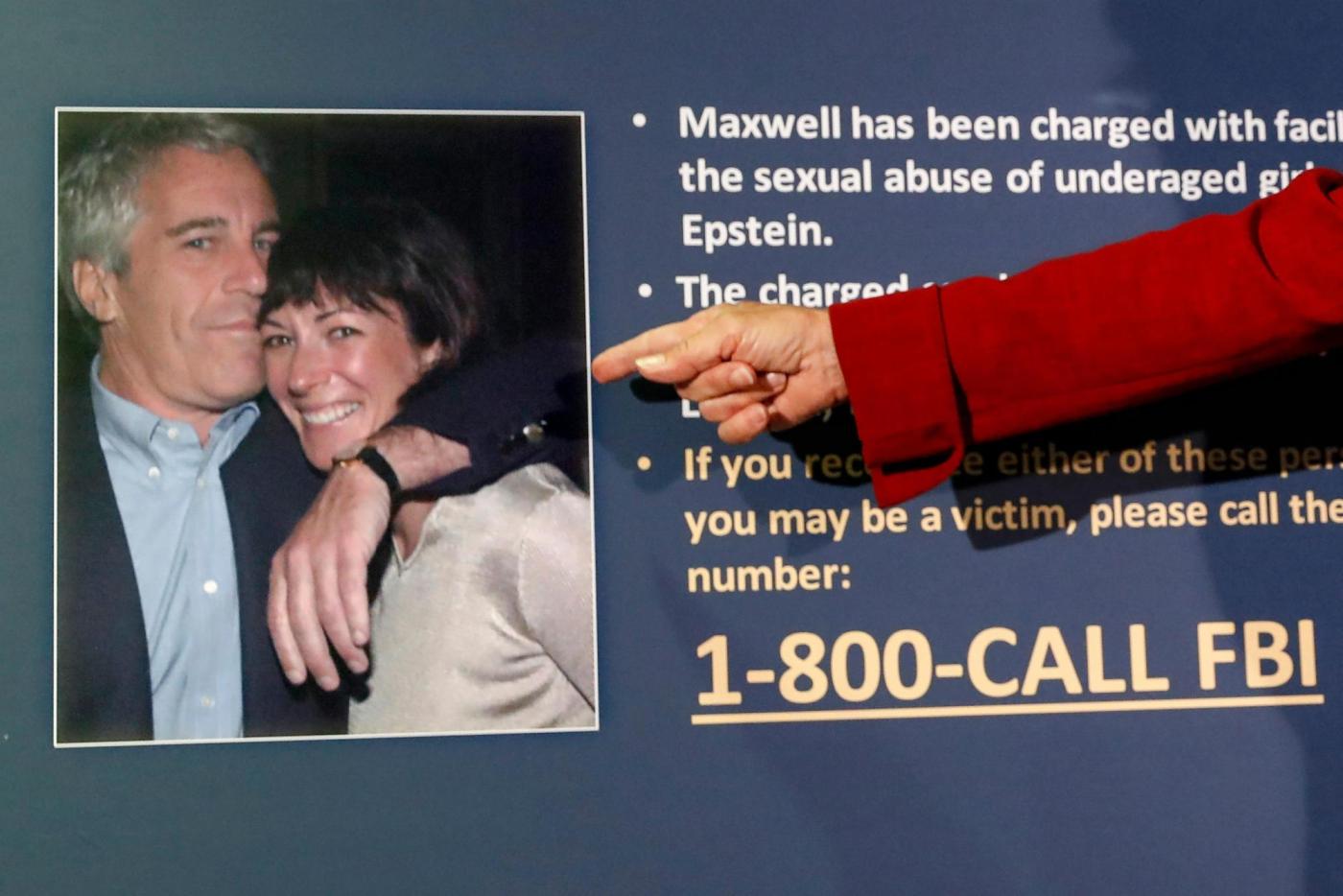
A House committee released 23,000 documents related to Jeffrey Epstein on Wednesday, many of them emails the convicted sex offender sent to his rich or influential friends, or to reporters, over many years.

Democrats on the House Oversight Committee initially released three emails where Epstein mentioned President Donald Trump. Republicans on the committee responded by disclosing the bigger trove of documents and accused the Democrats of cherry-picking a few messages out of context in an effort to make Trump look bad.

Epstein served about a year in jail after pleading guilty in 2008 to soliciting prostitution from someone under age 18 but then went on to renew relationships with many influential figures in business, academics and politics.

Epstein killed himself in jail in 2019, a month after his arrest on sex trafficking charges.

Here’s some takeaways from the documents released Wednesday.

Epstein said Trump ‘knew about the girls,’ but it’s unclear what he meant

Trump and Epstein were friends for years but at some point had a falling out, even before underage girls started to come forward to accuse Epstein of sexual abuse.

Related Articles


Today in History: November 13, Hundreds of men and boys killed in coal mine fire


President Trump signs government funding bill, ending shutdown after a record 43-day disruption for country


Tribes that restored buffalo are killing some to feed people because of the shutdown


The timeline for SNAP benefits remains uncertain, even as the government is set to reopen


US bishops officially ban gender-affirming care at Catholic hospitals

Journalists sometimes reached out to Epstein, perhaps hoping he might have dirt to spill on Trump. One of those writers was Michael Wolff, who has written extensively about Trump. In a 2019 email to Wolff, Epstein mentioned that one of his best-known accusers, Virginia Giuffre, had worked at Trump’s Mar-a-Lago club.

“She was the one who accused Prince Andrew,” Epstein wrote.

Giuffre, who died by suicide earlier this year, had said that Epstein’s longtime companion Ghislaine Maxwell recruited her from Mar-a-Lago to give sexualized massages to Epstein. And Trump had long claimed that he banned Epstein from coming to Mar-a-Lago.

Epstein said in an email to Wolff that Trump hadn’t asked him to resign from the club, because he hadn’t been a member.

“Of course he knew about the girls as he asked ghislaine to stop,” Epstein added.

In July, Trump said he had banned Epstein from Mar-a-Lago because his one-time friend was “taking people who worked for me,” including Giuffre.

Before her death, Giuffre said that she only met Trump once and that he was not among the people who abused her. She didn’t think Trump knew of Epstein’s misconduct with underage girls.

White House press secretary Karoline Leavitt said that Democrats had leaked select emails to “create a fake narrative to smear President Trump.”

Mentions of former Prince Andrew

In lawsuits and interviews, Giuffre accused Epstein and Maxwell of pressuring her into sexual encounters with Britain’s former Prince Andrew, starting when she was 17 years old. Those allegations eventually cost Andrew — now known as Andrew Mountbatten-Windsor — his official titles and his royal residence near Windsor Castle.

In 2011, Epstein emailed a reporter and attacked Giuffre’s credibility.

“Yes she was on my plane, and yes she had her picture taken with Andrew as many of my employees have,” wrote Epstein, before arguing that “this girl is a total liar.”

Epstein wrote that he’d ask if then-Prince Andrew’s “people” would cooperate with the reporter for a story.

Mountbatten-Windsor has always denied Giuffre’s allegations.

That same year, Epstein, whose writing paid little heed to grammar or spelling, also mentioned Giuffre and Trump in an email that Epstein sent to Maxwell.

“i want you to realize that that dog that hasn’t barked is trump.. virignia spent hours at my house with him,, he has never once been mentioned,” Epstein wrote.

“I have been thinking about that,” Maxwell responded.

In other emails, Epstein strategized how to respond to Giuffre’s stories, which included an account of meeting former President Bill Clinton on Epstein’s island in the Caribbean.

“Presidents at dinner on caribean islands. ( clinton was never ever there, easy to confirm ). Sharing a bath with a Prince ( bathtub too small even for one adult ). sex slave being paid thousands of dollars. ( while at the exact same time, she was working as a hostess in a burger bar ).”

Clinton has acknowledged traveling on Epstein’s private jet but has said through a spokesperson that he had no knowledge of Epstein’s crimes. Clinton has not been accused of wrongdoing by any of the women who say Epstein abused them, including Giuffre.

Relationship with the press

Many of the documents were email exchanges between Epstein and journalists he had longstanding relationships with, or who solicited his insights on financial markets and Trump.

He was asked, typically off the record, to weigh in on everything from the president’s relationships with foreign leaders to the impact of oil prices on wealthy families in Saudi Arabia.

Epstein offered to broker introductions between journalists and powerful people numerous times. He also contested the accusations against him.

In a 2016 email to a reporter, Epstein denied ever spending time with former President Bill Clinton or Vice President Al Gore on his island.

“You can also add, fresh politcal juice by stating that Clinton was never on the island,” Epstein wrote. “I never met Al Gore. No diners on the island either, no matter how much detail has been in the press.”

Associated Press reporters Eric Tucker in Washington, D.C. and Michael R. Sisak in New York contributed to this report.

Judge to hear arguments challenging appointment of prosecutor who charged James Comey, Letitia James

posted in: All news | 0

By ERIC TUCKER, Associated Press

ALEXANDRIA, Va. (AP) — Lawyers for two of President Donald Trump’s foes who have been charged by the Justice Department are set to ask a federal judge Thursday to dismiss the cases against them, saying the prosecutor who secured the indictments was illegally installed in the role.

Related Articles


Today in History: November 13, Hundreds of men and boys killed in coal mine fire


President Trump signs government funding bill, ending shutdown after a record 43-day disruption for country


Tribes that restored buffalo are killing some to feed people because of the shutdown


The timeline for SNAP benefits remains uncertain, even as the government is set to reopen


US bishops officially ban gender-affirming care at Catholic hospitals

The challenges to Lindsey Halligan’s appointment as interim U.S. attorney for the Eastern District of Virginia are part of multi-prong efforts by former FBI Director James Comey and New York Attorney General Letitia James to get their cases dismissed before trial.

At issue during Thursday’s arguments are the complex constitutional and statutory rules governing the appointment of the nation’s U.S. attorneys, who function as top federal prosecutors in Justice Department offices across the country.

The role is typically filled by lawyers who have been nominated by a president and confirmed by the Senate. Attorneys general do have the authority to get around that process by naming an interim U.S. attorney who can serve for 120 days, but lawyers for Comey and James note that once that period expires, the law gives federal judges of that district exclusive say over who can fill the vacancy.

But that’s not what happened in this instance.

After then-interim U.S. attorney Erik Siebert resigned in September while facing Trump administration pressure to bring charges against Comey and James, Attorney General Pam Bondi — at Trump’s public urging — installed Halligan to the role.

Siebert had been appointed by Bondi in January to serve as interim U.S. attorney. Trump in May announced his intention to nominate him and judges in the Eastern District unanimously agreed after his 120-day period expired that he should be retained in the role. But after the Trump administration effectively pushed him out in September, the Justice Department again opted to make an interim appointment in place of the courts, something defense lawyers say it was not empowered under the law to do.

Prosecutors in the cases say the law does not explicitly prevent successive appointments of interim U.S. attorneys by the Justice Department, and that even if Halligan’s appointment is deemed invalid, the proper fix is not the dismissal of the indictment.

Comey has pleaded not guilty to charges of making a false statement and obstructing Congress, and James has pleaded not guilty to mortgage fraud allegations. Their lawyers have separately argued that the prosecutions are improperly vindictive and motivated by the president’s personal animus toward their clients, and should therefore be dismissed.