Pakistan deploys troops, imposes 3-day curfew after deadly protests over US-Israeli strikes on Iran

posted in: All news | 0

By MUNIR AHMED

ISLAMABAD (AP) — Pakistani authorities deployed troops and imposed a three-day curfew before dawn Monday in the northern cities of Gilgit and Skardu after several people died and tens were injured in violent protests following the killing of Iran’s Supreme Leader Ayatollah Ali Khamenei in U.S.-Israeli strikes, officials said.

Related Articles


Families take shelter in schools as Lebanon’s government calls Hezbollah’s strike on Israel illegal


Iran’s nuclear ambassador alleges that US-Israeli airstrikes targeted the Natanz enrichment facility


Hegseth insists the Iran conflict is ‘not endless’ and declares, ‘We fight to win’


Global air travel chaos deepens as US-Israel strikes and Iran retaliation shut Gulf hubs


Energy prices surge as tanker disruptions, facility shutdowns rattle global supply

Thousands of Shiite demonstrators attacked on Sunday the offices of the U.N. Military Observer Group, which monitors the ceasefire along the disputed Himalayan region of Kashmir, and the U.N. Development Programme in Skardu city. Protesters also burned a police station and damaged a school and the offices of a local charity in Gilgit, according to officials. At least 12 people were killed and 80 others injured, said police in the Gilgit-Baltistan region.

U.N. spokesman Stephane Dujarric said Monday protesters became violent near the UNMOGIP Field Station, which was vandalized. “The safety and security of U.N. personnel and premises throughout the region remain our top priority, and we continue to closely monitor the situation,” Dujarric said.

Meanwhile, Shabir Mir, a Gilgit-Baltistan government spokesman, said Monday the situation was under control and that the curfew would remain in place until Wednesday. Police chief Akbar Nasir Khan urged residents to stay indoors, citing “deteriorating law and order conditions.”

Demonstrators in Pakistan’s southern port city of Karachi stormed the U.S. Consulate on Sunday, smashing windows and attempting to burn the building. Police responded with batons, tear gas, and gunfire, leaving 10 people dead and more than 50 injured. One person was also killed in clashes in Islamabad during an attempted Shiite march toward the U.S. Embassy.

The U.S. Embassy and its consulates in Karachi and Lahore canceled visa appointments and American Citizen Services on Monday, citing security concerns. Pakistani authorities have beefed up security at U.S. diplomatic missions across the country, including around the U.S. consulate building in Peshawar, to avoid any further violence.

Also Monday, the Pakistan Stock Exchange plunged, with the benchmark KSE-100 Index falling nearly 10% amid rising geopolitical tensions following attacks on Iran. Investors sold off shares across sectors, with analysts citing heightened uncertainty as the main driver behind the sharp decline.

Anger has been rising in Pakistan, particularly among members of the Shiite minority, following U.S. and Israeli strikes on Iran that killed Khamenei and other senior officials. While Shiites are a minority nationwide, they form a majority in some northern districts and in the province of Khyber Pakhtunkhwa bordering Afghanistan.

Sunday’s unrest came amid ongoing cross-border fighting between Pakistan and Afghanistan, which began Thursday after Afghanistan launched attacks in retaliation for Pakistani airstrikes the previous Sunday. Pakistan has since carried out repeated operations along the border.

Associated Press writers Riaz Khan and Rasool Dawar in Peshawar, Pakistan and Jamey Keaten in Geneva contributed to this report.

US says Kuwait mistakenly downed 3 American jets during Iranian attacks

posted in: All news | 0

CAIRO — Three American fighter jets were mistakenly downed by friendly Kuwaiti fire Monday during an Iranian air assault, the U.S. military said.

All six crew members safely ejected from the F-15E Strike Eagles and were in stable condition after being recovered, the U.S. said.

Related Articles


Families take shelter in schools as Lebanon’s government calls Hezbollah’s strike on Israel illegal


Iran’s nuclear ambassador alleges that US-Israeli airstrikes targeted the Natanz enrichment facility


Hegseth insists the Iran conflict is ‘not endless’ and declares, ‘We fight to win’


Global air travel chaos deepens as US-Israel strikes and Iran retaliation shut Gulf hubs


Energy prices surge as tanker disruptions, facility shutdowns rattle global supply

An attack by Iranian aircraft, missiles and drones was underway at the time the planes were shot down.

Iranian state television claimed that Iran had targeted one of the U.S. planes that crashed in Kuwait without elaborating.

Explosions could be heard as one of the planes fell from the sky in flames, said witness Ahmed al-Asar, who rushed to the scene with about a dozen others as an airman parachuted to the ground.

Al-Asar initially thought it was an Iranian pilot, but recognized he was American before rescuers whisked him away.

Kuwait said its air defenses had accidentally shot down the jets as part of its support for the U.S. combat operation in Iran, U.S. Central Command said.

“The U.S. Air Force fighter jets were mistakenly shot down by Kuwaiti air defenses,” the military said. “Kuwait has acknowledged this incident, and we are grateful for the efforts of the Kuwaiti defense forces and their support in this ongoing operation.”

The cause of the incident was under investigation, the U.S. said.

Families take shelter in schools as Lebanon’s government calls Hezbollah’s strike on Israel illegal

posted in: All news | 0

By FADI TAWIL and BASSEM MROUE

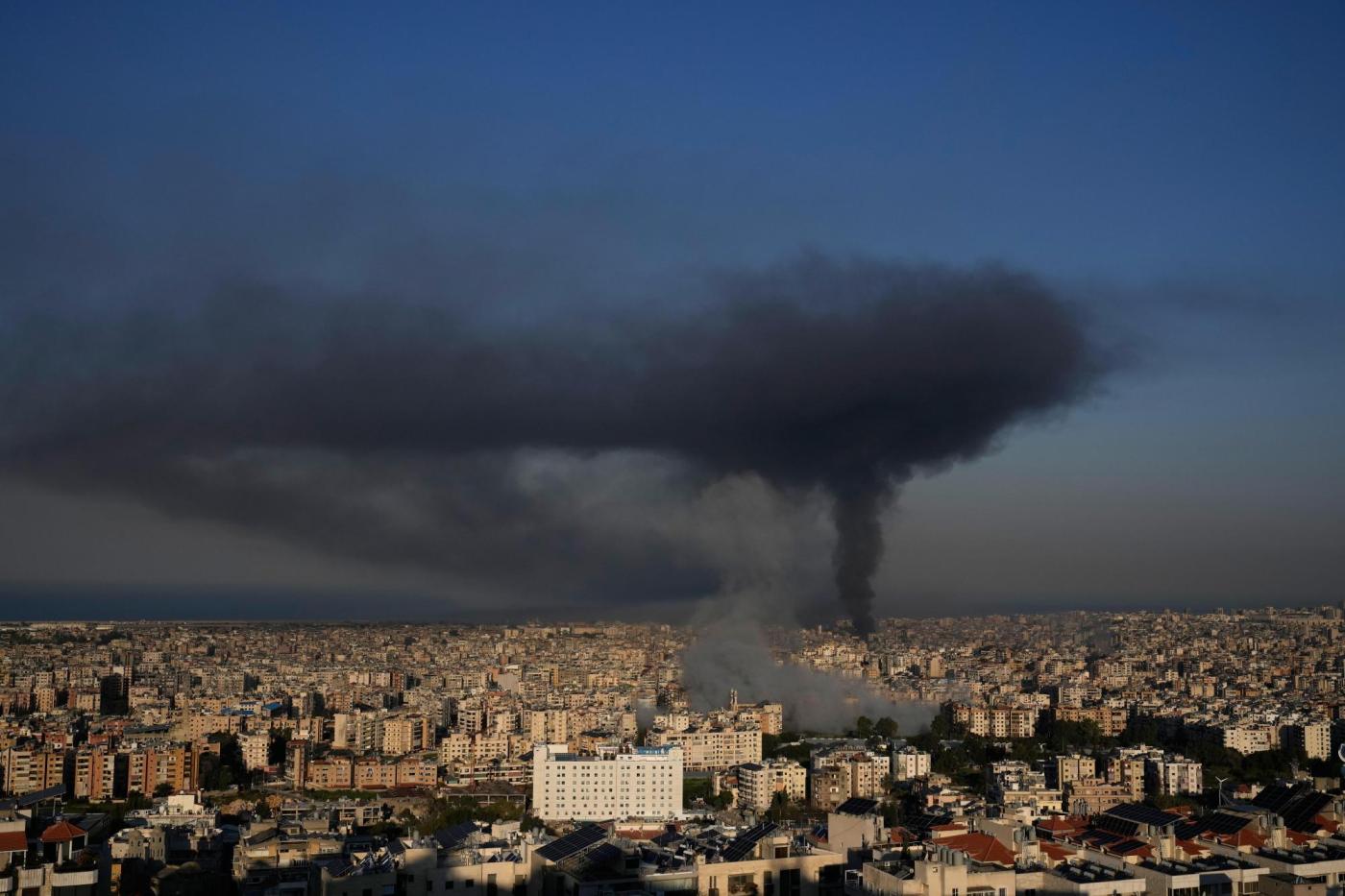
BEIRUT (AP) — Lebanese civilians fled from the country’s south and Beirut’s southern suburbs on Monday, seeking refuge in schools in Lebanon’s capital following a new and deadly escalation between Israel and the Iran-allied Lebanese militant group Hezbollah.

Lebanon’s Health Ministry reported at least 31 people were killed and 149 wounded in overnight strikes in the Beirut suburbs and southern Lebanon.

Related Articles


Iran’s nuclear ambassador alleges that US-Israeli airstrikes targeted the Natanz enrichment facility


Hegseth insists the Iran conflict is ‘not endless’ and declares, ‘We fight to win’


Global air travel chaos deepens as US-Israel strikes and Iran retaliation shut Gulf hubs


Energy prices surge as tanker disruptions, facility shutdowns rattle global supply


Congress will debate an Iran conflict that is well underway

The Lebanese government later Monday slammed Hezbollah’s decision to enter Iran’s war with Israel and the United States, calling the militant group’s actions illegal and demanding it hand over its weapons.

Highways were jammed overnight and into Monday with people fleeing after what was Israel’s deadliest barrage on Lebanon in more than a year, striking hours after Hezbollah fired missiles across the border for the first time in more than a year.

Ali Hamdan was stuck in gridlock on the road between his village in southern Lebanon, Deir al-Zahrani, and the port city of Sidon. What should have been a half-hour’s drive had taken seven hours, he said.

“I don’t know how long it will take us to reach Beirut,” he said. “I’m headed toward Beirut, but I don’t know where yet. We don’t have a place to stay.”

At a public school in Beirut, hastily converted into a temporary shelter, families arrived carrying mattresses, plastic bags, and bundles of clothing. Other families sat on sidewalks beside their belongings, some men smoking as they waited for space to open inside.

Volunteers moved through the crowd, registering names as families filled classrooms and gathered in the school courtyard.

Hussein Abu Ali, who fled a southern Beirut suburb with his wife and children, described the moment the strikes hit.

“My son began shaking and crying,” he said. “Where are you supposed to go? I stepped outside, then back in because I was afraid of shooting in the air. I gathered my children and went down to the street.”

Nadia Al‑Salman, displaced from the southern town of Majdal Zoun, said they left their homes “not out of fear or terror of the United States, but to fulfill our religious and legal duty to protect ourselves.”

“They do not intimidate or frighten us, and they will not make us retreat even an inch from the path of resistance,” she added.

During the latest Israel-Hezbollah war in 2024, at one point, more than a million people were displaced in Lebanon. Many have been unable to return to their homes in the south, where villages along the border remain in ruins.

Hezbollah launched rockets into Israel a day after the militant Palestinian group Hamas attacked southern Israel on Oct. 7, 2023, triggering the war in Gaza. After months of low-level fighting, the conflict escalated into a full-scale war in September 2024 before a U.S. brokered ceasefire nominally halted the fighting two months later.


Since that ceasefire, Israel has continued to launch near-daily strikes in Lebanon, saying it aims to stop Hezbollah from rebuilding.

Monday’s escalation also marked the first time in more than a year that Hezbollah has claimed responsibility for firing into Israel. Hezbollah said in a statement that the strikes were carried out in retaliation for the killing of Iran’s Supreme Leader Ali Khamenei, and for “repeated Israeli aggressions,” describing it as “a legitimate defensive response.”

But Lebanon’s government said it considers Hezbollah’s military activities illegal and that the group should hand over its weapons. Prime Minister Nawaf Salam said after an emergency Cabinet meeting Monday that only the state should decide on matters of war and peace.

He added that Hezbollah’s military activities were banned going forward and called on security agencies to prevent the firing of missiles or drones from Lebanon and detain those behind the launch. It was the harshest stance the Lebanese government has taken yet toward Hezbollah, which also has a political party with a parliamentary bloc in addition to its armed militants.

Salam also called on the international community to work on getting a “clear and final commitment” from Israel to stop its strikes on Lebanon.

The Israeli military overnight issued a warning for residents of around 50 communities across southern and eastern Lebanon to evacuate. Military spokesman Brig. Gen. Effie Defrin said Israel is keeping “all options on the table,” including a potential ground invasion of Lebanon and threatened that “Hezbollah will pay a very heavy price.”

He said Israel has called up more than 100,000 reservists since the war with Iran began on Saturday.

Associated Press writers Abby Sewell in Beirut and Melanie Lidman in Tel Aviv, Israel, contributed to this report.

Iran’s nuclear ambassador alleges that US-Israeli airstrikes targeted the Natanz enrichment facility

posted in: All news | 0

By STEPHANIE LIECHTENSTEIN

VIENNA (AP) — Iran’s Ambassador to the International Atomic Energy Agency on Monday alleged that airstrikes by the United States and Israel targeted the Natanz enrichment facility in his country.

That contradicts an assessment by the U.N. nuclear watchdog chief Rafael Grossi who said that “up to now” the agency has “no indication” that nuclear facilities have been hit in Iran.

Related Articles


Hegseth addresses strikes in Iran and says this conflict is ‘not endless’


Travelers stranded as Middle East conflict spreads; governments scramble to bring citizens home


Oil prices surge as Strait of Hormuz tanker disruptions rattle global supply


Congress will debate an Iran conflict that is well underway


War widens as Israeli and US planes pound Iran and Tehran and its proxies hit back

“Again they attacked Iran’s peaceful safeguarded nuclear facilities yesterday. Their justification that Iran wants to develop nuclear weapons is simply a big lie,” Reza Najafi told reporters at the IAEA headquarters in Vienna, where a special session of the Board of Governors is being held at the request of Russia.

When asked by a reporter which nuclear facility he was referring to, Najafi replied “Natanz.”

The Natanz site, some 135 miles south of the capital, is a mix of above- and below-ground laboratories that did the majority of Iran’s uranium enrichment.

Before the war, the IAEA said Iran used advanced centrifuges there to enrich uranium up to 60% — a short, technical step from weapons-grade levels of 90%. Some of the material is presumed to have been onsite when the entire complex was attacked last June.

The main above-ground enrichment building at Natanz was known as the Pilot Fuel Enrichment Plant. Israel hit the building June 13, leaving it “functionally destroyed,” and seriously damaging underground halls holding cascades of centrifuges, the IAEA’s director-general, Rafael Grossi, said at the time. A U.S. follow-up attack on June 22 hit Natanz’s underground facilities with bunker-busting bombs, likely decimating what remained.

IAEA says “up to now” no nuclear installations hit in Iran

Addressing the special session of the Board of Governors, IAEA chief Rafael Mariano Grossi said that “up to now” the International Atomic Energy Agency has “no indication that any of the nuclear installations, including the Bushehr Nuclear Power Plant, the Tehran Research Reactor or other nuclear fuel cycle facilities” in Iran have been damaged or hit.

He added that the IAEA continues to try to contact the Iranian nuclear regulatory authorities via the IAEA’s own Incident and Emergency Center “with no response so far,” given the limitations in communications caused by the conflict.

Grossi urged military restraint, warning that Iran and many other countries in the region that have been targeted militarily have “operational nuclear power plants and nuclear research reactors, as well as associated fuel storage sites, increasing the threat to nuclear safety.”

He added that so far “no elevation of radiation levels above the usual background levels has been detected in countries bordering Iran.”

Najafi attacks Trump

Najafi added that the U.S. uses “deception and disinformation to invade other countries.” He said that the war was launched by U.S. President Donald Trump, “who attempts to portray himself as a man of peace and asking for Nobel Peace Prize. Even when they talk about peace, it is a lie. And if they call for diplomacy, it’s about deception” he said.

Najafi said that the strikes against his country are “unlawful, criminal and brutal” and called on states of the 35-member IAEA Board of Governors to “categorically condemn” the attacks.

The Associated Press receives support for nuclear security coverage from the Carnegie Corporation of New York and Outrider Foundation. The AP is solely responsible for all content.

Additional AP coverage of the nuclear landscape: https://apnews.com/projects/the-new-nuclear-landscape/