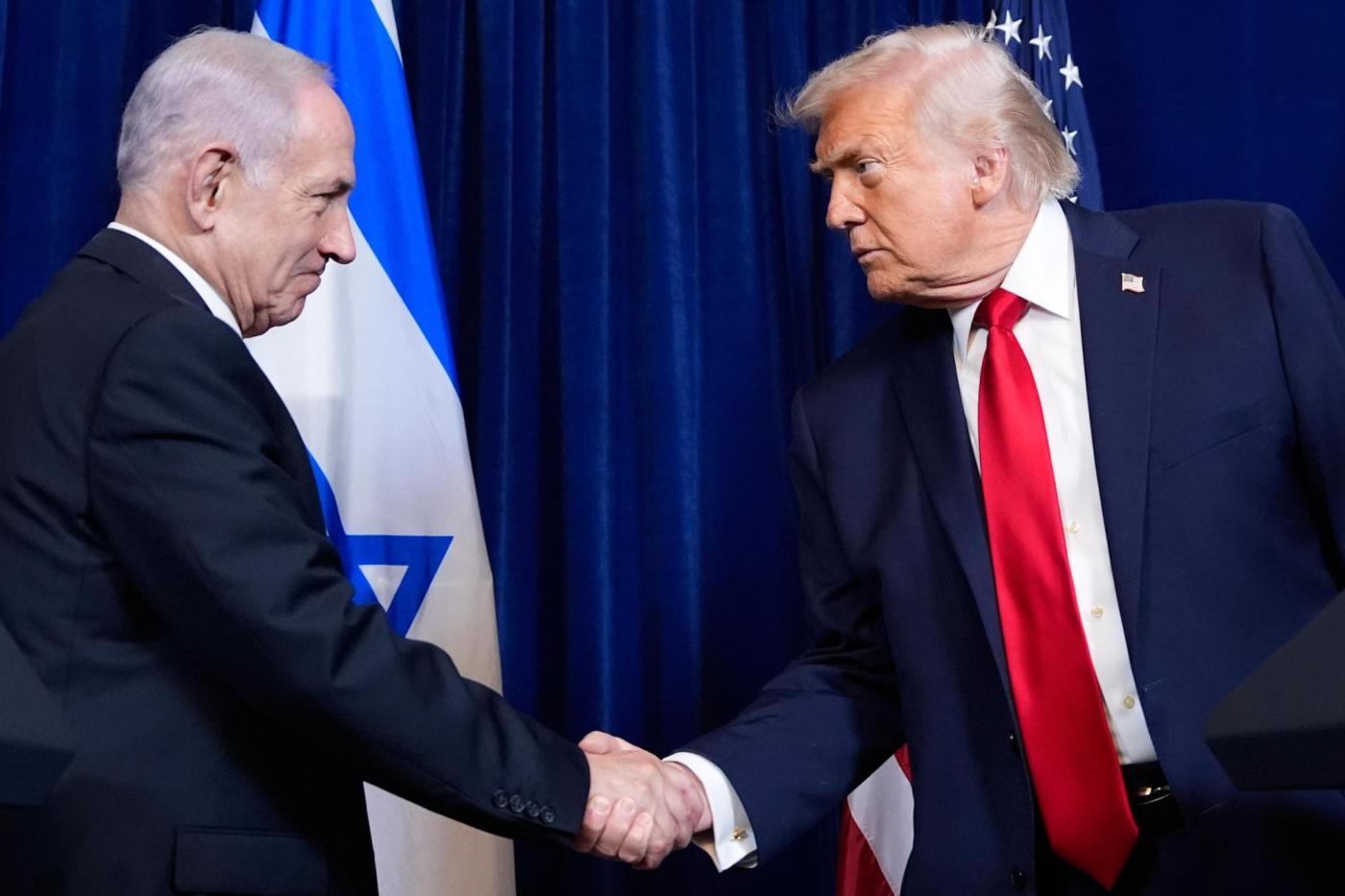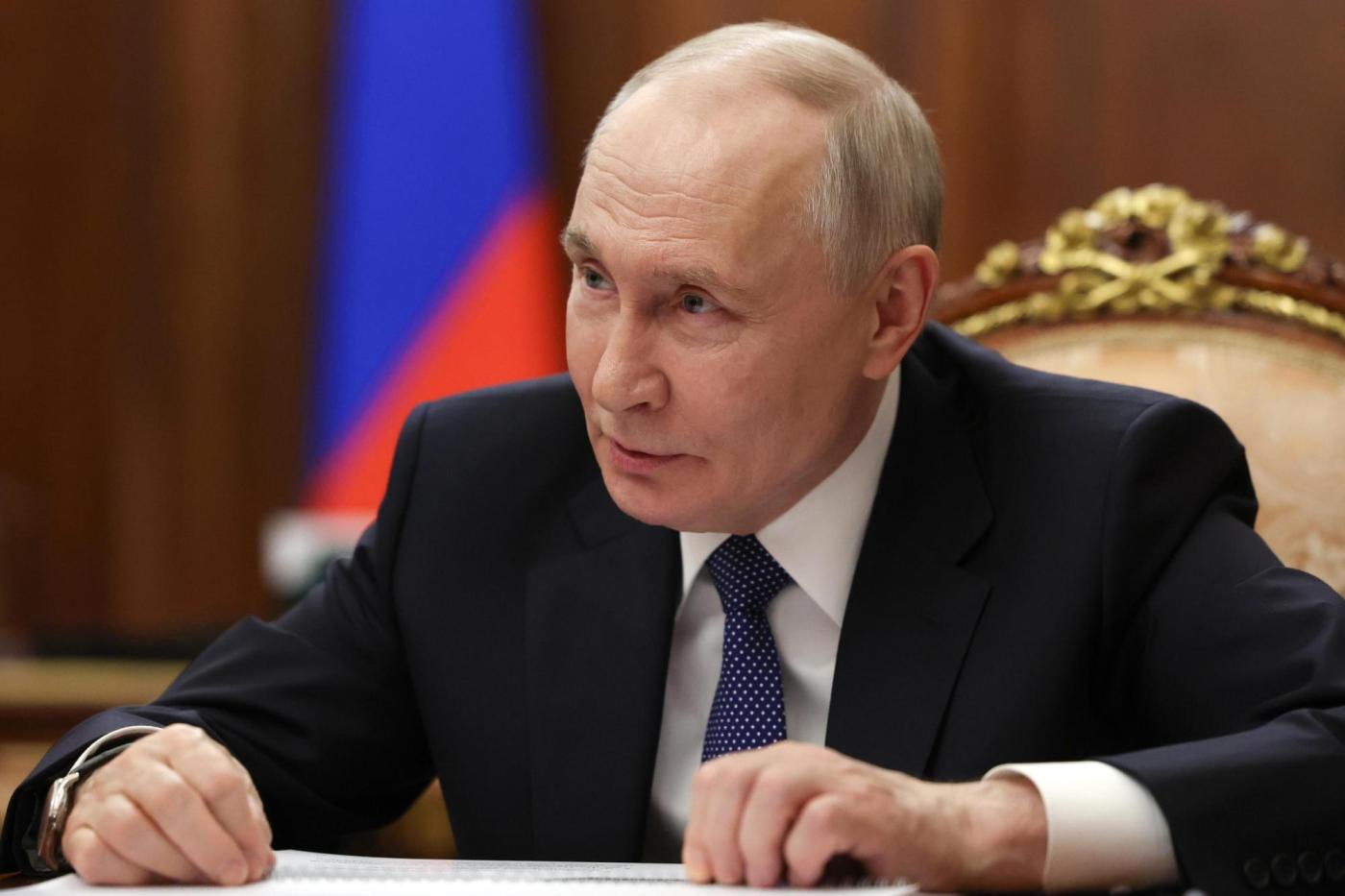
World hurries to respond to rapidly changing war around Iran

posted in: All news | 0

By FOSTER KLUG

TOKYO (AP) — A shaken world reacted with anger and confusion — and more involvement than expected, in some cases — Monday as the coordinated U.S.-Israeli attacks on Iran over the weekend sprawled into a regional war.

The first details of possible effects on Iran’s nuclear program, the issue at the center of the escalating conflict, began to emerge. More allies of the U.S. and Israel engaged, as did Iran’s armed proxies. And countries from the Gulf to Cyprus found themselves in the line of fire.

Fast-paced diplomacy was required as the missiles and drones kept coming. Borders closed, embassies emptied and allies sent military reinforcements.

Open support, and some silence

Many nations refrained from commenting directly on the initial U.S.-Israeli joint strikes but condemned Tehran’s retaliation, perhaps mindful of U.S. President Donald Trump.

Other governments criticized Iran’s strikes on Arab neighbors while staying silent on the U.S. and Israeli military action.

Canada — not shy about its frustration with the Trump administration — expressed open support for the U.S. strikes, along with Australia.

Russia, China and Spain responded with sometimes sharp criticism. Russia’s foreign ministry accused the U.S. and Israel of “hiding behind” concerns about Iran’s nuclear program while actually pursuing regime change.

India called for dialogue. “There will have to be a dialogue at some point,” the head of the U.N. nuclear watchdog, Rafael Grossi, said.

With thousands of citizens of countries around the world stranded at airports or on cruise ships, and some from countries like the Philippines and China killed in the exchanges of fire, more nations have a stake in what comes next.

All will have the chance for more say as international groups convene in urgent calls and meetings, after the U.N. Security Council gathered in emergency session on Saturday, hours after strikes began.

German Chancellor Friedrich Merz speaks before media members as he visits facilities of Siemens Energy during his official visit, in Hangzhou, China, Thursday, Feb. 26, 2026. (Andres Martinez Casares/Pool Photo via AP)

Pitching in to stop Iran

In a statement, British Prime Minister Keir Starmer, French President Emmanuel Macron and German Chancellor Friedrich Merz called on the United States and Iran to resume talks over Iran’s nuclear program and said they favored a negotiated settlement. Saturday’s strikes began two days after the latest round of talks.

The three countries have led efforts to reach a negotiated solution over Iran’s nuclear program.

Related Articles


US and Israeli attacks on Iran put further strain on international law


A look at some of the contenders to be Iran’s supreme leader after the killing of Khamenei


Where things stand after the US and Israeli strikes on Iran


Russia-Ukraine talks planned for Abu Dhabi this week may change venue, Zelenskyy says


Macron says France will allow temporary deployment of nuclear-armed jets to European allies

At the same time, Britain, France and Germany said they were ready to help with efforts to keep Iran from firing more missiles and drones.

But countries tried to make clear how far they might go. Germany will not actively participate in military action against Iran but will consider defending its soldiers stationed on multinational military bases in Jordan and Iraq if they are attacked, German Foreign Minister Johann Wadephul said Monday.

Britain stressed that it was “not at war,” although it said it would now permit the U.S. to use joint bases to strike Iran, pointing to Iran’s “scorched-earth strategy.”

Top diplomats of six Gulf states — Qatar, Saudi Arabia, the United Arab Emirates, Kuwait, Oman and Bahrain — after an emergency meeting called on Iran to immediately halt its attacks and asserted their right to self-defense.

A plea for talks, too

Oman, which was facilitating the nuclear talks and tried to keep the U.S. and Iran at the table as tensions soared, said the U.S. action “constitutes a violation of the rules of international law and the principle of settling disputes through peaceful means.” Oman, too, like other Gulf nations reported attacks that came uncomfortably close to home.

But Oman’s Foreign Minister Badr al-Busaidi said after the second full day of hostilities that “the door to diplomacy remains open.”

Meanwhile, some states were shaken into saying something different.

The 22-nation Arab League, which has historically condemned both Israel and Iran for actions it says risk destabilizing the region, called the Iranian attacks “a blatant violation of the sovereignty of countries that advocate for peace and strive for stability.”

And Syria was among Iran’s closest regional allies and a staunch critic of Israel under former President Bashar Assad, yet its foreign ministry singularly condemned Iran, reflecting the new government’s efforts to rebuild ties with regional economic heavyweights and the United States.

Concerns about oil and nuclear assets

China, a significant buyer of Iranian oil, said it was “highly concerned” about the U.S. and Israeli strikes called for an immediate halt to the military action and return to negotiations.

But Japanese Prime Minister Sanae Takaichi on Monday played down growing worry about the economic impact on oil shipments from the Middle East, saying Japan has oil reserves at home that can last for several months.

The Nobel Peace Prize-winning International Campaign to Abolish Nuclear Weapons condemned the U.S. and Israeli strikes on Iran. And European Union leaders in a joint statement called for restraint and diplomacy in hopes of “ensuring nuclear safety.”

Associated Press writers around the world contributed.

US and Israeli attacks on Iran put further strain on international law

posted in: All news | 0

By MIKE CORDER

THE HAGUE, Netherlands (AP) — As U.S. and Israeli forces pounded Iran, and Tehran and its affiliates retaliated by firing missiles at targets across the Mideast on Monday, the international legal order was caught in the crossfire.

Related Articles


A look at some of the contenders to be Iran’s supreme leader after the killing of Khamenei


Where things stand after the US and Israeli strikes on Iran


Russia-Ukraine talks planned for Abu Dhabi this week may change venue, Zelenskyy says


Macron says France will allow temporary deployment of nuclear-armed jets to European allies


Britain says it’s not at war after a drone strikes its Akrotiri base in Cyprus

At the heart of the post-World War II global order — United Nations headquarters in New York — Secretary-General António Guterres told the Security Council on Saturday that U.S. and Israeli airstrikes violated international law, including the U.N. Charter. He also condemned Iran’s retaliatory attacks for violating the sovereignty and territorial integrity of nations in the Mideast.

Officials in the Trump administration insist that the military campaign is a lawful measure to ensure Tehran does not build nuclear weapons. “It’s a matter of global security. And to that end, the United States is taking lawful actions,” Trump’s U.N. ambassador, Mike Waltz, said.

Iranian Foreign Minister Abbas Araghchi wrote in a letter to the U.N. on Sunday that the killing of Supreme Leader Ayatollah Ali Khamenei “constitutes a grave and unprecedented breach of the most fundamental norms governing relations among States.”

On Monday, Defense Secretary Pete Hegseth bullishly defended the U.S. military campaign. “No stupid rules of engagement, no nation building quagmire, no democracy building exercise, no politically correct wars. We fight to win and we don’t waste time or lives,” he said at the Pentagon.

The war with Iran comes less than two months after U.S. forces swooped into Caracas to capture former Venezuelan President Nicolás Maduro and fly him to New York to face justice.

International law and the US Constitution under pressure

David Crane, an American expert on international law and founding prosecutor of a United Nations court that prosecuted crimes in Sierra Leone, wrote in an analysis that U.S. attacks in Iran and Venezuela “highlight a dangerous trend: the normalization of unilateral force as a tool of foreign policy. Even when the outcome is positive, the violation of international law and constitutional limits sets a precedent that threatens global stability and undermines America’s own legal foundations.”

In Washington, many Democrats have called the strikes illegal. They argue that under the Constitution, only Congress has the power to declare war. They say the Trump administration failed to lay out its rationale or plan for the military strikes, and the aftermath.

Congress hurriedly scheduled a war powers debate for Monday over Trump’s authority to bomb Iran.

A plume of smoke rises after a strike in Tehran, Iran, Monday, March 2, 2026. (AP Photo/Vahid Salemi)

The crime of aggression

Under an amendment to the founding treaty of the International Criminal Court, aggression is described as “the use of armed force by a State against the sovereignty, territorial integrity or political independence of another State, or in any other manner inconsistent with the Charter of the United Nations.”

Among acts of aggression listed by the court are: “Bombardment by the armed forces of a State against the territory of another State or the use of any weapons by a State against the territory of another State.”

Neither the United States, Israel nor Iran are members of the court, meaning the court does not have jurisdiction in the ongoing war unless it is referred to ICC prosecutors by a Security Council resolution.

International legal order

Under the U.N. Charter, nations are only permitted to use force against another nation if it has been authorized by the Security Council or in self-defense, said Marieke de Hoon, an associate professor of international criminal law at the University of Amsterdam.

De Hoon said the attacks on Iran amount to a crime of aggression.

“It is a violation of the prohibition to use force, the cornerstone of the international legal order, and there is no legal justification for it: it is not a self-defense against an armed attack by Iran or an imminent threat” of an attack, “nor is there a UNSC resolution to authorize use of force,” she told The Associated Press. “Regime change moreover violates the sovereignty of another state.”

What about Iran

Iranian authorities have a history of brutal repression of dissent and sponsoring extremism that has destabilized the Mideast. The country’s nuclear ambitions were targeted by Trump last year in military strikes on sites in Iran.

But De Hoon said that is not enough to justify the U.S. and Israeli bombardments.

She said that under international law Tehran has the right to self-defense, but she added that “Iran is not allowed to attack civilian infrastructure in other countries. Its response needs to be proportionate to stop the aggression, without offering itself a legitimation toward, for instance, regime change in the aggressor country.”

Crane said that while the removal from power of Maduro and Khamenei could potentially boost regional stability and reduce suffering and ultimately improve the prospects for peace and democracy, “international law does not permit states to unilaterally decide which tyrants to remove by force.”

President Donald Trump waves after arriving on Marine One on the South Lawn of White House, Sunday, March 1, 2026, in Washington. (AP Photo/JMark Schiefelbein)

Are assassinations ever legal

Marko Milanovic, a professor of international law at Reading University, said that in peacetime, “it is a clear violation of international law to assassinate the head of state or government of some other state.”

He said heads of state and government “enjoy personal immunities and inviolability, and any attacks against them would also violate the sovereignty of their state.”

That changes in wartime, he added, saying that if political leaders also are members of the armed forces, “then they are combatants like any other members of the armed forces and are not immune from attack.”

Associated Press writer Jovana Gec in Belgrade, Serbia, contributed to this report.

Why This South Texas District Is a Proving Ground for One of Democrats’ Biggest Questions

posted in: All news | 0

This article was co-published with Puente News Collaborative, a bilingual nonprofit newsroom dedicated to high-quality coverage from the U.S.-Mexico border.

Sitting inside the taquería El Portón here in Edinburg, Texas, tuba-tinged banda music wafting through the speakers, Bobby Pulido could easily pass for one of the many South Texas Latinos who drifted toward Donald Trump in the past two presidential races. He’s a rancher who spends time at the shooting range. Clad in a plaid shirt, cowboy boots, and khaki baseball cap that reads “Texican,” Pulido talks easily about faith, family and personal responsibility.

But, he insists, the Democratic Party is still his party.

“They shouldn’t own the flag,” Pulido said of Republicans. “I love my country, and I’d die for it. And I love God, and I embrace my faith. That’s who I am. But I’m also empathetic, and I also want to help people. And I believe that the little guy sometimes needs—like my dad did—needs a helping hand to get their family out of poverty. That’s our spirit.”

As the country heads into another volatile election season, Texas’ 15th Congressional District—stretching nearly 250 miles from the Rio Grande Valley north toward Central Texas—has become a testing ground for one of the biggest questions facing the Democratic Party: Can it win back Latino voters who swung right in recent elections?

Pulido, 52, the high-profile Tejano singer best known for his 1990s hit “Desvelado,” is widely viewed as the frontrunner in Tuesday’s Democratic Party primary in a district redrawn in 2022 to favor Republicans—but one of the few in Texas that Democrats hope they can flip. 

The race has attracted national attention as a case study in how the party might reconnect with disaffected, hard-to-pin working-class Mexican American voters.

Pulido is not the only charismatic product of the Valley’s working class in this race, however. His opponent, emergency room physician Ada Cuellar, 44, argues she is also capable of appealing beyond party lines. While she doesn’t like to label herself ideologically, some of her positions place her further left than Pulido’s self-declared Democratic conservatism.

Cuellar has an equally inspiring personal story that reflects the dreams many of the Valley’s working families hold for their children. Originally from Weslaco, she recently earned a law degree while tending to patients and raising her 12-year-old daughter as a single mother. 

“I’m a kid who grew up low-income and relied on public education,” she said. “I was a WIC program recipient, and then growing up, I was a Pell grant recipient. I see that now these things are being attacked by the Trump administration. Benefits that would have helped a kid like me, right now they’re being cut.”

She describes herself as anti-corruption and anti-establishment and takes firmer stances than Pulido on issues such as codifying abortion rights. She favors dismantling ICE, leaving immigration enforcement to other agencies with greater trust. 

“Democrats are excited about me because I’m a fighter,” she said. “And interestingly, when talking to Republicans, they also are excited about the same thing, even if they don’t align with every single position that I take.”

Despite her political attributes, a poll shared with Politico in January showed Cuellar running a solid second, facing an uphill battle against Pulido’s celebrity status and high media profile. 

The son of famed conjunto musician Roberto Pulido —a former migrant farmworker who worked his way through college—Bobby Pulido grew up in a political family reflective of the Democratic Party establishment that has long dominated the Valley. 

Tejano music star and Democratic candidate Bobby Pulido poses for a portrait following a campaign event in Falfurrias on October 25, 2025. (Photo by Michael Gonzalez)

His uncle, Eloy Pulido, was a county judge. In high school, Bobby Pulido was selected by his teachers to attend Texas Boys State, a prestigious civic leadership program, and later studied political science at St. Mary’s University in San Antonio.

With these deep roots in politics, he assumed he might one day run for office.

But in the mid-1990s, major record labels were searching for the next Selena-type sensation. When Pulido’s father invited him to record a duet, executives heard him and offered a deal he couldn’t resist. He left college a year shy of graduating and became one of Tejano music’s biggest stars, producing 18 albums, winning two Latin Grammy awards, and touring the U.S. and Mexico.

Now, three decades later, the father of four hopes to translate his cultural capital into political momentum.

On the campaign trail, Pulido has hosted what he calls “ranch halls” instead of town halls. He appears in his signature cowboy hat and boots, sometimes breaking into song at the end of his speeches. His campaign ads emphasize that he’s “not team red, not team blue, team you.”

He argues that Latino voters in the Valley defy easy partisan labels. 

An in-depth study in 2020 by the Texas Organizing Project Education Fund found that many Latino voters hold weak partisan attachment, even when they regularly vote for one party. Rather than aligning wholesale with a platform, respondents often described weighing issues individually—immigration, healthcare, taxes, education—and basing votes on who is running at any given moment.

Equis Research, a national firm that studies Latino voters, has similarly argued that Latinos should be understood less as a guaranteed Democratic bloc and more as persuadable swing voters.

That pattern is visible in South Texas. In 2024, some Valley voters supported Trump at the top of the ticket while backing Democrats in local and congressional races. 

“I hate this narrative that South Texas is red,” Pulido said. “I don’t think the people are red. I think they care about the candidate.”

The four counties that make up the Valley, which has more than 1.3 million mostly Latino residents, had not voted Republican in a presidential race since the late 1800s. That shifted dramatically when Trump made moderate gains in 2020—then markedly larger ones four years later.

In Hidalgo County, where District 15 is anchored, he went from drawing 28 percent of the vote in 2016 to 51 percent in 2024. 

Political pundits and the media often oversimplify the Latino electorate, and Pulido rejects the argument that the shift was mostly about the economy and immigration.

He believes cultural conservatism—including debates over gender identity—resonated with many Valley voters deeply rooted in church, family, and a Tejano identity, while shielding them from the overt discrimination that Latinos face in other communities where they are the minority.

“You don’t feel the racism because we’re all Hispanics, predominantly,” he said. “So you just think, ‘It’s conservatism. I go to church, I love God. I want tax cuts, have the government staying out of my business.’”

He added: “You don’t understand how many people down here would tell me stuff about biological men playing in women’s sports, and none of them had ever experienced that, or even known of any situation where it happened.”

In a region where many Mexican American families like Pulido’s go back generations—in some cases to before the land was part of the United States—cultural identity and party affiliation do not always move together.

Democratic candidate Ada Cuellar at a No Kings rally in October. (Courtesy of Ada Cuellar Campaign/Facebook)

Pulido sees himself in that middle space. He’s confident he can bring some Trump supporters back to the political center with a focus on working-class concerns like healthcare access and cost of living.

He said programs that focus solely on people living in poverty create resentment among people who earn just enough to disqualify them, yet still struggle to make ends meet.

“So we have to do something about catering our message more to the middle class and the working class,” he said. “Because they feel like they have to work two jobs just to make it.”

Pulido believes his advantage is his friendships across party lines, including with Border Patrol agents and Trump voters.

“The most important thing for me as a Democrat that did not vote for Donald Trump is I’ve learned how to talk to people that did,” he said. “They feel I don’t disrespect them, and I don’t look down on them. And I don’t think I’m better than they are.”

Pulido’s celebrity status and his ability to code-switch politically are formidable. Yet Cuellar has mounted a serious campaign, self-funding television and radio ads while criticizing his establishment endorsements and old social media posts in which he made sexist remarks and boasted that a family friend who was a judge dismissed a speeding ticket.

She argues that longtime Democratic power brokers in the Valley who are backing Pulido are the same ones who contributed to voter disillusionment that helped Republicans flip the district.

“It’s a mistake to think that he’s the only candidate that can win this district,” she said.

This week’s winner will face Republican U.S. Representative Monica De La Cruz in November. She flipped the district in 2022 after Texas Republicans redrew its boundaries, and won again in 2024 by 14 points.

“It is absolutely winnable,” Pulido said. “But I’m the underdog, I get it.”

The post Why This South Texas District Is a Proving Ground for One of Democrats’ Biggest Questions appeared first on The Texas Observer.

Trump expects his Fed pick and AI to deliver a replay of the ’90s boom. Economists have doubts

posted in: All news | 0

By PAUL WISEMAN, AP Economics Writer

WASHINGTON (AP) — President Donald Trump, his Treasury secretary and his choice to lead the Federal Reserve believe they can coax the U.S. economy into partying like it’s 1999.

They are putting their faith in artificial intelligence to duplicate what happened when another technology arrived in the 1990s: the internet. Back then, the American economy surged as businesses became more productive, unemployment tumbled and inflation remained in check.

Trump is confident that his nominee to become Fed chair, Kevin Warsh, can unleash an even greater economic bonanza by jettisoning what the president sees as the central bank’s hidebound reluctance to slash interest rates.

Many economists are skeptical.

The world looks a lot different today than it did when the Spice Girls ruled radio and “Titanic’’ dominated the box office. And the story the Trump team is telling — that a visionary Fed chair, Alan Greenspan, fueled the ‘90s boom by keeping interest rates low — is incomplete at best.

“The administration is offering a rather distorted version of what actually happened in the 1990s,’’ economist Dario Perkins of TS Lombard said in a commentary.

Nonetheless, the Trump administration believes history can repeat itself. All that’s been missing, in the president’s view, is a Fed chair with Greenspan’s foresightedness.

FILE – Economist Alan Greenspan, chairman of the Federal Reserve from 1987 to 2006, is seen in his office in Washington, Oct. 18, 2013. (AP Photo/J. Scott Applewhite, File)

AI’s influence over interest rates

Trump has repeatedly attacked current Fed chief Jerome Powell, whose term as chair ends in May, for his reluctance to lower rates aggressively while inflation hovers above the central bank’s 2% target. Treasury Secretary Scott Bessent said on social media in January that the president sought to replace Powell with someone with “an open, Greenspan-like mind.”

“Our nation can see productivity boom like we did in the ’90s when we are not encumbered by a Federal Reserve which throws the brakes on,” Bessent said.

On Jan. 30, Trump said he was picking Warsh.

In speeches and writings, Warsh has argued that AI-driven improvements in productivity could justify lower interest rates.

Related Articles


Where things stand after the US and Israeli strikes on Iran


Trump will award Medal of Honor to three US Army service members in White House ceremony


Hegseth insists the Iran conflict is ‘not endless’ while warning more casualties are likely


Congress will debate an Iran conflict that is well underway


War widens as Israel and US pound Iran and Tehran and its allies hit back

These views align with Trump’s desires for Fed rate cutes but mark a break with Warsh’s own past as an inflation hawk. In the aftermath of the 2007-2009 Great Recession, Warsh — then a Fed governor — objected to some of the central bank’s efforts to help the struggling economy by pushing down rates even though unemployment exceeded 9%. Warsh warned then, wrongly, that inflation would soon accelerate.

At issue now are gains in productivity and the possibility that AI will make them bigger — much bigger.

To economists, productivity improvements are almost magical. When companies roll out new machines or technology, their workers can become more efficient and produce more stuff per hour. That allows firms to earn more and to raise employees’ pay without raising prices. In short: Surging productivity can drive economic growth without spurring inflation.

Greenspan and the internet

In the mid-1990s, Greenspan was contending with a strange set of economic circumstances: Wages were rising, but inflation wasn’t heating up.

Big productivity gains might have explained things, but government data showed no sign of them. Other Fed policymakers worried that surging wages and tame inflation couldn’t co-exist and that higher prices were coming. They wanted to raise interest rates.

But Greenspan suspected the official productivity numbers were missing something. For one thing, they didn’t jibe with the amazing tales of efficiency improvements the Fed was hearing from companies investing in computers and turning to the internet.

So he ordered his lieutenants to dig through decades of productivity numbers. The official statistics they assembled told an implausible story: Services firms — from retailers to legal practices — had supposedly seen productivity fall over the years, despite intense competitive pressure and massive investments in technology.

Greenspan didn’t believe it. He persuaded his Fed colleagues that the government’s numbers were wrong and were understating productivity. They agreed in September 1996 to hold off on raising rates.

The economy took flight.

Tardily, productivity advances began to show up in the official data. Overall, American economic growth surpassed 4% every year from 1997 through 2000, something it would do again only once in the next quarter century. The unemployment rate plunged to 3.8% in April 2000, lowest in three decades. Inflation stayed in its cage, coming in below 2% — later the Fed’s official target – for 17 straight months in 1997-1999.

History repeats itself … maybe?

American productivity certainly looked strong in the second and third quarters of 2025, and some economists attribute the improvements to early adoption of AI; they see bigger gains and stronger economic growth ahead.

Others aren’t so sure.

Joe Brusuelas, chief economist at the consulting firm RSM, wrote that the 2025 productivity improvements “are not because of artificial intelligence’’ but reflect investments in automation that companies made when they couldn’t find enough workers during and after the COVID-19 pandemic. “Those investments are starting to pay off,’’ Brusuelas wrote.

Economist Martin Baily, senior fellow emeritus at the Brookings Institution, believes it will take time for AI to have a big impact on the way companies do business and on the nation’s productivity.

“Companies don’t change that fast,” said Baily, chair of President Bill Clinton’s Council of Economic Advisers. “It’s expensive to change. It’s risky to change. The managers don’t necessarily understand the new technology that well. So they have to learn how to use it. They have to train their staff. All that stuff takes a long time.’’

A productivity boom can raise the economy’s speed limit — how fast it can grow without pushing prices higher. But it might not justify lower interest rates, Federal Reserve Gov. Michael Barr said in a speech earlier this month.

Businesses will borrow to invest in AI, putting upward pressure on interest rates. Likewise, American workers and their families likely would save less and borrow more in anticipation of higher wages, the payoff for being more productive; that would put still more pressure on rates to rise.

Bottom line, Barr said: “The AI boom is unlikely to be a reason for lowering policy rates.’’

Even Greenspan’s Fed eventually came to the same conclusion, reversing course and starting to raise its benchmark rate in mid-1999, taking it from 4.75% to 6.5% in less than a year. (The rate Trump complains about now is around 3.6%.)

“Warsh and Bessent talk only about the dovish 1995/96 version of Greenspan; they overlook the hawkish 1999/2000 variant,’’ Perkins wrote.

Then and now

Many of Warsh’s potential future colleagues on the Fed’s interest-rate setting committee see the late 1990s experience differently than he does, setting up what could be a clash at the central bank if the Senate confirms Warsh as chair.

Austan Goolsbee, president of the Federal Reserve Bank of Chicago, said earlier this week that “the analogy to the late 90s is a little harder for me to understand.” Greenspan’s insight was that productivity gains meant the Fed could hold off on raising rates, not that it should slash them, Goolsbee noted.

“It wasn’t, ‘Should we cut rates because productivity growth is higher?’” he said.

The economic backdrop that awaits Warsh is also far less friendly than the one Greenspan enjoyed.

Greenspan was avoiding rate hikes at a time when the usually profligate U.S. government was running rare budget surpluses and didn’t need to borrow so desperately. Now, after a series of spending hikes and tax cuts, deficits are piling up year after year, and the Congressional Budget Office expects federal debt to hit a historic high of 120% of America’s GDP by 2035.

Nor was productivity the only thing controlling inflation in the 1990s. Countries were lowering tariffs and dismantling trade barriers. Immigration was surging.

Now, thanks largely to Trump’s own policies, notably his sweeping taxes on imports and his crackdown on immigration, the world is much different. “Trade barriers are going up,’’ Perkins wrote. “Globalization has given way to de-globalization.’’

“That benign era is clearly behind us,’’ said Michael Pearce, chief U.S. economist at Oxford Economics.

AP Economics Writer Christopher Rugaber contributed to this story.