Today in History: March 2, Black teen refuses to give up her bus seat

posted in: All news | 0

Today is Monday, March 2, the 61st day of 2026. There are 304 days left in the year.

Today in history:

On March 2, 1955, nine months before Rosa Parks’ more famous act of defiance, Claudette Colvin, a Black high school student in Montgomery, Alabama, was arrested after refusing to give up her seat on a public bus to a white passenger.

Also on this date:

In 1807, the Act Prohibiting Importation of Slaves was signed by President Thomas Jefferson. (The domestic trade of enslaved people was not affected.)

Related Articles


Thousands rally in Westwood as U.S.-Iran war escalates, calling for a ‘free Iran’


Oil prices jump 10% After Iran attack, pointing to economic risks


Gaza’s ceasefire had some momentum. Now, some fear a new war will distract the world


Iran Fires Cheap Drones Into Arab Countries, Wreaking Havoc


For immigrants in detention, spiritual care can be hard to find

In 1861, the state of Texas, having seceded from the Union, was admitted to the Confederacy.

In 1877, Republican Rutherford B. Hayes was declared the winner of the 1876 presidential election over Democrat Samuel J. Tilden, despite Tilden winning the popular vote. Tilden remains the only presidential candidate to get over 50% of the popular vote (50.9%) and not win the presidency.

In 1943, the three-day Battle of the Bismarck Sea began in the southwest Pacific during World War II; U.S. and Australian warplanes inflicted heavy damage on an Imperial Japanese convoy.

In 1962, Wilt Chamberlain scored 100 points for the Philadelphia Warriors against the New York Knicks, a single-game NBA record that still stands. Philadelphia won by a score of 169-147.

In 1985, the U.S. government approved a screening test for AIDS that detected antibodies to the virus, allowing possibly contaminated blood to be excluded from the blood supply.

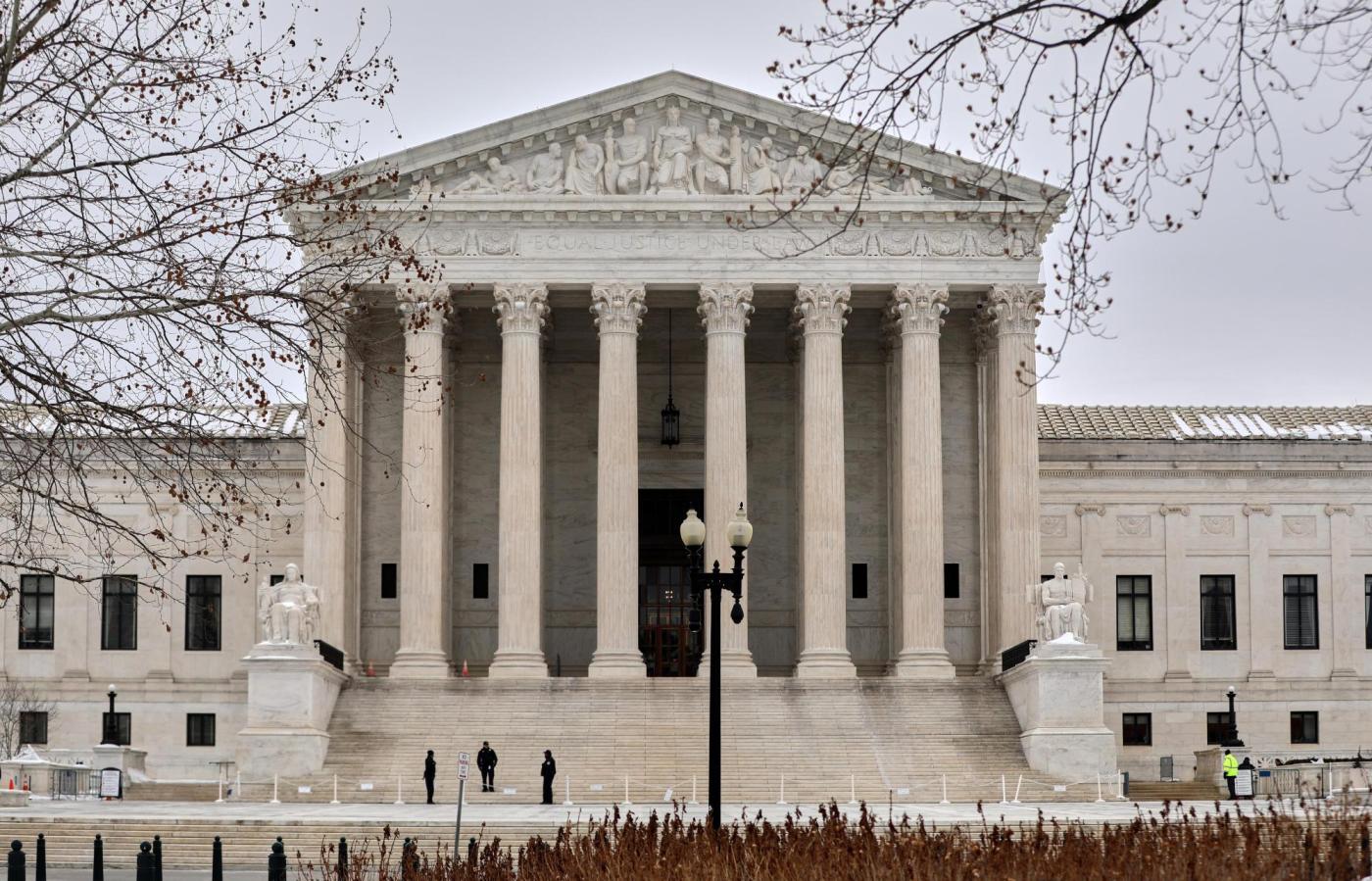
In 2011, the U.S. Supreme Court ruled, 8-1, that a grieving father’s pain over mocking protests near his Marine son’s funeral had to yield to First Amendment protections for free speech in a decision favoring the Westboro Baptist Church of Topeka, Kansas.

In 2020, a tornado outbreak began in Tennessee, killing 24 people and causing massive destruction as at least six twisters tore through the state over two days.

Today’s birthdays:

Author John Irving is 84.
Actor-comedian Laraine Newman (Saturday Night Live) is 74.
Golf Hall of Famer Ian Woosnam is 68.
Musician Jon Bon Jovi is 64.
Actor Daniel Craig is 58.
Rapper-actor Method Man is 55.
Musician Chris Martin (Coldplay) is 49.
Actor Rebel Wilson is 46.
Actor Bryce Dallas Howard is 45.
Hockey Hall of Famer Henrik Lundqvist is 44.
Actor Robert Iler is 41.
Actor Nathalie Emmanuel is 37.
Country musician Luke Combs is 36.
Singer-actor Becky G is 29.

Multiple people arrested at Whipple Federal Building during ICE protest

posted in: All news | 0

15 people protesting ICE were arrested at the Whipple Federal Building Sunday by the Hennepin County Sheriff’s Office. Other agencies, including the Minnesota Department of Natural Resources, made more arrests, according to the sheriff’s office.

In a statement, the Hennepin County Sheriff’s Office said the protest was an “unlawful assembly as people were blocking roads and throwing objects.” The Minnesota State Patrol arrested 15 of those in attendance, according to the sheriff’s office. The office stated that mutual aid was requested during the gathering, which is why the department intervened.

Many on social media say that the gathering was a peaceful protest involving community members protesting ICE actions in the state. Videos posted to social media taken by witnesses show multiple agents putting people in handcuffs, and some show agents tackling people to the ground and dragging attendees by their bodies.

This report is ongoing.

Related Articles


Minneapolis man gets 40-year prison sentence for trafficking, sexually assaulting teen and woman at Mahtomedi apartment


Ex-Oakdale officer sentenced for omitting information in 2022 police report


30 more indicted in anti-ICE protest at St. Paul church


A chief judge warns Minnesota’s top prosecutor and ICE: Obey court orders or face contempt


Park Rapids man accused of threats against lawmaker, state Capitol

Thousands rally in Westwood as U.S.-Iran war escalates, calling for a ‘free Iran’

posted in: All news | 0

By Matthew Ormseth, Los Angeles Times

Thousands gathered outside the Westwood Federal Building on Sunday afternoon celebrating the fall of Iran’s Supreme Leader Ayatollah Ali Khamenei and dreaming of a “free Iran” as war continued to escalate between Iran and a united U.S. and Israel.

Residents of Los Angeles’ massive Persian diaspora continued to revel in the news of Khamenei’s death after the U.S. and Israel launched surprise attacks across the nation on Saturday. Many at Sunday’s demonstration were draped in American, Israeli or Iranian flags, the latter emblazoned with a golden lion that represented the traditional banner abandoned when the Islamic Republic came to power. Some wore green hats that said, “Make Iran Great Again.”

Members of the crowd chanted for a “free Iran” and danced in shuttered streets.

“We’re thrilled,” said demonstrator Shawn Araghi, who left Iran as an 8-year-old when Shah Mohammad Reza Pahlavi was ousted in 1979. “Most people think Iranians are the same as the regime. The people are way different than the regime. They could care less about the people. That’s why they’re killing them left and right.”

On Sunday, military officials confirmed that three U.S. service members were killed and five seriously wounded in a widening war across the Middle East, with intensifying counterattacks by Iran across the region. Hundreds in Iran, including dozens of civilians at a school, were reported dead in the attacks, and dozens more across the region.

But for many in and around Westwood — the epicenter of L.A.’s sprawling Iranian diaspora, earning the nickname “Tehrangeles” — the attacks on Iran signaled hope for a regime change that could bring increased freedom to their homeland.

The Greater Los Angeles area is home to the largest concentration of people of Iranian descent outside Iran. Since the Islamic Revolution in 1979, it has served as a capital for exiles.

Nilgoon Askari, a native of Iran, was in attendance at Sunday’s demonstration. She said Iranian Americans had gathered in West Los Angeles or downtown L.A. every weekend in February since Iranian security forces used lethal force to suppress a widespread popular uprising.

Askari said her best friend was killed in the crackdown on protesters and some of her relatives were arrested. The demonstrations in L.A. were often tearful affairs, she said. Sunday was different.

“It was impossible for 47 years,” Askari said of the killing of Iran’s supreme leader. She said President Trump and Israeli Prime Minister Benjamin Netanyahu had assassinated a “dictator” whom the Iranian people could not depose themselves.

Askari and Araghi said they hoped the Islamic Republic would fall and the country will come under the leadership of Reza Pahlavi, the son of the shah.

Araghi said he wasn’t concerned that Israel or the United States would meddle in the future of Iran. “Anything is better than the current regime,” he said. “It can’t be worse than this.”

____

(Times staff writers Corinne Purtill and Grace Toohey contributed to this report.)

©2026 Los Angeles Times. Visit at latimes.com. Distributed by Tribune Content Agency, LLC.

Related Articles


Oil prices jump 10% After Iran attack, pointing to economic risks


At least 22 people killed in Pakistan as protesters try to storm US Consulate


Oil prices rise sharply in market trading after attacks in Middle East disrupt global energy supply


Stranded travelers scramble to make new connections as war shuts much of Middle East to air travel


3 US troops killed and 5 are seriously wounded during Iran attacks, military says

Oil prices jump 10% After Iran attack, pointing to economic risks

posted in: All news | 0

Oil prices rose 10% as markets opened Sunday evening, underscoring the economic risks of the widening conflict in the Middle East.

The U.S.-Israeli attacks on Iran could severely restrict supplies from a key oil and gas-producing region. Even if the disruption is brief, it will almost certainly make energy more expensive worldwide. The magnitude of those price increases and how long they last will depend on what the United States and Israel do next — and how Iran responds.

International oil prices had climbed about 20% this year, nearing $73 a barrel Friday. On Sunday, they crossed $80 a barrel.

The longer that the war disrupts the energy trade, the bigger the risk that consumers will face higher prices, not just at the gas pump but in a broad array of products, at a time when many people are already worried about the economy. That could cause domestic political blowback for President Donald Trump, whose approval ratings have tumbled in part because many Americans are concerned about inflation.

By Sunday, the flow of tankers carrying energy products through the Strait of Hormuz, a narrow waterway off Iran’s southern coast, had slowed to a trickle. About one-fifth of the world’s oil and a significant amount of natural gas usually pass through the choke point daily.

But in a crucial sign for oil markets, no major energy assets in the region appeared to have been struck as of late Sunday in Iran.

“The biggest question is what, if any, oil installations get damaged,” said Amy Myers Jaffe, director of the Energy, Climate Justice and Sustainability Lab at New York University. “If the answer to that is none, my opinion is the price of oil will come back down.”

The United States may be the world’s largest producer of oil and natural gas, but that does not fully insulate it from market shocks since those commodities are traded globally.

This is the second time in two months that the United States has taken military action in an oil-rich country. Prices barely moved in January after U.S. forces captured Nicolás Maduro, the president of Venezuela, partly because that country accounts for less than 1% of the world’s oil supply.

Not only does Iran produce more oil, but so do its neighbors, and the country sits at the mouth of the Persian Gulf, a vital oil and natural gas trading route.

Until this point, one of the main concerns in the global market had been that the world was producing a lot more oil than it needed. That oversupply is likely to blunt any increase in prices, at least for a while. Indeed, on Sunday, a group of oil producers known as OPEC+ said it planned to increase output modestly in April.

“Americans will see some impact at the gasoline pump,” said Jason Bordoff, the founding director of the Center on Global Energy Policy at Columbia University in New York. “But even with a massive strike on Iran that killed the leader of the country, at this point we’re still talking about oil prices that are well within historical norms — and much less than one would have ever expected with a strike of this magnitude.”

Higher prices for oil traded on commodity futures markets will not immediately lead to a big increase in prices at gas pumps in the United States. But fuel prices tend to respond relatively quickly, within a matter of days or weeks.

The pace “will really depend on how severe the supply constraint reveals itself to be,” said Ken Medlock, an energy fellow at Rice University’s Baker Institute in Texas.

In the week after Russia invaded Ukraine in February 2022, oil prices climbed around 20%. But the average price of a gallon of regular gasoline in the United States only rose about 3% in that time, according to AAA motor club data. It was not until the following week that drivers started to see significantly higher gasoline prices. U.S. gasoline prices eventually hit a record above $5 a gallon several months later, in June.

As a general rule of thumb, for every $10 a barrel increase in the cost of oil, the price of gasoline that consumers see at local stations might rise 20 to 30 cents a gallon, said Jaffe. Gasoline cost an average of $2.98 a gallon in the United States on Sunday, according to AAA.

The Russian invasion of Ukraine also drove up the price of natural gas, a key fuel for the power sector and heavy industry. That contributed to increases in the prices of electricity in Europe, the United States and elsewhere. A lot of liquefied natural gas is shipped through the waters around Iran, and a sustained disruption of those flows could, over time, also hurt the global economy.

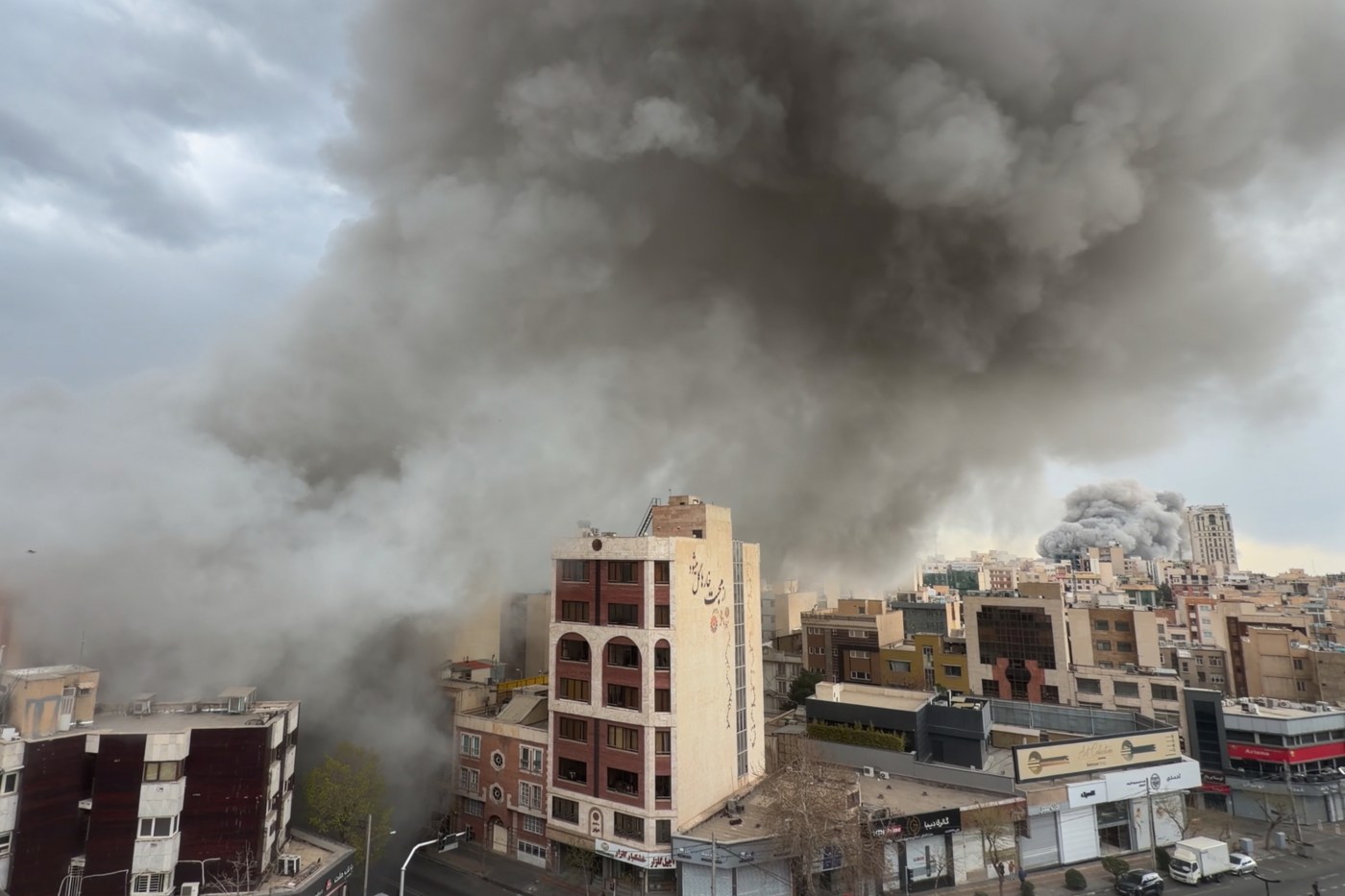
On Sunday, attention remained on the Strait of Hormuz, where videos verified by The New York Times showed a tanker ablaze while anchored near Oman. Another vessel was also reportedly struck in the area, and a separate projectile was said to have exploded near a third ship.

In other conflicts, naval vessels have escorted commercial ships that have come under threat, though a Defense Department spokesperson said the United States had no such plans for the Persian Gulf.

As of Sunday afternoon in Iran, just six tankers used to carry energy products had traveled through the strait, down from 65 on Friday, according to S&P Global Energy’s Commodities at Sea.

This article originally appeared in The New York Times.

Related Articles


Real World Economics: Today’s Fed: Moral hazard on steroids


Ajaypal Banga: How to create jobs for the world’s 1.2 billion new workers


Commentary: Rising costs, chronic disease and AI — the fight to save US health care


Your Money: Should you claim social security now and invest your benefits?


MN revenue forecast: $3.7B surplus for 2026-2027, a $377M surplus in 2028-2029