Iran’s nuclear ambassador alleges that US-Israeli airstrikes targeted the Natanz enrichment facility

posted in: All news | 0

By STEPHANIE LIECHTENSTEIN

VIENNA (AP) — Iran’s Ambassador to the International Atomic Energy Agency on Monday alleged that airstrikes by the United States and Israel targeted the Natanz enrichment facility in his country.

That contradicts an assessment by the U.N. nuclear watchdog chief Rafael Grossi who said that “up to now” the agency has “no indication” that nuclear facilities have been hit in Iran.

Related Articles


Hegseth addresses strikes in Iran and says this conflict is ‘not endless’


Travelers stranded as Middle East conflict spreads; governments scramble to bring citizens home


Oil prices surge as Strait of Hormuz tanker disruptions rattle global supply


Congress will debate an Iran conflict that is well underway


War widens as Israeli and US planes pound Iran and Tehran and its proxies hit back

“Again they attacked Iran’s peaceful safeguarded nuclear facilities yesterday. Their justification that Iran wants to develop nuclear weapons is simply a big lie,” Reza Najafi told reporters at the IAEA headquarters in Vienna, where a special session of the Board of Governors is being held at the request of Russia.

When asked by a reporter which nuclear facility he was referring to, Najafi replied “Natanz.”

The Natanz site, some 135 miles south of the capital, is a mix of above- and below-ground laboratories that did the majority of Iran’s uranium enrichment.

Before the war, the IAEA said Iran used advanced centrifuges there to enrich uranium up to 60% — a short, technical step from weapons-grade levels of 90%. Some of the material is presumed to have been onsite when the entire complex was attacked last June.

The main above-ground enrichment building at Natanz was known as the Pilot Fuel Enrichment Plant. Israel hit the building June 13, leaving it “functionally destroyed,” and seriously damaging underground halls holding cascades of centrifuges, the IAEA’s director-general, Rafael Grossi, said at the time. A U.S. follow-up attack on June 22 hit Natanz’s underground facilities with bunker-busting bombs, likely decimating what remained.

IAEA says “up to now” no nuclear installations hit in Iran

Addressing the special session of the Board of Governors, IAEA chief Rafael Mariano Grossi said that “up to now” the International Atomic Energy Agency has “no indication that any of the nuclear installations, including the Bushehr Nuclear Power Plant, the Tehran Research Reactor or other nuclear fuel cycle facilities” in Iran have been damaged or hit.

He added that the IAEA continues to try to contact the Iranian nuclear regulatory authorities via the IAEA’s own Incident and Emergency Center “with no response so far,” given the limitations in communications caused by the conflict.

Grossi urged military restraint, warning that Iran and many other countries in the region that have been targeted militarily have “operational nuclear power plants and nuclear research reactors, as well as associated fuel storage sites, increasing the threat to nuclear safety.”

He added that so far “no elevation of radiation levels above the usual background levels has been detected in countries bordering Iran.”

Najafi attacks Trump

Najafi added that the U.S. uses “deception and disinformation to invade other countries.” He said that the war was launched by U.S. President Donald Trump, “who attempts to portray himself as a man of peace and asking for Nobel Peace Prize. Even when they talk about peace, it is a lie. And if they call for diplomacy, it’s about deception” he said.

Najafi said that the strikes against his country are “unlawful, criminal and brutal” and called on states of the 35-member IAEA Board of Governors to “categorically condemn” the attacks.

The Associated Press receives support for nuclear security coverage from the Carnegie Corporation of New York and Outrider Foundation. The AP is solely responsible for all content.

Additional AP coverage of the nuclear landscape: https://apnews.com/projects/the-new-nuclear-landscape/

Global markets roiled and energy prices soar with US pressing attack on Iran

posted in: All news | 0

By ELAINE KURTENBACH and MICHELLE CHAPMAN, AP Business Writers

Military strikes on Iran rattled global markets on Monday with U.S. futures following markets in Europe and Asia lower. Energy prices rose sharply.

Futures for the S&P 500 and Dow Jones Industrial Average each sank about 1%.

Related Articles


Energy prices surge as tanker disruptions, facility shutdowns, rattle global supply


Oil prices jump 10% After Iran attack, pointing to economic risks


Oil prices rise sharply in market trading after attacks in Middle East disrupt global energy supply


People line up for ice cream treats every March 1 at this Minnesota Dairy Queen. Why? It’s tradition


Business People: Ecolab splits COO role between Darrell Brown and Greg Cook

The price of a barrel of U.S. benchmark rose more than 8% to $72.70 per barrel, a price not seen since the U.S. summer driving season and the 12-day Israel-Iran war. Brent crude jumped 9% to nearly $79.19 per barrel.

The spike in the cost for a barrel of crude could show up in a matter of days or weeks at gas pumps, with retailers forced to pay more for new shipments of gasoline.

Travel sectors, from airlines and cruise operators to global hotel chains, tumbled.

But it wasn’t just oil. Natural gas futures rose early 6% and futures for fuel used for transportation as well as industrial purposes, spiked more than 14%.

Germany’s DAX dropped 1.9% to 24,817.42, while in Paris the CAC 40 lost 1.7% to 8,435.80. Britain’s FTSE 100 slipped 1% to 10,808.53.

Shares fell in most Asian markets but they rose in Shanghai, where higher oil prices lifted some oil company stocks such as CNOOC, China Petroleum & Chemical and PetroChina to the 10% limit.

The Shanghai Composite index climbed 0.5% to 4,182.59, while in Hong Kong, the Hang Seng lost 2.1% to 26,059.85.

Japan’s Nikkei 225 index initially fell more than 2%. It closed 1.4% lower at 58,057.24. Offsetting other losses, shares in defense-related stocks including Mitsubishi Heavy Industries and IHI Corp. advanced.

In India, which could face disruptions to its access to oil due to the hostilities, the Sensex fell 1.3%.

Taiwan’s benchmark lost 0.9% and Singapore’s dropped 2.3%. In Bangkok, a major tourism destination for the Middle East, the SET fell 4%.

Markets were closed in South Korea for a holiday.

Gold, a safe haven for investment in times of uncertainty, rose 3.1% to about $5,408.10 per ounce.

The U.S. dollar also gained, rising to 156.88 Japanese yen from 156.27 yen late Friday. The euro slipped to $1.1740 from $1.1762.

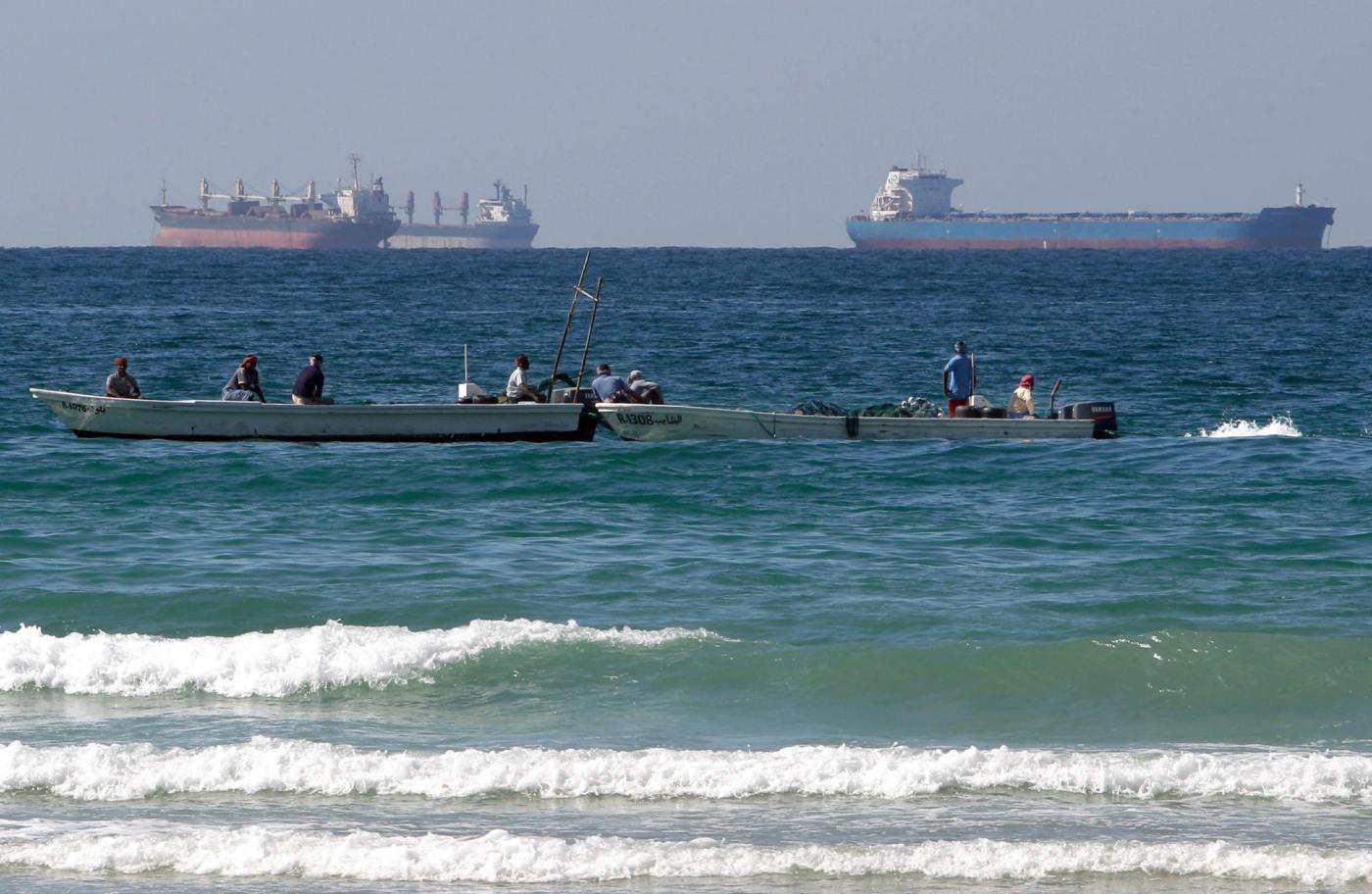
The war is likely to disrupt oil supplies from Iran and elsewhere in the Middle East. Attacks throughout the region, including on two vessels traveling through the Strait of Hormuz, the narrow mouth of the Persian Gulf, have constrained oil exports to the rest of the world.

“Roughly one-fifth of global oil and LNG (liquefied natural gas) flows squeeze through the Strait of Hormuz. This is not an obscure canal. It is the aorta of the global energy system,” Stephen Innes of SPI Asset Management said in a commentary.

Prolonged interruptions to oil flows through the Middle East would have “huge implications for oil and LNG and every market everywhere if it occurs. Energy is an input to ALL production,” RaboResearch Global Economics & Markets said in a report.

Iran exports roughly 1.6 million barrels of oil a day, mostly to China. It may need to look elsewhere for supply if Iran’s exports are disrupted, another factor that could increase energy prices.

The size of China’s strategic oil reserves is a state secret. But a recent report by John Kemp of Base Research estimated them at 1.1 billion to 1.2 billion barrels –- equivalent to around 100 days or just over three months of imports.

The war’s impact on markets was muted somewhat because the attacks were anticipated, with a massive buildup of U.S. forces in the Middle East. So traders had adjusted their positions to take that risk into account.

The conflict has shifted attention, for now, away from issues surrounding artificial intelligence that have dominated markets in recent months.

Treasury yields fell in the bond market as investors sought safer places for their money.

“When markets are fragile, they do not need a knockout blow. They just need another weight on the bar,” Innes said.

Also hurting the broad market was a report Friday showing that inflation at the U.S. wholesale level was at 2.9% last month, much higher than the 1.6% that economists expected.

That could pressure the Federal Reserve to hold off longer on its cuts to interest rates. Lower rates would give the economy and prices for investments a boost, but they risk worsening inflation.

Hegseth and Caine will hold a news conference as Iran conflict intensifies in region

posted in: All news | 0

By MICHELLE L. PRICE and KONSTANTIN TOROPIN

WASHINGTON (AP) — Defense Secretary Pete Hegseth and Air Force Gen. Dan Caine, chairman of the Joint Chiefs of Staff, will hold a news conference on Monday about the U.S.-Israeli strikes in Iran.

Related Articles


War widens to include Iranian-backed militias as Israeli and American planes pound Iran


Thousands rally in Westwood as U.S.-Iran war escalates, calling for a ‘free Iran’


Oil prices jump 10% After Iran attack, pointing to economic risks


3 US troops killed and 5 are seriously wounded during Iran attacks, military says


Gaza’s ceasefire had some momentum. Now, some fear a new war will distract the world

The briefing will mark the first time since Saturday that the Trump administration holds a news briefing on the strikes and situation in Iran. President Donald Trump, while he’s conducted a few phone interviews with individual reporters, has not taken questions on camera and only released two videos since the operation began.

The briefing comes as the conflict has intensified into a wider war in the region. Iran and its allied armed groups have launched missiles at Israel, Arab states and U.S. military targets in the Middle East.

Four American troops have been killed in action. Trump on Sunday predicted there would be more U.S. casualties.

The latest sign of the escalating upheaval came when U.S. ally Kuwait “mistakenly shot down” three American fighter jets during a combat mission as Iranian aircraft, ballistic missiles and drones were attacking. U.S. Central Command said all six pilots ejected safely from the American F-15E Strike Eagles and were in stable condition.

U.S. officials have not offered any exit plan or offered signs that the conflict would end anytime soon, and the killing of Iranian Supreme Leader Ayatollah Ali Khamenei cast doubt on the future of the Islamic Republic and hurtled the region into broader instability.

Trump, in an interview Sunday with The New York Times, said the assault could last “four to five weeks.”

The Republican president said the U.S. and Israel had struck hundreds of targets already. That included Israel and the U.S. bombing Iranian missile sites and targeted its navy, claiming to have destroyed its headquarters and multiple warships.

The Iranian Red Crescent Society said at least 555 people have been killed in Iran so far by the U.S.-Israeli campaign. Eleven people have been killed in Israel and 31 in Lebanon, according to authorities there.

Travelers stranded as Middle East conflict spreads; governments scramble to bring citizens home

posted in: All news | 0

By KELVIN CHAN, AP Business Writer

LONDON (AP) — Governments scrambled Monday to help travelers get home after the attack on Iran by the United States and Israel shut down flights through the Middle East.

Tourists and business travelers found themselves stuck unexpectedly in hotels, airports and on cruise ships, with no word on when many airports would reopen or when flights to and through the Middle East would resume. Governments told stranded citizens to shelter in place.

Related Articles


War widens to include Iranian-backed militias as Israeli and American planes pound Iran


Today in History: March 2, Black teen refuses to give up her bus seat


Thousands rally in Westwood as U.S.-Iran war escalates, calling for a ‘free Iran’


Oil prices jump 10% After Iran attack, pointing to economic risks


At least 22 people killed in Pakistan as protesters try to storm US Consulate

Shutdown airports in Dubai, Abu Dhabi and Doha — including Dubai International Airport, one of the busiest in the world — are important hubs for travel between Europe, Africa and the West to Asia. All three were directly hit by strikes.

Qatar Airways said Monday its flights remain suspended, with its next update planned for Tuesday morning while Jordan announced a partial closure of its airspace.

About 30,000 German tourists are currently stranded on cruise ships, in hotels or at closed airports in the Middle East and cannot get back home because of the conflict.

German Foreign Minister Johann Wadephul said late Sunday that a military evacuation was currently not possible because of the closed airspace.

He said that the government was looking into other options to help bring its citizens home and that everyone should follow advice from German travel agencies and local authorities.

The German Travel Association called on tourists to “remain at their booked hotels as a matter of urgency” and not “make their own way to the airport or to a neighboring country.”

A board shows flight details at the Overseas Filipino Workers lounge at Manila’s International Airport, Philippines on Monday, March 2, 2026. (AP Photo/Aaron Favila)

Other governments made similar recommendations.

The Czech Republic is sending two planes to Egypt and Jordan to bring home Czech nationals, Prime Minister Andrej Babiš said. One will pick up 79 Czechs in the Egyptian resort town of Sharm El Sheikh who who want to return from Israel. They are traveling from Israel to Egypt by bus. The other plane will evacuate Czechs from Amman, Jordan. Babiš said there are some 6,700 Czechs in the region.

Four more planes are heading to Muscat and Salalah in Oman to fly home Czech tourists.

In Asia, thousands of travelers were stranded on Indonesia’s tourist island of Bali because international flights were cancelled.

Bali’s international airport said at least 15 flights, including eight departures and seven arrivals, on routes to Dubai, Doha and Abu Dhabi were cancelled as of Monday afternoon.

A man works beside a parked Emirates plane at Manila’s International Airport, Philippines on Monday, March 2, 2026. (AP Photo/Aaron Favila)

Air France canceled flights to and from Tel Aviv, Beirut, Dubai and Riyadh, while carriers from Air India to KLM suspended flights and issued advisories.

Airline data showed 3,197 departing passengers were affected by the disruptions, airport spokesperson Gede Eka Sandi Asmadi said.

U.S. airlines issued travel advisories and upended global transportation roiled the travel sector in financial markets early Monday, including the shares of airlines that fly globally. United, Delta and American all slid 5% to 6% and global hotel chains tumbled. Cruise lines like Carnival fell even harder.

AP writers Kirsten Grieshaber in Berlin, Karel Janicek in Prague, Sam Magdy in Cairo, and Niniek Karmini in Jakarta contributed to this report.