In Texas, Juneteenth is often described as the day that Union Major General Gordon Granger marched upon the shores of Galveston to announce the Emancipation Proclamation—on June 19th, 1865.
But freedom in Texas was achieved both after and before formal emancipation.
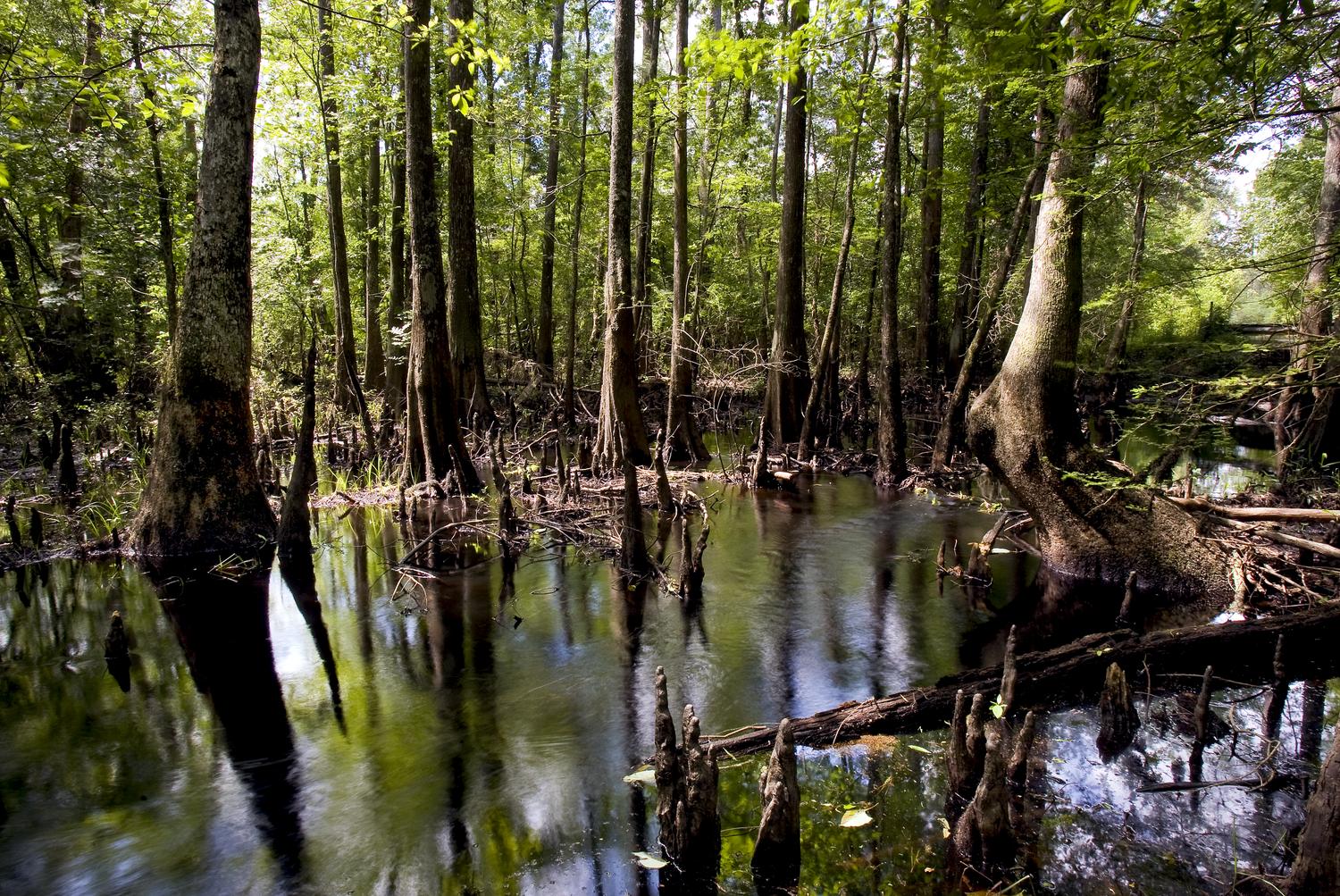
Following June 1865, those newly freed Afro-Texans who’d heard the news still had to battle the psychological toll of slavery, briefly remaining bound to the familiarity of plantations for fear of white violence, racist policies, and uncertainty. Eventually, Freedmen established more than 500 Freedom Colonies and even migrated to urban centers like Houston for better employment opportunities as well as, they hoped, safety. According to the National Park Service, “Emancipated people settled in the Big Thicket [a forested region in Deep East Texas known as the ‘biological crossroads of North America’] and survived off the land, using the woods of southeast Texas for homesteading, hunting, and foraging.”
And, prior to 1865, many Afro-Texans reclaimed their sovereignty and autonomy well before the federal government acknowledged their basic humanity, though there’s a dearth of centralized information about Black placemaking in Texas from this time. This reclamation was called “marronage”—a term borrowed from French for this act of antebellum self-emancipation. The word most often refers specifically to runaway slaves, or “maroons,” who broke free to set up isolated communities in places like East Texas, Louisiana, and throughout the Global South.
Ferns in a bog along the Kirby Nature Trail in the Big Thicket National Preserve in Kountze in October 2005 (Randy Mallory/UNT)
There are only piecemeal accounts of how Black maroons actually created their own communities in the dense, jungle-like swamps and forests of Deep East Texas. Newspaper clippings and oral histories leave just crumbs of stories related to these outlaws who sought refuge in the Thicket.
Regardless, marronage showcases that some Black Texans had already gained sovereignty long before it was granted to them. Maroon communities in the woods embodied the intricate connection between the natural world and Black people. Ecospirituality, reciprocity, and Indigenous technologies from Africa and America have always been the drumbeat of Black survival in this state.
Diana Jones Allen, director of landscape architecture at the University of Texas at Arlington, has dedicated much of her research to the history of maroons in Coastal Louisiana and the connection between environmental justice, identity, and cultural landscapes.
From the Carolinas to Haiti, Brazil, Jamaica, and even Florida, Allen has described how Black maroons operated as landscape architects who had the forethought and technical skills to work with the natural world. Allen’s work points to why studying Black marronage is essential to both ecological preservation and understanding the true meaning of freedom in Texas, on Juneteenth 161 years later.
The Texas Observer spoke with Allen in early June. The conversation has been edited for length and clarity.
TO: What is a maroon community, and why are they important?
Maroons were self-liberated enslaved people. I call them self-liberated because they were not freed. They chose to liberate themselves.
In the U.S., escaped enslaved people [in general] were trying to go and be free in the North. Marronage was different because not only did they not want to be enslaved, but they didn’t want to be a part of the system at all, right? They saw the flaws. … It’s not just that [maroons] were people that were trying to escape enslavement. Maroons were different. They wanted to make their own communities, their own way of living, and their own values. And so they had to be isolated to do that.
Oftentimes, we talk about slavery, as if there was slavery and then there was 1863 or 1865 and then everybody was free. But there’s so much messiness in between that. Can you expand on that?
Enslavement in the Americas … was really based on capitalism. It was based on production. And this production, of course, took labor. But it also took knowledge, right?
So in Louisiana, the French needed to clear and drain the swamps. The landscape was quite different from the Europeans’. They discovered that in Africa there were certain landscapes, for example Senegambia, where it was a lot like Louisiana. And so people in Africa knew how to build levees and how to do drainage and they also knew how to grow rice. The French were almost about to die, but then they started particularly bringing in slaves that had this knowledge and brought them into Louisiana, which had a similar landscape.
Even if you look at the East Coast, like the Gullah people—they didn’t maroon themselves, they were kind of left there—but they were able to survive. They developed the whole culture because they had this knowledge. Maroon communities throughout Texas, Louisiana, and other places were brought here for this knowledge; they were able to take it into these landscapes and continue to figure it out. And they also exchanged knowledge with Indigenous people.
More than anything else, more than like revolt or escaping, marronage was to the enslaver one of the greatest threats. Because marronage proved that the key to slavery was making other human beings believe that they couldn’t live without you or without this system, but maroons in a landscape somewhere prove to other enslaved people that it is possible that, actually, we don’t really need them and we could live on their own. It was a substantial threat to the slavocracy.
Is marronage actually freedom? If you are forced to go to a place to isolate yourself in order to be free, is that really freedom?
I think the practice of marronage is freedom. I’m finishing up my book, and I’m about to send it off to the press, and one thing I do ask is, ‘What is freedom?’
Freedom is being able to decide for yourself what am I going to do in place of slavery? What am I going to do today? What am I gonna eat? How am I going to dress? And so on the plantation, almost all of those decisions were made by someone else.
Can you tell me more about why maroons had the upper hand in the wetlands, swamps, and forests?
We have this attitude towards nature that anything that can’t be built upon is worthless. So you have to drain it, fill it, clear it. … That land in its “naturalness” has no value, which is totally untrue.
So marronage can then happen in these places that other societies felt were forsaken. … That was one of the positive things for maroon communities; there were places for a time that were felt to have no monetary value.
The other thing is the fauna. Alligators, bobcats, coyotes, all these natural animals that were there that were very threatening, but Indigenous and African communities had a different relationship. A spiritual connection with the plants and animals. Maroons figured out a symbiotic relationship with the alligators and water moccasins and all, wherever they were, be they in the the wetlands of Louisiana or Texas or the hills in Jamaica and Haiti. Which Indigenous people had figured out before Europeans came in.
Why is it that we do hear about maroon communities in places like Florida, Louisiana, and Mississippi, but we don’t hear a lot about Black marronage and sovereignty here in Texas?
If you’re just looking at maroons in the U.S., you’re right; Florida comes up and Louisiana, and there’s a lot of stuff on the Great Dismal Swamp, the sea islands, but you can’t find Texas.
So complicated, right? Because Texas was really Mexico. And then there was this war in 1836 where a group said we’re not going to have slavery anymore, and then some other people said we want to have slavery, and they had a war and they created Texas. And then, you know, Texas tried to be its own state … then Texas became part of the United States. So I think the true history of Texas, especially in terms of Black people, is very complicated and has been submerged. I mean, that’s why I think [Director of The Texas Freedom Colonies Project] Andrea Roberts is so great… finding all those Freedom Colonies and enlightening people.
The “absolute equality” mural in Galveston in 2024 (Josephine Lee)
As Juneteenth approaches, what does the history of marronage tell us about the meaning of freedom?
It tells us that it’s possible, and it’s something that takes action. You can’t really have marronage without slavery, right? That freedom is possible, but you gotta go from the plantation to the thicket.
So I think that’s the message for us, especially today: that we got to go from the plantation to the thicket. It’s gonna be tough, but we gotta take action.
What is lost when we separate environmental history from Black history?
Oh my goodness, you really can’t. There’s this great book. It’s called African American Environmental Thought, and I’ve read that book and I’ve used it so many times.
It’s complicated because on one hand, you know, Black people have a love-hate relationship with certain landscapes because they were landscapes of slavery, right? That’s why a lot of people don’t want to be near a plantation.
And also there’s this misconception too that Black people aren’t environmentalists, but actually we’re some of the first environmentalists. Like you go back to the maroons … that’s one reason, like I said, they brought us here—because we were environmentalists.
And also it’s just symbolic: Like, if the land dies, we die. Not just because it feeds us and gives us air to breathe and water to drink, but spiritually. We’re so connected.
It’s part of our freedom.
The post From the Plantation to the Thicket: Juneteenth, Black Freedom, and ‘Marronage’ in Texas appeared first on The Texas Observer.
Leave a Reply