By MICHELLE L. PRICE
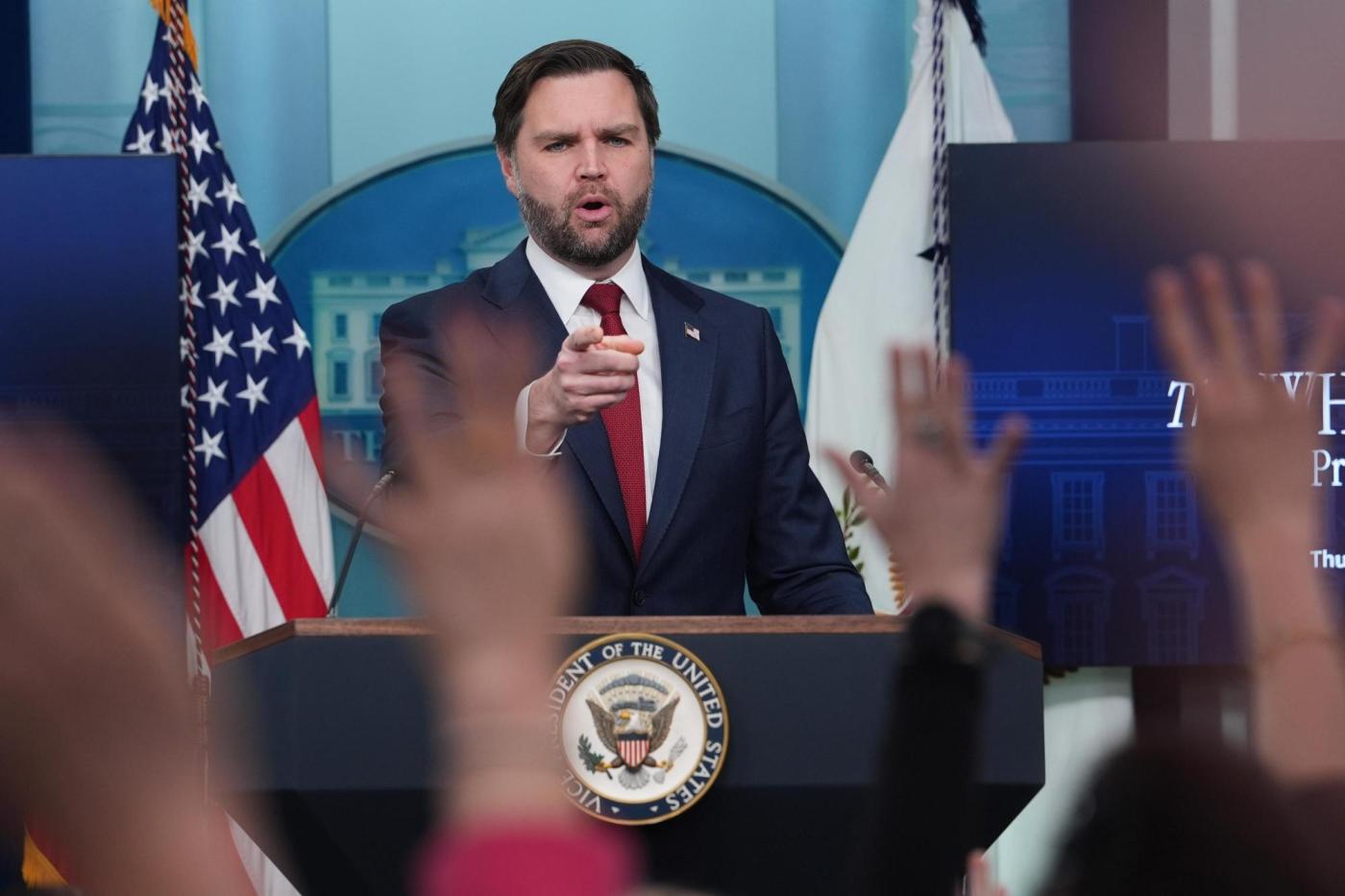
WASHINGTON (AP) — Vice President JD Vance on Thursday blamed a federal immigration officer’s fatal shooting of a Minneapolis woman on “a left-wing network,” Democrats, the news media and the woman who was killed as protests related to her death expanded to cities across the country.
After delays, the missing Jan. 6 plaque will be displayed at the Capitol
Federal immigration officers shoot and wound 2 people in Portland, Oregon, authorities say
FACT FOCUS: Minneapolis shooting prompts spread of misrepresented and fabricated images online
Trump says he wants government to buy $200B in mortgage bonds in a push to bring down mortgage rates
House easily passes spending package as lawmakers work to avoid another shutdown
The vice president, who made his critiques in a rare appearance in the White House briefing room and on social media, was the most prominent example yet of the Trump administration quickly assigning culpability for the death of 37-year-old Renee Good while the investigation is still underway. Good was shot and killed by an ICE officer while she tried to drive away on a snowy residential street as officers were carrying out an operation related to the administration’s immigration crackdown.
Vance said at the White House that he wasn’t worried about prejudging the investigation into Good’s killing, saying of the videos he’d seen of the Wednesday incident, “What you see is what you get in this case.”
Vance said he was certain that Good accelerated her car into the officer and hit him. It isn’t clear from the videos if the vehicle makes contact with the officer. Minneapolis Mayor Jacob Frey said Wednesday that video of the shooting shows arguments that the officer was acting in self-defense were “garbage.”
The vice president also said part of him felt “very, very sad” for Good. He called her “brainwashed” and “a victim of left-wing ideology.”
“I can believe that her death is a tragedy, while also recognizing that it’s a tragedy of her own making and a tragedy of the far left who has marshaled an entire movement — a lunatic fringe — against our law enforcement officers,” Vance said.
His defense of the officer, at times fiery, came as Homeland Security Secretary Kristi Noem and President Donald Trump likewise said the officer’s actions were a justified act of self-defense. Trump said Good “viciously ran over” the ICE officer, though video footage of the event contradicts that claim.
Trump has made a wide-ranging crackdown on crime and immigration in Democratic cities a centerpiece of his second term in office. He has deployed federal law enforcement officials and National Guard troops to support the operations and has floated the idea of invoking the Insurrection Act to try to stop his opponents from blocking his plans through the courts.
Trump officials made it clear that they were rejecting claims by Democrats and officials in Minnesota that the president’s move to deploy immigration officers in American cities had been inflammatory and needed to end.
“The Trump administration will redouble our efforts to get the worst of the worst criminal, illegal alien killers, rapists and pedophiles off of American streets,” White House press secretary Karoline Leavitt said Thursday before Vance spoke.
She called Good’s killing “a result of a large, sinister left-wing movement.”
Vance was selected as Trump’s running mate last year partly for his ability to verbally spar, especially with the media. He opened his remarks by condemning headlines he saw about the shooting, at times raising his voice and decrying the “corporate media.”
“This was an attack on law and order. This was an attack on the American people,” Vance said.
He accused journalists of falsely portraying Good as “innocent” and said: “You should be ashamed of yourselves. Every single one of you.”
“The way that the media, by and large, has reported this story has been an absolute disgrace,” he added. “And it puts our law enforcement officers at risk every single day.”
When asked what responsibility he and Trump bore to defuse tension in the country over the incident, Vance said their responsibility was to “protect the people who are enforcing law and protect the country writ large.”
“The best way to turn down the temperature is to tell people to take their concerns about immigration policy to the ballot box,” he said.
Vance also announced that the administration was deputizing a new assistant attorney general to prosecute the abuse of government assistance programs in response to growing attention to fraud in childcare programs in Minnesota. The position “will be run out of the White House under the supervision of me and the president,” Vance said. The Justice Department did not immediately respond to questions about the new role.
Vance said the prosecutor will focus primarily on Minnesota, and will be nominated in coming days. Vance added that Senate Majority Leader John Thune told him he’d seek a prompt confirmation.
Associated Press writers Konstantin Toropin, Will Weissert, Jonathan J. Cooper and Alanna Durkin Richer contributed to this report.