Relic from the wreck of the Edmund Fitzgerald is returned, plus $600,000 from Michigan

posted in: All news | 0

By ED WHITE

DETROIT (AP) — The state of Michigan is giving up ownership of a rare relic from the famous Edmund Fitzgerald shipwreck, just weeks after it strangely obtained it through a settlement in a lawsuit that was completely unrelated to the doomed freighter.

Larry Orr is getting one of the ship’s life rings back — and the state will still pay $600,000 to settle his lawsuit over police misconduct.

“I feel a whole lot better,” Orr, 77, told The Associated Press this week.

In 1975, eight days after the Fitzgerald sank in Lake Superior, killing all 29 men, Orr said he found the life ring and a piece of a lifeboat on shore in Michigan’s Upper Peninsula.

“There was an eerie feeling. Maybe someone had survived,” he recalled. “I looked around for footprints or any other sign of life for a while and never found anything.”

Fast forward 50 years to this autumn: Orr was in talks with the Michigan State Police to settle a lawsuit. He accused Lt. David Busacca of violating his rights during a sexual abuse investigation that was ultimately discredited. Orr had spent five months in jail, in addition to house arrest, before charges were dropped in 2019.

Orr and his attorney, Shannon Smith, said the state suddenly expressed interest in the Fitzgerald life ring during the negotiations. Orr said Busacca was aware that he owned it when he saw paperwork during a search of his Michigan home.

Orr said he felt he was being manipulated, but he also needed money to move out of a recreation vehicle in Yulee, Florida. Smith said throwing the ring into the deal raised the settlement to $600,000 from roughly $300,000.

“I think we should have gotten a million for everything they did to me,” Orr said.

The AP was first to report the peculiar deal on Oct. 23. When state police were asked to explain why it was appropriate, spokesperson Shanon Banner said the department was “not comfortable.”

Additional talks among lawyers led to a new agreement: Orr gets the ring back while taxpayers will still be on the hook for $600,000 to close the police misconduct lawsuit. Banner acknowledged the terms this week.

For decades, Orr allowed the Great Lakes Shipwreck Museum in Paradise, Michigan, to display the orange ring, which has “Fitzgerald” in stenciled letters. Now he might sell it at auction.

Orr said he’s trying to buy a modular home and his wife’s car “is on its last legs.”

“I need all the money I can get,” he said.

Related Articles


Solar storm forecasts come true, trigger northern lights on Tuesday night


Presents to arrive in time for the holidays, but may be more expensive


Tesla Cybertruck executive leaving the Musk-led automaker


Supreme Court rejects call to overturn its decision legalizing same-sex marriage nationwide


Senate takes first step toward ending the government shutdown

St. Paul offering $2,500 for those facing eviction. Here’s how it works.

posted in: All news | 0

The city of St. Paul is offering up to $2,500 in emergency rental assistance for low-income tenants at risk of eviction. The “Emergency Rental Assistance and Eviction Prevention Program,” or ERA, is open for applications.

To receive ERA funds, landlords must agree to not evict the tenant receiving assistance. The goal of the program is to help prevent eviction and homelessness through one-time grants.

The program was funded by $1 million from this year’s city budget following collaboration from the mayor’s office, the Department of Planning and Economic Development, Ward 7 City Council Member Cheniqua Johnson’s office and the unanimous support of the city council. It revives and builds upon an anti-displacement program launched by the city during the COVID-19 pandemic using funding from the federal American Rescue Plan Act.

Related Articles


‘Living in America’ examines the housing crisis through comedy and real experience


Young homebuyers lose more ground in housing market as states struggle to help


‘It is a crisis’: Mayors share how grappling with housing has shaped their jobs


Minnesota ends Medicaid-funded housing stabilization program beset by fraud accusations


Foreclosures are up. Here’s why experts aren’t worried

“My ward has one of the highest eviction rates in Ramsey County, and that is simply not okay,” said Johnson, in a written statement. “We needed to bring this program back, expand who we can help, and make sure resources reach people faster. Everyone deserves stable housing.”

To be eligible, applicants must be able to verify a household income at or below 80% of area median income and provide proof of a pending eviction such as a 14-day notice or housing court summons. The city council is exploring continuing to fund the program in 2026. For more information, visit tinyurl.com/EvictionHelpStp25.

What are prop bets, and why can’t sports leagues escape them?

posted in: All news | 0

By MARK ANDERSON, AP Sports Writer

LAS VEGAS (AP) — Major League Baseball and its affiliated sportsbooks offered a fast reaction Monday to the latest on a growing list of sports betting scandals, capping bets on individual pitches at $200 and excluding them from parlays to keep those prop bets from jeopardizing the integrity of the sport.

Related Articles


Robin Lod shares uncertainty on his future with Minnesota United


High School Hockey: Hill-Murray poised for another run following abrupt exit last season


Gophers can’t keep up with Missouri in a 83-60 loss


High School Football: Thursday’s state semifinal predictions


High School Football: How Lakeville South’s deep connections spurred a deep playoff run

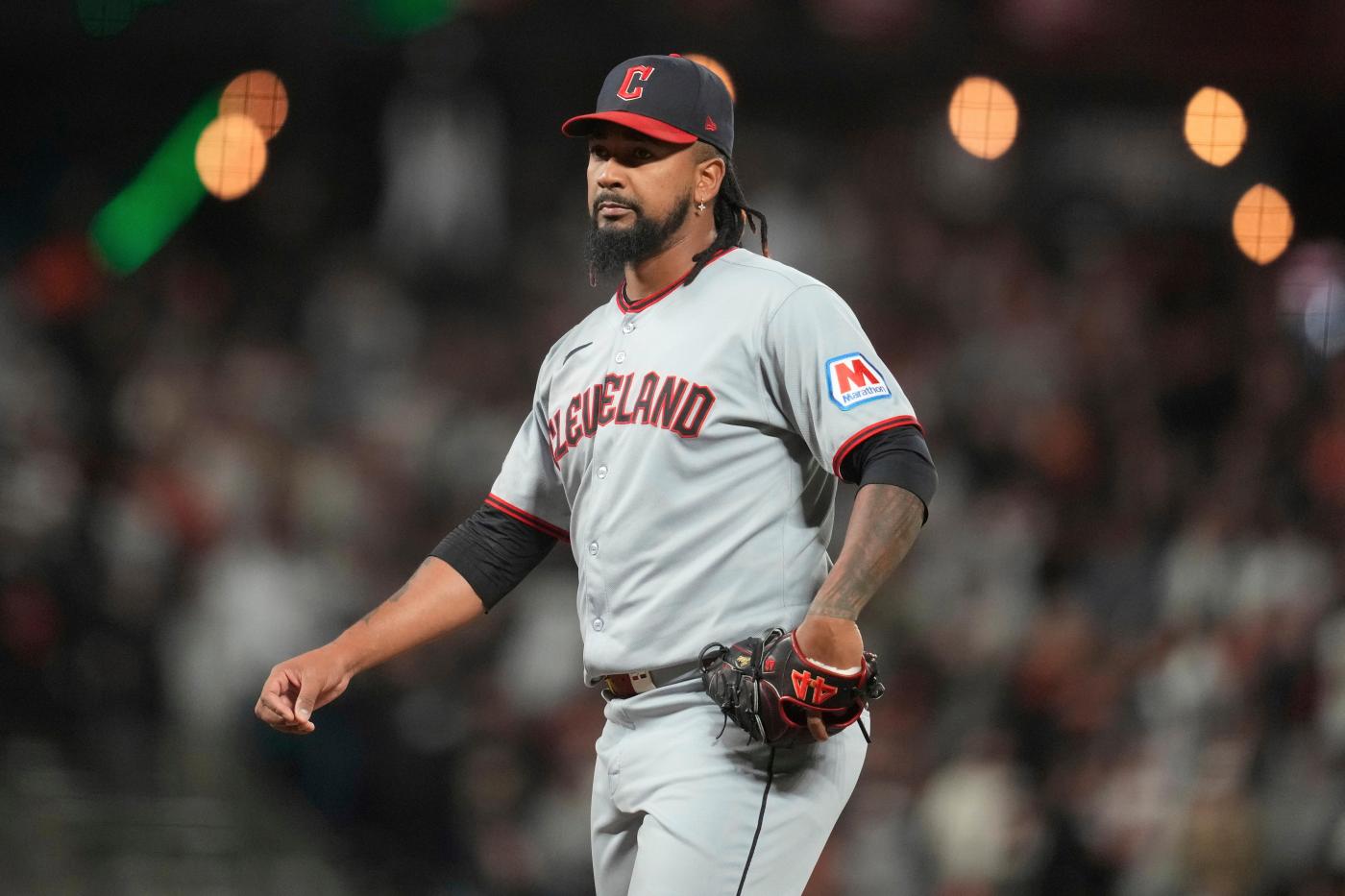
That decision came a day after Cleveland Guardians pitchers Emmanuel Clase and Luis Ortiz were indicted on charges they took bribes from sports bettors to purposely throw certain types of pitches that would pay off bets. Bettors allegedly made at least $460,000 off the rigged pitches.

Prop bets are also at the center of a scandal in the NBA. Miami Heat guard Terry Rozier was arrested Oct. 24 and accused of providing inside information on teammates’ injuries to gamblers and removing himself prematurely from an NBA game.

The four major North American sports leagues and many of their teams have embraced legal wagering and formed partnerships with sports-betting companies while at the same time insisting the integrity of their games are what matters most. Prop bets have become a point of contention. Here’s what to know.

What are prop bets?

Gamblers can bet on anything from how many yards a quarterback will throw for in a game to how many points an NBA player will score. In-game wagering allows for even more granular betting, such as whether the first pitch in the fourth inning of an MLB game will be a strike.

Prop bets that depend entirely on the efforts of one person — like the ones Clase and Ortiz are charged with targeting — are ripe for exploitation. MLB Commissioner Rob Manfred and NBA Commissioner Adam Silver are among those who have asked for limits around such wagers.

Ohio Gov. Mike DeWine has called for the Ohio Casino Control Commission to end player-specific micro betting entirely.

Others have suggested allowing payoffs only on the over — like predicting a player will score more than 20 points, but not fewer — because it would be difficult to rig that kind of outcome. Even before baseball made its announcement, betting limits also have been floated as a possible way to at least curb gamblers working together with athletes to alter how games are played.

Are prop bets here to stay?

MLB’s announcement Monday about limiting action on pitch-level prop bets marked a rare win for those concerned about them. MLB said in a statement that “most prop bets present limited integrity risk because they take into account multiple events that are influenced by more than one actor. However, ‘micro-bet’ pitch-level markets (e.g., ball/strike; pitch velocity) present heightened integrity risks because they focus on one-off events that can be determined by a single player and can be inconsequential to the outcome of the game.”

Pitch-level micro bets are hardly the only wager offered by books that can be impacted by just one player. Think of minutes played, yards gained or points scored. Such bets are easy to find and also dictated by actions of individual athletes.

Commercial sports betting revenue in the U.S. is already over $10 billion this year, according to the American Gaming Association. With that sort of money at stake, it’s highly unlikely prop bets are going away. Betting partners have become a tremendous source of income for leagues and teams, and prop bets are a big driver. For the sportsbooks, too, because they can massively expand their wagering menus.

Prop bets also help keep gamblers engaged with game action, even in blowouts. That benefits leagues, teams and sportsbooks at a time when alternative entertainment options have never been more plentiful. Some leagues, including the NBA and PGA Tour, have even experimented with betting-specific alternate broadcasts to spur that engagement.

How do leagues protect themselves?

All four major North American leagues use monitoring services that track in real time for unusual betting activity. If any is detected, that information is reported immediately to that specific league.

It’s unclear whether MLB’s service tipped off baseball that something could be afoul with the Guardians players, but it was the league that notified authorities of a potential problem.

Rozier is a subject in a larger-scale FBI investigation that resulted in more than 30 arrests, though the NBA conducted its own inquiry and said it found no evidence of wrongdoing. Whether the NBA was alerted through its monitoring service is uncertain.

Do the leagues have an integrity problem?

It depends. Those who support legalized sports betting say the system is working as designed because perpetrators are being caught. It’s much easier to track if athletes are involved with gambling than it was when most wagers were handled out of sight through illegal bookies. Detractors argue that easy access to legal betting attracts those, including athletes, who otherwise wouldn’t gamble on sports.

Judge denies New Jersey Rep. McIver’s request to dismiss Trump administration charges

posted in: All news | 0

By MIKE CATALINI, Associated Press

TRENTON, N.J. (AP) — A federal judge on Thursday denied Democratic Rep. LaMonica McIver’s motions to toss out a prosecution against her stemming from a visit to an immigration detention center this year.

Related Articles


Federal workers question whether the longest government shutdown was worth their sacrifice


President Trump signs government funding bill, ending shutdown after a record 43-day disruption for country


The timeline for SNAP benefits remains uncertain, even as the government is set to reopen


FAA says flight cuts will stay at 6% because more air traffic controllers are coming to work


California revokes 17,000 commercial driver’s licenses for immigrants

U.S. District Judge Jamel Semper also said he would reserve judgment on one of the New Jersey congresswoman’s motions to toss the case brought by acting U.S. Attorney Alina Habba, who was President Donald Trump’s former personal attorney.

McIver sought to dismiss the case against her on the grounds that her visit to Newark’s Delaney Hall immigration detention center in May was protected on the grounds of constitutional legislative immunity as well as selective and vindictive prosecution.

Semper wrote that the congresswoman failed to show the prosecution was vindictive and that her actions were “wholly disconnected” from the oversight she was conducting as a member of Congress.

The case is a high-profile clash between Trump’s second administration and a Democratic lawmaker who has been sharply critical of the president’s policies. McIver has pleaded not guilty and vowed to continue her work as a lawmaker.

McIver as charged by Habba, a Republican, after the May 9 visit to Delaney Hall. Immigration and Customs Enforcement uses the privately owned, 1,000-bed facility as a detention center.

She was indicted in June on three counts of assaulting, resisting, impeding and interfering with federal officials. Two of the counts carry a maximum sentence of up to eight years in prison. The third is a misdemeanor with a maximum punishment of one year in prison.

Habba’s tenure as acting U.S. attorney for New Jersey is being challenged in court, with appellate judges having heard arguments in that case and a decision pending.

A nearly 2-minute video clip released by the Department of Homeland Security shows McIver at the facility inside a chain-link fence just before Newark Mayor Ras Baraka’s arrest on the other side of the barrier, where other people were protesting. McIver and uniformed officials go through the gate, and she joins others shouting that they should circle the mayor.

The video shows McIver in a tightly packed group of people including officers. At one point her left elbow and then her right elbow push into an officer wearing a dark face covering and an olive green uniform emblazoned with the word “Police.”

It is not clear from police body camera video if the contact was intentional, incidental or the result of jostling in the chaotic scene. The judge’s opinion on Wednesday cites video footage and says McIver pushed and was pushed during the incident.

The government’s complaint alleges that she “slammed” her forearm into an agent and then tried to restrain the agent by grabbing him.

The indictment also says she placed her arms around the mayor to try to stop his arrest and says again that she slammed her forearm into and grabbed an agent.

A trespassing charge against the mayor was later dropped.

Members of Congress are legally authorized to go into federal immigration facilities as part of their oversight powers, even without notice. Congress passed a 2019 appropriations bill spelling out that authority.

McIver first came to Congress in September in a special election after the death of Rep. Donald Payne Jr. left a vacancy in the 10th District. She was then elected to a full term in November.