Every year, the entire staff of National Geographic — writers, explorers, photographers — get together to decide the best places to visit in the year to come.
Related Articles
Going to Lambeau for the Vikings game? Here are my favorite spots to eat in Green Bay
Feeling right at home in Scotland
One Tech Tip: iPhone users can now add US passport info to their digital wallets
Joshua Tree short-term rental frenzy cools, but community is changed forever
Airlines are optimistic about a quick recovery ahead of Thanksgiving once FAA ends flight cuts
It’s like the world’s most qualified travel company is giving you advice for free. Getting there, now that will cost you – although for 2026’s picks, some destinations for U.S. residents are easier to reach than you might think.
“Our annual Best of the World feature will inspire you to explore Spain’s Basque Country beyond a total solar eclipse, hike a coast-to-coast trail in South Korea, plan a road trip on America’s iconic Route 66, or celebrate 800 years of maritime history in England,” write the magazine’s staff.
Domestically, places that made the list include Pittsburgh, Pennsylvania (impressive arts and culture); Maui, Hawaii (recovering after the 2023 wildfires) and the Badlands of North Dakota (the soon-to-open Theodore Roosevelt Presidential Library). In no particular order, here are some other destinations on the magazine’s list of 25.
National Geographic’s best places in the world to travel to in 2026
1 The Dolomites, Milan, Italy
2 Vancouver, Canada
3 Beijing, China
4 Rabat, Morocco
5 Hull, Yorkshire, England
The city of Tulsa, Okla., has preserved its historic Meadow Gold neon sign to shine bright over Route 66 (now 11th Street). (Photo by Scott Varley, Daily Breeze/SCNG)
When the new Ken Burns documentary series “The American Revolution” premiered on PBS on Sunday, it marked the end of a filmmaking journey that began almost a decade ago.
“Ken always says these films take 10 years,” says Sarah Botstein, who co-directed the series with David Schmidt and Burns. “From the second he goes, ‘We’re going to make “The American Revolution”‘ to when it broadcasts is 10 years.”
That’s two years longer than the actual length of the American Revolution, but the Founding Fathers and the Continental Army were making history in real time, while Burns and his Florentine Films team were reading and researching nearly 250 years later.
Filmmaker Ken Burns co-directed the new PBS documentary series “The American Revolution” with David Schmidt and Sarah Botstein. It premieres on Sunday, Nov.16, 2025. (Photo by Stephanie Berger)
Sarah Botstein co-directed the new PBS documentary series “The American Revolution” with Ken Burns and David Schmidt. It premieres on PBS on Sunday, Nov. 16, 2025. (Photo by Stephanie Berger)
1 of 2
Filmmaker Ken Burns co-directed the new PBS documentary series “The American Revolution” with David Schmidt and Sarah Botstein. It premieres on Sunday, Nov.16, 2025. (Photo by Stephanie Berger)
“I’ve worked on a few of these big epic series,” says Botstein, who joined Burns’ filmmaking world in 1997. “Our process stays the same with any topic.
“The specific things that have to do with the 18th century and the American Revolution are different from jazz music or World War II or Vietnam,” she says of past docu-series from Burns and his collaborators. “But we start by immersing ourselves in the topic.
“We read a lot. We meet a lot of people. We meet scholars. We’re fundraising. Geoff Ward [who writes screenplays for Burns’ series] starts to familiarize himself with the topic. He’s reading and writing and thinking about the story he’s telling.
“We just jump into the deep end of the pool and try to figure out who’s alive that’s given this a lot of thought or has some direct relationship to the history,” Botstein says.
A few years in, the team starts interviewing the historians and scholars they’ve settled on.
“I’ve been likening it like going to Jane Kamensky’s senior seminar on the American Revolution,” Botstein says of interviewing the history professor and current president and CEO of the Thomas Jefferson Foundation and his home, Monticello.
“Or Vince Brown’s senior seminar on the American Revolution,” she adds, referring to the Harvard professor of African and African-American Studies. “We basically just go to school with the American Revolution.”
The interviews aren’t freeform, notes Schmidt, who joined Botstein on a recent video interview.
“We go with a list of questions, but we’re not trying to connect Point A to Point B,” he says. “‘Could you please lead us?’ We talk about the American Revolution. We’ll see what can make it into the film later.”
“The American Revolution” began broadcasting on PBS stations in two-hour episodes over six consecutive nights Sunday, Nov. 16, and will continue through Friday, Nov. 21, with the first of numerous rebroadcasts as a marathon on Saturday, Nov. 22, and Sunday, Nov. 23.
In an interview edited for length and clarity, Schmidt and Botstein discussed what they learned in their deep dive into the American Revolution, how concepts such as democracy and liberty shifted during and after the revolution, what the series might mean to viewers today, and more.
Q: Most of us remember a few highlights about the American Revolution: Paul Revere’s ride, Lexington and Concord, Washington crossing the Delaware. What did you learn in the deep dive you took?
David Schmidt: There are two things that definitely were unlocked in my brain that I think are incredibly important. One is that while the American Revolution did win American independence, did unite the states, did create the republic that we operate under, those weren’t the goal at the start of the war.
At the time of Lexington and Concord, the goal was to liberate Boston, have a redress of all these grievances, and restore the way we operated within the British Empire to the way it used to work back when we were all happy. Independence, union, and republic were outcomes of the revolution. They were necessary in order to win the revolution.
The other, which should be so obvious, is something that Maya Jasanoff, [a historian specializing in the British Empire], says in the film: “The United States came out of violence.” That should be self-evident when we’re talking about a war. But I don’t think it is.
Sarah Botstein: I think how long the revolution took. And, obviously, nobody knows how history is going to go. We’ve all been talking about this. Ken will say, “George Washington didn’t know he’s going to be George Washington.” The founders couldn’t decide if they were going to declare independence or get the aid of a foreign power and try to throw off the Crown.
Nobody knows how things are going to happen. We feel that today. There are large pieces of the story that I think are left out, as your question suggests, of the four or five things we collectively think we know about the revolution.
It’s also the underdog story of all time. It’s so surprising and unlikely that we’re going to win. It sort of comes down to us [through time] as this great thing that we did – rather than this totally unlikely, surprising thing that we did.
Q: Talk about democracy, and how it became this revered result of the revolution when the series shows its origins as almost unplanned.
Schmidt: Democracy is something that we as Americans have struggled to define for 250 or more years. Some of the historians in the film make the point that some of the big-name founding fathers were actually afraid of democracy. They thought it similar to anarchy. If you give power to the individual, every individual, what do you have left?
I think that democracy, such as it came out of the American Revolution, was, as the writer Bill Hogeland says in the film, an unintended consequence of the revolution. What that is, I believe, is that in order to win this war, the leaders of the patriot coalition had to offer more rights and freedoms than had existed before the revolution. And you see that play out in the Bill of Rights.
Democracy, one man, one vote, actually isn’t something that happens at the end of the revolution. It just kind of increases through the ages of the revolution and continues through the course of American history.
Q: The series also makes clear that the liberty and freedom the founders fought for in the revolution didn’t apply to everyone. Black Americans, Native Americans, women are not fully vested.
Botstein: The Declaration of Independence says “all,” right? So if you say “all,” even if you don’t mean it, eventually people are going to hear that and be inspired to push, as Maggie Blackhawk [a law professor and legal historian at New York University] says, the levers of power.
We spent a lot of time thinking about how to edit the scene on the Declaration of Independence. How to square all the complexities and ironies and complicated things about who wrote it, when it was written, and what it meant then to what it means now. It took us a long time to figure out how to celebrate the Declaration of Independence, how to point out its ironies and its failings and to see it as inspirational.
Schmidt: What might surprise people is how quickly people at the margins pick up the ideas of the Declaration and begin using them for themselves. There’s Lemuel Hayes [a prominent Black minister and Revolutionary War soldier] by the end of the year writing that liberty is everybody’s. I think it will surprise people that people at the time recognized the inconsistency in some of the arguments patriots were making.
Certainly, Abigail Adams was saying that. Phyllis Wheatley [the first Black American to publish a book of poetry] was saying that. It’s not just a presentist interpretation looking back on the past. It’s letting the people of the time themselves talk about that.
Q: Both of you worked on Ken’s series on Vietnam, which might be the most visually documented war in history. Here, there were no photographs, video or film. How did you adapt?
Botstein: I think we got better at it as we went. It’s pretty daunting, and I certainly was like what the (heck) are we going to do? We’re making a film before photographs and newsreels.
So first, we have to bring in all the stuff that’s been done over 250 years in terms of paintings and interpretations. Then, think about this as a story of land, right? It’s a vast continent. We moved north to south during the war. It was fought in every season. The weather plays a major role.
We’re a fairly organized, neurotic group of people. So we think, “OK, we’ve got five or six years. We’ve got to be winter here, summer here [for video shots of the locations where key events occurred]. We got better as went. I think in terms of how we worked with the reenactments and re-enactors.
We would obviously go to Lexington and Concord. They’re going to have a major reenactment. We’re going to go shoot it with a bazillion cameras. But we’re also going to have to get to know a few of those re-enactors and do smaller shoots.
Everything was very impressionistic. We shot through glass, we shot at a distance, we always had a smoke machine with us.
And we were fairly reliant on the extreme integrity of the living history museums, places like Colonial Williamsburg, Sturbridge Village [in Massachusetts], the Longhouse at Ganondagan in upstate New York. Those people were extremely generous to us.
Schmidt: An 18th-century war was so different from a 21st-century war. You can’t really imagine the human effort it takes to make the war effort work without seeing the people and movement in some way. That’s why we needed the re-enactors. You need to see them walking, going through mud.
Thousands of people, not just soldiers; there are women and children and other civilians following the army. There’s animals. It’s a moving village. You also want to see what it took to build the munitions, hammering away at a rifle as it’s being made. You want to see people’s hands make the uniforms. This is really a handmade war effort.
Q: People watching this series can learn a lot about the American Revolution. What lessons can it provide people today?
Botstein: Annette Gordon-Reed has a great bite at the very end of the film where she says she believes that the founders wanted us to be an engaged, active group of citizens. Education is at the heart of the founding principles of the United States. Citizenship is right behind it. You’re going from being a subject [of the Crown] to a citizen in the American Revolution.
And over the last 250 years, we’ve made good on who’s a citizen, who has a right to vote, who is an active member of this now-working republic-democracy. So I think citizenship is at the heart of the movie, as is patriotism.
I think being patriotic doesn’t mean that you just stand around mindlessly waving a flag. It means you are an active member of your community. You know who’s on your local school board. You care about your local senate race. You don’t pick up your head every four years and scream about the president.
They were worried about executive overreach. They were worried about a too powerful executive branch. The more I learned, the more I thought this Congress was what they worried about. They wanted Congress to be the voice of the people and to check the president.
We need to actually know what the founders actually thought about. My takeaway is a really interesting version of patriotism and citizenship that I did not understand 10 years ago, and I hope that comes through in the show.
Schmidt: One thing I get out of this story is that the times they lived through were incredibly uncertain. And in that uncertainty, there’s a lot of scary things. There can be terror in that, but there’s also a lot of possibility. People came together and did the work and got something done.
I think that’s a universal lesson that at times of uncertainty – and I don’t think that’s a particularly controversial take, that this is a time of uncertainty – there’s possibility in that uncertainty.
Related Articles
Review: ‘Stumble,’ NBC’s cheerleader mockumentary, gives you something to root for
Column: Women grapple with profound loneliness in a trio of new TV shows
A happy circumstance: Bob Ross paintings sell for more than $600K to help public TV stations
Diane Ladd, 3-time Oscar nominee, dies at 89
Paramount to lay off 2,000 employees shortly after its merger with Skydance
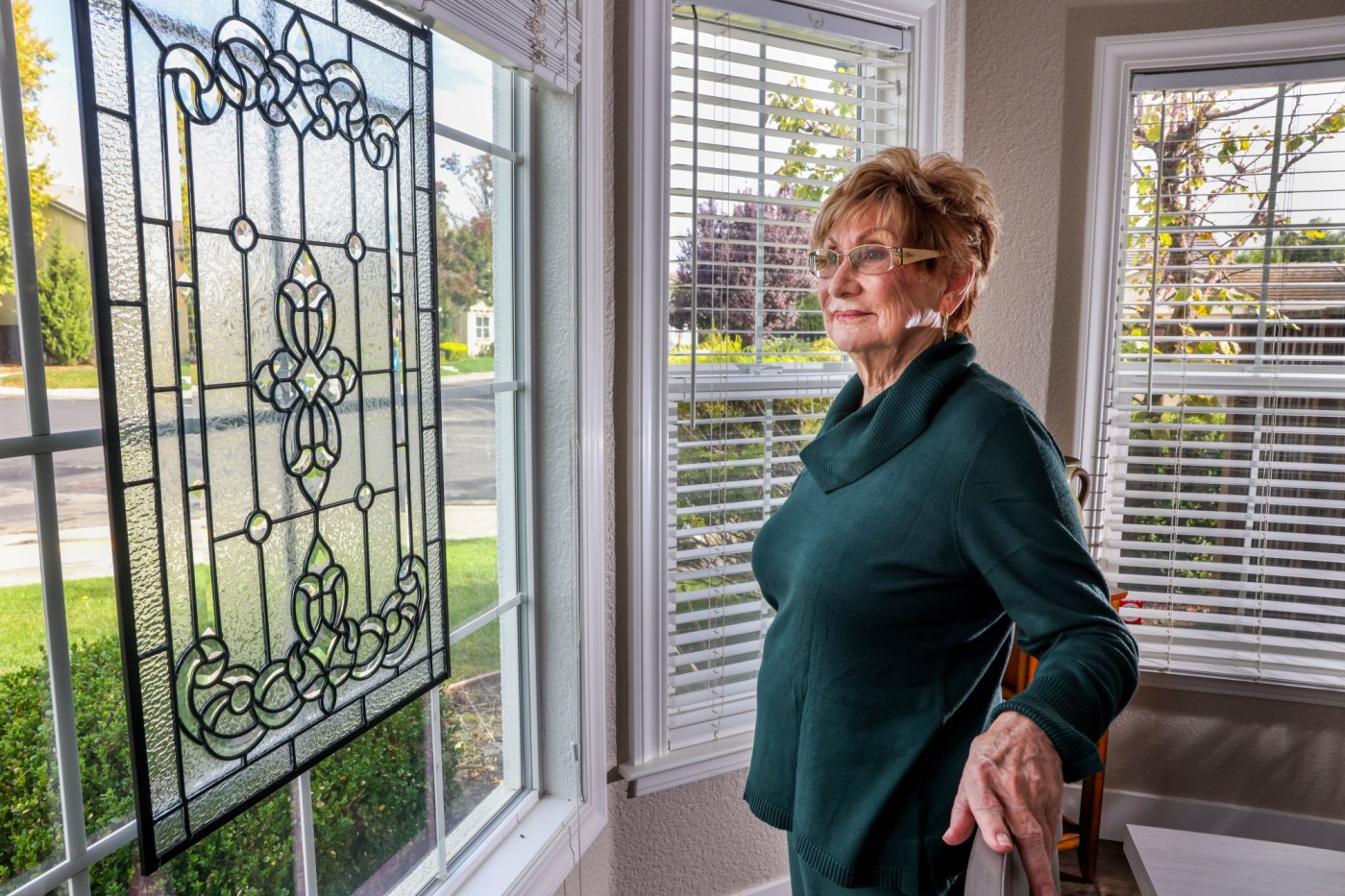
Kathleen Ford of Solano County was a nurse for more than 20 years, until one day she squatted down to help a patient and, hobbled by terrible joint pain, couldn’t stand up.
Then in her 60s, Ford had been diagnosed with lupus years earlier. It’s a mysterious autoimmune disease that drives inflammation as the body’s own immune system fights tissue and organs instead of foreign intruders like viruses and bacteria. Symptoms are a rollercoaster, from hair loss to joint pain that afflicted Ford so badly that she had to quit the job she loved. Strange rashes also broke out on her legs — then quickly disappeared.
Related Articles
Medica to acquire 300,000 UCare health insurance accounts in Minnesota, Wisconsin
A closer look at the unapproved peptide injections promoted by influencers and celebrities
NIH funding cuts have affected over 74,000 people enrolled in experiments, a new report says
Novo cuts Wegovy prices, but doctors still see cost challenges for patients
FDA adds strongest warning to Sarepta gene therapy linked to 2 patient deaths
About 1.5 million Americans have lupus and almost all — 90% — are women There is no cure. Treatments may relieve symptoms, but the troubling side effects can include osteoporosis and eye damage. More rarely, lupus can be fatal.
“It’s not a fun disease, at all,” said Ford, now 77, who lives in the northern Solano County city of Dixon. “You never know when it’s going to exacerbate. And for no reason.”
The cause of lupus has eluded medical researchers for decades. But this week a team of Stanford Medicine researchers claim they’ve cracked the code, a development some independent lupus experts described as a “major breakthrough” that could lay the groundwork for a potential cure.
In a paper published Wednesday in the peer-reviewed journal Science Translational Medicine, the Stanford researchers said they have connected the dots between lupus and the Epstein-Barr virus, a virus 95% of Americans carry.
According to the study, that common virus infects certain white blood cells that are part of the immune system until, ultimately, more and more cells are recruited into a battle against the command centers of cells in one’s own body.
Betty Tsao, a prolific autoimmune disease researcher and professor of medicine at the Medical University of South Carolina, said other biological factors may complicate the race to cure lupus. But she described the Stanford research team’s paper as “a major breakthrough” and said the study is “convincing” in illustrating the biology behind lupus.
“This is an exciting time,” Tsao said. “And we hope we will have much better therapy options for patients in a very short horizon.”
Bill Robinson, professor of immunology and rheumatology at the Stanford medical school, who is the study’s senior author, said the “breakthrough” reveals “the key missing link for how EBV causes lupus,” using the acronym for the virus.
The discovery may reveal new possibilities for effective prevention and treatment. Currently, doctors offer lupus patients a wide range of medications with limited results and a slew of possible side effects.
By identifying the biological process that leads to lupus, Robinson said he and his colleagues can pursue treatment to interrupt the immune system’s misguided — and dangerous — attack against the body it is designed to protect. In particular, the co-authors plan to use a targeted sequencing technology to identify and remove the white blood cells infected with the Epstein-Barr virus.
That would “effectively cure lupus,” he said.
That’s now the mission of EBVio Inc., a privately-held biotech company co-founded by Robinson and two of his Stanford colleagues. On Wednesday, Robinson said they did not have immediate plans to take the company public.
“Our goal is to make a good drug,” Robinson said. “We’re still pretty early-stage.”
The study landed as other scientists advance early research into the application of a cancer treatment to lupus patients. In that approach, CAR T-cell therapy, white blood cells called B cells are removed en masse from the body. That could put lupus into remission, but at the cost of a weakened immune system, according to the Lupus Foundation of America.
In the Bay Area and Northern California, the new research was greeted with gratitude and praise in the community of people living with lupus, or those supporting a family member.
By tying lupus to the Epstein-Barr virus, the Stanford paper “represents a transformative moment for millions of people living with this devastating disease,” said Thomas Bakewell, executive director of the Lupus Foundation of Northern California. “This finding brings us closer than ever to understanding the ‘why’ behind lupus and, importantly, opens the door to new pathways for prevention and cure.”
The possibility of a cure for lupus would “truly be amazing,” said Shauntay Davis-Patterson, 48. The Sacramento parent of two adopted boys knows all too well the journey of living with lupus, over the course of 30 years.
Davis-Patterson has contended with joint paint so severe that she couldn’t walk, hair loss, hospitalizations and bouts with chemotherapy. Lupus has attacked her kidneys so viciously that she’s waiting for a transplant. On top of that, she’s endured the “toxic” side effects of medication intended to help her. Prednisone, a steroid, improved her symptoms, but at the cost of osteoporosis, she said.
“We all kind of suffer in silence a lot because people don’t understand what we go through,” said Davis-Patterson, who runs a support group for lupus patients as part of the lupus foundation.
Ford also developed osteoporosis, a brittleness and weakness in bones, because of Prednisone. And Plaquenil, which eases pain and swelling, can cause eye damage in patients who are older or have taken the drug for many years. Every six months, Ford has a doctor examine the health of her retinas.
But, big picture, both women consider themselves blessed. Davis-Patterson said she is grateful she can run after her boys, and that she was diagnosed quickly all those years ago. Some have to navigate the health system for years to nail down a diagnosis, she said.
And Ford is grateful that she’s as healthy as she is — even after two hip replacements. On Thursday, she laughed and brushed off talk of her symptoms and the pile of pills she has to take every week.
“I’m really not that bad,” she said. “I think I’m one of the lucky ones, actually.”
NEW YORK (AP) — The U.S. stock market is falling sharply again on Tuesday, joining a global-sell off stretching from Asia to Europe, as Nvidia, bitcoin and other Wall Street stars keep falling on worries that their prices shot too high.
Related Articles
Cloudflare outage disrupts ChatGPT, X, other internet services
Judge to explain why he’s approving Purdue Pharma settlement plan, which calls for $7B from Sacklers
US has warned others to avoid loans from Chinese state banks. But it’s the biggest recipient of all
Medica to acquire 300,000 UCare health insurance accounts in Minnesota, Wisconsin
Future data centers are driving up forecasts for energy demand. States want proof they’ll get built
The S&P 500 dropped 1% and pulled further from its all-time high set late last month. The Dow Jones Industrial Average was down 484 points, or 1%, as of 10 a.m. Eastern time, and the Nasdaq composite was 1.5% lower.
Nvidia was again the heaviest weight on the market, and its drop of 3.2% brought its loss for the month so far to 10.8%. That’s a steep enough fall that Wall Street has a name for it: a correction.
What Nvidia does matters disproportionately to investors because it’s the most influential stock on Wall Street. It can almost single-handedly steer the direction of the S&P 500 on some days because of its immense size, after fervent demand for its AI chips helped it briefly top $5 trillion in total value. And the S&P 500 sits at the heart of many investors’ 401(k) accounts.
Nvidia’s and the U.S. stock market’s struggles are a sharp turnaround from months of relentless rallying since April, when Wall Street sold off after President Donald Trump shocked the world with stiff tariffs.
Many big investors still seem to be expecting stock prices to rise further, according to the latest monthly survey of global fund managers by Bank of America Global Research. But when asked what the No. 1 risk for the market is, one with a lower probability of happening but a high chance of damage, 45% pointed to an AI bubble. That beat out trouble in the bond market, inflation and trade wars.
The highest net percentage of investors in 20 years is also saying companies are “overinvesting,” according to the survey. The worry is that all the investment pouring into AI chips and data centers worldwide may not produce the kind of revolution that proponents have been predicting, or at least not as profitable a one.
Other high-flying areas of the market with their own evangelists have also been struggling lately. Bitcoin’s price briefly fell below $90,000 during the morning, down from nearly $125,000 last month.
Home Depot helped drag the market lower after falling 3.1%. It reported a weaker profit for the summer than analysts expected and cited a variety of reasons. Chief among them was a lack of storms, which would have driven customers to buy more home-improvement supplies. But CEO Ted Decker also pointed to “consumer uncertainty and continued pressure in housing” for preventing an expected increase in demand from happening.
Reporting stronger profits is one of the ways a company can make its stock price look less expensive, because stock prices tend to track with earnings over the long term.
Elsewhere on Wall Street, Cloudflare fell 3.1% after an issue at the internet infrastructure provider caused global outages for ChatGPT and other services.
In the bond market, Treasury yields eased. The yield on the 10-year Treasury sank to 4.09% from 4.13% late Monday.
In stock markets abroad, indexes tumbled across Europe and Asia.
Japan’s Nikkei 225 dropped 3.2% after feeling extra pressure from a jump in Japanese government bond yields, reflecting rising risks as Prime Minister Sanae Takaichi prepares to boost government spending and push back the timetable for bringing down Japan’s huge national debt.
South Korea’s Kospi sank 3.3%, and France’s CAC 40 fell 1.6% for two of the larger drops worldwide.
AP Business Writers Matt Ott and Elaine Kurtenbach contributed.