Venezuela’s acting president calls for oil industry reforms to allow more foreign investment

posted in: All news | 0

By REGINA GARCIA CANO, Associated Press

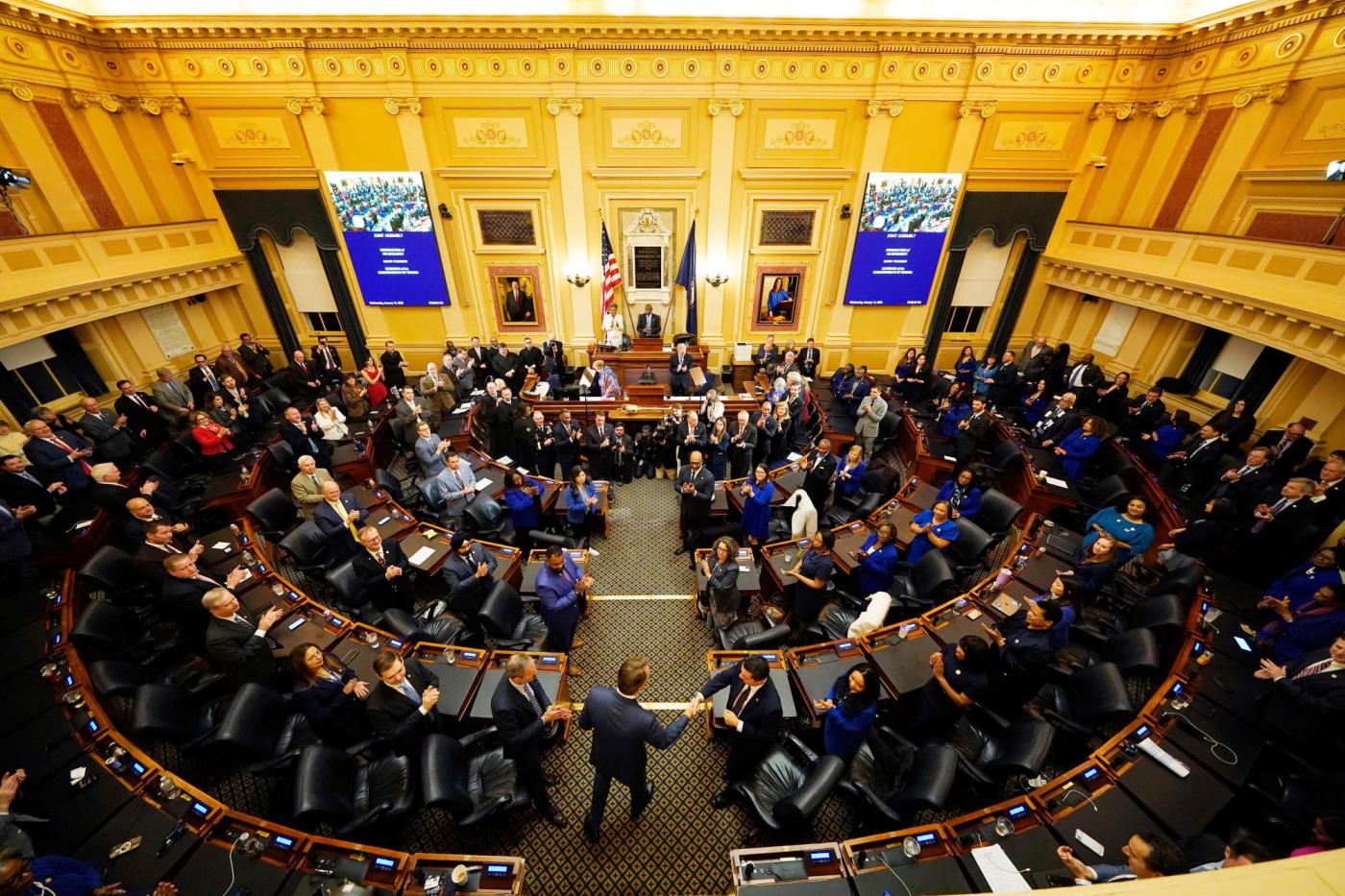
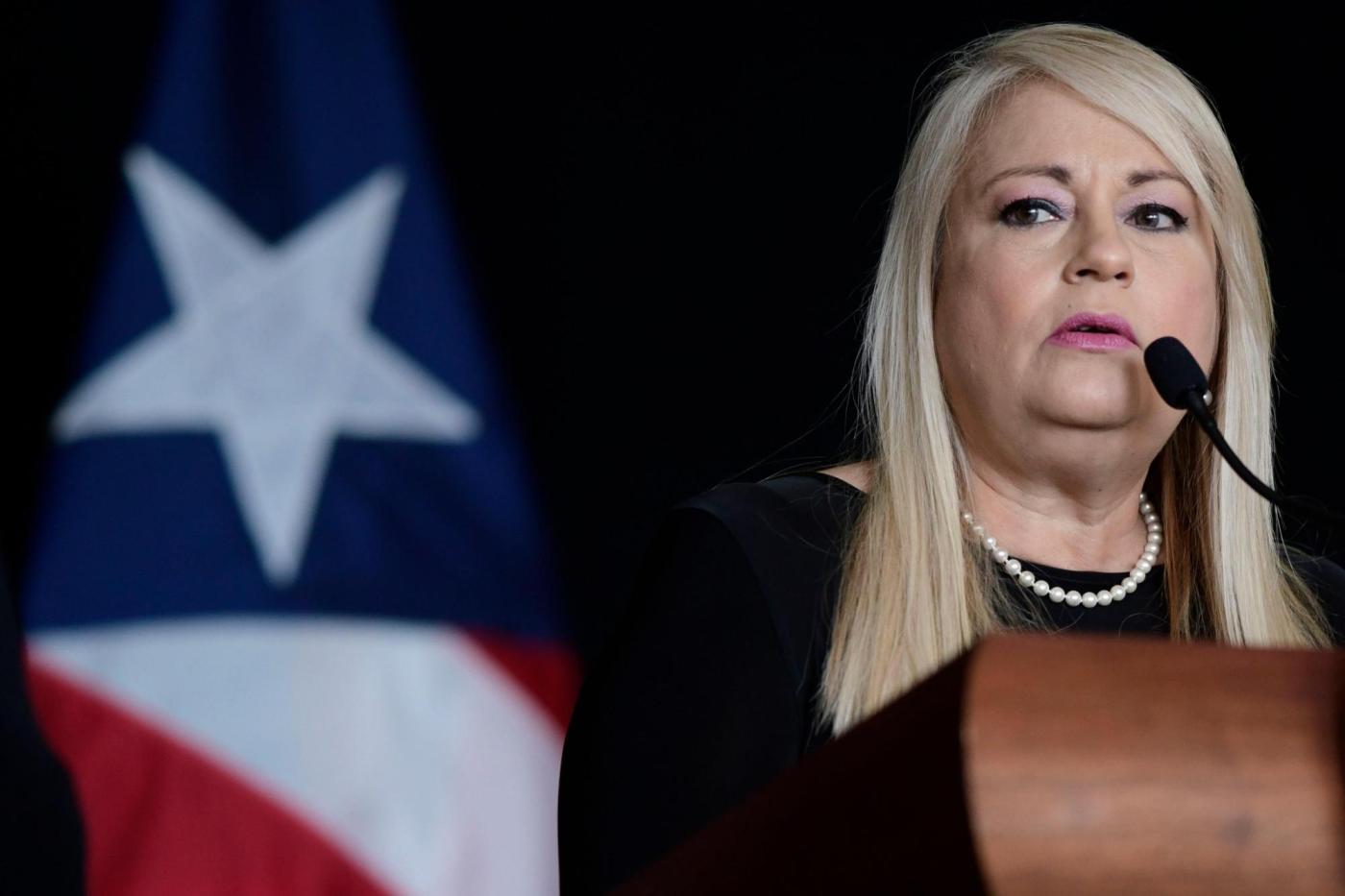
CARACAS, Venezuela (AP) — Venezuela’s acting President Delcy Rodríguez on Thursday asked lawmakers to approve reforms to the oil industry that would open the doors to greater foreign investment during her first state of the union speech less than two weeks after its longtime leader was toppled by the United States.

Rodríguez, who has been under pressure by the Trump administration to fall in line with its vision for the oil-rich nation, said sales of Venezuelan oil would go to bolster crisis-stricken health services, economic development and other infrastructure projects.

She outlined a distinct vision for the future, straying from her predecessors, who have long railed against American intervention in Venezeula. “Let us not be afraid of diplomacy” with the U.S., said Rodriguez, the former vice president who must now navigate competing pressures from the Trump administration and a government loyal to former President Nicolás Maduro.

Related Articles


Israel to honor Charlie Kirk with award for fighting antisemitism


Netanyahu says the announced start of Gaza ceasefire’s next phase is a ‘declarative move’


Iran’s nationwide protests appear increasingly smothered after crackdown and internet outage


European troops arrive in Greenland as talks with US highlight ‘disagreement’ over island’s future


Trump is meeting with Venezuelan opposition leader after cozying up to Maduro’s successor

The speech, which was broadcast on a delay in Venezuela, came one day after Rodríguez said her government would continue releasing prisoners detained under Maduro in what she described as “a new political moment” since his ouster.

On Thursday, Trump met at the White House with Venezuelan opposition leader María Corina Machado, whose political party is widely considered to have won 2024 elections rejected by Maduro. But in endorsing Rodríguez, who served as Maduro’s vice president since 2018, Trump has sidelined Machado.

Rodríguez, who had a call with Trump earlier this week, said Wednesday evening on state television that her government would use “every dollar” earned from oil sales to overhaul the nation’s public health care system. Hospitals and other health care facilities across the country have long been crumbling, and patients are asked to provide practically all supplies needed for their care, from syringes to surgical screws.

The acting president must walk a tightrope, balancing pressures from both Washington and top Venezuelan officials who hold sway over Venezuela’s security forces and strongly oppose the U.S. Her recent public speeches reflect those tensions — vacillating from conciliatory calls for cooperation with the U.S., to defiant rants echoing the anti-imperialist rhetoric of her toppled predecessor.

American authorities have long railed against a government they describe as a “dictatorship,” while Venezuela’s government has built a powerful populist ethos sharply opposed to U.S. meddling in its affairs.

For the foreseeable future, Rodríguez’s government has been effectively relieved of having to hold elections. That’s because when Venezuela’s high court granted Rodríguez presidential powers on an acting basis, it cited a provision of the constitution that allows the vice president to take over for a renewable period of 90 days.

Trump enlisted Rodríguez to help secure U.S. control over Venezuela’s oil sales despite sanctioning her for human rights violations during his first term. To ensure she does his bidding, Trump threatened Rodríguez earlier this month with a “situation probably worse than Maduro.”

Maduro, who is being held in a Brooklyn jail, has pleaded not guilty to drug-trafficking charges.

Before Rodríguez’s speech on Thursday, a group of government supporters was allowed into the presidential palace, where they chanted for Maduro, who the government insists remains the country’s president. “Maduro, resist, the people are rising,” they shouted.

Honduran detained at St. Paul gas station didn’t receive immediate medical attention, sister says

posted in: All news | 0

A man whose arrest by federal officers at a St. Paul gas station was captured in videos and photos, and led to community concerns about his condition, is being held at a detention facility in Texas.

Orbin Mauricio Henríquez Serrano, 27, was able to briefly speak with his sister Tuesday morning.

“He told me he was very hurt, but we only spoke for a few seconds and couldn’t go into detail,” said Conseulo Henríquez Serrano on Thursday. He told her he had not received medical attention and she hasn’t been able to reach him since to find out how he is doing.

Orbin Mauricio Henríquez Serrano stopped at the Speedway at Snelling and Portland avenues in St. Paul for gas on Sunday. He doesn’t have a criminal history, according to a GoFundMe (gofund.me/15cef07b7) started for his family to hire an attorney for him.

The arrest was made by Border Patrol, according to a post on X (formerly Twitter) by Homeland Security. It didn’t name Henríquez Serrano, but referenced video from the scene. He was from Honduras and was issued a final order of removal in 2020, according to Homeland Security. A search of Minnesota court records did not turn up any records with his name.

“The subject refused to obey lawfully given orders and during that time a crowd formed,” said the Homeland Security post. “After multiple warnings and several minutes,” Border Patrol broke the window of the vehicle and arrested the driver.

“During the arrest, the crowd continued to surround Border Patrol who tried to push them back for the safety of everyone,” the post continued. “One US citizen did not comply with the lawfully given order and instead responded by hitting an officer and was arrested.”

U.S. Border Patrol agents take an activist into custody following an altercation at a gas station on Jan. 11, 2026 in St. Paul. (Scott Olson/Getty Images)

When Orbin Mauricio Henríquez Serrano was dragged out of his car, his leg — for which he’d undergone surgery after a car crash — was injured, according to the GoFundMe.

He was restrained by several agents and lost consciousness. “He was then brutally dragged and handled while unable to move or respond,” said the GoFundMe. “Videos show visible wounds on his face and chest during the incident.”

Conseulo Henríquez Serrano said her brother “didn’t deserve to be attacked like that.”

“He wasn’t a criminal, nor was he a threat to the officers; he was just a person who was afraid, afraid to get out of the car and be assaulted, afraid of being sent back to a country he didn’t want to return to,” she said. She added in a video on TikTok that all he wanted was “to live a quiet and peaceful life, with a stable job.”

Border Patrol commander Greg Bovino, responding to a post on X, wrote that Orbin Mauricio Henríquez Serrano “refused to roll the window down as 5 minutes of us asking nicely (too long). This illegal alien sure wasn’t going to be allowed to drive away.”

An ICE website with information about detainees shows Henríquez Serrano is being held at a detention center in El Paso, Texas.

Related Articles


Trump threatens to use the Insurrection Act in Minnesota to end protests


Read Gov. Tim Walz’s full address on ICE actions in Minnesota


MN lawmaker: ICE detains parent at a bus stop in Crystal


St. Paul Public Schools to offer online learning at all schools


Students protest ICE enforcement, walk out of classes, rally at the Capitol

Kaiser affiliates will pay $556M to settle a lawsuit alleging Medicare fraud

posted in: All news | 0

SAN FRANCISCO (AP) — Kaiser Permanente affiliates will pay $556 million to settle a lawsuit that alleged the health care giant committed Medicare fraud and pressured doctors to list incorrect diagnoses on medical records to receive higher reimbursements, federal prosecutors said.

The deal announced Wednesday came more than four years after the U.S. Department of Justice filed the legal claim in San Francisco that consolidated allegations made in six whistleblower complaints.

Related Articles


What you need to know about Grok and the controversies surrounding it


Minifridge recall expands to 964,000 Frigidaires after fire reports


National park staff are asking about citizenship status. Here’s why


Wikipedia inks AI deals with Microsoft, Meta and Perplexity as it marks 25th birthday


Press freedom advocates worry that raid on Washington Post journalist’s home will chill reporting

The affiliates in the settlement include the Kaiser Foundation Health Plan; Kaiser Foundation Health Plan of Colorado; The Permanente Medical Group; Southern California Permanente Medical Group; and Colorado Permanente Medical Group P.C.

Kaiser, based in Oakland, California, is a consortium of entities that together form one of the largest nonprofit health care plans in the U.S. with more than 12 million members and dozens of medical centers.

The lawsuit alleged that Kaiser entities gamed the Medicare Advantage Plan system, also known as the Medicare Part C program, which gives beneficiaries the option of enrolling in managed care insurance plans.

Prosecutors contended that Kaiser “pressured its physicians to create addenda to medical records,” often months or more than a year after an initial consultation with an enrollee, because more severe diagnoses for beneficiaries generally result in larger payments to the plan.

“More than half of our nation’s Medicare beneficiaries are enrolled in Medicare Advantage plans, and the government expects those who participate in the program to provide truthful and accurate information,” Assistant Attorney General Brett A. Shumate said in a statement Wednesday.

Kaiser said the settlement includes no admission of wrongdoing or liability. The company said it chose to settle to avoid “the delay, uncertainty, and cost” of a trial.

“Multiple major health plans have faced similar government scrutiny over Medicare Advantage risk adjustment standards and practices, reflecting industrywide challenges in applying these requirements,” Kaiser said in a statement Wednesday. “The Kaiser Permanente case was not about the quality of care our members received. It involved a dispute about how to interpret the Medicare risk adjustment program’s documentation requirements.”

Letters: We can teach our children about money here in St. Paul for a lot less than $900,000

posted in: All news | 0

Teach our children well — about money, with local resources

Why was St. Paul spending $900,000 for Youth Financial Literacy curriculum in St. Paul Schools and Rec Centers from BlackFem to teach victimhood and “wealth justice”? Why not invest that time and money into developing useful skills to meet the goals of the NAACP and the Federal Reserve of self-esteem, creating lifelong success with money, developing rewarding careers, building wealth, and passing that wealth to the next generation?

There are St. Paul Schools Business Education teachers, local financial professionals, and St. Paul Junior Achievement who are willing to create and deliver a K-12 age-appropriate financial literacy curriculum from a wealth of quality existing resources.  It can be done for 10% of what Mayor Carter’s Office of Financial Empowerment is wasting nearly $1,000,000 of scarce taxpayer money on to pay BlackFem to create a product from whole cloth.  BlackFem would then own the product, and St. Paul would have to buy a license to use a curriculum St. Paul paid to create, with no ownership rights.  That makes no sense.

Don’t reinvent the wheel. Stop wasting money on a new, unfinished, overdue, untested, non-peer reviewed curriculum. With a locally developed and delivered curriculum, St. Paul would own it with the copyrights to evolve it and reproduce it without licensing fees, forever. Maybe even license it to others and create revenue for the city.

I’m sure Mayor Her, with her business acumen, knows financial literacy can be taught far better with far fewer tax dollars.  St. Paul youth are not victims of “the financial system,” they are young people who, with the right fiscal education, can be future millionaires next door.

Gregg Adler, Afton. The writer is a retired St. Paul school teacher.


Relief is at hand!

Because of the billions of dollars we will no longer be spending to support fraud in our government programs, we can now look forward to our elected officials dramatically lowering our taxes.

Every cloud has a silver lining.

John Heller, North St. Paul


On and on and on

The Monday, Dec. 29, article concerning Donald Trump’s war plans in the Caribbean only goes to show how things do not change, ever. Good old-fashioned gun boat diplomacy at its very best. And guess what? For oil. It goes on and on and on. Forget renewable energy. No money to be made there.

Tom Bates, St. Paul


Stop the pandering. Start governing

Minnesotans, how much taxpayer money has to be stolen before we finally say enough? No one expects fraud to be eliminated entirely, but it is unacceptable to build systems that invite abuse instead of preventing it.

This is not an isolated failure. It is systemic, deep and long-standing. Hardworking taxpayers are watching their money disappear while being told this is just how government works. That excuse is insulting.

All three branches of government share responsibility for this mess. Years of weak oversight, political protection, and refusal to act have brought us here. The problem is not a lack of information. It is a lack of courage.

Partisanship has replaced leadership. Decisions are made to protect political interests, not the people paying the bills. That approach has failed Minnesota.

Real people rely on these programs, and unchecked fraud puts them at risk. There is no accountability to voters and no respect for taxpayers asked to give more every year.

Enough. Stop pandering. Start governing. Minnesotans deserve leaders with the backbone to do what is right, not what is politically convenient.

Jay Reeves, Victoria, MN


Minneapolis shows the way on Summit Avenue

St. Paul’s showcase street is threatened by a multi-million dollar overhaul that will remove all the bike lanes — first of their kind in Minnesota — and build an above-grade trail.

Minneapolis is widely regarded as having one of the best bicycling infrastructures in the country. So how might our upstart twin tell us to proceed?

They’d tell us the 9-foot-wide, buffered bicycle lanes on Summit Avenue west of Lexington Avenue are fine just as they are. Minneapolis Public Works confirmed in an OpenCity data request that they have about 20 miles of buffered bike lanes. The email states, “The City has never replaced a buffered bicycle lane with an above-grade bike trail.” And that, “there are no upcoming reconstruction projects that would replace buffered bicycle lanes with above-grade trails.” In other words — stay the course west of Lexington.

A recent pedestrian fatality at Summit and Dale Street has raised additional concerns regarding the project. Minneapolis, like St. Paul, works to create safer streets for walking as well as bicycling. Portland Avenue in south Minneapolis has buffered bike lanes and recently rebuilt the intersection at 34th Street. This innovative design narrows the pedestrian crossing distance on Portland while allowing the buffered bicycle lane to continue up and over the raised walkway. Enhanced pedestrian crossings like this could help slow traffic and provide safer crosswalks at key intersections on Summit.

Slowing down cars is a high priority everywhere. Last summer Minneapolis implemented a pilot project using cameras to issue speeding tickets. The program coordinator, Ethan Fawley, has said that speeding declines up to 97% when cameras are present.

Minneapolis is a bigger city with a much larger budget. Besides their terrific 89-mile network of off-road trails winding through parks and parkways, around the lakes and along rail-trails, they also have an extensive bike system in the city street grid. Almost 80% of this city system consists of on-street, painted bike lanes. There are 140 miles of bike lanes plus an additional 36 miles of “curb-protected,” above-grade bikeways. Everyday bicyclists must be comfortable on both bike lanes and trails.

While the buffered bike lanes on Summit west of Lexington offer safe cycling, the stretch of Summit from Lexington east to Western Avenue has narrower bike lanes, higher traffic counts and greater need of subsurface repairs. This section of Summit merits a closer look by city officials interested in improving bicycle and pedestrian safety.

There’s one area where St. Paul is way ahead of Minneapolis and every other city in the country. Professor Ernest Sandeen proclaimed in his landmark book on the celebrated street, “Summit Avenue stands as the best-preserved American example of the Victorian monumental residential boulevard.” He explained how Prairie Avenue in Chicago, Euclid Avenue in Cleveland, Fifth Avenue in New York and Park Avenue in Minneapolis were all grand boulevards a century ago. But their stately homes, magnificent churches and leafy parkways succumbed to urban development, decay and commerce leaving little to see of their former grandeur.

In St. Paul this grandeur is alive. Summit Avenue stands alone. And with Minneapolis in mind, most of it should be left alone.

Richard Fred Arey, St. Paul. The writer is author of “Twin Cities Bicycling” and founder of the Saint Paul Classic Bike Tour.

Related Articles


Letters: We are living in a time that calls for clarity, courage and leadership


MnDOT to host meetings on MN 280 project, section of highway to close later this year


Date-night dinner specials: Spoil your sweetie for less


Charges: Man, 24, fatally shot teen in North St. Paul apartment after argument over a sweatshirt


St. Paul Public Schools to offer online learning at all schools