
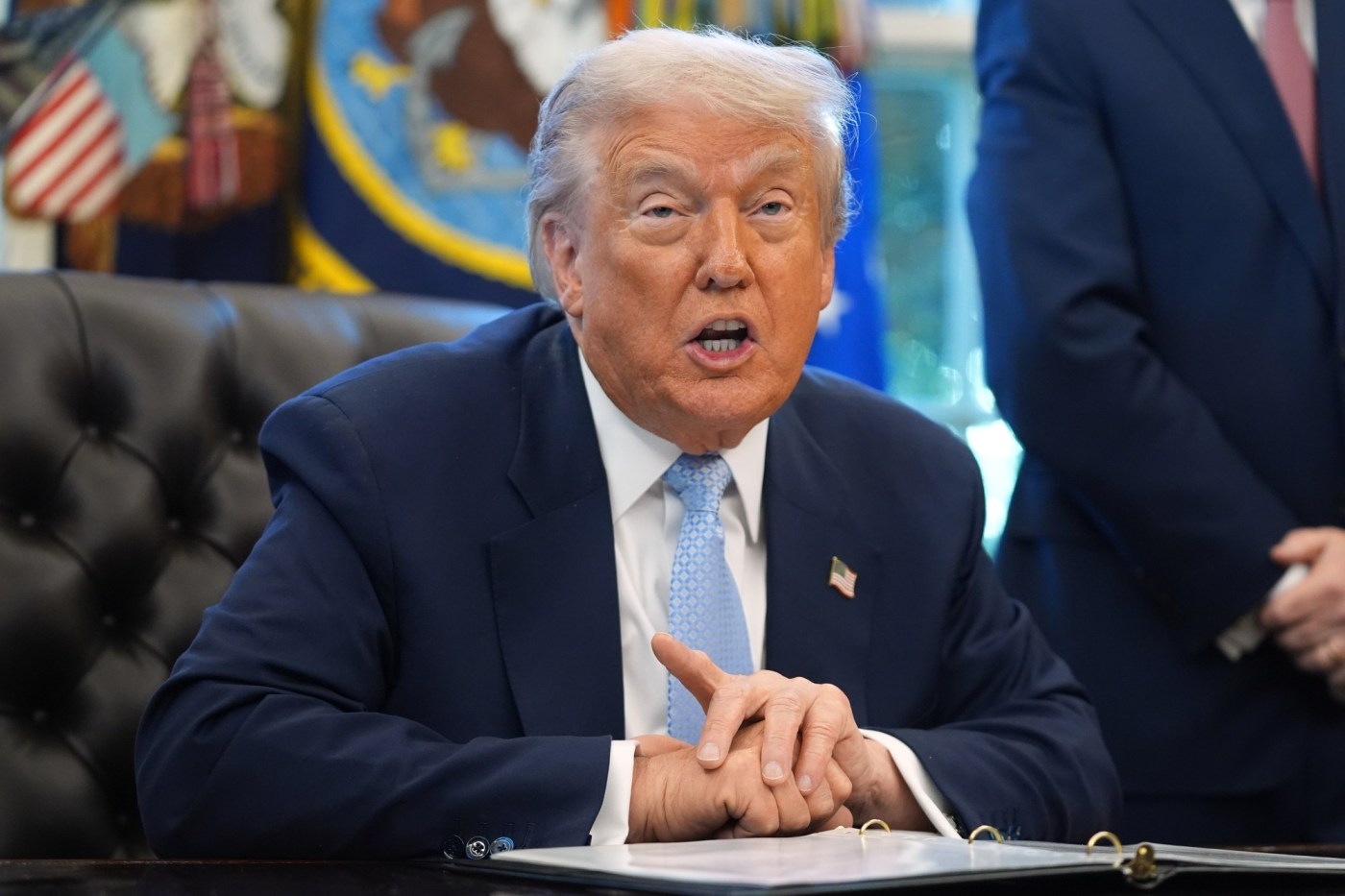
Trump signs bill to release Jeffrey Epstein case files after fighting it for months

posted in: All news | 0

By SEUNG MIN KIM, Associated Press

WASHINGTON (AP) — President Donald Trump signed legislation Wednesday that compels his administration to release files on convicted sex offender Jeffrey Epstein, bowing to political pressure from his own party after initially resisting those efforts.

Trump could have chosen to release many of the files on his own months ago.

“Democrats have used the ‘Epstein’ issue, which affects them far more than the Republican Party, in order to try and distract from our AMAZING Victories,” Trump said in a social media post as he announced he had signed the bill.

Now, the bill requires the Justice Department to release all files and communications related to Epstein, as well as any information about the investigation into his death in a federal prison in 2019, within 30 days. It allows for redactions about Epstein’s victims for ongoing federal investigations, but DOJ cannot withhold information due to “embarrassment, reputational harm, or political sensitivity.”

It was a remarkable turn of events for what was once a farfetched effort to force the disclosure of case files from an odd congressional coalition of Democrats, one GOP antagonist of the president, and a handful of erstwhile Trump loyalists. As recently as last week, the Trump administration even summoned one Republican proponent of releasing the files, Rep. Lauren Boebert of Colorado, to the Situation Room to discuss the matter, although she did not change her mind.

But over the weekend, Trump did a sharp U-turn on the files once it became clear that congressional action was inevitable. He insisted the Epstein matter had become a distraction to the GOP agenda and indicated he wanted to move on.

“I just don’t want Republicans to take their eyes off all of the Victories that we’ve had,” Trump said in a social media post Tuesday afternoon, explaining the rationale for his abrupt about-face.

Related Articles


US Rep. Sheila Cherfilus-McCormick of Florida indicted on charges of stealing $5M in disaster funds


Democratic senator accuses Trump of playing politics with aviation safety during shutdown


5 accused of supporting antifa plead guilty to terrorism-related offense after Texas shooting


Trump says allowing skilled immigrants to train US workers ‘is MAGA’


Joe Biden to attend Dick Cheney’s funeral, as Donald Trump continues to remain silent on his death

The House passed the legislation on a 427-1 vote, with Rep. Clay Higgins, R-La., being the sole dissenter. He argued that the bill’s language could lead to the release of information on innocent people mentioned in the federal investigation. The Senate later approved it unanimously, skipping a formal vote.

It’s long been established that Trump had been friends with Epstein, the disgraced financier who was close to the world’s elite. But the president has consistently said he did not know of Epstein’s crimes and had cut ties with him long ago.

Before Trump returned to the White House for a second term, some of his closest political allies helped fuel conspiracy theories about the government’s handling of the Epstein case, asserting a cover-up of potentially incriminating information in those files.

Trump administration makes major changes to a report it commissioned on FEMA reforms, AP sources say

posted in: All news | 0

By GABRIELA AOUN ANGUEIRA

A draft of a much-anticipated report on reforms to the Federal Emergency Management Agency has been whittled down in size, with recommendations compiled by a council appointed by the president slashed and amended by Homeland Security Secretary Kristi Noem’s office, according to three people familiar with the developments.

Related Articles


US Rep. Sheila Cherfilus-McCormick of Florida indicted on charges of stealing $5M in disaster funds


Democratic senator accuses Trump of playing politics with aviation safety during shutdown


5 accused of supporting antifa plead guilty to terrorism-related offense after Texas shooting


Trump says allowing skilled immigrants to train US workers ‘is MAGA’


Joe Biden to attend Dick Cheney’s funeral, as Donald Trump continues to remain silent on his death

The report “got nuked,” said one former FEMA official. The three people, who spoke to The Associated Press on condition of anonymity to discuss the issue with the media, said the report shrunk from over 160 pages to roughly 20. They said it left council members and other emergency management leaders concerned that some of the recommendations about the country’s disaster preparedness won’t make it into the final copy, which is expected around Dec. 12.

The draft report’s downsizing reflects the Trump administration’s push to disengage the federal government from disaster management and the agency overseeing it, FEMA, pushing more responsibility for preparing, responding to and recovering from climate on states, tribes and territories.

The former officials said that cutting some of the original recommendations and adding others that further diminish FEMA will not only show that the administration is intervening politically in a professional undertaking. They said the changed recommendations could ultimately leave states and other governments unequipped to prepare for or recover from disasters.

Those who oppose shrinking FEMA say most state and local governments can’t take on more of the enormous financial and logistical strains of rebuilding, especially as the frequency and severity of extreme weather wrought by climate change grows, and that FEMA plays a key coordinating role, shepherding help from across the federal government.

DHS did not immediately respond to requests for comment. Asked about the status of the report, White House spokeswoman Abigail Jackson said the review council will recommend to President Donald Trump how FEMA may be reformed “such that the Federal role remains supplemental and appropriate to the scale of disaster,” and that “Secretary Noem is working hard to implement the President’s vision that will best serve the American public.”

The initial draft sought reforms to FEMA

The council, appointed by Trump and made up almost exclusively by members from Republican-led states who support significant FEMA reforms, finished a draft report in early November of over 160 pages, according to the three people.

A table of contents obtained by the AP showed the initial draft included nine “key principles,” including reforming public assistance, flood insurance, direct assistance to survivors, and improving rural resilience.

It also included sections on potential reforms to the Stafford Act, which dictates most of FEMA’s authorities, and proposes a phased approach to the changes, to prepare state and local governments.

Two former officials familiar with the matter told the AP the initial recommendations included several of the reforms Trump and Noem have repeatedly touted, including giving states upfront direct grants for disaster recovery instead of reimbursing for the work after it’s done, a process that is often criticized for being too slow and bureaucratic.

Other initial recommendations would reduce how much FEMA pays for disasters by reducing the federal cost share below its current minimum of 75%, and raising the threshold of how much a disaster must be estimated to cost before FEMA recommends to the president that it receive a major disaster declaration. Declarations are ultimately up to the president regardless of that formula.

The new draft cuts proposed reforms and makes others

After submitting the draft in early November to DHS for comment and approval, council members learned Noem’s office cut the report to around 20 pages, the former officials said.

Two people who had not seen the DHS version but are close to members of the council who did said the new draft removes any mention of mitigation programs and slashes preparedness dollars for local emergency management agencies. The AP could not independently confirm other changes made to the draft.

Noem called a last-minute meeting of the FEMA Review Council on Wednesday afternoon. DHS did not respond to questions about the meeting.

The AP could not reach council members for comment.

At a disaster resilience conference in Florida Wednesday, council member and Florida Division of Emergency Management Executive Director Kevin Guthrie said federal funds would “continue to come down” to states, but that, with legislative changes, the money could potentially arrive in “days and weeks,” hinting at the transition to using direct grants. He did not address the draft report in his remarks.

Many of the expected recommendations would require action by Congress because the 1988 Stafford Act lays out most of FEMA’s responsibilities. Other changes could be implemented by Trump or the FEMA administrator.

A Republican-dominated council

For nearly a year, the council has been meeting around the country, holding listening sessions in disaster-impacted places and surveying emergency management professionals and others on how to reform FEMA, and streamline federal support after disasters.

Trump created the review council by executive order on Jan. 24, the same day he proposed “ getting rid of ” FEMA after touring Hurricane Helene damage in North Carolina.

It is co-chaired by Noem and Defense Secretary Pete Hegseth, though Hegseth did not attend the last of three public meetings, and Noem attended two meetings virtually.

The members are almost exclusively from Republican-led states and include the emergency management directors of Texas and Florida, Virginia Gov. Glenn Youngkin, and Texas Gov. Greg Abbott. Former Mississippi Gov. Phil Bryant is vice chair.

Members held three public meetings between May and August in Washington, D.C., New Orleans and Oklahoma City, along with multiple closed-door listening sessions with Native tribes and in disaster-impacted states and territories including North Carolina and Puerto Rico. They also surveyed emergency management directors and others involved with disaster recovery.

Experts hoped that what they believed was a thorough approach would mean that the final recommendations would be reflective of the broad input.

St. Paul City Council President Rebecca Noecker to run for Ramsey County Board

posted in: All news | 0

St. Paul City Council President Rebecca Noecker has informed key supporters she’s set her sights on another elected office — a seat on the Ramsey County Board of Commissioners.

The District 5 board seat, which represents downtown St. Paul and surrounding areas from Highland Park to the West Side, is currently held by Ramsey County Board Chair Rafael Ortega, who was first elected to the board in 1994. Ortega has not publicly announced whether he will seek another four-year term next November.

“I want to move us forward with greater urgency on economic development, housing, child care, transit, fighting fentanyl, and more,” wrote Noecker, in an email circulated Wednesday to key constituents. “I’m also eager to increase the transparency and visibility of the county board.”

“As Mayor-elect Her rightfully refocuses the city on its own priorities and asks the county and other partners to step up, I want to make sure they do,” she added.

She said she would make her decision to seek the county board seat public in December. The county seat represents downtown, Highland Park, Macalester Groveland, West Seventh, the West Side and Dayton’s Bluff.

Noecker was first elected to the Ward 2 seat on the city council in 2015, and she was made council president by her council peers effective last February.

Related Articles


Man admits to fatally stabbing St. Paul woman, believing she was his mother


White Bear Lake man sentenced for killing infant son while ‘blackout drunk’


Letters: These are family men, hard-working, stable. Hardly the ‘worst of the worst’


Tattoo artists trained in Stillwater prison find work, community at White Bear Lake studio


St. Paul PD’s first AI policy: How is it being used and what’s next?

Florida university administrator named new president of St. Cloud State

posted in: All news | 0

The Minnesota State higher education system on Wednesday named Gregory Tomso to be the next president of St. Cloud State University. Chancellor Scott Olson made the recommendation during a Minnesota State Board of Trustees meeting in St. Paul, and the board unanimously approved it.

“References paint a picture of (someone who offers) collaborative, creative leadership,” Olson said of Tomso. “He has a proven track record of growing retention and growing enrollment.”

Tomso, 54, is currently on sabbatical through August 2026 from his previous appointment as vice president of academic engagement and student affairs at the University of West Florida in Pensacola. He increased enrollment at West Florida 17% enrollment over five years and promoted programs that raised the university’s student retention rate to 89%, according to Olson.

“I’m excited to step into the role of president because I’ve seen firsthand how faculty, staff, students, administrators and community leaders in St. Cloud are making great strides towards the future,” said Tomso, who spoke after the board officially approved his appointment. “One thing I appreciated about my visit here and to campus and to St. Cloud is that I was able to have many, many frank conversations … about what we need to do and how we need to do it.”

He added that, as someone from the South, famous Southern hospitality has nothing on Minnesota nice, and he and his partner, Dr. Conor Cronin, are looking forward to moving here.

“As president, I will continue to listen,” Tomso said. “I will continue to learn, and I will pick up the torch as the lead storyteller for SCSU because there are so many great things going on.”

SCSU will have a welcome event for Tomso from 9 to 10:30 a.m. Thursday in the Cascade Room at Atwood Memorial Center.

The university system received lots of feedback during the search for the next president of SCSU, especially from students and faculty, Olson said. Students in particular said they appreciated Tomso’s inclusive approach.

Olson said that 99 candidates initially applied for the position, and 14 went through Zoom interviews before four finalists, including Tomso, were selected.

The other three finalists for the position included: Matt Cecil, interim provost and senior vice chancellor for academic affairs at the University of Wisconsin-Parkside; Lisa Foss, senior director for U.S. practice at the University Design Institute at Arizona State University; and Rodney Hanley, president of Northeastern State University in Tahlequah, Okla.

They were recommended by a search advisory committee of students, faculty, staff and community leaders.

Tomso has been at West Florida since 2004. He was also the director for the school’s Kugelman Honors Program, English department chair and director of the faculty garden. He was an assistant professor of English at Ithaca College, in New York, from 2001-04. He earned his bachelor’s degree from the University of Virginia and his doctorate from Duke University.

Of the finalists, Foss was the only one with previous connections to SCSU. She earned her bachelor’s and master’s degrees at the school and, from 2017-21, served as vice president for planning and engagement and chief strategy officer for the university. She also was an adjunct faculty member, associate vice president and associate provost for strategy, assistant vice president for institutional effectiveness, and director of marketing and communications.

MnSCU conducted a national search to replace Interim President Larry Dietz, 77, who in July announced he was leaving his post early due to persistent health issues in his family. Dietz had taken over as the university’s president in July 2024 after former SCSU President Robbyn Wacker announced in the fall of 2023 that she would be leaving at the end of the academic year. Wacker was president for six years.

“I want to thank Larry Dietz,” Olson said before he announced his recommendation. “We don’t often see people like you, especially as an interim president. Thank you for all the work you have done over the past 18 months.”

Dietz, other SCSU employees and other St. Cloud community leaders attended the board of trustees meeting, many easily identified by their red-and-black attire.

“I am joyful for our new president,” Dietz said. “I am also very hopeful … Our increased collaboration with the St. Cloud community has allowed us to dispel myths and educate them about the work we do.”

He added that he will take a “piece of Minnesota” in his heart once his tenure as interim president ends next month and he returns home to Illinois.

Over the past decade, SCSU enrollment has fallen by about 6,000 students, or 38%, and that trend continued with enrollment for the current school year. Dietz, however, noted that enrollment has stabilized around 10,000 students over the past few years.

Last June, Minnesota State also approved a 6.5% tuition increase at the university, the second largest in the Minnesota State systems.

Greenwood Asher & Associates, which specializes in recruiting and retaining higher education talent, led the search. Winona State President Kenneth Janz served as chair of the search committee.

The anticipated start date of the new president is Jan. 1.

“Our road ahead is clear — we’re going to invest in our students, our staff, our faculty, our campus,” Tomso said. “Whatever challenges we face, will face them together.”

Related Articles


MN lawmakers hear about impact of canceled federal higher education grants


Macalester community ‘heartbroken’ by student’s death in off-campus accident


Mayme Hostetter formally takes on role as Hamline University president


Brendan Harley: The health of our society depends on students equipped to embrace uncertainty