Twins position breakdown: catcher

posted in: News | 0

The Twins knew they needed another catcher to pair with Ryan Jeffers last offseason and went out and addressed that need by signing veteran Christian Vázquez to a three-year, $30 million deal.

When the season began, Vázquez was starting two out of every three games. But Jeffers’ performance led the Twins into a fairly even playing time split for most of the season, and by the time the postseason rolled around, Vázquez never even saw the field.

The Twins seem to prefer having two catchers share the duties to keep both of them fresh so as they move into next year, with both under contract, a similar split seems like the likely path moving forward.

2023 RECAP

On the day that the Twins officially signed Vázquez last December, president of baseball operations Derek Falvey said that the two-time World Series-winning backstop would take on “primary duties” behind the plate. And in the first month of the season, he did, playing in 20 games to Jeffers’ 12.

But a strong offensive season from Jeffers and an underwhelming year at the plate for Vázquez ended up landing the two in a situation where they simply alternated starts behind the plate for most of the season.

Vázquez wound up playing in 102 games, also appearing occasionally late in games at first base and once even at second. Jeffers played in 96 games, seeing some designated hitter duties come his way, as well.

In his first season with the Twins, Vázquez, known first for his defense, hit, got on base and slugged at levels lower than his career norms, finishing the season hitting .223 with a .598 OPS.

Jeffers, who spent last offseason rebuilding his swing, saw the fruits of that hard work, hitting .276 with an .858 OPS. He finished the season with a career-high 134 OPS+, a mark 34 percent higher than a league-average hitter. He also ended the season with a 3.3 bWAR (Wins Above Replacement per Baseball Reference), which was tops among all Twins position players and tied for second on the team with starting pitcher Pablo López.

“We often don’t talk about the season that Ryan Jeffers had, and ultimately may have been as good a season at catcher as could have been imagined going into this in terms of the way he approached the defensive side, got better over there, but obviously the offense too,” Falvey said.

Remarkably, neither missed a game and the Twins went the entire season using just two catchers.

2024 OUTLOOK

Their success keeping both catchers fresh and healthy, the Twins believe, is because of how they allocate playing time.

It seems likely that the Twins run it back with both Jeffers and Vázquez again next season, employing a split that looks somewhat similar, even though the $10 million going towards Vázquez’s contract could potentially be better allocated. The Twins do have a catcher in the minor leagues, Jair Camargo, who hit 21 home runs with the Saints last season and posted a .826 OPS. He could be an option if either of the two suffer an injury.

“I think having a catching team works best in 2023,” manager Rocco Baldelli said. “I just think you’re going to get the most out of your guys when they’re both actively out there on a regular basis. … We have guys in Ryan and Vasky that are both going to be out there regularly. They’re both going to play. They’re both going to be catching all of our pitchers.”

Related Articles

Minnesota Twins |


Twins pitcher Sonny Gray named Most Valuable Player as team announces award winners

Minnesota Twins |


Twins position breakdown: bullpen

Minnesota Twins |


Three Twins named Gold Glove finalists

Minnesota Twins |


Twins position breakdown: starting pitching

Minnesota Twins |


Five questions as the Twins’ offseason gets underway

MBTA track worker injured Friday morning after brushing up against electrified third rail

posted in: News | 0

An MBTA track department employee dropped his wrench Friday morning and brushed his right leg against an electrified third rail while working at North Quincy Station, according to an internal safety alert and a spokesperson for the agency.

The employee was transported “conscious and alert” to Boston Medical Center with a minor burn to their leg, MBTA spokesman Joe Pesaturo said in a statement to the Herald. The Quincy Fire Department and transit police responded, according to an internal MBTA safety alert.

“The MBTA Safety Department and the Department of Public Utilities are investigating,” Pesautro said.

The incident did not pause work on the track, Pesautro said, because the overnight work was just ending at the time of the incident.

The MBTA shut down other parts of the Red Line — JFK/UMass through Ashmont and Mattapan stations — for two weeks so crews can make repairs to tracks in an effort to eliminate slow zones.

A work site inside the Red Line’s Ashmont Tunnel was shut down over the weekend because of air quality concerns but MBTA safety officials said they were not immediately notified of the decision. Top MBTA managers were in the field at the time and addressed the issue “in real-time,” a spokesperson previously said.

House Republicans reject Jim Jordan a third time for the speaker’s gavel as opposition deepens

posted in: Politics | 0

By LISA MASCARO, FARNOUSH AMIRI, STEPHEN GROVES and KEVING FREKING (Associated Press)

WASHINGTON (AP) — Rep. Jim Jordan failed badly Friday on a third ballot for the House speaker’s gavel, rejected by even more Republicans from the conservative mainstream who warned the hard-edged ally of Donald Trump that no threats or promises could win their support.

The Republicans have no realistic or workable plan to unite the fractured GOP majority, elect a new speaker and return to the work of Congress that has been languishing since hard-liners ousted Kevin McCarthy at the start of the month.

In all, Jordan lost 25 Republican colleagues, leaving him far from the majority needed, as the standoff deepened with next steps uncertain.

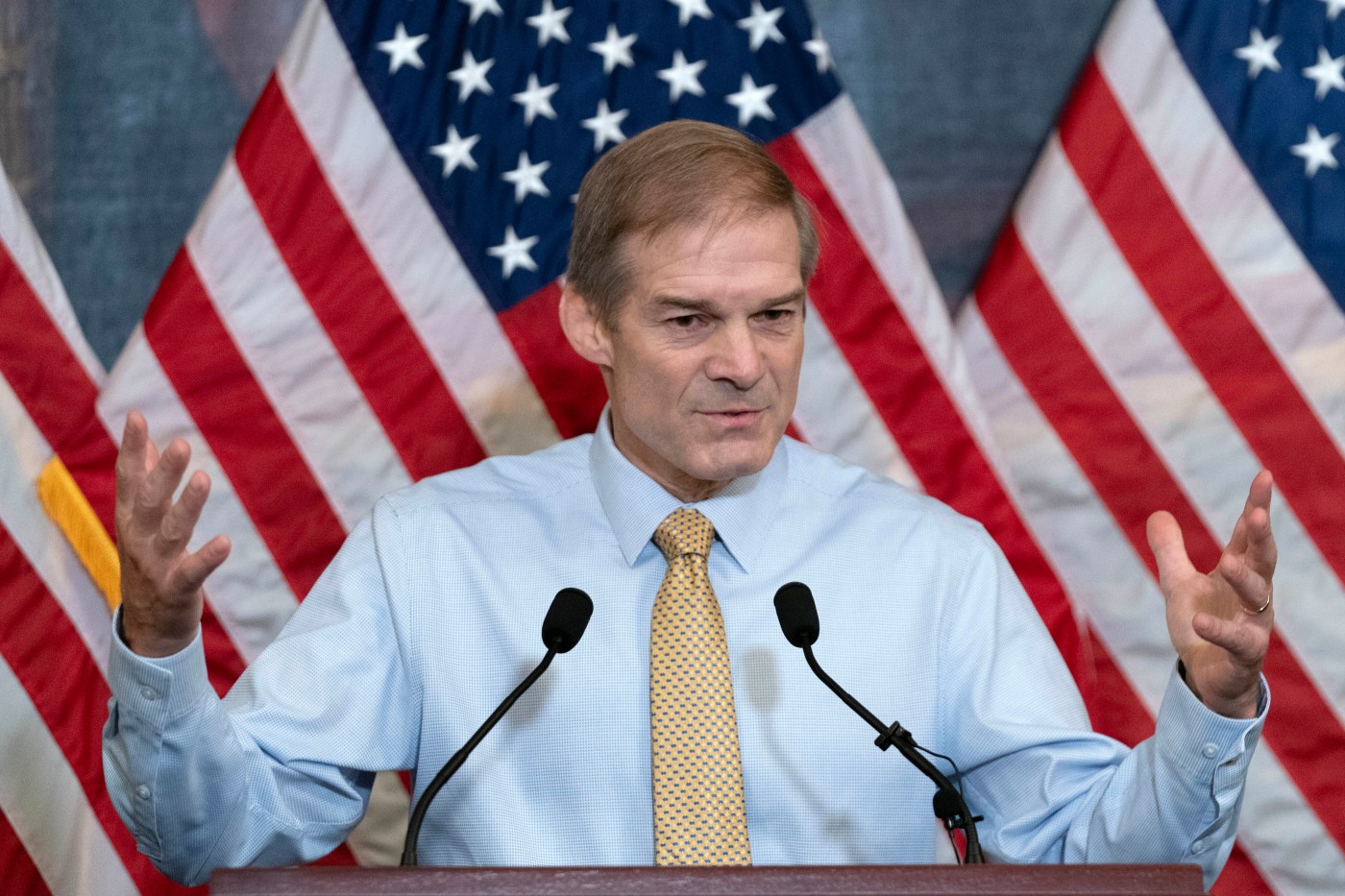
Ahead of the vote, Jordan showed no signs of stepping aside, insisting at a Capitol press conference: “The American people are hungry for change.”

Drawing on his Ohio roots, Jordan, who is popular with the GOP’s right-flank activist base of voters, positioned his long-shot campaign alongside the history of American innovators including the Wright brothers, urging his colleagues to elect him to the speakership.

McCarthy himself rose in the chamber to nominate Jordan, portraying him as a skilled legislator who reaches for compromise. That drew scoffs of laughter from the Democratic side of the aisle.

McCarthy said of Jordan, “He is straightforward, honest and reliable.”

Democrats nominated Leader Hakeem Jeffries, with Rep. Katherine Clark calling Jordan, who refused to certify the 2020 presidential election results, “a threat to democracy.”

“We need a speaker worthy of wielding the gavel,” she said.

But after two failed votes, Jordan’s third attempt at the gavel did not end any better — in large part because more centrist Republicans are revolting over the nominee and the hardball tactics being used to win their votes. They have been bombarded with harassing phone calls and even reported death threats.

In fact, the hard-charging Judiciary chairman lost rather than gained votes despite hours spent trying to win over holdouts, no improvement from the 20 and then 22 Republicans he lost in early rounds this week.

Friday’s vote was 194 for Jordan, his lowest tally yet, and 210 for Jeffries, with two absences on each side.

For more than two weeks the stalemate has shut down the U.S. House, leaving a seat of American democracy severely hobbled at a time of challenges at home and abroad. The House Republican majority appears to have no idea how to end the political turmoil and get back to work.

With Republicans in majority control of the House, 221-212, any candidate can lose only a few detractors. It appears there is no Republican at present who can win a clear majority, 217 votes, to become speaker.

“He doesn’t have the votes to be speaker,” Rep. Carlos Gimenez, R-Fla., said after a late Thursday meeting when Jordan sought to hear detractors out and shore up support.

The holdouts want “nothing” from Jordan, Gimenez said, adding that some of the lawmakers in the meeting simply called on Jordan to drop out of the race.

One extraordinary idea, to give the interim speaker pro tempore, Rep. Patrick McHenry, more powers for the next several months to at least bring the House back into session and conduct crucial business, was swiftly rejected by Jordan’s own ultra-conservative allies.

A “betrayal,” said Rep. Jim Banks, R-Ind.

Next steps were highly uncertain as angry, frustrated Republicans predict the House could essentially stay closed for the foreseeable future — perhaps until the mid-November deadline for Congress to approve funding or risk a federal government shutdown.

“We’re trying to figure out if there’s a way we can get back with a Republican-only solution,” said veteran legislator Rep. Tom Cole, R-Okla.

“That’s what normal majorities do. What this majority has done is prove it’s not a normal majority.”

What was clear was that Jordan was refusing to step aside, appearing determined to wait out his foes even as his path to become House speaker was all but collapsing.

Rep. Matt Gaetz of Florida, a chief architect of McCarthy’s ouster, said after Friday’s vote that he and other Jordan supporters would be willing to be censured or otherwise punished by their GOP colleagues if that was what it took to win over votes for Jordan.

But earlier, Rep. John Rutherford, R-Fla., said simply of Jordan’s chances, “It’s not going to happen.”

Many view Jordan, a founding member of the hard-right House Freedom Caucus, as too extreme for a central seat of U.S. power, second in line to the presidency.

“One thing I cannot stomach or support is a bully,” said a statement from Rep. Mariannette Miller-Meeks, R-Iowa, who voted against Jordan on the second ballot and said she received “credible death threats.”

Democratic Leader Jeffries reiterated that his party was “ready, willing and able” to partner with more traditional Republicans on a path to re-open the House —- particularly as Congress is being asked to consider President Joe Biden’s aid package for Israel, Ukraine and other needs.

A closed-door meeting Thursday to regroup grew heated at times with Republican factions blaming one another for sending their majority into chaos, lawmakers said.

Elevating McHenry to an expanded speaker’s role could be a possible off-ramp for the crisis, but it would not be as politically simple as it might seem.

Republicans are loath to partner with the Democrats in a bipartisan way on the arrangement, and it’s highly unlikely Republicans could agree to give McHenry more powers on their own, since their hard-liners don’t like it.

McHenry himself has brushed off attempts to take the job more permanently after he was appointed to the role after the unprecedented ouster of McCarthy more than two weeks ago.

To win over GOP colleagues, Jordan had relied on backing from Trump, the party’s front-runner in the 2024 election, and groups pressuring rank-and-file lawmakers for the vote. But they were not enough and in fact backfired on some.

Jordan has been a top Trump ally, particularly during the Jan. 6 Capitol attack by the former president’s backers who were trying to overturn the 2020 election he lost to Biden. Days later, Trump awarded Jordan a Medal of Freedom.

First elected in 2006, Jordan has few bills to his name from his time in office. He also faces questions about his past.

Some years ago, Jordan denied allegations from former wrestlers during his time as an assistant wrestling coach at Ohio State University who accused him of knowing about claims they were inappropriately groped by an Ohio State doctor. Jordan has said he was never aware of any abuse.

The White House details its $105 billion funding request for Israel, Ukraine, the border and more

posted in: Politics | 0

By CHRIS MEGERIAN (Associated Press)

WASHINGTON (AP) — The White House on Friday released a sweeping set of proposals to bolster Israel and Ukraine in the midst of two wars as well as invest more in domestic defense manufacturing, humanitarian assistance and managing the influx of migrants at the U.S.-Mexico border.

The total cost of the supplemental funding request was pegged at just over $105 billion. President Joe Biden hopes Congress will move urgently on the legislation, and he made the case for deepening U.S. support for its allies during a rare Oval Office address on Thursday night.

The Democratic president’s national security adviser, Jake Sullivan, told reporters on Friday that Russia’s ongoing invasion of Ukraine and Hamas’ attack on Israel represent a “global inflection point.”

“This budget request is critical to advancing America’s national security and ensuring the safety of the American people,” Sullivan said.

However, next steps are in doubt while the House of Representatives remains in chaos with the Republican majority unable to choose a new speaker. Rep. Jim Jordan of Ohio, a close ally of former President Donald Trump, is still pushing to run the chamber, an effort that has led to frayed nerves and bruised relationships on Capitol Hill.

Even if Republicans are able to sort out their leadership drama, Biden will swiftly face resistance to his plans. He’s hopeful that combining several different issues, from border security to countering China’s influence, will foster a political coalition that can move the legislation forward.

But there’s equal potential for the entire package to get bogged down in various policy debates, especially when it comes to immigration, a historically contentious topic.

Shalanda Young, the director of the Office of Management and Budget, suggested it would be hypocritical for Republicans to oppose Biden’s proposal after complaining about lax border management.

“We will not be lectured by those who refuse to act,” she said. “As we’ve said repeatedly, Congress needs to take action to provide sufficient resources for the border.”

Although there was a lull in migrant arrivals to the U.S. after the start of new asylum restrictions in May, illegal crossings topped a daily average of more than 8,000 last month.

The White House wants roughly $14 billion to, among other things, boost the number of border agents, install new inspection machines to detect fentanyl and increase staffing to process asylum cases.

The biggest line item in the supplemental funding request is $61.4 billion to support Ukraine. Some of that money will go to replenishing Pentagon stockpiles of weapons that have already been provided.

“The world is closely watching what Congress does next,” Sullivan said.

Israel would receive $14.3 billion in assistance under the proposal. The majority of that money would help with air and missile defense systems.