
Feds OK natural gas pipeline expansion in Pacific Northwest over environmentalist protests

posted in: Society | 0

By CLAIRE RUSH (Associated Press/Report for America)

PORTLAND, Ore. (AP) — Federal regulators on Thursday approved the expansion of a natural gas pipeline in the Pacific Northwest over the protest of environmental groups and top officials in West Coast states, who said it goes against the region’s plans to address climate change and could pose a wildfire risk.

The project, known as GTN Xpress, aims to expand the capacity of the Gas Transmission Northwest pipeline, which runs through Idaho, Washington and Oregon, by about 150 million cubic feet (4.2 million cubic meters) of natural gas per day. The Federal Energy Regulatory Commission gave it the green light in a vote on Thursday.

TC Energy plans to modify three compressor stations along the pipeline — in Kootenai County, Idaho; Walla Walla County, Washington; and Sherman County, Oregon. Compressor stations help maintain the pressure and flow of gas over long distances in a pipeline.

Environmental groups criticized the decision.

In a statement, Audrey Leonard, staff attorney for environmental nonprofit Columbia Riverkeeper, said it represented a “rubber stamp of unnecessary fracked gas in the Northwest” and accused the energy agency of failing to listen to U.S. senators, governors, state attorneys general, tribes and members of the public.

Leonard said potential spills and explosions on the pipeline, which was built in the 1960s, would not only harm the environment but also present a heightened wildfire risk in the arid regions it passes through.

“An explosion of that level in eastern Washington or eastern Oregon would be catastrophic,” she said.

Leonard said Columbia Riverkeeper will appeal the federal regulators’ decision and submit a petition for a rehearing.

The pipeline belongs to TC Energy of Calgary, Canada — the same company behind the now-abandoned Keystone XL crude oil pipeline. The company said the project is necessary to meet consumer demand.

Environmentalists and officials opposed to the project have expressed concern about TC Energy’s safety record. Its Columbia Gas Transmission pipeline exploded in Strasburg, Virginia, in July and its existing Keystone pipeline spilled nearly 600,000 gallons of bitumen oil in Kansas last December.

The 1,377-mile (2,216-kilometer) pipeline runs from the Canadian border through a corner of Idaho and into Washington state and Oregon, connecting with a pipeline going into California.

Oregon, along with Washington and California, have passed laws requiring utilities to transition to 100% clean electricity sources by 2040 and 2045, respectively.

While Idaho’s Republican governor and Congress members said that imposing other states’ climate policies would be “misguided,” Democratic officials in the other states called on federal officials to reject the plan.

After the vote, Washington Gov. Jay Inslee, a Democrat, condemned the decision. And the Democratic U.S. Senators from Washington and Oregon described the project as “incompatible with our climate laws” in a letter to the energy agency.

“GTN Xpress represents a significant expansion of methane gas infrastructure at a time when California, Oregon, and Washington are moving away from fossil fuels,” the senators said.

The attorneys general of the three states, citing the energy agency’s draft environmental impact statement for the project, said it would result in more than 3.47 million metric tons of planet-warming greenhouse gas emissions per year for at least the next three decades.

The agency’s final environmental assessment revised that number downward by roughly half in calculations contested by environmental groups. This is partly because some of the project’s gas would be delivered to Tourmaline, a Canadian natural gas producer. The assessment said it wasn’t clear what the end use of the gas delivered to Tourmaline would be, leading it to conclude that the company’s downstream emissions — those stemming from consumers — weren’t “reasonably foreseeable.”

The energy agency’s chairman, Willie Phillips, reiterated its stance after Thursday’s vote.

“There was no evidence presented that this project would significantly increase greenhouse gas emissions,” he told reporters. “The commission determined that this project was needed and therefore we support its approval.”

In its final environmental impact statement for the project issued last November, the federal agency said the compressor stations were in non-forested areas with low to moderate fire hazard. It concluded the project “would result in limited adverse impacts on the environment.”

“Most adverse environmental impacts would be temporary or short-term,” the federal agency said.

The agency recommended certain steps, such as requiring the company to train its personnel and contractors on environmental mitigation measures before any construction begins.

But environmental groups say the assessment didn’t adequately address the harm caused by the project, including by fracking to obtain the natural gas that flows through the pipeline.

Fracking is a technique used by the energy industry to extract oil and gas from rock by injecting high-pressure mixtures of water, sand or gravel and chemicals. It has been criticized by climate and environment groups for increasing emissions of methane, an extraordinarily potent greenhouse gas.

___

Claire Rush is a corps member for the Associated Press/Report for America Statehouse News Initiative. Report for America is a nonprofit national service program that places journalists in local newsrooms to report on undercovered issues.

Biden admin readies two funding requests — domestic and national security — for Congress

posted in: Politics | 0

The Biden administration is expected to send Congress a funding request for domestic priorities next week, according to three people familiar with the request, in addition to its anticipated national security emergency spending request.

The roughly $100 billion national security request is expected to cover aid to Israel, Ukraine and Taiwan, as well as funding to address the nation’s southern border. The domestic policy request is slated to include funding for child care, broadband and disaster relief, and is likely to gain far less traction with Republicans on the Hill than its counterpart.

The people who confirmed the timing of the funding requests — which are expected to cover one year — stressed that they are subject to change. President Joe Biden is expected to make a formal appeal for swiftly approving aid to Ukraine and Israel in a prime-time speech Thursday night, arguing that supporting the two allied nations is critical to U.S. national security interests.

The national security package will include about $60 billion for Ukraine and around $10 billion for Israel, the sources said, a Ukraine number that aligns roughly with a yearlong timetable. An earlier White House funding request for Ukraine, which Congress has not yet acted upon during its current gridlock, had only covered three months.

Progressives have called for a funding pitch from the White House that included both foreign and domestic spending — arguing that while constituents care about aiding Ukraine and Israel, they also need support at home. However, Republicans are likely to balk at the request’s expansive child care spending and other domestic priorities.

“We have a national security obligation and we also have a domestic security obligation, and both of them are imperative,” said Rep. Rosa DeLauro (D-Conn.). The top House Appropriations Committee Democrat added that she “would advocate for” child care policy’s inclusion.

A group of progressive senators, including Sen. Tina Smith (D-Minn.), have pushed the Biden administration to add the child care funding, which would fill the void left when pandemic-era federal aid for child care expired on Sept. 30. They’ve based their request on the approximately $16 billion that was provided annually during the pandemic.

“Child care funding is incredibly important for kids, families and providers, and I’m glad to hear reports that the White House will be including it in its supplemental request,” Smith said. “This is an issue that can’t be left on the cutting room floor.”

Some Democrats want the president to ask for extra cash to bolster other at-home priorities, like funding for science programs like AI and quantum computing efforts authorized under the CHIPS bill Biden signed into law last year.

“Those investments are critical to jobs at home and our security around the world,” Sen. Chris Van Hollen (D-Md.) said. “So I think that would be a good fit.”

Communities can’t recycle or trash disposable e-cigarettes. So what happens to them?

posted in: Society | 0

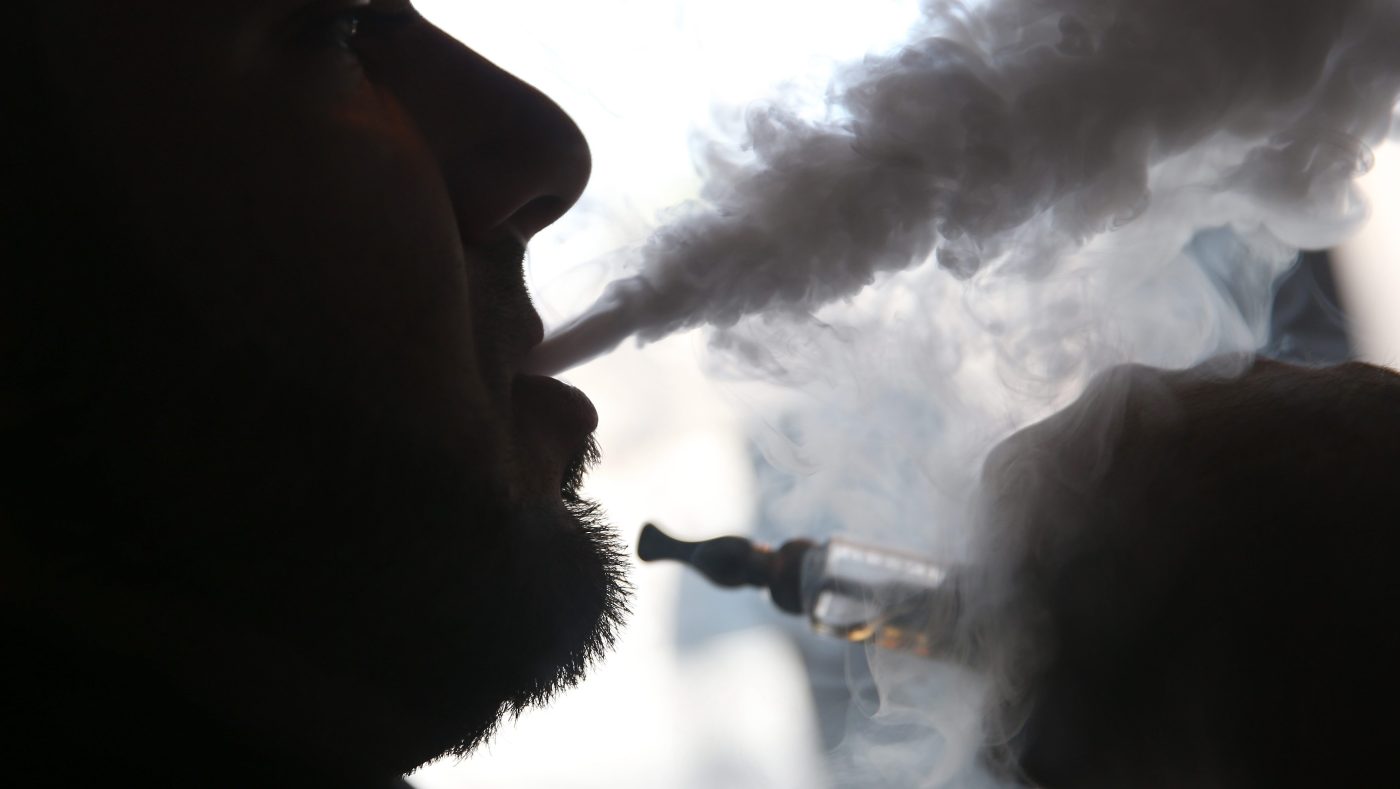
WASHINGTON — With the growing popularity of disposable e-cigarettes, communities across the U.S. are confronting a new vaping problem: how to safely get rid of millions of small, battery-powered devices that are considered hazardous waste.

For years, the debate surrounding vaping largely centered on its risks for high school and middle school students enticed by flavors like gummy bear, lemonade and watermelon.

But the recent shift toward e-cigarettes that can’t be refilled has created a new environmental dilemma. The devices, which contain nicotine, lithium and other metals, cannot be reused or recycled. Under federal environmental law, they also aren’t supposed to go in the trash.

U.S. teens and adults are buying roughly 12 million disposable vapes per month. With little federal guidance, local officials are finding their own ways to dispose of e-cigarettes collected from schools, colleges, vape shops and other sites.

“We are in a really weird regulatory place where there is no legal place to put these and yet we know, every year, tens of millions of disposables are thrown in the trash,” said Yogi Hale Hendlin, a health and environmental researcher at the University of California, San Francisco.

In late August, sanitation workers in Monroe County, New York, packed more than 5,500 brightly colored e-cigarettes into 55-gallon steel drums for transport. Their destination? A giant, industrial waste incinerator in northern Arkansas, where they would be melted down.

Sending 350 pounds of vapes across the country to be burned into ash may not sound environmentally friendly. But local officials say it’s the only way to keep the nicotine-filled devices out of sewers, waterways and landfills, where their lithium batteries can catch fire.

“These are very insidious devices,” said Michael Garland, who directs the county’s environmental services. “They’re a fire risk and they’re certainly an environmental contaminant if not managed properly.”

Elsewhere, the disposal process has become both costly and complicated. In New York City, for example, officials are seizing hundreds of thousands of banned vapes from local stores and spending more than $1 each for disposal.

HAZARDOUS WASTE

Vaping critics say the industry has skirted responsibility for the environmental impact of its products, while federal regulators have failed to force changes that could make vaping components easier to recycle or less wasteful.

Among the possible changes: standards requiring that e-cigarettes be reusable or forcing manufacturers to fund collection and recycling programs. New York, California and several other states have so-called extended product responsibility laws for computers and other electronics. But those laws don’t cover vaping products and there are no comparable federal requirements for any industry.

Environmental Protection Agency rules for hazardous waste don’t apply to households, meaning it’s legal for Americans to throw e-cigarettes in the garbage at home. But most businesses, schools and government facilities are subject to EPA standards in how they handle harmful chemicals like nicotine, which the EPA considers an “acute hazardous waste,” because it can be poisonous at high levels.

In the U.S., the push to manage disposable e-cigarettes has chiefly come from schools, which can face stricter regulation if they generate more than a few pounds of hazardous waste per month. Monroe County schools pay $60 to dispose of each one-gallon container of vapes. More than two thirds of the e-cigarettes collected by the county come from schools.

“Our schools were very relieved because they had confiscated so much of this material,” Garland said. “If you think of all the high schools across the country, they are in a very difficult place right now.”

The lithium in e-cigarette batteries is the same highly sought metal used to power electric vehicles and cellphones. But the quantities used in vaping devices are too small to warrant salvage. And nearly all disposable e-cigarette batteries are soldered into the device, making it impractical to separate them for recycling.

Disposable e-cigarettes currently account for about 53% of the multi-billion U.S. vaping market, according to U.S. government figures, more than doubling since 2020.

Their rise is a study in unintended consequences.

In early 2020, the Food and Drug Administration banned nearly all flavors from reusable e-cigarettes like Juul, the cartridge-based device blamed for sparking a nationwide surge in underage vaping. But the policy didn’t apply to disposables, opening the door to thousands of new varieties of fruit- and candy-flavored vapes, almost all manufactured in China.

In recent months the FDA has begun trying to block imports of several leading disposable brands, including Elf Bar and Esco Bar. Regulators consider them illegal, but they have been unable to stop their entry to the U.S. and the devices are now ubiquitous in convenience stores, gas stations and other shops.

FDA’s tobacco chief, Brian King, said in a statement that his agency “will continue to carefully consider the potential environmental impacts” of vaping products.

THE COST OF CONFISCATING DISPOSABLE E-CIGARETTES

In 2020, New York City outlawed the vast majority of e-cigarette types, banning flavors that can appeal to youngsters.

City employees conduct thousands of inspections annually, and last year issued more than 2,400 citations to corner stores and bodegas selling illegal flavored products. Adding to the challenge are THC vapes sold at hundreds of unlicensed marijuana shops, a separate but related problem that has mushroomed since New York’s legalization of recreational pot.

Since last November, officials have seized more than 449,000 vape units, according to city figures. New York City is spending about $1,400 to destroy each container of 1,200 confiscated vapes, but many more remain in city storage lockers.

“I don’t think anyone ever considered the volume of these in our community,” said New York Sheriff Anthony Miranda, who leads a task force on the issue. “There’s a tremendous amount of resources going into this effort.”

A recent lawsuit against four large vaping distributors aims to recoup some of the city’s costs.

For now, New Yorkers who vape can bring their used e-cigarettes to city-sponsored waste-collection events.

Ultimately those vapes meet a familiar fate: They are shipped to Gum Springs, Arkansas, to be incinerated by Veolia, an international waste management firm. The company has incinerated more than 1.6 million pounds of vaping waste in recent years, mostly unsold inventory or discontinued products.

Veolia executives say burning e-cigarettes’ lithium batteries can damage their incinerators.

“Ideally we don’t want to incinerate them because it has to be done very, very slowly. But if have to, we will,” said Bob Cappadona, who leads the company’s environmental services division.

Veolia also handles e-cigarettes from Boulder County, Colorado, one of the only U.S. jurisdictions that actively tries to recycle e-cigarette batteries and components.

Historically, Boulder has had one of the highest teen vaping rates in the country, peaking at nearly 33% in 2017.

“It was like someone flicked the switch. Suddenly e-cigarettes were everywhere,” said Daniel Ryan, principal of Centaurus High School.

Beginning in 2019, county officials began distributing bins to schools for confiscated or discarded e-cigarettes. Last year, they collected 3,500.

County staffers sort the devices by type, separating those with removable batteries for recycling. Disposables are packed and shipped to Veolia’s incinerator. Shelly Fuller, who directs the program, says managing vape waste has gotten more costly and labor intensive with the shift to disposables.

“I kind of miss the days when we had Juuls and I could take each battery out and recycle them very easily,” Fuller said. “No one has time to dismantle a thousand Esco Bars.”

Related Articles

Health |


Aging U.S. power grid to get $3.5B update; Minnesota to share largest grant

Health |


U.S. violent crime dropped to prepandemic level last year; trend also seen in Minnesota

Health |


Disneyland brawl breaks out in Fantasyland with kids and strollers stuck in the middle

Health |


Mourners in heavily Palestinian Chicago suburb remember Muslim boy killed as kind, energetic

Health |


U.S. violent crime dropped to prepandemic level last year; trend also seen in Minnesota

Havana’s once stately homes crumble as their residents live in fear of an imminent collapse

posted in: Politics | 0

HAVANA — The house on Villegas Street, in the heart of Old Havana, looks nothing like the stately two-story home it used to be a century ago, with its high ceilings, wrought iron railings, semicircular arches and stairs covered in white marble. Its former elegance is such that local lore says it used to belong to a marquise.

Today, everything inside the six-family unit is chaos.

The roots of a tree protrude through the wall of a makeshift toilet where birds have made their nests. The roofs of the first and second floors are propped up. There is rubble and fresh sand scattered everywhere. The walls seem to tilt and the façade has completely disappeared, exposing a patio where one can see freshly washed clothes hanging.

The structure is one of many once luxurious houses in the island nation that in recent years have partially collapsed — or suffer visible damage. Barely 100 meters (yards) away, also on Villegas Street, a similar building fell in earlier this month, causing three deaths.

Residents say they have repeatedly asked authorities for help to no avail. Years of neglect, inclement weather and a deepening economic crisis only aggravate the fear that their home will eventually collapse.

“How can we not live in fear? Every time it rains I feel like small pebbles come falling down on me,” said Maricelys Colás, a retired 64-year-old who has lived in the house with her 85-year-old mother for 59 years. “And a collapse doesn’t warn you.”

The Cuban government has in the past acknowledged the problem of housing deterioration, but says the lack of material resources prevents it from tackling it. Yet, many Cubans wonder why the pace of investment in tourism megaprojects such as hotels — a vital business sector that has failed to take off in at least the last two years — is not slowing down to address the dire housing crisis.

The house on Villegas Street was built at the end of the 18th century or the beginning of the 19th on a plot measuring about 15 meters (50 feet) wide by 60 meters (about 200 feet) deep. Three families live on the ground floor, where there used to be a main patio and rooms for the domestic staff. Three other families live on the more deteriorated top floor, where cracks abound and the staircase creaks as you climb it.

All of the residents say the building once belonged to the Marquise of Pinar del Río, a title granted by the Spanish crown when the island was part of its domains. The Associated Press could not verify that, but its elegant design is visible.

Nowadays, everything smells of mold.

AP interviewed all the residents in the unit, except for an elderly man who was temporarily staying in a relative’s house. They unanimously reported having made efforts before the government, requesting to live elsewhere or to have access to materials for repairs. They said they never received a response.

The Cuban government did not respond to an emailed request for comment.

Mario Luis Poll, a 57-year-old art restorer who has lived in the building for 19 years, walks around his unit showing a reporter all the repairs he has done to try to hold the ceiling together after the floor of the room above collapsed.

Right above him, 47-year-old musician Marcos Villa faces a different problem: Foliage from a tree is growing out of his improvised bathroom.

“The struts (the wooden posts that support the roof of the entire construction) are almost just for decoration,” Poll said, shrugging in a sign of resignation.

Cuba’s housing crisis is one of the most pressing challenges facing the island, where a humid climate, the passage of hurricanes and other storms, poor maintenance and a low completion rate of new ones are usually among the top complaints of Cubans.

Cuba’s director of housing, Vivian Rodríguez, said earlier this month that the island has a housing deficit of 800,000 homes, especially in the provinces of Havana, Holguín, Santiago de Cuba and Camagüey.

Government figures from 2020 say Cuba had 3.9 million homes, out of which nearly 40% were deemed to be in only fair or poor condition.

“The situation is critical,” said Abel Tablada, professor at the Faculty of Architecture of the Technological University of Havana, adding that rebuilding and restoring partially collapsed buildings “requires many resources that the Cuban state does not have in these moments of acute crisis.”

The residents of the house in Villegas Street, tired of asking authorities for help, can only sigh about the fate of the former mansion they inhabit.

“If those marquises came back to life and saw this house, they would surely die again,” joked Elayne Clavel, 26, wife of musician Villa.

Related Articles

World News |


Bret Stephens: President Biden’s finest hour

World News |


Other voices: The killing of Wadea Al-Fayoume shows anguish in Mideast threatens tolerance at home

World News |


Now open: Little Brazil, a cafe and market highlighting affordable regional Brazilian cuisine

World News |


Gaza carnage spreads anger across Mideast, alarming US allies and threatening to widen conflict

World News |


Israel will let Egypt deliver some aid to Gaza, as doctors struggle to treat hospital blast victims