Mike Pence faces a cash shortage and questions about how much longer his 2024 campaign can survive

posted in: Politics | 0

By JILL COLVIN (Associated Press)

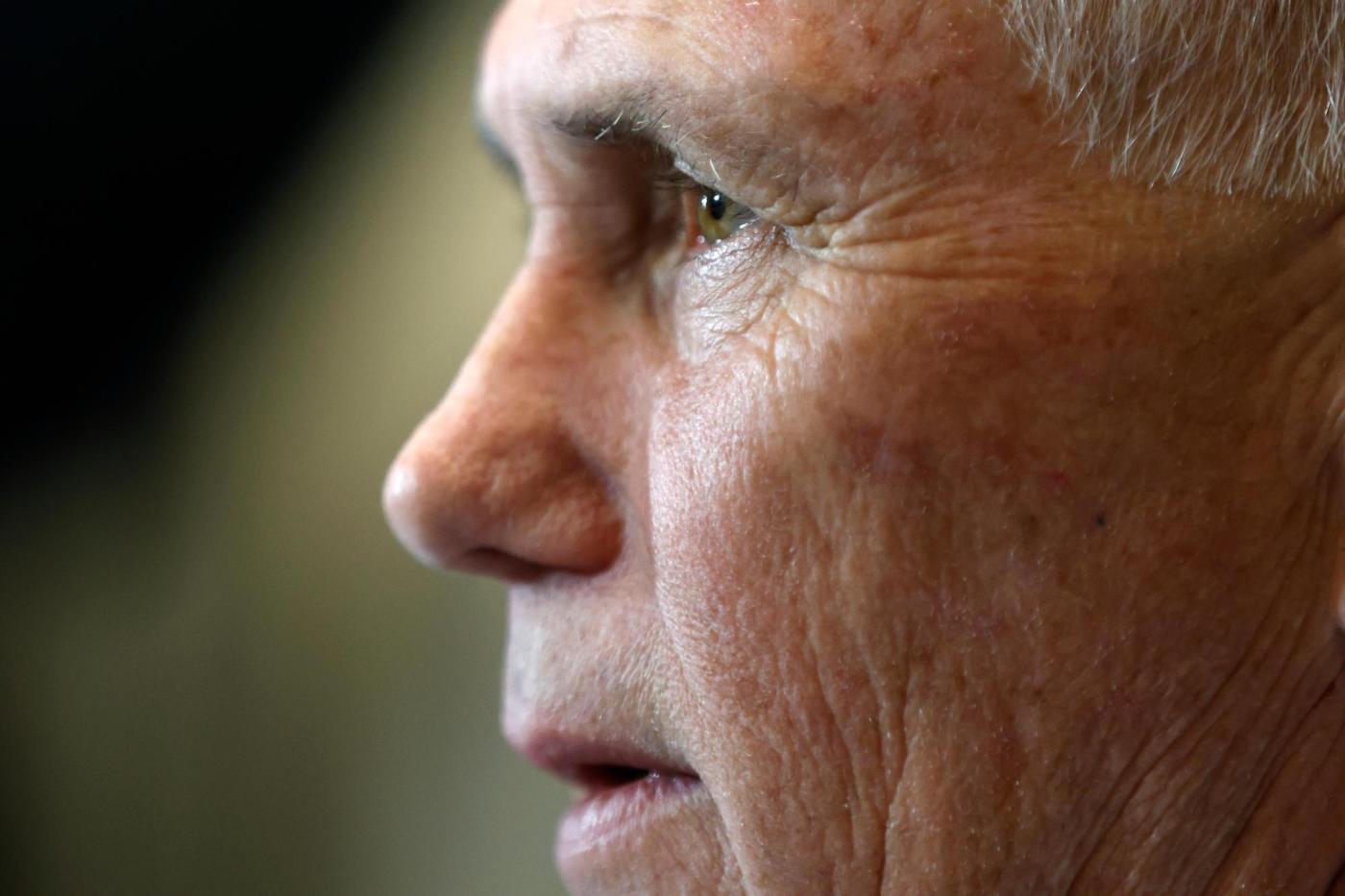
NEW YORK (AP) — With three months to go before the Iowa caucuses that he has staked his campaign on, former Vice President Mike Pence faces mounting debt and lagging poll numbers that are forcing questions about not only whether he will qualify for the next debate, but whether it makes sense for him to remain in the race until then.

Pence ended September with just $1.18 million left in his campaign account, a strikingly low number for a presidential contest and far less than his rivals, new filings show. His campaign also has $621,000 in debt — more than half the cash he had remaining — and is scrambling to meet donor thresholds for the Nov. 8 debate. While he would likely meet the debate’s polling requirements, Pence has struggled to gain traction and is polling in the low single digits nationally, with no sign of momentum.

Former President Donald Trump, meanwhile, is leading every one of his rivals by at least 40 points in national polls and ended September with $37.5 million on hand.

People close to Pence say he now faces a choice about how long to stay in the race and whether remaining a candidate might potentially diminish his long-term standing in the party, given Trump’s dominating lead. While Pence could stick it out until the Jan. 15 Iowa caucuses, visiting the state’s famous Pizza Ranch restaurants and campaigning on a shoestring budget, he must now weigh how that will impact his desire to remain a leading conservative voice, according to the people, some of whom spoke on condition of anonymity to share their unvarnished views.

“For Pence and many of the others, you gotta start looking and saying, ‘I’m not going to go into substantial debt if I don’t see a pathway forward,’” said former Wisconsin Gov. Scott Walker, who ran against Trump in 2016 but abandoned his bid after concluding “the Trump train had left the station.”

Pence, for the moment, is pressing forward. He held a Newsmax town hall in Iowa Tuesday night and fundraisers this week in Cleveland, Philadelphia and Dallas. He was to speak at the Republican National Committee’s fall retreat Friday night and at the Republican Jewish Coalition’s Annual Leadership Summit in Las Vegas next week — all opportunities to pitch deep-pocketed donors to keep his campaign afloat.

The super PAC supporting Pence is also continuing its efforts, fundraising and conducting extensive voter outreach, including knocking on nearly 600,000 doors and counting.

The campaign is also working aggressively to reach the 70,000-donor threshold needed to qualify for next month’s debate and expressed confidence they could get there if they try — even as others remain skeptical he can make it.

“I know it’s an uphill climb for a lot of reasons for us, some that I understand, some that I don’t,” Pence acknowledged as he spoke to reporters in New Hampshire last week after formally registering for the state’s first-in-the-nation primary.

Still, some in Pence’s orbit believe he has important contributions left to make in the primary, particularly after the Hamas attack on Israel pushed foreign policy to the forefront. Pence has argued he is the most qualified candidate to deal with issues abroad, saying in the August debate that “now is not the time for on-the-job training.”

Pence, they say, feels a renewed sense of purpose given his warnings throughout the campaign against the growing tide of isolationism in the Republican Party. Pence has used the conflict to decry “voices of appeasement,” which he argues embolden groups like Hamas.

Another person cautioned that Pence, a devout Evangelical Christian who sees the campaign as a calling, may respond differently than other candidates might in his position if he feels called to stay in the race.

If he decides to exit, Pence would have a potential platform in Advancing American Freedom, the conservative think tank he founded after leaving the vice presidency.

In the meantime, the campaign has been working to cut costs, including having fewer staff members travel to events.

Regardless of what he decides, the predicament facing the former vice president underscores just how dramatically Trump has transformed the GOP.

Pence, in many ways, has been running to lead a party that no longer exists

He has cast himself as the field’s most traditionally conservative candidate in the mold of Ronald Reagan. But many of his positions — from maintaining U.S. support for Ukraine’s defense against the Russian invasion to proposing cuts to Social Security and Medicare — are out of step with much of his party’s base.

He also faces fallout from Jan. 6, 2021, when a mob of Trump’s supporters — some chanting “Hang Mike Pence!” — stormed the Capitol building, sending him running for his life. Trump tried to falsely convince Pence and his own followers that the vice president somehow had the power to overturn the results.

Pence has repeatedly been confronted on the campaign trail by people who accuse him of betraying Trump, who still promotes falsehoods about the 2020 election — often several times a day.

But Pence has also faced the same challenge as every candidate in the field not named Trump, a singular figure whose grip on the party has only intensified as he has been charged with dozens of crimes.

“If something big doesn’t happen on Nov. 8, the primary is over. Some would argue it is now,” said Walker, who entered the 2016 Republican primary as a front-runner only to end his campaign in September 2015, months before a single vote was cast, amid mounting debt.

An August AP-NORC poll found Republicans split on Pence: 41% held a favorable view of the candidate and 42% an unfavorable one. Nationally, a majority of U.S. adults — 57% — view him negatively, with only 28% having a positive view.

Some are hoping Pence doesn’t give up. In Iowa, Kelley Koch, chair of the Dallas County Republican Party, said she felt Pence had struggled to define himself beyond Trump and said many remained skeptical of his actions on Jan. 6.

But she said following the attack on Israel, with all eyes now on the Middle East and a new war, that Pence could have a moment to break through.

“He is such a pro on foreign policy. That’s one of his strengths. And he has that over a lot of the new rookie candidates who are in the race. He should run on that,” she said. “I would think that that would be just a major trumpet setting the stage for Mike Pence to step up and take the mic.”

———-

Associated Press writer Holly Ramer in Concord, New Hampshire contributed to this report.

Red meat tied to higher risk for type 2 diabetes, plant-based protein may lower risk: Harvard study

posted in: News | 0

Have you been trying to cut back on red meat? It could help you avoid a serious disease that affects tens of millions of people across the U.S.

People who eat two servings of red meat a week may have a higher risk of developing type 2 diabetes compared to people who eat fewer servings, and the risk increases with greater consumption, according to a new study from Harvard T.H. Chan School of Public Health.

The Harvard researchers also found that replacing red meat with healthy plant-based protein sources — such as nuts and legumes — or modest amounts of dairy was tied with a lower risk of type 2 diabetes.

“Our findings strongly support dietary guidelines that recommend limiting the consumption of red meat, and this applies to both processed and unprocessed red meat,” said first author Xiao Gu, a postdoctoral research fellow in the Department of Nutrition.

Type 2 diabetes is a major risk factor for cardiovascular and kidney disease, cancer, and dementia.

While previous studies have found a link between red meat consumption and type 2 diabetes risk, this study now adds a greater level of certainty about the association.

The researchers analyzed health data from 216,695 participants from the Nurses’ Health Study (NHS), NHS II, and Health Professionals Follow-up Study. The participants were asked about their diet in food frequency questionnaires every two to four years, for up to 36 years. During this time, more than 22,000 participants developed type 2 diabetes.

Related Articles

Health |


‘Exciting’ glioblastoma study: Researchers create virus that effectively targets brain cancer

Health |


Crohn’s disease and colitis: Advocates strive to raise awareness, break stigma for ‘invisible’ illnesses

Health |


PrEP, a key HIV prevention tool, isn’t reaching black women

Health |


Insurers often shortchange mental health care coverage, despite a federal law

Health |


Bipolar disorder is little researched, but doctors at Johns Hopkins aim to change that

The scientists found that consumption of red meat — including processed and unprocessed red meat — was strongly linked with increased risk of type 2 diabetes.

Participants who ate the most red meat had a 62% higher risk of developing type 2 diabetes compared to those who ate the least.

Every additional daily serving of processed red meat was linked with a 46% greater risk of developing type 2 diabetes, and every additional daily serving of unprocessed red meat was associated with a 24% greater risk.

The researchers also estimated the potential effects of substituting one daily serving of red meat for another protein source. They found that substituting a serving of nuts and legumes was linked with a 30% lower risk of type 2 diabetes, and substituting a serving of dairy products was associated with a 22% lower risk.

“Given our findings and previous work by others, a limit of about one serving per week of red meat would be reasonable for people wishing to optimize their health and wellbeing,” said senior author Walter Willett, a professor of epidemiology and nutrition.

The researchers also said swapping red meat for healthy plant protein sources would help reduce greenhouse gas emissions and climate change, and provide other environmental benefits.

The red meat and type 2 diabetes study was published on Thursday in The American Journal of Clinical Nutrition.

How climate change could affect when and where people travel

posted in: Adventure | 0

By Sam Kemmis | NerdWallet

Travelers encountered many weather surprises this summer, from wildfires in Europe to knee-deep mud at Burning Man. Indeed, it was the hottest summer on record around the globe, according to the European Union’s Copernicus Climate Change Service.

“The dog days of summer are not just barking, they are biting,” said U.N. Secretary-General António Guterres in a prepared statement published Sept. 6. “Our planet has just endured a season of simmering — the hottest summer on record. Climate breakdown has begun.”

Shifting weather patterns are raising questions about where, when, how and whether tourists will travel.

For example, does it still make sense to visit Italy in July, despite high temperatures, large crowds and minimal air conditioning? Or should “peak” travel season move to the more hospitable autumn or spring months?

Tourism destinations are starting to take note — and get worried — about the toll climate change could take on this enormous industry.

Hot destinations

Escaping to the Spanish coast for the summer used to sound like a dream. This year it turned into more of a nightmare for Mediterranean travelers. The coastal city of Valencia, Spain, saw temperatures reach 116 degrees Fahrenheit in August, a record high. That came amid Spain’s limits on air conditioning use in public spaces, leaving tourists to sweat it out.

These trends are only likely to get worse, driving travelers away from hot beachside destinations in Europe, according to a July report from the European Commission’s Joint Research Centre. Southern coastal regions such as Greece, Italy and Spain are expected to see a drop in tourism if temperatures continue to increase.

On the other hand, colder destinations in Northern Europe could actually see more vacationers. Denmark, France and the United Kingdom could receive more tourists because of higher temperatures, according to the report. Greenland, which is mostly covered with ice, is expecting to see far more tourists in the coming decades, with a new airport set to open in 2024.

Closer to home, many popular destinations have already been affected by rising temperatures. The namesake glaciers of Glacier National Park have lost an average of 40% of their size between 1966 and 2015, according to the National Park Service. Florida’s coral reefs were bleaching and dying under the stress of record ocean temperatures this summer.

Peak travel seasons

Summers are for vacations — that’s a truth so universally acknowledged as to be almost self-evident. Families travel while kids are out of school, and office workers flee to vacation in ideal weather.

Yet, as summers continue to warm, these vacations could give way to “shoulder season” alternatives in spring and autumn months. In other words, tourists could change when (rather than where) they visit.

Indeed, this change may already be taking place. Short-term rental analytics platform AirDNA reported that occupancy rates at mountain and lake destinations in October 2022 were nearly as high as 2019’s peak occupancy (in July), bucking the typical sharp downward trend after the summer.

Cherry blossoms in Japan are flowering 11 days earlier than they used to, according to a 2022 report in the journal Environmental Research Letters. This has shifted the tourist-attracting cherry blossom festival from April into March.

Changes in flexible working conditions, as well as pent-up demand from the pandemic, could also be contributing to the rise of shoulder season travel.

Yet as more travelers take stock of changing weather patterns, they will likely adjust their schedules to avoid stifling summer heat. The European Commission’s Joint Research Centre estimates that southern coastal regions could lose as much as 10% of tourists during peak summer months.

A climate catch-22

A changing climate will affect how and when tourists travel. Yet this causation runs the other way, as well: Tourism is itself affecting the climate.

Tourism accounts for about 8% of global emissions, according to some estimates. A single trans-Atlantic flight would require an acre of forest to absorb its carbon emissions. Although the airline industry is racing to reduce emissions, it lags far behind other major emitters, such as passenger vehicles, in making meaningful change.

What does that mean for airline passengers? Either they must begin reducing the number of miles they fly, or governments may begin imposing restrictions in order to reduce emissions.

For example, France has already banned short-haul domestic flights for routes already serviced by rail. That is, if travelers can get there in less than two and a half hours on a train, they can no longer fly. Similar bans could appear throughout Europe as countries get more aggressive on combating climate change.

Some advocates have even proposed a frequent flyer tax that scales with the number of flights a traveler takes — an effort to curb these large carbon footprints.

Whether these or similar measures take off in coming years or not, this much is clear: The days of unfettered jet-setting could be coming to an end.

This article was written by NerdWallet and was originally published by The Associated Press.


Sam Kemmis writes for NerdWallet. Email: skemmis@nerdwallet.com. Twitter: @samsambutdif.

AI bots are helping 911 dispatchers with their workload

posted in: News | 0

By Amanda Hernández, Stateline.org

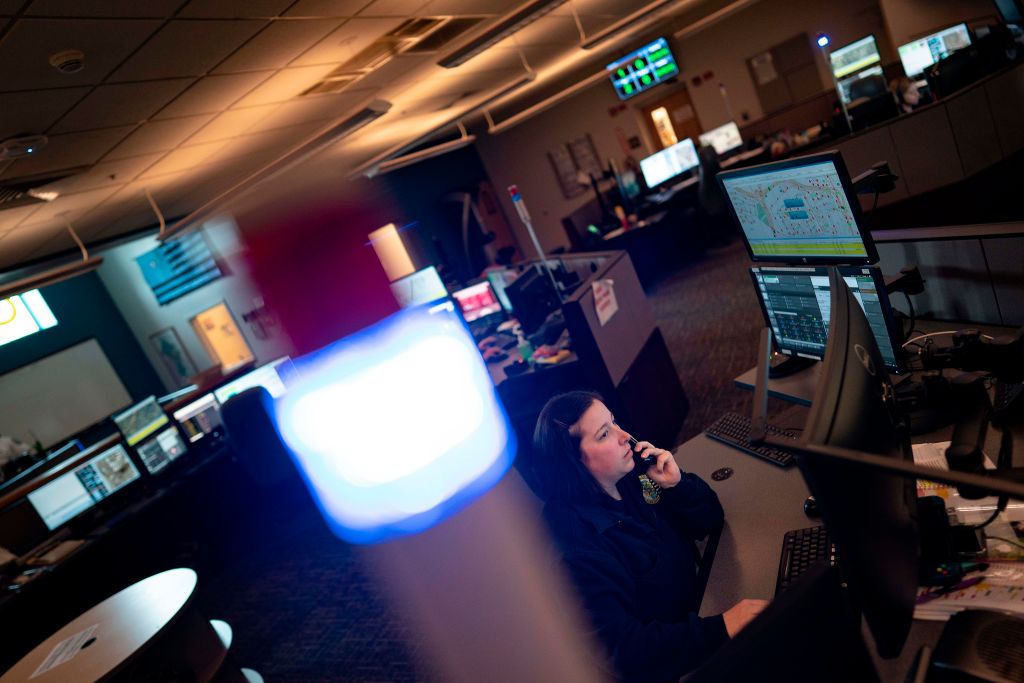
In the middle of a storm, 911 call centers often find themselves inundated with reports of fallen trees, flooded roads and panicked residents. Every call matters, but with multiple reports of the same incident pouring in, the pressure on emergency services can become overwhelming.

Amid the chaos, a technological ally has emerged: artificial intelligence. In the United States, AI is quietly transforming how non-emergency calls are handled in dispatch centers. An AI-powered system can triage and coordinate the flood of reports, promptly alerting the relevant agencies.

For now, AI-powered systems only manage non-emergency calls, which typically come from a non-911 phone number but are answered in the same centers, allowing human dispatchers to focus on emergencies.

The integration of AI technology into 911 centers is partly a response to an acute staffing crisis and the pressing need to address the mental health challenges that emergency responders face. While AI-powered systems in 911 centers offer potential benefits, such as managing call surges and reducing dispatcher workloads, concerns linger among experts about the possibility that these systems may overprescribe police response or make mistakes due to biases.

So far, fewer than a dozen localities in seven states across the country are using or testing artificial intelligence in their 911 centers. But, as in other industries, leaders are wondering how AI can transform workplaces.

“For me, I think that the use of AI for non-emergency calls is a fantastic idea,” said Ty Wooten, the director of government affairs for the International Academies of Emergency Dispatch, an organization that helps set standards for emergency dispatch centers. “I see the huge benefit of being able to alleviate those calls out of the 911 center queue so that the 911 call takers can really focus … on the ones that really matter.”

Emergency call centers are struggling to find workers. Between 2019 and 2022, 1 in 4 jobs at 911 centers were vacant, according to a report published in June of this year from the International Academies of Emergency Dispatch and the National Association of State 911 Administrators. As emergency call centers continue to grapple with understaffing issues, some 911 calls may go unanswered or get stuck in lengthy queues.

“That subsequent loss of staff makes everyone have to work more, which then burns people out and creates more turnover,” Wooten said in an interview. “It’s this vicious cycle.”

For now, there’s little regulation on how artificial intelligence can help. Only a few states have set AI regulatory frameworks. And the definition of AI itself remains uncertain in many states.

Public safety agencies often approach new technologies, including artificial intelligence, with caution because of concerns about service disruptions, said Brandon Abley, the director of technology for the National Emergency Number Association, a nonprofit professional group.

“[Emergency call centers] are not really stumbling over themselves to try and implement AI in their operations because generally, they don’t want huge disruptions to their operations unless they’re very, very certain,” Abley said in an interview with Stateline.

And there could be disadvantages, he added. For example, dispatchers could face heightened mental health challenges if they have to manage more emergency calls because an AI system is taking the bulk of administrative or non-emergency calls.

“We think it looks promising,” Abley said, “but we’re also cautious.”

Boosting efficiency and reducing workload

The testing or implementation of AI systems for call-taking in 911 centers already has begun in municipalities in Colorado, Maryland, Missouri, Oregon, South Carolina, Texas and Virginia.

Among the driving forces is the dual role that call center personnel play. In most public safety centers, the same people answer both emergency and non-emergency calls. With a shrinking workforce, some governments see AI as a solution to alleviate part of the workload.

Among the tech companies offering products to 911 centers is Amazon Web Services, a subsidiary of Amazon that provides cloud computing services, including Amazon Connect, a cloud-based contact center designed to provide verbal assistance. Carbyne is another software company focused on emergency communications services that uses AI for live two-way translation and triaging calls.

In South Carolina, for example, Amazon Connect is used for non-emergency calls in Charleston County’s Consolidated Emergency Communication Center. When a caller dials the county’s non-emergency line, Amazon Connect will answer and ask the caller what they need help with. The system will redirect the caller to appropriate resources, allowing human dispatchers to focus on emergency call-taking. If the system cannot understand the caller, it will send the call to a human dispatcher.

The center spends about $2,800 per month on its Amazon Connect subscription, which Jim Lake, the center’s director, said is cheaper than hiring staff solely for answering non-emergency calls. The system has reduced the volume of calls to the administrative line by 36% since March, Lake told Stateline.

“Those are calls that our 911 public safety telecommunicators don’t want to take. They are not emergencies. So we’re showing them that we’re making their jobs more efficient and giving them the opportunity to do more on those emergency calls,” Lake said.

Several other call centers — including the Arlington County Emergency Communications Center in Virginia, the St. Louis County Police Department in Missouri and the Jefferson County Communications Center Authority in Colorado — also are adopting the Amazon Connect system or similar technologies.

Since Jefferson County began using Amazon Connect’s program last December, AI has processed about 40% of the emergency center’s administrative calls.

“We’re processing just under a million calls a year, so for us to handle it through technology — freeing up personnel to handle more acuity-style calls — works much better for us,” said Jeff Streeter, the center’s executive director.

While there are concerns about AI displacing dispatchers’ jobs, many leaders of 911 call centers emphasize that their goal is to make existing roles more manageable.

“I cannot stress enough that it does not take away jobs, especially in the 911 industry. It’s there to help them enhance their job,” said Jacob Saur, the emergency communications center administrator for Arlington County Public Safety Communications and Emergency Management. “I just cannot see in any way, shape or form an automated bot answering a 911 call.”

Brian Battles, the communications administrative specialist for the St. Louis County Police Department’s Bureau of Communications, which oversees the county’s 911 operations, echoed this perspective.

“It has been very beneficial to the call takers, who are already overworked,” Battles said. “Anything we can do to relieve that stress while actually providing a more efficient service to the citizens is a no-brainer on our part.”

Addressing bias and funding

Like other new criminal justice technology, concerns about bias loom large with AI systems.

“All AI models are only as good as their developers,” Daniela Gilbert, the director of the Vera Institute of Justice’s Redefining Public Safety initiative, wrote in an email. The potential is there, she wrote, for AI to replicate human biases on a large scale.

“If these systems are [designed] to take calls, rather than assisting call takers, it would remove a human empathy that is so often essential in crisis situations,” Gilbert wrote. “Imagine being in a time of stress and great need and having to negotiate with a bot.”

If, for example, developers have a particular bias that favors police response, AI systems may overprescribe police involvement when alternative resources might be more suitable, Gilbert wrote.

Martha Buyer, a telecommunications law attorney and 911 expert, emphasized that AI systems are prone to errors, which could lead to liability issues. The systems must be capable of accommodating a diverse range of callers, including those who speak languages other than English or have specific needs related to their abilities, Buyer added.

“To have an AI system answer a 911 call — that’s so fraught with liability I don’t even want to think about it,” she said. “Timing is critical.”

Artificial intelligence systems aren’t available everywhere in part because many dispatch call centers find themselves stuck in a technological time warp, relying on old systems that struggle to keep pace with rapid tech advancements.

“The reality is the system of 911 as it is today across the country is still kind of operated off technology that was developed in the 1930s,” said Wooten, of the International Academies of Emergency Dispatch. “That technology has to be upgraded, and we have to get that to a point where we understand and it is more equitable.”

Even as cellphones have become ubiquitous, for example, some outdated systems grapple to accurately pinpoint a mobile phone caller’s location. Instead of obtaining precise GPS coordinates, these centers might only get the location of the nearby cell tower, hampering response efforts.

“Nobody ever plans on needing to call 911, so from a government perspective, it’s often pushed to the side in terms of funding,” Buyer said.

Wooten said that despite AI’s potential, many centers need basic tech improvements before getting involved with artificial intelligence.

“We really have to get the infrastructure in place and taken care of first before we will ever be able to see the benefits and understanding of what other future technologies, whether that be AI or any other future technology.”

Stateline is part of States Newsroom, a national nonprofit news organization focused on state policy.

©2023 States Newsroom. Visit at stateline.org. Distributed by Tribune Content Agency, LLC.