
Native lands lack clean water protections, but more tribes are taking charge

posted in: Adventure | 0

Alex Brown | (TNS) Stateline.org

Across the roughly 1,300 square miles of the White Earth Indian Reservation in northwest Minnesota, tribal members harvest wild rice in waters that have sustained them for generations. They’ve been working for decades to restore sturgeon, a culturally important fish, and they harvest minnows and leeches to supply bait for anglers across the country.

But the White Earth Band can no longer depend on the clean, abundant waters that make those activities possible. Droughts brought on by climate change and irrigation for agriculture have threatened the reservation’s rivers and lakes. Manure runoff from factory farms could poison the water that’s left.

Last year, the tribal government passed an ordinance to restrict withdrawals of water from the reservation and adjacent lands that share an aquifer. Under the statute, farms and other businesses seeking to withdraw more than 1 million gallons per year must obtain a permit from the tribe.

“White Earth firmly believes that if they did not take this action, the health and well-being of their members would be imminently harmed,” said Jamie Konopacky, the tribe’s environmental attorney. “Because of the growing concern about massive water appropriations, they passed this ordinance to give themselves independent permitting authority.”

The tribe’s action has not stopped the state from issuing water withdrawal permits on reservation land, a dispute currently being contested in tribal court. While the legal battle is with a farmer, not the state, Minnesota officials are examining the jurisdictional issues in play, and the tribe is urging them to recognize its sovereignty.

White Earth leaders are joining a growing effort by tribal nations to protect waters in Indian Country — asserting their sovereignty to target pollution that’s threatening wild rice in Minnesota, shellfish in Washington and salmon in California.

Some of the nations have passed tribal ordinances to regulate polluters on reservation lands. Others have sought authority under the federal Clean Water Act to establish their own water quality standards, giving them a legal mechanism to combat pollution coming from upstream.

“The tribe’s treaty right to harvest and consume shellfish and finfish is not a meaningful right if they’re not safe to eat,” said Hansi Hals, natural resources director for the Jamestown S’Klallam Tribe on Washington state’s Olympic Peninsula.

Last year, the U.S. Environmental Protection Agency gave the Jamestown S’Klallam Tribe approval to issue its own water quality standards under the Treatment as a State (TAS) program. That status essentially gives tribes the same regulatory power over certain water quality programs as states, once they have proven their jurisdiction on waters that run through or connect to reservation and tribal trust lands. The tribe plans to adopt standards under that authority sometime next year.

Meanwhile, the EPA is working to establish “baseline” water quality standards for tribes that have not yet adopted their own, ensuring that all Native lands receive Clean Water Act protections.

As tribes establish their own standards and permitting programs, some experts believe they could play a critical role in fighting pollution and ensuring that the resources they depend on for subsistence and cultural values are preserved.

But tribal leaders acknowledge that regulatory programs are expensive and time-consuming to establish, and some tribes can’t afford them. And many tribes that seek to assert their sovereignty risk costly legal battles with industry-friendly states, which are reluctant to give up their own permitting authority. Meanwhile, a new presidential administration could appoint EPA leaders hostile to tribal interests, undoing recent efforts.

Asserting sovereignty

In 1987, Congress passed a provision allowing tribes to set their own water quality standards in the same manner as states, recognizing that Native reservations had been left out of the powers delegated to states under the Clean Water Act.

“Clean Water Act standards don’t exist in Indian Country,” said Jim Grijalva, a professor at the University of North Dakota School of Law and a longtime advocate for tribal water programs. “The problem is a racist assumption that tribes shouldn’t have the governmental right to do anything.”

While the Treatment as a State program sought to correct that, its lengthy and complicated approval process has made it challenging for tribes to pursue that option. Only 84 of the nation’s 574 federally recognized tribes are recognized under the TAS program. And only 326 tribes have reservation land, further limiting the nations that can apply.

But momentum is growing. A 2016 EPA rule streamlined the application process, and 22 tribes — more than a quarter of those approved — have earned TAS status since 2020.

“The learning curve has been slow at times, but tribes are realizing the ability to use their sovereign authority under the Clean Water Act as part of their arsenal for protection,” said Ken Norton, chair of the National Tribal Water Council, a tribal advocacy group.

Norton also directs the Tribal Environmental Protection Agency for the Hoopa Valley Tribe in California, which was among the first tribes approved for TAS status in 1996. The tribe’s regulatory authority on the Klamath River enabled it to negotiate the extension of a state-run salmon hatchery that was slated to close under a dam-removal plan.

“Our voice at the table, not as a stakeholder but as a regulatory entity, was strengthened because we had these federally approved water quality standards,” Norton said.

Grijalva, the law professor, noted that tribal standards can take into account factors such as the dietary habits of Native people who harvest food from the landscape.

“Tribes have inherent rights to make value judgments that are different than their neighbors,” he said. “If you set a dioxin standard, mercury standard or selenium standard based on risk to the average white guy, you’re not accounting for the tenfold increase in exposure to an Indigenous person.”

In Michigan’s Upper Peninsula, members of the Keweenaw Bay Indian Community fish for lake trout, brook trout and walleye on the reservation’s lakes and rivers. The tribe earned TAS status in 2020 and is working to issue water quality standards by the end of the year.

“We’re a fishing community, so the protection of water quality is of utmost importance,” said Dione Price, the tribe’s environmental specialist and environmental health section lead. “This really does give the tribe a seat at the table in water protection.”

The Karuk Tribe in California also received TAS approval in 2020. Grant Johnson, the tribe’s water quality program manager, said that step came after years of securing funding, hiring staff and building proficiency to ensure it could craft detailed regulations, monitor its waters and enforce its standards.

The Keweenaw Bay and Karuk tribes are among the 37 nations that have received TAS authority but are still working to issue water quality standards or waiting on EPA approval of those thresholds. While many are well underway, the staffing levels and expertise required to run a water quality program remain a major hurdle for some tribes.

“It’s great to take advantage of the politically open moment, but many tribes don’t have the resources and support to make their own standards,” said Sibyl Diver, a lecturer at Stanford University’s Earth Systems Program who has published research on TAS.

Diver also noted that many reservations are within states that are hostile to tribal sovereignty and environmental regulations. Such tribes are likely to face lawsuits from state governments and conservative groups, and may not have the resources for expensive legal battles.

New authorities

While many tribes have set standards that are more stringent than their neighbors, experts say that even thresholds that only match federal minimums give tribes a major tool. Just by holding that authority, tribes can participate in permitting decisions on upstream waters.

For the Chehalis Tribe in Washington state, water quality standards allow it to protect the salmon that swim in the Chehalis River.

“The tribe having its own standards means that if there’s a project or an issue that’s happening upstream, the tribe now has a say in what’s happening rather than waiting for the federal government to act on it,” said Jeff Warnke, the tribe’s director of government and public relations.

While more tribes work toward that regulatory power, others have started by setting tribal ordinances for their own reservations. Some, like the White Earth Band in Minnesota, see the establishment of an internal program as a precursor for pursuing TAS authority. Norton, with the National Tribal Water Council, said more tribal nations have issued such regulations in recent years, although specific figures are hard to come by.

Meanwhile, more tribes may seek to create or expand water ordinances after the U.S. Supreme Court’s ruling earlier this year to remove millions of acres of wetlands from Clean Water Act jurisdiction, leaving their protection up to states and tribes.

As more tribes work to set up their own programs, the EPA has proposed a “baseline” water quality standard for tribal lands that are not yet covered under TAS. If the rule moves forward, it would provide protection for 76,000 miles of rivers and streams and 1.9 million acres of lakes and reservoirs that currently lack standards, the agency said.

“Some states like the fact that there’s no rules in Indian Country,” said Grijalva, the law professor. “But if a significant part of the country is not protected because it doesn’t have the most basic water quality standards, EPA isn’t doing its job.”

The federal agency did not make a spokesperson available for comment.

Stateline is part of States Newsroom, a national nonprofit news organization focused on state policy.

©2023 States Newsroom. Visit at stateline.org. Distributed by Tribune Content Agency, LLC.
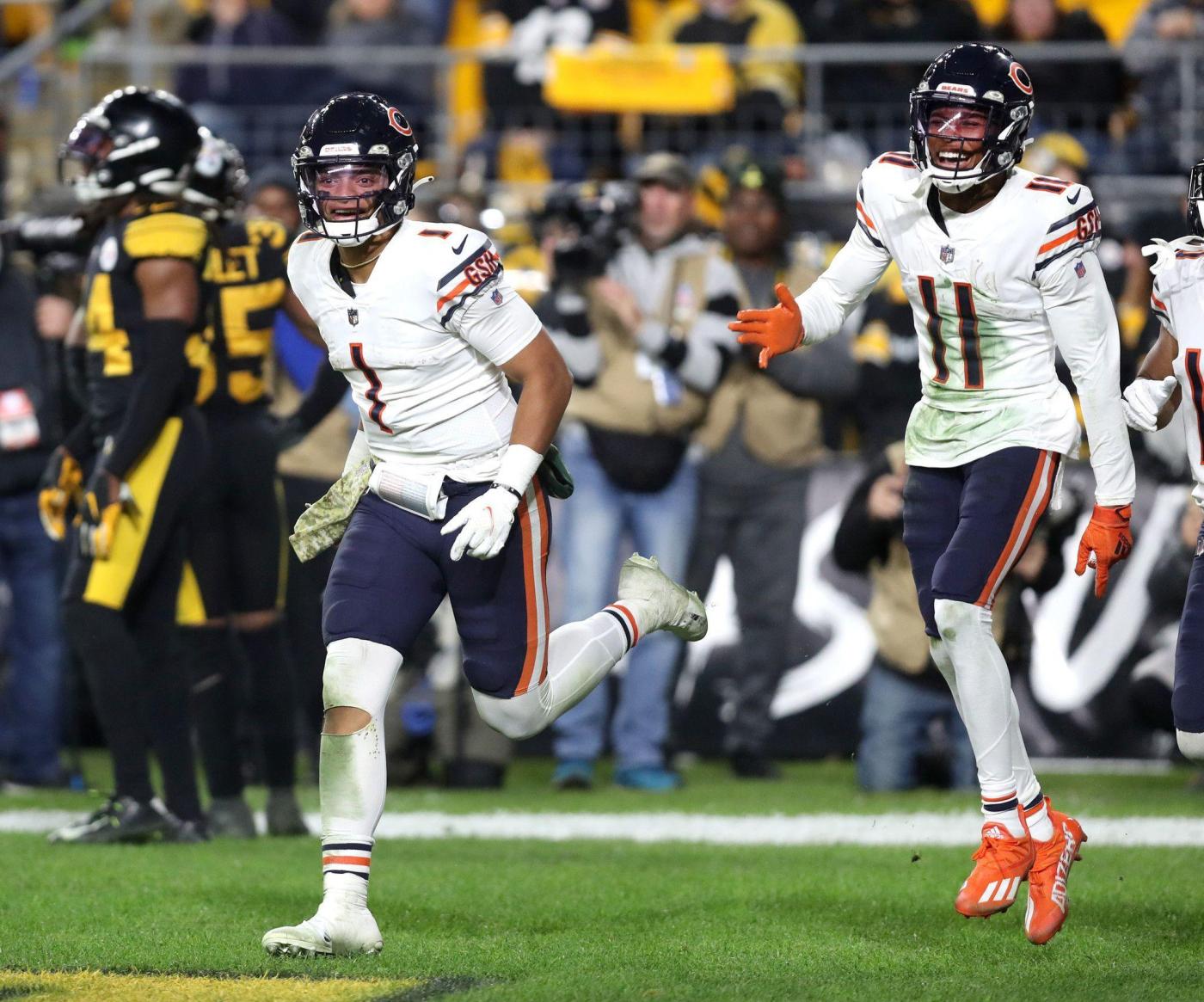
Chicago Bears Week 7 storylines: Tyson Bagent’s underdog charm, Justin Fields’ unclear prognosis and a possible defensive resurgence

posted in: News | 0

At 1-5, the Chicago Bears have a lot to sort through as they ready to face the Las Vegas Raiders on Sunday at Soldier Field.

Offensive line uncertainty. Defensive inconsistency. An undrafted rookie likely to make his first NFL start. It’s another complicated puzzle that Matt Eberflus and his coaching staff need to put together.

In advance of the game, here’s the inside slant on three notable storylines.

‘Nothing to lose’

All aboard who’s coming aboard.

That amplified and familiar whistle you’ve been hearing this week has been coming from Chicago Bears headquarters in Lake Forest, where Desperation Station has sent the latest hope-and-hype train on its way.

The Tyson Bagent Express is out on the tracks with a couple of opportunities to board before it barrels into Soldier Field for Sunday’s game against the Las Vegas Raiders.

For the “Let’s see what we’ve got in the kid” crowd, this is an exciting and intriguing moment, a chance to latch on to an underdog story as a 23-year-old undrafted rookie from Division II Shepherd University continues to live out his football dreams.

What’s not to love about the possibility and the self-assured way Bagent has been attacking this with preparation as his fuel and destiny as his compass?

Asked Wednesday if he ever dreamed an opportunity like this would materialize as a kid growing up in Martinsburg, W.Va., Bagent just shrugged and smirked. “Oddly,” he said, “I always thought it was going to happen.”

His sincerity carried such positive energy.

As for those rolling their eyes at the sudden and significant swelling of Bagent belief within pockets of the Bears fan base, the skepticism is understandable given the number of once-hopeful backup quarterbacks whose journeys derailed well short of their desired destinations.

Does Caleb Hanie ring a bell? Matt Barkley?

How about a Chad Hutchinson or Jimmy Clausen? Henry Burris or P.T. Willis?

In some ways, Bagent is just like all those dudes, thrust onto center stage due to circumstance but still eager for the chance to prove himself. He is also nothing like any of the QB2s who have come through Halas Hall before, on a unique voyage and blessed with a combination of humility, drive and poise that helps him stay centered.

Reminded that a year ago he was at Shepherd preparing to face West Chester University in front of a crowd of 2,123 fans in Pennsylvania, Bagent didn’t flinch at the reality that he will lead the Bears to play the Raiders this weekend. In fact, he explained why he hasn’t felt all that overwhelmed.

“I think my life has been planned out for me ahead of time,” Bagent said. “Everything that has happened and will happen was already set in stone to happen. And I think coming from where I come from, I’ve pretty much beat every odd that there was for me. So I’ve got nothing to lose.”

Bears tight end Robert Tonyan applauds that mindset. Tonyan’s NFL entry came in 2017 as an undrafted rookie out of Indiana State, and the first regular-season game he played in was that unforgettable Packers-Bears opener in 2018 at Lambeau Field. He recalls the energy and nerves he had that night and can relate to the situation Bagent finds himself in.

If Tonyan has any wisdom to share with the rookie quarterback, it’s that perseverance can be a powerful professional catalyst.

Listen up, kid.

“A lot of people give in and give up,” Tonyan said. “In this league and in this world in general, sometimes it’s all about who can put their head down and just work harder to last longer without giving up. So wherever you have your eyes set or your goal established, just keep going after it. Put in the work and manifest that vision of success and it’s going to come.”

Tonyan’s belief in Bagent has only grown as they’ve gotten to know each other over the last six months. “We were talking in the sauna almost every day during camp,” Tonyan said. “We have similar stories. And we have talked a lot about taking that different path to get here but also understanding it’s all about what we do with these opportunities.”

Tonyan has come to appreciate Bagent’s natural confidence and the ways he used his preparation habits to strengthen it. Then, on Sunday, Tonyan saw Bagent’s playmaking instincts kick in under pressure. On first down from the Vikings 20-yard line during the Bears’ fourth-quarter touchdown drive, Tonyan was supposed to run an out-and-up route. But when he recognized a blitz, he converted into a short out route into open space near the right sideline, hoping his quarterback would adjust similarly.

Sure enough, facing a six-man pressure, Bagent stood strong in the pocket and, just as he was blasted from behind by linebacker Ivan Pace Jr., fired a strike to Tonyan. Gain of 11.

“Tyson just ripped it,” Tonyan said. “That was good to see. This is a dude who played a lot of ball in college. And regardless of how young he still is, he has confidence in his ability to make those kinds of plays and trust what he sees in a way where he can make quick decisions and find completions and get the ball out in time.”

Those are the types of moments Bears teammates have been taking note of for months now with Bagent. There’s a presence there, running back D’Onta Foreman explained, that guys easily respond to.

“It’s just the way he carries himself,” Foreman said. “His poise and how he goes about business is what I respect. He’s just very confident and passionate — just somebody who expects to go out and play well.”

Now it’s on to Sunday, on to the Raiders, on to an opportunity to continue turning heads for however long starting quarterback Justin Fields is out with his dislocated thumb.

To dismiss the fun folded into this Bagent storyline — regardless of how temporary or long-lasting it turns out to be — is to willfully pass on some of the most-time tested allure in sports with a determined underdog taking on this massive challenge with admirable fearlessness.

Still, just the setup and the efforts alone aren’t enough to guarantee any level of success. Not for a guy trying to master the hardest position in the sport at the highest level under an incomprehensible amount of pressure.

Hanie, don’t forget, turned in an admirable relief performance in the 2010 NFC championship game against the Packers, allowing giddy imaginations in Chicago to run wild. But the next season, after Jay Cutler broke his thumb in late November, the 7-3 Bears became the 7-7 Bears under Hanie’s guidance as the underdog quarterback threw nine interceptions in four losing starts.

By Christmas night of that season, the Bears had moved on to start another underdog backup, Josh McCown, whom they had pulled back into the league from a high school coaching gig in North Carolina.

Now Bagent’s number has come up, offering him the chance to write this next chapter in Bears quarterback history.

On Wednesday, Bagent thought about what it will mean to him to make an NFL start and reflected back to December when he was processing the end of his college career following a Division II playoff loss to the Colorado School of Mines Orediggers. A friend of Bagent’s reminded him that with the astronomical odds of just making the NFL, his days as a starting quarterback might have ended.

“That’s just how the apple falls from the tree sometimes,” Bagent said.

But this chance to start for the Bears against the Raiders? Bagent is ready to give it his best shot.

“To look at where I’m at and see how everything has kind of fallen into place, I have nothing but extreme gratitude and I’m just feeling super blessed to be able to be that kind of motivational role model to the younger people in my family.”

And off we go. All aboard who’s coming aboard, right?

Like sands through the hourglass

On the first play of last week’s loss to the Minnesota Vikings, Justin Fields did everything right before the snap. He recognized the six defenders at the line of scrimmage and, with the Bears operating out of an empty backfield — with three potential pass catchers to the left and two to the right — Fields made a protection call to have his offensive line block to their right after the snap.

It was basic math. With six defenders potentially rushing and only five Bears blockers, one Viking would be left free. The protection call should have alerted Fields it would be outside linebacker D.J. Wonnum sprinting unblocked from his left, requiring the quarterback to float right after catching the snap and get the ball out quickly to one of his reads in fullback Khari Blasingame or receiver DJ Moore.

There’s been debate across Chicago in the five days since on whether that was the optimal play call against a heavy-pressure defense. (Coordinator Luke Getsy explained Thursday he was hoping to get an early tell on how the Vikings would defend them when they had two backs and one tight end on the field).

Still, there was still a play there for Fields to make had he executed his post-snap responsibilities properly.

Catch snap. Float right. Fire.

Instead, Fields stayed behind center after he took the snap, was slow to get the ball out, took a huge shot from behind from Wonnum and lost 7 yards on a sack.

“He did the hard part,” Getsy said. “He checked the protection. He just didn’t react the right way. When you make the protection check and you know you have the (rusher) free, you’ve got to drift right and throw it.”

That was one of four sacks Fields took on 18 dropbacks against the Vikings. The final one came on the Bears’ first drive of the second half, this time when the Vikings brought six defenders to the line of scrimmage but rushed only three, dropping eight players into coverage to confuse Fields. On that sequence, the pressure wasn’t immediate and Fields — this time following his rules — saw the Vikings drop eight and made his best effort at extending the play in a way that would hopefully open up bigger throwing lanes.

Said Getsy: “When you’re on third down or in the gold zone and people want to drop eight, you have to extend some plays. Because the (throwing) windows are going to be all foggy, right? You have people dropping all over the place. But if you can extend the play now you create huge windows for yourself.”

Perhaps Fields could have taken a deep shot to Darnell Mooney down the middle of the field or ripped one to Moore 13 yards beyond the line of scrimmage. But as he drew the play out, rookie right tackle Darnell Wright didn’t finish his pass blocking duties on Danielle Hunter. Thus Hunter slipped around Wright 4.6 seconds after the snap and hit Fields, who desperately tried to throw the ball away but landed awkwardly on his right hand.

Loss of 5. And perhaps a loss of very valuable time.

Fields dislocated his thumb on that play and now has an indefinite timetable to return. His right hand remains swollen. And while there is no fracture or significant structural damage, the Bears aren’t certain when their starting quarterback will be able to firmly grip a football.

It’s not as much a pain tolerance thing as it is about functional strength. And while it’s a near certainty rookie Tyson Bagent will start Sunday against the Raiders, the Bears need to figure out how quickly Fields can return.

Week 8 in Los Angeles against the Chargers? Perhaps the following Sunday against the New Orleans Saints? Or might his return not come until after the team’s second mini-bye following a Thursday night game against the Carolina Panthers on Nov. 9?

The clock is ticking.

Tick, tick, tick.

Every game Fields misses is a missed opportunity to both further his development and give the Bears a better big-picture understanding of where his growth curve is headed.

Sunday will mark the eighth start since 2021 Fields has missed due to injury or illness. Compare that to his six total victories as an NFL starter and a problematic trend has emerged. The Bears currently have a QB1 who has been more likely to miss a game than win one.

Last week’s clunky performance awas further unnerving, particularly coming after encouraging offensive performances against the Denver Broncos and Washington Commanders. With the entire unit unsettled, Fields managed just six completions and 45 net passing yards with the Bears scoring only six points over the seven possessions he led before being hurt.

That provided additional evidence to the files of a young quarterback whose playmaking brilliance and flashes of potential have too often been overshadowed by his inconsistency and inability to flourish as a passer.

After 31 NFL starts, Fields still isn’t showing a breakthrough with his pocket poise, processing speed or his off-script abilities as a thrower. Now he’s injured again and perhaps facing a decision on how much he should rush to get back for a last-place team that isn’t going anywhere.

But what about Fields? Where is he headed? How will the rest of his season unfold? And how will the long-term direction of the franchise be impacted in an offseason full of crucial decisions?

It’s such an uncomfortable position to be in. For Fields. For the Bears. For a quarterback-scarred city fatigued by all the disappointment it has been forced to endure and still unable to agree on what needs to happen next.

After Sunday, the Bears will still have 10 games remaining, each an opportunity to seek clarity on the quarterback situation. As intriguing as a handful of Bagent starts may be, the Bears’ biggest priority is to have a solid understanding for where Fields’ development is headed. But after 31 starts, there is already a pretty large sample size.

At this point, it’s probably misguided to anticipate Fields eventually performing high-level quarterback duties he has yet to show he can master.

Now, the Bears must wait through another delay, waiting to see how long it will take Fields to get back on the field and then waiting to learn how he’ll function when he does.

Make no mistake, though. The clock is ticking.

Tick, tick, tick, tick, tock.

‘The next level’

Even with the heaviness of another loss, the disappointment of a 1-5 start, the harsh reality that just getting “in the hunt” of the NFL playoff picture is a long shot, safety Jaquan Brisker stood in front of his locker stall Sunday at Soldier Field and felt a tinge of encouragement.

Brisker and the Bears defense had come alive in the 19-13 loss to the Minnesota Vikings. The Bears played with noticeable cohesion. There was an obvious edge. The result was a crisp and relatively clean performance with the Bears allowing only three plays of 15 yards or longer in the game and forcing four three-and-outs on the Vikings’ first five possessions after halftime.

“Every series, it felt like we kept getting more and more swag,” Brisker said. “We have to keep that up.”

For a player as passionate and hungry as Brisker, the loss still triggered a sharp frustration that continues to linger as the team looks ahead to Sunday’s game. But defensively, the Bears also feel like last weekend’s performance provided something to build on.

“That was definitely a positive,” he said. “Now we have to take it to the next level.”

Added linebacker T.J. Edwards: “It was fun out there, man. We played with a confidence and a swagger. That was good to see.”

Don’t get it twisted: No one inside the locker room is feeling cheerful or satisfied about where the team stands. But a strong defensive showing was still noteworthy. Over 11 possessions, the Bears allowed only one touchdown and 12 points. They limited the Vikings to 220 total yards — the fewest allowed by a Bears defense since Week 6 last season — with just 58 of those coming after halftime.

The Vikings failed to convert on 11 of their 13 third-down plays, including all six in the second half while averaging just 2.1 yards per rush for the game.

Bears coach Matt Eberflus was particularly pleased with how his defenders made tackles in space and used sharp vision to break on the underneath throws the Vikings tried to hit throughout the afternoon.

“That’s stuff we worked on,” Eberflus said. “The coaches who I’ve been around have always said, ‘You get what you emphasize.’ We emphasized that a lot last week. The guys played with good energy. The guys knew what to do. They played fast and they played with good fundamentals.”

On top of all that, the team’s second-quarter takeaway was a group effort with Edwards winning his blitz and hitting quarterback Kirk Cousins just as he threw with Tremaine Edmunds diving to snatch the fluttering football on what was officially ruled a Cousins fumble.

“That’s a crazy outcome as far as what they’re calling it,” Edmunds said. “But nah, that was just a big play as far as us collectively being in position to be successful. Now we need more of that.”

The Bears started last weekend’s game with their preferred group of 11 starters intact. And while safety Eddie Jackson, still battling a nagging foot injury, lasted only 14 snaps before exiting, there’s hope the defense can be close to whole with a chance to build meaningful chemistry and momentum.

“Our coaches have been putting guys in positions to make plays,” Edmunds said. “Then our execution of the detail has been to the top (level) and guys are figuring out ways to make plays. That all goes back to how we work through the week. Every time we go out to practice, every time we make our way through a walk-through, we lock in on what the emphasis is. It’s a positive when those things carry over.”

Against the Vikings, the video showed what is possible when a unit is assignment sound and able to take care of the littlest details. “The energy and effort was at a premium last week,” safeties coach Andre Curtis said.

Cornerback Jaylon Johnson was bothered by the 77-yard touchdown drive the Bears allowed just before halftime but felt, beyond that, the defense “played dominating football.”

“We just have to keep building, keep finding ways to come together and stick together, to be aggressive and go out there and have energy,” Johnson said. “Then (we) let our execution drive our energy and continue to keep that juice throughout the game.”

()

Can psilocybin help ease existential despair in patients with advanced cancer? Researchers hope to find out.

posted in: Society | 0

A new study in Colorado is trying to answer definitively whether psychedelics help at least some patients dealing with distress over advanced cancer.

Dr. Stacy Fischer, co-leader of cancer prevention and control at the University of Colorado Cancer Center, said several small studies have found that psychedelic drugs may help patients who are experiencing demoralization or despair because of their impending mortality. The study CU is part of will have a larger and more diverse group of people, which hopefully will produce more conclusive evidence of whether there’s a benefit, she said.

“There’s so much science that needs to be done in this space,” Fischer said.

Psilocybin, the active ingredient in magic mushrooms, is still a Schedule 1 drug, meaning the U.S. Drug Enforcement Administration determined it has high potential for misuse and no accepted medical use.

But the U.S. Food and Drug Administration also released guidance earlier this year for trials involving psilocybin and some other psychedelics, and designated it as a “breakthrough” therapy for some mental health conditions, which would ease the path to getting treatments approved.

If the data shows that psilocybin is helpful for at least some people dealing with existential despair, that information could be useful to the FDA, even though no drug companies are asking for the agency’s approval to market it for that condition, Fischer said.

Generally, doctors can prescribe FDA-approved drugs “off label” for any condition where they might be helpful, but the agency also has the option to limit how a drug can be used if it is concerned about risk, said Dr. Brian Anderson, a psychiatrist at University of California San Francisco who is also studying psilocybin.

That means that it’s important to have robust data justifying that it works for people nearing the end of life if patients are going to have that option, he said.

All of the participants in the CU study will receive six hours of therapy before taking the drug and eight hours afterward, spread across multiple sessions. Half will get a dose of psilocybin and the other half will get niacin, a vitamin that causes flushing and some physical symptoms meant to mimic the effects of the psychedelic.

“I think even those receiving the placebo are getting some benefit” from the therapy, Fischer said.

Jim Grisgby, a professor at CU’s Denver and Anschutz campuses and one of the participating therapists, said much of the initial therapy is about preparing for the experience, since people are more likely to benefit if they’re ready to release control and go where the drugs take them. Afterward, they process anything from the experience, as well as patients’ feelings about their cancer and the grief that comes with it, he said.

“Everybody’s got their own sense of loss,” Grisgby said.

Research is still trying to determine how important the drug itself is, versus the therapy to integrate the experience into patients’ lives, Grigsby said. It’s likely both matter, since people who took psychedelics at Phish and Grateful Dead concerts didn’t usually come away changed, he said.

“You’d have a lot more people having these profound experiences” if drugs were all that was needed, he said.

Related Articles

Health |


Fatal drug overdoses remained high last year but plateaued, Minnesota Department of Health says

Health |


Communities can’t recycle or trash disposable e-cigarettes. So what happens to them?

Health |


Adults on autism spectrum invited to St. Paul job fair

Health |


Crohn’s disease and colitis: Advocates strive to raise awareness, break stigma for ‘invisible’ illnesses

Health |


These Florida researchers are giving depressed, anxious people psychedelics

One weakness in psychedelic research is that most people figure out if they got the active drug or the placebo, Fischer said. They’ll attempt to account for that by asking people about their expectations beforehand, to see if a significant amount of any benefit from psilocybin is because people believe it will help them, she said.

The study is open to people who have stage 3 or 4 cancer and significant anxiety or depression, but no other major medical problems. The participants will have the option to receive psilocybin under a different protocol after they complete the six-month follow-up process in the initial study, Fischer said.

The study leaders also hope to answer whether the experience under psilocybin has to be especially spiritual or mystical to produce a benefit, Fischer said. They think a more mystical experience will prove helpful, and are encouraging participants to bring items that are significant to them to help put them in the right mindset, she said.

Anderson, who is working on a different study to see whether psilocybin reduces demoralization in people with a life expectancy of less than two years, said most research on psilocybin has involved relatively young, physically healthy people, so there’s a need to study how it would affect those who are older and more medically complex.

And of course, there’s no good information about what will happen if people take the drugs in “healing centers” like Colorado is creating, since the conditions may not be as carefully controlled, he said.

“It’s a bit of comparing apples and oranges,” Anderson said.

Sign up for our weekly newsletter to get health news sent straight to your inbox.

Belgian minister quits after ‘monumental error’ let Tunisian shooter slip through extradition net

posted in: Politics | 0

By LORNE COOK (Associated Press)

BRUSSELS (AP) — Belgium’s justice minister resigned on Friday over what he described as a “monumental error” after it was discovered that Tunisia was seeking the extradition last year of an Islamic extremist who shot dead two Swedes and wounded a third this week.

Justice Minister Vincent Van Quickenborne said that he and his services had been searching for details to understand how Abdesalem Lassoued had disappeared off the map two years ago after being denied asylum and ordered by Belgian authorities to be deported to Tunisia.

On Monday night, Lassoued gunned down two Swedish men and wounded a third with a semiautomatic rifle. The attack forced the lockdown of more than 35,000 people in a soccer stadium where they had gathered to watch Belgium play Sweden.

In a video posted online he claimed to be inspired by the Islamic State group. Police shot him dead on Tuesday morning in a Brussels cafe.

“This morning at nine o’clock, I remarked the following elements: On Aug. 15, 2022, there was an extradition demand by Tunisia for this man,” Van Quickenborne told reporters on Friday evening.

“This demand was transmitted on Sept. 1, as it should have been, by the justice expert at the Brussels prosecutor’s office. The magistrate in charge did not follow up on this extradition demand and the dossier was not acted upon,” he said.

“It’s an individual error. A monumental error. An unacceptable error. An error with dramatic consequences,” Van Quickenborne said in announcing that he had submitted his resignation to Prime Minister Alexander De Croo.

In a post on X, formerly Twitter, De Croo said he took note of Van Quickenborne’s resignation and offered “respect for his courage.” The prime minister called a meeting of senior ministers and top security officials for Saturday to shed more light on the failure.

Lassoued had applied for asylum in Belgium in November 2019. He was known to police and had been suspected of involvement of human trafficking, living illegally in Belgium and of being a risk to state security.

Information provided to the Belgian authorities by an unidentified foreign government suggested that the man had been radicalized and intended to travel abroad to fight in a holy war. But the Belgian authorities were not able to establish this, so he was never listed as dangerous.

He was denied asylum in October 2020, and ordered to be extradited in 2021, but the authorities did not do so because they could not find an address for him. After Monday night’s shooting, the place where he was living was found within hours.

The attack comes amid heightened global tensions over the war between Israel and Hamas. France’s anti-terror prosecutor said Tuesday that a suspected Islamic extremist declared allegiance to the Islamic State group before fatally stabbing a teacher at a French school attack last week.

However, Belgian prosecutors said nothing suggests that Monday’s attack was linked to what is happening in Israel and Gaza.