To pinpoint the birth of the cancel culture era one has to go back to shortly before Halloween 2015.
A group of Yale deans had sent an email urging students to avoid insensitive costume choices. Three days later, Erika Christakis, the co-director (then called “co-master”), of Silliman, one of Yale’s 12 residential colleges, sent her own email to students. Christakis acknowledged “genuine concerns about cultural and personal representation,” but, drawing upon her own experience and research as an expert in early childhood education, suggested the students themselves were best positioned to police their own conduct. She also mused about the consequences of delegating control over their behavior to bureaucrats.
A dizzying backlash ensued. Students circulated a petition demanding Christakis and her co-master and husband, Nicholas, an eminent sociologist and physician, resign their Silliman posts. The courtyard was quickly covered with chalked protest messages.
The following Sunday, Nicholas Christakis decided to walk the courtyard and read the notes. “I could have stayed indoors,” he told me recently, “but I felt like Marie Antoinette.” Word got out, and Christakis was soon surrounded by a crowd of some 150 students and administrators. Things escalated when he tried to make a point about competing rights to express oneself. A YouTube video of the ensuing encounter has been viewed 1.8 million times.
“Be quiet!” a young woman can be heard screaming at Christakis. “It is your job to create a place of comfort and home for the students who live in Silliman!” she shouts. “By sending out that email, that goes against your position as master! Do you understand that?”
“No,” Christakis replies, “I don’t agree with that.”
“Then why the fuck did you accept that position?”
With preternatural calm, Christakis says, “I have a different view.”
But the student dismisses Christakis’ suggestion that residential colleges should foster an intellectual environment for challenging discourse.
“You should not sleep at night!” she cries. “You are disgusting!”
At the end of the academic year, the Christakises resigned their positions as co-masters of Silliman. Erika never taught at Yale again.
The videographer of the Halloween conflict and witness to this quietly critical moment in society just so happened to be Greg Lukianoff, one of the nation’s preeminent First Amendment lawyers and most vivid chroniclers of American fragility.
The presence of Lukianoff, who was on Yale’s campus that day to give a speech, is an apt metaphor for his career. As president of the Foundation for Individual Rights and Expression, Lukianoff has been either in front of the camera or behind the scenes of almost every major free speech controversy over the past 25 years. A near sui generis figure in American legal history, he’s the rarest of creatures in modern public life: someone dedicated to elevating principle over tribalism, a progressive who’s willing to ally himself with anyone — even the Koch brothers — who supports his larger cause.
That cause is a near absolute commitment to the First Amendment and civil liberties. It’s premised upon a faith in the human capacity to tolerate complexity, hearkening to F. Scott Fitzgerald’s observation that “the test of a first-rate intelligence is the ability to hold two opposed ideas in mind at the same time and still retain the ability to function.” That Americans can recognize the importance of the due process rights of a likely criminal or the speech rights of someone with extreme or loathsome views.
Most deeply, it’s rooted in the belief that governmental and institutional authority is never more dangerous than when it infringes upon freedom of thought and expression — even when the motivation is noble.
“The Constitution is always what tends to save us,” Lukianoff told me. “‘We have to destroy freedom to save freedom’ is one of the thin-sound philosophies that can lead to tyranny.”
Lukianoff’s philosophy — civil libertarianism — is arguably the very core of the American project. And yet it now faces intense threats from the left and the right, which Lukianoff chronicles in a new book on cancel culture. The book also offers some prescriptions, a new approach to politics and culture that could help bridge our poisonous divide, if given the chance.
Lukianoff doesn’t have all the answers, but as he recounted his own struggles with severe depression, it’s clear that his approach is a healing one. Whether Americans are willing to listen — and whether civil libertarianism can survive — is far less certain.
Lukianoff grew up a latchkey kid in Danbury, Conn., a working-class city that was once the center of the American hat industry. When he was 7, his mother, Joanna, an ethnically Irish Brit who’d come to the U.S. as a teenager, divorced his father, Basil, a Yugoslavian. Following the split, Basil moved to Geneva leaving Joanna to raise Greg and his three older siblings. The Lukianoffs struggled financially, qualifying for public assistance until Joanna found work as a geriatric nurse. To help support his family, Lukianoff worked at Sbarro’s, Burlington Coat Factory, and during summers, as a cook on Block Island.
He began his academic career at St. Joseph, a small Catholic school, where the nuns embraced him even though he was an unenthusiastic student and identified as an agnostic. Lukianoff describes the sisters’ open mindedness as his first lesson in pluralism. At Immaculate High School, he played defensive tackle in football and excelled at quiz bowl, but still felt ambivalent about structured education.
“We didn’t attend school very often,” says Lukianoff’s childhood best friend, Anthony Rodriguez, today a professor of education at Providence College. “We just wanted to have space for people like us — free thinkers — kids who maybe were born on the other side of the tracks.”
During his senior year, Lukianoff submitted only one college application — to American University — where his sister had worked as an organizer of the centennial celebration. He enrolled, majored in international relations and felt entirely alienated. “American was the worst school to go to if you had a class chip on your shoulder,” Lukianoff told me. “It was the kind of place a lot of rich kids went if they couldn’t get in somewhere else.” He recalled with anger the loans his mother was forced to take to keep him in school. “I have no warm fuzzies about American.”
It’s plausible to imagine writing having been the center of Lukianoff’s life. He edited a literary magazine in high school and has two unpublished science fiction novels on his computer. At American, he worked for the student newspaper, covering gun violence in D.C. But he took the biggest interest in the sensitivity of people who demanded retractions of articles and in a campus visit from an ACLU lawyer who challenged a D.C. sexual assault bill as unconstitutionally vague.
“That made a big impression on me,” he said.
Without great conviction, Lukianoff took the LSAT, did better than he expected, and landed at Stanford. There, he again drifted until he met Kathleen Sullivan, a constitutional law scholar who changed the course of his life.
As Lukianoff recalls, Sullivan gave him a dose of tough love during their first meeting following a constitutional law class. When he expressed his ambivalence about law school, Sullivan said he should consider dropping out. (Sullivan only vaguely recalls the incident and says her comments were surely intended to light a fire under Lukianoff, whom she recalls as “enormously impressive and immensely intellectually curious.”)
After taking a second course with Sullivan on the First Amendment, Lukianoff told her this was the cause to which he wanted to dedicate his life. Sullivan introduced him to Harvey Silverglate, a left-leaning Boston-based lawyer, who, together with Charles Kors, a conservative history professor at the University of Pennsylvania, had recently started an organization then called the Foundation for Individual Rights in Education, dedicated to protecting speech at colleges and universities.
In 2001, Lukianoff signed on as legal director. At the time, FIRE, as it’s universally known, had a budget of just over $500,000 and five employees. When he took over as president five years later, FIRE had a staff of only 12. Today, the organization employs 109 people, including 42 lawyers, and has an annual budget of nearly $37 million. Its work includes student and faculty outreach, public education, litigation on individual cases, legislative policy advocacy and reform of campus speech codes. FIRE claims more than 500 victories for students and faculty members and a nearly equal number of campus policy changes. Lukianoff’s career would have been notable for these accomplishments alone.
But his project really got going only after he got serious about killing himself.
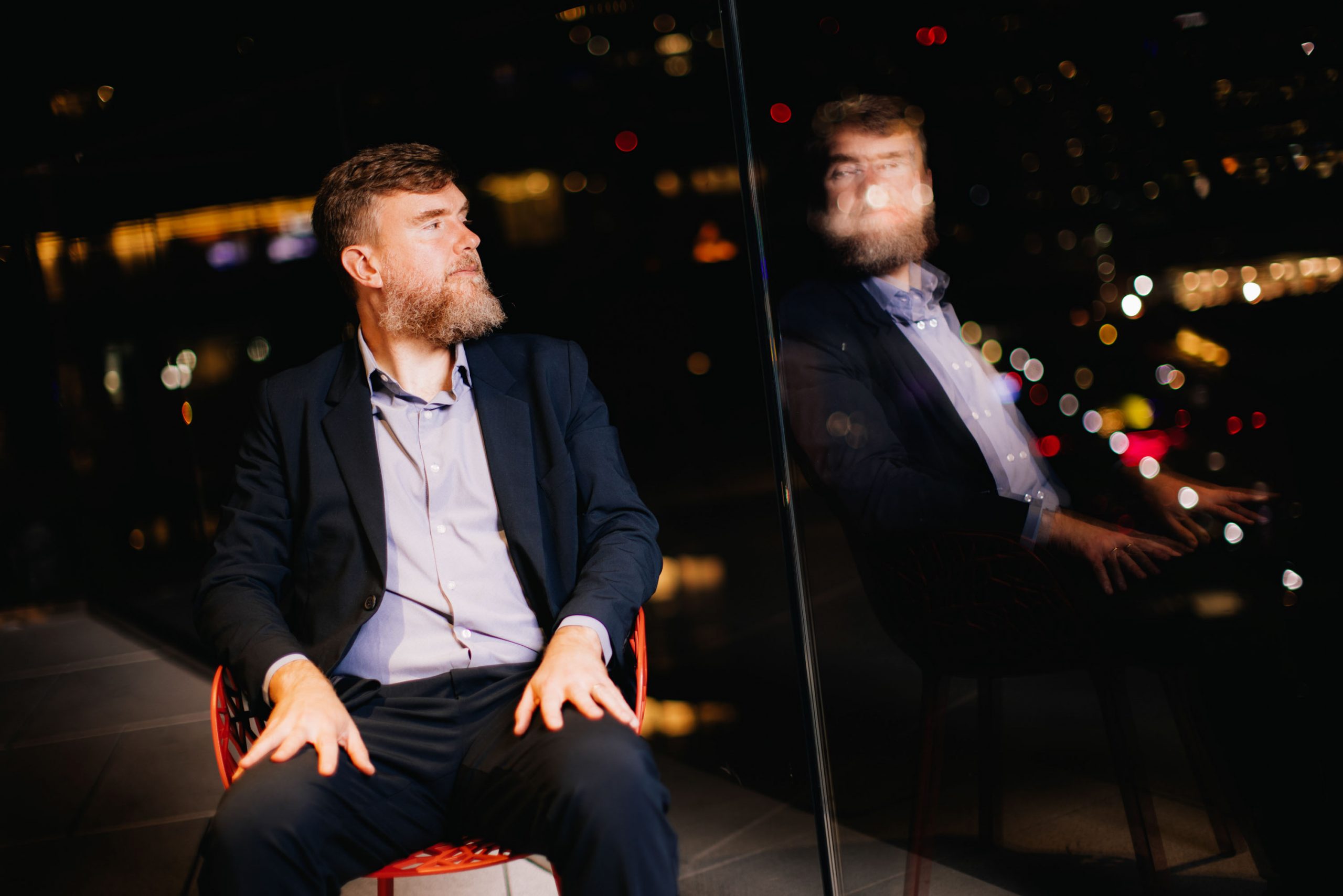
Lukianoff, 48, with a cherubic smile and a beard that Ron Swanson would envy, describes his descent into depression following his appointment as president of FIRE in 2006 with disarming detachment.
“The first year was incredibly exhausting,” he told me. Lukianoff had a bad breakup and contracted Lyme disease during a trip to Martha’s Vineyard. At the same time, he felt a professional responsibility to project the image that both he and FIRE were doing great, as well as a daunting obligation to demonstrate FIRE’s neutrality on all cases of free speech. When FIRE received a letter from a Christian conservative saying the organization wouldn’t care about people like him, Lukianoff thought, “I have to prove that I will care about people like him.” Soon, he was caring about everyone but himself.
By winter 2007, Lukianoff couldn’t stop thinking about suicide. “One day, I went to the hardware store. The plan was to take all of my medications and grind them up and to get wire and a thick bag to put over my head so if I woke up I would suffocate.” But, Lukianoff said, “something finally went off in my head.” He called 911, and agreed to be held for three days at the University of Pennsylvania hospital.
After the weekend, Lukianoff’s sister, a physician, collected him. That Tuesday, he returned to work without mentioning a word to his colleagues. Lukianoff felt FIRE couldn’t survive a perception of weakness in its leader.
Will Creeley, FIRE’s legal director, said he had no idea Lukianoff was suffering. No one did.
“Greg has shielded us,” Creeley told me. “I think it’s taken a toll on him. To do this work properly and consistently requires a patience and a willingness to suffer the slings and arrow. That really can be tough.” By Christmas, Lukianoff was still thinking about killing himself enough that he cried when his family mentioned the new year.
Lukianoff experimented with a variety of treatments. He tried EMDR (eye movement desensitization and reprocessing therapy), which helped him deal with some early childhood issues that he prefers to keep private but also retraumatized him. Antidepressants made his condition worse. Finally, Lukianoff began cognitive behavioral therapy with Jonathan Kaplan, a psychologist who grounded his practice in Buddhism. Gradually, Lukianoff began to feel better.
“I began to see my thoughts like the weather,” he says. This self-mastery again changed Lukianoff’s life.
During the 2013-14 school year, as he regained control personally, Lukianoff noticed a sea change on college campuses. Traditionally, students had opposed censorship by college administrators. Now, they were increasingly calling on them to stifle speech. And they were invoking unfamiliar language.
“That year,” Lukianoff said, “was the first time I ever heard of microaggressions.” He contrasted the new rhetoric of safe spaces and trigger warnings, which seemed to be encouraging emotional fragility, with his own experiences with cognitive behavioral therapy, which fostered resilience.
Lukianoff pitched the connection between civil libertarianism and cognitive behavioral therapy to his colleagues at FIRE. The response was “overwhelming silence,” he said. But NYU psychologist Jonathan Haidt bought in. Together, they published an article in the Atlantic under a title suggested by their editor, Don Peck. In “The Coddling of the American Mind,” Lukianoff and Haidt traced students’ increased sensitivity to the paranoid parenting that became prevalent in the 1990s, and argued that the culture of safetyism permeating campuses exponentially increased the risk that a student would see words as violence. Colleges, they argued, were imbuing students with the precise opposite of the sort of resilience that cognitive behavioral therapy tried to cultivate.
The article caused a stir, and they expanded it into a book framed around three “Great Untruths” at the root of the spreading epidemic of fragility:
— The Untruth of Fragility: What doesn’t kill you makes you weaker.
— The Untruth of Emotional Reasoning: Always trust your feelings
— The Untruth of Us versus Them: Life is a battle between good and evil people.
The Coddling of the American Mind reached No. 8 on the New York Times bestseller list and sold over 600,000 copies.
Lukianoff’s new book, The Canceling of the American Mind, co-authored with Rikki Schlott, a New York Post columnist and right-leaning podcaster, is a companion piece of sorts to The Coddling. Superficially about cancel culture, it’s more deeply about the kinds of interaction and engagement that foment mutual distrust, and which are familiar to anyone who recently has discussed a politically sensitive issue on social media or in the academy.
Lukianoff and Schlott call these “rhetorical fortresses,” which they categorize with admirable precision. One set of fortresses are rhetorical deflections — such as whataboutism, straw-manning and minimization — which people use to avoid dealing with the substance of an argument. The other are effectively forms of ad hominem attacks — efforts to dismiss arguments on the basis of the speaker’s identity or character.
The Canceling also offers a sort of Buddhist guide to public discourse — to cultivating what the Vietnamese monk Thich Nhat Hanh referred to as Right Thinking and Right Speech, practices rooted in mindfulness. Read together with The Coddling, Lukianoff lays out a worldview of self-aware individuals and institutions that promote mutual respect.
The books are a call for humility and extending grace, at least temporarily, for the sake of clarification; for reason and due process over emotion and rushes to judgment; and an acknowledgment of the difficulty of resolving questions of fairness by situated actors.
It’s almost the precise opposite of modern academic and political discourse.
Lukianoff and Schlott bolster their case with harrowing tales of cancellations, including the Christakises’, and other vivid illustrations of the precarious position of entering almost any topic — fraught or not — in the public sphere or classroom.
I can vouch for this from the front lines. Last year, I watched a liberal colleague pilloried for questioning the efficacy of mandatory DEI statements and rubrics; attended a de facto compulsory DEI training where a colleague — a national expert on policing — offered competing data regarding police shootings and was told that our job — a group of social scientists at a college of criminal justice — was to listen to the trainers’ data, not challenge it; and feared for my own cancellation when I defended the freedom of speech of a conservative student at a forum on freedom of speech.
Faculty on both the left and right are terrified. More than half of the respondents to a study of faculty conducted by the Higher Education Research Institute said faculty aren’t prepared to deal with classroom conflict over diversity issues. When FIRE surveyed 1,491 college faculty, 91 percent said they were at least “somewhat likely” to self-censor. Seventy-two percent of self-identified conservative faculty members said they’re afraid of losing their job or reputation over a misunderstanding of something they said or did, or because someone posted something from their past online. Forty percent of liberal faculty said the same thing.
From 2014 to 2022, FIRE recorded 946 attempts to punish professors for speech.
By any imaginable metric, civil libertarianism is under ominous threat.
Whether the threats to free speech are more severe from the right or the left is hotly debated, a hardly surprising reality given the polarization of modern America.
The only points of wide agreement among political observers and combatants alike are that the nature of the threat posed by each side is quite different — Lukianoff and Schlott distinguish the rhetorical fortresses upon which each side relies — and that both the left and right are guilty of significant inconsistencies.
The right’s “efficient rhetorical fortress,” as Lukianoff and Schlott call it, is like tribalism on steroids. Under its principles, one doesn’t have to listen to liberals, experts (including journalists) and, for MAGA supporters, anyone who isn’t pro-Trump. The efficient fortress has been used to galvanize support for book banning and prohibitions against teaching conceptual talismans of the culture wars, such as critical race theory.
These are commonly legislative initiatives, which makes them a more severe threat to civil liberties in the view of Steven Brint, distinguished professor of Sociology and Public Policy at University of California, Riverside.
“The coercive power of the state, even when it doesn’t seem like it’s intruding that much, nevertheless has a force — the force of law backed up by legal sanctions — that is quite unlike what we see mostly in terms of the threats from the left,” says Brint. “I worry a lot when the state gets involved in these issues.”
Brint also differentiates the coordination of right-leaning cancelation efforts from the haphazardness of cancelations from the left. A recent study conducted by Brint, who also serves on FIRE’s board, found that 78 of the 99 so-called divisive concepts bills that have been introduced since 2021 are directly derived from model legislation drafted by the conservative Heritage Foundation. Earlier this year, the Manhattan and Goldwater Institutes — a pair of conservative think tanks — drafted model bills to ban DEI officers, diversity trainings and diversity statements.
An irony of the threats from the right is that they’re informed by the same desire to spare their children from psychic harm which they’re quick to ridicule from the left. Florida’s Stop WOKE Act, championed by GOP presidential hopeful Gov. Ron DeSantis, says no student should be made to feel “guilt, anguish, or discomfort” over historical events for which they’re not directly responsible. According to Brint, this was a near-constant refrain among Republican legislators in Florida. “One wonders how conservatives became so tender in their sensibilities,” he says.
An even greater irony is that civil libertarianism has come to be perceived as a right-wing cause. This is in part because, divisive concept bills notwithstanding, conservative students take what Johns Hopkins University sociologist Amy Binder calls an “absolutist” position on speech. “Conservative students are the biggest free speech proponents because they’re the persecuted minority,” says Binder, who has written extensively about campus activism.
Over the past few months, when I’ve told people that I’m working on this piece, the most common question I’m asked is whether FIRE is a conservative organization. Indeed, the group has received significant contributions from several right-leaning foundations, including the Charles Koch Institute. Nevertheless, the charge frustrates Lukianoff.
“A great disappointment of my career is that I couldn’t get us more support from left-leaning foundations,” Lukianoff told me, adding that FIRE now received support from the center-left Knight Foundation and Bloomberg Philanthropies. He also readily acknowledges the unique threat Donald Trump poses to democracy. Indeed, nearly everyone I interviewed regarded the kind of violent attempted coup that sought to overturn the 2020 election as a greater threat to civil libertarianism than political correctness run amok.
I asked Lukianoff whether he perceived an inconsistency between accepting contributions from organizations which directly or indirectly fund candidates who support anti-free speech measures like divisive concepts legislation. “No,” he said. “Some of the worst threats from the government we’ve seen in our existence have come from the Obama — who I voted for — Department of Education,” Lukianoff explained. (Lukianoff took particular exception to a joint letter from the Department of Education and Department of Justice that lowered the evidentiary standard in sexual harassment cases and said that speech could serve as the basis for a complaint.) “The idea that people who support Democrats’ hands are totally clean on speech, that’s crazy,” he said.
While the ongoing threat to civil liberties may be greater from the right, the losses in support for civil libertarianism have been greater on the left.
It’s important to distinguish First Amendment civil libertarian types from small government, tea party-type libertarians. (Lukianoff, a lifelong Democrat, is an example of a civil libertarian who backs redistributive economic policy.) While the latter have been widely studied, scant research exists on the former.
One of the few sources of data is the General Social Survey, run by the University of Chicago, and known as the GSS. Since 1976, the GSS has asked whether a racist should be allowed to make a speech. During Trump’s presidency, between 2016 and 2021, support for this proposition dropped from 59 to 47 percent, the lowest level recorded in the survey’s history. Support among Democrats fell from 55 to 35 percent. The decline was even more pronounced among those with college degrees.
Over the same time period, the percentage of respondents who said a racist book should be removed from a public library increased by 7 points — from 35 to 42 percent. Again, the shift in support was attributable principally to Democrats, 49 percent of whom agreed with banning the racist book — compared with 28 percent of Republicans. The data should give pause to anyone who believes book banning is exclusively the province of the right.
What Lukianoff and Schott call the left’s “perfect rhetorical fortress” is characterized by dismissing speakers on the basis of identity markers such as race, gender and sexuality.
Binder frames it somewhat differently, as “speech realism” — as in realism about historical inequities and current power disparities. Binder related a typical interview with a progressive student. “Free speech, free speech, free speech — that’s all they ever talk about,” the interviewee told Binder, referring to their conservative peers. “But it’s hurtful and some things shouldn’t be said on campus.”
Sarah Longwell, a Republican strategist, draws a connection between these sorts of comments and the Trump presidency. In 2021, FIRE hired Longwell, who founded Republican Voters Against Trump, to conduct focus groups on how receptive Americans might be to a pro-free speech campaign.
Longwell divided the respondents into three categories: “reachables” — people, mostly over 45, who were receptive to a pro-free speech message; “teachables” — who had misconceptions about basic First Amendment law; and “in-too-deepables” — largely college-educated voters between the ages of 30 and 45 who were hostile to FIRE’s message.
“The idea of hate speech and speech as violence was very much a part of their thinking,” Longwell told me. “Trump was such a big reference point in terms of ‘Look at what Trump did. He incited violence.’”
These profound changes on the left leave civil libertarianism unmoored.
The North Star of many civil libertarians — including Lukianoff — was the ACLU’s 1976 decision to represent a neo-Nazi group that wanted to march through Skokie, Ill., a Chicago suburb where many Holocaust survivors made their home. Elevating the poignancy and indelibility of the defense was the fact that the lead lawyer, David Goldberger, was Jewish. Longwell said the “reachables,” who tended to be older, drew a direct connection to Skokie. “They had a real reverence for free speech,” Longwell said. “The nobility of ‘I don’t have to like what you’re saying, but this is how civil liberties are achieved.” By contrast, Longwell added, “young people did not think Nazis should be able to march.”
Today, it’s less clear whether the ACLU would defend the Skokie marchers. In 2017, the organization was roiled by conflict after its Virginia chapter defended the right of white nationalists to rally in Charlottesville in support of a statue of Confederate Gen. Robert E. Lee — an episode that devolved into deadly violence.
The following year, the national ACLU issued new guidelines, which seek to balance the free speech rights of even “the most repugnant speakers” against a variety of factors, including the speech’s “potential effect on marginalized communities.”
In 2021, Goldberger told Michael Powell of the New York Times that he had the sense it was more important for the ACLU “to identify with clients and progressive causes than to stand on principle” and that “liberals are leaving the First Amendment behind.” Powell’s article, widely discussed in the legal community and beyond, characterized the ACLU as facing an “identity crisis.”
David Cole, the ACLU’s national legal director, rejects Powell’s thesis.
“To be frank, I think Powell’s piece was an article in search of the author’s pre-committed theme,” Cole wrote me in an email. “He didn’t cite a single case we declined taking.” Cole says the organization remains committed to defending speech. “There is nothing to the charge that we would not defend the Nazis right to march today,” Cole wrote, noting that he’d written the guidelines. “The guidelines merely provide a process by which competing interests can be considered,” he added, “not a process by which lawsuits can be killed.”
Others are less convinced. Ira Glasser, who directed the ACLU from 1978 to 2001 and figures prominently in Powell’s article, told me “the ACLU has not completely abandoned but diluted” its commitment to speech. Most of the roughly two dozen people I interviewed for this piece expressed admiration for the ACLU but said the organization — which commenced more than 400 legal actions against Trump — had become a hybrid of a progressive political advocacy and civil libertarian organization. To hardcore civil libertarians, these positions are mutually exclusive.
An essential premise of civil libertarianism has always been that one could defend the rights of a speaker without agreeing with their message, even in the most extreme cases. Today, it’s no longer clear whether one can defend a racist’s right to speech without being considered a racist. This uncertainty is especially pronounced on college campuses. “Universities,” Binder says, “are confusing in the messages they send about speech.”
The ambiguity has also caused significant, perhaps irreparable, damage to the perception of civil libertarians. The label, once proudly worn by the likes of Clarence Darrow and William Kunstler, is no longer displayed without reservation. While writing my last book, about inequities in higher education, a college admissions officer who is also a civil libertarian asked me not to mention this identification, fearing its negative connotation. After my book’s publication, Lukianoff posted a kind message about it on the website formerly known as Twitter. When I expressed my gratitude, Lukianoff wrote, “To be honest, Evan, I am so used to the culture wars being so damn nasty, I was genuinely afraid you might say ‘well I don’t want HIS support for my book!’”
Despite everything, Lukianoff remains buoyant enough about the future of free speech that under his direction, FIRE, which recently changed the E from Education to Expression, will spend $75 million over the next three years on free speech advocacy in the general public, including $10 million on pro-free speech billboards in 15 American cities.
The Canceling also offers many sensible suggestions for improving speech culture. Hearkening to The Coddling, Lukianoff and Schlott urge parents and K-12 educators to raise and teach more resilient children. They call upon colleges to admit a more diverse student body so that faculty don’t feel compelled to engage in virtue signaling; to recommit to free speech and academic freedom; and to strive for political neutrality. (Their message seems particularly timely given the recent campus controversies surrounding the Hamas-Israeli conflict.) It’s an appealing vision of Americans coming together to recommit themselves to first principles. It also feels, for anyone who has spent time recently on a college campus or social media site, a somewhat fanciful one.
By some measure, Lukianoff’s optimism is his most remarkable trait. Despite having spent a lifetime defending students and professors who’ve had their careers threatened or destroyed over a single statement, he describes himself as “intellectually optimistic about the future of freedom of speech.” It’s one of several commonalities Lukianoff shares with the many prominent civil libertarians I’ve interviewed over the course of my career. Most, like Lukianoff, grew up as free-range kids. Some, like Lukianoff, had benefited from therapy. All, like Lukianoff, believed in the American project.
“Practicing free speech,” he writes in his new book, “is the lifeblood of a free society. At the very beginning of the American founders’ vision is freedom of speech.”
But even the greatest optimist can’t help but wonder whether Americans remain capable of tolerating the complexity Fitzgerald identified as the mark of a first-rate intelligence. In conversation, Lukianoff — who used to talk gleefully about this being the best moment in human history to be alive — describes the threats to the American experiment as dire.
Listening to his message is a sobering experience. With respect to higher education, Lukianoff says, “I hear some will to fix things, but I’m skeptical.”
And with respect to what may be the most significant threat to civil liberties in America — Trump’s reelection bid — Lukianoff sounds an even more ominous note.
“Jan. 6 was unlike anything I expected to see in my career,” he told me. “I’m really scared about next year.”