Skywatch: Get a stellar start to your day

posted in: Adventure | 0

This week in Skywatch I want to share the joy of stargazing in the early morning hours. I was a regular super early riser for many years, but not by choice. Before I retired over three years ago, I was a morning radio broadcaster at WCCO Radio In Minneapolis and had to be out of bed a little after 3 a.m. As brutal as that was, one of the great things about it is that if clouds didn’t get in the way, I could start my day with the stars. This time of year, it’s really a treat because the morning stars are dazzling and bright, especially in the southern half of the sky.  That’s because those stars make up the great winter constellations, the same stars and constellations we see in the early evening skies in early January. I lovingly call this part of the sky “Orion and his Gang.”

(Mike Lynch)

Even if you don’t know many constellations, chances are you recognize Orion the Hunter. It’s the one that resembles an hourglass or a cockeyed bowtie. Its hallmark is the three bright stars lined up neatly in a row that form Orion’s belt. Just below the belt are three fainter stars that make Orion’s sword. The middle star in the sword is fuzzy. That’s because it’s not a star but a vast cloud of hydrogen gas more than 8,000 trillion miles away. With that cloud new stars are being born gravitationally.

To the lower right of Orion’s belt is Rigel, the brightest star in Orion, marking the hunter’s left knee. Betelgeuse is the other super bright star to the upper left of Orion’s belt, marking Orion’s armpit. You can see that it has a reddish glow without any problem. Betelgeuse is what astronomers call a super red giant star. It’s a little under a billion miles in diameter. Our sun is less than a million miles in diameter.

Elsewhere in Orion’s gang, there’s Auriga, the retired chariot driver with the bright star Capella. There’s also Taurus the bull with the little arrow pointing to the right, which outlines the face of the bull with the reddish star Aldebaran marking the angry red eye of the beast. Above Taurus are the Pleiades, a beautiful bright star cluster resembling a tiny Big Dipper. The Pleiades star cluster is home to over 100 young stars, probably less than 100 million years old.

In the eastern half of the sky, east of Orion’s Gang is a super bright “star” renting out space in the early morning among the regular winter shiners. That’s Venus, one of Earth’s next-door neighbors in the solar system, currently about 65 million miles from Earth. It’s taken up temporary residence just below the constellation Leo the lion, a constellation resembling a backward question mark.

What stars we see at a given time has everything to do with where the Earth is in its orbit around the sun and where you are on the rotating Earth. Both Earth’s orbit and its daily rotation on its axis determine what direction in space you’re facing at any particular time. All of the stars and constellations are so far away from our perspective on Earth that it seems like we’re inside a giant celestial bowl. That’s more or less what more folks believed up until the 17th century.

We now know that isn’t the case, but observationally, that’s how it seems. The constant change of the night skies on a daily and seasonal basis is one of the joys of stargazing and amateur astronomy to me and many other stargazing fanatics. The stars are always on the move in familiar cycles.

Some morning soon, set that alarm, grab that cup of strong coffee, and enjoy a little winter stargazing without the windchill!  As a bonus, if you happen to be morning stargazing this weekend you may catch the peak of the annual Orionid meteor shower. In the countryside, you may see over 20 meteors an hour!

Celestial happening this week

On Monday evening, the first quarter moon will be just to the lower right of Saturn in the southeast sky. Next Saturday night the full moon will be just the upper right of the very bright planet Jupiter. It’ll be spectacular!

Mike Lynch is an amateur astronomer and retired broadcast meteorologist for WCCO Radio in Minneapolis/St. Paul. He is the author of “Stars: a Month by Month Tour of the Constellations,” published by Adventure Publications and available at bookstores and adventurepublications.net. Mike is available for private star parties. You can contact him at mikewlynch@comcast.net.

Starwatch programs

Monday, Oct. 23, 7-9 p.m., Metro State University, St. Paul Campus. For more information call 651-793-1300 or visit www.metrostate.edu.

Tuesday, Oct. 24, 7-9 p.m., at Afton Elementary School, in Afton, through Stillwater Community Education. For more information and reservations, call 651-351-8300 or visit stillwaterschools.org/community-education.

Thursday, Oct. 26, 7-9 p.m., Hillcrest School in Bloomington. For more information call Bloomington Community Education at 952-681-6100 or visit ce.bloomington.k12.mn.us/adult-enrichment-classes.

Related Articles

Outdoors |


Skywatch: The great autumn galactic happening

Outdoors |


Skywatch: A Saturday solar eclipse

Outdoors |


Skywatch: October skies are loaded this year

Outdoors |


Skywatch: Harvest moon 2023 has good company

On its 40th anniversary, Kowalski’s remains committed to being a civic-minded neighborhood grocer

posted in: News | 0

Officially, Kris Kowalski Christiansen is the chief executive officer of the grocery store her parents, Mary Anne and Jim Kowalski, started 40 years ago in St. Paul.

But still. Even after years in the role, something about that title doesn’t feel quite right.

“We never viewed ourselves as chain, or corporate,” she said. “(Mom) and Dad always taught us, we’re a neighborhood grocer. We just stayed small in how we viewed ourselves.”

That neighborhood ethos — spending time in their own stores, not growing too fast, prioritizing a business’s civic role in the community — is partly what’s kept Kowalski’s Markets around for four decades, Kris and Mary Anne said. The business now has 11 stores around the Twin Cities.

The Kowalski family buys their groceries there, too, of course.

“We’re consumers,” Kris said. “We just want to bring an experience to people that we would want to have.”

“A common-sense neighborhood kind of thing”

Growing up in St. Paul, Jim Kowalski and then-Mary Anne Oase were “neighborhood kids,” Mary Anne said.

They married at 19. Jim worked in management at Red Owl, the grocery store chain that was once ubiquitous in the Midwest. The job bounced them from city to city, from Faribault to Chippewa Falls, Wis., where Mary Anne earned a counseling certificate and worked at a clinic.

Finally, Jim was transferred back to the Twin Cities and eventually promoted into a corporate role in the franchising division. When Red Owl began to spin off its corporate-owned stores in the Twin Cities to sell as franchises, in the early 1980s, Jim and Mary Anne knew the business and were ready to take a leap.

Kowalski’s Markets began in 1983 as Kowalski’s Red Owl, a franchise of the then-local chain, shown in this semi-colorized photo from the early 1980s. The store was owned by Jim and Mary Anne Kowalski. (Courtesy Kowalski’s Markets)

They bought the store on Grand Avenue — where both their families had long shopped — and redesigned it. Reorganized it. Rethought the way the store interacted with the community.

They renamed it, too: Kowalski’s Red Owl.

“All we hoped was to make our mortgage payment on the house,” Mary Anne Kowalski said. “We just knew you had to be kind, you had to be good, you had to be nice to people. There just was a common-sense neighborhood kind of thing, and that’s how we ran the store. And that worked.”

At the time, their daughter, Kris, was 16. She was a three-sport high school athlete — and, probably like most teenagers, not exactly enthused about the grocery business, she joked. But hey, her parents’ grocery store meant guaranteed jobs for herself and her friends.

“Then prom came, and they all wanted off,” Mary Anne said. “So we had a bit of trouble then!”

Eventually, the Kowalskis’ store began to turn a profit, and the couple made a deal with Red Owl to acquire two more stores. By the early 1990s, the family had a few locations — now fully their own — and were getting more ambitious with their products. They’d earned some recognition, too, including a “grocer of the year” honor from the Minnesota Grocers Association.

Terri Bennis, now the company’s merchandising director, started as a deli manager in 1993. Jim sent her coast to coast, she said — searching for new specialty foods, trends and brands to bring back to the Twin Cities so Kowalski’s Markets could stand out.

She met with olive growers and cheese producers and figured out how to design the shops’ build-your-own Vietnamese pho bars, she said. Bennis and the Kowalskis would help small producers bring their products to market, from coaching them on insurance and labeling laws to fine-tuning their branding.

She recalled what Jim would tell her: “I just want to be the best deli in the Twin Cities, and I know you can make it happen,” he’d say. “I want people to feel something when they walk in that front door.”

Jim Kowalski died unexpectedly in 2013, and the family recommitted themselves to his legacy.

For Kris Kowalski Christiansen, the stores’ goal is that the level of care everyone shows, from her parents to company leaders to employees, should show through in really delicious food.

“At the end of the day, it’s the common sense, again, of what tastes good and what are the quality ingredients,” Kris said. “It’s about integrity and freshness and homemade — and butter. We use butter. A lot of butter.”

“How do you pass on a culture?”

In the early 2000s, Jim and Mary Anne took stock of their business.

The couple were in their 50s. By that point, Kris had earned an MBA and came back to work for her parents, taking on a variety of administrative roles

Mary Anne (left) and Jim Kowalski (right), founders/owners of Kowalski’s Supermarkets, with their daughter, Kris, the company’s chief operating officer, in the produce section of their newest store in Woodbury. (Pioneer Press file photo: Craig Borck)

Jim and Mary Anne trusted their daughter and knew they’d eventually pass the company to her — but they also knew that keeping a business in the family does not, on its own, guarantee it’ll succeed long-term.

“So many second-generation businesses fail because they’re sort of ‘mom and pop,’ and they weren’t able to leave any structure,” Mary Anne said. “The infrastructure wasn’t built.”

So the Kowalskis implemented a civic organizing program for employees, centered on ideals of active citizenship, shared decision-making and holding one another accountable. These are concepts Mary Anne had already been researching and advocating for a decade or so, she said; Kowalski’s Markets was an early partner of the the Midwest Active Citizenship Initiative.

The company’s Institutional Governing Document draws significantly from principles outlined by the Midwest Active Citizenship Initiative. The document calls on institutions to “sustain the democratic values of our society” and individuals to “govern for the common good and to be a co-producer of justice in the world.”

A companion document, the Civic Business Policy Agenda, is written in similar terms, calling on all business leaders to prioritize shared needs like sustainability over “narrow self-interest.” The company has also outlined decision-making standards, which are designed to ensure everyone who feels affected by a problem has a meaningful stake in solving it, Mary Anne said.

This program is not a cure-all: Employees at Kowalski’s stores are unionized through United Food and Commercial Workers Local 663, and workers at several locations nearly went on strike this summer over claims of unfair labor practices. A few days before it was set to begin, the company and union reached a deal to grant workers pay raises and continued input into health care, and the strike was called off. In a recent conversation, Mary Anne and Kris declined to discuss specifics.

But Mary Anne said she values a productive dialogue with union representatives and believes in the power of the company’s civic organizing principles to guide relationships among employees, management and ownership.

Ultimately, these principles distill what has helped Kowalski’s stay successful for 40 years, she said — and what will lead the business for decades onward.

“How do you pass on a culture? And how do you pass on a culture without a language?” Mary Anne said. “And so this is our language. This is what it still is today — we have standards and practices and a way of making policy that includes every single employee.”

Related Articles

Restaurants, Food and Drink |


Minnesota AG seeks dissolution of nonprofits allegedly connected to child food program fraud

Restaurants, Food and Drink |


The pignoli cookie is a sweet, simple way to time travel….

Restaurants, Food and Drink |


Now open: Little Brazil, a cafe and market highlighting affordable regional Brazilian cuisine

Restaurants, Food and Drink |


Gretchen’s table: Fall in love with an apple salad with maple vinaigrette

Restaurants, Food and Drink |


Recipe: Fried Onion Burgers, an Oklahoma specialty, make an irresistible meal

Is the Lexington haunted? That mystery among local Halloween events

posted in: News | 0

Halloween rolls around again, and this year is chock-full of events for young and old to enjoy. Whether it’s wholesome family fun or something a little more spine-tingling for adults, these events are sure to invite one into the spirit of the spooky season.

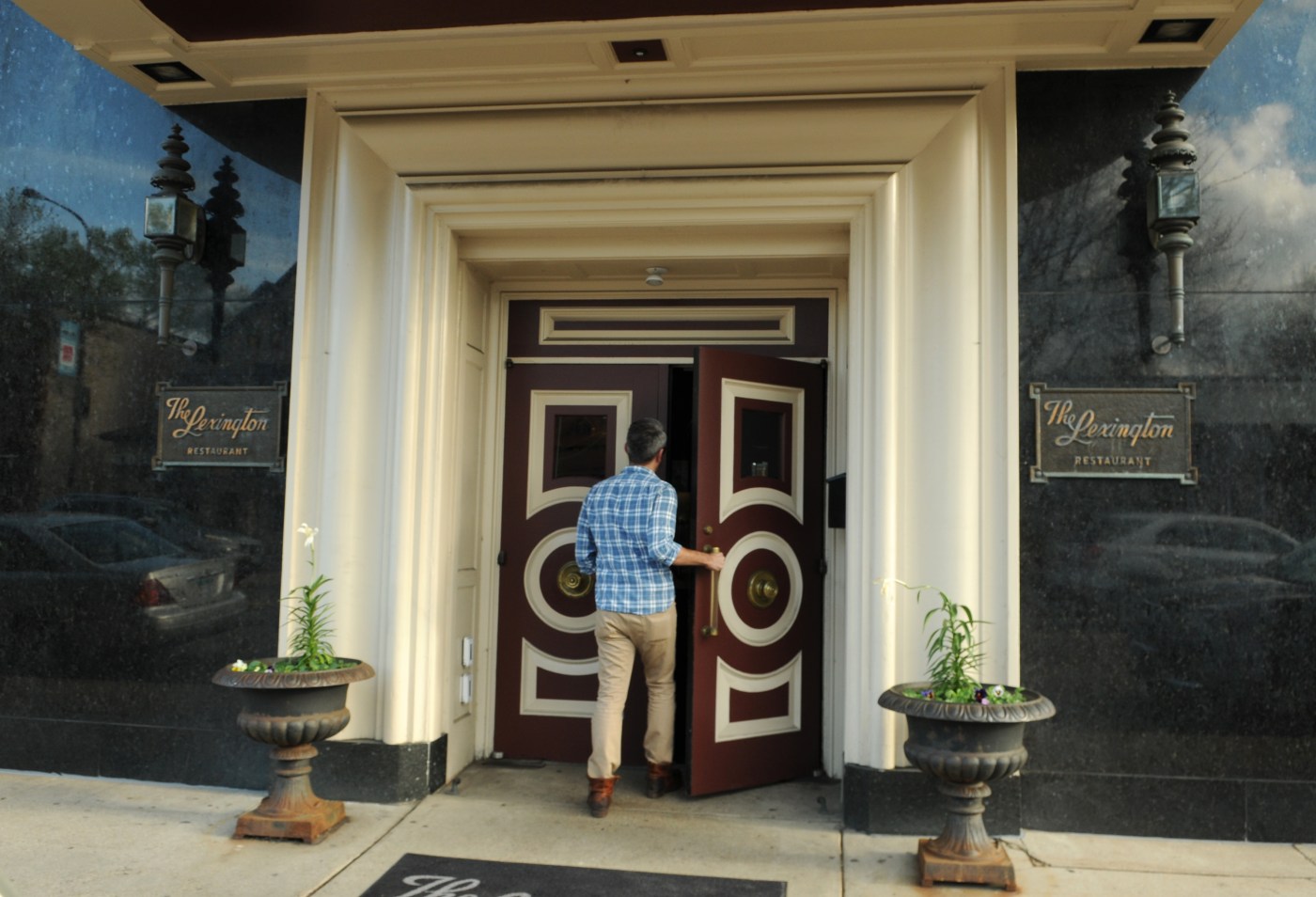
Twin Cities Paranormal Society Cocktail Party: Reminisce and drink over the Twin Cities Paranormal Society’s spooky adventures Oct. 27, 28 and 30 at The Lexington restaurant in St. Paul. On Oct. 30, the party will be joined by paranormal investigator Dave Schrader, host of the podcast The Paranormal 60, who will reveal the findings of his overnight investigation of The Lexington itself. Tickets available at opentable.com/r/the-lexington-saint-paul.

Minnesota Jack-O Lantern Spectacular: Through Nov. 4, the Minnesota Zoo invites families to walk its pumpkin-lined trail. This year’s theme is “Seasons of the Year” with pumpkins carved by artists. Ticket prices range from $18-24 for adults and $14-20 for children and are available at mnzoo.org/jols-2023.

Haunted Basement: A Party To Die For: Minneapolis nonprofit The Haunted Basement transforms Travail Kitchen and Amusements at 4134 Hubbard Ave. N. in Robbinsdale into a spine-tingling dining experience with a 10-course Halloween-themed tasting menu and cocktails. The dinner event starts at 5:45 p.m. and runs Wednesdays to Saturdays until Nov. 4, as well as Tuesday, Oct. 31. Tickets available at exploretock.com/travailkitchen.

Minneapolis Cider Co. Halloween Murder Mystery Party: Work together and role play with other participants Oct. 27 to solve a murder at an office party. Located at the Minneapolis Cider Company’s private event space, The Haralson Room, at 701 S.E. Ninth St. in Minneapolis. Food and drinks for purchase. Tickets available at eventbrite.com.

Barebones Puppet Theatre 30th Annual Extravaganza: The outdoor puppetry theater takes place every year in October, with this one being the event’s 30th that promises drama and songs fit for the family. Showings will be Oct. 27, 28, 29 and 31 on the Midtown Greenway at 2828 11th Ave. S. in Minneapolis. Tickets can be purchased at barebonespuppets.org. Admission can be free, but a $20 donation is encouraged with each ticket.

Hocus Pocus Halloween Drag Brunch: Roxy’s Cabaret in Minneapolis hosts a Halloween-themed drag show at 10 a.m. and 2 p.m. Oct. 28. The brunch show features performances and costumes. Tickets are $15 and can be purchased at roxyscabaret.com.

The Dead End Hayride: Billing itself as “Minnesota’s most terrifying haunted hayride,” the Dead End Hayride rises again for its yearly run from Sep. 22 to Oct. 31, Wednesday to Saturday. The event is at 28186 Kettle River Blvd. N. in Wyoming. Tickets are available at showclix.com/tickets/DEH2023.

Related Articles

Entertainment |


It’s been a century of learning and friendship for the Friday Study Club in Stillwater

Entertainment |


Twin Cities Marathon refund information released by organizers

Entertainment |


Author Michael Connelly proud that ‘Bosch’ has become longest running streaming character

Entertainment |


‘Reframing Our Stories’: A box of old photos led to the History Center’s new Native American exhibit

Entertainment |


These five toys are regular finalists for Hall of Fame honors. Now fans can vote one in

It’s been a century of learning and friendship for the Friday Study Club in Stillwater

posted in: News | 0

Gerrie Granquist researched and gave presentations on many topics as a member of the Friday Study Club in Stillwater.

Her most memorable report — one she spent months researching — was on Simone de Beauvoir, Jean Paul Sartre and existentialism.

“I didn’t understand it then, and I still don’t,” Granquist, 89, of Stillwater, said last week during a panel discussion on the club’s history.

Granquist joined the Friday Study Club in 1967, but stopped attending after she took a job at Stillwater Junior High School. But “once you’re a member, you’re always a member,” she told the group gathered at the Stillwater Public Library.

The Friday Study Club was founded as a branch of the Delphian Society, a national organization that promoted women’s education in the arts, literature and history. According to its charter, it was “organized in the interest of social progress, higher education and personal improvement.”

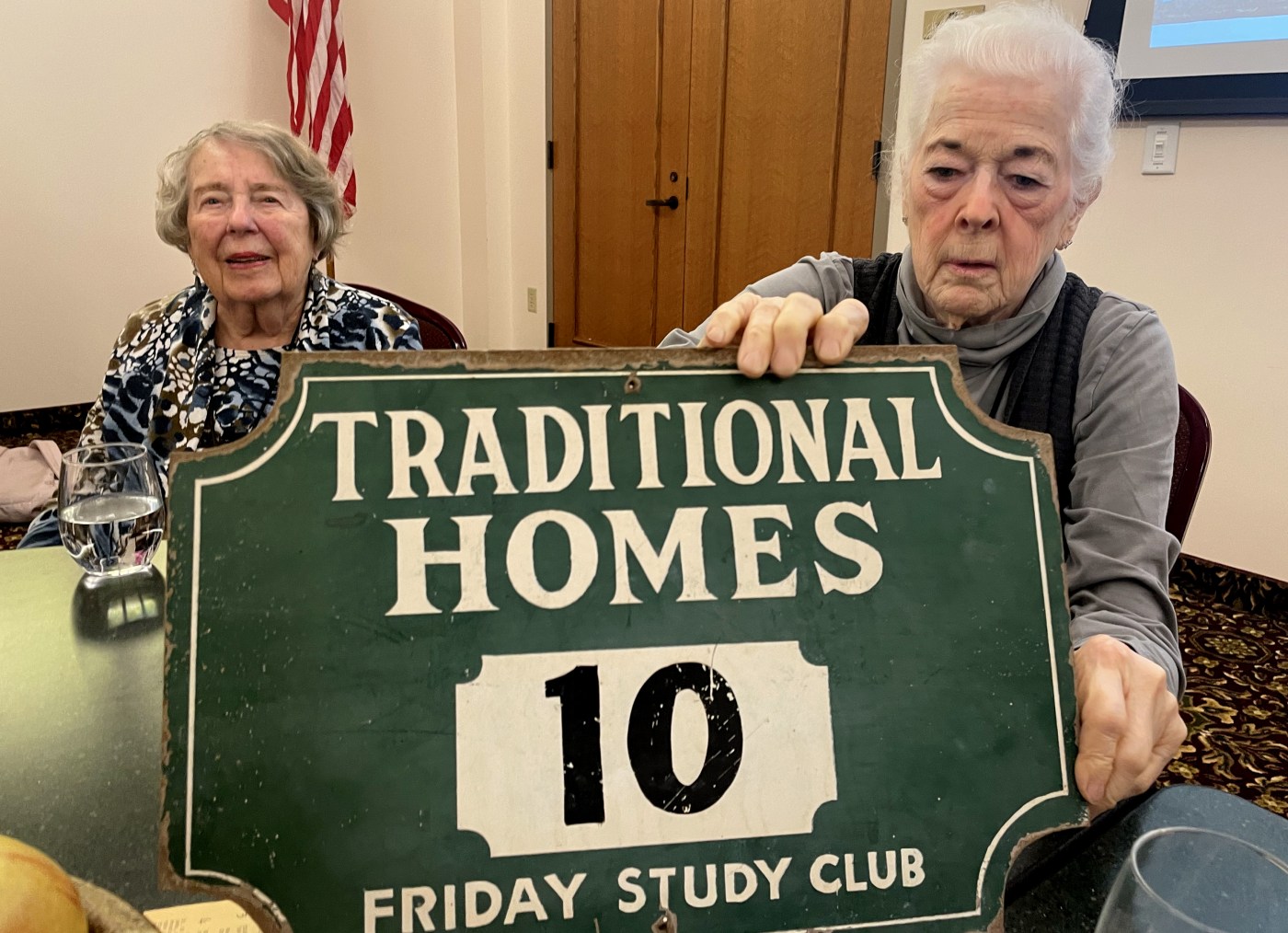
The club has about 25 active members and has met at least once a month — from September through June — since 1924. It originally met twice a month in members’ homes on Fridays; it now meets on the second Thursday of each month in a meeting room at Family Means in Stillwater.

Wait, why does the Friday Study Club meet on Thursday?

When the club transitioned in 2008 from meeting in members’ homes to meeting at Family Means, the space wasn’t available on Fridays, said Becci Dawson Cox, the club’s president. “They kept the name for the sake of tradition,” she said.

The club is open to anyone, but all members thus far have been women, Cox said. Dues are $35 a year.

Jane Dickinson, 80, of Stillwater, joined the Friday Study Club in 1971; her late mother, Jo Dickinson, joined in 1936. “I’m a chip, a legacy, I guess,” Dickinson said.

Dickinson taught kindergarten at Lily Lake Elementary School and was able to attend the club’s meetings when kindergarten was half-day, she said. When the school district moved to full-day kindergarten, Dickinson had to put her membership on pause until she retired in 2010. She remains an active member today.

“What I like about it is I always come away having learned something new and interesting I never would have thought I wanted to learn about,” she said.

‘Scared to death’

One of Dickinson’s most memorable presentations was on “World War I war posters and their artists,” she said. “I took a long time to prepare. This was before the internet. We did all our research at the library, and it was quite a procedure.”

Julie Paukert’s presentation on the Reconstruction period after the Civil War spurred a lifelong interest in the subject, she said.

Friday Study Club members, from left, Julie Paukert, Nancy Langness, Sue Alleva, Peg Quinn and Gudrun Nordby chat after a panel discussion at the Stillwater Public Library on Oct. 12, 2023. The club will celebrate its centennial in 2024. (Mary Divine / Pioneer Press)

“I really got into it,” said Paukert, 80, of Stillwater. “It was something I had never been interested in before, but I am still, to this day, reading books about the Reconstruction period. That’s one of the valuable things about this group. One year, we had the topic of information technology and how it applies to housing, so I learned about geothermal heating. I’m grateful for the opportunities I’ve had.”

But Paukert said her first presentation in 1998 — at the late Anne Magnuson’s house — nearly sent her over the edge.

“We were all sitting in this circle, and I was just scared to death,” she said. “It was on a very small topic called ‘Vitamins and Supplements,’ and that report kept changing every day, and my dining room table was getting higher and higher with all that information.”

“It was difficult to describe things and have everybody understand it,” she said. “I just thought, ‘Well, this is what they told me to do. This is a huge topic, so you do with it what you want. You don’t have to go overboard. Just take parts of it.’ That made it possible to lighten up and do what I wanted with it.”

People may be hesitant to join Friday Study Club “because they think they have to give these speeches,” said longtime member Julie Edstrom, 77, of Stillwater, but the rules have loosened up, and presenters can now include clips of videos in their reports.

Still, Edstrom said, “it’s a really good experience to have to make a speech and then present it. I ended up having to learn how to do slides and the whole bit. I had to work really hard to learn things that I didn’t know, and it was good for me.”

Thanks to Friday Study Club, Edstrom has researched Mexican immigrants in Minnesota and “Blue Zones,” areas of the world where people live the longest lives. “I’ve learned things about subjects I probably would have never studied on my own,” she said. “You get to know a lot of people who have the same interest in learning.”

While researching a presentation on early transportation, club member Kathryn Nelson, 88, discovered that her late husband Nick Nelson’s paternal great-grandfather, Ezekial Reed, was a builder and a captain of steamboats on the St. Croix River. “I said to my husband, ‘Ezekial Reed. That’s the name on our family tombstone,’ and he didn’t even know about it,” she said.

As part of her research, Nelson located Stillwater’s old streetcar barn and “traced the route the streetcar took out of town,” she said. “I also located the old stagecoach stops in Lake Elmo and other places. I just learned so much.”

Nelson joined the club in 1990 after she retired from her position as director of food service for the White Bear Lake school district.

“The programs are always interesting,” she said. “It was almost like doing a term paper. We really did some timely studies. One year, we studied all the Middle East crises and the history of the area, and another year we studied all the religions of the world, so it’s been really educational.”

Hosting the gatherings — once every other year — was stressful, Paukert said. Hostesses would prepare the food, polish the silver tea service and clean house. “It was a lot of work,” Paukert said. “You got rid of your kids and your husband, and you cleaned everything possible.”

“We didn’t have dishwashers, so we didn’t worry about putting the silver in there,” said Carolyn Leys, 93, a club member since 1970. “We washed it all by hand, and it worked out fine.”

Leys’ first presentation for Friday Study Club was on President Herbert Hoover. The club met that month at Lillian Bowell’s house, she said.

“I studied him for at least two months,” she said. “My dining room table was piled high with research materials. I was a nervous wreck. And only 14 people came.”

Related Articles

Local News |


Ramsey County Lawsuit says new law violates disability pay for disabled first responders

Local News |


8 candidates, heavy fundraising, Rondo land bridge, Summit bikeway heat up Ward 1 council race

Local News |


5 dead and 5 injured — names on a scrap of paper show impact of Gaza war on a Minnesota family

Local News |


Historic Justus Ramsey House finds new home at Minnesota Transportation Museum

Local News |


Minnesota CAIR says Woodbury woman loses 30 family members in Israeli airstrike

What does she remember from her research? Hoover “wanted to do some of the things that (President Franklin D.) Roosevelt did, but Congress wouldn’t let him,” she said.

Leys’ favorite topic to research was Rhode Island, she said. “I’m from Rhode Island, and it was good to tell everybody about the state of Rhode Island.”

Her presentation on the American Revolution, however, was met with some criticism, Leys said.

“I talked for 40 minutes,” she said. “Katherine Van Meier came up to me after I had finished and said, ‘Carolyn, your program wasn’t long enough. It was supposed to be 45 minutes, and it was only 40 minutes.’”

Education clubs

Friday Study Club is one of three long-standing women’s education clubs still in existence in Stillwater. The Primrose Club was founded in 1893, and the Stillwater Reading Club was founded in 1886. “In Primrose, you did a paper every year,” Leys said. “In Study Club, you did a topic every other year.”

The list of Friday Study Club’s 38 charter members reads like a who’s who of early Stillwater. Among those who signed: Mrs. Ned Easton; Mrs. Joseph Simonet; Marguerite Murphy; Mrs. J.R. Kolliner; Mrs. S.P. McKusick; Mrs. D. Kalinoff and Mrs. Reuben Thoreen.

A framed copy of the charter of the Stillwater branch of the Delphian Society, the precursor to the Friday Study Club, was on display during a club meeting on Oct. 12, 2023, in the Margaret Rivers Room at the Stillwater Public Library. (Mary Divine / Pioneer Press)

Formed in Chicago in 1910, the Delphian Society was “a combination of book club and correspondence course involving a condensed library and encyclopedia,” said club member Diane Dahl, who researched the club’s history for a presentation in September.

The Delphian Society was said to be “deliberately non-scholarly, with the members encouraged to speak briefly from personal knowledge they had gained, rather than from notes or outlines,” according to Dahl’s report. “The organization kept in regular touch, giving instructions on how to conduct meetings, and asking for progress reports.”

For the first six years of the club’s existence, club members discussed topics on a theme selected by the Delphian Society. Dues were $2.50 a year.

The women, who ranged in age from 25 to 30, originally met at 2 p.m. “because back then, the husbands came home for lunch,” Leys said. The start time was later changed to 1 p.m., she said.

Membership was capped at 30 because that was the maximum number of women who could fit comfortably in a house.

“One of the written histories of the club said, ‘They were seeking more to life than cleaning and child rearing,’” Dahl said. “But also they clearly adjusted their meeting times to accommodate family responsibilities. Attendance was crucial, and many had perfect attendance.”

The club’s minutes from 1927 — the earliest year found in the club’s archives — detail the members’ numerous activities. Among the recorded tasks: distributed book lists for supplemental readings; read communication from the head office; planned a holiday party for the female teachers; judged the Stillwater High School Oratorical Society competition; went to a series of talks in St. Paul on the development of the drama; housed and fed boys attending the YMCA conference at the high school; sponsored two girls at Girl Scout camp; and purchased a sign for the corner of Owen and Olive streets.

In 1930, the Stillwater club members decided to discontinue using the curricula from the Delphian Society and do their own research and presentations, Dahl said.

Club member Ethel Kolliner was instrumental in re-energizing the club — dubbed the Friday Study Club — and landing on a course of study, according to Dahl’s research. Kolliner worked in the dean’s office at the University of Minnesota and consulted with colleagues on study topics, she said.

Early themes of the Friday Study Club ranged from “The German Mind” to “U.S. States” to “English Literature: Pope to Burns.”

Club members often went to lectures, musical events, museums and talks about history in Stillwater and St. Paul, Dahl said.

Each year, the Friday Study Club took on a different cause to support the Stillwater community, including children in need, schools, the library and the hospital. In 1946, members “adopted a 7-year-old Italian boy through the Foster Parents Plan for War Children,” according to a “Backward Glance” column written by Anita Buck and published in the Stillwater Gazette. “The boy was born in Sicily and was tiny when war engulfed his world. Living at the Caltagirone Colony in Sicily, the child would receive the best of food and care with the help of his Stillwater sponsors.”

Members helped start the children’s story hour at the Stillwater Public Library and contributed to the Art Colony, Senior Citizens, Youth Commission, the Community Chest, the Historical Society and Lakeview Hospital Auxiliary.

They raised funds by holding a bake sale, sponsoring the Stillwater House Tour and a tea, and selling stationery, said Dickinson, who drew the sketches of the houses and the Washington County Historic Courthouse included on the tour brochures and stationery.

“I was in college, and I got a phone call from my mother,” Dickinson said. “I was an art history major, but she said, ‘You can draw some pictures of those houses, can’t you?’ So I drew the pictures of the houses, and they put that out.”

100 years of Friday Study Club

This year’s theme is “100 years of Friday Study Club,” Cox said, a precursor to the club’s centennial picnic in June.

“There used to be a huge emphasis on philanthropy and community service, so we are trying to increase that this year,” said Cox, who joined the club in 2019. “We are volunteering at Valley Outreach and in other ways.”

Dahl, who rejoined the club eight years ago, said that in addition to the opportunity to further her education on different topics, she loves the social aspects of the club and the friendships she’s made.

“I’ve gotten to meet people that I wouldn’t have otherwise necessarily met and have great conversations,” she said.

In 2019, Dahl researched the Nobel Prize in physics.

“I learned that there is new research coming out all the time about the origin of the universe,” she said. “I’m still learning about that. You never know what you’re going to get until the topic is announced for the year, so it’s a great excitement to see what you’re going to be learning about.”

Next year’s topic won’t be revealed until the picnic in June. The club’s program committee is charged with choosing the theme, Cox said.

“They can be really light, or they can be deep and life-changing,” Cox said. “It’s a mix of women from different professions, different ages, and all of them are devoted to learning.”

When charter member Alice LaVine resigned from the club in 1975, she wrote a heartfelt letter that is included in the club’s archives. Dahl closed her presentation on Sept. 14 by reading it aloud.

“The time has come for me to announce my finale as a Friday Study Club member,” LaVine wrote. “I do not wish to say ‘resignation’ as in my heart and mind I will always be with you. We cannot terminate the friendships, philosophies, personal memories and education received in studying and playing together for half a century. Among you are some of my favorite people with whom I have a long friendship, and also many newer and younger friends. All of you have given something to me in the very richness of your varying personalities and keeping me in touch and alert to the movements of the day. I regret that during the latter years I’ve been able to contribute so little. This is not a formal letter. To you I could not write one. With wishes for your future in a heart full of love to every one of you. Sincerely, Alice LaVine.”

Friday Study Club meeting

The Friday Study Club’s next meeting will be at 1 p.m. Nov. 9 at Family Means, 1875 Northwestern Ave., Stillwater.

Brent Peterson, executive director of the Washington County Historical Society, will be the guest speaker. The title of his talk is: “Myths and Legends of Stillwater.”

New members are welcome. For more information or to RSVP, contact Becci Dawson Cox at cherrywoods_417@msn.com.

Related Articles

Local News |


22 dogs seized from Andover rescue organization in investigation into dead dogs found in Cottage Grove

Local News |


Historic Courthouse in Stillwater getting a major makeover

Local News |


Eights dogs found in Cottage Grove died outside city, officials say

Local News |


Cottage Grove: Animal-cruelty investigation underway after eight dogs found dead

Local News |


Stillwater native is helping bring modern health care to Central African Republic