Appeals panel questions why ‘presidential immunity’ argument wasn’t pursued years ago in Trump case

posted in: Politics | 0

By LARRY NEUMEISTER (Associated Press)

NEW YORK (AP) — A federal appeals panel wants to know why lawyers for former President Donald Trump didn’t try years ago to use a claim of absolute presidential immunity to shield him from a defamation lawsuit by a woman who accused him of sexual assault.

A three-judge panel of the 2nd U.S. Circuit Court of Appeals in Manhattan listened Monday as a lawyer for Trump argued that a lower-court judge was wrong to reject the defense after it was raised three years after columnist E. Jean Carroll first sued Trump.

The lawsuit seeks to hold Trump liable for comments he made while president in 2019 after Carroll said publicly for the first time in a memoir that Trump sexually abused her in the dressing room of a Manhattan luxury department store in 1996. Trump has adamantly denied ever encountering Carroll in the store or knowing her.

The court did not immediately rule.

Circuit judges Maria Araujo Kahn and Denny Chin questioned Trump attorney Michael Madaio about why Trump’s lawyers waited until last December for the first time to claim that Trump was entitled to have the lawsuit about his 2019 statements tossed out on the grounds that he was protected by absolute presidential immunity.

In an August written opinion, Judge Lewis A. Kaplan rejected absolute presidential immunity as a defense not only on grounds that it was forfeited when lawyers waited so long to assert it, but also because it would not be appropriate even if had been asserted in a timely fashion.

“While there is a public interest in immunizing presidents for actions properly taken within the scope of their duties, there is a public interest also in ensuring that even presidents will be held accountable for actions that — as this Court already has determined in this case — do not come within that scope,” Kaplan wrote.

On Monday, Chin noted the three-year delay in making the claim before asking, “If that’s the case, how is it an abuse of discretion for Judge Kaplan to say it’s too late?”

Madaio responded that it would not prejudice Carroll’s claims for the defense to be asserted now. He also insisted that absolute presidential immunity was a protection that cannot be surrendered by Trump or any other president.

Kahn asked Madaio later in the arguments why absolute presidential immunity was not asserted sooner.

Madaio did not directly answer the question.

The appeals court has taken the issue up in expedited fashion because Kaplan has scheduled a January trial for damages to be decided on the claims first made in 2019.

In the spring, a Manhattan federal court jury found that Trump sexually abused Carroll, but it rejected her claim that he raped her. It awarded Carroll $5 million for sexual abuse and defamation for comments he made last year. The trial stemmed from a lawsuit she filed last November after New York state temporarily allowed individuals who were sexually attacked, even decades ago, to sue for damages.

The verdict left the long-delayed defamation lawsuit she brought in 2019 to be decided. Kaplan has ruled that the jury’s findings earlier this year applied to the 2019 lawsuit as well since Trump’s statements, made in different years, were essentially the same in both lawsuits. He said the January trial will determine damages. Carroll is seeking over $10 million.

Trump is the early front-runner for the 2024 Republican presidential nomination.
Feds issue subpoenas in Tesla probe 

posted in: News | 0

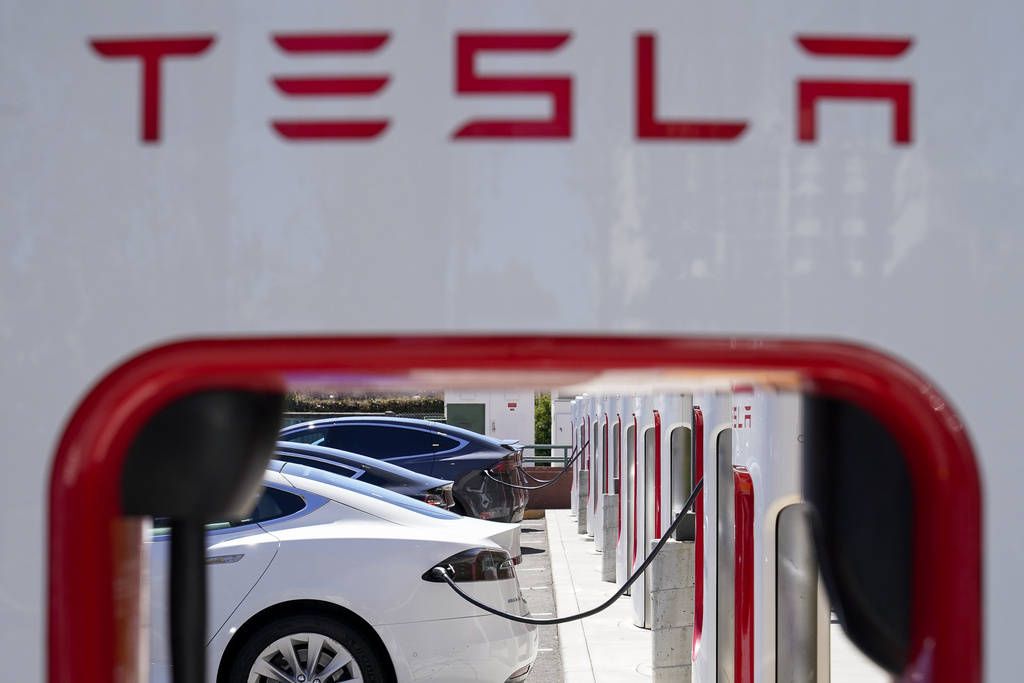
DETROIT — Federal prosecutors have expanded investigations into Tesla beyond the electric vehicle maker’s partially automated driving systems, and they have issued subpoenas for information instead of simply requesting it, the company disclosed Monday.

In a quarterly report filed with the Securities and Exchange Commission, Tesla said the Department of Justice is looking into “personal benefits, related parties, vehicle range and personnel decisions” without giving details.

The additional investigation topics and the subpoenas suggest that prosecutors have broadened their inquiry, and they have found the need to force Tesla to disclose information, legal experts say. The filing indicates prosecutors may be investigating Tesla CEO Elon Musk, and whether the company has been candid in describing the features of its vehicles, they say.

In January, Tesla disclosed that the Justice Department had requested documents related to its Autopilot and “Full Self-Driving” features. Both features are classified as driver-assist systems, and the company says on its website that the vehicles cannot drive themselves.

Now, the company is disclosing a probe that is “a lot wider than just looking at Autopilot and FSD features,” said Erik Gordon, a University of Michigan business and law professor. “The DOJ often starts with a formal written request and escalates to administrative subpoenas if it thinks it isn’t getting full cooperation,” he said.

Specifying additional items that prosecutors are looking at indicates that Tesla lawyers found them serious enough to change the company’s public disclosures, Gordon said.

Tesla didn’t respond to a request for comment, but the company based in Austin, Texas, said in its SEC filing that to its knowledge, no government agency has concluded that any wrongdoing happened in any ongoing investigation. The Justice Department declined to comment.

For the first time, Tesla said in its filing that the investigations could damage the company’s brand.

“Should the government decide to pursue an enforcement action, there exists the possibility of a material adverse impact on our business, results of operation, prospects, cash flows financial position or brand,” the filing said.

UAW expands strike to Ram 1500 plant

posted in: Society | 0

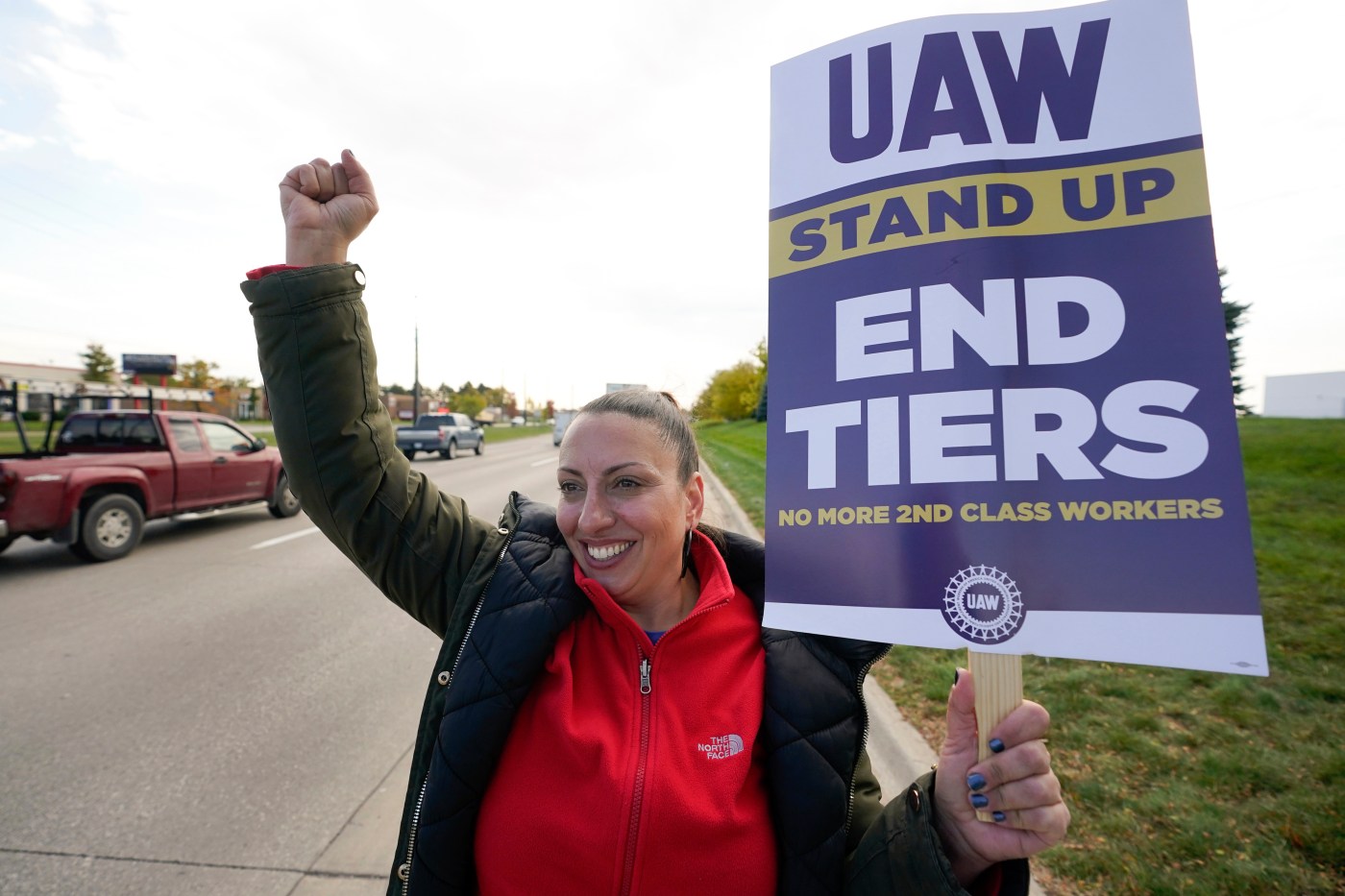
STERLING HEIGHTS, Michigan — The United Auto Workers said Monday it has expanded its strike of the Detroit automakers to Stellantis NV’s Sterling Heights Assembly Plant, adding 6,800 members to picket lines and dealing another blow to the automakers’ profitable truck plants.

Workers at SHAP make Ram 1500 trucks. The week before last, the UAW significantly expanded its unprecedented simultaneous strike of all three U.S. automakers when it took down Ford Motor Co.’s largest and most profitable plant, Kentucky Truck, which builds Super Duty trucks. UAW President Shawn Fain warned in a public bargaining update Friday that the union was prepared to hit the auto companies’ pickup truck production as he insisted the UAW has “cards left to play” in the strike, which is now in its 39th day.

Fain had emphasized an end of an era of partnering with the automakers. Instead, his comments were around class warfare, fighting for the working class and securing a strong enough deal to organize plants owned by foreign and EV automakers that the union to date has failed to bring into the fold. Escalating the strike to Stellantis’ largest and most profitable plant in the United States underscores those objectives, experts said.

“That is a sea change. He’s making the case that being too close to the company is not in the union’s interest,” said Harley Shaiken, a University of California-Berkeley professor who specializes in labor, started his career as a GM apprentice and decades ago briefly worked as a UAW consultant. The SHAP strike is “a sharp wake-up call to Stellantis. This is going to be economically painful.”

The strike began on Sept. 15 with walkouts at three assembly plants in Michigan, Missouri and Ohio. It has since expanded to include seven assembly plants and 38 parts distribution centers across the country.

The surprise walkout at SHAP brings the number of striking UAW members at the Detroit Three to more than 40,000.

In announcing the move, the UAW pointed in a news release to Stellantis having some of the best financial metrics of the three automakers, including the highest revenue and profits. The union said the automaker “lags behind both Ford and General Motors in addressing the demands of their workforce,” noting what it deems as inadequate proposals on wage progression, temporary worker pay, and cost-of-living adjustments, among other items that Fain had detailed during Friday’s livestream. There wasn’t a major event over the weekend that resulted in the Monday strike expansion, spokesman Jonah Furman said.

“We’re just sending a message,” Fain said Monday on the picket line at the Macomb County plant.

“We’re done. We’ve tried to do things the right way. We’ve taken our time. We’ve been patient with these companies. It’s time to amp up the pressure and SHAP just seemed like the proper target at this time.”

Striking SHAP is a blow to Stellantis’ financial success. AutoForecast Solutions LLC estimates the plant had been expected to produce more than 300,000 trucks this year. That is fewer than the 400,000 vehicles projected for Ford’s Kentucky Truck plant, but Stellantis has fewer plants in the United States.

— Jordyn Grzelewski, Breana Noble and Kalea Hall  /  The Detroit News

Biden launches 31 technology hubs nationally, including Minnesota MedTech 3.0 in St. Paul

posted in: News | 0

The Biden administration on Monday designated 31 technology hubs spread across the country — including St. Paul — to help spur innovation and create jobs in industries such as artificial intelligence, precision medicine and clean energy that have previously clustered on the nation’s coasts.

“We’re going to invest in critical technologies like biotechnology, critical materials, quantum computing, advanced manufacturing — so the U.S. will lead the world again in innovation across the board,” President Joe Biden said on Monday. “I truly believe this country is about to take off.”

The hubs, chosen through a competitive application process, include “Minnesota MedTech 3.0,” or “MMT3.0,” to be led by the Minneapolis-St. Paul Economic Development Partnership, otherwise known as Greater MSP.

Based in downtown St. Paul, Greater MSP plans to boost the state’s profile as a global center for “smart medtech” by bringing together the state’s “medical technology ecosystem” to integrate artificial intelligence, machine learning and data science, according to a written release from the U.S. Economic Development Administration.

A goal of improving health outcomes

The goal, said Greater MSP officials in a separate release, is to create new products for health providers, health insurers and vendors in ways that improve health outcomes for patients while managing rising costs.

Officials said they expect MedTech 3.0 to “deliver thousands of jobs” while courting underrepresented groups in the region and across rural areas of the state as they expand access to lab spaces for start-ups and business accelerators, on top of apprenticeships, training and career pathway programs.

The MedTech 3.0 partnership includes 20 hospitals, medical device manufacturers, state agencies, venture capital firms and research institutions such as the University of Minnesota.

Matt Lewis, vice president of Strategic Initiatives at Greater MSP, indicated Monday it was still unclear how much money would come directly from federal coffers to support Minnesota MedTech 3.0.

“We don’t know exactly,” said Lewis, in an email. “This is a designation that makes us eligible to win tens of millions and as many as hundreds of millions of federal dollars in 2024 and beyond. This is just the beginning. The first wave of funding is only 5% of what Congress passed and the President signed. Much more will likely be allocated over time.”

Regional information sharing, collaboration

Lewis said the federal designation “allows us to combine all our powers here in Minnesota to get industry, government, academia, and other institutions rowing in the same direction, which will lead to many billions more in private investment.”

Among its goals, the Minnesota partnership aims to develop operating protocols for sharing medical data, better allowing for regional information-sharing and collaboration.

Partners include Allina, Boston Scientific, Brown Venture Group, the Center for Economic Inclusion, Fogarty Innovation, gener8tor, the Governor’s Workforce Development Board and the Minnesota Department of Employment and Economic Development, HealthPartners, Mayo Clinic, Medica, Medical Alley Association, Metropolitan Economic Development Association, Medtronic, MN SBIR Inc., Minnesota Technology Association, the MSP Equity Fund and the Shakopee Mdewakanton Sioux Community, the University of Minnesota and Vensana Capital.

On Monday U.S. Sen. Amy Klobuchar, a member of the Senate Commerce Committee and backer of the CHIPS and Science Act, joined Greater MSP President Peter Frosch to announce the designation of a Minnesota tech hub alongside Medtronic chairman and chief executive officer Geoff Martha, as well as University of Minnesota Interim President Jeff Ettinger, and Vocxi Health CEO Ping Yeh.

$500 million in grants to cities

The tech hubs are the result of a process that the Commerce Department launched in May to distribute a total of $500 million in grants to cities.

The $500 million came from a $10 billion authorization in last year’s CHIPS and Science Act to stimulate investments in new technologies such as artificial intelligence, quantum computing and biotech. It’s an attempt to expand tech investment that currently is largely concentrated around a few U.S. cities to the rest of the country.

According to the New York Times, the Biden administration said that in coming months the hubs will compete for a share of the $500 million, with roughly 5 to 10 of the projects receiving up to about $75 million each.

The program, formally the Regional Technology and Innovation Hub Program, ties into the president’s economic argument that people should be able to find good jobs where they live and that opportunity should be spread across the country, rather than be concentrated on the coastal areas of the U.S. The White House has sought to elevate that message and highlight Biden’s related policies as the Democratic president undertakes his 2024 reelection bid.

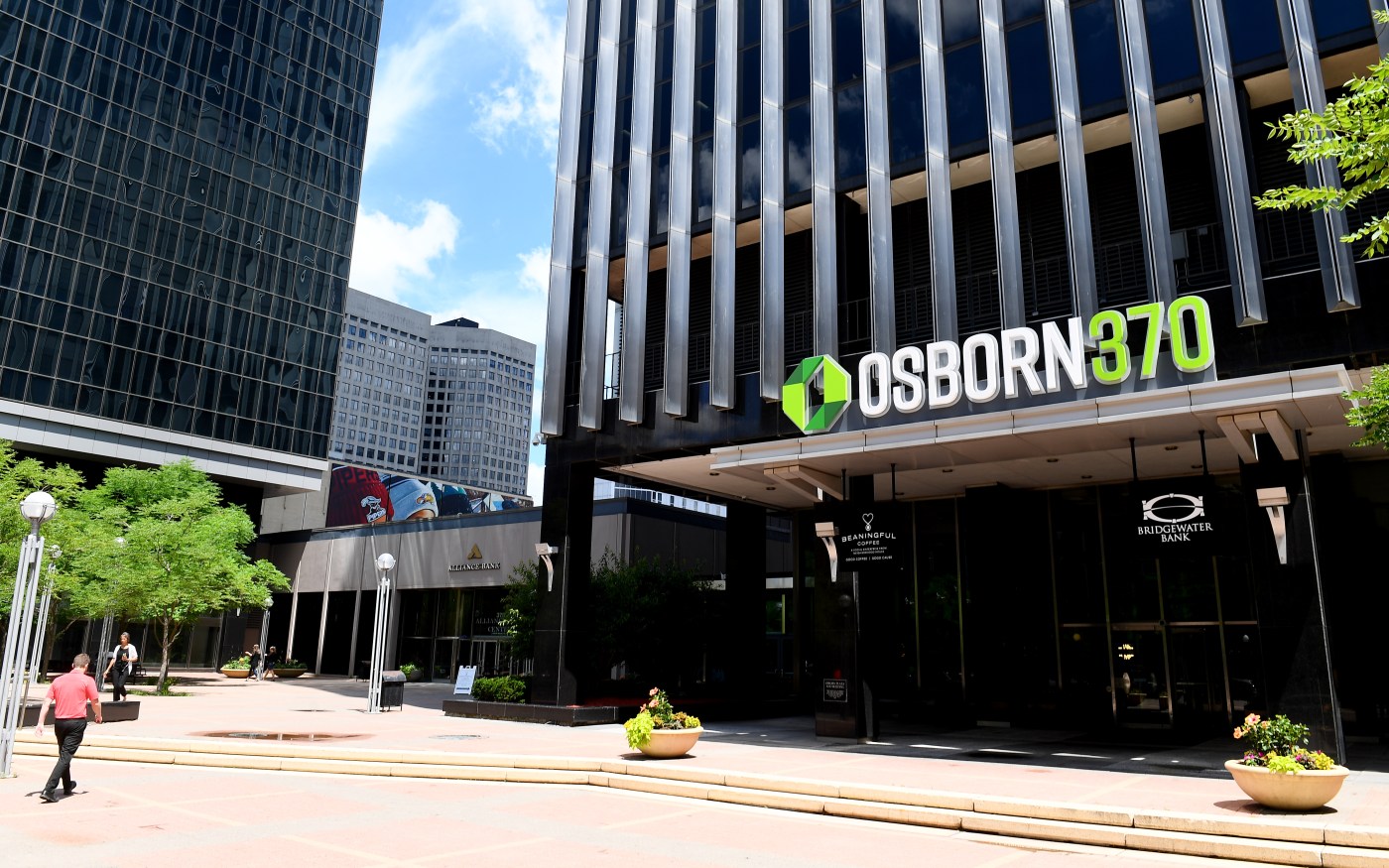
In January, Greater MSP plans to relocate across downtown St. Paul from its Robert Street offices in the Securian building to its new home in the Osborn370 building on Wabasha Street.

This story contains information from the Associated Press. 

Related Articles

Local News |


What you need to know: 2023 Dakota County education levy referendums

Local News |


Unisys plans to leave its 32-acre Eagan campus as the city envisions new development

Local News |


Nina Axelson’s Grid Catalyst helps launch new eco-firms like Carba and GetGreen in Minnesota

Local News |


Sony’s Access controller for the PlayStation aims to make gaming easier for people with disabilities

Local News |


Some Rosemount residents hesitant about $700 million Meta data center at UMore site