How your employer can help you save for emergencies

posted in: News | 0

By Liz Weston | NerdWallet

The investing information provided on this page is for educational purposes only. NerdWallet, Inc. does not offer advisory or brokerage services, nor does it recommend or advise investors to buy or sell particular stocks, securities or other investments.

When I wrote about employer-provided emergency savings accounts four years ago, the idea was still pretty novel. Some companies were experimenting with ways to help their workers save for short-term needs, but the concept wasn’t even on the radar for many employers.

What a difference the pandemic made. Millions were thrown out of work with little warning, and few had the financial reserves to survive even a few months of unemployment. Big employers, and lawmakers, took notice, says Claire Chamberlain, global head of social impact for investment manager BlackRock. The result: Hundreds of thousands of workers now have options to build emergency savings through their employers, and Congress passed laws to encourage more companies to add short-term savings options.

“I think a lot of people woke up,” Chamberlain says.

Pandemic highlighted Americans’ financial fragility

Employers tend to overestimate their workers’ financial stability, says Timothy Flacke, co-founder and executive director of Commonwealth, a nonprofit that promotes financial security. The pandemic brought home the reality that most Americans live paycheck to paycheck, and many have little or no emergency savings.

“COVID really changed a lot of things in terms of an employer’s understanding of the day-to-day financial challenges of their people,” Flacke says.

But there’s also been a growing awareness that emergency savings are key to financial health, he says. Even a small amount of savings can help families avoid falling behind on bills or turning to high-cost loans. Workers without emergency savings are less likely to contribute to retirement plans, and those with savings are less likely to tap the retirement savings they have, Flacke says.

In addition, companies are aware that financial stress takes a toll on workers’ productivity by distracting them during working hours, Chamberlain says.

“It’s that productivity drag that I think at its core is motivating employers,” Chamberlain says.

Push for emergency savings picks up steam

In 2019, BlackRock launched its Emergency Savings Initiative in partnership with Commonwealth, the Financial Health Network and a third nonprofit, Common Cents Lab. The initiative started with a handful of employers and financial services firms experimenting with emergency savings programs.

Since the pandemic began, those companies have been joined by several big employers — including UPS, Starbucks, Delta Air Lines and Best Buy. Some provide incentives to encourage savings: Delta will chip in up to $1,000 for workers who complete a financial education program, for example, while Starbucks contributes up to $250.

One of the biggest hits so far is a savings feature that payroll processor ADP added to its Wisely prepaid debit card and app. Wisely can be used by employers to pay workers as an alternative to checks or direct deposit. The savings feature allows users to set up automatic transfers to a “savings envelope,” and transfer savings back to their available balance whenever they need to spend the money. By the end of 2022, Wisely users had saved more than $1.55 billion, Chamberlain says.

Don’t expect an emergency savings plan at open enrollment

We’re a long way from employer-provided emergency savings accounts being as common as employer-provided health insurance or retirement plans. But momentum seems to be building.

“It is rare that I have a conversation with an organization of any size that is not thinking about emergency savings,” says Matt Bahl, Financial Health Network’s vice president and head of workplace financial health.

It doesn’t hurt that SECURE 2.0, the retirement legislation that became law late last year, includes provisions that encourage employers to offer emergency savings options.

Starting in 2024, employers can add an after-tax emergency savings option to their retirement plans, allowing workers to put aside up to $2,500 — an option often referred to as a 401(k) “sidecar.” In addition, employers can opt for automatic enrollment to increase participation. Another provision allows companies to let workers take penalty-free withdrawals of up to $1,000 from their 401(k)s and other workplace retirement accounts.

But employers may be more likely to offer emergency savings programs in addition to, rather than as part of, their retirement plans, Bahl says. Standalone savings plans could be easier and cheaper to implement, and could attract some of the most financially fragile workers who may not feel able to contribute to retirement, Bahl says.

“We work with some of the largest employers in the country. Not a single one of them is doing a sidecar program, but more than half of them have or are planning to deploy an out-of-retirement-plan emergency savings option,” Bahl says.

Still, having Congress’ blessing on the concept of employer-provided emergency savings plans was a watershed moment, Bahl and Flacke agree.

“Certainly having policymakers who can’t agree on much these days pass a bill that includes these provisions is a pretty clear signal,” Flacke says.

In the past, workers may have been reluctant to ask for emergency savings options, concerned that they would be stigmatized for struggling financially, Flacke adds. Greater awareness that most workers live paycheck to paycheck could ease that fear.

“I think there’s more space for people to say, ‘That’s my reality. And it would really be helpful if you can put systems in place to allow me to have a buffer,’” Flacke says.


Liz Weston, CFP® writes for NerdWallet. Email: lweston@nerdwallet.com. Twitter: @lizweston.

Pentagon says it will hold Iran responsible for attacks on U.S. troops

posted in: Politics | 0

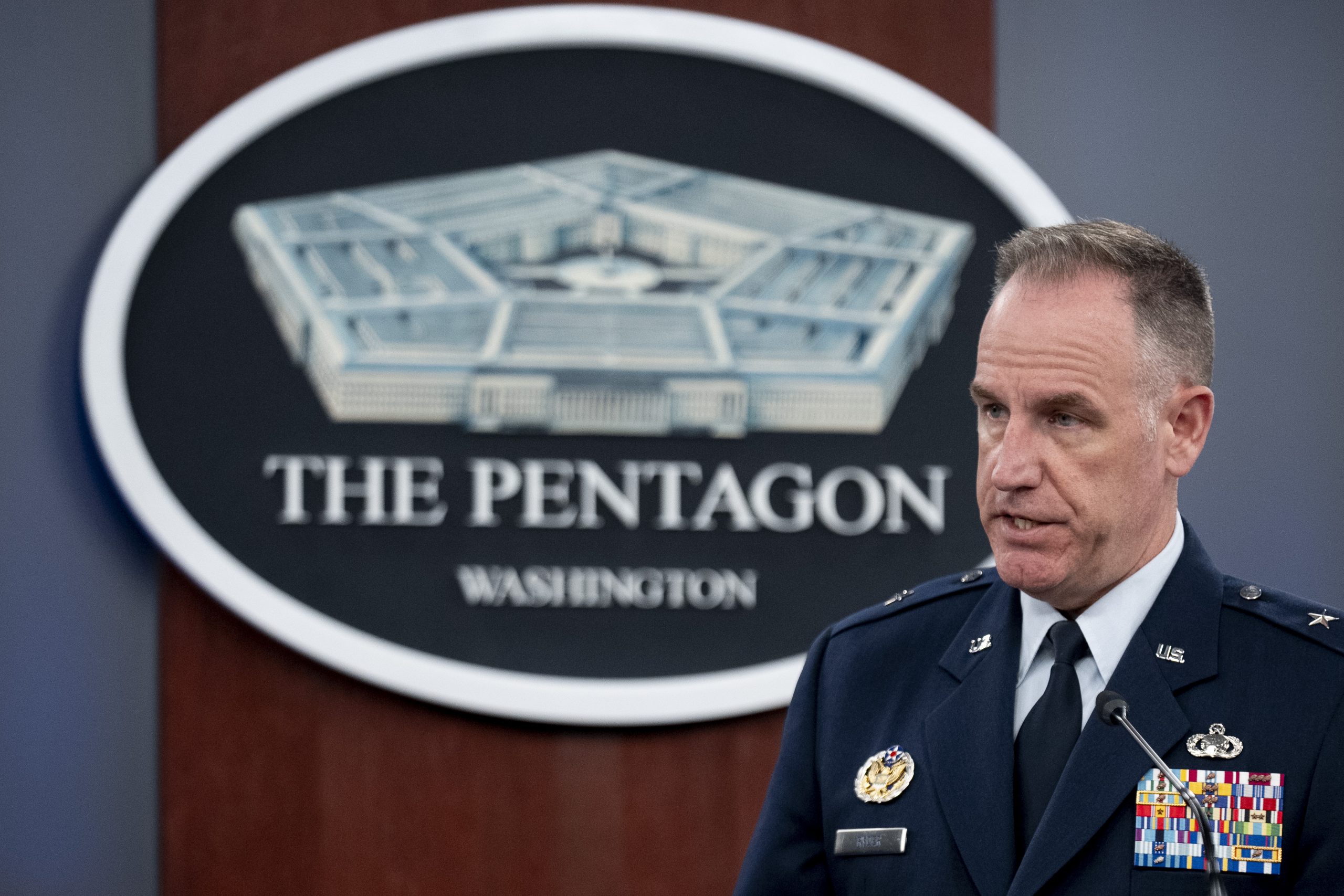
The Defense Department ratcheted up its rhetoric against Iran on Monday, saying it will hold Tehran ultimately responsible for a spate of recent drone and rocket attacks on American troops in the Middle East.

While the Pentagon does not have information that the government of Iran “explicitly ordered” the attacks on U.S. forces in the past week, the groups responsible for the incidents are backed by Tehran, DOD spokesperson Brig. Gen. Patrick Ryder told reporters on Monday.

A number of U.S. troops were injured during the attacks, which spanned several days and bases in Iraq and Syria, and an American contractor died of a cardiac episode while running from a false alarm at al Asad air base in Iraq.

“By virtue of the fact that they are supported by Iran, we will ultimately hold Iran responsible,” Ryder said.

Ryder’s comments on Monday were a departure from the Pentagon’s more cautious rhetoric against Tehran since Hamas militants’ surprise attacks on Israel on Oct. 7 launched an escalating regional conflict.

In a press briefing last Thursday after the destroyer USS Carney intercepted missiles and drones launched by Yemen’s Houthi rebels in the northern Red Sea, Ryder declined to assign blame for the drone attacks on U.S. troops in Iraq and Syria. He also said he would not draw a direct link between the Oct. 7 strikes and the recent attacks on U.S. troops.

On Monday, however, Ryder pointed to statements last week by Iranian proxy groups saying they would scale up attacks on American forces if Israel launches a ground invasion of Gaza.

He declined to say which specific Iranian proxy groups were responsible for the attacks, even as he confirmed another had taken place in Syria. In the latest incident, which occurred at 3 a.m. Eastern time on Monday, American troops at the al Tanf garrison in southern Syria shot down two drones targeting their positions, Ryder said. There were no injuries.

“We are concerned about escalation,” Ryder said. “We are all watching increased tensions in the region and again we want to deter this from becoming a bigger conflict.”

After the attacks last week, Defense Secretary Lloyd Austin ordered additional ships and air defenses to U.S. Central Command to better protect American forces in the region. That included redirecting the aircraft carrier USS Dwight D. Eisenhower strike group from the eastern Mediterranean — where it was set to join the USS Gerald R. Ford off the coast of Israel — to an area that includes the Red Sea, the Persian Gulf and other Middle Eastern waters .

Austin also ordered the deployment of a Terminal High Altitude Area Defense battery and Patriot missile defense system battalions to locations throughout the region, and placed an additional number of forces on “prepare to deploy” orders.

“We’re going to continue to do what we need to do to protect and safeguard our forces and take all necessary measures,” Ryder said. Although “no one wants to see a wider regional conflict, but we will not hesitate to protect our forces.”

Israel ramps up strikes on Gaza as US advises delaying ground war to allow talks on captives

posted in: Society | 0

By NAJIB JOBAIN, SAMY MAGDY and JOSEPH KRAUSS (Associated Press)

RAFAH, Gaza Strip (AP) — Israel ramped up its airstrikes Monday in Gaza, where the death toll was rising rapidly, and the United States advised Israel to delay an expected ground invasion to allow more time to negotiate the release of hostages taken by Hamas terrorists.

A third small aid convoy from Egypt entered Gaza, where the population of 2.3 million has been running out of food, water and medicine under Israel’s two-week seal. With Israel still barring entry of fuel, the U.N. said its distribution of aid would grind to a halt within days when it can no longer fuel its trucks. Gaza hospitals are struggling to keep generators running to power life-saving medical equipment and incubators for premature babies.

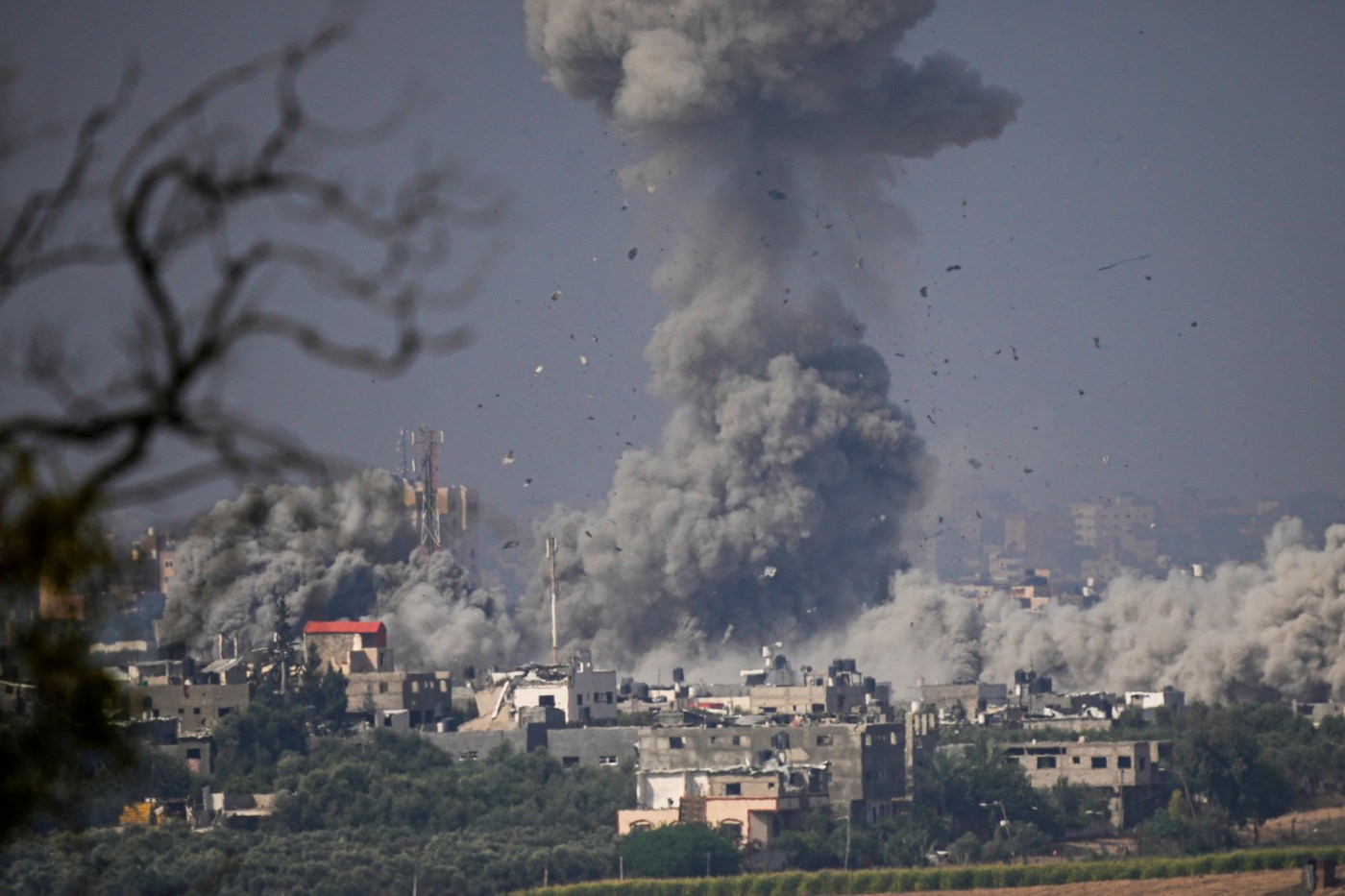
Heavy airstrikes demolished buildings across Gaza, including in areas where Palestinians were told to seek refuge, killing hundreds and sending new waves of wounded into already packed hospitals, according to Palestinian officials and witnesses. After a strike in Gaza City, a woman with blood on her face wept as she clasped the hand of a dead relative. At least three bodies were sprawled on the street, one lying in a gray stream of water.

Israel is widely expected to launch a ground offensive in Gaza, vowing to destroy Hamas after its brutal Oct. 7 rampage into southern Israeli communities. That is raising fears of the war spreading beyond Gaza and Israel, as Iranian-backed fighters in the region are warning of possible escalation, including targeting U.S. forces deployed in the Mideast. Hamas has been designated as a terrorist organization by the United States, Canada and the European Union.

The U.S. has told Iranian-backed Hezbollah in Lebanon and other groups not to join the fight. Israel has frequently traded fire with Hezbollah, which is armed with tens of thousands of rockets. Israeli warplanes have struck targets in the occupied West Bank, Syria and Lebanon in recent days.

The U.S. advised Israeli officials that delaying a ground offensive would give Washington more time to work with regional mediators on securing the release of people captured by Hamas during its deadly incursion, according to a U.S. official.

The official, who requested anonymity to discuss the private discussions, said it was unclear how much the argument will “move the needle” on Israeli thinking. Hamas released an American woman and her teenage daughter last week in what it said was a humanitarian gesture mediated by Qatar.

Israeli Defense Minister Yoav Gallant told troops near Gaza to keep preparing for an offensive “because it will come.” He said it will be a combined offensive from air, land and sea but did not give a timeframe.

Tanks and troops have been massed at the Gaza border, and Israel says it has stepped up airstrikes to reduce the risk to troops in the next stages. A ground excursion is likely to dramatically increase casualties in what is already the deadliest by far of five wars fought between Israel and Hamas in less than 15 years.

More than 1,400 people in Israel have been killed — mostly civilians slain during the initial Hamas attack. At least 222 people were captured and dragged back to Gaza, including foreigners, the military said Monday, updating a previous figure.

More than 5,000 Palestinians, including some 2,000 minors and around 1,100 women, have been killed, the Hamas-run Health Ministry said Monday. That includes the disputed toll from an explosion at a hospital last week. The toll has climbed rapidly in recent days, with the ministry reporting 436 additional deaths in just the last 24 hours.

Israel said it had struck 320 militant targets throughout Gaza over the last 24 hours in preparation for “a maneuver,” an apparent reference to a ground operation. The military says it does not target civilians, and that Palestinian militants have fired over 7,000 rockets at Israel since the start of the war.

The Israeli military released footage showing what it said were attacks on Hamas infrastructure. Flashes of yellow light were followed by an explosion as multi-story buildings collapsed or toppled over.

Israel carried out limited ground forays into Gaza. On Sunday, Hamas said it destroyed an Israeli tank and two armored bulldozers inside the territory it has ruled since 2007. The Israeli military said a soldier was killed and three others were wounded by an anti-tank missile during a raid inside Gaza.

The military said the raid was part of efforts to rescue hostages. Hamas hopes to trade the captives for Palestinian prisoners held by Israel.

On Monday the Palestinian Red Crescent said 20 trucks entered Gaza carrying food, water, medicine and medical supplies, through the Rafah crossing with Egypt, the only way into Gaza not controlled by Israel. It was the third delivery in as many days, each around the same size.

The aid coming in so far is “a drop in the ocean” compared to the needs of the population, said Thomas White, the Gaza director of the U.N. agency for Palestinian refugees, UNRWA. The U.N. has said 20 trucks amounts to 4% of an average day’s imports before the war and that hundreds of trucks a day are needed.

White said the agency had only three days of fuel left for its trucks. The supplies coming through Rafah are reloaded onto UNRWA and the Red Crescent trucks to take to hospitals and U.N. schools, where hundreds of thousands of people are taking shelter, running low on food and largely drinking contaminated water.

An airstrike hit a residential building some 200 meters (yards) from the U.N. headquarters in Rafah on Monday, killing and wounding several people, according to an Associated Press reporter at the scene, underscoring the perils of humanitarian operations.

After a day of intense strikes, Rafah’s Abou Youssef Al-Najjar Hospital registered 61 deaths since Monday morning, its spokesperson said. With no room left in the morgue, more half the bodies were lying in the hospital grounds, spokesperson Talaat Barghout said.

More than half the territory’s population have fled their homes, and hundreds of thousands are sheltering in U.N.-run schools and tent camps.

The World Health Organization said seven hospitals in northern Gaza have been forced to shut down due to damage from strikes, lack of power and supplies, or Israeli evacuation orders.

Israel repeated its calls for people to leave northern Gaza, including by dropping leaflets from the air. It estimated 700,000 have already fled. But hundreds of thousands remain. That would raise the risk of mass civilian casualties in any ground offensive.

___

Magdy reported from Cairo and Krauss from Jerusalem. Associated Press writers Wafaa Shurafa in Deir al-Balah, Gaza Strip, Aamer Madhani in Washington, Amy Teibel in Jerusalem, Brian Melley in London, contributed to this report.

Big Ten, NCAA stand behind call at end of Gophers’ win over Hawkeyes

posted in: News | 0

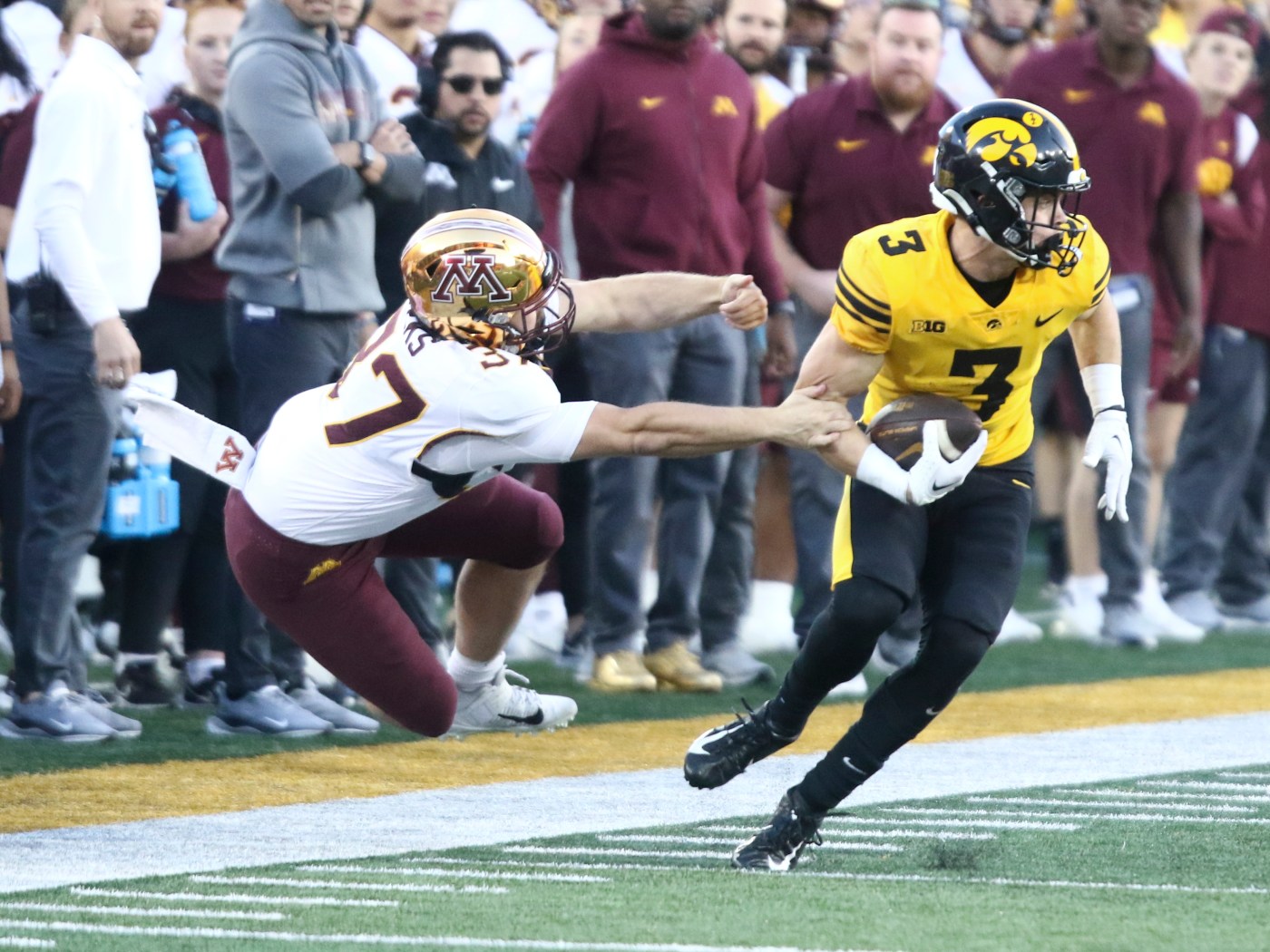
One official each with the Big Ten Conference and NCAA stood by the review decision to call back Iowa punt returner Cooper DeJean’s 54-yard touchdown at the end of the Gophers’ 12-10 win over Iowa on Saturday.

Big Ten coordinator of football officials Bill Carollo and NCAA rules editor Steve Shaw addressed the call of an invalid fair catch signal with the Pioneer Press and Des Moines Register for roughly 25 minutes on Monday morning.

“In this situation, we allowed (DeJean’s) right hand to point to the ball, but if the other hand, if there’s any waving signal, it constitutes an invalid signal,” Carollo said in the video interview.

Shaw said replay review “came in and properly overturned the call” at put it at the spot where DeJean possessed it, Iowa’ 46-yard line, wiping away a go-ahead touchdown with two minutes left in the game.

DeJean and Hawkeyes coach Kirk Ferentz thought otherwise on DeJean’s arm movements.

Carollo did acknowledge one caveat to how the call was administered in Iowa City. “In retrospect, we would have preferred if they were confident that signal was an invalid signal, we should have killed the play” before a return was made, Carollo said.

That would have defused a lot of the negative reaction from the Hawkeyes and their fans fans because the play continued and DeJean appeared to give Iowa a 16-10 lead with 90 seconds left.

Ferentz took issue with, in his mind, the review going from whether DeJean stepped out of bounds to a decision on the invalid fair catch signal.

“They didn’t deem it, they didn’t see it, they didn’t rule on it during the actual play, but it is a reviewable play,” Carollo clarified. “Once you go to replay, you have a chance to look at all aspects of the play.”

Hawkeyes fans were disgruntled by the fact that Big Ten official Tim O’Dey, who was the referee on Saturday, was the line judge for Floyd of Rosedale game in Minnesota in 2022, when Hawkeyes linebacker Jack Campbell had an interception return called back for stepping out of bounds late in Iowa’s 13-10 win.

Carollo said the call to review the play was not made by O’Dey, but in the booth at Kinnick Stadium. Carollo said there was “no consideration” to not put O’Dey’s crew on this year’s Floyd of Rosedale game.

“We all make mistakes, different position, different game,” Carollo said. “I usually don’t comment on past games. But I did acknowledge at the time we made a mistake, you know, made a mistake that we should have killed the play. But Tim O’Dey is 60 yards away from this play. He has nothing to do with it except for listens. He does watch, but replay is making the final decision at the booth in Iowa.”

Related Articles

College Sports |


A look behind the scenes of Gophers’ emotional win over Hawkeyes

College Sports |


‘Fine me.’ Hawkeyes coach Kirk Ferentz fired up over controversial call in loss to Gophers

College Sports |


Gophers find a way to beat Iowa, 12-10, to grab Floyd of Rosedale trophy

College Sports |


Gophers bounce back from self-inflicted errors to shut down Iowa in 12-10 win

College Sports |


A revolving door for Gophers running backs vs. Hawkeyes