Other voices: Why are governments still subsidizing fossil fuels?

posted in: News | 0

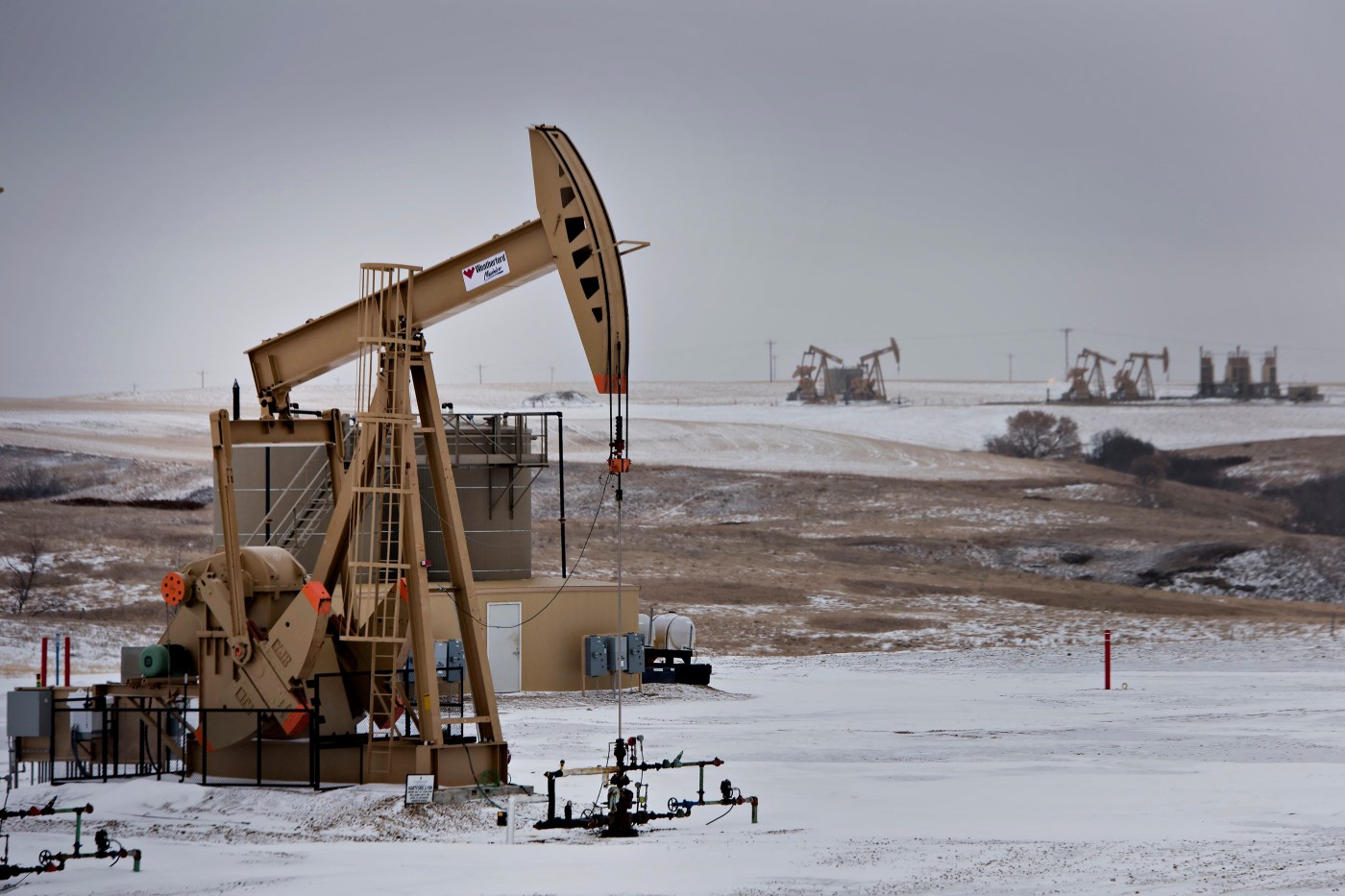
The fight against climate change commands the support of governments across much of the world. Targets for carbon abatement have gotten more ambitious and policies to address the challenge are proliferating. Yet one measure of progress shows how badly these efforts still fall short. Last year, global fossil-fuel subsidies expanded to a new record — $7 trillion, roughly 7% of global gross domestic output.

This remarkable number comes from a recently updated assessment by the International Monetary Fund, drawing on detailed disaggregated data for 170 countries. Rightly, it uses a comprehensive definition of subsidy, combining outright support (spending that offsets production costs) and implicit support (underpricing for environmental harms and forgone tax revenue).

Explicit subsidies have more than doubled since the previous assessment for 2020, to more than $1 trillion, thanks partly to efforts to soften the blow of higher energy prices after Russia attacked Ukraine. Implicit subsidies, some 80% of the total, surged as well — and unlike the explicit kind, they’re on track to rise further, both in dollar terms and as a share of global output, by the end of the decade.

One result of these enormous supports is that policies are often at cross-purposes. Keeping fossil fuels cheap offsets the other taxes, subsidies, and regulations governments use to reduce emissions and promote clean energy. In effect, with some of their policies, governments push fossil-fuel demand in the right direction; then, with generous subsidies for pollution and climate change, they push it back.

The gap between efficient prices and actual prices is especially egregious in the case of coal — which is both a potent driver of global climate change and in many countries a main cause of local air pollution. According to one authoritative estimate, outdoor air pollution resulted in 4.5 million premature deaths in 2019. The IMF finds that 80% of global coal consumption was priced at less than half its true cost in 2022.

Insisting that people pay full price for fuel would not only reduce consumption and slash emissions. It would also align that purpose with greater economic efficiency. First, it would make plain that some fossil fuels are worse than others, differences that can and should be priced accordingly. It would also provide a transparent basis for more effective international cooperation. Because air pollution and climate change both count in the calculations, efficient fossil-fuel prices vary from country to country according to local circumstances — but the gap between true costs and actual prices provides a consistent yardstick. Finally, cutting subsidies raises revenue, which allows for higher spending on worthwhile goals, lower government borrowing and/or cuts in other taxes.

No doubt governments will blame politics for the current dysfunction: Making fossil fuels more expensive is unpopular. This excuse is hardly compelling, since the existing subsidies could be put to better and more popular use. Still, if politics is indeed the obstacle, the rise in fossil-fuel prices since 2020 provides an opportunity. Instead of letting prices subside in due course all the way back to the pre-Ukraine norm, governments could withdraw or offset their existing subsidies at the same time, narrowing the gap with true costs without forcing prices higher.

The new assessment shows that the numbers involved aren’t rounding errors. They’re enormous — and enormously counter-productive. Working to reduce and then eliminate fossil-fuel subsidies should be an overriding priority for governments everywhere.

— Bloomberg Opinion

F.D. Flam: Let’s stop insulting each other as ‘anti-science’

posted in: News | 0

Peter Hotez, a vaccine scientist from Baylor College of Medicine, has been receiving a stream of hate mail. Much of it is unhinged, paranoid and threatening. He’s not alone — other prominent figures in public health have gotten hateful messages and death threats, especially since the beginning of the pandemic.

He describes the abuse in his new book, “The Deadly Rise of Anti-science — A Scientist’s Warning.” And he argues that an estimated 200,000 people in the U.S. who died from COVID probably would have survived if they hadn’t refused to get free, easily accessible vaccines.

He’s right about that, but throwing around the “anti-science” label isn’t helping bridge any divides. Take any scientific issue that involves political choices, from public health to climate change: All sides claim to be basing their concerns in science.

For example, further into the book, Hotez applies that anti-science label to people who opposed other mitigations like extended school and business closures and mask mandates. That’s too bad. Reasonable people can argue against the tradeoffs required by some of these non-pharmaceutical interventions.

The U.S. lost more people to this virus than most other developed countries where such restrictions and mandates were looser — suggesting much of what we asked people to do didn’t help. What we learn from our mistakes could help us continue to fight this still-circulating disease and do better with the next public health crisis.

When I spoke to Hotez on the phone, he said one of the main messages he wants to convey is that much anti-vaccine rhetoric wasn’t “just random junk on the internet” but part of a coordinated, politically motivated effort — the thrust of which was that they’ll first force you to get vaccines, then they’ll take away your guns and Bibles. And conservative politicians and media outlets encouraged irrational paranoia about the vaccines.

The effect of that was deadly — as seen in statistics showing significantly more deaths in the least vaccinated states once the shots became widely available. But of course, there is no movement that calls itself anti-science. There are movements where people openly proclaim themselves anti-nuclear or anti-GMO or anti-abortion, but the term anti-science is an insult. It’s the kind of label used to cast aspersions on enemies and deride them as stupid.

And much of what the public heard from the Centers for Disease Control and Prevention, the news media or their local governments was not scientific information but commands — don’t go to the beach, stay six feet from other people, wear a mask every time you leave your house.

In response to Hotez’s argument, risk communication expert Peter Sandman said he appreciates his concern over those 200,000 tragic deaths. But he thinks public health carries some of the blame for fumbling public trust.

“The natural impulse of public health professionals to blame their critics for the public’s increased mistrust isn’t just mistaken,” he says, “It is self-defeating. It keeps public health people from assessing what they said and did during the pandemic that aroused that mistrust, apologizing for these misstatements and misbehaviors, and figuring out how to do better going forward.”

There is a political component to the divide over vaccines, he agrees, but he also listed a number of ways public health efforts alienated conservatives: Delaying the vaccine approval until after Election Day, deferring to teachers’ unions on keeping kids out of school, and “prioritizing health over all other values … especially over freedom, which public health officials widely denigrated as a value not even worth considering.”

Barouch Fischhoff, a Carnegie Melon University social scientist specializing in risk communication, said he sees a snowballing communication problem. People in public health communicated poorly, then they blamed the audience, he said. “Then these dedicated scientists and health officials become disrespectful and aggressive,” which further alienates parts of the public.

He was on a 2020 National Academies of Sciences Medicine and Engineering committee and his contribution was to find ways to communicate facts and uncertainties — science — in a way that’s comprehensible and accessible. “Then you trust people to make their own decisions.”

He said that public health officials weren’t transparent about their goals or the evidence. That’s still a problem, especially with the ongoing booster campaigns. Is the goal to reduce transmission? Is the goal to protect against death? What’s the evidence a broad, annual booster campaign will achieve those goals? It’s hard to get clear answers.

“There’s no place to go to get facts and be treated as an adult,” he said. “People are stuck having to choose who to trust — and they all claim to be using science.”

So do the extreme hate mailers on the other side. Doctors and scientists with moderate views have told me they’ve gotten paranoid messages and even death threats from people who wanted longer lockdowns, permanent mask mandates and mandatory booster shots.

Scientists shouldn’t have to rely on blind trust; they can offer a logical, evidence-based argument for their claims. They have to express uncertainty, because that’s part of science, but honesty about what you don’t yet know can help build trust over the long term. And despite the wonders of modern science, infectious disease is going to remain a very long-term problem.

So please, let’s retire the term “anti-science.” It’s not persuading anyone on the other side.

F.D. Flam is a Bloomberg Opinion columnist covering science. She is host of the “Follow the Science” podcast.


Food insecurity shot up last year with inflation and the end of pandemic-era aid, a new report says

posted in: News | 0

By ASHRAF KHALIL (Associated Press)

WASHINGTON (AP) — An estimated 17 million households reported problems finding enough food in 2022 — a sharp jump from 2021 when boosted government aid helped ease the pandemic-induced economic shutdown.

A new Department of Agriculture report, released Wednesday, paints a sobering picture of post-pandemic hardship with “statistically significant” increases in food insecurity across multiple categories. Using a representative survey sample of roughly 32,000 American households the report said 12.8% (17 million households) reported occasional problems affording enough food in 2022 — up from 10.2% (13.5 million households) in 2021 and 10.5% (13.8 million households) in 2020.

Analysts and food security professionals point to the dual impact last year of high inflation and the gradual expiration of multiple pandemic-era government assistance measures.

“This underscores how the unwinding of the pandemic interventions and the rising costs of food has taken hold,” said Geri Henchy, director of nutrition policy for the Food Research and Action Center. “It’s like a horrible storm for families.”

The number of households reporting more serious forms of economic hardship also increased. Wednesday’s report by the USDA’s Economic Research Service also tracks families with “very low food security” — a condition it defines as families having to ration food consumption and where “normal eating patterns were disrupted at times during the year because of limited resources.”

Households experiencing this level of hardship in 2022 rose to 5.1% (6.8 million households), up from 3.8% (5.1 million households) in 2021 and 3.9% (5.1 million households) in 2020.

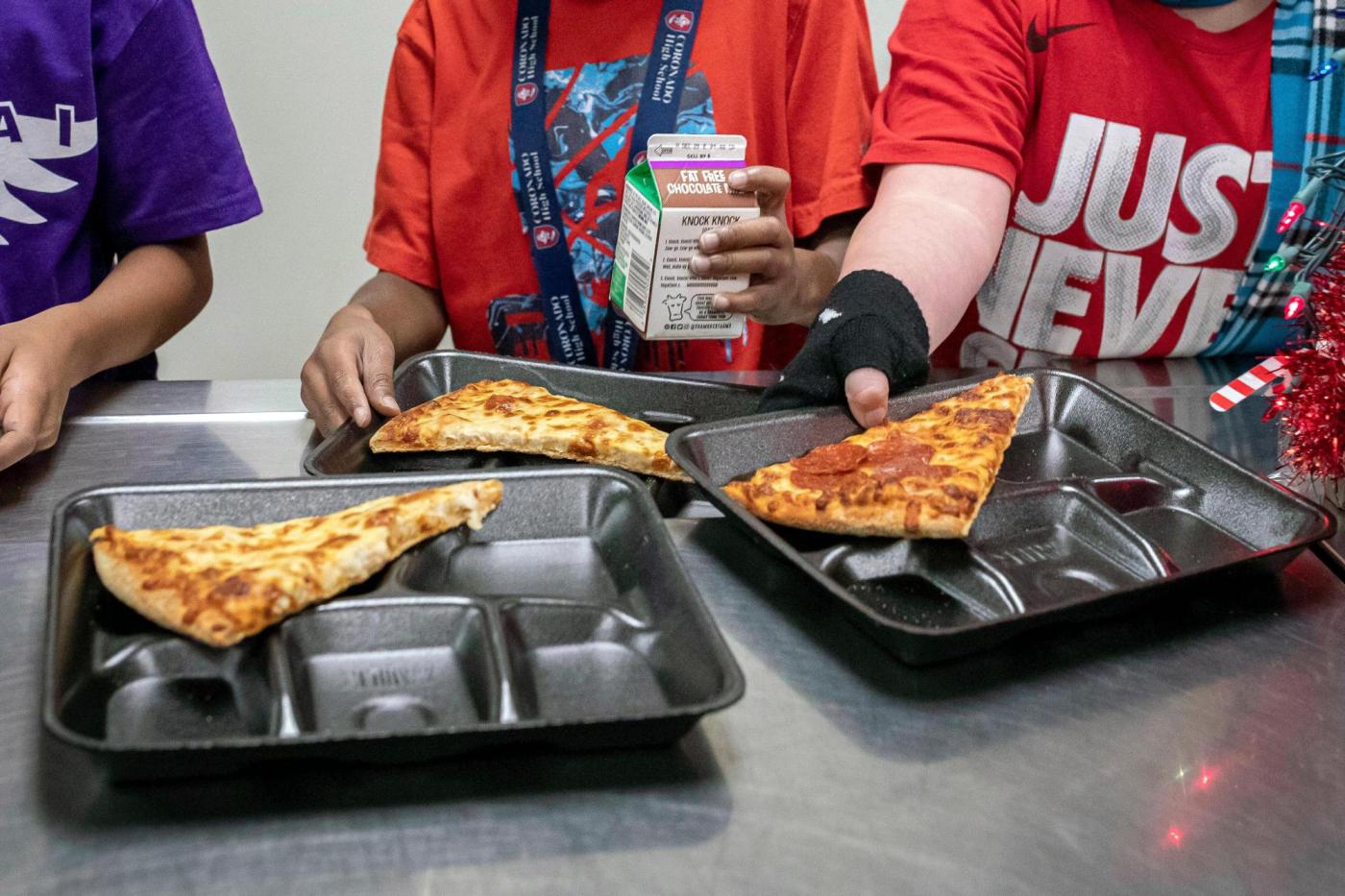
Increased benefits and more relaxed enrollment rules for SNAP — the foundational government assistance program commonly known as food stamps — didn’t end until early this year. But a host of other federal and state-level pandemic aid initiatives wound down last year. One key national change that Henchy highlighted was the end of universal free school lunches for all students, a policy that ended over the summer of 2022.

“These were healthy, nutritious meals because the schools had good standards,” she said. “It was great for the kids. It was stigma-free, and it was huge for people’s budgets.”

These findings broadly mirror real-time anecdotes from late last year, when multiple food banks and charitable groups reported being surprised by the higher-than-expected levels of need entering the 2022 holiday season. In several cases last year, food banks and charities made educated estimates of how much food they would need to distribute, only to find that those predictions were far too low.

Agriculture Secretary Tom Vilsack called the survey results “unacceptable” and said the rising level of need “should be a wake-up call to those wanting to further roll back our anti-poverty and anti-hunger programs.”

Vilsack highlighted the increased fruit and vegetable benefits for recipients of WIC — an aid program that specifically targets mothers and young children. The increased WIC benefits package is one of the few pandemic policies that’s continuing, although there have been proposals in Congress to bring those benefits down to pre-pandemic levels.

“The experience of the pandemic showed us that when government invests in meaningful support for families, we can make a positive impact on food security, even during challenging economic times,” Vilsack said in a statement Wednesday. “No child should go hungry in America. The report is a stark reminder of the consequences of shrinking our proven safety net.”

President Joe Biden’s White House echoed Vilsack’s call to maintain WIC funding at its current levels and strengthen the country’s social safety net in multiple ways.

White House spokesperson Jeremy Edwards said: “17 million households experiencing food insecurity in the richest nation in the world is unacceptable, and exactly why President Biden has continued to call on Congress to fund programs like WIC, as well as the Supplemental Nutrition Assistance Program (SNAP), the National School Lunch Program, and restore the enhanced Child Tax Credit that helped cut child poverty in half and helped millions of families afford the basics.”

Bret Stephens: The Palestinian Republic of fear and misinformation — the nature of tyrannical regimes

posted in: News | 0

JERUSALEM — Many years ago, when I first started covering the Israeli-Palestinian conflict, I got to know a gifted Palestinian journalist who, for reasons that will become apparent in a moment, I’ll refer to only by his first name, Said.

As with many other Palestinian journalists, Said’s primary source of income was working with foreign reporters as a “fixer,” someone who could arrange difficult meetings, translate from Arabic, show you around. Said had an independent streak, and he was no fan of Yasser Arafat, which made him particularly helpful in cutting through the Palestinian Authority’s propagandistic bombast.

With Said, I interviewed senior Hamas leaders in the Gaza Strip; and in the West Bank, officials in Ramallah, retired terrorists in Nablus, political dissidents in Jenin and construction workers in Hebron. We developed a friendship. Then, shortly after 9/11, he called me in a panic because something I had written in The Wall Street Journal had met with the displeasure of officials in the Palestinian Authority. The goon squad, he said, had paid his family an admonitory visit in their apartment, and he wanted me to take the story down. That was out of the question, I told him. It was never safe for us to work together again.

I mention this anecdote in the wake of last week’s sensational story that an Israeli airstrike had killed some 500 people at a Gaza hospital — a story variously attributed to “Palestinian officials,” “the Gazan health ministry” and “health authorities in the besieged enclave.” The story sparked violent protests throughout the Middle East.

It has since become clear that nearly every element of that story is, to put it gently, highly dubious.

A missile did not hit the hospital but rather the parking lot next to it. Abundant evidence, confirmed by U.S. intelligence and independent analyses, indicates that the explosion was caused by a missile fired from Gaza, which was intended to kill Israelis but malfunctioned and fell to Earth. There is no solid reason to believe the death toll reached anywhere near 500. And the “Gazan health ministry” is not some sort of apolitical body but a Hamas-owned entity, towing and promoting whatever the terrorist organization demands.

I’ll leave the media criticism to others. But Western audiences will never grasp the nature of the current conflict until they internalize one central fact.

In Israel, as in every other democracy, political and military officials sometimes lie — but journalists hold them to account, tell the stories they want to tell, and don’t live in fear of midnight knocks on the door. The Palestinian territories, by contrast, are republics of fear — fear of the Palestinian Authority in the West Bank and of Hamas in Gaza. Palestinians are neither more nor less honest than people elsewhere. But, as in any tyrannical or fanatical regime, those who stray from the approved line put themselves at serious risk.

This is a truth that only rarely slips out — but when it does, it’s revealing.

During the first major Israel-Hamas war, in 2008 and 2009, Palestinian groups claimed the death toll was mostly civilian, with roughly 1,400 people killed. But a Palestinian doctor working in Gaza’s Shifa hospital told a different story. “The number of deceased stands at no more than 500 to 600,” he said. “Most of them are youths between the ages of 17 to 23 who were recruited to the ranks of Hamas, who sent them to the slaughter,” he said. Tellingly, according to the Israeli news site YNet, “the doctor wished to remain unidentified, out of fear for his life.”

Or take the case of Hani al-Agha, a Palestinian journalist who was jailed for weeks and tortured by Hamas in 2019. In that case, the Palestinian Journalists Syndicate took the extraordinary step of condemning al-Agha’s arrest and torture as “an attempt to intimidate journalists in Gaza Strip, who are subject to repressive police authority.” Yet, outside of a few news releases, the story received almost no coverage in the wider media.

Human rights organizations occasionally take a break from their incessant criticism of Israel to pay attention to this kind of atrocious repression. But only rarely do Western audiences understand the full extent to which information emerging from Gaza is suspect — at least until it has been extensively and independently corroborated by journalists who aren’t living in fear of Hamas and don’t need to protect someone who is. Readers who wouldn’t normally be inclined to believe man-in-the-street interviews in, say, Pyongyang, North Korea, or regime pronouncements coming out of the Kremlin, should be equally skeptical about the phrase “Palestinian officials say.”

The news media still needs fixers and freelancers to tell the full story in war zones. But people consuming that media should know the threats, pressures and cultures that these journalists operate in — not because we necessarily distrust them individually, but because we appreciate the dangerous circumstances in which they find themselves.

The next time there’s a story about an alleged Israeli atrocity in Gaza, readers deserve to know how the information was acquired and from whom. It’s bad enough that Hamas tyrannizes Palestinians and terrorizes Israelis. We don’t need it misinforming the rest of us.

Bret Stephens writes a column for the New York Times.