Thomas Friedman: It’s time for a Biden Peace Plan

posted in: Politics | 0

TEL AVIV, Israel — During my nine days of reporting recently in Israel and the West Bank, little did I know that the most revealing moment would come in the final hours of my visit. As I was packing to leave Saturday night, Prime Minister Benjamin Netanyahu gave a news conference in which he indicated that Israel and the United States do not have a shared vision of how Israel should complete its war in the Gaza Strip or how to convert any Israeli victory over Hamas into a lasting peace with the Palestinians.

Without such a shared strategy, the Biden administration, the American people and particularly American Jews who support Israel will need to make some fateful decisions.

We will either have to become captives of Netanyahu’s strategy — which could take us all down with him — or articulate our own American vision for how the Israel-Hamas war must end. That would require a Biden administration plan to create two states for two indigenous peoples living in the areas of Gaza, the West Bank and Israel.

Yes, I am talking about a wartime peace plan that, if Israel agreed, could help give it the time, legitimacy, allies and resources it needs to defeat Hamas — without getting stuck governing all of Gaza and all of the West Bank forever, with no political horizon for the Palestinians.

And have no illusion, this is the only vision Netanyahu is offering right now: Seven million Jews trying to govern 5 million Palestinians in perpetuity — and that is a prescription for disaster for Israel, America, Jews everywhere and America’s moderate Arab allies.

President Joe Biden’s plan — are you sitting down? — could actually use as one of its starting points President Donald Trump’s proposal for a two-state solution, because Netanyahu warmly embraced that in 2020, when he had a different coalition. (Netanyahu and his ambassador in Washington practically wrote the Trump plan.) More on that in a second.

Here is why we are at a juncture that demands bold ideas, starting last Saturday night. Speaking in Hebrew in the joint news conference with Defense Minister Yoav Gallant and Minister Benny Gantz, Netanyahu rejected U.S. and world concerns over the thousands of Palestinian lives already lost to the war to uproot Hamas from Gaza. Even more important, he declared that Israel’s military would remain in Gaza “as long as necessary” to prevent the Gaza Strip from ever again being used to launch attacks on Israeli civilians.

Gaza “will be demilitarized,” he said. “There will be no further threat from the Gaza Strip on Israel, and to ensure that, for as long as necessary, IDF will control Gaza security to prevent terror from there.”

Those are legitimate Israeli concerns given the Hamas atrocities, but Netanyahu also indicated that Israel would oppose the return of the Palestinian Authority — Israel’s partner in the Oslo peace process that governs Palestinians in the West Bank — to Gaza following the war. The authority, Netanyahu said, is “a civil authority that educates its children to hate Israel, to kill Israelis, to eliminate the State of Israel … an authority that pays the families of murderers based on the number they murdered … an authority whose leader still has not condemned the terrible (Oct. 7) massacre 30 days later.” Bibi — who never gives the Palestinian Authority credit for how it works every day with Israeli security officials to dampen violence in the West Bank — offered no suggestion of how and from where an alternative, legitimate Palestinian governing authority ready to work with Israel might emerge.

This was an in-your-face rebuke of the Biden administration position articulated by Secretary of State Antony Blinken on Wednesday. As The New York Times reported, Blinken declared during a meeting of foreign ministers in Tokyo that Gaza should be unified with the West Bank under the Palestinian Authority once the war is over. To retain America’s Arab and Western allies, Blinken said that right now — today — we must articulate “affirmative elements to get to a sustained peace.” And “these must include the Palestinian people’s voices and aspirations at the center of post-crisis governance in Gaza,” he said. “It must include Palestinian-led governance and Gaza unified with the West Bank under the Palestinian Authority.”

My four-word translation of Blinken’s proposal to Israel: “Help us help you.’’

Blinken, though, also offered no details of how that might happen. The Biden team needs to flesh that out.

Why is Netanyahu trying to destroy the Palestinian Authority as a governing option for a postwar Gaza? Because he is already campaigning to hold onto power after the Israel-Hamas war is over, and he knows there will be a huge surge of Israelis demanding he step down because of how he and his far-right cronies distracted and divided Israel and its military by pursuing a judicial coup that Israeli intelligence sources told Netanyahu was emboldening and tempting enemies such as Hamas and Hezbollah.

The only way Netanyahu can stay in power is if his far-right allies don’t abandon him — particularly Finance Minister Bezalel Smotrich and National Security Minister Itamar Ben-Gvir. So to hold the support of the Jewish supremacists in his Cabinet — some of whom want Israel to erect settlements in Gaza as soon as possible — Netanyahu has to declare now that the Palestinians will have no legitimate, independent representation in Gaza or the West Bank.

Yes, I know it is hard to believe, but Netanyahu is campaigning in the middle of this war.

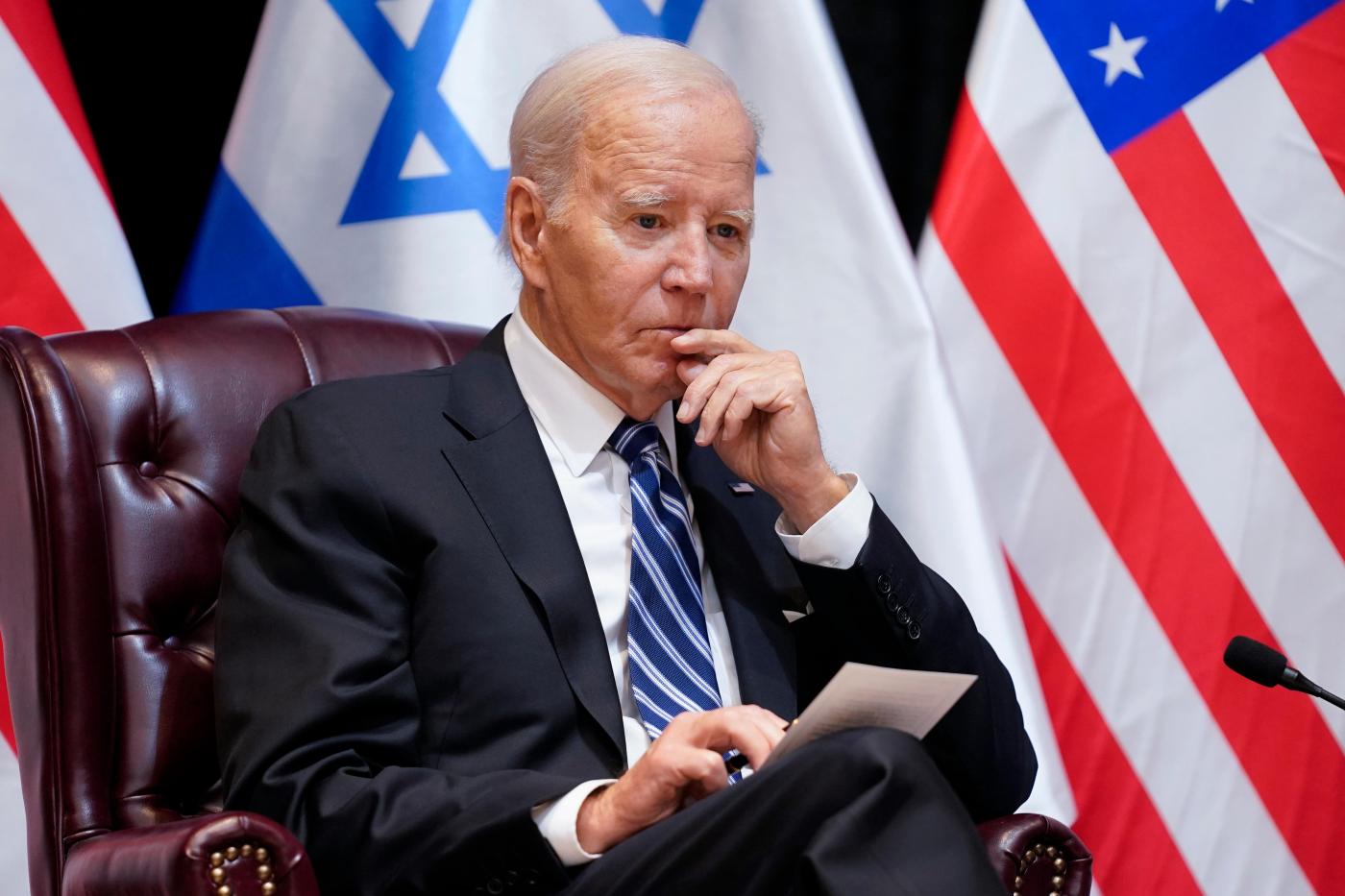
It is time for Biden to create a moment of truth for everyone — for Netanyahu, for the Palestinians and their supporters, for Israel and its supporters and for Aipac, the Jewish lobby. Biden needs to make clear that America is not going to be Netanyahu’s useful idiot. We are going to lay down the principles of a fair peace plan for the morning after this war — one that reflects our interests and that will also enable us to support Israel and moderate Palestinians and win the support of moderate Arabs for an economic reconstruction of Gaza after the war. I cannot see any major economic support for the rebuilding of Gaza coming from Europe or from countries like the United Arab Emirates or Saudi Arabia unless Israel and some legitimate Palestinian authority are committed to the principles of a peace framework to create two states for two peoples.

Biden needs to say: “Israel, we are covering your flank militarily with our two aircraft carriers, financially with $14 billion in aid, and diplomatically at the U.N. The price for that is your acceptance of a peace framework based on two states for two indigenous peoples in Gaza, the West Bank and pre-1967 Israel. This plan is based on U.N. Resolutions 242 and 338, which was also the cornerstone for negotiations in the peace plan put forward by Trump in 2020.

Related Articles

Opinion |


Serge Schmemann: Violence by West Bank settlers cannot be ignored

Opinion |


Jesse Wegman: Teach the importance — and the principles — of free speech

Opinion |


Trudy Rubin: In the war between Ukraine and Russia, which side is the GOP on?

Opinion |


Pamela Paul: It’s not kids with the cellphone problem. It’s parents.

Opinion |


F.D. Flam: Useless decongestants are just the tip of the iceberg

“Bibi, do you remember what you said about that Trump plan that gave Palestinians about 70% of the West Bank for a state, plus an expanded Gaza Strip and a capital in the area of Jerusalem?” Biden could add. “Here’s the Associated Press story of Jan. 28, 2020, to remind you: ‘Netanyahu called it a ‘‘historic breakthrough’’ equal in significance to the country’s declaration of independence in 1948.’”

The Palestinian Authority foolishly rejected the Trump plan outright, instead of asking to use it as a starting point. This is a chance to make up for that mistake — or be exposed as unserious.

In his valuable new book on the history of the peace process, “(In) Sights: Peacemaking in the Oslo Process Thirty Years and Counting,” Gidi Grinstein, a member of Ehud Barak’s negotiating team at Camp David, argues that the Trump plan provides a natural foundation for a revived peace process for a two-state solution. That is not only because Netanyahu already agreed to it, Grinstein told me in an interview, even if the settler hard-liners in his Cabinet did not and still would not. It’s also viable because the Trump plan was actually based on the precondition that peace was possible only after Hamas was removed from power in Gaza and the Palestinian Authority could assume control of the Gaza Strip, which, the Trump plan argued, would be expanded by land carved from Israel’s Negev Desert.

Biden could also propose that with the help of our moderate Arab allies like the UAE, Saudi Arabia, Egypt, Jordan and Bahrain, we would come up with a plan to overhaul the Palestinian Authority, purge its education system of anti-Israel material, upgrade its forces that work daily with Israeli security teams in the West Bank, and phase out its financial support for Palestinian prisoners who harmed Israelis.

Is the Palestinian Authority up to such a deal? Are progressive Palestinian supporters in the West who chant the eliminationist mantra “from the river to the sea, Palestine will be free” up for it? Will Israel’s silent majority be if Hamas is defeated? Let’s see what everyone really stands for — or if they have a better answer — because neither is going to disappear. Biden needs to put them all to the test.

I know that a lot of American Jewish leaders privately would love Biden to put forward such a plan but so far only one, Ronald Lauder, a longtime Republican and president of the World Jewish Congress, has had the courage to call for it — in a Saudi newspaper, no less, in an essay titled: “A time for peace and a two-state solution.” As he explained: “Only a two-state solution would guarantee Israelis and Palestinians a life in dignity, safety and with a better perspective on the economic situation, which would lead to a sustainable future.”

Such a plan would protect America’s interests — and make clear that we care about what’s best for Israelis and Palestinians and our allies in the region, not what’s best for Bibi’s political future — which several Israeli analysts told me would be to drag out the war, so he couldn’t be ousted by mass demonstrations — or to drag us into a conflict with Iran in hopes that would overshadow all his mistakes.

If a two-state plan were embraced by Israel, even with reservations, it would reinforce for the world that Israel sees its war in Gaza as one of necessary self-defense and a prelude to lasting peace. And if such a plan were embraced by the Palestinian Authority, even with reservations, that would reinforce that the authority intends to be the alternative to Hamas in shaping an independent future for Palestinians alongside Israel — and that it will not be a bystander to Hamas’ madness or a victim of it.

Thomas Friedman, who was born in Minneapolis and grew up in St. Louis Park, writes a column for the New York Times.
Minnesota’s PWHL team will practice at TRIA Rink this season

posted in: Society | 0

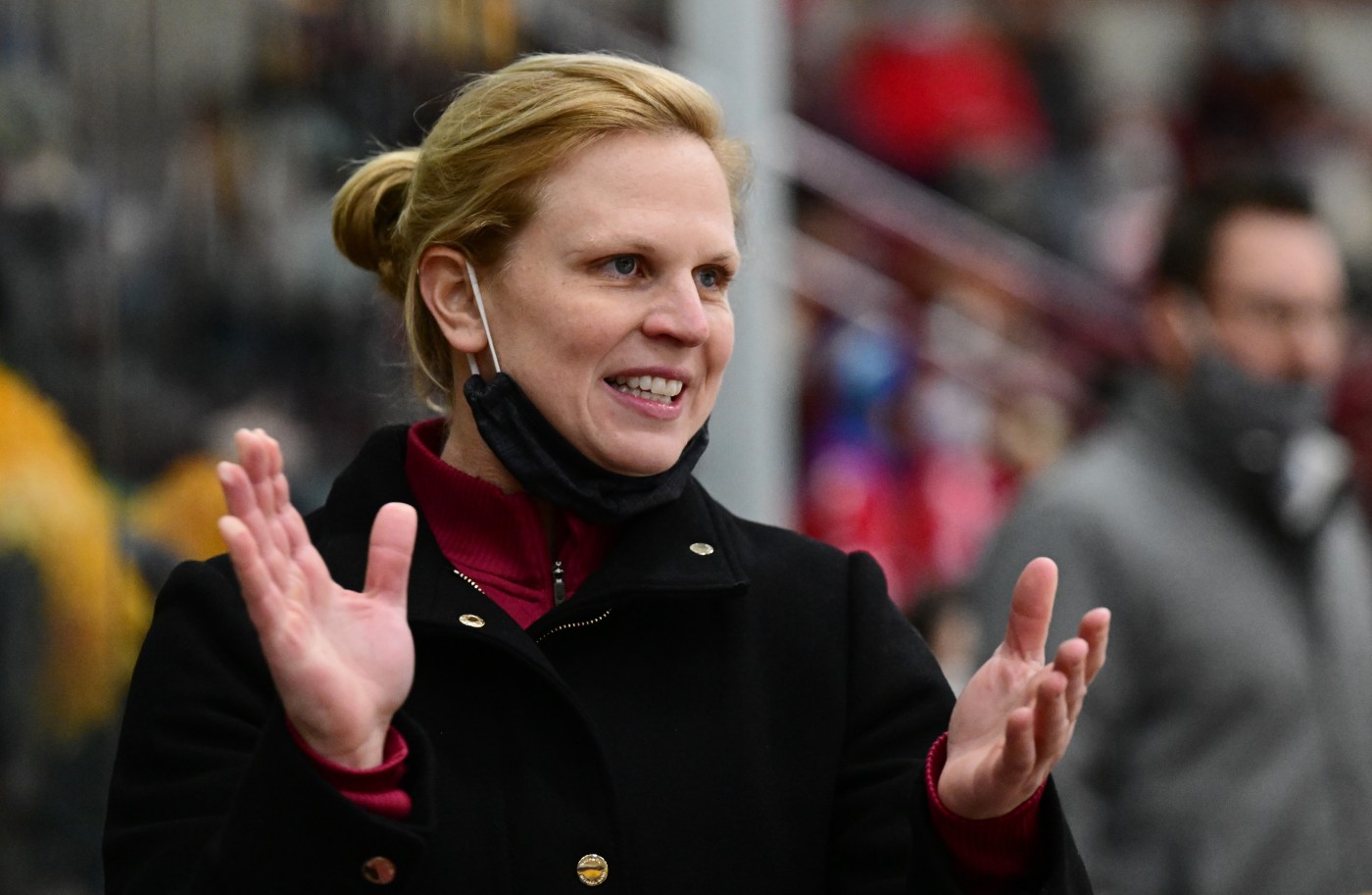
Minnesota’s unnamed Professional Women’s Hockey League team will practice at TRIA Rink in downtown St. Paul for a season scheduled to begin in early January.

“Minnesota is excited to call TRIA Rink our practice facility,” general manager Natalie Darwitz said in a statement. “TRIA Rink is one of the best ice rinks in the State of Hockey. … Their rink staff is professional and goes the extra mile to truly make us feel that this is a home for our organization.”

The team’s inaugural training camp begins this week. The new league, officially born in August, comprises six teams and will play a 24-game season.

Related Articles

Minnesota Wild |


‘Banged up’ Kirill Kaprizov misses practice, but Wild hold off on calling up a forward

Minnesota Wild |


Dallas sends Wild off to Sweden with 8-3 loss, three-game losing streak

Minnesota Wild |


Wild’s Freddy Gaudreau begins skating, could play in Sweden

Minnesota Wild |


No need for reset, says Jared Spurgeon. Wild need to build on ‘positives’

Minnesota Wild |


Jared Spurgeon returns, but Wild can’t shift narrative in Buffalo setback

Opinion: Struggling Families Can’t Afford to Wait for NYC to Fix Benefit Delays

posted in: Politics | 0

“Hundreds of thousands of New York City households depend on government benefits to avoid eviction and homelessness. Yet countless households are experiencing ongoing and systemic delays when attempting to apply or renew their benefits.”

Gerardo Romo / NYC Council Media Unit

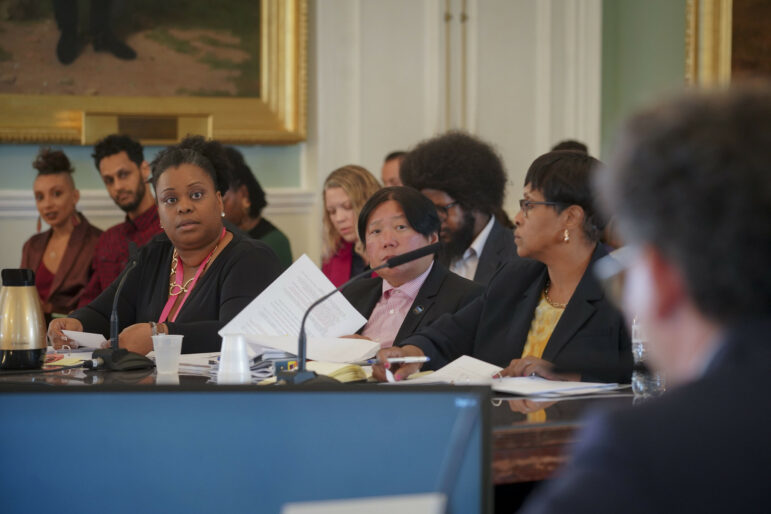
Staffers with the city’s Department of Social Services and Human Resources Administration at a Council hearing in August on benefits processing wait times.

CityViews are readers’ opinions, not those of City Limits. Add your voice today!

In the midst of her life’s most challenging chapter, Ms. S, a resilient 55-year-old accountant from Washington Heights, found herself in a situation she could have never anticipated. A debilitating stroke left her partially paralyzed and hindered her ability to put food on the table or make ends meet. Ms. S found herself jobless and without income for an entire year as she waited for her Social Security benefits to kick in. When she applied for SNAP benefits, her application encountered a 45 day-delay, after which she received a notice from the city’s Human Resources Administration (HRA) indicating that she missed her mandatory interview—which was not the case—leaving her panicked and unsure of where to turn.

Or take the case of Ms. V, a single mother of five children in Harlem whose landlord moved to evict her after her husband, the sole earner in the family, tragically passed away. Ms. V struggled to secure employment while caring for her young toddlers and applied for the Family Homelessness and Eviction Prevention Supplement (FHEPS) program, which, if approved, would clear her rent arrears and provide ongoing rental assistance. However, she has now been waiting two months for HRA to process her application, growing more and more fearful of losing her home for herself and her children as each day passes.

These are just some of the many stories of delays that struggling New Yorkers face when attempting to access live-saving benefits from the City’s Human Resource Administration, including SNAP, Public Assistance, One Shot Deals, FHEPS and CityFHEPS. Such delays have devastating consequences for our city’s most vulnerable people. 

Every week in New York City, new tenants are being sued by their landlord because of missing, delayed shelter payments or improper discontinuance of a Public Assistance, FHEPS or CityFHEPS case. Why is it that the programs that were created to help vulnerable people access affordable housing are the ones that end up pushing these same marginalized tenants into eviction proceedings?

At Legal Services NYC, we see our clients struggle to afford groceries to feed their families or make rent to keep a roof over their heads. Food insecurity is on the rise in New York City, up to 10.8 percent last year compared to 7.3 percent in 2021, and even higher for children at 13.4 percent. Statewide, nearly 2.9 million New York households rely on Supplemental Nutrition Assistance Program (SNAP) to eat.

The city is also home to nearly 500,000 rent burdened households, struggling to keep up with rent as prices soar to the highest in recent history. Hundreds of thousands of New York City households depend on government benefits to avoid eviction and homelessness. Yet countless households are experiencing ongoing and systemic delays when attempting to apply or renew their benefits with HRA, with no signs of improvement.

According to the latest Mayor’s Management Report, less than 30 percent of Public Assistance applications and 40 percent of SNAP applications were processed within the required 30 days timeline. While some applicants receive decisions well past the required time frames, others never receive a response. 

RELATED READING: NYC Failing to Process Most Food Stamp, Cash Benefit Applications on Time

HRA’s shortcomings extend beyond mere delays, turning the process of accessing public benefits into an ordeal that disregards fundamental human rights and social justice. Numerous issues mar the system, among them benefits applications that are mistakenly closed without notice; benefits denials erroneously claiming that the applicant failed to provide required documents or missed deadlines; a glitchy and inaccessible AccessHRA website that often ends up making it more difficult for New Yorkers in need to access government benefits; and hours-long phone wait times.

Although the Mayor’s Management Report indicates that “HRA is taking aggressive action to fill critical vacancies, invest in technology, and implement process improvements to improve timeliness,” we have yet to see the fruits of such a plan. By when will New Yorkers be able to get their benefits within 30 days? What substantial steps have been put in place to comply with a court order to eliminate the backlog by March 2024?

New Yorkers are hungry and suffering. Every day, advocates in my organization send follow-up after follow-up to HRA on behalf of our clients, many of which go unanswered. The current state of affairs is unacceptable. Our clients are in need and HRA has the duty to assist.

It’s time for the Adams Administration to take immediate steps to help struggling New Yorkers access life-saving benefits by, first, approving the necessary budget to fill critical vacant positions at HRA to process applications and clear the backlog.

The New York Department of Social Services (DSS) should also commit to creating and publishing a corrective action plan to resolve the systemic delays in processing public benefits applications within the requisite 30-day timeline, as well as create a Direct Access Line phone number for advocates and community partners to help address and facilitate correction of case errors. 

The department should also share monthly monitoring reports with community partners representing clients with the most to lose to ensure the agency is complying with its protocols, corrective action plans, and applicable state or federal laws and regulations. These steps would go a long way in protecting the safety, well-being, and dignity of struggling New Yorkers. 

At a time when low-income families are struggling to find stability among post-pandemic financial hardships, deepening economic gaps, and racial disparities, the Adams Administration must move quickly to improve and expand access to public benefits that help stabilize marginalized New Yorkers, not shrink or neglect these services.

Hungry families on the brink of homelessness cannot afford to wait. 

Jenna Coudin is a staff attorney in the Government Benefits Unit in Legal Services NYC’s Manhattan Office.

Orioles arbitration FAQ: What you need to know about Baltimore’s first big offseason decisions

posted in: News | 0

The first big decisions of the Orioles’ offseason are approaching.

Baltimore had no contract options to sort out. None of its five free agents were going to receive the $20.325 million qualifying offer. The club has hardly any top prospects who need to be protected from the Rule 5 draft. So, the arbitration tender deadline Friday marks the first significant offseason benchmark for the Orioles’ roster.

Here’s what you need to know.

What is arbitration?

Arbitration is a system that provides pay raises to players who have established themselves as big leaguers but haven’t yet spent enough time in the majors to become free agents.

Players who have at least three years of MLB service time but fewer than the six necessary to become a free agent are eligible, as long as they don’t already have a set salary through a guaranteed contract. A year of service time is equivalent to 172 regular-season days spent on the major league roster or injured list. A player can earn no more than one year of service time in a given season, even if they are active for more than 172 days.

A portion of players with between two and three years are also eligible, with the top 22% of that group by service time receiving “Super Two” status. These players don’t become free agents any sooner, but they receive four years of arbitration eligibility instead of the typical three, which results in higher career earnings before they reach free agency. This year’s Super Two cutoff is two years and 118 days of service time, according to the Associated Press.

How does the process work?

Before Friday’s deadline, teams will decide whether to tender contracts to their arbitration-eligible players. Any players who are non-tendered become free agents. Players are typically non-tendered because the salary they would likely receive through arbitration exceeds the salary the club is willing to pay them, and the sides weren’t able to agree on a lower figure ahead of the deadline.

Teams and tendered players can continue negotiating contract terms after the initial deadline. If they haven’t come to an agreement by Jan. 12, the sides will then each suggest a potential 2024 salary for that player.

If the team and the player remain unable to agree to terms, a panel of arbitrators will pick either the team’s or the player’s suggested salary — and no other possible value — after a hearing, which will take place in late January or early February.

Which Orioles are arbitration-eligible?

The Orioles will have 16 players who are eligible for arbitration, which MLB Trade Rumors estimates as tied for the second-largest group of any team. It’s a tally executive vice president and general manager Mike Elias called “an earmark of having a good roster these days” at the end of the season.

Outfielder Anthony Santander and left-handers John Means and Danny Coulombe are in their final year of eligibility before becoming free agents; Santander is 10 days shy of already having six years of service time. Outfielders Cedric Mullins and Austin Hays, first baseman Ryan O’Hearn, shortstop Jorge Mateo and reliever Dillon Tate have between four and five years of service time.

First baseman Ryan Mountcastle, infielder Ramón Urías, right-hander Jacob Webb, and left-handers Cionel Pérez, Cole Irvin and Keegan Akin all reached three years of service time in 2023 and are arbitration-eligible for the first time. Joining them are outfielder Ryan McKenna and right-handers Tyler Wells, who are eligible as Super Twos. Right-hander Dean Kremer came six days of service short of Super Two eligibility.

How much will they earn?

If the 16 eligible Orioles are all tendered contracts, they would receive more than $50 million collectively, based on projections from MLB Trade Rumors, Cot’s Baseball Contracts and Spotrac. That total represents almost double what that group earned in 2023.

About a quarter of that $50 million is expected to go to Santander, a switch-hitter who led Baltimore in home runs each of the past two seasons. The three forecasts’ average projection for Santander’s 2024 salary is $12.8 million; he earned $7.4 million in 2023.

Mullins ($6.2 million), Hays ($5.8 million) and Means ($5.6 million) have the next highest average projections. Mountcastle is projected for the largest salary of Baltimore’s first-time recipients at $3.9 million, a significant raise after he made about $740,000 in 2023.

The remaining members of what would currently be the Orioles’ season-opening roster are projected to make about $10 million combined in 2024, according to Spotrac. That total will likely increase should Baltimore make trades and free-agent signings.

Who could get non-tendered?

Some of these decisions could come down to next week’s deadline, with the possibility some players agree to lesser deals beforehand to avoid being non-tendered. The majority of the Orioles’ eligible players will be tendered contracts, though there are a handful of decisions to be made.

It’s difficult to imagine Baltimore parting with Santander in this fashion, though it’s worth noting his projected salary would be the largest Elias has given out in his five years running the club.

Mateo and Urías are both projected to make between $2 million and $3 million in 2024. Both are right-handed-hitting infielders who ended this season in part-time roles, with the pair effectively splitting a platoon. Each excelled defensively in 2022 but took a step back in 2023, while their offensive contributions were below average. With top overall prospect Jackson Holliday set to join Gunnar Henderson and Jordan Westburg in the majors — and prospects Joey Ortiz, Coby Mayo and Connor Norby also in the mix for big league time at some point next season — it’s possible there isn’t room for Mateo, Urías or both.

Tate and Akin each ended the season on the 60-day injured list but have played key roles in Baltimore’s bullpen in recent years. Tate, who missed all of 2023 with an elbow injury, led the Orioles in games pitched in both 2021 and 2022. He made $1.5 million in 2023 and likely would receive a similar figure for next season. Akin had a 3.20 ERA in 2022 and a 3.66 mark through his first 20 appearances of 2023, then gave up 13 runs while recording 12 outs in his final four outings before going on the IL with a lower back injury. At $850,000, Akin has the lowest average projected salary of Baltimore’s arbitration-eligible players.

McKenna’s eligibility could put him at risk, though he’s not projected to make much above the league minimum. With Aaron Hicks entering free agency, the Orioles have a need for a right-handed hitter who can play all three outfield spots, a mold McKenna fits. But he’s mainly been an up-and-down defensive replacement in his career, and he’s out of minor league options, meaning the team would have to expose him to waivers to send him to Triple-A. If the Orioles don’t think they’ll have space for him come opening day, this would be a prudent move to make now.

()