Estudiante de Honor de 11 Años Se Encontró en Confinamiento Solitario en Brownsville

posted in: Adventure | 0

Este artículo fue traducido por Jorge Luis Sierra del Hub de Periodismo de Investigación de la Frontera Norte (Border Hub). Lea la versión original en español aquí.

Timothy Murray, de once años, tiene muchos trofeos colocados en fila junto a la pared de su habitación. Durante una videollamada, me muestra lo que ganó en proyectos científicos, competencias de ajedrez y programas de codificación, y termina con el más grande de su colección: un trofeo de tres niveles repleto de estrellas que ganó como gran campeón de la Feria de la Ciencia del Distrito Escolar Independiente de Brownsville en noviembre de 2022. Parece casi tan alto como su estructura de poco más de un metro. Explica que el proyecto midió los factores de seguridad al conducir sobre el puente Golden Gate cambiando variables de velocidad, masa y tamaño de un vehículo.

Es difícil para mí seguir el ritmo mientras Timothy habla y señala con entusiasmo el tablero tríptico lleno de color de su proyecto.

El proyecto fue el último en el que Timothy trabajó con su padre antes de que éste muriera en abril a causa de mieloma múltiple, una forma de cáncer de la sangre. Su padre había estado enfermo desde que Timothy tenía dos años y las salidas familiares a menudo implicaban viajes al hospital. A medida que su cáncer se propagaba, el padre de Timothy nunca trató de ocultar su enfermedad. Más bien, desmitificó la enfermedad, explicó las causas y los síntomas y preparó a Timoteo para su posible muerte.

Timothy dice que gracias a su padre quiere ser oncólogo cuando sea mayor, aunque su madre se ríe de que todos piensan que su hijo debería ser abogado ya que le gusta mucho discutir. Su padre le enseñó a hablar y defenderse a sí mismo.

“Mi papá me enseñó lo que está bien y mal. Haz esto. No hagas eso. Terminar los proyectos tan pronto como pueda. Porque si llego tarde, mis calificaciones pueden verse afectadas”, dijo Timothy. “Mis notas son muy frágiles en este momento: tengo un 84 en ortografía, el resto están en los 90.”

Timothy y su padre, también llamado Timothy Murray, en la Isla del Padre en noviembre de 2021. Su padre falleció en abril. Cortesía de Nadia Rincón. Cortesía de Nadia Rincón.

Pero los esfuerzos de Timothy por hablar y solicitar asesoramiento para sí mismo al comienzo de su año escolar de quinto grado en la Escuela Primaria Palm Grove llevaron a lo que la familia llama represalias por parte de Myrta Garza, directora de la Escuela Primaria Palm Grove.

El 8 de septiembre, los administradores de la escuela le dijeron a Timothy, quien había irritado al director con solicitudes de asesoramiento y aclaraciones sobre las políticas del código de vestimenta escolar, que otro estudiante alegó que había amenazado a Garza. Timothy negó la acusación, pero Garza llamó a la policía, quienes lo detuvieron y lo pusieron en régimen de aislamiento durante tres días en el Centro de Detención Juvenil Darrell B. Hester en Brownsville.

Los fiscales del condado de Cameron presionaron para que se presentaran cargos por delitos graves de clase C de “amenaza terrorista” y solicitaron dos semanas más de detención. En cambio, la jueza Adela Kowalski-Garza ordenó una evaluación de riesgos de seguridad y libertad condicional en su domicilio hasta su audiencia el 8 de noviembre.

Expertos en justicia juvenil entrevistados por el Observador de Texas dicen que el Distrito Escolar Independiente de Brownsville y la policía parecen haber violado las leyes estatales y otras reglas en el caso de Timothy que tienen como objetivo proteger a niños tan pequeños de acciones policiales excesivas. Estos incluyen una ley que exige que una escuela se someta a una evaluación de amenazas sistémica basada en hechos que involucre a los padres para determinar si existe una amenaza inminente que justifique una remisión a las autoridades y una orden de la Corte Suprema de Texas que prohíbe esposar y encadenar a niños pequeños. Las leyes estatales permiten poner a un menor en régimen de aislamiento durante 24 horas; El personal del centro de detención le dijo a Rincón que su hijo estaba aún más aislado por precauciones de COVID.

“Esta fue la elección de la escuela de referirse a las autoridades, la elección de las autoridades de detener al niño, la elección del fiscal de acusarlo y tratar de inventar los cargos”, dijo Renuka Rege, asesora de políticas de Texas Appleseed, una organización sin fines de lucro que investiga y aboga por muchos temas, incluida la justicia juvenil. “Todas estas cosas son fracasos en el servicio a los niños pequeños”.

El Observador solicitó comentarios e información al superintendente del distrito escolar independiente de Brownsville, René Gutiérrez, al jefe de policía del distrito, Oscar García, y a Garza. Le preguntamos al Distrito si los funcionarios habían realizado una evaluación de amenazas, pero la única respuesta que recibimos fue del Director de Relaciones Públicas y Participación Comunitaria Jason Moody, quien escribió: “Este caso ha sido transferido al Departamento de Justicia Juvenil del Condado de Cameron y está pendiente de adjudicación. El Distrito Escolar de Brownsville no puede hacer más comentarios sobre este asunto.”

Timothy muestra premios por cuadro de honor, logros académicos en lectura y matemáticas, lectura acelerada y asistencia perfecta para el año escolar 2022-2023. Cortesía de Nadia Rincón. Courtesy of Nadia Rincon

La Escuela Primaria Palm Grove es un edificio achaparrado y color canela a sólo cinco millas de la frontera entre Estados Unidos y México. No hay mucho desarrollo alrededor de la escuela en este vecindario semirrural de Brownsville. Su madre, Nadia Rincón, mudó a su familia allí en 2020 después de que ya no podían pagar una vivienda en Uvalde, que era más cara, debido a los crecientes gastos médicos del padre de Timothy.

Como estudiante de cuarto grado en Palm Grove, Timothy llegó a depender del apoyo de una consejera escolar. Según Rincón, la consejera lo guió durante el fallecimiento de su padre y lo animó a continuar trabajando duro para ingresar al programa de niños superdotados y talentosos del distrito. Por eso se preocupó cuando no la vio a ella ni a ningún otro consejero cuando comenzó su quinto grado en la escuela en agosto.

“No sabía que ella se había ido. Entonces estaba un poco confundido y le pregunté a la directora dónde estaba. Como que a ella no pareció gustarle eso. Ella simplemente me dijo: ‘Yo estoy a cargo’”, dijo Timothy. Insistió en el tema y le dijo a Garza que la escuela necesitaba tener un consejero. “Entonces, ella me hizo a un lado”.

Más tarde descubrió que la consejera se había mudado a otra escuela.

Myrta Garza, directora de la Escuela Primaria Palm Grove. Crédito: Escuela Primaria Palm Grove Palm Grove Elementary School

Timothy dijo que después sintió que lo estaban molestando porque Garza lo amonestó repetidamente. Primero por su corte de pelo. Y luego por no usar uniforme escolar, una regla que no se había aplicado el año anterior. No existe una política de código de vestimenta publicada en el sitio web de la escuela y la mayoría de fotos muestran a los estudiantes sin uniforme. Timothy le escribió a mano tres cartas a Garza pidiéndole que aclarara si usar el uniforme era una recomendación o política de la escuela. Garza nunca respondió pero, según Timothy, se paraba afuera de su salón de clases o en el comedor para gritar: “¡Uniforme, Murray!”

“Había niños detrás de mí sin uniformes, pero no les gritaban”, dijo Timothy. “Ella me decía: ‘¿Dónde está tu uniforme? De lo contrario, lo expulsaremos del programa ACE [después de la escuela], revocaremos sus privilegios de biblioteca, revocaremos sus privilegios de almuerzo’”.

Garza proviene de un legado educativo de Brownsville. Su madre, Rachel Medina Ayala, fue una de las primeras mujeres superintendentes del Distrito Escolar Independiente de Brownsville. Las dos hermanas de Garza también son directoras del distrito.

“Todos dicen: ‘Eres como tu mamá; estás siguiendo sus pasos’”, Garza dijo al Heraldo de Brownsville en 2021.

Patrick Hammes, organizador del sindicato Educators Stand Together de Brownsville, era maestro de educación especial cuando Ayala se desempeñaba como superintendente adjunto en el distrito. Hammes la recuerda como exigente.

“Ella dirigió las cosas con mano de hierro. Tenía admiradores, pero había mucha gente que le tenía miedo”, afirmó. “Myrta Garza es igual a su madre”.

El verano pasado, el actual superintendente, René Gutiérrez, anunció una reorganización en el liderazgo en varios campus. La primaria Canales, donde Garza fue directora durante cuatro años, fue considerada como un plantel que necesitada de mejoras, y Garza fue reasignada a Palm Grove. El ex consejero y director de Palm Grove fueron transferidos a la Escuela Primaria Canales.

El 3 de septiembre, Timothy envió un correo electrónico a Gutiérrez. En el correo electrónico que Rincón compartió con el Observador, Timothy escribe que Garza “se está metiendo conmigo sin consideración por mis cartas”. Timothy nunca recibió una respuesta.

Un correo electrónico que Timothy envió al superintendente de Brownsville ISD, René Gutiérrez.

Su calvario comenzó cinco días después. A última hora de la mañana del 8 de septiembre, sacaron a Timothy de su clase de música y lo llevaron a un salón donde encontró a Garza, la subdirectora Michelle Saucedo, un oficial de policía del distrito y un consejero enviado desde la oficina administrativa central del distrito. Le dijeron que otro estudiante acababa de informar que Timothy había dicho que planeaba matar al director. Rincón dijo que la llamaron y la llevaron rápidamente a la escuela, pero no le permitieron estar en la sala mientras interrogaban a Timothy.

“Cuando el oficial de policía apagó su cámara corporal, gritaban y me decían: ‘Vamos a llegar hasta el final’. Te pondremos en una caja fuerte’”, dijo Timothy. “Luego, cuando finalmente se encendió la cámara corporal, fueron muy amables”.

Timothy me dijo que había explicado a los funcionarios de la escuela y del distrito que las acusaciones no eran ciertas, que la única conversación que tuvo esa mañana fue con otros dos niños sobre usar su suéter sobre el uniforme.

Rincón ha recibido sólo un formulario de remisión de conducta escolar, en el que los administradores escribieron que “Timothy le dijo a otro estudiante que tenía el cabello desordenado porque estuvo despierto toda la noche ideando un plan para matar a la señora Garza (directora)”. Debajo, Timothy escribió: “No, no estuve despierto en toda la noche, simplemente me olvidé [de peinarme]”.

En la parte inferior del formulario, los administradores habían escrito: “OSS [suspensión fuera de la escuela] 3 días 9/11-9/13”.

Pero en lugar de suspenderlo, Garza citó a un oficial de policía para arrestar a Timothy en la escuela. En un video que Rincón compartió con el Observador, Timothy pone los brazos en alto sobre un estante de madera y espera a que lo esposen según las indicaciones de un oficial de policía. Con los ojos muy abiertos y en silencio, mira a su madre, quien dice: “Mi hijo le escribió una carta a la directora de la escuela porque ella estaba tomando represalias contra él y ahora lo arrestarán”.

Timothy fue llevado al Centro de Detención Juvenil Darrell B. Hester y puesto en régimen de aislamiento por precauciones de COVID en espera de su audiencia el lunes. Rincón dijo que los oficiales se negaron a dejarla hablar con su hijo hasta que comenzó a tener un ataque de pánico el domingo.

“Le permitieron llamarme cinco minutos porque mi hijo estaba teniendo una crisis. Estaba llorando mucho. Sus ojos eran todos negros. Escuchó a alguien decir que querían acusarlo de amenaza terrorista”, dijo Rincón.

A pesar de múltiples solicitudes, Rincón dijo que no ha recibido más información de la escuela sobre los fundamentos de los cargos contra su hijo.

Timothy y su papá cuando estaba en 1er grado. Cortesía de Nadia Rincón. Courtesy of Nadia Rincon

La ley de Texas permite arrestar y acusar penalmente a niños de hasta 10 años. Pero Texas Appleseed y otros defensores han presionado a los legisladores de Texas en los últimos años para que incorporen más protecciones legales para estudiantes y padres para evitar acciones policiales arbitrarias y excesivas, protecciones que, según Rege, los administradores escolares, la policía del distrito y el distrito escolar violaron en el caso de Timothy.

Según la  Iniciativa de ley 11 del Senado, aprobada en la 86.ª sesión legislativa, todas las escuelas deben involucrar a diversos expertos, incluidos maestros, consejeros y administradores, para llevar a cabo una investigación sistemática basada en hechos para determinar si existe un “peligro inminente y una preocupación de seguridad” que requiera que las autoridades policiales actúe cuando haya un reporte de amenaza.

Las escuelas deben considerar si la amenaza reportada es consistente con el comportamiento pasado del estudiante, la comunicación escrita o verbal pasada, y si el estudiante tiene los medios para llevar a cabo dicha amenaza, entre otros factores. En el caso de Timothy, la amenaza reportada no era consistente con ningún patrón pasado. Rincón dice que su hijo nunca había recibido una remisión de conducta conductual antes de este incidente.

Además, la Iniciativa HB 473, aprobada en la 88ª sesión legislativa, requiere que los administradores escolares notifiquen y brinden una oportunidad para que los padres participen y presenten información en los procedimientos de evaluación de amenazas de una escuela. A partir de entonces, el equipo de evaluación de amenazas debe comunicar sus conclusiones a los padres. Rincón dice que nada de esto ocurrió. Si la escuela realmente siguió el procedimiento de evaluación de amenazas, el distrito rechazó la solicitud de Rincón de proporcionarle una copia de dichos hallazgos en una carta compartida y revisada por el Observador.

“La legislación dice claramente que se supone que debe haber participación de los padres tanto en la evaluación inicial como después se supone que se les debe informar cuál fue el resultado de la evaluación”, dijo Ellen Marrus, profesora y directora del Centro para Niños. Derecho y Política en la Universidad de Houston.

Además, el año pasado la Corte Suprema de Texas emitió un fallo prohibir el uso de esposas o grilletes de niños en procedimientos judiciales de menores, a menos que el niño presente un riesgo sustancial de dañarse físicamente a sí mismo o a otros, o de huir de la sala del tribunal. SB 133, aprobada en la 88.ª sesión legislativa, también restringe el uso de restricciones en los estudiantes de escuela primaria en los campus escolares. Sin embargo, Timothy fue esposado en la escuela y luego nuevamente esposado y encadenado por los tobillos en el tribunal.

“No sabemos si Timothy siquiera hizo esta amenaza. Esto se basó en un informe de un estudiante y realmente no hay nada que lo respalde. No sabemos si la escuela hizo una evaluación de amenazas. No sabemos sobre qué base el tribunal pudo haber determinado que Timothy presentaba un riesgo sustancial de daño físico o de fuga en el momento de esposarlo”, dijo Rege. “No está claro sobre qué base podrían haber considerado que se trataba de una amenaza inminente que justificaba una remisión a las autoridades. Desafortunadamente, eso es lo que hicieron”.

Cuando Timothy llegó al centro de detención, Rincón dijo que Timothy fue puesto en régimen de aislamiento desde el viernes por la tarde hasta su audiencia el lunes por la mañana. Las regulaciones estatales prohíben el aislamiento. de un menor durante más de 24 horas, pero a Rincón le dijeron que el centro de detención lo estaba aislando por precauciones de COVID.

Según Rincón, esa mañana, los fiscales intentaron acusar a Timothy de realizar una amenaza terrorista contra un servidor público, un delito grave de tercer grado, que podría resultado en una pena de prisión de dos a diez años.

En cambio, la jueza Adela Kowalski-Garza ordenó una evaluación de riesgos de seguridad y libertad condicional que le permite asistir a la escuela y permanecer en casa hasta su audiencia el 8 de noviembre.

Rincón y su hijo están pidiendo a un abogado designado por el tribunal que busque que se retiren los cargos. El abogado asignado para representar a Timothy declinó hacer comentarios.

“Timothy está mejor. Pero ya no se siente seguro para hablar cuando necesita algo”, dijo Rincón.

Cuando le pregunto a Timothy cómo le ha afectado todo esto, dice después de un largo momento de silencio: “Me puso bajo mucho estrés”.

Después del incidente, Rincón transfirió a Timothy a otra escuela primaria donde ahora trabaja su ex director, a quien Garza reemplazó, y consejero de la primaria Palm Grove. 

Dice que puede hablar con ellos cuando tenga problemas. Ha retomado sus viejas rutinas y está lidiando con un estrés más familiar estos días: preocuparse por sus calificaciones, prepararse para concursos extracurriculares, como el próximo concurso La Batalla de los Libros, y estudiar para examinarse en el programa de superdotados y talentosos el próximo año.
How lawmakers in Texas and Florida undermine COVID vaccination efforts

posted in: News | 0

Amy Maxmen | KFF Health News (TNS)

Katherine Wells wants to urge her Lubbock, Texas, community to get vaccinated against COVID-19. “That could really save people from severe illness,” said Wells, the city’s public health director.

But she can’t.

rule added to Texas’ budget that went into effect Sept. 1 forbids health departments and other organizations funded by the state government to advertise, recommend, or even list COVID vaccines alone. “Clinics may inform patients that COVID-19 vaccinations are available,” the rule allows, “if it is not being singled out from other vaccines.”

Texas isn’t the only state curtailing the public conversation about COVID vaccines. Tennessee’s health department homepage, for example, features the flu, vaping, and cancer screening but leaves out COVID and COVID vaccines. Florida is an extreme case, where the health department has issued guidance against COVID vaccines that runs counter to scientific studies and advice from the Centers for Disease Control and Prevention.

Notably, the shift in health information trails rhetoric from primarily Republican politicians who have reversed their positions on COVID vaccines. Fierce opposition to measures like masking and business closures early in the pandemic fueled a mistrust of the CDC and other scientific institutions and often falls along party lines: Last month, a KFF poll found that 84% of Democrats said they were confident in the safety of COVID vaccines, compared with 36% of Republicans. It’s a dramatic drop from 2021, when two-thirds of Republicans were vaccinated.

As new vaccines roll out ahead of the expected winter surge of COVID, some health officials are treading carefully to avoid blowback from the public and policymakers. So far, vaccine uptake is low, with less than 5% of Americans receiving an updated shot, according to the Department of Health and Human Services. Wells fears the consequences will be dire: “We will see a huge disparity in health outcomes because of changes in language.”

study published in July found that Republicans and Democrats in Ohio and Florida died at roughly similar rates before COVID vaccines emerged, but a disparity between parties grew once the first vaccines were widely available in 2021 and uptake diverged. By year’s end, Republicans had a 43% higher rate of excess deaths than Democrats.

Public health initiatives have long been divisive — water fluoridation, needle exchanges, and universal health care, to name a few. But the pandemic turned up the volume to painful levels, public health officials say. More than 500 left their jobs under duress in 2020 and 2021, and legislators in at least 26 states passed laws to prevent public officials from setting health policies. Republican Arkansas state Sen. Trent Garner told KFF Health News in 2021, “It’s time to take the power away from the so-called experts.”

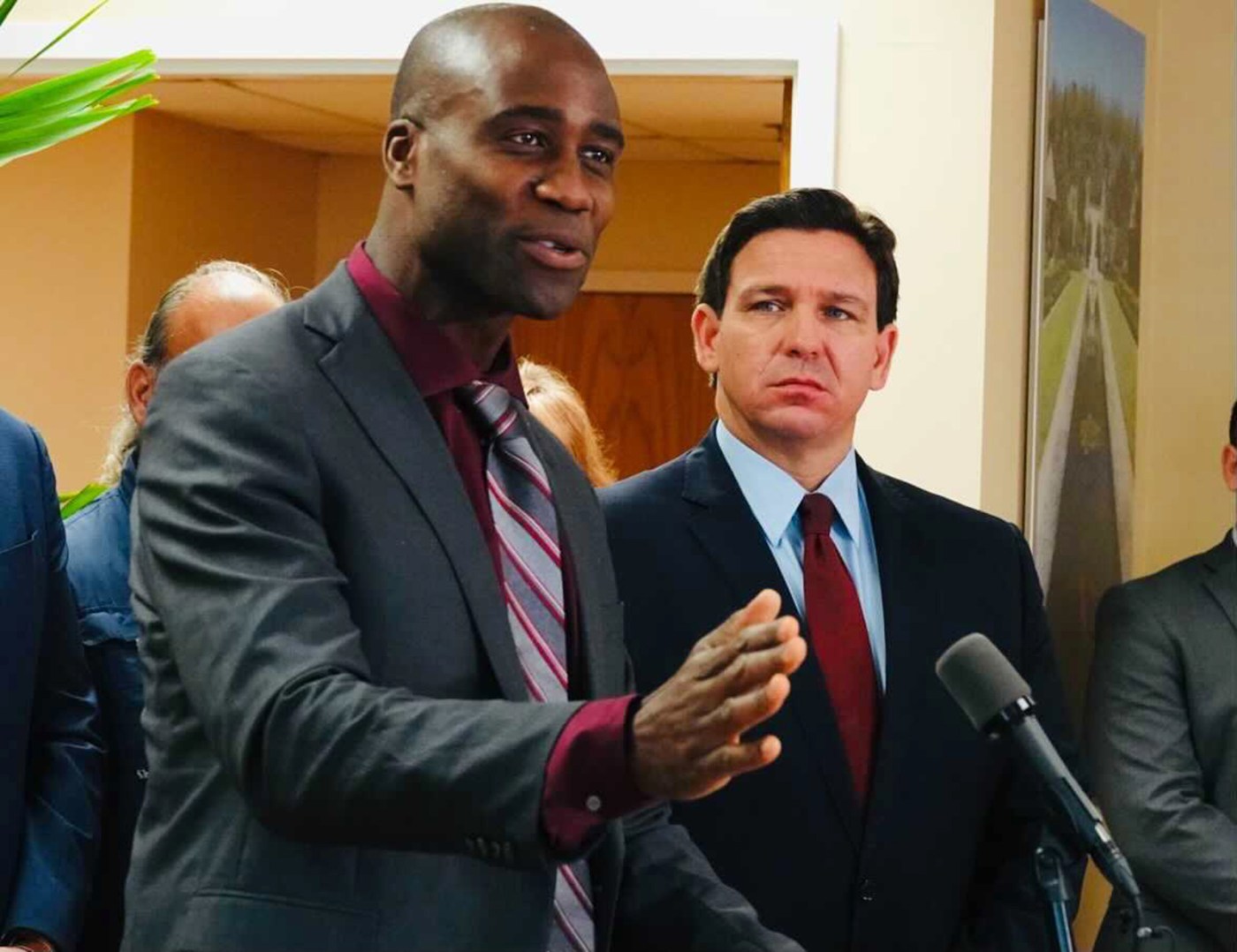
At first, vaccine mandates were contentious but the shots themselves were not. Scott Rivkees, Florida’s former surgeon general, now at Brown University, traces the shift to the months after Joe Biden was elected president. Though Florida Gov. Ron DeSantis initially promoted COVID vaccination, his stance changed as resistance to COVID measures became central to his presidential campaign. In late 2021, he appointed Joseph Ladapo surgeon general. By then, Ladapo had penned Wall Street Journal op-eds skeptical of mainstream medical advice, such as one asking, “Are COVID Vaccines Riskier Than Advertised?”

As bivalent boosters rolled out last year, the Florida health department’s homepage removed information on COVID vaccines. In its place were rules against mandates and details on how to obtain vaccine exemptions. Then, early this year, the department advised against vaccinating children and teens.

The state’s advice changed once more when the CDC recommended updated COVID vaccines in September. DeSantis incorrectly said the vaccines had “not been proven to be safe or effective.” And the health department amended its guidance to say men under age 40 should not be vaccinated because the department had conducted research and deemed the risk of heart complications like myocarditis unacceptable. It refers to a short, authorless document posted online rather than in a scientific journal where it would have been vetted for accuracy. The report uses an unusual method to analyze health records of vaccinated Floridians. Citing serious flaws, most other researchers call it misinformation.

Scientifically vetted studies, and the CDC’s own review, contradict Florida’s conclusion against vaccination. Cases of myocarditis following mRNA vaccines have occurred but are much less frequent than cases triggered by COVID. The risk is sevenfold higher from the disease than from mRNA vaccines, according to an analysis published in a medical journal based on a review of 22 other studies.

Since leaving his post, Rivkees has been stunned to see the state health department subsumed by political meddling.

About 28,700 children and adults from birth to age 39 have died of COVID in the United States. Florida’s anti-vaccine messaging affects people of all ages, Rivkees added, not just those who are younger.

He points out that Florida performed well compared with other states in 2020 and 2021, ranking 38th in COVID deaths per capita despite a large population of older adults. Now it has the sixth-highest rate of COVID deaths in the country.

“There is no question that the rise of misinformation and the politicization of the response has taken a toll on public health,” he said.

As in Florida, the Texas health department initially promoted COVID vaccines, warning that Texans who weren’t vaccinated were about 20 times as likely to suffer a COVID-associated death. Such sentiments faded last year, as state leaders passed policies to block vaccine mandates and other public health measures. The latest is a prohibition against the use of government funds to promote COVID vaccines. Uptake in Texas is already low, with fewer than 4% of residents getting the bivalent booster that rolled out last year.

At Lubbock’s health department, Wells managed to put out a press release saying the city offers COVID vaccines but stopped short of recommending them. “We aren’t able to do as big a push as other states,” she said.

Some health officials are altering their recommendations, given the current climate. Janet Hamilton, executive director at the Council of State and Territorial Epidemiologists, said clear-cut advice to get vaccinated against COVID works when people trust the scientific establishment, but it risks driving others away from all vaccines. “It’s important for public health to meet people where they are,” Hamilton said.

Missouri’s health department took this tack on X, formerly known as Twitter: “COVID vaccines will be available in Missouri soon, if you’re in to that sort of thing. If not, just keep scrolling!”

___

(KFF Health News, formerly known as Kaiser Health News (KHN), is a national newsroom that produces in-depth journalism about health issues and is one of the core operating programs of KFF — the independent source for health policy research, polling and journalism.)

©2023 KFF Health News. Distributed by Tribune Content Agency, LLC.

Orioles arbitration FAQ: What you need to know about Baltimore’s first big offseason decisions

posted in: News | 0

The first big decisions of the Orioles’ offseason are approaching.

Baltimore had no contract options to sort out. None of its five free agents were going to receive the $20.325 million qualifying offer. The club has hardly any top prospects who need to be protected from the Rule 5 draft. So, the arbitration tender deadline Friday marks the first significant offseason benchmark for the Orioles’ roster.

Here’s what you need to know.

What is arbitration?

Arbitration is a system that provides pay raises to players who have established themselves as big leaguers but haven’t yet spent enough time in the majors to become free agents.

Players who have at least three years of MLB service time but fewer than the six necessary to become a free agent are eligible, as long as they don’t already have a set salary through a guaranteed contract. A year of service time is equivalent to 172 regular-season days spent on the major league roster or injured list. A player can earn no more than one year of service time in a given season, even if they are active for more than 172 days.

A portion of players with between two and three years are also eligible, with the top 22% of that group by service time receiving “Super Two” status. These players don’t become free agents any sooner, but they receive four years of arbitration eligibility instead of the typical three, which results in higher career earnings before they reach free agency. This year’s Super Two cutoff is two years and 118 days of service time, according to the Associated Press.

How does the process work?

Before Friday’s deadline, teams will decide whether to tender contracts to their arbitration-eligible players. Any players who are non-tendered become free agents. Players are typically non-tendered because the salary they would likely receive through arbitration exceeds the salary the club is willing to pay them, and the sides weren’t able to agree on a lower figure ahead of the deadline.

Teams and tendered players can continue negotiating contract terms after the initial deadline. If they haven’t come to an agreement by Jan. 12, the sides will then each suggest a potential 2024 salary for that player.

If the team and the player remain unable to agree to terms, a panel of arbitrators will pick either the team’s or the player’s suggested salary — and no other possible value — after a hearing, which will take place in late January or early February.

Which Orioles are arbitration-eligible?

The Orioles will have 16 players who are eligible for arbitration, which MLB Trade Rumors estimates as tied for the second-largest group of any team. It’s a tally executive vice president and general manager Mike Elias called “an earmark of having a good roster these days” at the end of the season.

Outfielder Anthony Santander and left-handers John Means and Danny Coulombe are in their final year of eligibility before becoming free agents; Santander is 10 days shy of already having six years of service time. Outfielders Cedric Mullins and Austin Hays, first baseman Ryan O’Hearn, shortstop Jorge Mateo and reliever Dillon Tate have between four and five years of service time.

First baseman Ryan Mountcastle, infielder Ramón Urías, right-hander Jacob Webb, and left-handers Cionel Pérez, Cole Irvin and Keegan Akin all reached three years of service time in 2023 and are arbitration-eligible for the first time. Joining them are outfielder Ryan McKenna and right-handers Tyler Wells, who are eligible as Super Twos. Right-hander Dean Kremer came six days of service short of Super Two eligibility.

How much will they earn?

If the 16 eligible Orioles are all tendered contracts, they would receive more than $50 million collectively, based on projections from MLB Trade Rumors, Cot’s Baseball Contracts and Spotrac. That total represents almost double what that group earned in 2023.

About a quarter of that $50 million is expected to go to Santander, a switch-hitter who led Baltimore in home runs each of the past two seasons. The three forecasts’ average projection for Santander’s 2024 salary is $12.8 million; he earned $7.4 million in 2023.

Mullins ($6.2 million), Hays ($5.8 million) and Means ($5.6 million) have the next highest average projections. Mountcastle is projected for the largest salary of Baltimore’s first-time recipients at $3.9 million, a significant raise after he made about $740,000 in 2023.

The remaining members of what would currently be the Orioles’ season-opening roster are projected to make about $10 million combined in 2024, according to Spotrac. That total will likely increase should Baltimore make trades and free-agent signings.

Who could get non-tendered?

Some of these decisions could come down to next week’s deadline, with the possibility some players agree to lesser deals beforehand to avoid being non-tendered. The majority of the Orioles’ eligible players will be tendered contracts, though there are a handful of decisions to be made.

It’s difficult to imagine Baltimore parting with Santander in this fashion, though it’s worth noting his projected salary would be the largest Elias has given out in his five years running the club.

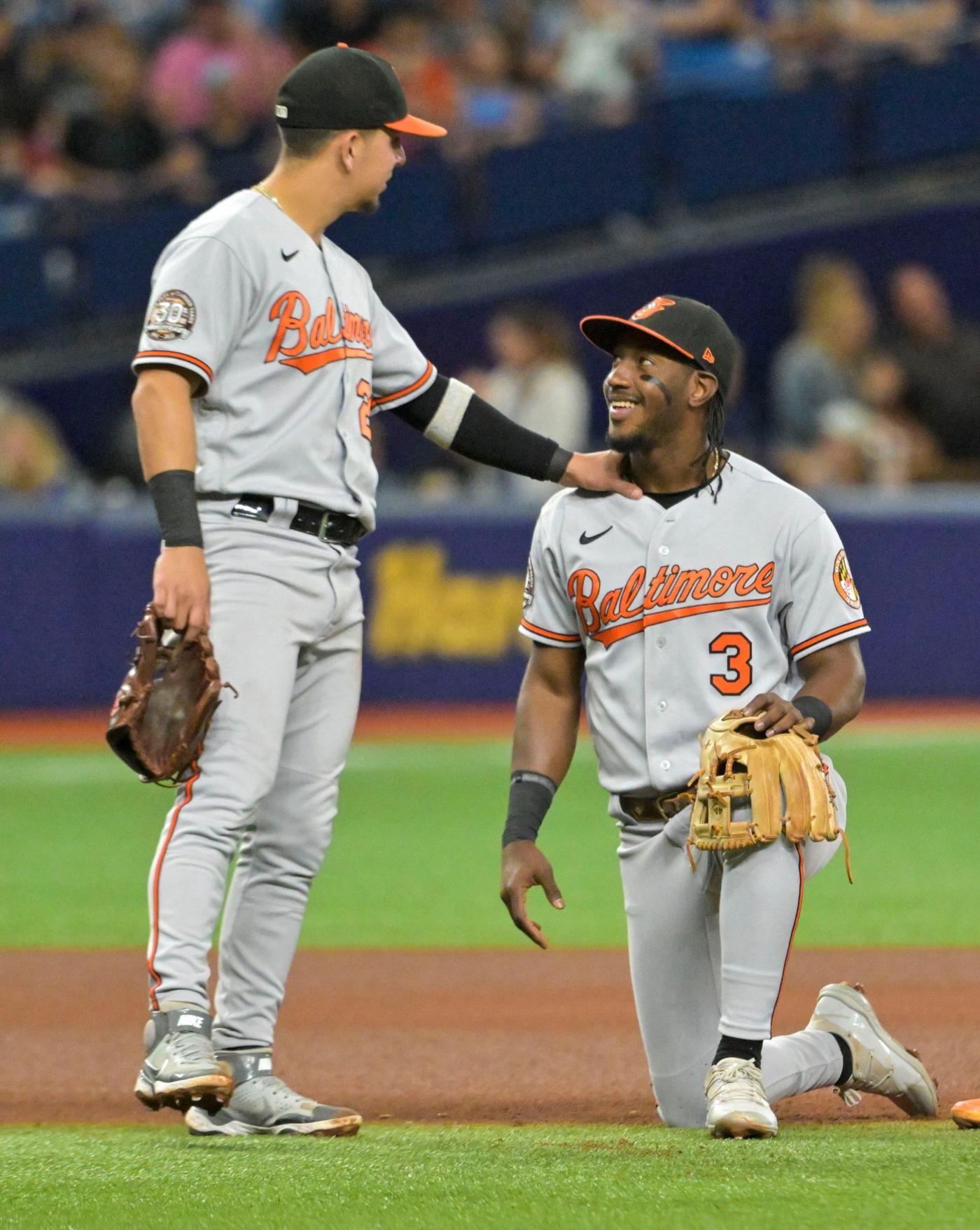
Mateo and Urías are both projected to make between $2 million and $3 million in 2024. Both are right-handed-hitting infielders who ended this season in part-time roles, with the pair effectively splitting a platoon. Each excelled defensively in 2022 but took a step back in 2023, while their offensive contributions were below average. With top overall prospect Jackson Holliday set to join Gunnar Henderson and Jordan Westburg in the majors — and prospects Joey Ortiz, Coby Mayo and Connor Norby also in the mix for big league time at some point next season — it’s possible there isn’t room for Mateo, Urías or both.

Tate and Akin each ended the season on the 60-day injured list but have played key roles in Baltimore’s bullpen in recent years. Tate, who missed all of 2023 with an elbow injury, led the Orioles in games pitched in both 2021 and 2022. He made $1.5 million in 2023 and likely would receive a similar figure for next season. Akin had a 3.20 ERA in 2022 and a 3.66 mark through his first 20 appearances of 2023, then gave up 13 runs while recording 12 outs in his final four outings before going on the IL with a lower back injury. At $850,000, Akin has the lowest average projected salary of Baltimore’s arbitration-eligible players.

McKenna’s eligibility could put him at risk, though he’s not projected to make much above the league minimum. With Aaron Hicks entering free agency, the Orioles have a need for a right-handed hitter who can play all three outfield spots, a mold McKenna fits. But he’s mainly been an up-and-down defensive replacement in his career, and he’s out of minor league options, meaning the team would have to expose him to waivers to send him to Triple-A. If the Orioles don’t think they’ll have space for him come opening day, this would be a prudent move to make now.

()

3 takeaways from the Chicago Cubs at the GM meetings, including what rotation will look like after Marcus Stroman’s opt-out

posted in: News | 0

The annual MLB general managers meetings lay the groundwork for the rest of the offseason.

The Chicago Cubs’ unexpected hiring of manager Craig Counsell added a wrinkle to what should have been an otherwise normal beginning to free agency. But it didn’t change the mission this week for President Jed Hoyer and the Cubs front office: getting an early feel for the free-agent market and the trade landscape and meeting with agents, including Scott Boras.

As the Cubs prepare to formally introduce Counsell next week, here are three takeaways from the GM meetings.

1. Craig Counsell’s departure to a rival a surprise for Brewers GM.

Thirty-six hours after the Cubs named Counsell their manager, Brewers general manager Matt Arnold stated he was surprised by Counsell leaving for a division rival but still spoke highly of his friend.

“From our perspective, it’s always been about people, that’s something Craig and I talked about a lot after working together for eight years, and I think that’s really important for us to put people first,” Arnold said Wednesday. “In this situation, we put Craig first throughout the process, and I’m thrilled for him and his outcome. At the same time, we’re in a position where we have to put our best foot forward and we’re going to do exactly that.

“Everything that Craig has done, all the accolades he deserves. I certainly enjoyed our time together and I’ll always have good memories of working with Craig Counsell. But at the same time we’re going to be competing against each other, and it should be a lot of fun.”

Pat Murphy, Counsell’s bench coach in Milwaukee, is in a “very real” discussion for the Brewers manager opening, Arnold said. If he is not hired, Arnold wants to make sure the incoming manager brings on his own bench coach. That could create a path to Murphy joining Counsell as the Cubs work through who will be retained from David Ross’ staff.

Arnold would not discuss other names the Brewers are considering for the job, including whether their list includes Ross.

“If it ends up with Pat Murphy not being our manager, he will absolutely have a home here with the Brewers,” Arnold said.

Arnold did not close the door on letting members of the Brewers coaching staff follow Counsell to the Cubs, stating if it’s a good opportunity for someone, he would be open to having that discussion.

“Having come from the Tampa Bay Rays, there are a lot of places where you get raided when you have good people, and we’ve had that happen here in Milwaukee and that’s something we should be proud of,” Arnold said. “That speaks to our culture and the good people that we’ve produced here.”

2. Christopher Morel will get offseason work at first base.

One of the Cubs’ biggest internal roster questions centers on Morel’s positional future with the team.

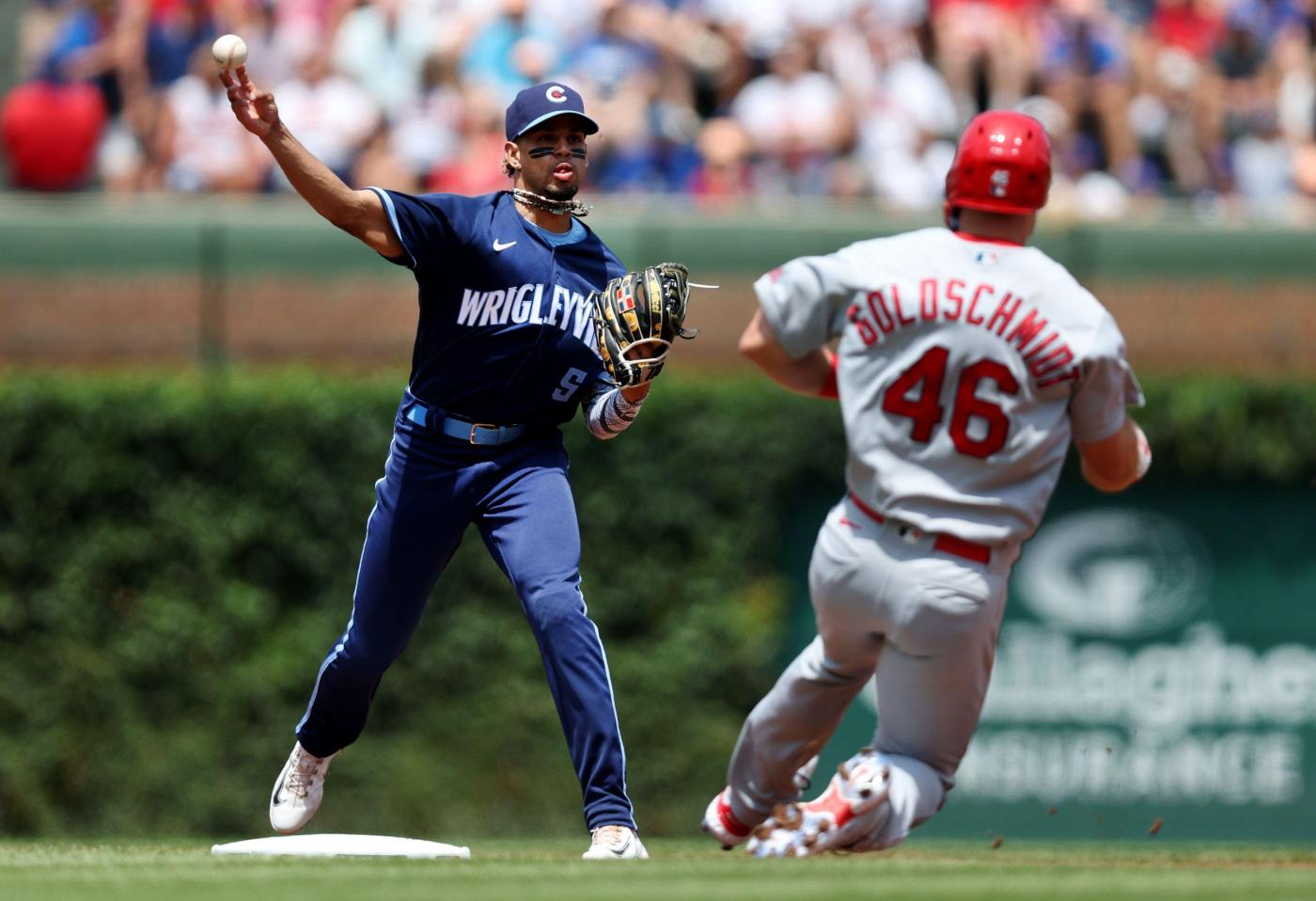
The Cubs have had ongoing conversations about his best fit and believe Morel, 24, would benefit from sticking at one position defensively rather than being used in a utility role. Ideally the right-handed Morel would play second base, where his athleticism and arm strength could shine, but that spot is locked down by Gold Glove award winner Nico Hoerner for at least the next three years. They have tried Morel at third base, where he logged a majority of his starts in the minors. He put in work pregame there, too, in his last two big-league seasons to complement his 17 starts at the hot corner for the Cubs, but inaccuracy with his throws has been a continuing issue.

It’s a balance between blending Morel’s strengths and skill set with the team’s personnel.

“He’s a very capable second baseman, (but) we have (Hoerner), so that’s not the spot we’re going to put him,” Hoyer said Wednesday. “Another team might be able to put him there and have him do that.”

With limited everyday options for a non-designated hitter role, the Cubs want Morel to get offseason work at first base in winter ball and see how he handles the position.

“Finding a home for him is something that would be really valuable,” Hoyer said. “(First base) fits our needs and potentially his needs. … With that position, too, you’ve got to put a lot of work in.

“The hard part about first base is that certainly it doesn’t require a lot of things that third base or second base do, but the footwork around the bag, understanding positioning can be really challenging, so that’s a big part of it.”

The Cubs do not have an obvious option within the organization at first base and used Cody Bellinger — now a free agent — more in the second half of the season. Lefty slugger Matt Mervis could get another look in spring training and show he learned from his first taste of the majors. Otherwise, their first baseman would need to come through a trade or free agency if they want a non-platoon setup — perhaps re-signing Bellinger, Jeimer Candelario or signing Rhys Hoskins. Candelario, though, preferred playing third base, which prompted former manager David Ross to instead use Patrick Wisdom at first when both were in the lineup.

There is no harm in seeing if Morel can handle first base in the offseason. He also represents a trade asset the Cubs can use to help acquire a better roster fit, namely a star player. Morel is not arbitration-eligible until after the 2025 season and boasts easy power, both attractive qualities to organizations.

3. After Marcus Stroman’s opt-out, Cubs will explore internal and external options for rotation opening.

Hoyer didn’t know which way right-hander Marcus Stroman was leaning in the leadup to his opt-out decision.

Hoyer had multiple lengthy conversations with Stroman’s agent, Brodie Van Wagenen, on Friday and Saturday about what the pitcher wanted to do by Monday’s deadline. Even at the moment Van Wagenen called to inform Hoyer of the decision, he was unsure whether Stroman would return for the remaining one-year and $21 million on his contract.

“I think he felt like in this market he’d secure a multiyear deal and I think that was a priority,” Hoyer said. “It’s not often when I truly didn’t know what direction that was going to go. That’s why we had a bunch of conversations because I think they were kind of feeling it out and thinking about it too.

“He was a very hard worker, really diligent with his preparation, really cares about winning. He wants to sort of do his own thing in terms of how he does his preparation and that’s great. We gave him that freedom because he deserves that and he always gets his work done. He’s always prepared. I thought it was a good match for us.”

Stroman’s departure opens a spot in the rotation, and Hoyer wants to give opportunities to pitchers within the organization, pointing to the depth they had this year. It’s a big-league group that featured right-handers Javier Assad and Hayden Wesneski and left-handers Jordan Wicks and Drew Smyly, plus arms at the upper levels in the minors that most notably include right-handers Ben Brown and Cade Horton.

“I do like the fact that we can give some young guys some opportunities,” Hoyer said.

But as Hoyer likes to preach: Teams never can have enough pitching. So expect the Cubs to explore the starting pitching market. The Cubs pitching staff needs more swing-and-miss stuff, which Hoyer said he would look to add.

“I still don’t feel like the stuff of our staff can still continue to ramp up,” Hoyer said. “It’s gotten better, but the stuff in the big leagues isn’t where our minor-league system is. We’ve got to continue to migrate that up and have more swing-and-miss.”

()