Movie review: Eli Roth’s slasher flick ‘Thanksgiving’ an underbaked holiday dish

posted in: News | 0

Gather ’round the table, horror fans, because Eli Roth is finally serving up his long-gestating holiday feast: the seasonal slasher movie “Thanksgiving.” The idea for this film got rolling some 16 years ago with the 2007 Quentin Tarantino/Robert Rodriguez double feature “Grindhouse,” in which Roth and his longtime friend Jeff Rendell cooked up a joke trailer inspired by their love of themed horror movies and a Massachusetts childhood spent just down the road from Plymouth, the site of the first Thanksgiving.

When horror fans first got their eyes on the “Thanksgiving” trailer, it sparked a fervent appetite for the whole meal, but with the full film finally hitting theaters, after 16 years of discussion and development, it proves the adage — also true for Thanksgiving meals — that there can be too much of a good thing.

A mysterious Thanksgiving-inspired killer terrorizes Plymouth, Massachusetts, in “Thanksgiving.” (Pief Weyman/Sony Pictures/TNS)

“Thanksgiving” is an enthusiastic slasher romp in which Roth is clearly having a ball making his childhood dreams come true. But the problem here is the underbaked script, co-written with Rendell. The film has been reverse-engineered around the holiday-themed kills (Black Friday mob, electric carving knife, turkey roasting) and references to the original trailer and other classic horror movies. The script takes the shape of a loose take on “Scream” or “I Know What You Did Last Summer,” with our killer, known as John Carver, stalking a group of teens in a revenge plot. “Thanksgiving” doesn’t try to deconstruct the genre — its only self-reflection are the requisite references — but the characters are thinly written, lacking motivation, and the central mystery is hopelessly muddled.

Our heroine is Nell Verlaque as Jessica. She could have been easily swapped with social media star Addison Rae, who plays a vaguely mean popular girl Gabby (and they might have been at some point), both are brunettes with long wavy hair and similarly wan screen abilities. The plot starts on Thanksgiving when Jessica’s father (Rick Hoffman), the owner of the Right Mart big-box store, starts his Black Friday sale a day early. A mob, frothing for free waffle irons, starts a stampede after they’re taunted by Jessica’s snotty group of friends, who sneaked into the store early.

Mayhem ensues, lives are lost, etc. All that’s left is a haunting social media video and a sense of collective grief and trauma. Fast forward a year later and this John Carver character — outfitted in Pilgrim finery — has been hunting down everyone involved in the melee for a deadly dinner party. It’s up to Jessica to track down the killer’s identity (is he one of two boyfriends?) since the bumbling Sheriff Newlon (Patrick Dempsey) proves to be utterly useless.

Roth, a horror fan and dedicated student of the genre, can stage and shoot an innovative suspense sequence. The violence is sadistic and gory; the setups are inventive and engaging. But he rushes through them, and doesn’t let anything breathe. But it’s the connective tissue — the gristle — between the kills that is seriously lacking. Local color is sprinkled on top like a garnish, not incorporated as a part of the whole, and the story movement from scene to scene hardly makes sense. It’s only the prior knowledge of horror tropes and a curiosity about who’s under the Carver mask that keeps this moving forward.

There’s also the sense that this holiday meal just might be a little stale. Certain set pieces like a cheerleader on a trampoline might have played back in the wild west of the mid-aughts, but in 2023 it’s cringeworthy, and Roth seems to know that. He rushes through it as if he’s checking a box for the fans. His centerpiece of the table is a roasting sequence that reminds us why he excelled in the “torture porn” era, but overall, “Thanksgiving” feels incredibly juvenile, which is perhaps due to its genesis so long ago.

If “Thanksgiving” had to be any specific dish on the holiday table, it would be stuffing: made up of disparate chunks tossed together and baked, stuffing is a dish where old bread goes to shine, a cheap and easy crowd-pleaser. But this particular offering is missing a crucial element — the binder. Without it, it’s just a crumbly mess. It might taste good for a bite or two, but Eli Roth’s “Thanksgiving” doesn’t stand up to scrutiny.

‘Thanksgiving’

2 stars (out of 4)

MPA rating: R (for strong bloody horror violence and gore, pervasive language and some sexual material)

Running time: 1:47

How to watch: In theaters Friday

Related Articles

Entertainment |


Marijuana master Snoop Dogg announces he’s giving up smoking

Entertainment |


Review: ‘Thanksgiving’ is Eli Roth’s grotesque holiday slasher film with a surprisingly good premise

Entertainment |


Sound Advice: High-end turntable makes great gift for audiophiles

Entertainment |


Tech review: Three gift suggestions for the techie on your Christmas list

Entertainment |


Movie review: ‘The Hunger Games: The Ballad of Songbirds & Snakes’ an overstuffed prequel

Shifa Hospital patients, staff and displaced leave the compound as Israel strikes targets in south

posted in: Politics | 0

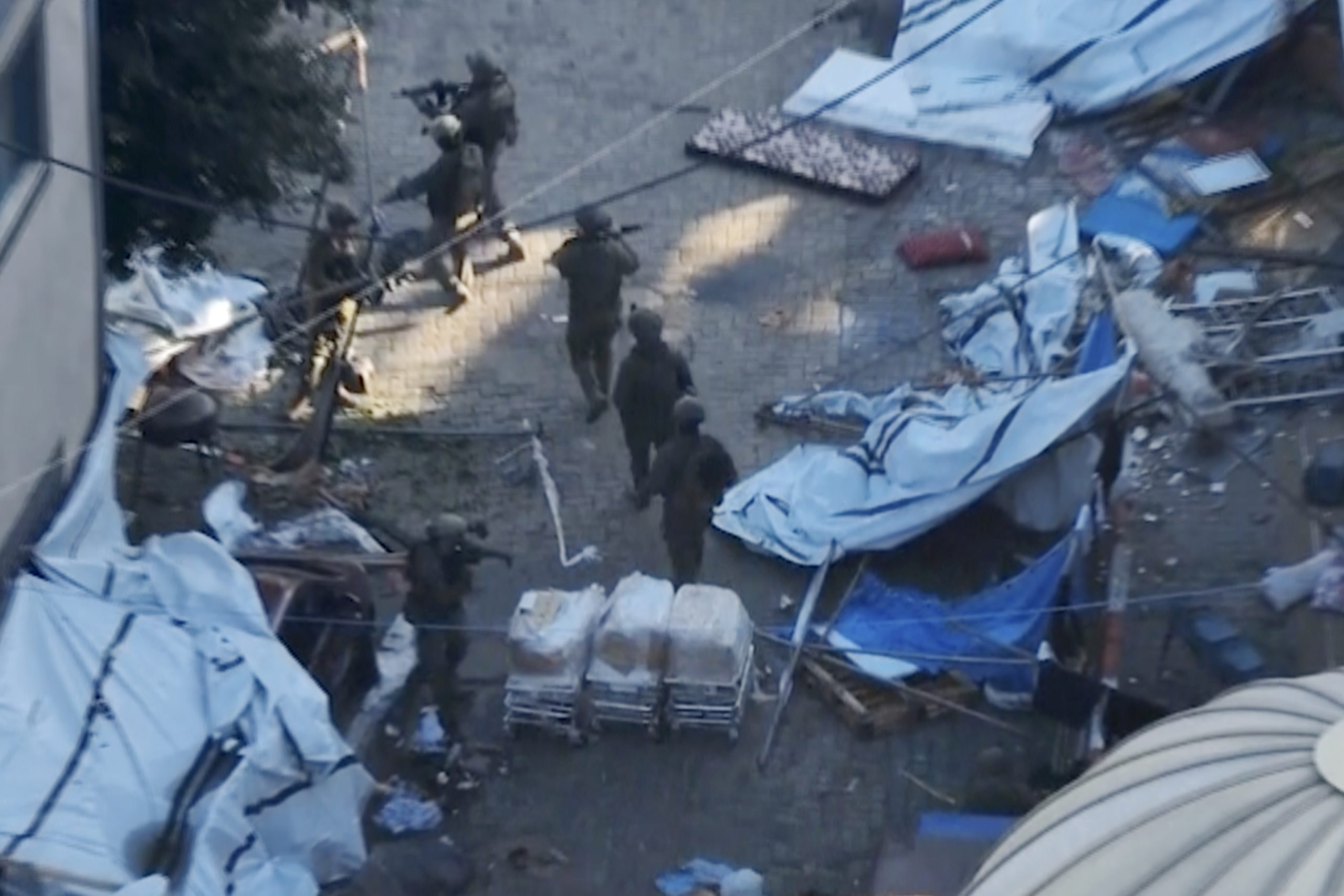
KHAN YOUNIS, Gaza Strip — Patients, staff and displaced people left Gaza’s largest hospital Saturday, health officials said, leaving behind only a skeleton crew to care for those too sick to move and Israeli forces in control of the facility.

The exodus from Shifa Hospital in Gaza City came the same day internet and phone service was restored to the Gaza Strip, ending a telecommunications blackout that forced the United Nations to shut down critical humanitarian aid deliveries because it was unable to coordinate its convoys.

Israel continued to expand its offensive in Gaza City, with the military warning in a social media post in Arabic that residents of two neighborhoods in the east and north and the urban refugee camp of Jabaliya must evacuate for their safety.

It said military activities would be paused briefly to allow them to leave. Earlier in the week, the Israeli defense minister had said troops had completed operations in the west of Gaza City.

Attacks also continued in the south of the Gaza Strip, with an Israeli airstrike hitting a residential building on the outskirts of the town of Khan Younis, killing at least 26 Palestinians, according to a doctor at the hospital where the bodies were taken.

Israel’s military has been searching Shifa Hospital for traces of a Hamas command center that it alleges was located under the building — a claim Hamas and the hospital staff deny — and urging the several thousand people still there to leave.

On Saturday, the military said it had been asked by the hospital’s director to help those who would like to leave do so by a secure route.

The military said it did not order any evacuation, and that medical personnel were being allowed to remain in the hospital to support patients who cannot be moved.

But Medhat Abbas, a spokesman for the Health Ministry in Hamas-controlled Gaza, said the military had ordered the facility cleared, giving the hospital an hour to get people out.

After it appeared the evacuation was mostly complete, Dr. Ahmed Mokhallalati, a Shifa physician, said on social media that there were some 120 patients remaining who were unable to leave, including some in intensive care and premature babies, and that he and five other doctors were staying behind to care for them.

It was not immediately clear where those who left the hospital had gone, with 25 of Gaza’s hospitals non-functional due to lack of fuel, damage and other problems and the other 11 only partially operational, according to the World Health Operation.

Israel has said hospitals in northern Gaza were a key target of its ground offensive aimed at crushing Hamas, claiming they were used as militant command centers and weapons depots, which both Hamas and medical staff deny.

Israeli troops have encircled or entered several hospitals, while others stopped functioning because of dwindling supplies and loss of electricity.

The war, now in its seventh week, was triggered by Hamas’ Oct. 7 attack in southern Israel, in which militants killed about 1,200 people, mostly civilians, and abducted some 240 men, women and children. Fifty-two soldiers have been killed since the Israeli offensive began.

More than 11,400 Palestinians have been killed in the war, two-thirds of them women and minors, according to Palestinian health authorities. Another 2,700 have been reported missing, believed buried under rubble. The count does not differentiate between civilians and combatants, and Israel says it has killed thousands of militants.

The U.N. has warned that Gaza’s 2.3 million people are running critically short of food and water, but it was not immediately clear when the agency for Palestinian refugees, known as UNRWA, would be able to resume the delivery of aid that was put on hold Friday.

The Palestinian telecommunications provider said it was able to restart its generators after UNRWA donated fuel. The end of the communications blackout meant a return to news and messages from journalists and activists in the besieged enclave on social media platforms as service began to return late Friday night.

AID DRIES UP

Gaza’s main power plant shut down early in the war and Israel has cut off the electricity supply. That makes fuel necessary to power the generators needed to run not only the telecommunications network, but water treatment plants, sanitation facilities hospitals and other critical infrastructure.

Israel said it would now allow in 2,641 gallons of fuel daily for communications service to continue, according to the U.S. State Department.

Additionally, COGAT, the Israeli military body responsible for Palestinian affairs, said it would allow 15,850 gallons a day for the U.N.

Still, that is only 37% of the fuel needed by UNRWA to support its humanitarian operations, including food distribution and the operation of generators at hospitals and water and sanitation facilities, the U.N. said.

Gaza has received only 10% of its required food supplies each day in shipments from Egypt, according to the U.N., and the water system shutdown has left most of the population drinking contaminated water, causing an outbreak of disease.

Dehydration and malnutrition are growing, with nearly all residents in need of food, according to the U.N.’s World Food Program.

MARCH FOR HOSTAGES

Thousands of marchers — including families of more than 50 hostages — snaked along a main Israeli highway Saturday on their last leg of a five-day walk from Tel Aviv to Jerusalem. Calling on the government to do more to rescue some 240 hostages held by Hamas, they planned to rally outside Prime Minister Benjamin Netanyahu’s house later in the day.

A spokesperson for the families, Liat Bell Sommer, said two members of Israel’s wartime Cabinet, Benny Gantz and Gadi Eisenkot, had agreed to meet with them. She added it was not yet clear whether Netanyahu would as well.

Many are furious with the government for refusing to tell them more about what is being done to rescue the hostages. They have urged the Cabinet to consider a cease-fire or prisoner swap in return for the hostages, both proposals which the government has thus far opposed.

Hamas offered to exchange all hostages for some 6,000 Palestinians in Israeli jails, which the Cabinet rejected.

CONTINUED STRIKES

Israel has signaled plans to expand its offensive south while continuing operations in the north.

In Khan Younis, the attack early Saturday hit Hamad City, a middle-class housing development built in recent years with funding from Qatar. In addition to the 26 people killed, another 20 were wounded, said Dr. Nehad Taeima at Nasser Hospital.

Israel rarely comments on individual strikes, saying only that it is targeting Hamas and trying to avoid harm to civilians. In many of the Israeli strikes, women and children have been among the dead.

Most of Gaza’s population is now sheltering in the south, including hundreds of thousands of people who heeded Israel’s calls to evacuate Gaza City and the north to get out of the way of its ground offensive.

Elsewhere, the Israeli military said its aircraft struck what it described as a hideout for militants in the urban refugee camp of Balata in the occupied West Bank. The Palestinian Red Crescent ambulance service said five Palestinians were killed in the strike.

The military alleged that those targeted had planned to carry out imminent attacks on Israeli civilians and military targets.

The deaths raised to 210 the number of Palestinians killed in West Bank violence since the Gaza war erupted on Oct. 7, making it the deadliest period in the territory since the second Palestinian uprising in the early 2000s.

Wisconsin’s split personality with deer: more south, fewer north

posted in: Adventure | 0

Wisconsin has a split personality of sorts when it comes to deer populations and deer hunter success across the state, with more to the south and fewer to the north, and the chasm is getting wider.

That’s the report from Wisconsin Department of Natural Resources wildlife experts who say southern Wisconsin faces problems of too many deer — including crop damage, vehicle accidents and faster spread of chronic wasting disease — at the same time many hunters in far northern Wisconsin are complaining there aren’t enough deer.

Deer hunters in Wisconsin will go afield Nov. 18 for the start of the firearms deer hunting season. The DNR says there may be fewer deer compared to last year in the far north due to the deep snow winter, but that record or near-record deer populations continue in the southern part of the state. (Wisconsin DNR)

It’s a pretty big state, north to south, and little differences in geography and topography make a huge difference for deer.

“Deer are very unevenly distributed across the landscape in Wisconsin,” said Jeff Pritzl, DNR deer program specialist.

Pritzl said the state as a whole may be close to its highest-ever deer population. But most of those deer are in the southern two-thirds of the state where nutritious agricultural crops are easy to find, winters are far less harsh and fewer wolves roam.

Greg Kessler, DNR wildlife manager in Douglas County, said last winter’s deep snow — record snow in many areas — likely brought the deer population down some from previous years, but not drastically, across the state’s northern tier of counties. Iron County, for example, will be bucks-only hunting this year with no general antlerless permits issued — the only such county in the state.

“I suspect we’ll be down a little this season from last, which was pretty good,” Kessler said.

For Douglas County, the DNR, on recommendation from the County Deer Advisory Council, issued roughly the same number of antlerless permits this year as last, again favoring private land permits where more deer are concentrated.

Kessler said that, while winters, wolves and a few other factors are pushing deer numbers up or down a little each year, the deer herd across the north has been fairly stable after falling from record levels 20 years ago.

“Hunter expectations got so high in the early 2000s when we had the highest deer numbers we have ever had,” Kessler said. “We will probably never see that again. … But we still have pretty good deer numbers right now compared to historic levels.”

Kessler said hunters need to adjust to a new normal, generally fewer deer than 20 years ago with generally smaller fluctuations up and down each year.

“We’re pretty close to that long-term average right now, comparable with the ’50s and ’60s but not nearly as high as the early 2000s,” he added.

Pritzl said Wisconsin likely will never see a harvest of 600,000-plus deer as occurred in 2000 (including archery and all gun seasons), even if there are as many or more deer on the ground. There are simply far fewer hunters — the state is losing at least 1%-2% of deer hunters each year — and remaining hunters appear less willing to take multiple deer each season.

How unusual was that peak deer period? In 1999, there was a record firearms harvest of 402,204 deer. In 2000, that jumped another 125,000 to 528,494. With 694,712 licensed gun hunters, their success rate was an astonishing 76%. By comparison, in the 43 years from 1966-2009, the average success rate for gun hunters was 37%.

“I cannot imagine that we will ever see the peak harvest of 600,000-plus deer again,” Pritzl said. “That occurred under rather unique circumstances and was never going to be sustainable. I think if we see a harvest of 400,000 in the future, that would be exceptional, and will likely only occur if we see some rule changes that enhance antlerless harvest.”

Last year, Wisconsin hunters registered 203,295 deer during the firearms deer season, including 98,397 bucks and 104,898 antlerless deer. Compared to 2021, the total firearm deer harvest was up 14.4% statewide, with the buck harvest up 14.7% and antlerless harvest up 14.1%. All four deer management zones showed harvest increases from 2021 for buck and antlerless harvests, including a 19.3% jump in the northern forest zone.

Acorns may be key

Kessler said last summer’s severe drought appeared poised to reduce the acorn crop across the north this fall, but then timely rains in September may have saved the day.

Once again, hunters willing to scout around to find acorns, and find deer, will have better luck.

“Not all oak trees had good crops. But if you can find the trees that did have good acorns, that’s where the deer will be,” Kessler said. “Don’t assume that because you have oaks, you are going to have acorns this year.”

Weather during hunt tops population swings in harvest impact

Weather during the 9 days of firearms deer season, even more than the nominal ups and downs of deer populations, is now the key factor in how many deer are shot each year, Prtizl noted.

If it’s relatively warm and dry, especially opening weekend and especially opening day, hunters spend more time in the woods and fields, and they shoot more deer. That’s what happened last year when hunters across most of the state had great weather and shot more deer than expected, up 14% from 2022.

But very cold, rainy and/or windy deer seasons invariably lead to fewer deer being shot, even if the population is high.

“For us up north, the best conditions are a little snow on the ground for seeing deer and (tracking) deer, but not bitterly cold and windy. And not a foot of snow on the ground, so hunters can’t get into the woods,” Kessler said. “When it’s miserable like that, a lot of guys just don’t go out, at least not for very long.”

Earlier opener, more deer shot

Wisconsin’s firearms deer season is tied to Thanksgiving, so the season dates can swing widely from year to year. Thanksgiving has been held on the fourth Thursday in November since 1941, which means that the actual date of the holiday shifts each year between Nov. 22 and Nov. 28.

That calendar shift alone can mean a 10%-15% difference in how many deer are shot each year in Wisconsin, with earlier openers far better for hunter success, Prtizl said.

About the same number of antlerless or doe permits were available in Douglas County this year as last year for the firearms deer season that begins Nov. 18. (Wisconsin DNR)

With Thanksgiving on the 23rd this year, the Nov. 18 season opener is the second-earliest it can occur, and that means hunters could not only see better weather but may even hit the tail end of the rut, the deer mating season when bucks are more vulnerable to coming out in front of hunters.

Next year would be the earliest-ever opener, but with 2024 a leap year, Thanksgiving jumps back to a later date, the 28th, so the opener will be Nov. 23.

“It’s mostly that we catch some of the rut when the season is earlier. For us in the north, all else being equal, we can see a 15% or 20% drop in harvest during those later seasons when Thanksgiving is late,” Kessler said.

Test deer for CWD before eating venison

So far, no wild deer have tested positive for CWD in Northwestern Wisconsin, but the DNR still suggests hunters test their deer for chronic wasting disease before eating venison and, as advised by health organizations, not eat the meat if the animal tests positive.

The Wisconsin Department of Health Services, the Centers for Disease Control and Prevention and the World Health Organization advise against eating meat from deer that test positive for CWD.

Because infected deer typically appear healthy for many months after contracting the disease, the only way to be sure the animal is CWD-free is to have it tested.

CWD is a contagious, fatal neurological disease that affects the nervous system of deer, elk, moose and caribou. It belongs to the family of diseases known as transmissible spongiform encephalopathies, or prion diseases .

Prions are misshapen proteins that can spread the disease through direct animal-to-animal contact or in the environment through bodily substances or the carcass parts of an infected deer. Prions are extremely resilient and capable of remaining in the soil for years, potentially infecting several deer from a single source.

The disease can have an incubation period of over a year, which means infected deer can appear healthy for months before showing signs of illness. When signs are visible, the common signs are drastic weight loss, drooping head and ears, loss of coordination, excessive salivation and reduced fear of humans.

CWD testing options

The DNR offers different options for hunters to test their deer for CWD:

Self-service kiosks open 24/7: Kiosks contain supplies for hunters to drop off their deer’s head with 5 inches of neck attached for testing. This is a great option for antlerless deer or any deer that has already been skull-capped or caped out by a taxidermist.

In-person with cooperating partners: Meat processors and other businesses can collect the deer head for sampling later or remove the lymph nodes at the time of drop-off. This is a good option for hunters who intend to mount their deer. If your taxidermist is not a cooperator, ask for the caped-out head back so you can drop it off at a kiosk.

At-home via lymph node sampling: Hunters unable to stop by a kiosk or cooperator within a day or two of harvest may pick up a kit ahead of time. Hunters can extract the retropharyngeal lymph nodes using the provided instructions and return the lymph nodes to the DNR or a kiosk for testing.

By appointment with local DNR staff: This is a good option for hunters who want to have a European mount done. Hunters can contact their local wildlife management staff to schedule an in-person appointment.

In Northwestern Wisconsin, self-service CWD testing drop-off sites are located at the Bait Box store in Superior and DNR ranger stations in Brule, Ashland, Hayward, Mellen and Washburn.

For more information on CWD in Wisconsin deer, including a map showing more testing site options, go to dnr.wisconsin.gov/topic/wildlifehabitat/cwd.

Donate a deer

The DNR encourages hunters to donate Wisconsin-harvested deer through the DNR’s Deer Donation Program, which helps stock food pantries for the upcoming holiday season and supports residents in need throughout the state.

Since the program began in 2000, hunters have donated 98,000 deer, totaling over 3.9 million pounds of venison, to help Wisconsinites in need.

Hunters interested in donating a Wisconsin-harvested deer to the DNR’s Deer Donation Program should follow these steps:

1. Field dress the deer.

2. Register the deer through GameReg. Note the registration confirmation number and keep it on hand when dropping off the deer.

3. Test the deer for CWD before taking the deer to a processor if it was harvested from a CWD-affected county.

4. Call ahead to a participating processor. In Northwestern Wisconsin, that’s Hursh Meats at 10083 E. Oak Road, Poplar, 715-364-6855.

5. Bring the deer to the processor. If donating a deer being tested for CWD, inform the processor and provide the CWD barcode number. The processor will not distribute the deer until the results are known.

Related Articles

Things to Do |


Minnesota opening weekend deer harvest down 13% from 2022

Things to Do |


For success in Minnesota’s deer hunt, head south

Things to Do |


Wisconsin DNR approves new wolf management plan with no population goal

5 takeaways from the Chicago Bulls’ 103-97 loss to the Orlando Magic, dropping them to 0-2 in the In-Season Tournament

posted in: News | 0

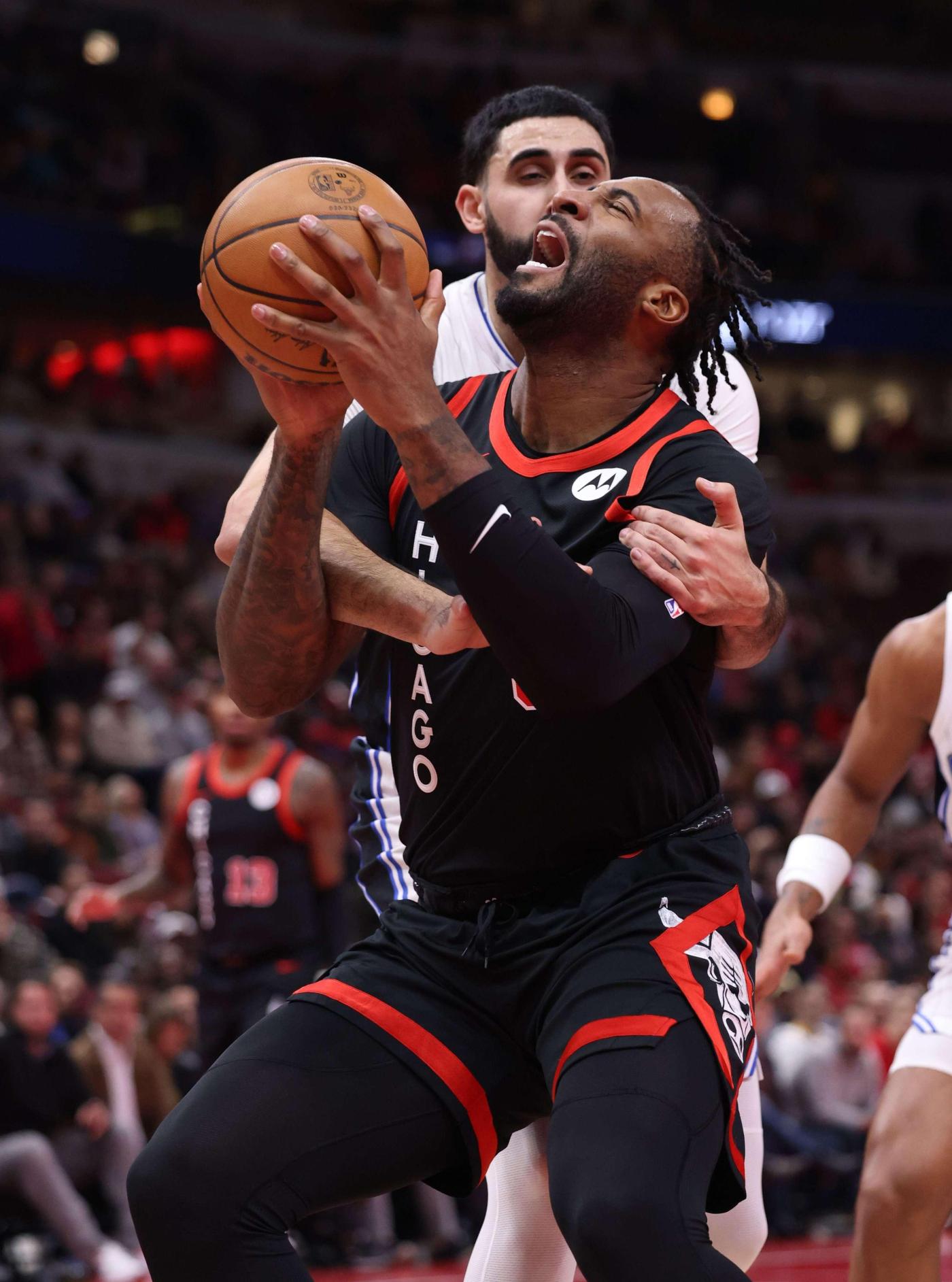
The Chicago Bulls staged another rally from yet another substantial halftime deficit Friday but again fell short in a 103-97 loss to the Orlando Magic at the United Center.

It was the Bulls’ second consecutive defeat to the Magic, third straight overall and seventh in nine games, dropping them to 4-9. It also was their second loss in as many games in the NBA In-Season Tournament.

Here are five takeaways from the loss.

1. Alex Caruso starts strong before a midgame exit.

Caruso replaced Torrey Craig in the starting lineup as coach Billy Donovan tinkers with rotations to try to snap the Bulls out of their early-season slump.

Caruso offered an immediate antidote to the Bulls’ recent pattern of slow starts, draining his first three 3-pointers and recording a block and steal in the opening six minutes.

The Bulls pulled ahead 9-4, but the Magic answered with a 19-7 run to close the first quarter with the guard off the court. Caruso was one of three players to finish with a positive plus-minus rating (7), but the Bulls struggled whenever he was on the bench.

This issue was exacerbated when Caruso exited the game in the third quarter after he landed awkwardly on his right hand while diving for a ball. After several minutes of playing through visible discomfort, he subbed out the game with 5 minutes, 6 seconds left in the quarter.

Caruso had several fingers taped on the hand before heading to the locker room. He returned briefly to the sideline, then went back to the locker room to have his shoulder wrapped with an ice pack.

Caruso did not reenter the game until the final three minutes of play. He logged only 23 minutes because of the injury. He still made an impact, hitting free throws and nailing a 3-pointer in the final minute.

2. Another stagnant 1st half poses serious questions.

For the second consecutive game, the Bulls scored only 33 first-half points.

It was a 24-minute slog in which the Bulls shot 11-for-37. Without Caruso, the Bulls shot only 7-for-31 (22.6%) from the field in the first half. The bench added just one point — an Andre Drummond free throw — while shooting 0-for-9.

The Bulls also coughed up 12 turnovers in the first half, which the Magic converted into 19 points.

Slow starts have become a norm for the Bulls, who average the second-lowest first-quarter points in the league (26) and the fifth-lowest points in the second quarter (27.5).

“We shoot like we trying not to miss,” DeMar DeRozan said. “We play like we trying not to make a mistake instead of just shooting to make it and playing. “You’ve got to understand, there’s going to be mistakes. That happens.

“We just overly try to be conservative in a sense that put us in a lot of situations that make it seem like we in mud, we can’t get a rhythm. But as soon as that sense of urgency kicks in, we find a way no matter how the game is going.”

3. Zach LaVine powers a fruitless 2nd-half turnaround.

The Bulls fell behind by 20 points in the opening minutes of the third quarter. But after hitting that low point, their stars sparked a rally.

LaVine scored 13 points in the third quarter and DeRozan added 11, with each player hitting a 3-pointer. The Bulls scored 32 points in the third, nearly matching their first-half production. This comeback cut the Magic lead to 12 points by the end of the quarter.

In the fourth, the Bulls trailed 15 points with seven minutes left. But LaVine took over, scoring 12 points in the final frame on 5-for-9 shooting.

LaVine sank back-to-back 3-pointers to cut the Magic lead to five points with 5:28 remaining, then fed Drummond for a slam dunk. With a turnaround jumper, LaVine cut the deficit to one. On the next play, LaVine grabbed a turnover and passed ahead to Coby White, who threw down a shattering dunk over Paolo Banchero for a one-point Bulls lead with 3:13 left.

Still, it wasn’t enough. The Magic grabbed a pair of offensive rebounds to drag out one of their last possessions and regain the lead, then stripped LaVine when he attempted a 3-pointer. A pair of missed shots from LaVine and Nikola Vučević sealed the loss.

4. Lack of bench scoring adds to woes.

The Bulls’ stars produced — LaVine scored 34 points on 12-for-20 shooting. DeRozan added 23 points on 10-for-20 shooting. And Caruso provided 18 points despite his midgame exit.

But the Bulls bench scored only eight points. Craig made one 3-pointer and Drummond scored five points.

Part of the issue stemmed from moving Caruso out of the secondary unit, where he typically operates as a playmaker and distributor in addition to a defensive specialist. But the bench couldn’t buy a shot, especially in the first half. Ayo Dosunmu and Patrick Williams both went 0-for-3. Jevon Carter didn’t take a single shot.

5. What does this mean for the In-Season Tournament?

The Bulls fell to 0-2 in the tournament, sitting at the bottom of Eastern Conference Group C.

The Boston Celtics defeated the Toronto Raptors 108-105 Friday, moving the Celtics to the top the group with a 2-0 record.

The Bulls will conclude the group stage with two road games: against the Toronto Raptors on Friday and Celtics on Nov. 28. But with two losses, it’s unlikely they will be able to advance to the quarterfinals.

()