Lush, private Northern California estate is site for Xi-Biden meeting

posted in: Politics | 0

By JANIE HAR (Associated Press)

SAN FRANCISCO (AP) — U.S. President Joe Biden and China’s Xi Jinping will meet at a historic country house and museum with lavish gardens for one-on-one talks aimed at improving relations between the two superpowers.

The two leaders will meet Wednesday at Filoli, a secluded estate along Northern California’s coastal range. It was built in 1917 as a private residence and later became a National Trust for Historic Preservation site. The estate is about 25 miles (40 kilometers) south of San Francisco, where leaders are gathering for the Asia-Pacific Economic Cooperation leaders’ conference this week.

The location for the meeting was disclosed by three senior administration officials who spoke on condition of anonymity to discuss a matter with security implications.

Bonnie Glaser, managing director of the Indo-Pacific program at the German Marshall Fund, said the location likely has met Xi’s expectations for a private meeting with Biden away from the main summit venue.

“It appears to be a quiet, secluded estate, where Biden and Xi can have an intimate conversation in a relaxed environment,” Glaser said. “Importantly, the venue is not connected to the APEC summit, so it provides the appearance that the two leaders are having a bilateral summit that is distinct from the multilateral APEC summit.”

Observers of China’s elite politics have said Xi wants to project himself to his domestic audience as equal with Biden and as commanding the respect of a U.S. president.

The estate has more than 650 acres (2.6 square kilometers), including a Georgian revival-style mansion and a formal, English Renaissance-style garden. The mansion and grounds are open daily, but the site is currently closed for three days for holiday decorating, its website says.

“A place like this allows them to get away, not just from the media, but from a lot of the other things that encourage conflict,” said Jeremi Suri, a professor of public affairs and history at the University of Texas at Austin. “If they like each other, they are likely to start trusting each other and to communicate better.”

Suri says this is what happened with U.S. President Ronald Reagan and Mikhail Gorbachev, the last leader of the Soviet Union before it was dissolved. The two met at a secluded chateau in Reykjavik in 1986, sat by a fireplace and walked outdoors wearing heavy coats, forging a relationship, Suri said.

“We need leaders who can break through the fear,” he said.

San Francisco socialite William Bowers Bourn II named Filoli by taking the first two letters of key words of his personal credo, according to the estate’s website: “Fight for a just cause. Love your Fellow Man. Live a Good Life.”

The venue is available for private events, weddings and commercial filming and photography. The gardens feature in Jennifer Lopez’s film “The Wedding Planner.”

——

AP writers Didi Tang and Colleen Long in San Francisco, and Zeke Miller and Matthew Lee in Washington contributed to this report.

Derek Chauvin again appeals federal conviction, citing new evidence in George Floyd’s death

posted in: Politics | 0

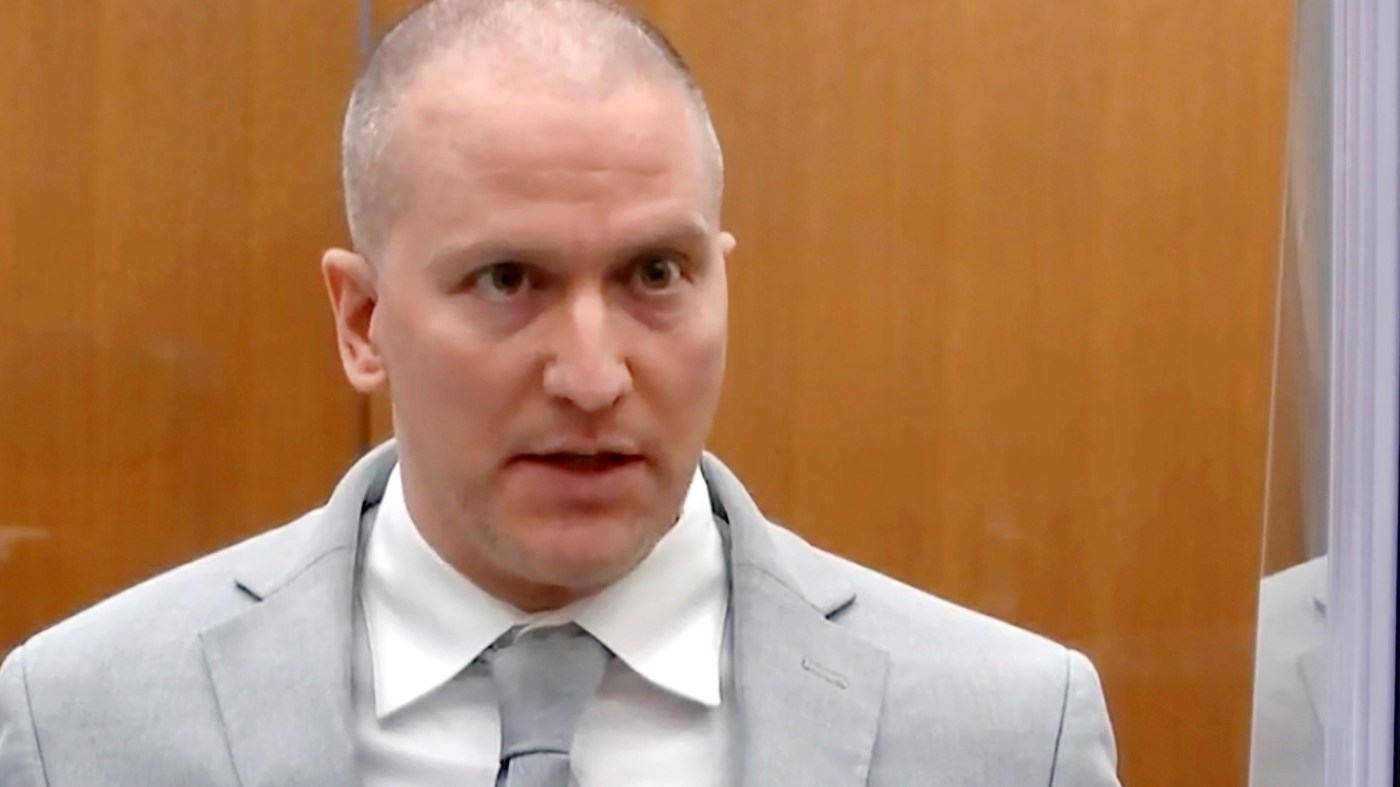
Former Minneapolis police officer Derek Chauvin is making another attempt to overturn his federal civil rights conviction in the 2020 murder of George Floyd, saying new evidence shows that he didn’t cause Floyd’s death.

In a motion filed in federal court Monday, Chauvin said he never would have pleaded guilty to the charge in 2021 if he had known about the theories of a Kansas forensic pathologist with whom he began corresponding in February. Chauvin is asking the judge who presided over his trial to throw out his conviction and order a new trial, or at least an evidentiary hearing.

Floyd, who was Black, died on May 25, 2020, after Chauvin, who is white, kneeled on his neck for 9½ minutes on the street outside a convenience store where Floyd tried to pass a counterfeit $20 bill. A bystander video captured Floyd’s fading cries of “I can’t breathe.” Floyd’s death touched off protests worldwide, some of which turned violent, and forced a national reckoning with police brutality and racism.

Chauvin, who is serving a 21-year sentence at a federal prison in Arizona, filed the request without a lawyer. He says Dr. William Schaetzel, of Topeka, Kan., told him that he believes Floyd died not from asphyxia from Chauvin’s actions, but from complications of a rare tumor called a paraganglioma that can cause a fatal surge of adrenaline. The pathologist did not examine Floyd’s body but reviewed autopsy reports.

“I can’t go to my grave with what I know,” Schaetzel told the Associated Press by phone on Monday, explaining why he reached out to Chauvin. He went on to say, “I just want the truth.”

Chauvin further alleges that Schaetzel reached out to his trial attorney, Eric Nelson, in 2021, as well as the judge and prosecution in his state-court murder trial, but that Nelson never told him about the pathologist or his ideas. He also alleges that Nelson failed to challenge the constitutionality of the federal charge.

But Chauvin claims in his motion that no jury would have convicted him if it had heard the pathologist’s evidence.

Nelson declined to comment Monday.

When Chauvin pleaded guilty to the federal charge in December 2021, he waived his rights to appeal except on the basis of a claim of ineffective counsel.

A federal appeals court has rejected Chauvin’s requests for a rehearing twice. He’s still waiting for the U.S. Supreme Court to decide whether it will hear his appeal of his state court murder conviction.

Three other former officers who were at the scene received lesser state and federal sentences for their roles in Floyd’s death.

Calls grow to evacuate Gaza’s largest hospital as Israel and Hamas battle just outside

posted in: Society | 0

KHAN YOUNIS, Gaza Strip — Palestinian authorities on Tuesday called for a cease-fire to evacuate three dozen newborns and other patients trapped inside Gaza’s biggest hospital as Israeli forces battled Hamas in the streets just outside and seized more ground across northern Gaza.

For days, the Israeli army has encircled Shifa Hospital, the facility it says Hamas hides in, and beneath, to use civilians as shields for its main command base.

Hospital staff and Hamas deny the claim. Meanwhile, hundreds of patients, staff and displaced people were trapped inside, with supplies dwindling and no electricity to run incubators and other lifesaving equipment. After days without refrigeration, morgue staff on Tuesday dug a mass grave in the yard for more than 120 bodies, officials said.

Israel’s defense minister, Yoav Gallant, said in a nationally televised news conference Tuesday night that Hamas has “lost control” of northern Gaza and that Israel has made significant gains in Gaza City. But asked about the time frame for the war, Gallant said: “We’re talking about long months, not a day or two.”

Israel has vowed to crush Hamas rule in Gaza after the militants’ Oct. 7 attack into Israel in which they killed some 1,200 people and took roughly 240 hostages. But even as its troops control more of devastated northern Gaza, the Israeli government has acknowledged it doesn’t know what it will do with the territory after Hamas’ defeat.

The onslaught — one of the most intense bombardments so far this century — has been disastrous for Gaza’s 2.3 million Palestinians.

More than 11,200 people, two-thirds of them women and minors, have been killed in Gaza, according to the Palestinian Health Ministry in Ramallah. About 2,700 people have been reported missing. The ministry’s count does not differentiate between civilian and militant deaths.

Almost the entire population of Gaza has squeezed into the southern two-thirds of the tiny territory, where conditions have been deteriorating even as bombardment there continues. About 200,000 fled the north in recent days, the U.N. said Tuesday, though tens of thousands are believed to remain.

The U.N. agency for Palestinian refugees said Tuesday that its fuel storage facility in Gaza is empty and that it will soon end relief operations, including bringing limited supplies of food and medicine in from Egypt for more than 600,000 people sheltering in schools and other facilities in the south.

“Without fuel, the humanitarian operation in Gaza is coming to an end. Many more people will suffer and will likely die,” said Philippe Lazzarini, the commissioner-general of UNRWA. Israel has repeatedly rejected allowing fuel into Gaza, saying it will be diverted by Hamas for military use.

PLIGHT OF HOSPITALS: Fighting has raged for days around Shifa Hospital, a complex several city blocks across at the center of Gaza City that has now “turned into a cemetery,” its director said in a statement.

The Health Ministry said 40 patients, including three babies, have died since Shifa’s emergency generator ran out of fuel Saturday. Another 36 babies are at risk of dying because there is no power for incubators, according to the ministry.

The Israeli military said it started an effort to transfer incubators to Shifa. But they would be useless without electricity, said Christian Lindmeier, a World Health Organization spokesman.

The Health Ministry has proposed evacuating the hospital with the supervision of the International Committee of the Red Cross and transferring the patients to hospitals in Egypt, but has not received any response, ministry spokesman Ashraf al-Qidra said.

While Israel says it is willing to allow staff and patients to evacuate, some Palestinians who have made it out say Israeli forces have fired at evacuees.

Israel says its claims of a Hamas command center in and beneath Shifa are based on intelligence, but it has not provided visual evidence to support them. Denying the claims, the Gaza Health Ministry says it has invited international organizations to investigate the facility.

The Palestinian Red Crescent said Tuesday it had evacuated remaining patients, doctors and displaces families from another Gaza City hospital, Al-Quds, “after more 10 days of siege, during which medical and humanitarian supplies were prevented from reaching the hospital.”

In a post on X, it blamed the Israeli army for bombarding the hospital and firing at those inside.

The White House’s national security council spokesperson, John Kirby, said the U.S. has unspecified intelligence from a variety of sources that Hamas and another Palestinian militants use Shifa and other hospitals and tunnels underneath them to support military operations and hold hostages.

But Kirby said the U.S. doesn’t support airstrikes on hospitals and does not want to see “a firefight in a hospital where innocent people” are trying to get care.

MARCH FOR HOSTAGES: Hamas released a video late Monday showing one of the hostages, 19-year-old Noa Marciano, before and after she was killed in what Hamas said was an Israeli strike. The military later declared her a fallen soldier, without identifying a cause of death.

She is the first hostage confirmed to have died in captivity. Four were released by Hamas and a fifth was rescued by Israeli forces.

Families and supporters of the around 240 people being held hostage by Hamas started a protest march from Tel Aviv to Jerusalem. The plight of the hostages has dominated public discourse since the Oct. 7 attack, with solidarity protests held across the country. The marchers, who expect to reach Jerusalem on Saturday, say the government must do more to bring home their loved-ones.

“Where are you?” Shelly Shem Tov, whose son, Omer, 21, is among the captives, called out to Netanyahu.

“We have no strength anymore. We have no strength. Bring back our children and our families home.”

BATTLE IN GAZA CITY: Independent accounts of the fighting in Gaza City have been nearly impossible to gather, as communications to the north have largely collapsed.

Israeli military spokesman Daniel Hagari said Israeli forces have completed the takeover of Shati refugee camp, a densely built district bordering Gaza City’s center, and are moving about freely in the city as a whole.

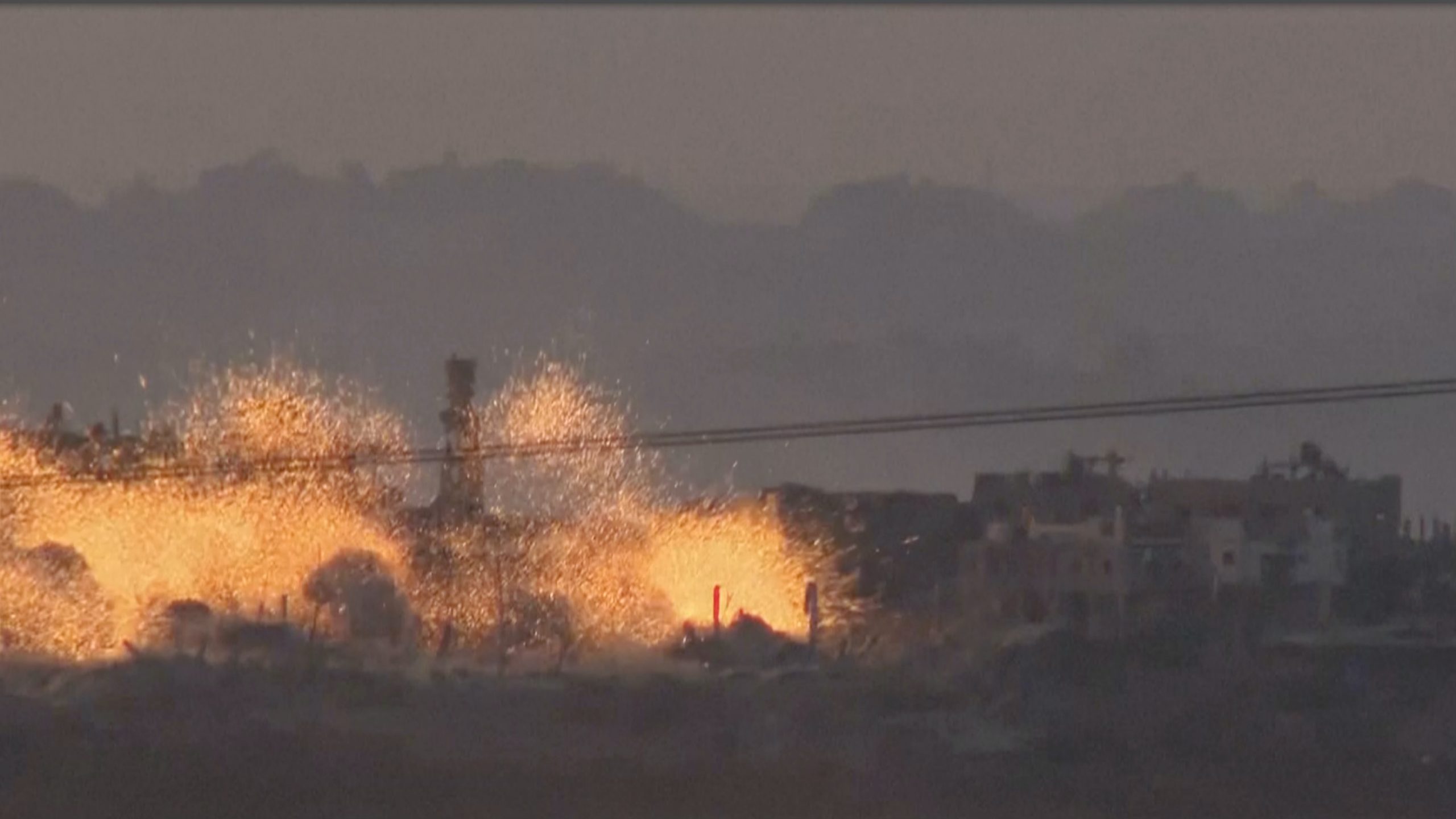
Videos released by the Israeli military show troops moving through the city, firing into buildings. Bulldozers push down structures as tanks roll through streets surrounded by partially collapsed towers.

The videos portray a battle where troops are rooting out pockets of Hamas fighters and tearing down buildings they find them in, while gradually dismantling the group’s tunnel network.

Israel says it has killed several thousand fighters, including important mid-level commanders, while 46 of its own soldiers have been killed in Gaza. In recent days Hamas rocket fire into Israel — constant throughout the war — has waned, though two people were wounded Tuesday in a rocket attack on Tel Aviv. Details of the Israeli account and the extent of Hamas losses could not be independently confirmed.

One Israeli commander in Gaza, identified only as Lt. Col. Gilad, said in a video that his forces near Shifa Hospital had seized government buildings, schools and residential buildings where they found weapons and eliminated fighters.

The army said it had captured Gaza’s legislature building, the Hamas police headquarters and a compound housing Hamas’ military intelligence headquarters. The captured buildings carry high symbolic value, but their strategic value was unclear. Hamas fighters are believed to be positioned in underground bunkers.

Israeli news sites showed pictures of soldiers holding up the Israeli flag and military flags in celebration inside some of the buildings.

Thomas Friedman: It’s time for a Biden Peace Plan

posted in: Politics | 0

TEL AVIV, Israel — During my nine days of reporting recently in Israel and the West Bank, little did I know that the most revealing moment would come in the final hours of my visit. As I was packing to leave Saturday night, Prime Minister Benjamin Netanyahu gave a news conference in which he indicated that Israel and the United States do not have a shared vision of how Israel should complete its war in the Gaza Strip or how to convert any Israeli victory over Hamas into a lasting peace with the Palestinians.

Without such a shared strategy, the Biden administration, the American people and particularly American Jews who support Israel will need to make some fateful decisions.

We will either have to become captives of Netanyahu’s strategy — which could take us all down with him — or articulate our own American vision for how the Israel-Hamas war must end. That would require a Biden administration plan to create two states for two indigenous peoples living in the areas of Gaza, the West Bank and Israel.

Yes, I am talking about a wartime peace plan that, if Israel agreed, could help give it the time, legitimacy, allies and resources it needs to defeat Hamas — without getting stuck governing all of Gaza and all of the West Bank forever, with no political horizon for the Palestinians.

And have no illusion, this is the only vision Netanyahu is offering right now: Seven million Jews trying to govern 5 million Palestinians in perpetuity — and that is a prescription for disaster for Israel, America, Jews everywhere and America’s moderate Arab allies.

President Joe Biden’s plan — are you sitting down? — could actually use as one of its starting points President Donald Trump’s proposal for a two-state solution, because Netanyahu warmly embraced that in 2020, when he had a different coalition. (Netanyahu and his ambassador in Washington practically wrote the Trump plan.) More on that in a second.

Here is why we are at a juncture that demands bold ideas, starting last Saturday night. Speaking in Hebrew in the joint news conference with Defense Minister Yoav Gallant and Minister Benny Gantz, Netanyahu rejected U.S. and world concerns over the thousands of Palestinian lives already lost to the war to uproot Hamas from Gaza. Even more important, he declared that Israel’s military would remain in Gaza “as long as necessary” to prevent the Gaza Strip from ever again being used to launch attacks on Israeli civilians.

Gaza “will be demilitarized,” he said. “There will be no further threat from the Gaza Strip on Israel, and to ensure that, for as long as necessary, IDF will control Gaza security to prevent terror from there.”

Those are legitimate Israeli concerns given the Hamas atrocities, but Netanyahu also indicated that Israel would oppose the return of the Palestinian Authority — Israel’s partner in the Oslo peace process that governs Palestinians in the West Bank — to Gaza following the war. The authority, Netanyahu said, is “a civil authority that educates its children to hate Israel, to kill Israelis, to eliminate the State of Israel … an authority that pays the families of murderers based on the number they murdered … an authority whose leader still has not condemned the terrible (Oct. 7) massacre 30 days later.” Bibi — who never gives the Palestinian Authority credit for how it works every day with Israeli security officials to dampen violence in the West Bank — offered no suggestion of how and from where an alternative, legitimate Palestinian governing authority ready to work with Israel might emerge.

This was an in-your-face rebuke of the Biden administration position articulated by Secretary of State Antony Blinken on Wednesday. As The New York Times reported, Blinken declared during a meeting of foreign ministers in Tokyo that Gaza should be unified with the West Bank under the Palestinian Authority once the war is over. To retain America’s Arab and Western allies, Blinken said that right now — today — we must articulate “affirmative elements to get to a sustained peace.” And “these must include the Palestinian people’s voices and aspirations at the center of post-crisis governance in Gaza,” he said. “It must include Palestinian-led governance and Gaza unified with the West Bank under the Palestinian Authority.”

My four-word translation of Blinken’s proposal to Israel: “Help us help you.’’

Blinken, though, also offered no details of how that might happen. The Biden team needs to flesh that out.

Why is Netanyahu trying to destroy the Palestinian Authority as a governing option for a postwar Gaza? Because he is already campaigning to hold onto power after the Israel-Hamas war is over, and he knows there will be a huge surge of Israelis demanding he step down because of how he and his far-right cronies distracted and divided Israel and its military by pursuing a judicial coup that Israeli intelligence sources told Netanyahu was emboldening and tempting enemies such as Hamas and Hezbollah.

The only way Netanyahu can stay in power is if his far-right allies don’t abandon him — particularly Finance Minister Bezalel Smotrich and National Security Minister Itamar Ben-Gvir. So to hold the support of the Jewish supremacists in his Cabinet — some of whom want Israel to erect settlements in Gaza as soon as possible — Netanyahu has to declare now that the Palestinians will have no legitimate, independent representation in Gaza or the West Bank.

Yes, I know it is hard to believe, but Netanyahu is campaigning in the middle of this war.

It is time for Biden to create a moment of truth for everyone — for Netanyahu, for the Palestinians and their supporters, for Israel and its supporters and for Aipac, the Jewish lobby. Biden needs to make clear that America is not going to be Netanyahu’s useful idiot. We are going to lay down the principles of a fair peace plan for the morning after this war — one that reflects our interests and that will also enable us to support Israel and moderate Palestinians and win the support of moderate Arabs for an economic reconstruction of Gaza after the war. I cannot see any major economic support for the rebuilding of Gaza coming from Europe or from countries like the United Arab Emirates or Saudi Arabia unless Israel and some legitimate Palestinian authority are committed to the principles of a peace framework to create two states for two peoples.

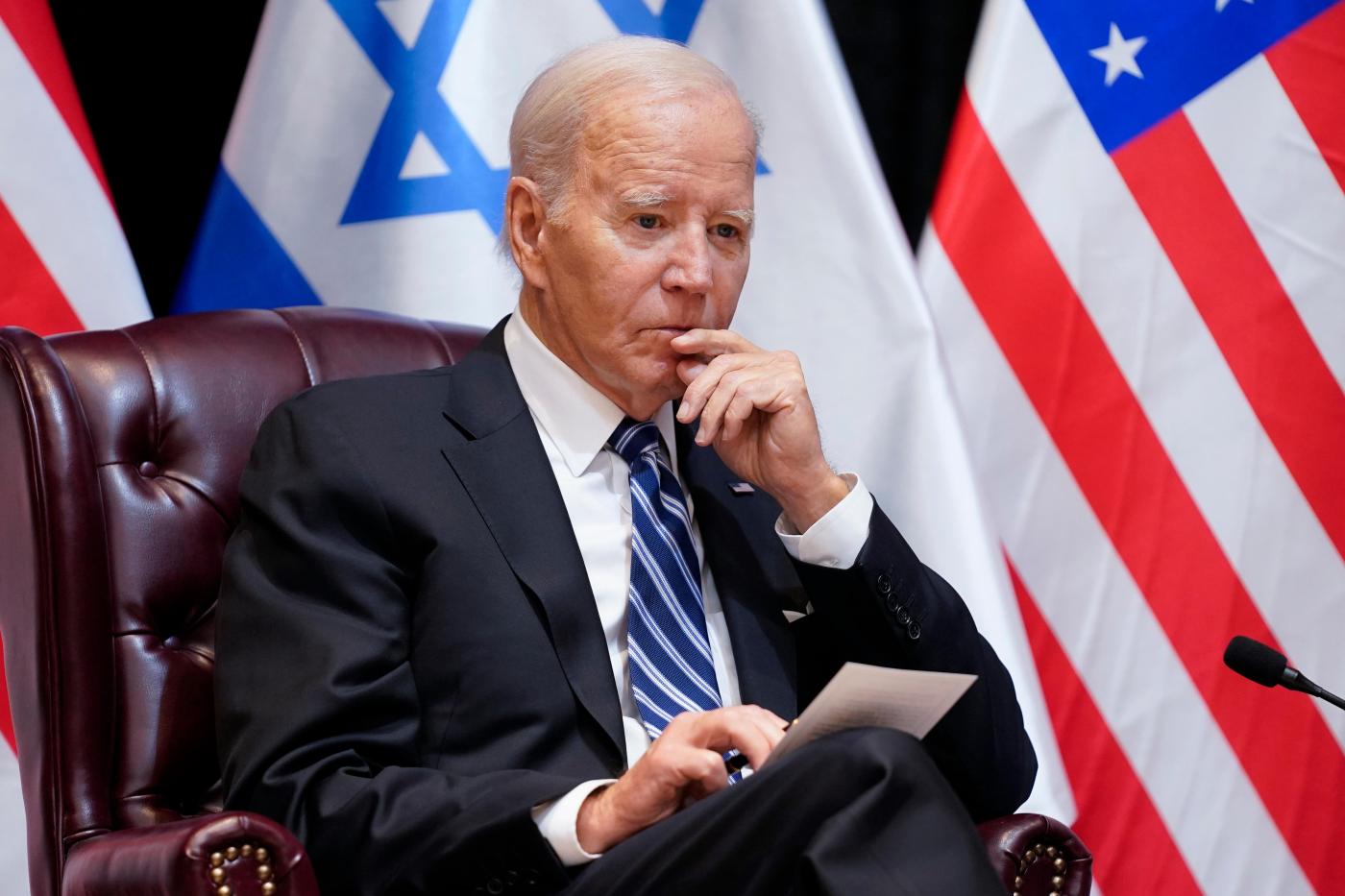
Biden needs to say: “Israel, we are covering your flank militarily with our two aircraft carriers, financially with $14 billion in aid, and diplomatically at the U.N. The price for that is your acceptance of a peace framework based on two states for two indigenous peoples in Gaza, the West Bank and pre-1967 Israel. This plan is based on U.N. Resolutions 242 and 338, which was also the cornerstone for negotiations in the peace plan put forward by Trump in 2020.

Related Articles

Opinion |


Serge Schmemann: Violence by West Bank settlers cannot be ignored

Opinion |


Jesse Wegman: Teach the importance — and the principles — of free speech

Opinion |


Trudy Rubin: In the war between Ukraine and Russia, which side is the GOP on?

Opinion |


Pamela Paul: It’s not kids with the cellphone problem. It’s parents.

Opinion |


F.D. Flam: Useless decongestants are just the tip of the iceberg

“Bibi, do you remember what you said about that Trump plan that gave Palestinians about 70% of the West Bank for a state, plus an expanded Gaza Strip and a capital in the area of Jerusalem?” Biden could add. “Here’s the Associated Press story of Jan. 28, 2020, to remind you: ‘Netanyahu called it a ‘‘historic breakthrough’’ equal in significance to the country’s declaration of independence in 1948.’”

The Palestinian Authority foolishly rejected the Trump plan outright, instead of asking to use it as a starting point. This is a chance to make up for that mistake — or be exposed as unserious.

In his valuable new book on the history of the peace process, “(In) Sights: Peacemaking in the Oslo Process Thirty Years and Counting,” Gidi Grinstein, a member of Ehud Barak’s negotiating team at Camp David, argues that the Trump plan provides a natural foundation for a revived peace process for a two-state solution. That is not only because Netanyahu already agreed to it, Grinstein told me in an interview, even if the settler hard-liners in his Cabinet did not and still would not. It’s also viable because the Trump plan was actually based on the precondition that peace was possible only after Hamas was removed from power in Gaza and the Palestinian Authority could assume control of the Gaza Strip, which, the Trump plan argued, would be expanded by land carved from Israel’s Negev Desert.

Biden could also propose that with the help of our moderate Arab allies like the UAE, Saudi Arabia, Egypt, Jordan and Bahrain, we would come up with a plan to overhaul the Palestinian Authority, purge its education system of anti-Israel material, upgrade its forces that work daily with Israeli security teams in the West Bank, and phase out its financial support for Palestinian prisoners who harmed Israelis.

Is the Palestinian Authority up to such a deal? Are progressive Palestinian supporters in the West who chant the eliminationist mantra “from the river to the sea, Palestine will be free” up for it? Will Israel’s silent majority be if Hamas is defeated? Let’s see what everyone really stands for — or if they have a better answer — because neither is going to disappear. Biden needs to put them all to the test.

I know that a lot of American Jewish leaders privately would love Biden to put forward such a plan but so far only one, Ronald Lauder, a longtime Republican and president of the World Jewish Congress, has had the courage to call for it — in a Saudi newspaper, no less, in an essay titled: “A time for peace and a two-state solution.” As he explained: “Only a two-state solution would guarantee Israelis and Palestinians a life in dignity, safety and with a better perspective on the economic situation, which would lead to a sustainable future.”

Such a plan would protect America’s interests — and make clear that we care about what’s best for Israelis and Palestinians and our allies in the region, not what’s best for Bibi’s political future — which several Israeli analysts told me would be to drag out the war, so he couldn’t be ousted by mass demonstrations — or to drag us into a conflict with Iran in hopes that would overshadow all his mistakes.

If a two-state plan were embraced by Israel, even with reservations, it would reinforce for the world that Israel sees its war in Gaza as one of necessary self-defense and a prelude to lasting peace. And if such a plan were embraced by the Palestinian Authority, even with reservations, that would reinforce that the authority intends to be the alternative to Hamas in shaping an independent future for Palestinians alongside Israel — and that it will not be a bystander to Hamas’ madness or a victim of it.

Thomas Friedman, who was born in Minneapolis and grew up in St. Louis Park, writes a column for the New York Times.