Chess grandmaster died of cardiac arrhythmia with methamphetamine, kratom in his system

posted in: All news | 0

A chess grandmaster from the Bay Area who died in October was found to have died due to a probable cardiac arrhythmia and had methamphetamine and the active ingredients of kratom in his system at the time of his death, authorities said.

Daniel Naroditsky, 29, a Foster City native who became one of the most influential voices in the sport of chess, died Oct. 19 at his North Carolina home.

In January, an investigative report listed Naroditsky’s pending probable cause of death as cardiac arrhythmia and cardiac involvement in systemic sarcoidosis, according to documents obtained from the North Carolina Office of the Chief Medical Examiner. Methamphetamine and kratom use are listed as contributing conditions. The medical examiner also listed the manner of Naroditsky’s death as an accident.

“The circumstances and scene findings suggest that death occurred suddenly, without evidence of acute distress.” the medical examiner wrote. “He did not contact friends or emergency services with complaints of severe illness or pain.”

A postmortem toxicology report conducted Oct. 23 found methamphetamine, amphetamine, mitragynine and 7-Hydroxymitragynine in his system. The levels of the substances found were at levels considered to be non-lethal, authorities said.

Mitragynine and 7-Hydroxymitragynine are the two active components of kratom, which is sourced from trees in Southeast Asia and is a stimulant in low doses and a sedative in high doses, according to a fact sheet from the Drug Enforcement Administration. Kratom is not federally regulated and has not been approved for medical uses by the FDA.

On a separate page, dated in October, the fatal injury or illness is listed as “Kratom and/or illicit substance toxicity vs. Pneumonia.” Naroditsky also had clusters of contusions on both thighs that were in various stages of healing, according to the report.

At the time of his death, Naroditsky did not have a known medical history, authorities said. He was found unresponsive on his couch by friends after missing a planned flight to Colorado. He was last confirmed to be alive around 3 p.m. on Oct. 18, when he received a delivery of a meal that was sitting on his dining room table, partially eaten, when he was found.

A few days after Naroditsky’s death, the International Chess Federation announced a disciplinary and ethics investigation into Vladimir Kramnik, 50, a chess grandmaster who had accused several chess champions, including Naroditsky, of cheating.

Kramnik alleged that these grandmasters used artificial intelligence on a separate computer screen to suggest chess moves, pointing to shifting eyes as evidence. Naroditsky denied the allegations and had the support of other chess grandmasters who painted them as baseless. After Naroditsky’s death, Kramnik called for a police investigation but also defended himself as a whistleblower.

The chess federation, known by its French acronym FIDE, filed an official complaint against Kramnik to its Ethics & Disciplinary Commission in November, outlining a “pattern of conduct” over two years that included harassment and “the insulting of an individual’s dignity” directed toward Naroditsky and another player, according to a press release from FIDE.

There was initial concern that Naroditsky’s death may have been due to an overdose on illicit substances, based on concern from friends and viewers that he had been exhibiting altered mental status while streaming the night before he was found deceased, authorities said.

Two days before, friends visited Naroditsky’s home and confiscated 40 pills, which they described to authorities as “probably Adderall,” after he had exhibited “concerning altered mental status” while live-streaming online.

Authorities did not find any drug paraphernalia, illicit substances or beverages containing alcohol in Naroditsky’s residence. They did locate bags of kratom powder and foreign over-the-counter medications used to treat colds, sore throats and coughs, authorities said.

The toxicology report revealed methamphetamine and amphetamine at levels that indicated the amphetamine was present from the metabolism of methamphetamine rather than direct ingestion, authorities added. Naroditsky did not have any prescriptions for methamphetamine or amphetamine listed in the North Carolina Controlled Substance Reporting System.

Radiographic imaging completed after Naroditsky’s death was “highly suggestive” of lung disease, authorities said. The medical examiner narrowed down the diagnosis to sarcoidosis, which causes a build-up of immune cells in organs and tissues.

The investigation found that there was “no evidence for intentional or unintentional overdose,” the medical examiner wrote, but the substances found in his system can increase the risk of cardiac arrhythmia and may have contributed to his death.

Law enforcement officials do not suspect foul play in Naroditsky’s death.

Naroditsky was raised in Foster City, where he first won a children’s chess world championship title as a sixth grader in 2007. He competed in his first chess tournament in Fremont at age six. He went on to earn the title of grandmaster at the age of 18.

Naroditsky studied at Hillsborough’s Crystal Springs Uplands School, then attended college at Stanford University, where he studied history. At the time of his death, Naroditsky was working as a coach at the Charlotte Chess Center in North Carolina. He also streamed videos of his chess games and commentary of other games on his Twitch and Youtube channels.

Naroditsky was ranked in the top 200 worldwide traditional chess players and won titles for blitz chess, a faster-paced game in which he ranked in the top 25. His most recent win was in August 2025, when he won the U.S. National Blitz Championship.

Opinion: How 459 Smith St. Could Set a New Standard for Gowanus Redevelopment

posted in: All news | 0

“From a sustainability and environmental justice perspective, the question is not whether redevelopment should occur, but under what conditions and for whose benefit.”

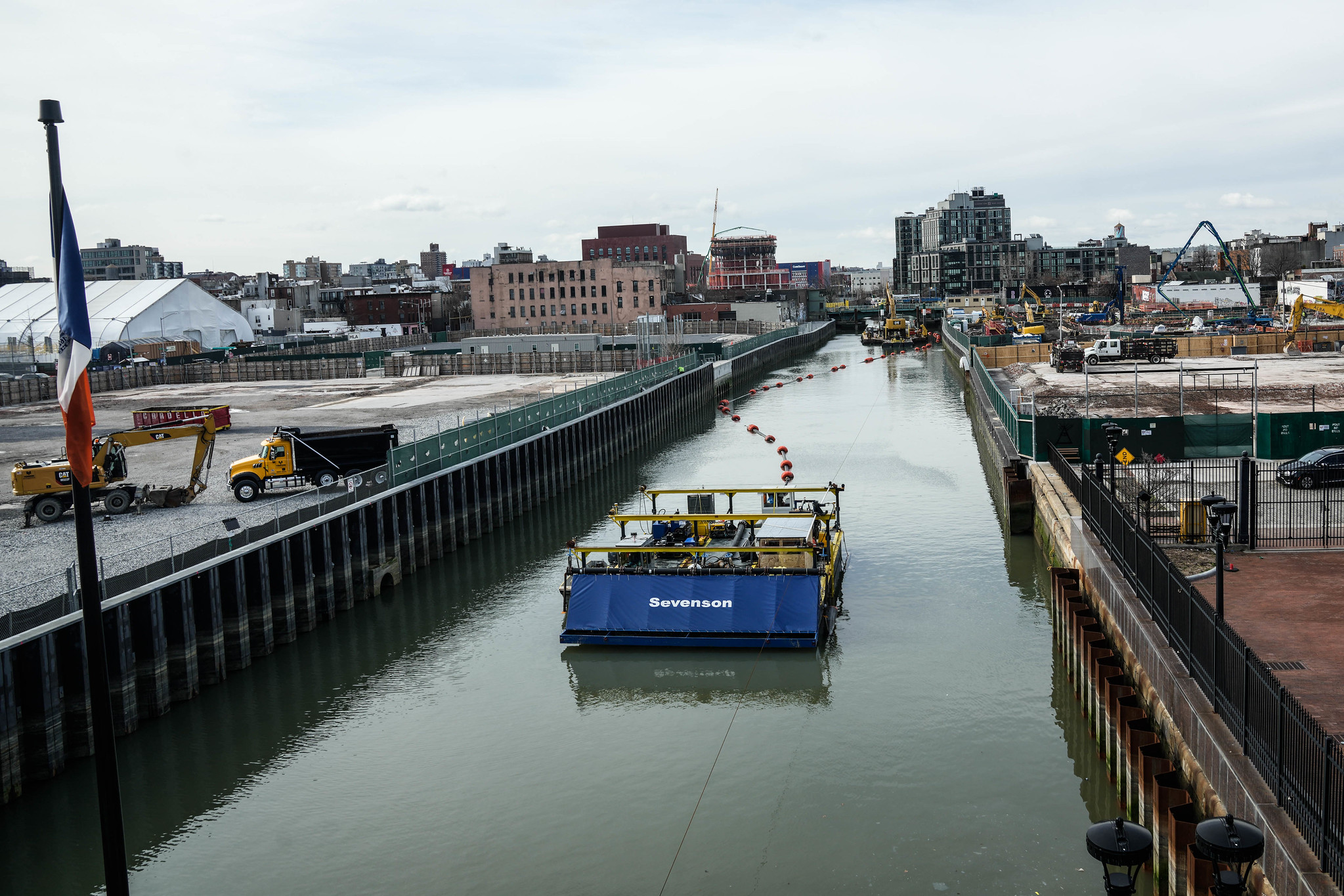
The Gowanus Canal in 2023. (Michael Appleton/Mayoral Photography Office)

For years, the Gowanus Canal has been presented as a success story in progress: a federal Superfund cleanup, new sewer tanks, and a rezoning that promises thousands of new apartments along a “revitalized” waterfront. But at 459 Smith St., a former manufactured gas plant parcel on the canal’s western edge, the story looks less straightforward.

Known in state records as the 459 Smith Street Brownfield site (Site No. C224012B), part of the K-Citizens MGP—Carroll Gardens complex, it’s classified as posing a “significant threat to public health or the environment,” according to New York’s Department of Environmental Conservation. Decades of gas production left coal tar and associated contaminants in soil, groundwater, and soil vapor, and helped create the toxic canal sediments often described as “black mayonnaise.”

Yet the site is being handled under New York’s voluntary Brownfield Cleanup Program (BCP), rather than the State Superfund framework generally used when the state seeks stronger enforcement leverage and long-term accountability at highly contaminated sites. That choice of program, and the development planned on top of it, raises fundamental questions about who is protected, who pays, and what we mean by “sustainability” in practice.

The 3.81-acre parcel once hosted fertilizer operations and later served as key infrastructure for the Citizens Manufactured Gas Plant. Investigations by NYSDEC and National Grid have documented coal tar at substantial depths, along with elevated contaminants in groundwater and vapor. Since entering the Brownfield program in 2019, remedial work has included excavation and removal of impacted material and canal-edge controls. NYSDEC materials also note that the canal remains hydraulically connected to the site, and that an impermeable bulkhead is intended to address that connection.

Those are significant steps. But NYSDEC’s own documents, including the Draft Remedial Action Work Plan and a recent Pre-Design Investigation work plan, make clear that the site is not “clean” in any ordinary sense. Contaminated historic fill remains in place, contaminants of concern persist in soil, groundwater, and vapor, and the future use of the parcel will rely on long-term engineering and institutional controls. The proposed remedy is designed to contain and monitor contamination, not remove it entirely.

Seen through an environmental governance lens, the decision to keep 459 Smith in the Brownfield program rather than treat it as a State Superfund site matters. Brownfield is a voluntary, incentive-driven program designed to spur redevelopment through negotiated remedies and tax credits. State Superfund was created for the most serious hazardous waste sites, with a stronger presumption that responsible parties will pay for robust, enforceable cleanups.

The two programs also differ in how cleanup costs are structured and recovered. Under the State Superfund program, the state can draw on a dedicated fund to investigate and remediate a site and then seek cost recovery from identified responsible parties. Under the Brownfield Cleanup Program, a private party enters as a “volunteer,” finances investigation and remedial work up front, and may receive substantial state tax credits in return. In the case of regulated utilities such as National Grid, many of those costs can ultimately be recovered through rates charged to customers, subject to approval by utility regulators. Program choice, therefore, has material implications for how the financial burden of remediation is distributed among polluters, ratepayers, taxpayers, and private developers.

Here, NYSDEC’s own registry acknowledges that 459 Smith is heavily contaminated and a significant threat, and that there is a clear, viable responsible party: National Grid. Yet the parcel has been carved out of the broader Citizens MGP complex and placed in BCP, with a developer entity serving as the Brownfield “Volunteer” and National Grid and the site owner listed as project applicants for the remaining work. That classification shapes who ultimately pays (ratepayers, taxpayers, shareholders), what level of cleanup is pursued, and what happens if long-term monitoring reveals new problems.

Community advocates and local elected officials have treated this as more than a bureaucratic detail. In July 2025, the coalition Voice of Gowanus filed a complaint with the State Inspector General and NYSDEC’s internal investigations office, arguing that using BCP for such a heavily contaminated “significant threat” parcel misuses the Brownfield statute and sets a troubling precedent for other former gas plant sites. Assemblymember Jo Anne Simon echoed those concerns in a comment letter, arguing that the Brownfield classification is a serious legal misfit for a “significant threat” parcel and that Track 4 remedies—often reliant on caps, vapor systems, and deed restrictions—do not provide the same enforcement leverage and long-term accountability as a Superfund pathway.

All of this sits beneath an ambitious development proposal. NYSDEC describes the concept as three multi-story buildings—two mixed-use commercial/residential buildings and one separate multi-story commercial building—along with canal-edge public realm improvements, including a new pedestrian walkway, a mapped Nelson Street segment, and roughly 90,000 square feet of open-air space. Immediately north, on land that was once part of the same industrial complex, Gowanus Green is planned as a 100-percent affordable housing campus with a new public school and public open space. The affordability and public access embedded in Gowanus Green are essential wins in a city facing overlapping housing and climate crises. The point is not to halt those projects, but to ensure they rest on the most protective and enforceable cleanup possible.

From a sustainability and environmental justice perspective, the question is not whether redevelopment should occur, but under what conditions and for whose benefit. Coal tar and volatile contaminants do not distinguish between market-rate and affordable units, or between rooftop pool users and schoolchildren. If residual contamination or future plume migration undermines indoor air, groundwater, or even the canal’s Superfund remedy itself, those impacts will be shared—though not equally.

The planned school at Gowanus Green is a good example of how risk and opportunity intersect. Placing an educational facility so close to a restored but still vulnerable canal demands the highest cleanup standards and the most reliable long-term monitoring. It also creates an opportunity to design a truly “green” school: a building and curriculum that acknowledge the site’s history and equip students for the green and blue careers that New York will increasingly depend on. A school staffed with educators knowledgeable in environmental science, public health, and local history would be a significant asset to the neighborhood, helping interpret monitoring data and collaborating with agencies and community groups to track the lingering effects of legacy pollution over time.

Rather than treating the school as an ordinary neighborhood facility on an ordinary site, the city could commit to a specialized focus on climate, ecology, and environmental technology—from water-quality monitoring and green infrastructure to coastal resilience and environmental justice. Partnerships with local groups, conservancies, and community scientists could give students hands-on experience with real data from the canal and the surrounding watershed. Career and technical education tracks could prepare young people for jobs in stormwater management, environmental monitoring, urban forestry, and sustainable design—fields directly linked to the long-term health of Gowanus and other waterfront neighborhoods.

In this model, the school is not simply next to the canal; it is in relationship with it. Transparency about environmental conditions, real-time data displays, and classroom projects tied to ongoing monitoring would help ensure that both risks and progress are visible to students, families, and residents. That kind of integration—strong cleanup, robust oversight, a knowledgeable school staff, and meaningful educational engagement—would move the project closer to the promise of “sustainability” that Gowanus has been asked to embody.

What happens at 459 Smith St. will resonate far beyond one block of Gowanus. Across New York City, communities are grappling with how to clean up old industrial sites, build housing, and prepare for climate-driven flooding at the same time. Program classification—Brownfield versus Superfund—is one of the quiet levers that determines who bears the risks and costs. New York’s new Mayor Zohran Mamdani ran and won on an affordability-and-justice agenda that treated housing, enforcement, and everyday cost pressures as inseparable from broader structural reform. For City Hall, the governance of sites such as 459 Smith belongs squarely on that sustainability-and-affordability agenda—where climate risk, land-use policy, and environmental health meet questions of accountability and who ultimately pays.

Early signals from the new administration suggest an effort to move quickly on housing and tenant protection, with an emphasis on speeding the delivery of affordable units and strengthening enforcement against negligent landlords. The mayor has also framed schools and other public facilities as part of the city’s climate-resilience toolkit—places that can cool neighborhoods, absorb stormwater, and serve communities during heat events and emergencies.

Whether this administration chooses to apply that same climate-and-affordability lens in Gowanus—by pressing for stronger oversight at 459 Smith, supporting more protective remedies there and at Gowanus Green, and aligning program choices with the realities of toxic plumes and climate change—will send an important signal. It will tell New Yorkers whether “sustainability” is branding or a genuine commitment to aligning land use, infrastructure, schools, and justice across the entire city.

Mark Yarish is a Brooklyn-based sustainability researcher completing his doctorate in sustainability at Capitol Technical University. He serves on the Gowanus Canal Community Advisory Group and the Gowanus Oversight Task Force. The views expressed are his own.

The post Opinion: How 459 Smith St. Could Set a New Standard for Gowanus Redevelopment appeared first on City Limits.

Chris Finch usually sticks with struggling Timberwolves’ vets. Will he do the same with Mike Conley?

posted in: All news | 0

Chris Finch has a history of sticking with trusted veterans, even during lengthy mid-season struggles.

Kyle Anderson couldn’t find his shot and at times crushed Minnesota’s offensive spacing because of it two years ago.

Julius Randle’s fit was clunky, at best, over the first half of last season.

Yet the Timberwolves’ coach never flinched in regards to his backing of both players. Anderson’s spot in the rotation was never threatened, nor was Randle’s spot in the starting lineup.

Finch’s patience paid off in the playoffs with both guys, with Anderson serving as a key cog in Minnesota’s run to the Western Conference Finals in 2024, and Randle doing the same in 2025.

Mike Conley is another test. Frankly, a reboot of one from a year ago for Finch.

The veteran point guard is struggling with his shot this season, hitting just 34% of his 3-point attempts this season. That number plummets to 24% since Dec. 1.

Which renders Conley as a de facto “zero” in the scoring department in his current state. He hasn’t been effective attacking off the bounce over the last two seasons. So when the outside shot isn’t falling, he’s simply not a threat to score in any fashion. Conley hasn’t produced a single point in either of Minnesota’s last two losses to San Antonio or Utah.

That’s frustrating for fans to watch. Pitchforks were out with added force following Minnesota’s inexplicable loss to the tanking Jazz on Tuesday.

Minnesota’s current three-game skid has led to similar calls from various corners of the internet for the coach to take action on a struggling veteran. Will he?

There are compelling reasons to this season. Conley’s net rating – how the team is performing when he’s on the floor – is worst among all current rotational players.

Plus, the Timberwolves have actual options to turn to. Conley exiting the rotation could free up playing time for rookie center Joan Beringer if the likes of Naz Reid and Jaden McDaniels slid down positions in the lineup. Or, more plausibly, Jaylen Clark and/or Bones Hyland could simply absorb Conley’s minutes.

Those are more enticing routes for Finch to take than demoting a struggling Randle last season to promote a struggling Reid. Or to take Anderson out of the rotation in favor of … no other real legitimate NBA option two years ago, when depth pieces like Troy Brown and Shake Milton struggled so mightily in Minnesota they were dealt during the season for Monte Morris, who hasn’t regained his NBA footing at other stops over the last two years.

Minnesota could also make a move at or prior to the trade deadline to upgrade the roster at the guard position and potentially force Finch’s hand.

But he could still stick with Conley. He trusts Conley and what he brings to the floor – Conley’s decision-making with the ball and team defense are very much still positive assets for this team – even if that package doesn’t include an ounce of scoring. There could be something to say for Conley’s mere presence on the court. The last two games he sat for rest purposes in December — against Atlanta and Brooklyn — were both embarrassing losses for Minnesota.

The tide could turn on the shooting. Conley shot 36% from deep pre-Christmas last season, and 44% from deep after the holiday. A similar bounce back is no guarantee. Conley is now 38 years old. Father Time does eventually come for all.

And it won’t be as easy for the veteran – who has started his entire career up until this season – to find the rhythm he’s searching for in his diminished reserve role. But that’s the job currently available on this roster. It’s on Conley to find a way to fill it. If he can’t, Finch may eventually have to make a tough decision.

But history suggests the coach will give the player who has done so much for the team in recent years every chance to correct course before taking an alternative route.

It also suggests he’s right for doing so. A slow trigger may be the most accurate shot.

HOUSTON, TEXAS – JANUARY 16: Mike Conley #10 of the Minnesota Timberwolves walks to the locker room for half time during the game against the Houston Rockets at Toyota Center on January 16, 2026 in Houston, Texas. User expressly acknowledges and agrees that, by downloading and or using this photograph, User is consenting to the terms and conditions of the Getty Images License Agreement. (Photo by Kenneth Richmond/Getty Images)


Related Articles


Timberwolves season-ticket renewal prices are rising. Here’s why


Timberwolves give up double-digit fourth-quarter lead, lose to Jazz


Frederick: With the game is on the line, opposing defenses can’t stop Ant


Edwards scores 55, but Spurs hold off Timberwolves


Timberwolves free-throw woes are catching up to them

House Republicans vote to lift 20-year ban on mining near pristine Boundary Waters Canoe Area

posted in: All news | 0

By TODD RICHMOND

Congressional Republicans moved closer Wednesday to lifting a 20-year ban on mining near Minnesota’s Boundary Waters Canoe Area Wilderness, pushing a resolution to end the moratorium through the House despite environmentalists’ warnings that it could devastate a premier destination for campers, kayakers and canoeists.

The resolution now goes to the Senate, and approval there would send it to President Donald Trump for his signature.

The push to end the ban comes as a Chilean mining company considers opening a copper mine in the Superior National Forest on the edge of the wilderness area that conservationists say could contaminate the watershed.

“Minnesota’s Boundary Waters is one of our nation’s most iconic wilderness areas,” Jackie Feinberg, the Sierra Club’s national lands conservation campaign manager, said in a statement. “This push by the Trump administration and their Congressional allies to allow toxic mining in the Boundary Waters watershed puts this fragile ecosystem at risk, and is a clear giveaway to corporate polluters.”

A beloved destination for outdoor enthusiasts

Boundary Waters is a vast swath of remote woods, lakes and swamps in the Superior National Forest in far northeastern Minnesota, stretching for about 150 miles (about 240 kilometers) along the border with Canada.

It remains largely untouched by humans; logging is prohibited, planes must stay above 4,000 feet (1,220 meters) as they fly over it, except in emergencies, and motorized boats are limited to certain areas.

The promise of serenity has drawn campers, hikers, kayakers and canoeists for decades. The U.S. Forest Service issued about 776,000 visitor permits between 2020 and 2024, according to agency data.

The Biden administration banned mining

Part of the Superior National Forest is situated on the Duluth Complex, a rock formation that contains deposits of copper, nickel, lead, zinc, iron, silver and gold, according to the Forest Service.

Twin Metals Minnesota LLC, a subsidiary of Chile-based Antofagasta Minerals, submitted a plan with the U.S. Department of the Interior in 2019 proposing to mine copper, nickel, cobalt and other precious metals in the forest.

President Joe Biden’s administration blocked the project in 2023, imposing a 20-year moratorium on mining on about 400 square miles (103,600 hectares) in the forest, saying that was necessary to protect the watershed and canoe wilderness.

Trump pushes to relaunch mining projects

The president has sought to bolster domestic energy and mineral production, declaring an energy emergency just days after retaking office a year ago. Last fall his administration reinstated a 2017 legal opinion that allowed Twin Metals to renew its leases in the Superior National Forest, and Minnesota regulators approved its exploratory mining plans in December.

This month U.S. Rep. Pete Stauber, a Duluth Republican, introduced the resolution to lift the Biden-era moratorium, saying it has cost jobs, put the nation’s mineral security at risk and is “an attack on our way of life.”

The House approved it on a voice vote Wednesday afternoon. It’s unclear when or if the Senate will take it up.

National security or toxic threat?

Republicans said on the House floor that they must open the door to mining near the canoe area to compete with China and Russia in the race for key minerals such as cobalt, copper and nickel. Stauber, almost shouting at times, called the moratorium “a dangerous, purely political decision.”

“It’s better in our backyard than in China or Russia or other adversarial nations,” he said.

Democrats painted mining as an existential threat to the wilderness and said any minerals extracted would just be sold on the international market anyway.

“Some places are just too precious to mine,” said Betty McCollum, a Minnesota Democrat.

Stauber brought the resolution under the Congressional Review Act, which allows lawmakers to overturn certain actions by federal agencies.

Democrats argued that the resolution was out of order because Republicans had to bring it within 60 days of the ban’s implementation, not three years later, and such resolutions cannot be used to erase public land protections. They said approving it would set a dangerous precedent.

Republicans countered that the Biden administration failed to formerly notify Congress of the ban in 2023.