Paramedics found guilty in death of Elijah McClain, who they injected with an overdose of ketamine

posted in: News | 0

BRIGHTON, Colorado — Two Denver-area paramedics were convicted Friday in the 2019 killing of Elijah McClain, who they injected with an overdose of the sedative ketamine after police put him in a neck hold.

It was the last trial against police and paramedics charged in the death of McClain, a 23-year-old Black man whose case received little attention until protests over the 2020 killing of George Floyd in Minneapolis, Minnesota. An Aurora police officer was convicted of homicide and third degree assault earlier this year while two officers were acquitted. The trial against the paramedics explored largely uncharted legal territory because it is the first case against medical first responders facing criminal charges to reach trial, potentially setting the bar for prosecutors in future cases.

The jury found Aurora Fire Rescue paramedics Jeremy Cooper and Peter Cichuniec guilty of criminally negligent homicide following a weekslong trial in state district court. The jury also found Cichuniec guilty on one of two second-degree assault charges. Cooper was found not guilty on the assault charges. They could face years in prison at sentencing.

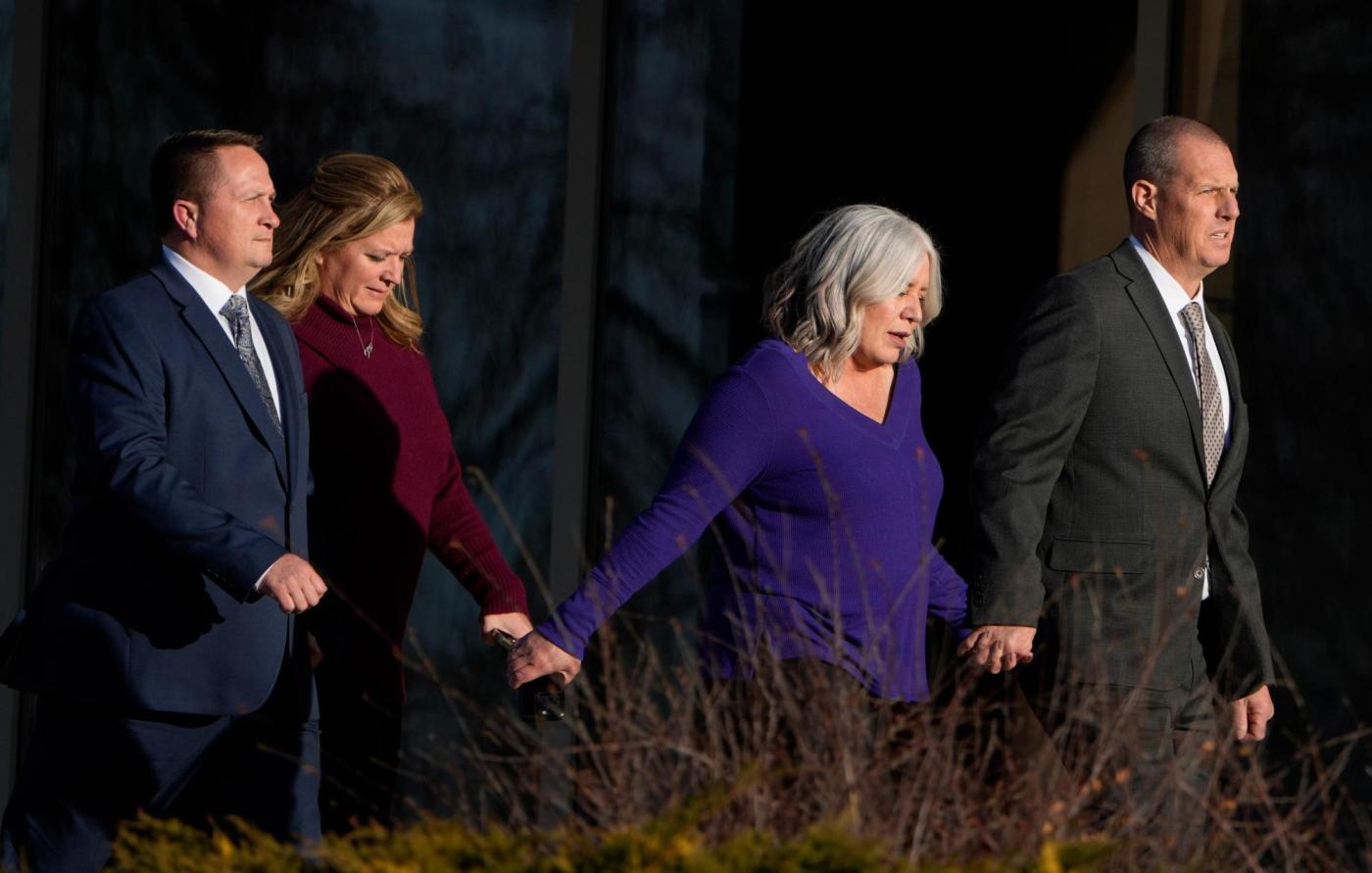
McClain’s mother, Sheneen, raised her fist in the air as she left the courtroom. Sitting in the front row, Cooper’s wife sobbed as deputies prepared to handcuff him.

The verdict was announced after two days of deliberations. When jurors told the judge Friday afternoon they were stuck on one of the charges, the judge told them to keep trying to reach a verdict.

Police stopped McClain while he was walking home from a convenience store on Aug. 24, 2019, following a suspicious person complaint. After an officer said McClain reached for an officer’s gun — a claim disputed by prosecutors — another officer put him in a neck hold that rendered him temporarily unconscious. Officers also pinned down McClain before Cooper injected him with an overdose of ketamine. Cichuniec was the senior officer and said it was his decision to use ketamine.

Prosecutors said the paramedics did not conduct basic medical checks of McClain, such as taking his pulse, before giving him the ketamine. The dose was too much for someone of his size — 140 pounds (64 kilograms), experts testified. Prosecutors say they also did not monitor McClain immediately after giving him the sedative but instead left him lying on the ground, making it harder to breathe.

McClain’s pleading words captured on police body camera video, “I’m an introvert and I’m different,” struck a chord with protesters and people around the country.

In a statement released prior to the verdict, McClain’s mother said that everyone present during the police stop of her son displayed a lack of humanity.

“They can not blame their job training for their indifference to evil or their participation in an evil action,” McClain wrote. “That is completely on them. May all of their souls rot in hell when their time comes.”

Defense attorneys argued that the paramedics followed their training in giving ketamine to McClain after diagnosing him with “ excited delirium,” a disputed condition some say is unscientific and has been used to justify excessive force.

The verdicts came after a jury in Washington state cleared three police officers of all criminal charges on Thursday in the 2020 death of Manuel Ellis, a Black man who was shocked, beaten and restrained face-down on a Tacoma sidewalk as he pleaded for breath.

In the Colorado case, the prosecution said Cooper lied to investigators to try to cover up his actions, telling detectives that McClain was actively resisting when he decided to inject McClain with ketamine, even though the body camera showed McClain lying on the ground unconscious. It also disputed Cooper’s claim that McClain tried to get away from police holding him down — and that he took McClain’s pulse as he bent down to give him the shot of ketamine, which others testified they did not see.

“He’s trying to cover up the recklessness of his conduct,” Senior Assistant Attorney General Jason Slothouber told jurors in closing statements.

Cichuniec, who testified along with Cooper this week, said paramedics were trained that they had to work quickly to treat excited delirium with ketamine and said they were told numerous times that it was a safe, effective drug and were not warned about the possibility of it killing anyone.

Colorado now tells paramedics not to give ketamine to people suspected of having the controversial condition known as excited delirium, which has symptoms including increased strength and has been associated with racial bias against Black men.

“We were taught that is a safe drug and it will not kill them,” Cichuniec testified.

Local authorities in 2019 decided against criminal charges because the coroner’s office could not determine exactly how McClain, a massage therapist, died. Colorado Gov. Jared Polis ordered state Attorney General Phil Weiser’s office to take another look at the case in 2020 and a grand jury indicted the officers and paramedics in 2021.

The killings of McClain, Floyd and others triggered a wave of legislation that put limits on the use of neck holds in more than two dozen states.

When the police stopped McClain he was listening to music and wearing a mask that covered most of his face because he had a blood circulation disorder. The police stop quickly became physical after McClain, seemingly caught off guard, asked to be left alone. He had not been accused of committing any crime.

The officers told investigators that they took McClain down after hearing Officer Randy Roedema say, “He grabbed your gun dude.” Roedema later said Officer Jason Rosenblatt’s gun was the target.

Prosecutors refuted that McClain ever tried to grab an officer’s gun and it can’t be seen in body camera footage.

Paramedics injected McClain with ketamine as Roedema — and another officer, who was not charged — held him on the ground. McClain went into cardiac arrest en route to the hospital and died three days later.

Roedema was convicted earlier this month of the least serious charge in a series of charges he could’ve faced, which could lead to a sentence of anywhere from probation to prison time.

Rosenblatt and officer Nathan Woodyard were acquitted of all charges.

In the first trials against the police officers, the defense sought to pin the blame for McClain’s death on the paramedics.

The city of Aurora in 2021 agreed to pay $15 million to settle a lawsuit brought by McClain’s parents.

Fridley woman dies after hit-and-run; she also had been shot, police say

posted in: News | 0

An 18-year-old woman was pronounced dead after a hit-and-run report Thursday afternoon in Fridley. Investigators determined that she also had been shot, according to the Anoka County sheriff’s office.

A 17-year-old male is in custody in connection with the death.

The sheriff’s office gave the following details:

Shortly before 4 p.m. Thursday, police and emergency workers were called to the 4500 block of Third Street Northeast in Fridley on reports of a pedestrian who had been injured in a hit-and-run crash.

Life-saving measures were performed on Jayden Lee Kline, of Fridley, who was taken to an area hospital and pronounced dead.

“Law enforcement has determined that the victim had suffered a gunshot wound,” the sheriff’s office said.

Officials have not stated the cause of the woman’s death and they said no further information would be made available Friday.

Later Thursday, a 17-year-old male was taken into custody, although he had not been formally charged, authorities said. The death is under investigation.

Related Articles

Crime & Public Safety |


Washington County man sentenced for tax crimes, swindling short-term renters

Crime & Public Safety |


Minnesota BCA details deadly domestic disturbance in Marshall that ended with officer killing suspect

Crime & Public Safety |


MN pharmacist refused to fill emergency contraception prescription. Court to decide if that was discrimination.

Crime & Public Safety |


Man sentenced for putting bogus bomb outside St. Paul City Hall/Ramsey County Courthouse

Crime & Public Safety |


Judge revokes sex offender’s probation after lewd conduct at Rosedale Center

‘The Color Purple’ review: An exhilarating, larger-than-life journey

posted in: News | 0

Like its central character, Alice Walker’s Pulitzer Prize-winning novel “The Color Purple” has had a long journey. Published in 1982, this lyrical story of a poor Black woman’s eventual triumph over an abusive husband and a seemingly uncaring world became a movie directed by Steven Spielberg in 1985, and then a Tony Award-winning Broadway musical in 2005. And here it is, transformed again: a new movie, based on the stage musical but featuring some new songs, directed by filmmaker/musician Blitz Bazawule.

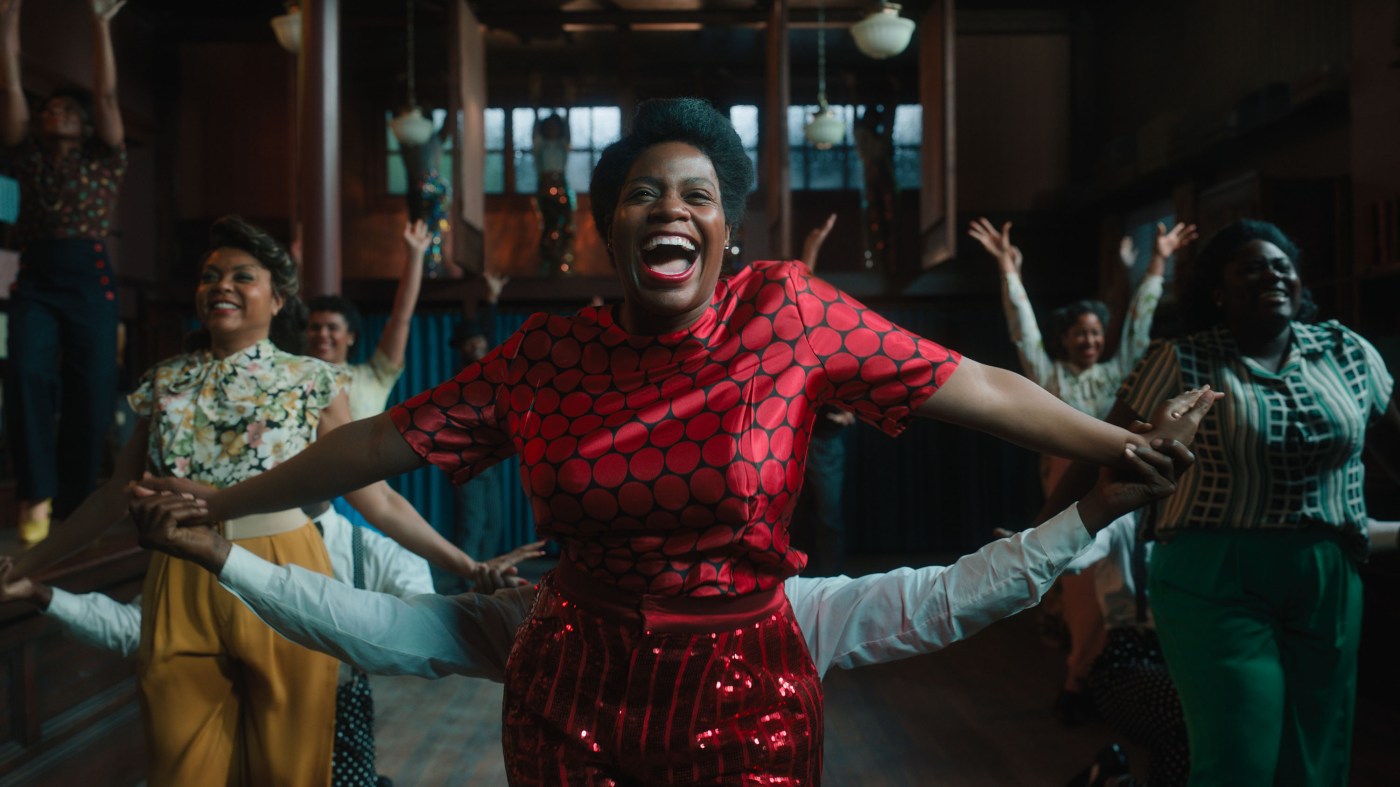
Let me just repeat a key word in that previous sentence: This is a capital-M Musical, complete with big songs and enormous dance numbers and larger-than-life emotions — and it’s often irresistibly exhilarating, as the best musicals can be. I haven’t seen the stage version of “The Color Purple,” but I can absolutely imagine what an impact it would have on an audience, how Miss Celie’s journey would sweep you up and carry you to a higher, more joyful place. That’s basically what happens here: Bazawule slowly but surely lifts us up, letting us soar with the cast by the end.

Not that it’s an easy road to get there. Set in the American South beginning in the early 1900s and extending over several decades, “The Color Purple” has at its center a deeply troubling story: Celie, a teenager when we meet her (she’s played in the early scenes by Phylicia Pearl Mpasi and later by Fantasia Barrino), is a victim of sexual assault by her father; her two babies have been taken from her, and she’s forced to marry a cruel older man known to her only as Mister (Colman Domingo), who beats her viciously and attempts to assault her beloved sister Nettie (Halle Bailey), who flees their town. Within this nightmare, two women arrive to change Celie’s world: She finds friendship with bold Sofia (Danielle Brooks) and love with confident nightclub performer Shug Avery (Taraji P. Henson) — and ultimately, movingly, learns to love herself.

Bazawule occasionally stumbles a bit in the aftermath of the musical numbers (too often they just seem to awkwardly stop), and he and Domingo can’t quite make Mister’s late transformation into a good guy believable. (The previous movie, and to a lesser extent the book, have the same problem.) And you wonder why he, like Spielberg before him, elected to significantly downplay Celie and Shug’s physical relationship.

But he gets the most important things right: the mood, of a dark night finally giving way to a bright morning, and the cast, particularly the three central women. Brooks, with sly comic timing (listen to the spin she puts on the word “respect”; it practically has four syllables) and emotional truth, steals the movie from the moment she saunters onscreen. Henson, particularly in a lovely sequence in which she and Celie suddenly occupy a set from an old RKO musical, glows with tart charisma. And Barrino, who played this role on Broadway and on tour, opens up her heart and her glorious voice, reminding you of how remarkable it must have been to see her as Celie onstage. “I’m beautiful,” she sings at the end, “and I’m here.” It’s a triumph, and it’s earned.

‘The Color Purple’

3 stars (out of 4)

MPA rating: PG-13 (for mature thematic content, sexual content, violence and language)
Running time: 2:20
How to watch: In theaters Dec. 25

Related Articles

Movies & TV |


Movie review: Mike White’s touch helps make ‘Migration’ worthwhile journey

Movies & TV |


‘Rebel Moon Part One: Child of Fire’ review: Snyder makes soulless ‘Star Wars’

Movies & TV |


‘The Boys in the Boat’ review: Clooney navigates mostly gentle waters

Movies & TV |


What to watch: ‘Iron Claw’ is a masterpiece

Movies & TV |


‘The Color Purple’ review: Musical adaptation soars thanks to its drama

RFK Jr. super PAC rolls out ballot access priorities

posted in: News | 0

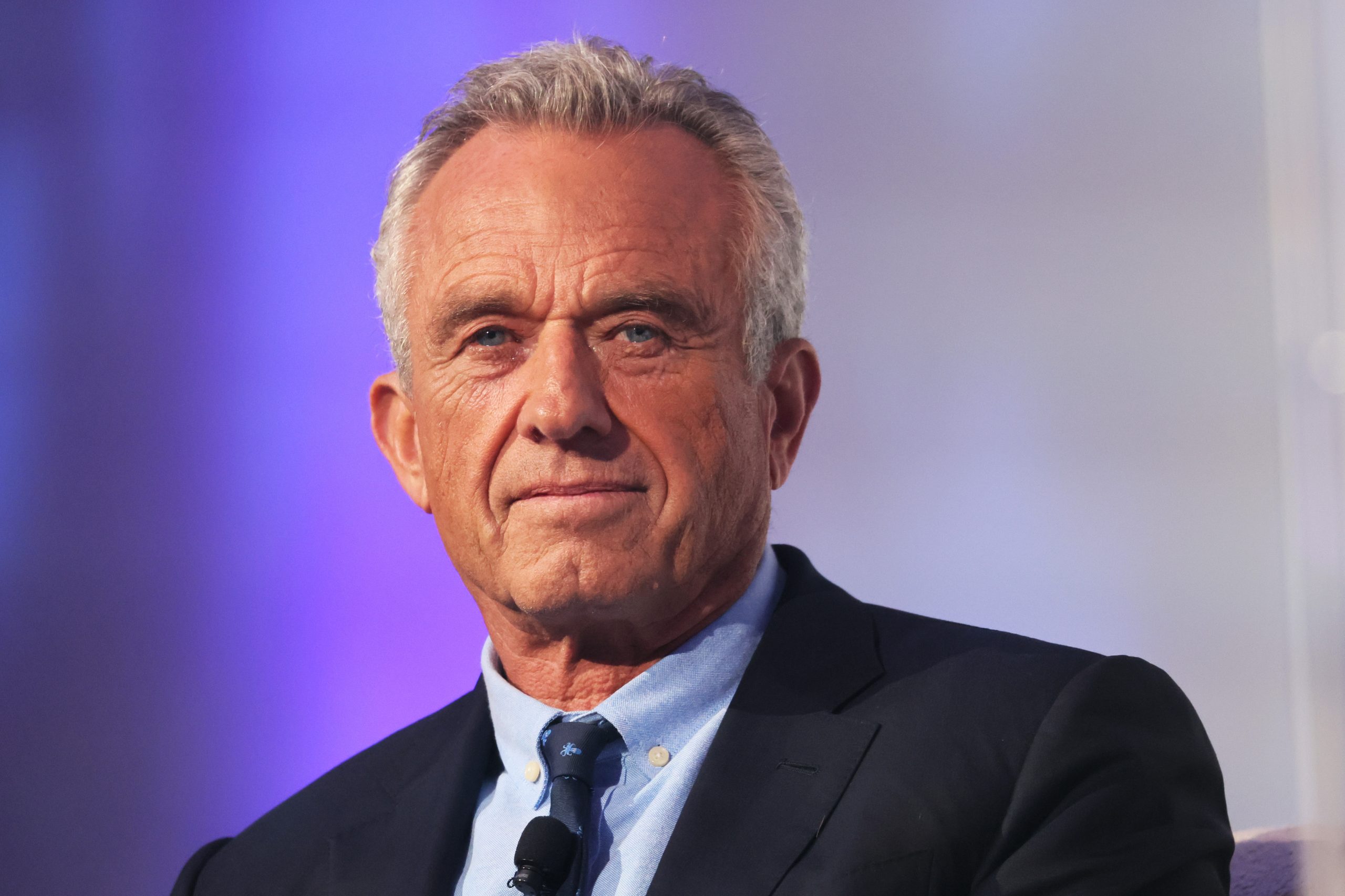
The super PAC supporting Robert F. Kennedy Jr.’s presidential bid is narrowing its ballot access campaign focus to seven states — including crucial battlegrounds that will determine the outcome of the presidential election.

American Values 2024 will now prioritize helping to get Kennedy on the ballot in Arizona, California, Georgia, Illinois, Michigan, New York and Texas, according to plans first shared with POLITICO.

Half of these target states were decisive in the 2020 race, and won by now-President Joe Biden by narrow margins. The promotion of a third-party candidate in these battlegrounds could change the pathways for victory for the major parties’ nominees — even if Kennedy only garners single-digit support next November.

“The seven states we will initially focus on have a total of 183 electoral college votes and some of the highest populations in the country,” PAC Founder Tony Lyons said in a statement.

The super PAC originally planned to also work on gaining ballot access in Indiana, Colorado and Nevada but have dropped them from the list after advice from their counsel. But American Values 2024 will still dedicate between $10 and $15 million to the smaller list of states.

A statement outlining the new plan also said it’s confident that Kennedy could win a contingent election, a possible scenario where no presidential candidate gets 270 electoral college votes. Under such a scenario, congressional delegations from each state cast votes to choose the next president.

“Kennedy has two clear pathways to the White House,” Lyons said. “We will do everything we can, while working closely with our attorneys and without coordinating with the campaign, to make sure that the uniparty fails in any efforts to derail the peaceful, populist revolution that he represents.”

There hasn’t been a contingent election since 1836. It is also widely believed that a contingent election would result in the Republican nominee winning the presidency because there are more state delegations with a majority of Republican members than Democratic ones.

Kennedy is garnering about 13 percent of voter support, according to public polling in matchups with Biden, Donald Trump, fellow independent candidate Cornel West and Green Party candidate Jill Stein. In three way matchups, with just Trump and Biden, Kennedy’s support increases to 15.4 percent.

Lyons is bullish on Kennedy’s chances in 2024 based on the recent polls, especially data that shows higher support among younger voters.

“I think in the end both parties are anti-democratic and that they would prefer to keep Bobby Kennedy off the ballot. They prefer to keep each other off the ballot,” Lyons said in a phone interview. “Not debate them, not engage, find a way to disqualify [candidates], and I don’t think that should happen in a democracy.”