What to know about the annual World Economic Forum meeting in Davos

posted in: All news | 0

DAVOS, Switzerland (AP) — Nearly 3,000 high-level participants from business, government and beyond plus untold numbers of activists, journalists and outside observers are converging in the Swiss town of Davos for the World Economic Forum’s annual meeting.

Here’s a look at the latest edition of the elite affair in the Alpine snows:

The WEF and Davos

The forum is a think tank and event organizer based in Geneva whose main event — the annual meeting — debuted in 1971 in Davos, a ski-resort town of about 10,000 people at a height of about 1,500 meters (nearly 5,000 feet) in the Alps of eastern Switzerland.

The first edition, hosted by forum founder Klaus Schwab, featured a gathering of business executives.

Since then, the meeting has swelled into a catch-all conference on issues as diverse as economic disparity, climate change, technology, and global cooperation — as well as competition and conflict.

More than 200 sessions will tackle a wide array of issues.

Who’s going?

Organizers says a record of nearly 400 top political leaders, including more than 60 heads of state and government, and nearly 850 chairs and chief executives of many of the world’s leading companies.

Headlining the lineup is U.S. President Donald Trump, who’s set to deliver a speech on Wednesday, and several Cabinet ministers and top advisers including Secretary of State Marco Rubio, Treasury Secretary Scott Bessent and special envoy Steve Witkoff.

Related Articles


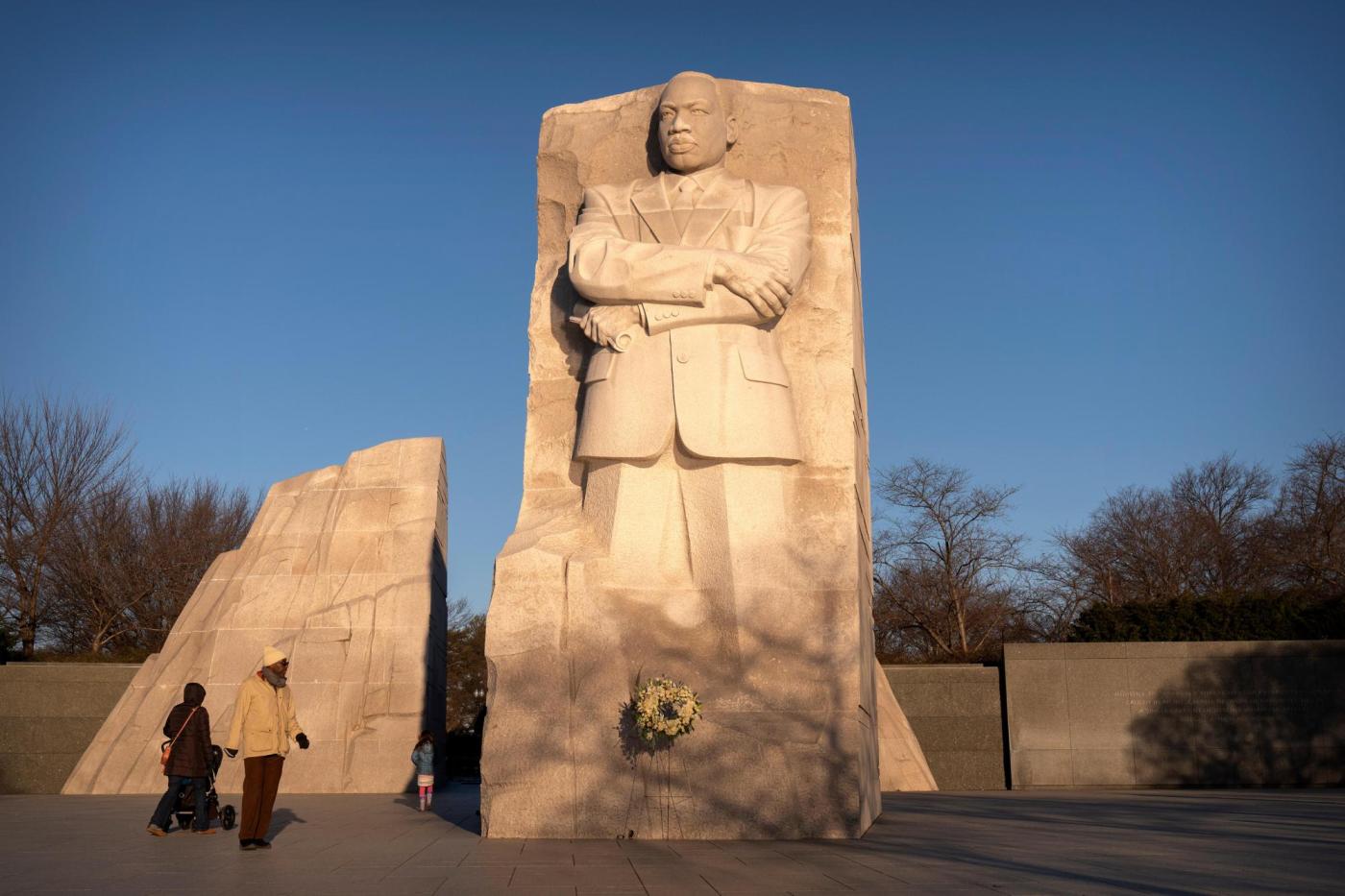
What’s open and closed on Martin Luther King Jr. Day


US futures sink after Trump warns of higher tariffs for 8 countries over Greenland issue


IMF upgrades outlook for surprisingly resilient world economy to 3.3% growth this year


Downtown St. Paul: The man with a plan for U.S. Bank Center, other empty buildings


Business people: Laura Watterson to lead human relations at Andersen Corp.

President Emmanuel Macron of France, European Commission President Ursula von der Leyen, President Ahmad al-Sharaa of Syria, Canadian Prime Minister Mark Carney, President Felix Tshisekedi of Congo, Vice Premier He Lifeng of China, and President Volodymyr Zelenskyy of Ukraine are among the who’s-who of top attendees.

Organizers say 55 ministers for economy and finance, 33 ministers for foreign affairs, 34 ministers for trade, commerce and industry, and 11 central bank governors are also expected.

Tech titans scheduled to be on hand include Jensen Huang of Nvidia. Microsoft’s Satya Nadella, Demis Hassabis of Google DeepMind, and Arthur Mensch of France’s Mistral AI.

NATO Secretary-General Mark Rutte and World Trade Organization Director-General Ngozi Okonjo-Iweala are among scores of top officials from international institutions.

What’s different this year?

The geopolitical context has become incredibly complex this year: Trump’s pronouncements and policies on subjects as diverse as Venezuela, Greenland and Iran — not to mention his aggressive tariff policies — have upended the world order and raised questions about America’s role in the world.

The advent of AI — its promise and perils — has also become a hot topic. Business executives will examine how to apply it to boost efficiency and profits; labor leaders and advocacy groups will warn of its threat to jobs and livelihoods, and policymakers will look to navigate the best way forward between regulation and right to innovate.

Davos conference organizers always trot out buzzwords for the meeting, and this year’s is “A Spirit of Dialogue” — around five themes of cooperation, growth, investment in people, innovation and building prosperity.

Critics say Davos is too much talk and not enough action to rectify gaping inequality in the world and address troubles like climate change.

AP World Economic Forum: https://apnews.com/hub/world-economic-forum
As faith in the US fades a year into Trump 2.0, Europe breaks with reliance on American security

posted in: All news | 0

By LORNE COOK

BRUSSELS (AP) — “Intimidation,” “threats” and “blackmail” are just some of the terms being used by European Union leaders to describe U.S. President Donald Trump’s warning that he will slap new tariffs on nations opposing American control of Greenland.

Related Articles


Inequality and unease are rising as elite Davos event opens with pro-business Trump set to attend


What to know about the annual World Economic Forum meeting in Davos


Diplomacy or retaliation? The EU mulls its options as tensions with U.S. rise over Greenland


Pro-Greenland protesters mock Trump’s MAGA slogan with ‘Make America Go Away’ caps


Trump’s Board of Peace has several invited leaders trying to figure out how it’ll work

European language has hardened since Trump returned to the White House 12 months ago. Now it’s in reaction to the previously unthinkable idea that NATO’s most powerful member would threaten to seize the territory of another ally. Trade retaliation is likely should Trump make good on his tariff announcement.

A year into Trump 2.0, Europe’s faith in the strength of the transatlantic bond is fading fast. For some, it’s already disappeared. The flattery of past months has not worked and tactics are evolving as the Europeans try to manage threats from an old ally just as they confront the threat of an increasingly hostile Russia.

Trump’s first term brought NATO to the brink of collapse. “I feared that NATO was about to stop functioning,” former Secretary-General Jens Stoltenberg wrote in his recent memoir, after the U.S. president had threatened to walk out of a 2018 summit.

Now, Danish Prime Minister Mette Frederiksen is warning that should he try to annex Greenland, a semiautonomous part of Denmark, “then everything stops … including our NATO.”

“We are at the very early stage of a rather deep political-military crisis,” said Maria Martisiute, a European Policy Centre analyst. “There is a greater realization, even though political leaders will not like to admit it, that America has abandoned NATO.”

FILE – President Donald Trump speaks before he signs a presidential memorandum imposing tariffs and investment restrictions on China in the Diplomatic Reception Room of the White House, March 22, 2018, in Washington. (AP Photo/Evan Vucci, File)

Reading the riot act

In January 2025, U.S. allies at NATO were waiting to hear Trump’s plans for Ukraine.

Europe’s biggest land war in decades was about to enter its fourth year. The Europeans believed that President Vladimir Putin would pose an existential threat to their territory should Russia win.

Few thought that Biden administration policies would continue. But within weeks, any lingering hopes for the U.S. commitment to Ukraine dissolved. American arms supplies and funds began to dry up. Europe would have to fill the gap and pay for U.S. help.

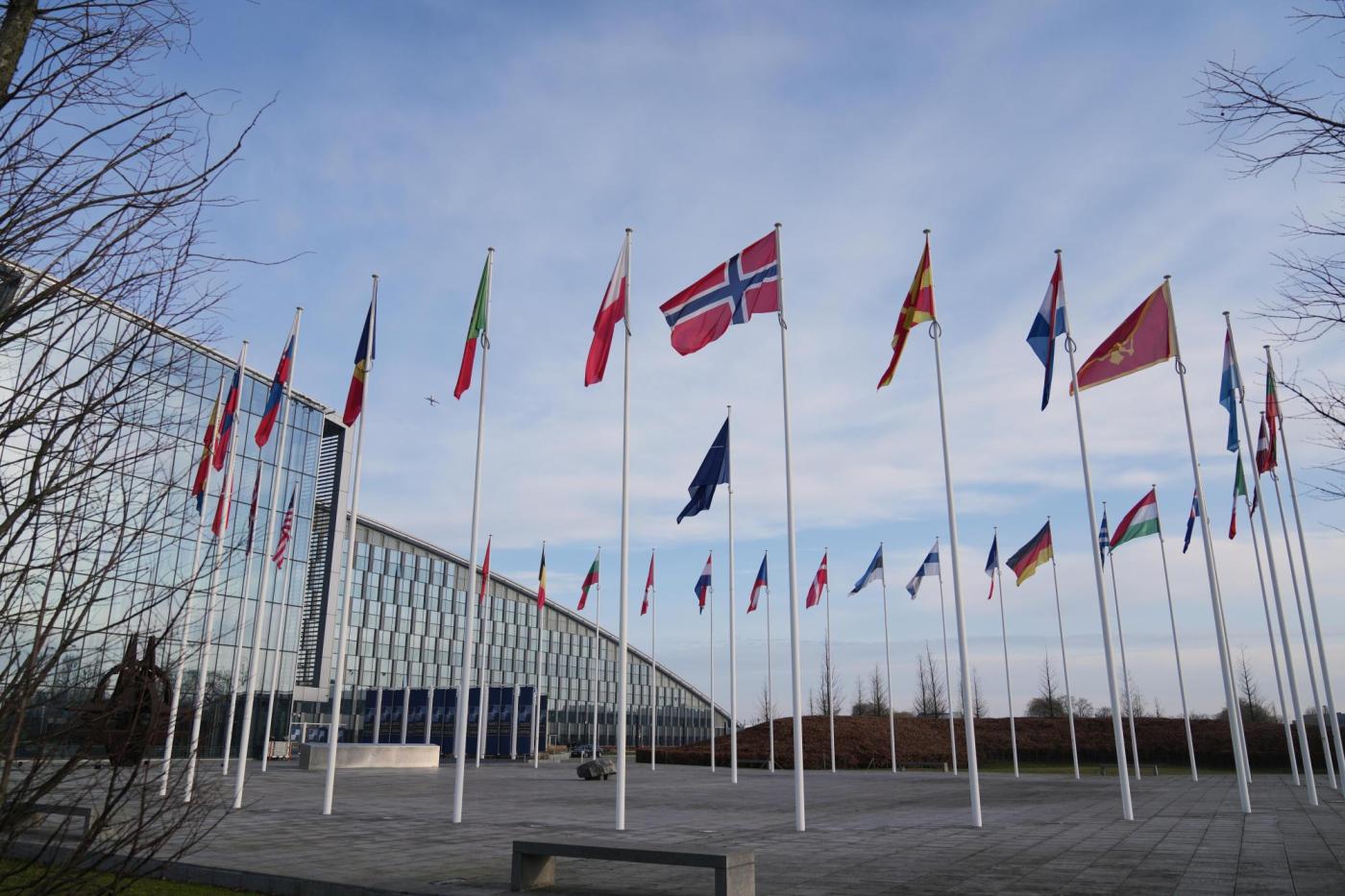
In a speech at NATO headquarters in February, U.S. Defense Secretary Pete Hegseth read the riot act to European allies and Canada. The United States had priorities elsewhere and Europe must handle security in its own backyard.

Ukraine would not join the alliance. Its territory seized by Russia would not be returned. The Europeans could pull together a force to help Ukraine if they wanted, but they wouldn’t get U.S. help if they went into the country and got attacked.

Trump has since blamed Ukrainian President Volodymyr Zelenskyy for the invasion.

Days later that February, in Munich, Vice President JD Vance met the leader of a far-right party during election campaigning in Germany. He claimed that Europe’s main threat was internal, not Russia. Free speech is “in retreat” across the continent, Vance warned.

But after winning the poll, Chancellor Friedrich Merz, said that “in view of the increasing threat situation,” Germany and Europe “must now very quickly make very big efforts, very quickly,” to strengthen their defense capabilities.

Chairman of the Naalakkersuisut, Greenland, Jens-Frederik Nielsen and Denmark’s Prime Minister Mette Frederiksen, right, give a statement on the current situation at a press conference in the Mirror Hall at the Prime Minister’s Office in Copenhagen, Tuesday, Jan. 13, 2026. (Liselotte Sabroe/Ritzau Scanpix via AP)

Europe’s security independence

Over the course of last year, European leaders and Zelenskyy flew to Washington to try to keep Trump onside. A 28-point plan to end the war that he floated would acquiesce to many Russian demands.

The plan was reworked. Talks continue, but without Putin. Few expect him to accept. Trump mostly blames Zelenskyy for the stalemate.

Meanwhile, Europe pressed ahead with new defense measures, even as Trump waged a global tariff war, including against U.S. allies, roiling their economies.

The EU created a multibillion-euro fund to buy arms and ammunition, with the emphasis on sourcing them from European companies and weaning nations off U.S. suppliers.

Debt rules were eased for security spending. Money was funneled into Ukraine’s defense industry. In December, European leaders agreed to pay for most of its military and economic needs for the next two years as Kyiv teeters on the brink of bankruptcy.

A new U.S. national security strategy further soured transatlantic relations. It paints European allies as weak, offers tacit support to far-right political parties, and criticizes European free speech and migration policy.

European Council President Antonio Costa warned the U.S. against interfering in Europe’s affairs. Merz said that the U.S. strategy underscores the need for Europe to become “much more independent” from the United States.

Work has since begun on Europe’s own security strategy. It aims to respond to “the geopolitical changes in our world and to give an appropriate answer to that,” European Commission President Ursula von der Leyen said.

Part of it is to make Europe even more autonomous.

As France, Germany, the U.K., Norway, Sweden and the Netherlands sent troops to Greenland last week — small in number but highly symbolic in the message of resolve sent to the White House — French President Emmanuel Macron said that it’s important “to stand at the side of a sovereign state to protect its territory.”

“Europe is being shaken from some of its certainties,” he told French military chiefs. “It sometimes has allies that we thought were predictable, fearless, always by our side, who are now causing us to doubt a lot, or are even turning against those who expected it the least.”

What’s open and closed on Martin Luther King Jr. Day

posted in: All news | 0

By The Associated Press

Government offices, the stock market and many schools are closed Monday in observance of Martin Luther King Jr. Day, but most businesses are open.

National Parks are still open on MLK Day although they are no longer free this year after President Donald Trump made a change in the two days that will be free this year.

When in doubt, call ahead or look up more specific schedules online for stores in your neighborhood.

Here’s a rundown of what’s open and closed on Martin Luther King Jr. Day, 2026:

Government offices

MLK Day is an official holiday honoring the civil rights leader’s birthday and legacy, so federal and state government offices are closed. Courts and most schools are also closed.

Banks and the stock market

U.S. stock markets and banks are closed Monday but will reopen on Tuesday.

National and state parks

Last month, the National Park Service announced it will no longer offer free admission to parks on King Day and Juneteenth, but instead on Flag Day and Trump’s birthday.

But California Gov. Gavin Newsom defied Trump and ordered more than 200 state parks to offer free admission on Monday.

Retailers

Most stores and other businesses are open.

Diplomacy or retaliation? The EU mulls its options as tensions with U.S. rise over Greenland

posted in: All news | 0

By SAM McNEIL, Associated Press

BRUSSELS (AP) — Threats from the White House over Greenland have sparked outrage and a flurry of diplomatic activity across Europe, as leaders consider possible countermeasures, including retaliatory tariffs and the first-ever use of the European Union’s anti-coercion instrument.

Related Articles


Trump’s Board of Peace has several invited leaders trying to figure out how it’ll work


Trump ties his stance on Greenland to not getting Nobel Peace Prize, European officials say


One year of Trump. The cost is already too much to measure.


Bruce Springsteen dedicates song to Renee Good and says ICE should ‘get the f— out of Minneapolis’


$1 billion in cash buys a permanent seat on Trump’s ‘Board of Peace’

U.S. President Donald Trump said Saturday that he would charge a 10% import tax starting in February on goods from eight European nations because of their opposition to American control of Greenland.

Denmark, Norway, Sweden, France, Germany, the United Kingdom, the Netherlands and Finland would face the tariff, Trump said in a social media post while at his golf club in West Palm Beach, Florida. The rate would climb to 25% on June 1 if no deal was in place for “the Complete and Total purchase of Greenland” by the United States, he said.

European leaders from Dublin to Helsinki quickly condemned the announcement as economic coercion and sent representatives to Brussels on Sunday for an emergency meeting.

If diplomacy fails, they have signaled a new willingness to wield the economic might of the 27-nation European Union.

“Our priority is to engage, not escalate. Sometimes the most responsible form of leadership is restraint,” said European Commission spokesperson Olof Gill on Monday. “The EU has tools at its disposal and is prepared to respond should the threatened tariffs be imposed.”

What next for the EU?

Trump, European Commission President Ursula von der Leyen, and other world leaders will are now traveling to Davos for the annual World Economic Forum. No meetings are yet scheduled between European leaders and Trump.

After Davos, the 27 EU leaders will convene in Brussels on Thursday evening for an emergency meeting on transatlantic relations.

Costa has said EU leaders agree “that tariffs would undermine transatlantic relations and are incompatible with the EU-U.S. trade agreement.”

The leaders expressed “readiness to defend ourselves against any form of coercion.”

What are options on the table?

Europe has a lot of tools at its disposal but a fraught path ahead, said Penny Naas, senior vice president of the German Marshall Fund, a Washington-based think tank.

“It’s tough for the Europeans to find that space where they can both demonstrate strength without incurring significant retaliation. And as long as they’re unwilling to accept retaliation, they’re going to have trouble projecting strength,” she said.

The EU has three major economic tools it could use to pressure Washington: new tariffs, suspension of the U.S.-EU trade deal, and a “trade bazooka,” the unofficial term for the bloc’s Anti-Coercion Instrument that could sanction individuals or institutions found to be putting undue pressure on the EU.

The EU and the U.S. agreed in June on a framework for a trade deal. It was due to be ratified by the European Parliament this week, but on Saturday, the leader of the largest group in the Parliament, center-right German lawmaker Manfred Weber, said approval was “not possible at this stage.”

The EU could also levy tariffs on U.S. goods worth 93 billion euros ($108 billion) that it suspended after the July deal. However, commission spokesperson Gill said that unless that suspension is extended, those levies would take effect on Feb. 7 if the U.S. follows through on its tariff threat.

Europe’s biggest exports to the U.S. are pharmaceuticals, cars, aircraft, chemicals, medical instruments, and wine and spirits.

The value of EU-U.S. trade in goods and services amounted to 1.7 trillion euros ($2 trillion) in 2024, or an average of 4.6 billion euros a day, according to EU statistics agency Eurostat.

In 2021, the European Commission set up the Anti-Coercion Instrument after Beijing restricted trade to Lithuania, which has built ties with Taiwan, claimed by China as its territory.

“The primary objective of the ACI is deterrence. The instrument will, therefore, be most successful if there is no need to use it,” according to a commission statement.

There’s widespread refusal to use the instrument in European capitals out of fears it would escalate matters – but France and Germany, the bloc’s two economic juggernauts, have signaled their support.

“Tariff threats are unacceptable and have no place in this context,” said French President Emmanuel Macron in a social media post. “Europeans will respond in a united and coordinated manner should they be confirmed. We will ensure that European sovereignty is upheld.”

Indirectly, the EU has sought to shift its economies from the U.S. to other parts of the world.

Brussels signed a massive trade deal last week with the five Mercosur nations in South America as well as separate agreements with Indonesia and Japan. EU officials are working on similar free trade deals with the United Arab Emirates and India, where von der Leyen is expected in late January to finalize negotiations.

Gill, the commission spokesperson, said the India deal would cover nearly 2 billion people, and together with the Mercosur deal it provides a clear victory for the EU in the wake of the global economic chaos unleashed by the second Trump administration.

“We can see very clearly that the value of responsible, mature leadership on the global stage is paying off in terms of the EU trade agenda, in terms of our efforts to diversify our trade partners and give ourselves the maximum economic potential from our partnerships around the globe,” he said.