Column: New QBs coach Kerry Joseph says ‘it’s about trust’ with the Chicago Bears QB — whoever that ends up being

posted in: News | 0

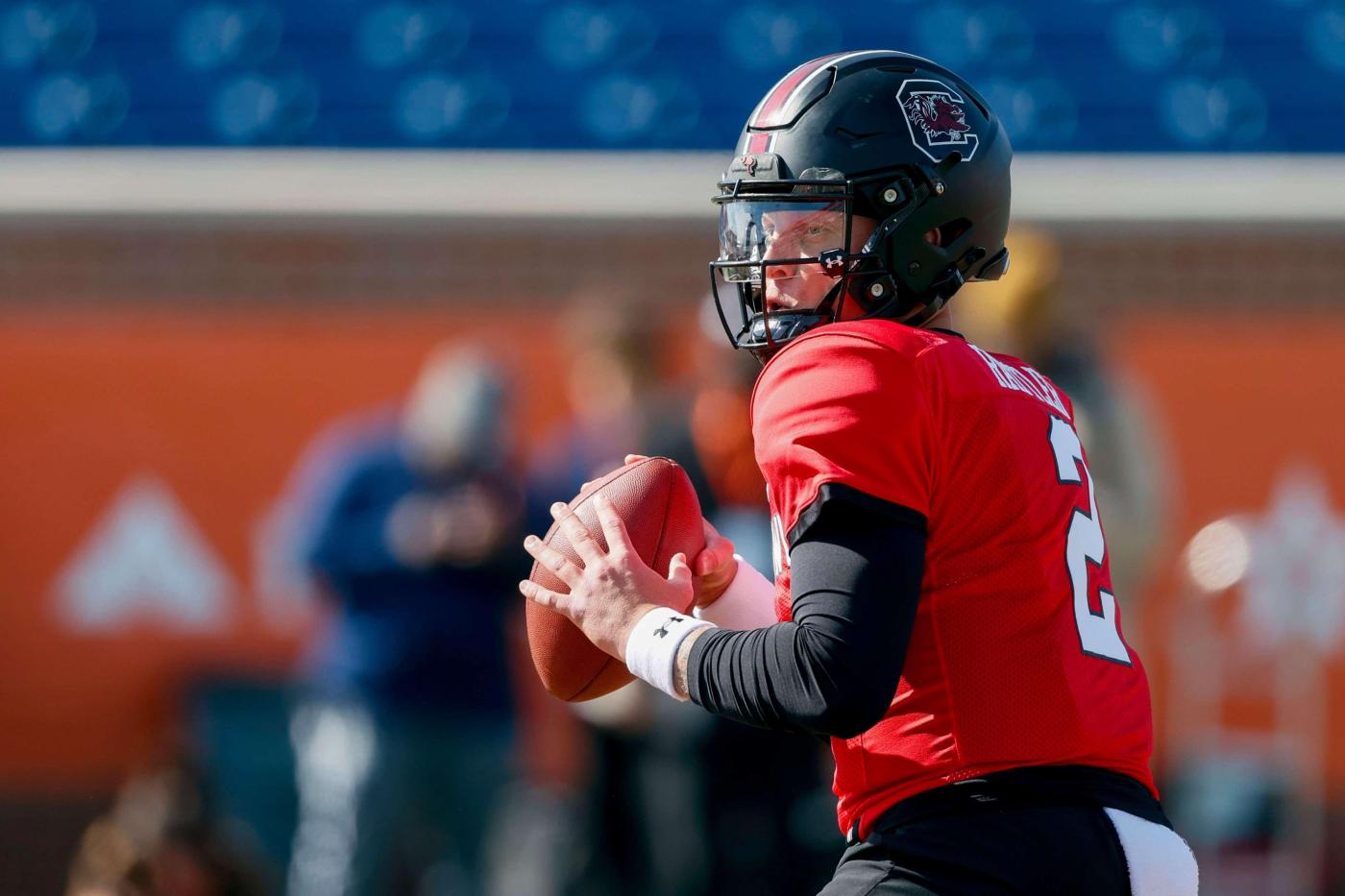
MOBILE, Ala. — Kerry Joseph doesn’t have any thoughts yet on the Chicago Bears’ biggest offseason decision, the one that holds the key to the NFL draft.

The team’s new quarterbacks coach, hired Friday, doesn’t even know where his office is at Halas Hall. He has been on a whirlwind tour since the season ended, free to seek a new job after the Seattle Seahawks forced out coach Pete Carroll.

Joseph, the assistant quarterbacks coach for the Seahawks the last two seasons, spent one day in Lake Forest interviewing for the Bears job. In between, he was scrambling to get to Mobile, where he’s serving as quarterbacks coach of the American team in the Senior Bowl.

Somehow along the way, Joseph got hooked up with Bears gear and was wearing a team-issued navy hat, navy shorts and gray sweatshirt at practice Tuesday at Hancock Whitney Stadium on the South Alabama campus.

He doesn’t have preliminary thoughts on Justin Fields. Joseph was the assistant wide receivers coach in Seattle in 2021, when the Bears drafted Fields. He has yet to dig in on this year’s draft, in which the Bears hold the first and ninth picks and are in position to select a new quarterback.

“I was getting transitioned to coming out here,” the 50-year-old Joseph said.

It’s the first time he has been an NFL position coach — above the assistant position coach level. The connection is easy to make. He worked with new Bears offensive coordinator Shane Waldron, who came from the Seahawks. The Bears also interviewed Seahawks quarterbacks coach Greg Olson for the offensive coordinator job.

The last first-time quarterbacks coach the Bears hired was Shane Day in 2010 based on his experience working with then-offensive coordinator Mike Martz in San Francisco. Since Day, the Bears have rolled through Jeremy Bates, Matt Cavanaugh, Dowell Loggains, Dave Ragone, John DeFilippo and most recently Andrew Janocko.

It would be overly dramatic to say this is the most important offseason for a Bears quarterbacks coach. There has been urgency to get the position right for the longest time. It just so happens they own the No. 1 draft pick as they prepare to thoroughly examine a talented group of passers, including USC’s Caleb Williams, North Carolina’s Drake Maye (who was a spectator at practice Tuesday), LSU’s Jayden Daniels and Michigan’s J.J. McCarthy.

Joseph, who was responsible for red-zone preparation with the Seahawks, had a hand in helping revive Geno Smith’s career in Seattle as Smith threw for 4,282 yards and 30 touchdowns in 2022. Joseph’s knowledge of Waldron’s system will be critical whether the Bears draft a quarterback or not.

“When you think about Shane and what we were able to do with the (Seahawks) offense, I think quarterback play is about having confidence,” Joseph said. “Quarterback play is just about being competitive. It’s about being smart, being dependable, having a good IQ of the game, being passionate.

“When you think about traits, when you talk about quarterback play and when you talk about Shane’s mentality, it’s just about being connected to the play caller, being connected to the offense. There are some things you’ve got to have and you’ve got to bring to it.”

Joseph was a quarterback at McNeese State and had a 42-11 record as a four-year starter, helping the Cowboys to two Southland Conference titles. He spent time with the Cincinnati Bengals in 1996 as an undrafted free agent before playing in NFL Europe. He tried to make the Washington Redskins as a slot back and then played safety for the Seahawks from 1998 to 2001, appearing in 56 games with 14 starts.

He returned to quarterback in the Canadian Football League in 2003, winning a Grey Cup with the Saskatchewan Roughriders in 2007, when he was named the league’s most outstanding player. After retiring following the 2014 season, he got into coaching at the college level with stops at his alma mater and Southeastern Louisiana before joining the Seahawks as an offensive assistant in 2020.

The diverse background — having played defense in the NFL — gives him a different perspective to teach offensive football.

“It helps me tremendously,” Joseph said, “because playing the safety position, playing that dime (position), playing down in the box helped me understand how defenses attack the offense, how guys fit. So now that I’ve gone back to quarterback, I see it from a defensive mentality.

“Being able to help guys to understand the game, not just from the offensive side but from the defensive side, kind of helped (with) where to put their eyes. That’s what it did for me as a player, and I try to teach it that way with a defensive mentality.”

Joseph will learn where his office is soon, and then he can hit the ground running as the Bears prepare for the draft and install a new offense — quite possibly with a new quarterback. As far as his philosophy on developing a young quarterback, he leaned into some basic tenets.

“I use three things: accountability, responsibility, communication,” Joseph said. “It’s about trust, believing and having confidence in each other. A quarterbacks coach and a quarterback, you’ve got to have those three things.

“Then, hey, it’s about the fundamentals. It’s about developing the fundamentals, developing the mentality to be a good leader. To be a winner. Just willing to compete. There are so many things that I have in my philosophy as a person that I take into the coaching world and into the quarterback room to help develop a group of guys.”

()
Are the Chicago White Sox eyeing a stadium move to the South Loop?

posted in: News | 0

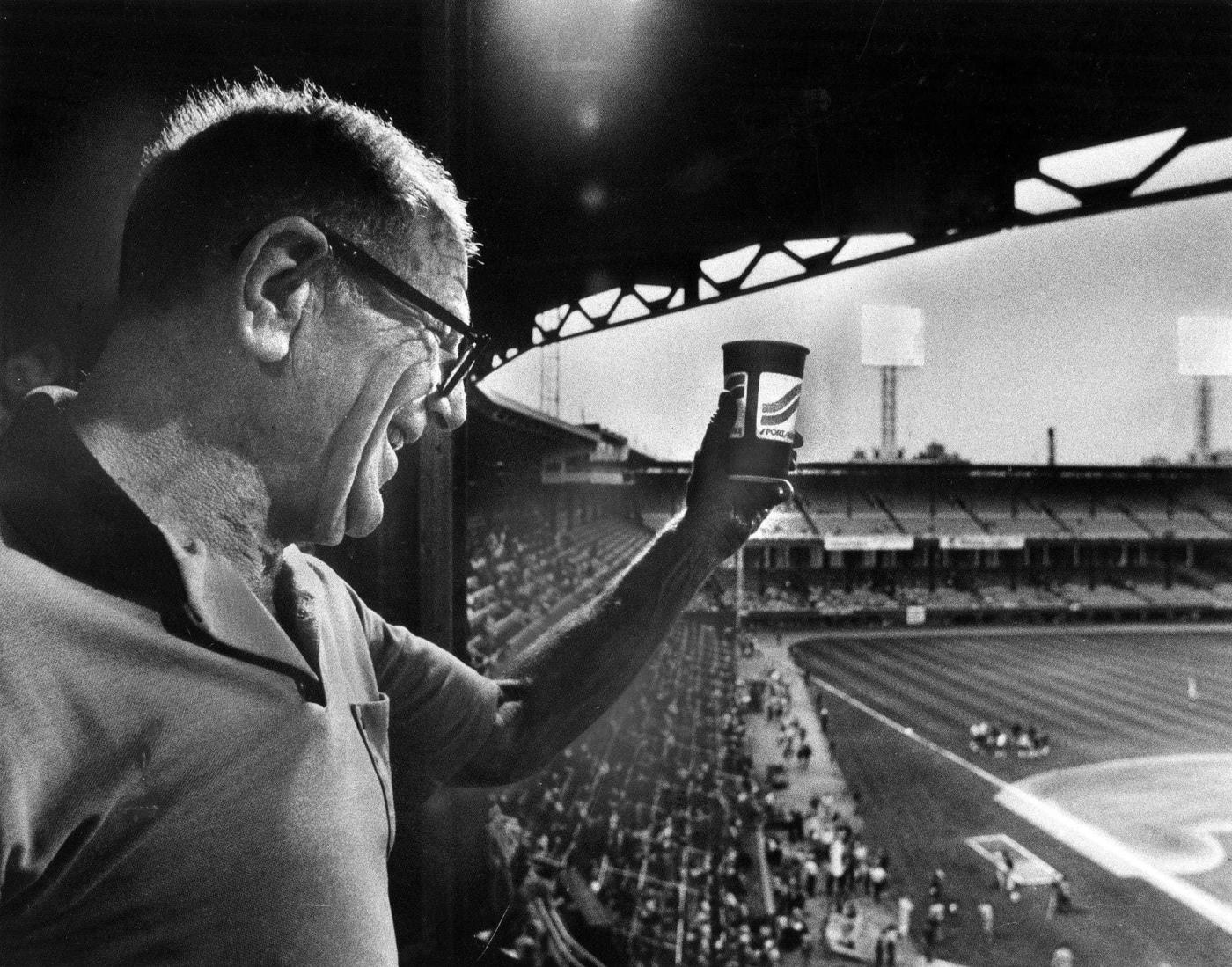
When the Chicago White Sox unveiled a sparkling new stadium on 35th Street in 1991, owner Jerry Reinsdorf declared he was “awestruck” at its beauty and predicted it wouldn’t “take a back seat” to any stadium in Major League Baseball for years to come.

But since that April day after the Sox had shuttered the original Comiskey Park across the street, the South Siders’ current home stadium has been a consistent source of criticism, tension and angst, with fans clamoring for a change even as major improvements have been made.

This week, a new twist developed in that long-running saga when it was revealed that Reinsdorf and the White Sox were in discussions about building a baseball-only Sox stadium about 3 miles to the northeast at Roosevelt Road and Clark Street as part of a massive development at a property in the South Loop called “The 78.″

Ald. Pat Dowell, whose 3rd Ward includes The 78, confirmed Related Midwest, the developer that owns the parcel, wants to discuss a White Sox relocation to that site.

“I will meet soon with the developers of The 78 to discuss the possibility of a stadium being built for the Chicago White Sox,” Dowell said in a statement Thursday afternoon.

Ald. Nicole Lee, who represents the area that includes Guaranteed Rate Field, where the team plays now, said she will also meet with Related Midwest and the Sox on the proposal.

“The White Sox have proudly called Chicago and Bridgeport home for over a century,” Lee said. “As a lifelong fan and now alderperson of the 11th Ward, I am wholeheartedly committed to keeping the Sox on the South Side.”

While serious questions remain about how real the talks are, whether such a plan will get off the ground and how it would be paid for, the news the Sox might leave their longtime home in the Bridgeport-Armour Square neighborhood spurred dreams that a modern ballpark ringed by skyscrapers and closer to downtown could breathe new life into the team and its fan base.

“The ballpark is right now not really in a neighborhood, it’s in the middle of nowhere, and a not very attractive nowhere,” said Allen Sanderson, a senior lecturer at the University of Chicago who studies the economics of sports. “And getting to the ballpark, there is nothing wonderful about that experience.”

Related Midwest declined to comment through Tricia Van Horn, vice president of marketing and communications. The Illinois Sports Facilities Authority — which owns Guaranteed Rate Field — has not been involved in the talks, the organization’s CEO, Frank Bilecki, told the Tribune.

“I’m not part of the discussion, at least as of yet,” Bilecki said. “I truly know nothing. I’m a landlord and they’re a tenant, and they’re looking at options as tenants do everywhere.”

The Chicago Sun-Times reported Thursday that “serious” negotiations have taken place between the Sox and Related Midwest about the potential move to The 78.

The Sox and Mayor Brandon Johnson released a joint statement Thursday that did not address the possibility of a new stadium being built on the site.

“Mayor Brandon Johnson and Chicago White Sox Chairman Jerry Reinsdorf met to discuss the historic partnership between the team and Chicago and the team’s ideas for remaining competitive in Chicago in perpetuity,” the statement reads. “The partnership between the city and the team goes back more than a century and the Johnson administration is committed to continuing this dialogue moving forward.”

Sanderson, a Sox fan who often attends games, and who is also a longtime critic of using public funds to finance stadiums, said a new ballpark may not do much to boost attendance.

“The bigger problem might be it’s a really bad baseball team, coupled with the fact that senior ownership hasn’t exactly endeared itself to the public,” he said.

But a new White Sox stadium could act as an anchor for the South Loop, much like Google will be a north anchor when it occupies the James R. Thompson Center, said Robert Sevim, a Chicago-based president of Savills, a commercial real estate firm.

“This would be transformative if it occurs,” he said. “You will be able to create an entire community around the ballpark. Wrigley Field has an entire community around it, and that’s what makes it special, and in some ways, a White Sox park might even do better because you have a clean slate.”

Sevim was a consultant on The 78 project several years ago, but was not involved in any potential deal with the White Sox.

A major league ballpark would likely help kick off other on-site development, perhaps including residences, offices, restaurants and retail, he added, all accessible to downtown residents and workers, he said.

Less clear is what losing the team would mean for the Bridgeport area that has been its home for over a century.

Bill Jackson, executive director at the University of Illinois’ Discovery Partners Institute, said a new home for the White Sox won’t interfere with his group’s plans to construct a $250 million headquarters at the 78.

DPI still plans to break ground this year on the eight-story, glass-and-steel dome, and complete it by December 2026.

Jackson added that he was shown drawings of the proposed stadium this week and believes having an on-site ballpark will help attract more scientists and startup firms to DPI’s future lab, research and office spaces.

He also expects the new infrastructure needed for the ballpark, including additional parking and transportation upgrades, will be useful to DPI as it expands.

A Sox stadium on The 78 site would be a huge positive development for the team and the city — but that doesn’t mean it will happen, said SportsCorp Ltd. President and consultant Marc Ganis, who is not involved with the proposal.

There are many roadblocks, Ganis said, the first being money. Sox owner Jerry Reinsdorf is not known as a big spender, and Johnson has other priorities eating up resources, such as schools, pensions, public safety, and now, the migrant crisis.

“This site could be a great one for the Sox for generations to come,” Ganis said. “But a lot of things that make sense around here don’t happen.”

The question about how any new ballpark would be funded is significant. Guaranteed Rate Field — where the Sox lease runs through 2029 — was paid for using money raised through an increase in Chicago hotel room taxes in a last-minute deal in Springfield in 1988. The city and state also each kick in $5 million per year.

The ISFA still owes about $50 million toward the construction of the stadium, which opened near 35th Street and Shields Avenue in 1991.

Gov. J.B. Pritzker has indicated he’s generally not supportive of state money going toward private, professional sports teams. He expressed this sentiment in the last year over rumblings about whether the Sox would move and in the Chicago Bears’ quest to find a new stadium in the city or suburbs.

As for the reports of the latest talks involving a possible new stadium for the Sox, Pritzker suggested he’d be open to listening to any proposals.

“Nobody’s made an ask yet, so having said that, I think you know my views about privately owned teams and whether the public should be paying for private facilities that will be used by private businesses,” the governor said during an unrelated event at an elementary school outside of Springfield. “Having said that, I mean, there are things that government does to support business all across the state, investing in infrastructure, making sure that we’re supporting the success of business in Illinois.

“So, as with all of the other (things), whether it’s sports teams or other private businesses, we’ll be looking at whatever they may be suggesting or asking.”

Where the Sox will be playing in the future has been a topic of conversation for several months.

In August, Crain’s Chicago Business reported the team was considering a move when its lease at Guaranteed Rate Field expires.

At that time, the Sox said in a statement: “We have not had any conversations about our lease situation, but with six years remaining, it is naturally nearing a time where discussions should begin to take place. The conversations would be with the city, ISFA and the state and most likely would be about vision, opportunities and the future.”

The Sox confirmed a meeting between Reinsdorf and Nashville Mayor Freddie O’Connell took place during the MLB winter meetings in December. But they did not disclose the topics discussed.

Nashville has long been mentioned in speculation as a city to consider if MLB decides to expand.

A Sox move could add a wrinkle to the Bears’ efforts to build a new enclosed stadium. The Bears spent $197 million to buy the former Arlington Park racetrack almost a year ago but have made little progress since then to get tax subsidies or resolve a dispute over property taxes with local school districts.

The Bears have also had discussions with Johnson about staying in the city and with officials about potential sites in Naperville, Waukegan and elsewhere.

Arlington Heights Mayor Tom Hayes said he couldn’t speculate about how the Sox talks might affect the Bears’ options, saying he was still trying to arrange face-to-face meetings between the team and the schools.

“I don’t anticipate that this would negatively impact the momentum we’ve been trying to gain,” he said. “We’re very hopeful things are moving in the right direction, and we’re continuing to work on it.”

A Sox relocation to The 78 might be modeled on the Atlanta Braves’ Truist Park, which opened in 2017 as an anchor to The Battery, a surrounding area of restaurants, housing and entertainment.

Such a mixed-use development is what the Bears have proposed for Arlington Heights. But at 62 acres, the Chicago site is much smaller than the 326 acres at the former Arlington horse track.

Chicago Tribune’s Jeremy Gorner, reporting from Rochester, Ill., and Jake Sheridan contributed.

Schiff blasts Porter’s ‘purity tests’ in Senate debate

posted in: Politics | 0

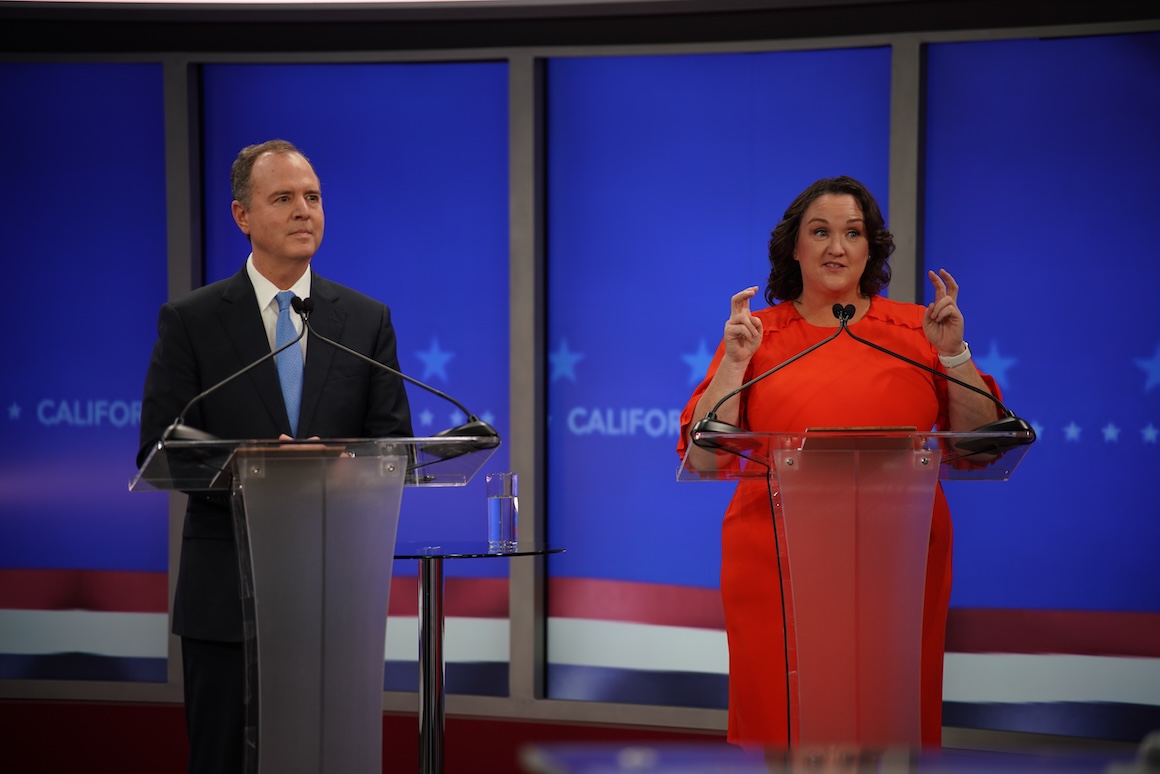
LOS ANGELES – Rep. Katie Porter’s Senate debate strategy on Tuesday was clear from her first answer: Goad fellow Democratic Rep. Adam Schiff into a fight.

By the hour-long debate’s end, she got her wish.

The final on-stage meeting between California’s top four candidates for U.S. Senate featured the most protracted clash yet between Porter and Schiff, the consistent polling frontrunner in the race for the late Sen. Dianne Feinstein’s seat.

With two weeks to go before the March 5 primary, Porter acted like the candidate facing the highest stakes – the prospect of being boxed out of the November general election by Steve Garvey, the Republican ex-baseball phenom who has benefited handsomely from a flood of Schiff-financed ads elevating his profile among GOP voters.

Throughout the evening, Porter lobbed spitballs at Garvey, and even foes not on stage, including another middling GOP candidate and the financiers of a “dark shady super PAC” running ads against her. But one clear focal point for the Orange County congressmember stood apart.

Porter picks her target

Forget Porter’s quippy pile-ons against Garvey from the first Senate debate. In this forum, hosted by NBC4 and Telemundo 52, she maintained a relentless focus on her fellow Democrat, taking every opportunity she could to tie him to corporate interests and the old ways of Washington.

She hammered him for not signing on to bills to address childcare costs or provide rental assistance, despite proposing such policies during his Senate run — the difference, she said, “between Congressman Schiff and candidate Schiff.” She dinged him for requesting earmarks for for-profit companies, a reference to a POLITICO report on Schiff’s previous appropriations request for defense contractors.

The early salvos did little to ruffle Schiff’s implacable demeanor, as he smoothly pivoted to tout other bills he had authored and dismissed Porter’s earmark attack as a “political talking point.”

But Porter’s continual jabs eventually roused Schiff to engage, accusing her of taking thousands of dollars from people working in industries reviled by Democrats, such as oil and pharmaceutical companies and Wall Street.

“The problem with purity tests as Representative Porter likes to establish is invariably the people establishing them don’t meet them,” he shot back.

It was the type of direct Democrat-on-Democrat sparring that Schiff has largely avoided this campaign, preferring to portray this race as a contest against Garvey to ensure an easier competitor in the general election.

Border bill goes bust

Before it died in the Senate earlier this month, the bipartisan border security bill put the Democratic candidates in a tricky spot. President Joe Biden backed the package, but California Sen. Alex Padilla was among its loudest opponents, arguing it gave conservatives too much without advancing the cause of comprehensive immigration reform.

Rep. Barbara Lee, the third Democrat among the top candidates who’s polling in fourth place, spoke out against the package before it failed. Her competitors Schiff and Porter held back on expressing their views – until Tuesday night.

Schiff and Porter joined Lee in opposing the proposal.

“It’s not surprising the package turned out so lopsided,” Schiff said, pointing to the fact that Padilla and other border-state Democrats were not involved in the negotiations. “I would support a package that had a comprehensive immigration reform. This was not that.”

Porter levied even harsher critiques, saying the bill “demonized immigrants by trying to ignore the fact they come here seeking a better life.”

“If we’re going to have a strong economy in the future, we should be focusing on the real problems like fentanyl, human trafficking and gun trafficking,” she said.

Garvey also said he would oppose the bill for having “too many things packed in there” — without specifying which provisions he opposed.

Lee pulls punches

Lee’s strategy throughout the three Senate debates can be succinctly summed up as “the personal is political.” In a bid to make up for her lagging fundraising and airtime, she used her time on stage to tell voters her life story.

Her biography has clear and compelling crossover with issues on voters’ minds, such as her childhood roots in a border town informing her outlook on immigration or her status as a single mother informing her view of gaps in the social safety net.

But she only glancingly used that background as a way to explicitly contrast herself from her opponents.

“I don’t think my opponents here tonight have ever lived in a neighborhood where a smelter was emitting toxic pollutants and chemicals throughout their childhood,” Lee said when asked about climate change, saying growing up in El Paso instilled in her the importance of environmental justice for minority communities.

Despite positioning herself as the progressive standard bearer in the race, she did not capitalize when Schiff was asked about the tough-on-crime legislation he passed as a state legislator in the 1990s – a position that had earned Schiff some blowback from the Democratic left flank.

Schiff, for his part, said he “certainly wouldn’t offer some of that legislation again,” before pitching his other efforts on criminal justice reform.

The dog ate Garvey’s homework

No one will accuse Garvey of focusing too much on the specifics. The first-time candidate has settled on a debate formula that is heavy on platitudes, light on details – and sometimes facts.

Garvey asserted Biden “turned off gas and oil,” leading to spiking energy costs – while in fact, domestic energy production has reached record highs under the current administration.

After stating several times that America is “the torchbearer for democracy,” Garvey was asked to square that sentiment with his previous votes for Donald Trump, who has repeatedly criticized NATO, much to the discomfort of America’s democratic allies in Europe.

Garvey, as he often does with issues regarding Trump, sidestepped the question.

“I look into this camera and talk to the citizens of California…As your senator, I will do everything to maintain your security,” he said, adding he was not focused on any particular person but “38 million Californians and 330 million Americans.”

The non-answer gave Porter the opportunity to trot out her eleventh-hour bid to blunt Garvey’s momentum by portraying him as squishy on Trump.

Instead, she plugged Eric Early, a lesser-known conservative candidate who has failed to qualify for any of the debates, in hopes that the free publicity will peel a few GOP voters his way – and ease her path to November.

“There is a Republican that is dangerous in this race,” Porter said, “and that’s Trump Republican Eric Early, who has said he will be 100 percent MAGA at all time.”

Haley attracts Biden donors as she tries to chase down Trump

posted in: Politics | 0

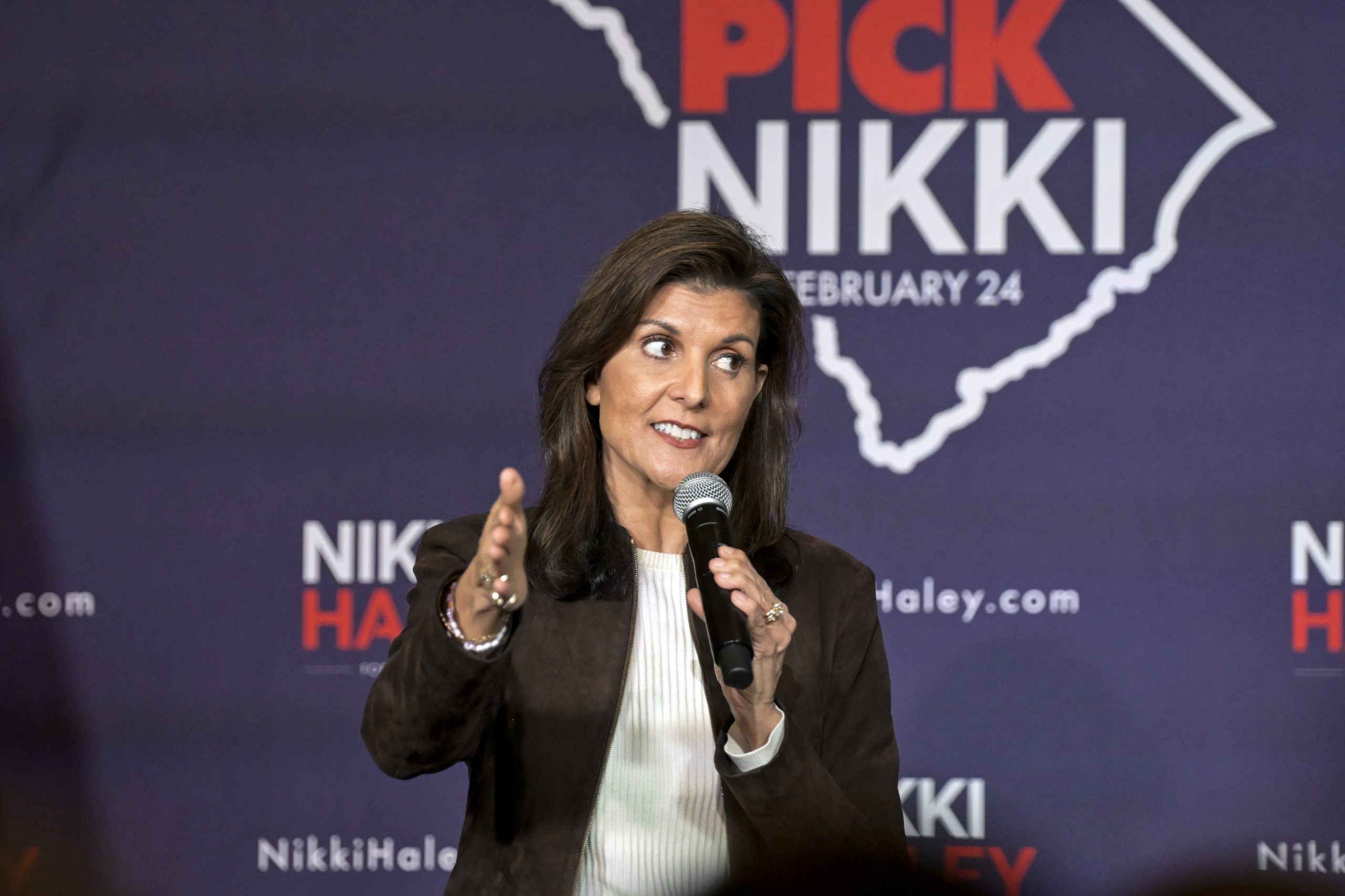
Former U.N. Ambassador Nikki Haley is attracting thousands of donations from people who gave to President Joe Biden’s 2020 campaign as she tries to cobble together a coalition of anti-Trump voters.

More than 5,200 donors to Biden’s 2020 campaign have backed Haley financially, including roughly 1,600 who gave more than $500,000 in January alone, according to a POLITICO analysis of Haley’s most recent fundraising report, filed Tuesday night with the Federal Election Commission.

That report lists donors who give at least $200 total, and Haley’s campaign reported raising money from more than 55,000 such “large-dollar” donors in the month of January, and 123,000 in total over the course of her entire campaign. But crossover donors, who give to politicians of both parties, are generally rare in politics, making the number of donors who previously gave to Biden notable. It’s especially striking because Haley is currently running in the Republican primary to be the nominee to take on Biden in November.

Still, Haley’s fundraising base is predominantly Republican. Over 3,000 large-dollar donors who previously gave to Trump in 2020 financially supported her campaign in January, and nearly 10,000 overall this cycle. Taken together, Haley’s ability to draw from both former Biden and Trump donors illustrates the coalition she has sought to piece together, which includes moderate and independent voters who are unhappy with Biden, Trump or both.

In total, Haley’s campaign raised $11.5 million and spent $13.1 million last month, according to the report her campaign filed late Tuesday. That makes January — the month of the Iowa caucuses and New Hampshire primary — her highest-grossing month so far as she emerged as the sole GOP challenger to Trump. Her campaign reported having just shy of $13 million in the bank as of Jan. 31, compared to more than $30 million cash on hand reported by Trump’s campaign.

The former U.N. ambassador has tried to attract unaffiliated voters — she noted on the campaign trail recently in her home state of South Carolina that anyone who did not vote in the Democratic primary earlier this month is eligible to vote for her this Saturday — and her allies have more actively courted Democrats.

General election polls have repeatedly shown Haley performing better against Biden than Trump, largely based on a subset of voters who prefer her to either. But those voters are a small enough group — and Trump has shown such domination of the GOP — that they have not been able to pull Haley to victory in any Republican primaries so far.

The financial numbers included in Haley’s campaign report do not represent the entirety of her fundraising; Team Stand for America, a joint fundraising committee between Haley’s campaign and other political committees she controls, does not have to file a disclosure with the Federal Election Commission until April.

And it’s clear that Haley is still plowing money into advertising as she tries to chase down Trump. Her campaign spent nearly $7.4 million on media production and placement, accounting for more than half of its spending.

The main pro-Haley super PAC, SFA Fund Inc., also reported spending nearly $13.7 million in January alone. That’s more than the major pro-Trump super PAC — MAGA Inc. — spent, and more than double what the pro-Trump operation spent on efforts like television advertising or get-out-the-vote efforts.

The super PAC is going for broke; it spent down to under $2 million in cash reserves at the end of the month. Cash on hand matters much less for super PACs than for campaigns because super PACs can get one or several donors to write massive checks to fund operations.

But notably, SFA Fund Inc., did not receive a single seven-figure check in January. Instead, her haul was buffered by people giving five and six figures.