Thomas Friedman: What Schumer and Biden got right about Netanyahu

posted in: Politics | 0

One of my ironclad rules of journalism is this: When you see an elephant flying, don’t laugh, don’t doubt, don’t sneer — take notes. Something very new and important is happening and we need to understand it.

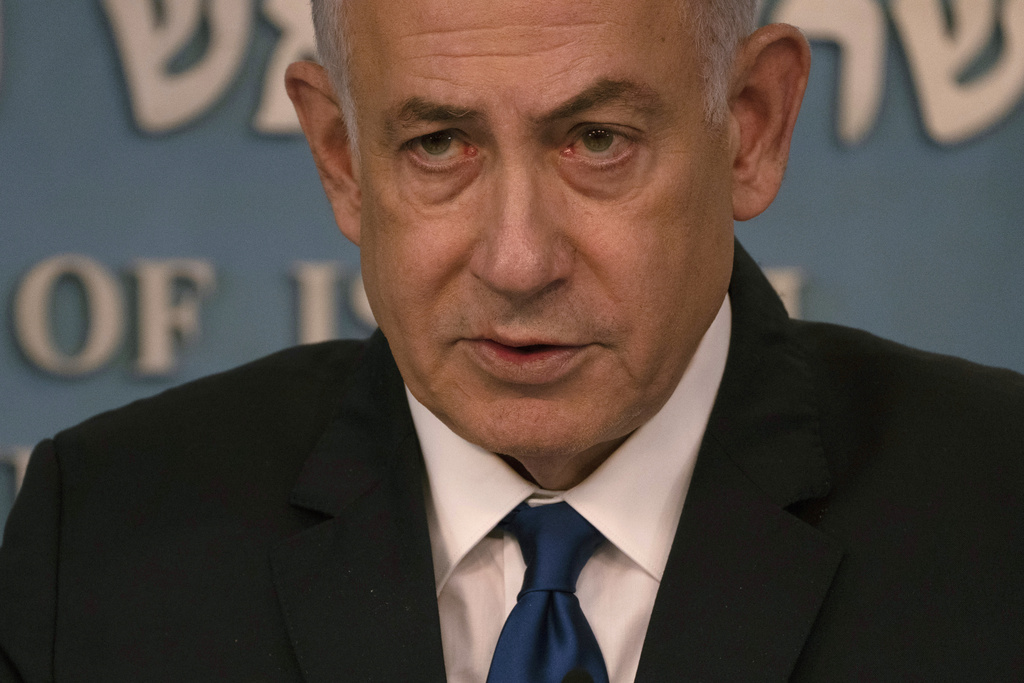
Last week, I saw an elephant fly: The Senate majority leader, Chuck Schumer — an authentic, lifelong supporter of Israel — gave a speech calling on Israelis to hold an election as soon as possible in order to dump Prime Minister Benjamin Netanyahu and his far-right Cabinet.

That was one big flying elephant. And it produced predictable responses from the Jewish right (Schumer is a traitor), from Netanyahu (Israel is “not a banana republic”) and from cynics (Schumer’s just cozying up to the Democratic left). All predictable responses, and all wrong responses.

The right response is a question: What has gone so haywire in the U.S.-Netanyahu relationship that it would drive someone as sincerely devoted to Israel’s well-being as Chuck Schumer to call on Israelis to replace Netanyahu — and have his speech, which was smart and sensitive, praised by President Joe Biden himself as a “good speech” outlining concerns shared by “many Americans”?

Israelis and friends of Israel ignore that basic question at their peril.

The answer has to do with a profound shift in U.S. politics and geopolitics when it comes to the Middle East — a shift that the Israel-Hamas war exposed, and a shift that has made Netanyahu’s refusal to articulate any vision for Israeli-Palestinian relations based on two states for two people a threat to both Biden’s foreign policy goals and reelection chances.

Before I explain why, I want to be very clear about one thing that Schumer and Biden have also made clear: The war in the Gaza Strip was forced on Israel by a vicious attack by Hamas on Israeli border communities, populated by the most dovish Israelis in the country’s political spectrum. If you are calling for a “cease-fire now” in Gaza and not a “cease-fire and hostage release now,” it’s making the problem worse. Because it just feeds Israelis’ fears that the world is against them, no matter what they do.

People protesting Israel’s war in Gaza and the many civilian casualties there also have a responsibility to call out Hamas — as Schumer did. It is a murderous organization that has brought death and destruction, and despair for the people of Gaza, and has done as much since the 1980s to destroy the possibility of a two-state solution as any actor in the region.

Back to the argument: Why has Netanyahu become such a problem for the U.S. and Biden geopolitically and politically?

The short answer is that America’s entire Middle East strategy right now — and, I would argue, Israel’s long-term interests — depend on Israel partnering with the non-Hamas Palestinian Authority based in Ramallah, in the West Bank, on the long-term development needs of Palestinians and, ultimately, on a two-state solution. And Netanyahu has expressly ruled that out, along with any other fully formed plan for the morning after in Gaza.

Why do Israel and the U.S. need a Palestinian partner and a vision for a two-state solution? I see six reasons — that’s a lot, but they all bear on Biden’s challenge and political fate:

1. No army has ever had to fight an enemy in such a dense urban environment that includes an estimated 350 to 450 miles of underground tunnels stretching from one end of the war zone to the other. As a result, such urban warfare was always going to cause many casualties among innocent civilians, even with the most careful of armies, let alone one enraged by the killing and kidnapping of so many children, parents and grandparents.

For those Gaza civilians who survive, I’m sure that nothing could compensate for the loss of their children, parents and grandparents. But an expressed willingness by Israel to forge a new relationship between Israel and the Palestinians in Gaza and the West Bank with non-Hamas-led Palestinians would at least give some hope to all sides that there would never be a round of bloodletting like this again.


2) This is the first big Israeli-Hamas war fought in the age of TikTok. TikTok was designed for a war like this — 15-second videos of the worst human suffering, beamed out constantly.

In the face of that media tsunami, Israel needed a clear message of commitment to a postwar peace process, heading toward two states. Israel had none. As a result, Israel is not only alienating many Arab Americans and Muslim Americans, Biden administration officials say, but it is also in danger of losing support among an entire generation of global youth (including part of the base of the Democratic Party).


3) This is not a war of “retaliation,” like all the previous Hamas-Israel wars — in which Israel punished Hamas for rocketing the country but then left it in power when the fighting was over.

This war, by contrast, is aimed at destroying Hamas once and for all. Therefore, from the start, Israel needed to have an alternative conception of how Gaza could and should be legitimately governed by non-Hamas Palestinians — and no Palestinians are ever going to step up for that job without at least a legitimate two-state process.


4) Hamas’ attack was designed to halt Israel from becoming more embedded than ever in the Arab world thanks to the Abraham Accords and the budding normalization process with Saudi Arabia.

Consequently, Israel’s response had to be designed to preserve those vital new relationships. That could be possible only if Israel was fighting Hamas in Gaza with one hand and actively pursuing two states with the other.


5) This war had a major regional component.

Israel very quickly found itself fighting Hamas in Gaza and Iran’s proxies in Lebanon, Yemen, Syria and Iraq. The only way Israel could build a regional alliance — and enable Biden to help line up regional allies — was if Israel was simultaneously pursuing a peace process with non-Hamas Palestinians. That is the necessary cement for a regional alliance against Iran. Without that cement, Biden’s grand strategy of building an alliance against Iran and Russia (and China) stretching from India through the Arabian Peninsula across North Africa and up to the European Union/NATO is stymied. No one wants to sign up to protect an Israel whose government is dominated by extremists who want to permanently occupy both the West Bank and Gaza.


6) Political scientist Gautam Mukunda, author of the book “Picking Presidents,” made this final, good point to me: “The rise of the progressive left and Netanyahu’s tacit alliance with Trump have weakened support for Israel among Democrats. If Israel fights a war in Gaza with many civilian casualties — but offers no political hope for a better future for both Israelis and Palestinians — over time it obscures people’s memories of the horrors of Oct. 7 and their support for Israel in its wake. That makes it increasingly difficult for even the most pro-Israel American figures — like Schumer — to continue to back the war in the face of the enormous international and domestic costs.”


For all of these reasons, and I cannot say this loudly enough, Israel has an overriding interest in pursuing a two-state horizon. And I cannot say this often enough. I don’t know if the Palestinian Authority can get its act together to be the government that Palestinians and Israelis need it to be; I just know everyone now has a huge interest in trying to make it so.

As such, I believe the Biden strategy will most likely unfold this way: Press as hard as possible on all the parties to get a cease-fire and another hostage release. That cessation of hostilities would then freeze any Israeli military plans for a full-scale invasion of Rafah to capture or kill Hamas leaders believed to be holed up there — an invasion that would very likely cause many more civilian casualties. (I assume the U.S. will urge Israel to use more targeted means.)

Then, use the cease-fire to come in with a big, fresh American-Arab-EU peace initiative that offers Israelis a breadth and depth of normalization with Arab states, including Saudi Arabia, and security guarantees, more than ever before, as the accompaniment to a two-state solution.

With that in hand, Biden could frame the choice for Israel’s next election: “Biden’s plan versus Bibi’s no-plan” — instead of Biden personally versus Netanyahu personally. Let Netanyahu choose between being remembered as the prime minister who presided over Oct. 7 or the prime minister who opened the road to Saudi Arabia.

The hour is growing late. There are a million moving parts, any one of which could fail. But this is my gut feeling for how the next phase of the Gaza conflict could play out and why Schumer’s speech was not just some personal rumination but a deep reflection of America’s best interests at this time — and, I believe, Israelis’ and Palestinians’ best interests as well.

Thomas Friedman, born in Minneapolis and raised in St. Louis Park, writes for the New York Times.

Related Articles

Opinion |


F.D. Flam: Do you really want to find out if you’ll get Alzheimer’s?

Opinion |


Stephen L. Carter: What leash laws for dogs tell us about humans

Opinion |


Andreas Kluth: Don’t fear AI in war, fear autonomous weapons

Opinion |


Richard Williams: The ‘natural’ food debate continues … to get the word wrong

Opinion |


Pamela Paul: Colleges are putting their futures at risk

Wild gain more ground in playoff push, lose Jonas Brodin in process

posted in: News | 0

On the surface, the Wild got everything they wanted out of Tuesday’s game against the Anaheim Ducks.

They got a 4-0 win to gain more ground in their playoff push. They got balanced scoring with goals from center Ryan Hartman, defenseman Jon Merrill, superstar winger Kirill Kaprizov and center Jake Lucchini. They got a bounceback performance by goaltender Filip Gustavsson in net as he posted 27 saves en route to a shutout.

All of that was overshadowed by the potential loss of star defenseman Jonas Brodin.

Though the Wild (34-27-8, 76 points) will certainly take the win as it helped them pull even closer to the Vegas Golden Knights (36-25-7, 79 points) in the race for the final playoff spot in the Western Conference, the lasting image for everybody was Brodin struggling to the bench in a lot of pain.

It happened fairly late in the contest as Brodin got tangled up with Ducks winger Alex Killorn in the corner. It looked like Brodin’s right leg got caught underneath him as he fell to the ice. He was very slow to get up and was unable to put any weight on his right leg as he left down the tunnel.

If Brodin has to miss a significant amount of time, it could be too much for the Wild to overcome. They are already without captain Jared Spurgeon, who won’t return this season, and center Joel Eriksson Ek, who is expected to return at some point later this month.

As for the game itself, as much as the Wild struggled to generate offense in the first period, it felt like only a matter of time before they got things going.

That proved to be the case as Hartman scored 35 seconds into the second period to push the Wild in front 1-0. Not long after that Merrill stretched the lead to 2-0 as rookie center Marat Khusnutdinov recorded an assist for the first point of his young NHL career.

Not to be outdone by his fellow countryman, Kaprizov made it 3-0 midway through the second period with a tenacious effort to fight through traffic in front.

That was more than enough for Gustavsson. He settled in nicely after not seeing very many shots in the early stages of the game.

As the game wound to a close in the third period, Lucchini hammered home a feed from winger Adam Beckman to finalize the score at 4-0.

As much as the Wild might be reeling from the potential loss of Brodin, they don’t have much time to sulk. Not with Wednesday’s game against the Los Angeles Kings looming.

Related Articles

Minnesota Wild |


Wild prospect Adam Beckman happy ‘to play in some meaningful games’

Minnesota Wild |


Wild lose Joel Eriksson Ek at a bad time, again

Minnesota Wild |


Wild will take point, but lament lost opportunity in St. Louis

Minnesota Wild |


Shootout loss gets Wild a point closer to playoffs

Minnesota Wild |


Kirill Kaprizov leads Wild in goals and points, and leading the way for rookie Marat Khusnutdinov

Short-handed Timberwolves put up stiff fight, fall at horn to Denver

posted in: News | 0

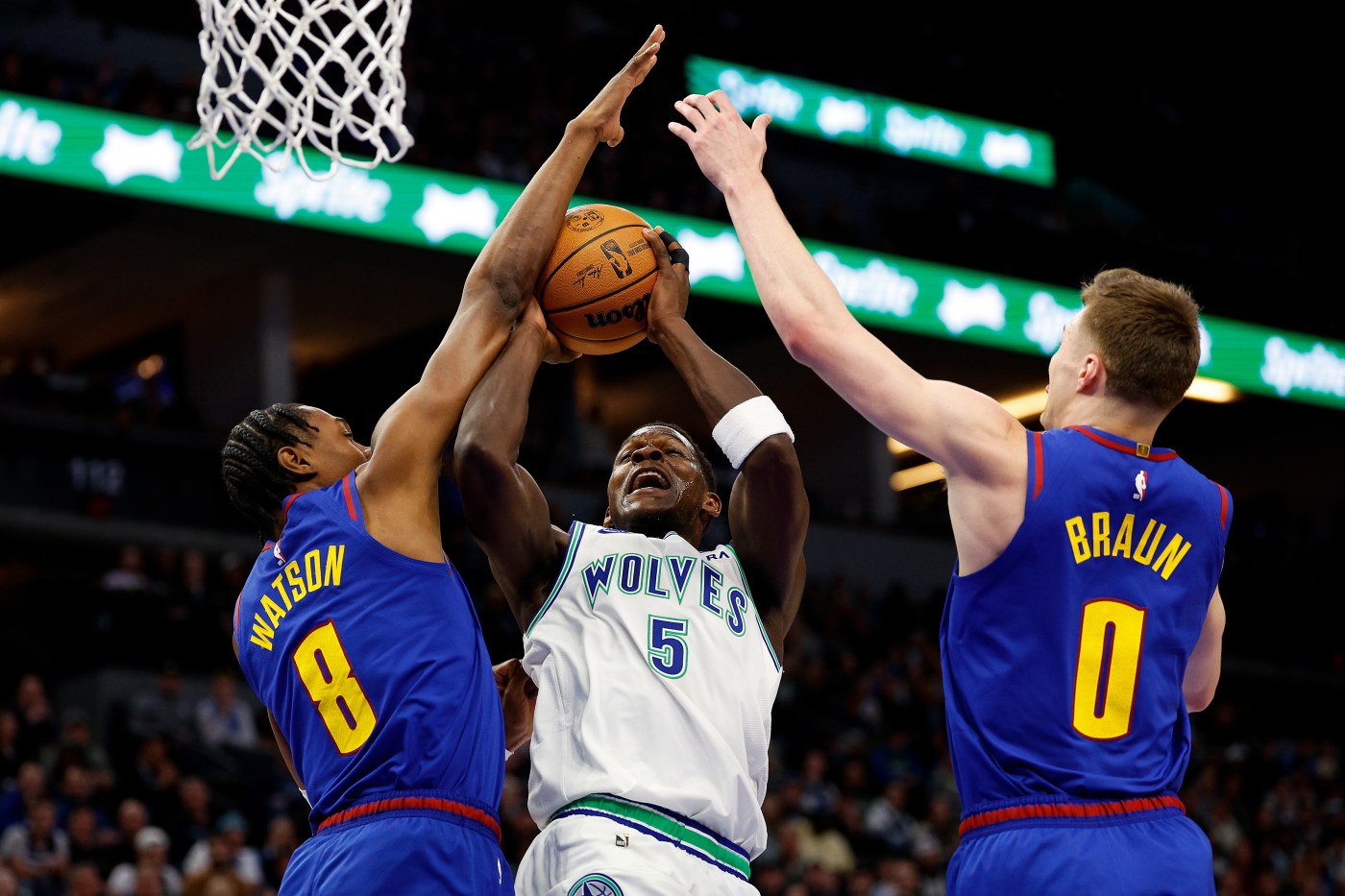
Minnesota put up a title-caliber fight Tuesday in Target Center with a short-handed roster on the second half of a back to back, pushing the defending champs to the brink.

In the end, it wasn’t enough, as soon-to-be MVP Nikola Jokic and sharpshooter Michael Porter Jr. landed a few haymakers that finally knocked the Wolves out of Denver’s 115-112 victory in a pivotal Western Conference showdown.

But you can’t knock Minnesota’s effort. Even down eight points in the final two minutes Tuesday, the Wolves scratched and clawed to the very bitter end. The game ended with Anthony Edwards putting up an open look from just beyond the arc at the horn that just hit front iron.

The Wolves were sans their three centers — Karl-Anthony Towns, Rudy Gobert and Naz Reid. They won a thriller Monday in Utah.

Denver was off Monday and fresh off a heart-breaking loss Sunday against Dallas.

Tuesday’s contest had all the makings of a Denver runaway.

And, for one half, it looked to be heading in that direction. Not that Minnesota played poorly over the first two quarters, but Denver’s size — with Jokic and Aaron Gordon — overwhelmed Minnesota, and Denver led 70-55 at the break.

But Anthony Edwards fueled another run in the third, scoring 14 in the frame to put Minnesota back in front. By the end of the quarter, Denver was double-teaming the 22-year-old the second he touched the ball. It was the only way to douse his inferno that ignited the Target Center building and the team.

The undermanned Wolves were flying around defensively and confidently attacking on the offensive end.

Edwards finished with 30 points, eight rebounds and eight assists. Jaden McDaniels put forth one of his best performances of the season, finishing with 26 points and six rebounds while serving as a defensive menace. Mike Conley scored 13 points, all in the fourth.

Everyone else played their tails off defensively, battling Denver’s size advantage with shear will and physicality. Everything about the performance reeked of the 2021-22 team and its style of play that captured the hearts of basketball fans around the state.

Jokic had 35 points and 16 rebounds — and he hit a few massive shots down the stretch — but the Wolves flustered the world’s best player for a large portion of the final two quarters.

In the end, it is still a loss, one that gives Denver a leg up in the Western Conference standings as Minnesota, Denver and Oklahoma City continue to jostle for the No. 1 seed with the playoffs fast approaching.

But if Minnesota continues to play as it did Tuesday, it will put itself in a good position when all the wins are tallied after 82 games.

How Texas’ plans to arrest migrants for illegal entry will work

posted in: News | 0

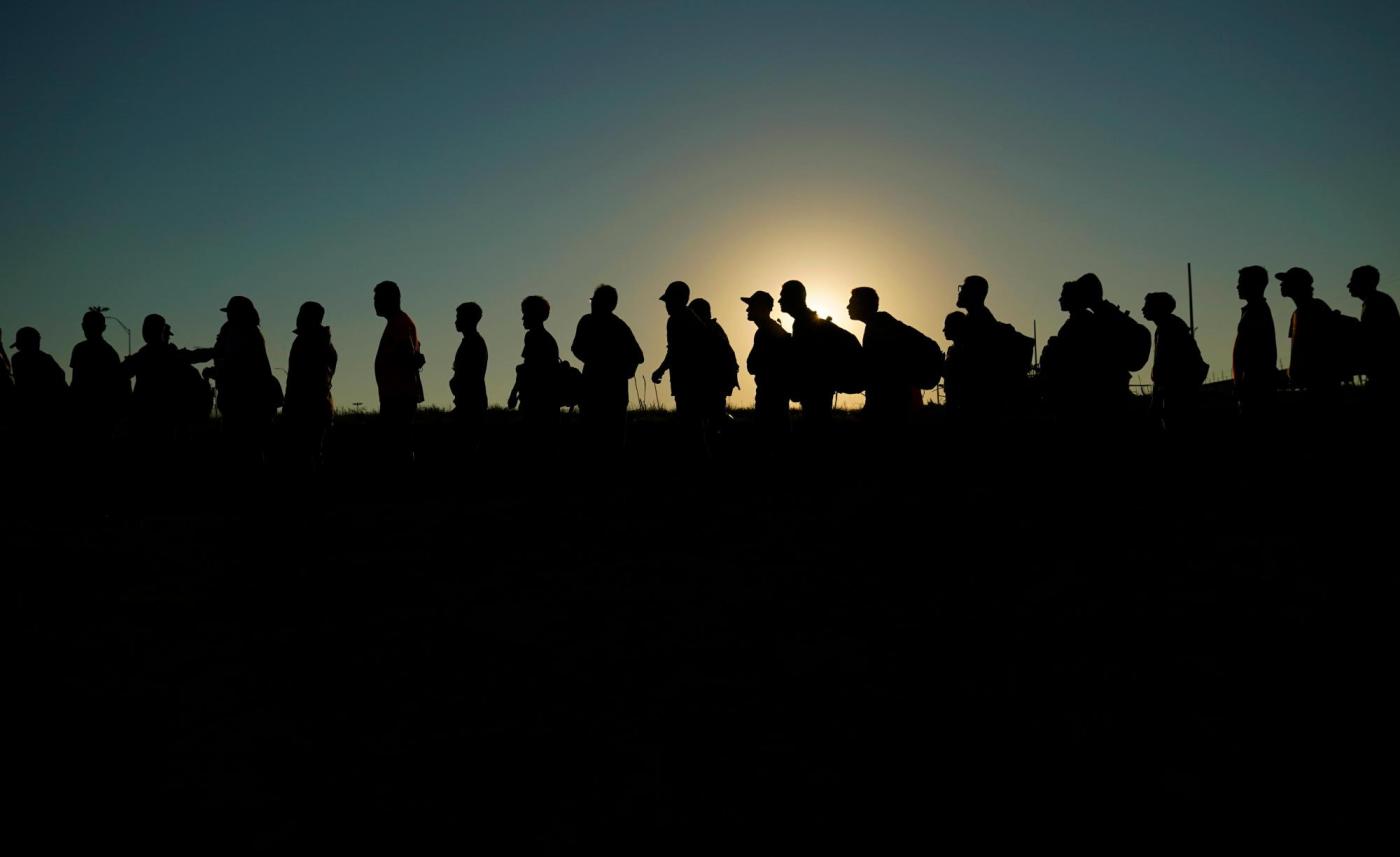
McALLEN, Texas — The U.S. Supreme Court will allow Texas to start arresting migrants who cross the U.S.-Mexico border and ordering them to leave, while the legal battle over Republican Gov. Greg Abbott’s latest immigration move plays out.

The court issued a divided decision Tuesday that allows Texas to enforce its immigration law for now. The high court declined to intervene on an administrative stay placed by the 5th Circuit Court of Appeals.

The Justice Department is challenging the law, saying Texas is overstepping the federal government’s immigration authority. Texas argues it has a right to take action over what Abbott has described as an “invasion” of migrants on the border.

The 5th Circuit is set to hear arguments in April. A federal judge in Texas issued a sweeping rejection of the law last month, calling it a violation of the Supremacy Clause of the U.S. Constitution.

Here’s what to know:

Who can be arrested?

The law allows any Texas law enforcement officer to arrest people suspected of entering the country illegally. Once in custody, migrants could either agree to a Texas judge’s order to leave the U.S. or be prosecuted on misdemeanor charges of illegal entry. Migrants who don’t leave could face arrest again under more serious felony charges.

Arresting officers must have probable cause, which could include witnessing the illegal entry or seeing it on video.

The law cannot be enforced against people lawfully present in the U.S., including those who were granted asylum or who are enrolled in the Deferred Action for Childhood Arrivals program.

Critics, including Mexico President Andrés Manuel López Obrador, fear the law could lead to racial profiling and family separation. American Civil Liberties Union affiliates in Texas and some neighboring states issued a travel advisory a day after Abbott signed the law. The advisory warns of a possible threat to civil and constitutional rights when passing through Texas.

Abbott has rejected concerns over profiling. While signing the bill, he said troopers and National Guard members at the border can see migrants crossing illegally “with their own eyes.”

Where will the law be enforced?

The law can be enforced in any of Texas’ 254 counties, including those hundreds of miles from the border.

But Republican state Rep. David Spiller, the law’s author, has said he expects the vast majority of arrests will occur within 50 miles of the U.S.-Mexico border. Texas’ state police chief has expressed similar expectations.

Some places are off-limits. Arrests cannot be made in public and private schools; places of worship; or hospitals and other health care facilities, including those where sexual assault forensic examinations are conducted.

It is unclear where migrants ordered to leave might go. The law says they are to be sent to ports of entry along the U.S.-Mexico border, even if they are not Mexican citizens. However, Mexico’s government said Tuesday it would not accept the return of any migrants to its territory from the state of Texas.

Is the law constitutional?

The Supreme Court’s decision did not address the constitutionality of the law.

The Justice Department, legal experts and immigrant rights groups have said it is a clear conflict with the U.S. government’s authority to regulate immigration.

U.S. District Judge David Ezra, an appointee of former President Ronald Reagan, agreed in a 114-page order. He added that the law could hamper U.S. foreign relations and treaty obligations.

Opponents have called the measure the most dramatic attempt by a state to police immigration since a 2010 Arizona law — denounced by critics as the “Show Me Your Papers” bill — that was largely struck down by the U.S. Supreme Court. Ezra cited the Supreme Court’s 2012 Arizona ruling in his decision.

Texas has argued that the law mirrors federal law instead of conflicting with it.

What is happening on the border?

Arrests for illegal crossings along the southern border fell by half in January from record highs in December. Border Patrol officials attributed the shift to seasonal declines and heightened enforcement by the U.S. and its allies. The federal government has not yet released numbers for February.

Texas has charged thousands of migrants with trespassing on private property under a more limited operation that began in 2021.
Tensions remain between Texas and the Biden administration. In the border city of Eagle Pass, Texas, National Guard members have prevented Border Patrol agents from accessing a riverfront park.

Other Republican governors have expressed support for Abbott, who has said the federal government is not doing enough to enforce immigration laws. Other measures implemented by Texas include a floating barrier in the Rio Grande and razor wire along the border.
___
Associated Press writers Acacia Coronado and Paul Weber in Austin, Texas, contributed to this report.

Related Articles

National Politics |


Trump asks Supreme Court to dismiss case charging him with plotting to overturn 2020 election

National Politics |


Eight House races to watch in Tuesday’s primaries

National Politics |


Trump is making the Jan. 6 attack a cornerstone of his bid for the White House

National Politics |


Trump says Jews who vote for Democrats ‘hate Israel’ and their religion

National Politics |


Biden and Trump notch more wins Tuesday as primary voters urge them to keep up the fight