
Former DEA agent sentenced to 5 years in prison for using badge to protect drug trafficking friends

posted in: All news | 0

By JIM MUSTIAN

BUFFALO, N.Y. (AP) — In two decades of kicking in doors for the U.S. Drug Enforcement Administration, Joseph Bongiovanni often took on the risks of being the “lead breacher,” meaning he was the first person into the room.

Related Articles


Food costs spiked while gas prices cooled. Here’s the latest look at consumer expenses.


Chess grandmaster died of cardiac arrhythmia with methamphetamine, kratom in his system


Astronauts say space station’s ultrasound machine was critical during medical crisis


Immigration officers assert sweeping power to enter homes without a judge’s warrant, memo says


ICE activity increases in Maine as anxiety grows in immigrant communities

On Wednesday, he felt a familiar uncertainty awaiting sentencing for using his DEA badge to protect childhood friends who became prolific drug traffickers in Buffalo, New York.

“I knew never what was on the other side of that door — that fear is what I feel today,” Bongiovanni, 61, told a federal judge, pounding the defense table as his face reddened with emotion. “I’ve always been innocent. I loved that job.”

U.S. District Court Judge Lawrence J. Vilardo sentenced the disgraced lawman to five years in federal prison on a string of corruption counts. The punishment was significantly less than the 15 years prosecutors sought even after a jury acquitted Bongiovanni of the most serious charges he faced, including an allegation he pocketed $250,000 in bribes from the Mafia.

The judge said the sentence reflected the complexity of the mixed verdicts following two lengthy trials and the almost Jekyll-and-Hyde nature of Bongiovanni’s career, in which the lawman racked up enough front-page accolades to fill a trophy case.

Bongiovanni once hurtled into a burning apartment building to evacuate residents through billowing smoke. He locked up drug dealers, including the first ever prosecuted in the region for causing a fatal overdose.

“There are two completely polar opposite versions of the facts and polar opposite versions of the defendant,” Vilardo said, assuring prosecutors five years behind bars would pose a considerable hardship to someone who has never been to prison.

Defense attorney Parker MacKay noted the judge had acknowledged Bongiovanni as a “beacon” of the Buffalo community. The government’s request for a 15-year sentence, he added, was “completely unmoored to the nature of the convictions.”

“As Mr. Bongiovanni told the judge at sentencing, he is innocent, and we look forward to continuing to work with him to prove that,” MacKay told The Associated Press.

A jury in 2024 convicted Bongiovanni of four counts of obstruction of justice, counts of conspiracy to defraud the United States, conspiracy to distribute controlled substances and making false statements to law enforcement.

Prosecutors said Bongiovanni’s “little dark secret” caused immeasurable damage over 11 years. They likened him to Jose Irizarry, a disgraced former DEA agent serving a 12-year federal sentence after confessing to laundering money for Colombian drug cartels.

Bongiovanni upheld an oath not to the DEA, they argued, but to organized crime figures in the tight-knit Italian American community of his North Buffalo upbringing. During sentencing, Bongiovanni’s family dissolved into tears on the front row of the packed courtroom in downtown Buffalo.

Prosecutors said Bongiovanni’s corruption involved as much inaction as calculated coverup. They pointed to a turning point in 2008 when Bongiovanni could have acted on intelligence about traffickers he knew whose operation would evolve into a large-scale organization with links to California, Vancouver, and New York City.

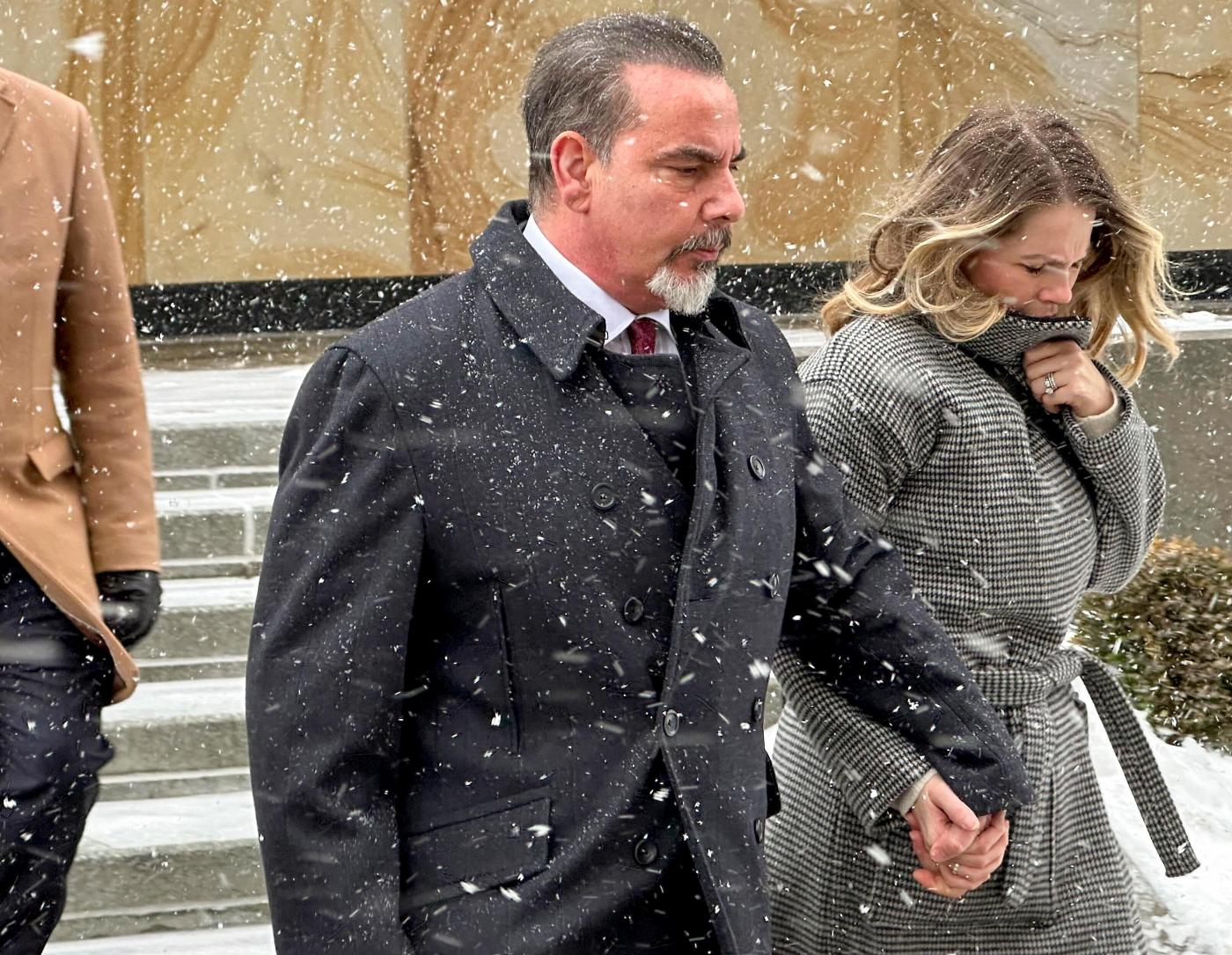
Joseph Bongiovanni, center, leaves federal court with his wife, Lindsay Bongiovanni, right, after being sentenced to 5 years in prison on corruption charges, Wednesday, Jan. 21, 2026, in Buffalo, N.Y. (AP Photo/John Mustian)

He also was accused of authoring bogus DEA reports, stealing sensitive files, throwing off colleagues, outing confidential informants, covering for a sex-trafficking strip club and helping a high school English teacher keep his marijuana-growing side hustle. Prosecutors said he brazenly urged colleagues to spend less time investigating Italians and focus instead on Black and Hispanic people.

“His conduct shook the foundation of law enforcement — and this community — to its core,” Assistant U.S. Attorney Joseph Tripi told the judge. “That’s what a betrayal is.”

The ex-agent’s downfall came amid a sex-trafficking prosecution that took sensational turns, including an implicated judge who killed himself after the FBI raided his home, law enforcement dragging a pond in search of an overdose victim and dead rats planted outside the home of a government witness who prosecutors allege was later killed by a fatal dose of fentanyl.

It also involved the Pharoah’s Gentlemen’s Club outside Buffalo. Bongiovanni was childhood friends with the strip club’s owner, Peter Gerace Jr., who authorities say has close ties to both the Buffalo Mafia and the violent Outlaws Motorcycle Club. A separate jury convicted Gerace of a sex trafficking conspiracy and of paying bribes to Bongiovanni.

The prosecution also cast a harsh light on the DEA after a string of corruption scandals prompted at least 17 agents brought up on federal charges over the past decade. Last month, prosecutors charged another former agent with conspiring to launder millions of dollars and obtain military-grade firearms and explosives for a Mexican drug cartel.

Frank Tarentino, the DEA’s northeast associate chief of operations, said Bongiovanni’s sentence “sends a powerful message that those who betray their badge will be held accountable to the fullest extent of the law.”
Food costs spiked while gas prices cooled. Here’s the latest look at consumer expenses.

posted in: All news | 0

The U.S. Bureau of Labor Statistics released its latest consumer price report last week, providing a closer look at how energy costs, grocery prices and other everyday expenses have shifted in the nearly 12 months since President Donald Trump assumed office.

Across the board, inflation accelerated last month, with prices rising 0.3% from November to December. Consumer costs are also 2.7% higher than they were a year ago, an increase driven largely by surging food prices, which saw a 3.1% hike year-over-year.

Grocery staples like milk, bread, tomatoes and ground beef all went up in December. Meanwhile, gas prices dipped 5.5%, representing the biggest percent decrease in the average nationwide cost going back at least two years.

The Tribune is tracking 11 everyday costs for Americans — eggs, milk, bread, bananas, oranges, tomatoes, chicken, ground beef, gasoline, electricity and natural gas — and how they are changing, or not, under the second Trump administration. This tracker is updated monthly using CPI data from the U.S. Bureau of Labor Statistics.

To see the average U.S. price of a specific good, click on the dropdown arrow below and select the item you wish to view.

Eggs

Egg prices have fallen for an eighth month, down another 15 cents from November to land at $2.71 for a dozen large Grade A eggs.

The continued drop-off in prices is the result of a declining number of bird flu cases in commercial and backyard flocks — particularly among egg-laying hens. From the beginning of December through the first half of January, roughly 1.8 million birds were affected by highly pathogenic avian influenza in the United States, with less than 150,000 of the birds being table egg-layers, according to U.S. Department of Agriculture data. By comparison, in January 2025, during the height of the outbreak, there were nearly 19 million cases among egg-layers alone.

The cost of eggs is currently about 35% less than it was in December 2024, before Trump’s swearing-in, and prices have plummeted 56% since March, when the nationwide average was a record-breaking $6.23 per dozen.

Milk

The cost of milk, meanwhile, jumped 5 cents month-over-month.

A gallon of fresh, fortified whole milk is now priced at $4.05 — a 1% decrease in price from this time last year.

Bread

The cost of white bread also ticked up by a few cents in December. Even so, at $1.83 per pound, the national average is 10 cents less than it was when Trump started his second term.

Bananas

Banana prices were unchanged in December, remaining at $0.66 per pound. That average is just 1 cent off the all-time high recorded in September and is nearly 7% more than it was 12 months ago.

Recent price inflation is likely a byproduct of the president’s trade war, with 10% reciprocal tariffs imposed on Guatemala, Ecuador, Costa Rica, Colombia and Honduras, and a 25% “fentanyl tariff” levied against Mexico — all of which are among the top suppliers of bananas to the U.S.

But in mid-November, Trump took action to combat rising grocery costs, announcing that some agricultural products would be exempt from reciprocal tariffs due to “current domestic demand for certain products” and “current domestic capacity to produce certain products.”

Both fresh and dried bananas were among the listed exemptions.

Oranges

It’s cold and flu season, which means stocking up on citrus. Luckily, you won’t have to pay as much for your daily dose of Vitamin C the next time you visit the grocery store.

The average price of navel oranges was $1.57 per pound in December — a 23 cent drop from September, the next most recent month of data.

This sharp decrease in cost is standard for the fruit market this time of year: Oranges are cheapest in the winter months, then increasing in price throughout the late spring and summer and eventually peaking in September or October each year.

Additionally, as with bananas, oranges are now exempt from most reciprocal tariffs, bringing down costs for foreign growers like Chile, South Africa and Australia.

Tomatoes

As of December, the cost of field-grown tomatoes was $1.84 per pound, a slight increase from the previous month but still lower than August and September.

This change is somewhat of an abnormality given the harvesting season. Typically, tomato prices spike in the fall and peak in the early winter months, but according to the USDA, softer market conditions domestically have driven cheaper retail costs — particularly for this time of year.

Prices for fresh tomatoes are down roughly 10% since Trump took power.

Chicken

After months of moderately raised prices, the cost of chicken seems to be on the decline.

Prices fell slightly for a fifth month, with a pound of fresh, whole chicken now costing an average of $2.02 nationwide. Even so, grocery store prices have stayed fairly stagnant, continuing to hover around the $2 mark for more than two years.

As a reliably cheap source of protein, there’s a reason chicken remains a staple in so many Americans’ diets.

Ground Beef

A notably less cheap source of protein? Ground beef.

Prices have been steadily climbing since last January, with ground beef costs ballooning by more than 18% — or about $1 per pound.

This can be attributed to a confluence of factors. The U.S. cattle inventory is the lowest it’s been in almost 75 years, and severe drought in parts of the country has further reduced the feed supply, per the USDA. Steep tariff rates on top beef importers have also played a part in higher prices stateside, but as of Nov. 13, high-quality cuts, processed beef and live cattle are exempt from most countries’ levies. Similarly, a 50% tariff on beef products from Brazil was lifted in late November, a huge win given the U.S. imported more beef from the South American nation than anywhere else in the world outside Australia last year.

Still, beef prices are so high that the president has taken to accusing foreign-owned meat packers of intentionally inflating costs and requested that the Department of Justice investigate the matter.

As of December, a pound of 100% ground beef chuck would set you back about $6.52.

Electricity

Electric costs are also hovering around all-time highs at approximately 19 cents per kilowatt-hour.

With the average American household using roughly 899 kWh every four weeks, that translates to a monthly bill of about $170.

Increased energy demand as a result of power-hungry data centers is a growing issue for many states — Illinois included. A recent report released jointly by three state agencies said Illinois could be five years away from chronic electricity shortages and higher monthly bills. As for Chicago, the Illinois Commerce Commission recently approved a $243 million rate reconciliation request for ComEd, the city’s primary electric utility. That hike will be passed along to customers, with a delivery charge increase of $3.10 per month starting in January.

To offset these rising costs, Gov. JB Pritzker earlier this month signed the Clean and Reliable Grid Affordability Act, and ComEd is offering state-mandated nuclear energy credits.

Still, for many Americans, relief is needed. Since last year, the average price of electricity per kilowatt-hour has risen by 7%.

Gasoline

The price at the pump saw a noticeable decrease month-over-month.

Dropping 18 cents, the average nationwide cost of gasoline registered at $3.05 per gallon of regular unleaded. Fill-ups were considerably cheaper in Chicago, too. From November to December, prices dropped by 22 cents a gallon, landing at $3.07, according to data from the U.S. Energy Information Administration.

Declining gas costs have become an oft-cited accomplishment from White House officials. In his presidential address last month, Trump highlighted the work his administration has done to lower prices, and last week, the White House X account shared a post claiming that 43 states now boast averages under $3 a gallon.

In truth, from January to December, the cost of gasoline has fallen by 5% nationwide. In that same 12-month window under President Joe Biden, prices spiked by more than 46%.

Natural Gas

Piped utility gas, or natural gas, is another expense that’s creeping up.

On average, Americans are paying nearly 12% more to heat their homes, ovens and stovetops than when Biden left office. Average prices nationwide sit at $1.70 per therm — the highest they’ve been in three years.

What’s more, both Chicago-area gas utilities, Peoples Gas and Nicor Gas, are seeking rate increases upward of $200 million. If approved, Chicagoans and suburban residents alike will see higher charges on their monthly bills.

DFL state lawmakers decry ICE tactics toward U.S. citizens

posted in: All news | 0

Flanked by DFL lawmakers from across the Twin Cities, Nasra Ahmed broke down in tears Wednesday as she recounted sharing a cell with a fellow U.S.-born citizen, a Native American woman who also detained by U.S. Immigration and Customs Enforcement at the federal Whipple Building at Fort Snelling.

“She had gashes on her face. They had shattered her (car) windows,” said Ahmed, 23, a Somali-American who spent two days in federal detention last week after a rough arrest at the hands of a dozen ICE agents on St. Paul’s East Side. “We were both crying together. We were holding each other tight. I’ll never forget the fear that we both felt in our hearts that day.”

Federal officials have said they are targeting “the worst of the worst” criminals, but lawmakers have pointed to Ahmed’s experience as illustrative of the growing number of ICE arrests involving U.S. citizens and others with no criminal history since a large-scale mobilization of federal agents got underway in Minnesota in early January.

State Rep. Mohamud Noor, DFL-Minneapolis, showed reporters video of an ICE stop in St. Cloud that resulted in the detention of a driver who was able to show evidence of his U.S. citizenship. He, too, is being held at the Whipple Building, Noor said.

State Rep. Samakab Hussein, DFL-St. Paul, said many detainees have been transferred to Texas for further processing, often without their family’s knowledge, and those who are released are put out on the streets of Houston or El Paso without their phones or any immediate way to contact relatives.

“Minnesota is better than this,” Hussein said. “We will not be silent. We will be demanding accountability. … It’s kidnapping for those people who are here legally.”

Appearing alongside state lawmakers in a Capitol press room, St. Paul City Council Member Anika Bowie said the city council will ask the governor’s office to freeze residential and small business evictions during a difficult time for many renters afraid to leave home and go to work, even if they have lawful status. The council later voted 6-0 to support making the request.

State Rep. Mara Isa Perez-Vega, DFL-St. Paul, said Ahmed and others detained by ICE will carry psychological wounds for years, and the St. Paul delegation will advocate for an infusion of state funding to support family behavioral services in St. Paul and Ramsey County.

Related Articles


Immigration officers assert sweeping power to enter homes without a judge’s warrant, memo says


Kaohly Her concerned ICE impact on St. Paul businesses, safety


St. Paul schools: 6,000 students to do online learning due to immigration actions


ICE activity increases in Maine as anxiety grows in immigrant communities


Court lifts restrictions on immigration officers’ tactics in Minnesota

“This is trauma that is not ever going to leave this young woman for the rest of her life,” said Perez-Vega, who said she’s also working on legislation to support children who have been separated from their parents by federal action.

On social media, some critics have shared a 10 or 20-second clip of Ahmed’s detainment, in which it appears she spits forcefully toward at least one agent. Ahmed said that occurred after she was surrounded, pushed to the ground hard enough to produce cuts to the side of her head, handcuffed and called a racial slur.

“It was fight or flight,” she said.

Chess grandmaster died of cardiac arrhythmia with methamphetamine, kratom in his system

posted in: All news | 0

A chess grandmaster from the Bay Area who died in October was found to have died due to a probable cardiac arrhythmia and had methamphetamine and the active ingredients of kratom in his system at the time of his death, authorities said.

Daniel Naroditsky, 29, a Foster City native who became one of the most influential voices in the sport of chess, died Oct. 19 at his North Carolina home.

In January, an investigative report listed Naroditsky’s pending probable cause of death as cardiac arrhythmia and cardiac involvement in systemic sarcoidosis, according to documents obtained from the North Carolina Office of the Chief Medical Examiner. Methamphetamine and kratom use are listed as contributing conditions. The medical examiner also listed the manner of Naroditsky’s death as an accident.

“The circumstances and scene findings suggest that death occurred suddenly, without evidence of acute distress.” the medical examiner wrote. “He did not contact friends or emergency services with complaints of severe illness or pain.”

A postmortem toxicology report conducted Oct. 23 found methamphetamine, amphetamine, mitragynine and 7-Hydroxymitragynine in his system. The levels of the substances found were at levels considered to be non-lethal, authorities said.

Mitragynine and 7-Hydroxymitragynine are the two active components of kratom, which is sourced from trees in Southeast Asia and is a stimulant in low doses and a sedative in high doses, according to a fact sheet from the Drug Enforcement Administration. Kratom is not federally regulated and has not been approved for medical uses by the FDA.

On a separate page, dated in October, the fatal injury or illness is listed as “Kratom and/or illicit substance toxicity vs. Pneumonia.” Naroditsky also had clusters of contusions on both thighs that were in various stages of healing, according to the report.

At the time of his death, Naroditsky did not have a known medical history, authorities said. He was found unresponsive on his couch by friends after missing a planned flight to Colorado. He was last confirmed to be alive around 3 p.m. on Oct. 18, when he received a delivery of a meal that was sitting on his dining room table, partially eaten, when he was found.

A few days after Naroditsky’s death, the International Chess Federation announced a disciplinary and ethics investigation into Vladimir Kramnik, 50, a chess grandmaster who had accused several chess champions, including Naroditsky, of cheating.

Kramnik alleged that these grandmasters used artificial intelligence on a separate computer screen to suggest chess moves, pointing to shifting eyes as evidence. Naroditsky denied the allegations and had the support of other chess grandmasters who painted them as baseless. After Naroditsky’s death, Kramnik called for a police investigation but also defended himself as a whistleblower.

The chess federation, known by its French acronym FIDE, filed an official complaint against Kramnik to its Ethics & Disciplinary Commission in November, outlining a “pattern of conduct” over two years that included harassment and “the insulting of an individual’s dignity” directed toward Naroditsky and another player, according to a press release from FIDE.

There was initial concern that Naroditsky’s death may have been due to an overdose on illicit substances, based on concern from friends and viewers that he had been exhibiting altered mental status while streaming the night before he was found deceased, authorities said.

Two days before, friends visited Naroditsky’s home and confiscated 40 pills, which they described to authorities as “probably Adderall,” after he had exhibited “concerning altered mental status” while live-streaming online.

Authorities did not find any drug paraphernalia, illicit substances or beverages containing alcohol in Naroditsky’s residence. They did locate bags of kratom powder and foreign over-the-counter medications used to treat colds, sore throats and coughs, authorities said.

The toxicology report revealed methamphetamine and amphetamine at levels that indicated the amphetamine was present from the metabolism of methamphetamine rather than direct ingestion, authorities added. Naroditsky did not have any prescriptions for methamphetamine or amphetamine listed in the North Carolina Controlled Substance Reporting System.

Radiographic imaging completed after Naroditsky’s death was “highly suggestive” of lung disease, authorities said. The medical examiner narrowed down the diagnosis to sarcoidosis, which causes a build-up of immune cells in organs and tissues.

The investigation found that there was “no evidence for intentional or unintentional overdose,” the medical examiner wrote, but the substances found in his system can increase the risk of cardiac arrhythmia and may have contributed to his death.

Law enforcement officials do not suspect foul play in Naroditsky’s death.

Naroditsky was raised in Foster City, where he first won a children’s chess world championship title as a sixth grader in 2007. He competed in his first chess tournament in Fremont at age six. He went on to earn the title of grandmaster at the age of 18.

Naroditsky studied at Hillsborough’s Crystal Springs Uplands School, then attended college at Stanford University, where he studied history. At the time of his death, Naroditsky was working as a coach at the Charlotte Chess Center in North Carolina. He also streamed videos of his chess games and commentary of other games on his Twitch and Youtube channels.

Naroditsky was ranked in the top 200 worldwide traditional chess players and won titles for blitz chess, a faster-paced game in which he ranked in the top 25. His most recent win was in August 2025, when he won the U.S. National Blitz Championship.