Editorial: After Venezuela, another Latin American dictatorship frets about its future

posted in: All news | 0

One welcome effect of President Donald Trump’s intervention in Venezuela that led to the capture of strongman Nicolás Maduro is the release of political detainees in the South American nation. It appears that another authoritarian regime, this one in Central America, has taken notice: Nicaragua.

This month, the Nicaraguan government announced the release of dozens of political prisoners after the U.S. ramped up pressure on President Daniel Ortega’s regime. Of course, anything coming from Nicaragua has to be taken with a grain of salt.

Ortega, 80, has been in power for almost two decades.

Without a hint of irony, the government stated the official reason for the prisoner release was to commemorate Ortega’s 19 years of rule. There was no mention of who was released and under what conditions, but a day earlier, the U.S. Embassy lamented that “more than 60 people remain unjustly detained or disappeared, including pastors, religious workers, the sick, and the elderly.”

Nicaragua doesn’t have oil reserves like Venezuela or a strong lobby of exiles like Cuba, but it is as ruthless as the other two dictatorships in the region. Ortega and his wife, Rosario Murillo, who is now “co-president,” have managed so far to remain under the radar of the Trump administration, but there are signs this might be changing.

A recent post from the State Department’s Bureau of Western Hemisphere Affairs stated: “Nicaraguans voted for a president in 2006, not a lifetime of an illegitimate dynasty.” U.S. Sen. Rick Scott, R-Fla., a Trump ally, also said Nicaragua “will get fixed.”

The Ortega-Murillo regime is known for arbitrary detentions of political adversaries, religious leaders and journalists. The couple has stripped hundreds of Nicaraguans of their citizenship and possessions and more than 5,000 religious and civic organizations have been shuttered. Thousands have fled the country.

After Maduro’s fall, the Nicaraguan regime seems to be in survival mode, doing the bare minimum to avoid international scrutiny, but at the same time, repression is still business as usual. A human rights group reported that roughly 60 people were detained for expressing support for Maduro’s capture.

Ortega and Murillo are doubling down on their police state, increasing surveillance in neighborhoods and social media monitoring, El País reported. An analyst interviewed by the Spanish newspaper added that the Nicaraguan “power couple” is increasingly paranoid. This is a sign of weakness that the U.S. could exploit.

There are plenty of reasons why the Trump administration should increase pressure on Nicaragua through political and diplomatic channels. For one, the country has enhanced its ties with Russia and China while remaining defiant in its relationship with the U.S.

Nicaragua is also a transit point for drug cartels. Last year, the Drug Enforcement Administration was set to leave the country due to Nicaragua’s rampant corruption and lack of cooperation, but at least one White House official told Politico that the Central American nation has been changing its tune lately.

The Trump administration should not be fooled. The Ortega-Murillo regime is not interested in drug cooperation, but only in its own survival.

— The Dallas Morning News

Related Articles


Julie Roland: We can’t let Pete Hegseth win his war on women in combat


For some refugees, immigration actions in Twin Cities are familiar


Aaron Coy Moulton: This time the US isn’t hiding why it’s toppling a Latin American nation


Other voices: Harvard’s president reminds academia it’s ‘not about the activism.’


Judge rules US Justice Department filed a lawsuit over Georgia voter data in the wrong city

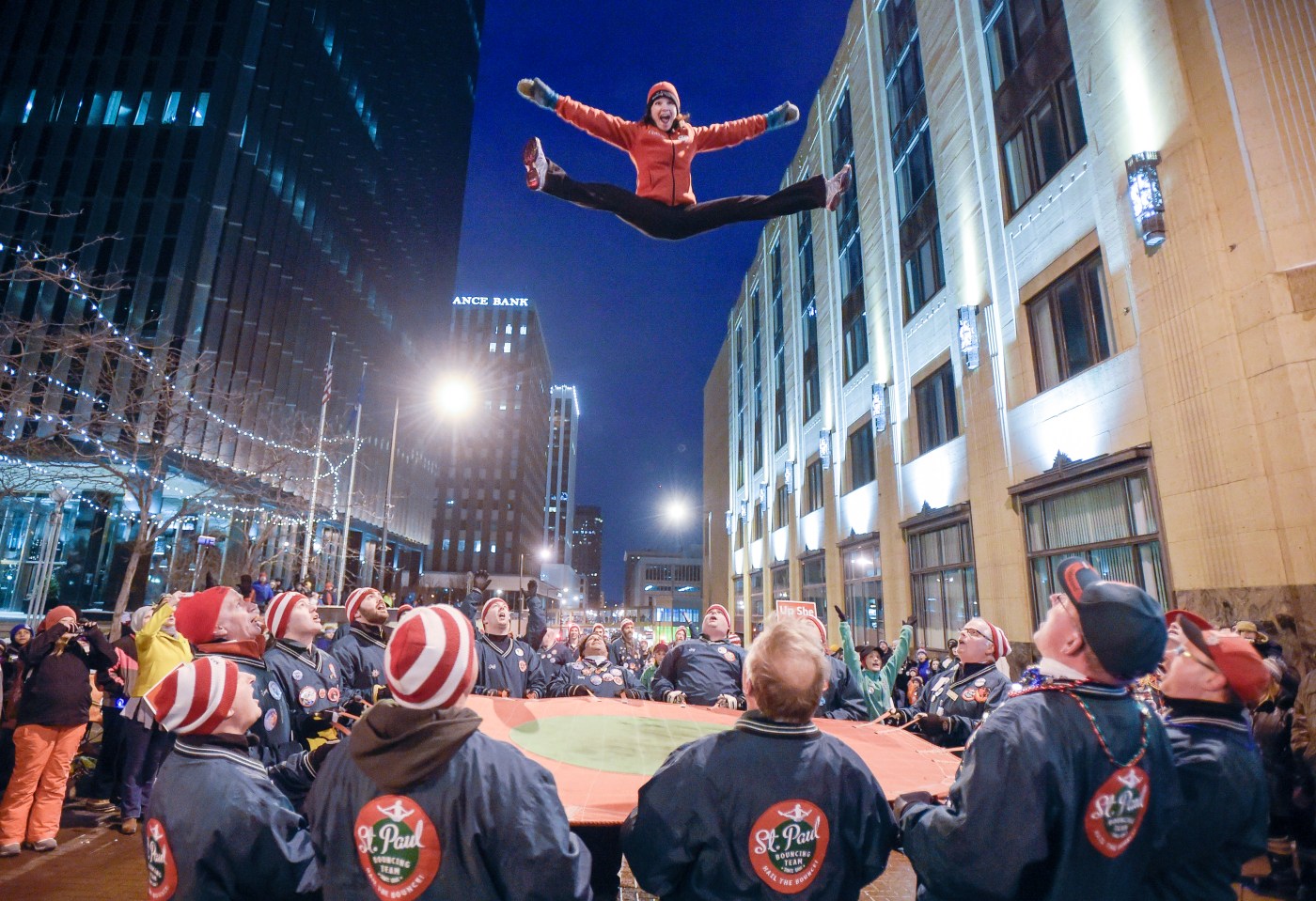
Carrying on the Winter Carnival’s oldest tradition, the St. Paul Bouncing Team still flies upward

posted in: All news | 0

In the 140 yeas since the first St. Paul Winter Carnival, plenty has changed.

In 1886, there was no Vulcan Krewe in red running suits to battle the king then known as Borealis; there was no medallion hunt nor Klondike Kate. In 2026, several-hundred-member toboggan clubs no longer line up to race down purpose-built slides.

But one tradition has not changed: the blanket bounce.

In fact, the legacy now carried on by the St. Paul Bouncing Team represents one of the only annual activities that has existed continuously since the carnival’s first days.

The St. Paul Bouncing Team performs during the 2022 King Boreas Grande Day Parade, Presented by Hamernick’s, along West 7th Street in St. Paul on Saturday, January 29, 2022. (John Autey / Pioneer Press)

Today, the Bouncing Team consists of three ‘bouncing girls’ and an alternate, plus a roster of ‘pullers,’ 14 of whom are needed around the blanket for any given bounce. They count “One! Two! Up she goes!” and swiftly pull the blanket taut, launching the acrobat some 30 feet in the air.

The blanket bounce stems from an Alaskan Inupiat tradition called nalukataq, still part of community celebrations and sport competitions today. And in early Winter Carnival parades, bouncing “units” were as common for social organizations to have as drum and bugle corps and flag brigades and floats. During the 1887 parade, the Daily Pioneer Press noted that “there was not a bouncing blanket that was not in active operation.”

Eventually, in St. Paul, many bouncing units eventually either folded or consolidated under the St. Paul Athletic Club, which had introduced the modern aerialist “bouncing girl” format in the 1930s and was the only game in town by 1950. After the Athletic Club abruptly declared bankruptcy in late 1989, the blanket bunch bounced off on their own and formed the St. Paul Bouncing Team.

To celebrate the 140th anniversary of the Carnival — and with it, 140 years of bouncing at the Carnival —  the Bouncing Team is holding a public exhibition showcase by present and past bouncing girls from across the decades. The event runs open-house-style from 6 to 9 p.m. on Jan. 30 inside Landmark Center.

“Once anybody joins our team, they’re literally part of a family for life,” bouncing girl Lindsay Ferris Martin said. “And the crowd support is so, so energizing. One of my favorite things to do is watch the little kids standing with their parents, and all their jaws just drop. It brings so much joy.”

The blanket toss is among the St. Paul Winter Carnival’s oldest continuous traditions. Here, a team of “pullers” launches a “bouncing girl” high into the air amid a crowd of downtown spectators in January 1917. (Pioneer Press file photo)

‘It just looks like a ball of fun’

A good bounce starts with a good blanket.

In the early days of the blanket bounce and even into the post-Athletic Club era, teams used rectangular blankets, usually wool. Today, the Bouncing Team uses custom-designed round blankets, made of two layers of nylon canvas with a layer of criss-crossing straps sandwiched between them, Appleton said. The Bouncing Team owns two, and stores them with a level of security befitting the country’s nuclear codes.

“There aren’t any other ones in the world; these are the only two that exist,” longtime puller Mike Appleton said. “So a quirky thing we do is, for safety’s sake, we keep them in different places in case something happens.”

Then, each of the 14 pullers is matched up with another puller directly across the blanket who has a similar height and grip strength, so the bouncing girl is launched directly upward and not at an angle.

Finally, the bouncing girl tumbles onto the blanket and prepares for takeoff.

Lindsay Martin of Forrest Lake took to the air with the St. Paul Bouncing Team during the Vulcan Victory Torchlight Parade, part of the 2025 St. Paul Winter Carnival, on Saturday, Feb. 1, 2025. (Craig Lassig / Special to the Pioneer Press)

Although many prospective bouncing girls have experience in gymnastics, cheerleading or aerial acrobatics, the powerful and sudden upward momentum on the blanket is a completely unique sensation, Ferris Martin said. It’s not uncommon for candidates to have to try out for the team multiple times before earning a spot. Ferris Martin herself auditioned for the first time in the mid-2010s and didn’t make the team till her third try, in 2024.

“You learn on the fly, pun intended,” Ferris Martin said, laughing. “There’s no other experience like it, so there’s really no place to practice beforehand. I know my first faces were probably just pure terror, but being able to lose that fear in your face for smiles really counts for a lot.”

There’s no specific rule that bouncing girls must be women, nor that they be a certain weight or height; they just have to be over 21 years old. However, the upward thrust force of the blanket launches smaller people higher, and those who typically get the most altitude — and therefore have the most time for flips and toe-touches and other crowd-pleasing maneuvers — tend to be younger and more petite women, organizers explained.

“We’ve had Jesse Ventura on the blanket. The pullers can handle it,” Appleton said. “But Jesse Ventura doesn’t go as high as Lindsay does.”

Even so, he said, everybody gets air: “I’ve been on the blanket, and it’s astonishing, feeling the amount of horsepower that’s underneath you.”

Although the Bouncing Team is most closely associated with the Winter Carnival, their busiest months are actually July and August, Casserly said. The team travels around the state on the summer parade circuit and makes appearances at special events including, in 2018, the Super Bowl.

And earning one of the regular spots on the blanket is competitive. Typically, the Bouncing Team holds tryouts once a year, during Winter Carnival, and only one new spot is made available.

This year, the team is not holding tryouts at all: Ahead of a busy 2025 summer schedule, early tryouts were held in May and the roster filled up, team president Joe Casserly said. He expects the regular January tryout schedule to resume next year.

The team is still actively looking for pullers this year, though. Prospective pullers can contact Casserly either online at stpaulbouncingteam.org/contact-us or via the team’s Facebook page and, if possible, should plan to attend the Jan. 30 exhibition, he said.

“I think it’s pretty much everybody’s goal on the team to make sure that we’re around 140 years from now,” Appleton said. “And what do we have to do now to make that happen? We need people to help us out with that and maintain the tradition.”

Although the bouncing girl flying up in the air is the most visible performer, the blanket bounce truly is a team sport, members said. And across 14 decades, Bouncing Team leaders say, every single person who has been bounced up has landed safely on the blanket.

“We are athletes, although you would never think about it that way because it just looks like a ball of fun,” Ferris Martin said. “And it really, really is. But beneath that, it’s the grit, it’s the family, it’s the brotherhood and sisterhood, and it is that continued Minnesota tradition.”

Bouncing Girl Sara LeBlanc holds 7 year-old Emme Arbuckle, from St. Paul, as she takes a turn on the blanket during the St. Paul Bouncing Team tryouts at the Landmark Center in St. Paul on Friday, February 5, 2016. (Pioneer Press: John Autey)

Related Articles


Winter Carnival is a family affair for Queen of the Snows — and her dad


As the St. Paul Winter Carnival’s 89th Boreas, Peter Kenefick strives to be the ‘all-in king’


St. Paul Winter Carnival: King Boreas Grande Day Parade canceled today


2026 St. Paul Winter Carnival Royal Family announced


Winter Carnival outdoor kickoff, ‘Day of Good’ postponed because of extreme cold

Readers and writers: An eclectic wintry mix takes a tour of state and time

posted in: All news | 0

It’s an eclectic reading day, with an 18th-century murder in an outhouse and nonfiction about art, community organizing and the environment.

(Courtesy of Wagonbridge Publishing)

“A Necessary Death”: by Terri Karsten (Wagonbridge Publishing, $15)

If you’re already tired of cold and snow, let Terri Karsten take you back to the spring of 1763. In her new mystery, Karsten introduces us to unhappy widow Penelope Corbitt. Her sailor husband is dead and all her possessions and her house were sold to pay his debts. Penelope is traveling from Philadelphia to Boston, where she and her teenage daughter and 10-year-old son will live with her sister. They are escorted by Penelope’s sister’s husband, an ill-tempered, haughty man who never lets the widow forget she will be living on his charity.

When their coach breaks down near a barely-functioning inn, they are rescued by owner Miles, who has let his business fall in disrepair since his wife’s death. Miles and Penelope have a testy relationship but are also drawn to one another. Until another coach arrives, Penelope agrees to use her cooking skills at the inn so her brother-in-law doesn’t have to whine about paying for her and her children’s keep.

Heading to the “necessary” (outhouse), Priscilla finds the dead body of the town’s parson. Who would murder a man of God, even if he didn’t always live up to his calling? And how can Penelope help Mercy, his young, thin, frightened and pregnant widow? What part does a young slave girl have to do with the death? Who is Sam, the Native American who insists on seeing Mercy?  And what does the old man who sleeps by the fire know about the dead parson? Why doesn’t Miles listen to her suspicions?

And then, in the middle of the story, a new character appears who has a profound effect on everyone.

Karsten, who lives in Winona, is a writer, editor, educator and writing teacher. Her specialty is bringing history alive with a focus on women and girls of the past, seemingly powerless but with courage and strength to manage their futures.

All these qualities are in “A Necessary Death.” Penelope is a master baker who makes “dead cakes” for a funeral, mixes up porridge in no time, delights in baking pies and works tirelessly sweeping and washing dishes.  As in all 18th-century inns, men sleep by the hearth although Penelope and her children have a room upstairs. We learn the norms of the era, including Penelope’s sadness at knowing her children will become indentured servants and how widows must  be careful about how they conduct themselves because their reputations are easily questioned. It is taken for granted that husbands can beat their wives and children. The personal stories play out against a background of wider issues such as the French and Indian War being waged between France and England, and mutual distrust between white settlers and local Native Americans.

This is the first in a series and includes some of Penelope’s recipes, such as mincemeat pie. Can’t wait for her second adventure.

NONFICTION

“Place-Keepers: Latina/x Art, Performance, and Organizing in the Twin Cities”: by Jessica Lopez Lyman (University of Minnesota Press, $24.95)

This is an in-depth look at how Latina/x artists (a gender neutral term referring to people with Latin American cultural or ethnic identity) transform art into activism and reclaim space in the Twin Cities, written by an assistant professor at the University of Minnesota department of Chicano and Latino Studies. She examines how these artists navigate and challenge the region’s racial injustices, responding to systemic oppression through public performances and behind-the-scenes negotiations with the state, nonprofits and other institutions. Illustrated with drawings and other interesting artwork.

“A Heathy Agitation”: by Judy and Ralph Brown; illustrated by Richard Schletty (Lamprey Lake Press, no price listed).

Subtitled “West Side Community Organization and the building of democracy in Saint Paul, Minnesota,” this is a thorough look at community-building in the area of St. Paul that is cut off from the rest of the city by the river. As former St. Paul mayor Jim Scheibel writes in a foreword: “From the beginning WSCO was the voice of West Side residents. Early  on WSCO led the effort to save the Riverview Library, members supported the creation of Douglas School park and advocated for increasing the quality of education at Humboldt High School.”

The organization began in 1987 as West Side Citizens Organization and was renamed in 2011. Chapters include history of the organization and the influence of the West Side Voice community newspaper, fighting for Humboldt High School, transportation, services, housing, safety, environment, development and parkland.

“A National Legacy: Fifty Years of Nongame Wildlife Conservation in Minnesota”: by Carrol L. Henderson (University of Minnesota Press, $49.95)

Minnesota became a national leader for a new era of conservation in 1977 when the state’s Department of Natural Resources hired Carrol L. Henderson as supervisor of the Nongame Wildlife program, a position he held for more than 40 years. Now Henderson is an internationally renowned leader in wildlife conservation. He explains in this oversized paperback how the statewide goal to preserve biological diversity became a reality as the program began to prioritize the management and restoration of nonhunted wildlife, from butterflies, frogs, snakes to bats to bald eagles and other birds. It is filed with color photos of turtles, birds and other creatures who are our neighbors.

Henderson has written more than a dozen books and won multiple awards, including the Frances K. Hutchinson Medal from the Garden Club of America for his distinguished service to conservation.

Related Articles


‘American Reich’ explores rising hate crimes and the Blaze Bernstein murder


Michael Connelly says same killer committed Black Dahlia, Zodiac murders


Get through winter doldrums or long drives with these favorite audiobooks


On ‘SNL,’ Finn Wolfhard pays tribute to the Replacements 40 years after they were banned from the show


Why mystery readers will be seeing a lot of the detective DS Cross book series

Literary pick for week of Jan 25

posted in: All news | 0

What a great way to start a new literary year. Six poets laureate from across Minnesota will participate Thursday in the inaugural A Gathering of Poets Laureate: Poets Building Community, the culminating public program of Minneapolis poet laureate Junauda Petrus’s 2025-26 laureate year. It is designed to celebrate the power of poetry to build connection, spark change and imagine a new future together.

Petrus will be joined by Gwen Westerman, Minnesota State poet laureate; Jean Prokott, Rochester poet laureate; Donte Collins, former St. Paul Youth poet laureate; Heid E. Erdrich, inaugural Minneapolis poet laureate; and Joyce Sutphen, former Minnesota State poet laureate.

Guided by Petrus’s question — “What does community look like for you?” — the Laureates will share original poems and reflect on the civic and cultural work they carry into their communities. Moderator will be Cristeta Boarini, partnerships manager at the Loft Literary Center in Minneapolis.

Here’s a look at these talented poets provided by program presenters Minneapolis Arts & Cultural Affairs Department, Loft Literary Center and Minnesota Humanities Center.

Junauda Petrus (Courtesy of the author)

PETRUS: Minneapolis-born writer, playwright and performance artist of Black Trinidadian and Crucian (Virgin Islands) descent. Her poetry celebrates Black wildness, futurism and ancestral healing, weaving poetics and storytelling with histories remembered through dreaming and research. Inspired by her parents and ancestors who immigrated from the Caribbean, her art reflects the magic, resilience and trauma caried across generations, resonating with themes of the Middle Passage, the African diaspora, and the lives of Black communities in Minneapolis. She is author of “The Stars and the Blackness Between Them,” winner of the American Library Association’s Coretta Scott King award.

Heid Erdrich (Courtesy of Angie Erdrich)

ERDRICH: During her term as inaugural Minneapolis poet laureate in 2024, Erdrich produced more than 30 public activities and worked with hundreds of poets, writers and enthusiasts. Author of nine books of poetry and prose, she is editor of the anthology “New Poets of Native Nations” and co-editor of the newly published “Boundless: Abundance in Native American Art and Literature.” Her on-going project is Poetry Service Announcement, which connects the peoples of Minneapolis/Bde Ota Othujwe and promotes poetry as public art. Winner of two Minnesota Book Awards, she serves her communities through formal and informal mentorship, poetry interventions and facilitating responses between communities. A member of the Turtle Mountain Band of Ojibwe, she was among 22 poets in the U.S. to receive a $50,000 grant from the Academy of American Poets.

Gwen Westerman (Courtesy of the author)

WESTERMAN: The first Native American to be a poet laureate (in 2021), she is also a visual artist and scholar with roots deep in the landscape of the tallgrass prairie that reveal themselves in her art and writing. An enrolled citizen of the Sisseton Wahpeton Oyate, she understands from experience the important ways language and the way land shapes who we are.

Joyce Sutphen (Courtesy of the author)

SUTPHEN: Minnesota’s second poet laureate grew up on a farm near St. Joseph, Minn. Among her books are “Straight Out of View,” “Naming the Stars” (Minnesota Book Award), and “To Sing Along the Way: Minnesota Women Poets from Pre-Territorial Days to the Present,” which she co-edited. Her poems have appeared in national publications and journals and she has been a guest on Garrison Keillor’s “A Prairie Home Companion.”

PROKOTT: She is winner of the Howling Bird Press prize for her collection “The Second Longest Day of the Year,” recipient of the AWP Intro Journals Award and the John Calvin Rezmerski Memorial Grand Prize from the League of Minnesota Poets. She has taught at the high school, college and graduate levels for more than 15 years, designing original curriculum for more than 10 courses, ranging from philosophy to the history of film.

COLLINS: A neurodivergent Afro-surrealist blues poet, playwright and movement artist, recipient of awards from the McKnight Foundation, National Urban League, Dramatist Guild Foundation and Augsburg University. They believe poems allow us to wander back to ourselves to meet ourselves anew and that poems are deeply human gestures here to gather us, to propose new, critical and compassionate “floor plans” for the future, for the self. They are the author of the collection “Autopsy” and received a 2023 Jerome Hill Artist fellowship for theater, spoken word and performance.

The program will also recognize Andrea Jenkins for her contributions as a poet and her pivotal role in establishing the Minneapolis Poet Laureate position as a member of the City Council, of which she is now president. She is the first Black transgender woman to be elected to public office in the U.S.

The Gathering of Poet Laureates begins at 5 p.m. Thursday at Open Book, 1101 Washington Ave. S., Mpls. Free, but registration does not guarantee a seat in the main performance space, which will be on a first-come first-served basis. Doors open at 4:30 p.m. and attendees are advised to arrive early. Reservations: loft.org/events/poets-building-community-gathering-poets-laureate. (The program will be streamed in an overflow room.)

Related Articles


‘American Reich’ explores rising hate crimes and the Blaze Bernstein murder


Michael Connelly says same killer committed Black Dahlia, Zodiac murders


Get through winter doldrums or long drives with these favorite audiobooks


On ‘SNL,’ Finn Wolfhard pays tribute to the Replacements 40 years after they were banned from the show


Why mystery readers will be seeing a lot of the detective DS Cross book series