Zeynep Tufekci: You don’t need to freak out about Boeing planes (but Boeing does)

posted in: Society | 0

“Ah, it’s a Boeing Max,” I exclaimed to my travel companions after we boarded our plane a few weeks ago. I looked to see if we were seated next to a hidden door plug panel like the one that blew out on Alaska Airlines Flight 1282 in January. We weren’t, but joining a trend on social media, we cracked a few jokes at Boeing’s expense: “Maybe they can charge extra, saying it’s potentially an even bigger window seat.”

The Federal Aviation Administration recently informed the passengers on that ill-fated Alaska Airlines flight that they may have been crime victims. The agency hasn’t explained why, but Boeing has told the Senate that it cannot find documentation of exactly how the door plug was removed and reinstalled, even though the company acknowledged it is supposed to have kept such records. Facing all this, the company announced last week that it was replacing its CEO. But the bad news wasn’t over: On Thursday, a New York Times investigation reported a disturbing pattern of sloppy safety procedures and dangerous cost-cutting. One expert who had spent more than a decade at Boeing told the Times, “The theme is shortcuts everywhere — not doing the job right.”

Is it any wonder that some travelers are trying to avoid Boeing planes? Kayak, a travel booking site, noticed an uptick in the number of people trying to weed them out; it recently made that search filter more prominent and even added an option to specifically avoid certain models.

Boeing’s problems, great as they are, are just one reason that consumers might be wary of taking flight. United Airlines now also faces scrutiny for a series of safety incidents, although many experts say the issues there do not appear to be systemic. The biggest danger of all may be understaffed air traffic controllers and overstuffed runways, which lead to far too many near misses.

Personally, I am not worried about flying, and other than cracking some ill-advised jokes, I have not changed my behavior. That’s why I hadn’t bothered to check whether I’d be flying on a Boeing Max, or any type of Boeing plane, until after I boarded.

Checks and redundancies

The trajectory of Boeing as a corporation, however, is another matter. It’s going to take a lot more than a shuffle at the top to fix that company’s problems. But the fact that Boeing managed to cut as many corners as it did is testament to the layers and layers of checks, redundancies and training that have been built into the aviation industry. Aviation safety is so robust because we made it so.

Two seemingly contradictory things are both true: U.S. commercial passenger airlines have gone an astonishing 15 years without a single death from a crash. And there is a huge safety crisis in commercial aviation that we urgently need to fix.

Commercial aviation is a complex system involving many dynamics: technology, engineering, corporate culture, regulation, weather, human factors, politics and more.

It’s extremely hard to predict what will emerge from so many different things interacting all at once — an example of the so-called butterfly effect, in which a tiny insect flapping its wings leads to major weather on the other side of the world. And although testing every part of the system on its own is necessary, it’s insufficient, since it’s the interaction of many moving parts that creates those hard-to-foresee problems. Solving equations won’t be enough to manage it all because such systems defy easy calculations.

Layers of precaution

We do, however, have methods to manage complex and safety-critical systems, and if done right, they can work very well.

Perhaps the most important measure is redundancy, the layering of precautions. Since even a minor failure could set off a catastrophic chain of events, it’s important to shore up everything. That’s why many plane parts have duplicates or backups, and much of planes’ production and maintenance is subject to inspections by multiple people.

Redundancy, however, while great for safety, is expensive.

The first Boeing 737 Max crash occurred in Indonesia in 2018. Everyone on board was killed. The next was in 2019, in Ethiopia. There were no survivors of that flight, either. After that, the planes — which had been flying globally for more than a year — were grounded by the FAA. (About 387 of them had been delivered at that time, and 400 or so more were in production.)

The public later learned Boeing had added a new software system to the planes to help keep them stable. Because the system made the planes behave more like older Boeing models that pilots were already familiar with, the company got permission from the FAA to avoid retraining pilots on the new planes (a cost savings for the airlines that bought them) or even telling pilots about it.

Those two flights proved the danger of that approach. The new system relied on a single sensor, even though the planes were equipped with two. When that sensor failed, pilots lacked the information to diagnose the problem and avoid disaster. Boeing’s actions were a violation of those core tenets of aviation of building in redundancy and understanding how complicated interactions can create problems that no one predicted.

Check everything

Given the impossibility of testing for every outcome, keeping complex systems safe also depends on another crucial signal: near misses. If something goes wrong but disaster is averted, the correct response should not be a “whew” and back to normal. It should be caution and investigation.

The Times investigation shows how alarmingly different Boeing’s approach was.

The Boeing plane that crashed in Indonesia had, the day before, experienced the exact same problem with the new stabilization system. But on that flight happened to be a third pilot, riding off-duty in the back of the cockpit. When things went haywire, he was able to suggest the correct sequence of actions and saved the day. Had Boeing updated pilots about the system, would the passengers on the airplane’s next flight have landed safely? We’ll never know.

That third pilot — in that case, present purely by luck — was an example of how redundancy can save lives. So is a co-pilot. Planes fly on autopilot all the time, and can even land on their own. Still, regulations require a second person in the cockpit for many types of passenger flights, not just to handle things in the extremely rare event that the primary pilot gets sick or dies midflight, but to help manage emergencies and equipment failures. It’s the same reason that planes have more engines, more tires and more ways to extend the landing gear than they need for any individual flight, just in case one of those things fails, as has happened many times.

An extra layer of safety helped avert the Alaska Airlines blowout from turning into a catastrophe: Because the incident occurred so soon after takeoff, all the passengers were still required to wear their seat belt.

Pilots even do a “walk-around” of their plane just before takeoff to conduct a final visual inspection. Commercial aviation works because of the principle of trust nothing and check everything.

It’s hard to escape the conclusion that those at the company who took all those shortcuts figured the system, with all its redundancies, would save them. But that’s a gamble. Eventually, two or three or four rare mishaps will align.

A Boeing representative told me that the company was taking responsibility and working to improve quality. But we need to see action, not promises.

Still, safe. Let’s keep it that way

So, why should anyone still fly on Boeing’s planes? Or fly at all? Because the statistics still show that commercial aviation is miraculously safe, far more so than all the alternative ways of traveling.

Although I don’t check for who manufactured the planes I fly, I do keep my seat belt on even when the captain says I don’t have to. Other than that, I’m as comfortable as possible while flying. I know that, on balance, air travel is a well-regulated system staffed by highly trained crews with layers and layers of safety precautions and a dedication to learning from past accidents. Let’s keep it that way.

Zeynep Tufekci writes a column for the New York Times.

Related Articles

Opinion |


Karl W. Smith: Raising Social Security’s retirement age is the least bad option

Opinion |


Ludwig, Miller: We are seeing a lethal shift in America’s shooting crisis

Opinion |


Allison Schrager: What are the odds of enjoying March Madness now?

Opinion |


Lisa Jarvis: Parents alone can’t protect kids from social media

Opinion |


David Brooks: The great struggle for liberalism
Three festive main dishes for any spring party

posted in: News | 0

After the quiet winter months, spring heralds the return of longer days and gathering over leisurely meals. The best dishes for those get-togethers are the ones that feel celebratory enough to serve to guests, but are simple enough to ensure you’re not spending all day in the kitchen.

These three cheery mains — a salad that can be prepared in advance, a one-pot seafood stunner and a versatile grilled chicken — remind us that with the right recipes, hosting doesn’t have to be stressful. These recipes can be served alone for low-key occasions, but for a particularly memorable meal, make all three. The clams are a lovely yet rustic first course, to be followed by the chicken as a hearty centerpiece and the salad as a refreshing side dish.

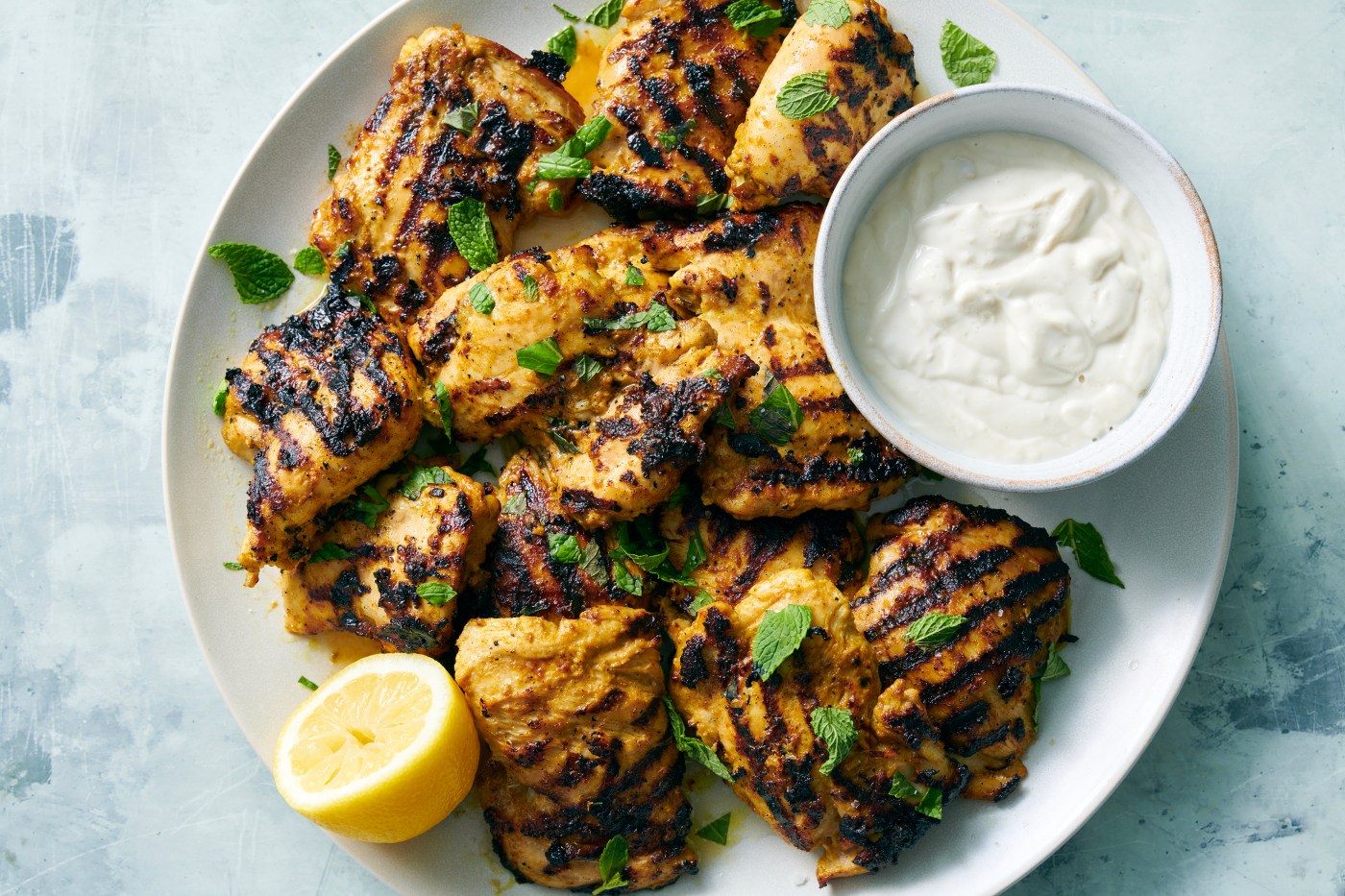
Shawarma-Spiced Grilled Chicken With Tahini-Yogurt Sauce

Marinated with whole-milk yogurt and shawarma-inspired spices, both white and dark meat end up tender and flavorful. Serve right off the grill or at room temperature.

Perfect for: A backyard barbecue on a warm spring day.

Prepare ahead: Marinating the meat a day in advance yields the best results and makes this dish even easier to prepare for guests. The sauce also can be made ahead and refrigerated for up to three days.

Serve with: Steamed rice and roasted or grilled vegetables or the salad below turn this into a hearty spread.

Taverna Salad

This colorful vegetarian main dish borrows elements from horiatiki, the classic Greek salad, and fattoush, the Lebanese salad studded with pieces of toasted pita. Seared cubes of halloumi make this salad substantial enough to stand on its own.

Perfect for: A brunch or lunch or a lighter dinner.

Prepare ahead: The dressing can be made in advance. The vegetables, aside from the tomatoes, can be sliced and stored in the refrigerator until you’re ready to serve the salad.

Serve with: More pita and dips such as hummus or tzatziki. For a heartier meal, it works well served alongside the grilled chicken above.

Littleneck Clams With Cherry Tomatoes and Pearl Couscous

This one-pot recipe capitalizes on the clams’ liquor (that briny juice inside their shells), white wine, a fresh red chile, garlic and shallots to make a broth that’s rich and nuanced with very little effort. It’s an impressive first course or standout meal on its own.

Perfect for: An intimate dinner party or lunch.

Prepare ahead: The vegetables can be chopped in advance. If you’re new to cooking clams, remember to give them a nice soak in salt water to remove any impurities, and to discard any that are open before you cook them, as well as any that haven’t opened after you cook them.

Serve with: A simple green salad and plenty of crusty bread for dipping.

Shawarma-Spiced Grilled Chicken With Tahini-Yogurt Sauce

By Lidey Heuck

Yield: 6 servings

Total time: About 4 1/4 hours

INGREDIENTS

For the chicken:

1 teaspoon sweet paprika
1 teaspoon ground cumin
1/2 teaspoon ground coriander
1/2 teaspoon ground ginger
1/2 teaspoon ground turmeric
1/4 teaspoon ground allspice
1/4 teaspoon ground cinnamon
Salt and pepper
1 1/2 cups plain yogurt
1/4 cup minced yellow onion
3 tablespoons extra-virgin olive oil, plus more for the grill
2 garlic cloves, minced
3 pounds boneless, skinless chicken breasts or thighs (or a combination)
1/2 lemon, for serving
Fresh parsley or mint leaves (optional), for serving
For the tahini-yogurt sauce:
1 cup plain yogurt
2 tablespoons tahini
1 tablespoon freshly squeezed lemon juice
1/2 garlic clove, finely grated or minced
Salt

DIRECTIONS

Make the marinade: In a large bowl, combine the paprika, cumin, coriander, ginger, turmeric, allspice and cinnamon with 1 1/2 teaspoons salt and 1/2 teaspoon pepper. Add the yogurt, onion, olive oil and garlic; mix well, then set aside.
Pat the chicken pieces dry with a paper towel. If using breasts, cut the breasts in half crosswise, so you have one thicker, rounded piece and one thinner, triangular piece. Working in batches, place the chicken pieces on a large cutting board and cover them with a sheet of parchment paper. Using a meat mallet or rolling pin, pound the chicken until each piece is about the same thickness as the others, between 1/2-inch and 3/4-inch. (Be careful not to pound so hard that you tear the chicken.)
Add the chicken to the marinade and toss well. Cover and refrigerate for at least 3 hours or up to 24 hours.
Meanwhile, make the tahini-yogurt sauce: In a small bowl, combine the yogurt, tahini, lemon juice and garlic; season to taste with salt. Refrigerate for at least 30 minutes or up to 3 days.
Before grilling, let the chicken come to room temperature for 30 minutes. If using a charcoal or gas grill, clean the grates and brush them with oil. Set the grill to medium-high or heat a grill pan slicked with olive oil on the stovetop over medium-high.
Lift the chicken from the marinade (no need to brush off excess marinade) and grill until cooked through, 6 to 8 minutes on each side, covering the grill halfway through, if necessary, to retain the heat.
Transfer the chicken to a plate, sprinkle generously with salt and squeeze the lemon half over the pieces. Allow the chicken to rest for at least 10 minutes before serving. Garnish with chopped fresh parsley or mint (if using) and serve the tahini-yogurt sauce on the side.

Taverna Salad

Taverna salad. Pan-fried halloumi adds richness and heft, but you can skip the searing process and use fresh feta instead. Food styled by Simon Andrews. (David Malosh/The New York Times)

By Lidey Heuck

Yield: 4 to 6 servings

Total time: 45 minutes

INGREDIENTS

1/3 cup plus 2 tablespoons extra-virgin olive oil
2 tablespoons red wine vinegar
1 teaspoon minced garlic (1 small clove)
1/2 teaspoon dried oregano
Salt and pepper
3 medium tomatoes, cored, seeded and diced into 1/2-inch pieces (or 1 cup halved cherry tomatoes)
1 (15-ounce) can chickpeas, rinsed
1 orange or yellow bell pepper, halved, seeded and diced into 1/2-inch pieces
1/2 large English cucumber, halved, seeded and diced into 1/2-inch pieces
1/2 cup pitted Kalamata olives
1/4 cup chopped fresh parsley
1/4 cup minced red onion or shallot
2 tablespoons (drained) capers, coarsely chopped
2 scallions, thinly sliced
1 (6-inch) pita
1 (8-ounce) block halloumi cheese, patted dry and cut into 3/4-inch slices

DIRECTIONS

In a small bowl, combine 1/3 cup olive oil with the vinegar, garlic and oregano. Whisk vigorously to combine then season to taste with salt and pepper.
In a large bowl, combine the tomatoes, chickpeas, bell pepper, cucumber, olives, parsley, red onion, capers and scallions. Pour the dressing over the salad and toss well.
Chop the pita into 1-inch pieces and place them in a small bowl. Drizzle with 1 tablespoon olive oil, sprinkle with salt and toss to coat. Heat an 8-inch skillet over medium. Add the pita pieces and cook, tossing often, until toasted and golden brown, about 5 minutes. Return to the small bowl to cool, reserving the skillet.
Place the halloumi slices on a small plate and drizzle with 1 tablespoon olive oil. Heat the same skillet over medium-high heat, and cook the halloumi until golden brown, 2 to 3 minutes per side. Transfer to a cutting board and cut the slices into bite-size cubes.
Add the pita and halloumi to the salad, toss well and serve.

Littleneck Clams With Cherry Tomatoes and Pearl Couscous

Littleneck clams with cherry tomatoes and pearl couscous. Fresh clams cook with garlic, white wine, shallots and tomatoes to form a deliciously fragrant sauce that’s perfect for mopping up with bread. Food styled by Simon Andrews. (David Malosh/The New York Times)

By Lidey Heuck

Yield: 4 servings

Total time: 45 minutes

INGREDIENTS

3 pounds littleneck clams
Salt and pepper
3 tablespoons extra-virgin olive oil
2 large shallots, chopped
4 garlic cloves, minced
1 small red chile (such as Fresno or red jalapeño), seeded and minced (about 1 tablespoon)
3 cups cherry tomatoes (preferably a combination of Sungold and red cherry tomatoes)
1/2 cup dry white wine (such as sauvignon blanc)
1/2 cup pearl couscous or fregola
2 tablespoons chopped fresh parsley
Crusty bread, for serving

DIRECTIONS

Place the clams in a large bowl along with 1 tablespoon salt, and fill the bowl with cold water. Set aside to let the clams release any grit.
While the clams soak, prepare the sauce: In a large Dutch oven (or a deep 12-inch skillet with a lid), heat the olive oil over medium. Add the shallots and cook, stirring occasionally, until tender but not browned, 3 to 5 minutes. Add the garlic and chile and stir until fragrant, 30 seconds to 1 minute.
Add the cherry tomatoes, 1/2 teaspoon salt and a few grinds of pepper and cook over medium heat, stirring occasionally, until the tomatoes begin to collapse, 6 to 8 minutes.
Stir in the wine and bring to a boil.
While the wine comes to a simmer, lift the clams from the water and rinse well under running water, scrubbing if necessary.
Reduce the heat to medium-low and add the clams to the pot, evenly nestling them into the sauce. Cover and cook until the clams open, 8 to 12 minutes, checking every few minutes and removing clams and placing them in a large serving bowl as they open. (This will prevent the clams from overcooking.) Discard any clams that do not open.
Bring the liquid in the pot back to a boil over medium-high heat and add the couscous. Reduce the heat and simmer, uncovered, until the couscous is tender and the liquid in the pan has reduced, 10 to 15 minutes.
Off the heat, season the couscous mixture with salt and pepper to taste, then carefully pour it over the clams. Garnish with the parsley and serve immediately, with crusty bread on the side.

Related Articles

Restaurants, Food and Drink |


Five weeknight dishes: The rice bowl you need for dinner and more

Restaurants, Food and Drink |


Quick Fix: Sweet and Tangy Sauced Pork Tenderloin with Green Beans and Barley

Restaurants, Food and Drink |


Minnesota Twins’ 2024 new food lineup: Baked potato bar, banh mi brat, chicken tinga arepas and more from local chefs

Restaurants, Food and Drink |


Kickoff to Summer at the Fair returns May 23-26

Restaurants, Food and Drink |


At new St. Paul Andiamo, fresh, comforting Italian is on the menu

Children’s Theatre names new managing director, part of a major leadership change for the Minneapolis institution

posted in: News | 0

The Children’s Theatre Company has named a new managing director to lead the organization’s operations, marking a summer of significant transition for the Minneapolis theater.

Incoming Children’s Theatre Company managing director Jill A. Anderson smiles in this undated portrait. Anderson, previously the managing director of Syracuse Stage, has established a reputation for overseeing savvy financial and reputational growth, theater officials said. (Brenna Merritt / Children’s Theatre Company)

Jill A. Anderson will assume the role July 22, just a few weeks after incoming artistic director Rick Dildine takes over the top creative post at the theater.

Anderson has served as the managing director of Syracuse Stage since 2016, and has established a reputation throughout her career of boosting theaters’ profiles while overseeing financial growth, CTC officials said.

Previously, she managed the Eugene O’Neill Theater Center in Connecticut and Arena Stage in Washington, D.C. While a college student at the University of Minnesota, she also worked in sales at CTC and as a stage manager at Mixed Blood Theater in Minneapolis. She’s a native of Marshfield, Wisconsin.

Anderson takes over the role of managing director from Kimberly Motes, who departed last year to become executive director of the Chicago Shakespeare Theatre.

Motes joined CTC in 2016 at a time when the theater was facing several lawsuits over alleged sexual abuse in the 1970s and ‘80s; the theater eventually settled those claims in 2019. During her tenure, Motes and outgoing artistic director Peter Brosius kept the theater on stable financial footing and supported significant growth in partnerships and commissions, theater officials said previously.

“Jill (Anderson) is one of the most distinguished executives in the American theatre, and I am delighted that she will be joining me this summer to embark on a new adventure at Children’s Theatre Company,” Dildine said in a statement.

Related Articles

Theater |


Circus, puppets, ‘Frozen’ and a pair of world premieres are taking the Children’s Theatre Company stage for the 2024–2025 season

Theater |


In a stroke of genius, Children’s Theatre Company show makes no sense

Theater |


Theater review: ‘Alice in Wonderland’ at Children’s Theatre Company is chaotic but entertaining

Theater |


A Q&A with incoming Children’s Theatre artistic director Rick Dildine

Theater |


Children’s Theatre Company names new artistic director

Five weeknight dishes: The rice bowl you need for dinner and more

posted in: News | 0

If you eat meat, or have ever eaten meat, then I probably don’t need to mount an argument for bacon, a food so powerfully appealing that science has sought to explain the reasons why. Bacon is transformative in cooking, elevating other ingredients that share the bun, pan or plate. That, of course, includes eggs, which don’t need bacon’s help to be delicious but become even more so in a New York-style breakfast sandwich or a bowl of spaghetti carbonara.

Eric Kim brings that pairing to his easy recipe for bacon and egg don, a nontraditional but highly delicious addition to the world of donburi, the Japanese rice bowls whose numbers include katsudon and oyakodon.

Scroll down for that recipe, along with four other dinners for the week.

1. Bacon and Egg Don

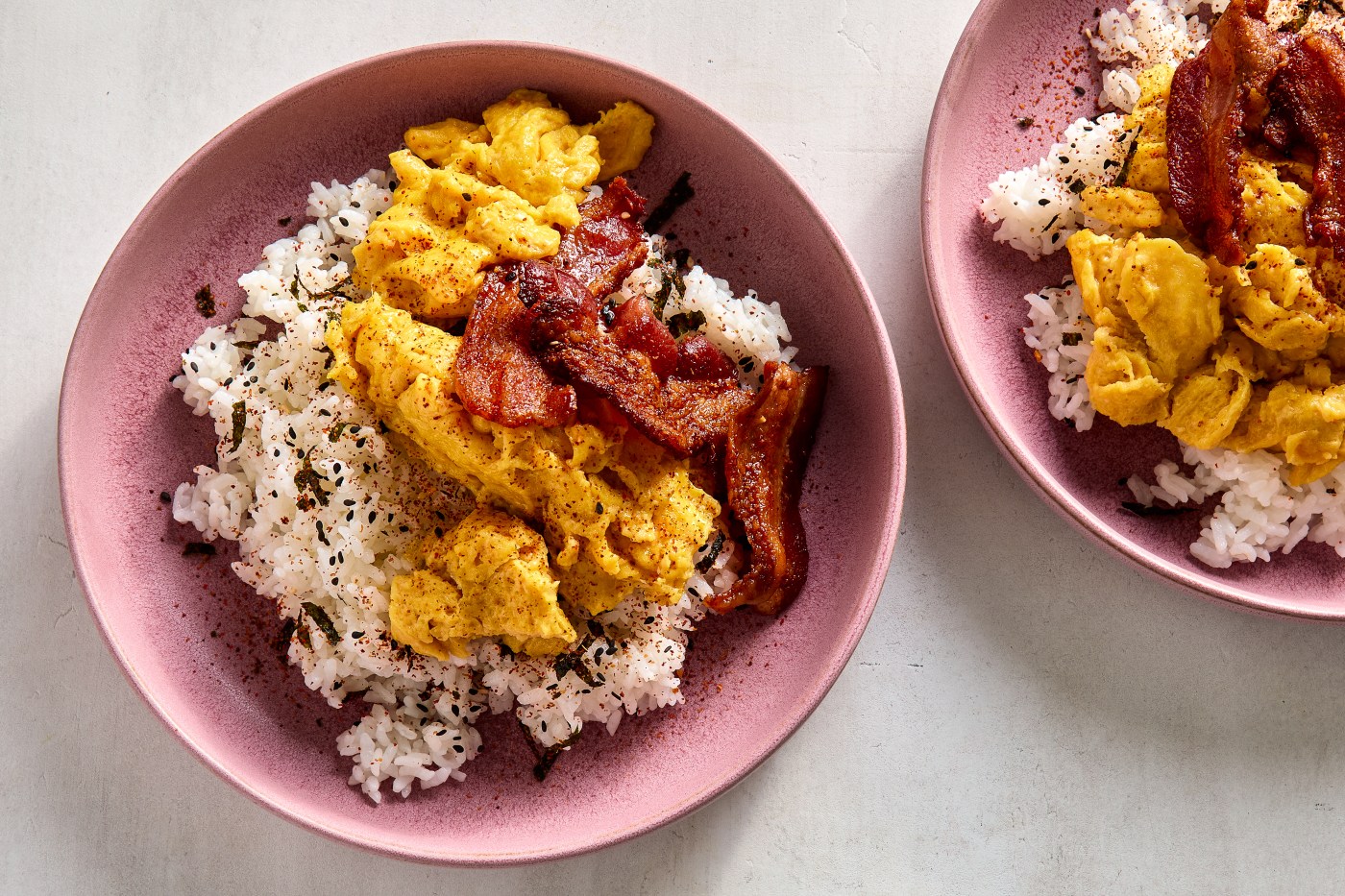
In the pantheon of comforting donburi (Japanese rice bowl dishes like katsudon, oyakodon and gyudon), bacon and eggs aren’t traditional toppings by any means, but they sure hit the spot. Eggs, soft-scrambled in the bacon fat with mirin and soy sauce, serve as a gently sweetened duvet for the rice and a counter to the salty bacon. Mirin, the Japanese rice wine, does a lot of work here to take ordinary eggs and rice to restaurant-flavor heights. To level up the rice, stir in 1 tablespoon rice vinegar and 1 teaspoon mirin while fluffing it. A sprinkle of furikake (rice seasoning) and shichimi togarashi (seven-spice blend) might feel like gilding the lily, but their nuanced savoriness completes this dish.

By Eric Kim

Yield: 2 servings

Total time: 25 minutes

INGREDIENTS

1 cup medium-grain white rice, such as Calrose
3 slices thick-cut bacon (5 ounces), halved crosswise
4 large eggs
1 tablespoon mirin
1 teaspoon soy sauce
Furikake and shichimi togarashi, for serving

DIRECTIONS

Rinse the rice in a sieve under cold running water, shaking constantly, for just a few seconds. Add to a medium pot with 1 1/2 cups cold water and soak for 10 minutes. Bring the water to a simmer over high heat, then reduce the heat to very low, cover and continue simmering without peeking for 17 minutes.
Remove from the heat, and as quickly as you can, open the lid, cover the pot with a clean kitchen towel and tamp on the lid again. Let the rice finish steaming, covered, until the grains are soft, distended and a little shiny, at least 10 minutes.
While the rice steams off heat, cook the bacon and eggs: In a cold skillet, lay the bacon in a single layer; add 1 tablespoon cold water and place over medium heat. Cook the bacon, flipping occasionally and lowering the heat if needed, until very crispy and the fat is evenly browned and no longer white, 6 to 8 minutes. Transfer the bacon to a paper towel to drain and discard all but 1 tablespoon of the fat from the skillet.
In a bowl, stir the eggs, mirin and soy sauce to combine. Add to the pan and cook over medium-low heat, stirring constantly and vigorously with a flexible spatula for the first 30 seconds then occasionally, so you end up with large curds, 2 to 3 minutes. The eggs should be set but still wet on top. Turn off the heat and cover with a lid to continue steaming in the residual heat, just a few seconds.
Uncover your steamed rice and fluff with a fork. Divide the rice between a couple of bowls and dust with furikake. Now divide the eggs between the bowls, followed by the bacon and a sprinkle of togarashi.

2. Yogurt-Marinated Roast Chicken

Yogurt-Marinated Roast Chicken. There are lots of ways to roast chicken, but few deliver crisp skin and juicy meat as well as marinating the meat in yogurt. Food Stylist: Barrett Washburne. (Matt Taylor-Gross/The New York Times)

Marinating chicken in yogurt, much like buttermilk, creates juicy meat and caramelized skin, but yogurt’s additional fat and lactic acid contributes extra richness and tang. The practice of marinating meat in yogurt likely dates as far back as 13th century Central Asia and has stood the test of time for good reasons. While you don’t need to add anything to the yogurt besides salt for it to work its magic, yogurt carries flavors well. For even more depth, consider fresh aromatics like chopped chiles, garlic, ginger and herbs, as well as dried spices like turmeric, cumin, za’atar and garam masala. As yet another bonus, you could serve more yogurt alongside to sauce the chicken. If marinating with Greek yogurt, thin it with a little olive oil until pourable — otherwise, its weight could keep the skin from crisping.

By Ali Slagle

Yield: 4 to 6 servings

Total time: 2 hours

INGREDIENTS

1/2 cup plain full-fat yogurt
2 teaspoons kosher salt (such as Diamond Crystal), or 1 teaspoon fine sea salt or coarse kosher salt
3 1/2 to 4 pounds bone-in, skin-on chicken pieces (or one whole chicken of equal weight, see tip below)

DIRECTIONS

In a large bowl, resealable container or zip-top bag, stir together the yogurt and salt. Pat the chicken dry, then add to the yogurt and coat every nook and cranny with the yogurt. Cover and refrigerate for at least 1 hour but preferably longer, up to 24 hours.
Heat the oven to 425 degrees and line a sheet pan with parchment paper. Scrape off excess yogurt, then transfer the chicken to the sheet pan, skin side up. Roast until browned and cooked through, 35 to 40 minutes for pieces and 45 to 50 minutes for a whole chicken. (For the juiciest results, check that the breast is at least 155 degrees and the dark meat at least 165 degrees in the thickest parts.)

Tip: For even browning and cooking, if using a whole chicken, spatchcock it first. To do so, place the chicken on a cutting board, breast side down. Using sharp kitchen shears, remove the backbone by cutting on either side of the backbone to release it. Flip the chicken, open it up and set it breast side up. Flatten the chicken by pressing firmly in the center; you should hear a crack.

3. Cilantro-Lime Salmon and Rice

Cilantro Lime Rice and Salmon. Bright and vibrant cilantro and lime liven up this weeknight-friendly, one-pot meal. Food Stylist: Barrett Washburne. (Julia Gartland/The New York Times)

Bright and vibrant cilantro and lime liven up this weeknight-friendly, one-pot meal. Start by toasting rice in butter in a skillet to create a flavorful base, then, when the rice is almost finished cooking, add green beans and briefly marinated salmon to steam. Like many one-pot meals, this one is carefully calibrated so that each of the ingredients finishes cooking at the same time. Give the beans a head start to ensure they tenderize in the short time it takes the delicate salmon to cook through. To serve, garnish the finished dish with more cilantro and lime juice.

By Yossy Arefi

Yield: 4 servings

Total time: 40 minutes

INGREDIENTS

4 limes
1/4 teaspoon sugar
Salt
2 tablespoons unsalted butter
1 1/2 cups long-grain rice
2 3/4 cups water or low-sodium chicken or vegetable stock
8 ounces green beans, trimmed
1 pound salmon, skin removed, cut into 1 1/2 inch pieces
1 cup finely chopped cilantro leaves and tender stems
Black pepper, to taste

DIRECTIONS

Zest and juice 3 of the limes into a medium bowl until you get about 1/4 cup lime juice. Stir in the sugar and 1/2 teaspoon salt. Reserve half of the juice and zest mixture in a small bowl. Cut the remaining lime into wedges.
In a large skillet with a lid, melt the butter over medium-high heat. Add the rice and stir until the rice is opaque and light golden brown, about 4 minutes. Add the water or stock and bring to a simmer. Cover with the lid and cook for 12 to 15 minutes or until the water is mostly absorbed and the rice is al dente.
Turn the heat to low and add the green beans to the pan in an even layer on top of the rice (if the pan seems dry, add a couple of tablespoons of stock or water). Cover and cook the beans for 5 minutes.
While the beans are cooking, add the salmon to the medium bowl with the lime mixture and toss to combine.
Uncover the skillet and shift the green beans to one side of the pan, then add the salmon to the other side, drizzling any remaining liquid from its bowl on top. Put the lid back on and steam until the salmon and beans are just cooked through, 10 to 15 more minutes.
Remove the salmon and green beans to a platter, then add the reserved lime mixture in the small bowl to the rice, along with all but 2 tablespoons of the cilantro. Stir gently to combine, then season the rice with salt and pepper.
Sprinkle the remaining cilantro over the top. Serve rice, salmon and green beans with more lime wedges on the side for squeezing over the top.

4. Chickpea Stew With Orzo and Mustard Greens

Chickpea Stew with Orzo. A complex and colorful chickpea stew, this is rich with vegetables, olive oil and Parmesan cheese. You can vary the vegetables to use what you’ve got. Food Stylist: Simon Andrews. (David Malosh/The New York Times)

A complex and colorful chickpea stew, this is rich with vegetables, olive oil and Parmesan cheese. You can vary the vegetables to use what you’ve got. Here, I keep to the basics, adding carrots for sweetness, fennel or celery for depth, cherry tomatoes for looks. Tender greens, wilted into the bubbling mixture at the end, are optional, but they do add a bright, almost herbal note. I particularly love using baby mustard greens, which are pleasantly peppery. But spinach, arugula and kale work well, too.

By Melissa Clark

Yield: 4 to 6 servings

Total time: 25 minutes

INGREDIENTS

2 tablespoons extra-virgin olive oil, more for drizzling
2 medium carrots, peeled and chopped
1 small fennel bulb or 2 celery stalks, chopped
1 medium onion, chopped
2 garlic cloves, minced
Pinch of red-pepper flakes
2 teaspoons minced fresh rosemary (optional)
2 cups chicken or vegetable broth (or water)
1 (15-ounce) can chickpeas, rinsed and drained
3/4 cup roughly chopped cherry or grape tomatoes
1/2 cup whole-wheat or regular orzo
1 quart loosely packed baby mustard greens or spinach (about 5 ounces)
Salt and black pepper
Chopped scallions, for garnish (optional)
1/4 cup finely grated Parmigiano-Reggiano, plus more as needed

DIRECTIONS

In a large pot, heat the olive oil over medium-high. Add the carrots, fennel or celery, and onion. Cook until tender, about 5 to 7 minutes. Add the garlic, red-pepper flakes and rosemary, if using, and cook for another 2 minutes. Pour in the broth, if using, or water, along with another 2 cups water, and bring to a boil.
Once the mixture is boiling, add the chickpeas, tomatoes and orzo. Reduce to a simmer and cover with a lid. Simmer 10 minutes, or until the orzo is tender. Uncover and stir in the greens, letting them simmer until soft, about 2 minutes.
Add more water if you want the mixture to be more souplike, and season with salt and pepper. Ladle into bowls and top with chopped scallions (if desired), grated cheese and a drizzle of olive oil.

5. Creamy Turmeric Pasta

Creamy Tumeric pasta. Nine ingredients may sound like a lot, but the only real work is slicing a shallot and two garlic cloves and grating the Parmesan. Food Stylist: Simon Andrews. (David Malosh/The New York Times)

This earthy pasta is cobbled together using ingredients that you almost certainly already have in your kitchen. Its approach is fairly standard: Melt some butter, saute some garlic and shallots, simmer with cream, then add some Parmesan and pasta cooking water to create a silky sauce. That alone would make a great meal, but what makes this recipe really special is the addition of ground turmeric, which gives this simple dish its vibrant color and sophisticated depth of flavor. This is meant to be a lazy meal — the kind of dish you throw together, then eat out of a big bowl while sitting on the couch — but if you’re feeling the need for something green, serve the pasta with a simple salad dressed with vinegar and olive oil.

By Sue Li

Yield: 4 to 6 servings

Total time: 30 minutes

INGREDIENTS

1 pound spaghetti
2 tablespoons unsalted butter
1 large shallot, thinly sliced
2 garlic cloves, thinly sliced
Kosher salt and black pepper
1 1/2 teaspoons ground turmeric
1 cup half-and-half
2 cups lightly packed freshly grated Parmesan (about 4 ounces), plus more for serving
4 tablespoons finely chopped fresh parsley or chives

DIRECTIONS

Cook spaghetti according to package instructions. Reserve 1 cup pasta cooking water and drain.
Meanwhile, melt butter in a large saucepan over medium heat. Add shallot and garlic, season with salt and pepper and cook, stirring, until golden-brown, 3 to 4 minutes. Add turmeric and stir to toast, about 30 seconds. Slowly whisk in the half-and-half then bring to a simmer.
Whisk in the 2 cups Parmesan, then add the cooked spaghetti and all of the reserved pasta cooking liquid and toss to coat. Serve with chopped parsley and more Parmesan.

Related Articles

Restaurants, Food and Drink |


Three festive main dishes for any spring party

Restaurants, Food and Drink |


Quick Fix: Sweet and Tangy Sauced Pork Tenderloin with Green Beans and Barley

Restaurants, Food and Drink |


Minnesota Twins’ 2024 new food lineup: Baked potato bar, banh mi brat, chicken tinga arepas and more from local chefs

Restaurants, Food and Drink |


Kickoff to Summer at the Fair returns May 23-26

Restaurants, Food and Drink |


At new St. Paul Andiamo, fresh, comforting Italian is on the menu