‘Ripley’ review: A remake of ‘The Talented Mr. Ripley’ has a terrific performance at its center, but lacks heat

posted in: News | 0

The character of Tom Ripley, luxury connoisseur and con man extraordinaire, appeared in five Patricia Highsmith novels, beginning in 1955 with “The Talented Mr. Ripley.” The book is his origin story, of a young grifter who encounters wealth and status up close and begins to envision a different life for himself. Unfortunately for those in his orbit, Tom’s methods include identity theft and a few murders. In Anthony Minghella’s 1999 movie starring Matt Damon, Jude Law and Gwyneth Paltrow, this plays out as a vibrant explosion of Tom’s desires, which are just as dangerous when fulfilled as when thwarted. Any remake needs to bring something new, or at least different, to the screen, and that’s true enough of the eight-episode Netflix series “Ripley,” starring Andrew Scott. Whether it succeeds in capturing the essence of Tom Ripley is another question.

It’s impossible not to compare the two adaptations, which have distinct tonal approaches. The former offers a sumptuous version of expat extravagance, vibrant and lustful. The latter is cooler to the touch. Shot in black and white, it’s literally seeped of color, but visually it is as gorgeous as anything you’ll find on television at the moment.

The story begins like this: A shipping magnate in New York mistakes Tom for a friend of his ne’er-do-well son, Dickie Greenleaf, who has been living off his trust fund in a coastal village in southern Italy. But Papa has decided enough is enough, it’s time for him to take his place in the family business. So he sends Tom overseas to convince Dickie that his future is behind a desk in New York. This trip to Italy is the door through which Tom will enter a different world, of casual glamor and monied leisure, and suddenly his longings snap into focus.

Dickie spends languorous days with his girlfriend, Marge, and he represents everything Tom covets. In Minghella’s film, he is swaggering and tanned and charismatic. It was Law’s breakout role, exuding so much heat and sex that he becomes the object of Tom’s ravenous cravings — not just for the conspicuous status markers but for Dickie himself. The story’s homoerotic subtext becomes text.

Andrew Scott stars as Tom Ripley in “Ripley.” (Netflix)

The Netflix series comes from Steven Zaillian, an accomplished screenwriter whose credits include everything from “The Irishman” to “Schindler’s List,” and his choices are less primal and more intellectual than Minghella’s.

You always feel like you’re in good hands with an actor like Andrew Scott and he gives a layered performance that finds all kinds of interesting — sometimes compellingly unsuccessful — bluffs meant to hide Tom’s insecurities. He’s utterly captivating as a man with sociopathic tendencies and his own personal (if tremendously cracked) moral code, but for one glaring issue. In the original novel, Ripley is 25. Scott is two decades older than that. Are we meant to suspend our disbelief, or is Dickie (played by John Patrick Vivian Flynn, also long past his 20s) supposed to be middle-aged as well? If so, that changes the story’s context in subtle ways that go unaddressed by the script.

This version also paints Tom as an asexual creature, which undercuts much of the potential frisson. Dickie’s world is meant to be such an incredible turn-on that Dickie himself is a turn-on. But the character is little more than a blank. The same goes for Marge, played by Dakota Fanning.

What the series lacks in carnal energy, it makes up for with an indelible visual language courtesy of director of photography Robert Elswit. The cinematography is frankly stunning and it’s one of the real pleasures of each episode, specifically the way moments are framed. A crisp white business card against the worn grain wood of a bar top. Winding stairways that alternately suggest a yawning void — or a trap. A fluffy cat staring at Tom as he drags a dead body. Any moment could be a still image you would hang as a work of art. The floors are marble and travertine and tile, which accentuate the echo of footsteps, becoming a delectable soundtrack underscoring the cat-and-mouse of it all, once the Italian police get involved.

Andrew Scott stars as Tom Ripley in “Ripley.” (Stefano Cristiano Montesi/Netflix)

The eight-episode running time means Zaillian has room to contemplate the logistics of violence. Tom favors blunt-force trauma to the head, with the help of a boat oar or a heavy glass ashtray. But it is the immediate aftermath that Zaillian wants to ponder. These wordless scenes are long and riveting and some of the best moments of the series, watching as Tom figures out his next moves and how to get rid of the evidence, including the corpse itself. It’s an aspect most crime dramas gloss over, but the attention to detail is thrilling. With Tom, the adrenaline-fueled violence isn’t premeditated, but it’s always followed by careful, semi-frantic, semi-numb attempts to save his own hide. Zaillian wants you to see what that looks like in real-time, and he is unflinching.

“Ripley” — 2.5 stars (out of 4)

Where to watch: Netflix

Nina Metz is a Tribune critic.

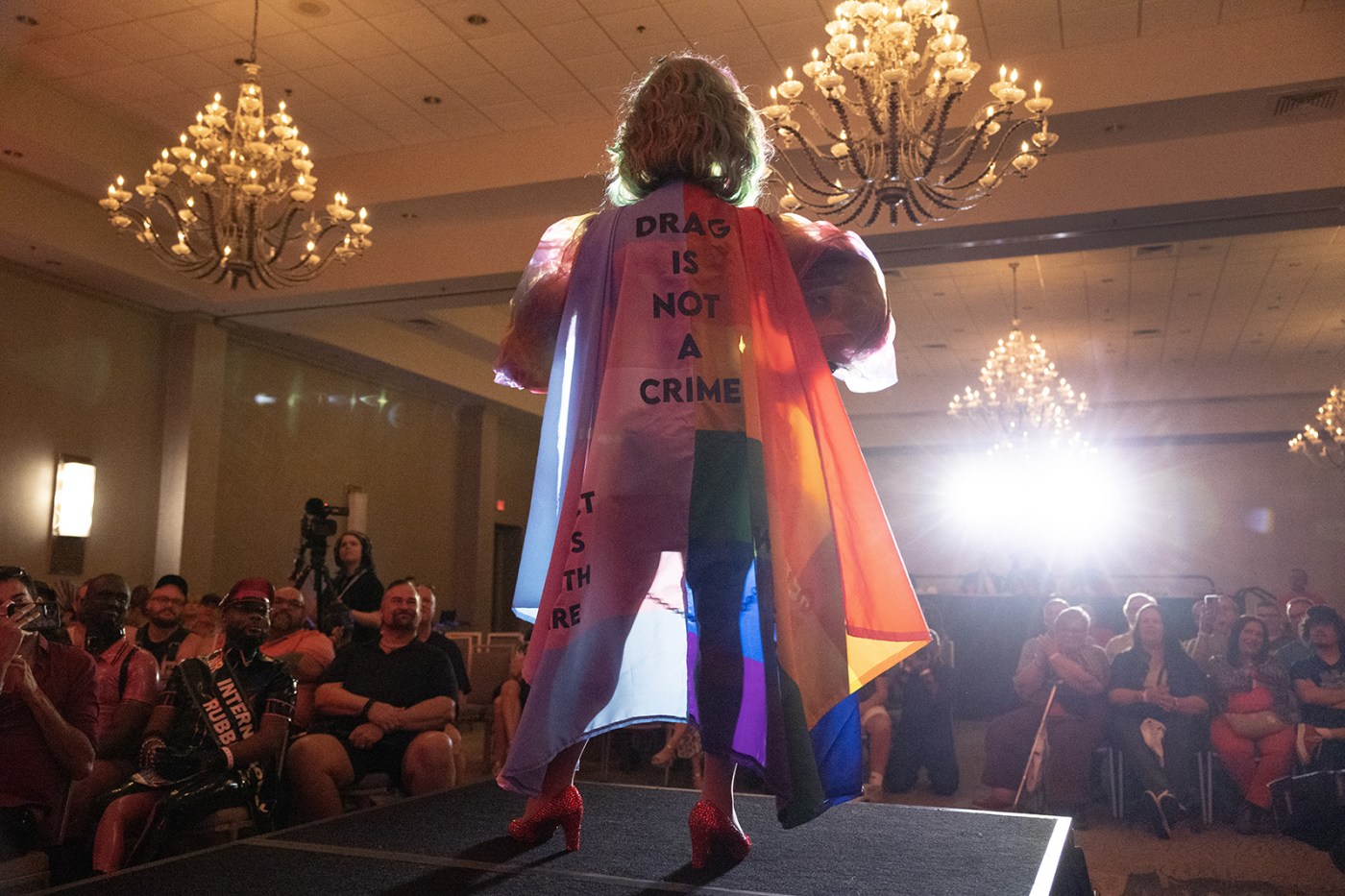
As drag shows go ‘mainstream,’ some red states look to restrict them

posted in: News | 0

Amanda Hernández | (TNS) Stateline.org

Drag performances used to be found mostly in the confines of nightlife venues such as clubs and bars.

But drag has stepped into the daylight, with elaborately costumed and made-up performers appearing at library readings and kid-friendly brunches, and a newfound visibility for gender-bending entertainment and self-expression.

“Drag now versus 15 years ago is like night and day,” said Dr. Lady J, a Cleveland-area performer with a doctoral dissertation in drag history. “Drag is so mainstream now. … I grew up in a world where drag queens were this mysterious thing that maybe existed in New York or San Francisco.”

The growing visibility has made drag performances a target for conservative legislators. Although polls show most Americans don’t support laws to restrict drag performances, lawmakers in states including Kentucky, Missouri, Nebraska, South Dakota and West Virginia have considered or enacted legislation this session that would prohibit businesses from allowing minors to attend drag shows. Several would impose stricter business regulations on establishments that host drag shows or would ban “obscene live conduct” at state universities.

Supporters of these bills say they are designed to protect children from entertainment that is not appropriate for them, not to target the transgender community. But critics warn that such laws could be used to file criminal charges or discriminate against people who identify as transgender outside of drag performances. This year, 21 drag-related bills have been considered in 12 states, according to the ACLU’s LGBTQ+ bill tracking database. (Some were carried over from last year’s legislative sessions.)

Most of them failed. Of 15 drag bills considered last year, only three were carried over to this year’s legislative sessions, according to the ACLU’s database. Those that become law often face significant legal challenges.

In Montana, where a law explicitly restricting drag performances was enacted last year, federal court orders have rendered it unenforceable.

Courts also have deemed the laws in FloridaTennessee and Texas— all of which use similar language about “adult cabaret entertainment” or “sexually oriented businesses” — unenforceable. A federal court ruled that the Texas law was unconstitutional and violated the First Amendment.

Legislation restricting gender-affirming care, transgender girls’ participation in school sports and restroom access is also on the table in many states.

Dr. Lady J says drag-related bills deflect attention from deeper issues facing the LGBTQ+ community.

“[These drag-related bills are] distracting people from the actual anti-trans laws that are being passed,” she said. “It’s flashier to talk about drag than it is to talk about what it means to tell a 12-year-old, 14-year-old trans kid they can have hormones one day and the next day to tell them that thing that you thought was going to save your life … the government decided yesterday you don’t get it anymore. Good luck surviving, kid.”

Largely backed by GOP lawmakers, bills affecting drag performances have often surfaced during election cycles, experts pointed out, deployed to mobilize conservative voter bases.

“[Drag] is the latest in a series of LGBTQ-related issues that [some Republicans] have found compelling as a way of firing up their base and getting folks either to contribute money or to come out and vote for them,” said Melissa Michelson, a political scientist and LGBTQ+ politics expert at Menlo College in California.

The focus on drag-related legislation is likely to wane as election season fades, Michelson added. “It’s all about riling up the public. There’s no actual threat. It’s very much an electoral politics phenomenon.”

Dr. Lady J said these efforts aren’t about protecting children but rather about erasing LGBTQ+ visibility from public spaces. When she performs at kid-friendly events, she is deliberate about selecting music and attire that are both appropriate for and captivating to younger audiences, such as a headdress adorned with pony figurines inspired by the popular toy and show “My Little Pony,” Dr. Lady J told Stateline.

“The reality is that a lot of these people just don’t want queer people anywhere near their kids,” she said. “They don’t want their kids to see that you are allowed to grow up and be happy and be a queer person.”

Many who are backing the bills disagree, saying they’re worried about how adult content is seeping into everyday life.

“We’ve really come to a place where things that were always considered adult-oriented have moved into the public sector and have been marketed and advertised at family-friendly events, when truly they were very sexual in nature,” Kentucky Republican state Sen. Lindsey Tichenor said in an interview.

State legislative efforts

Tichenor has sponsored a bill targeting performances “with explicitly sexual conduct” in “adult-oriented businesses” near places children might be.

Her bill would restrict these businesses from operating within roughly a city block’s distance — about 933 feet — of other establishments serving children, such as schools, playgrounds or day care facilities. Violators risk losing business or liquor licenses and may face cease-and-desist orders. Local governments also would have the power to impose stricter rules.

“A lot of the opposition really isn’t informed [about] exactly what is in the legislation. And it’s really, very simply, putting adult-oriented businesses in the proper place where minors can’t have access to it,” said Tichenor.

When initially introduced, the bill contained language that redefined as adult-oriented businesses establishments that “host sexually explicit drag performances.” Tichenor said she made several adjustments to the bill after meeting with performers who were concerned with the proposed revised definition. The current version of the legislation no longer references all drag, but describes adult cabaret that contains “explicitly sexual conduct.”

“I thought it was very important that we had that definition specific to drag performances that are of a sexual nature and where those can be and where they cannot be,” she said.

This legislative session, only one related measure has been signed into law, in South Dakota. Approved in early March, the law prohibits the state Board of Regents and the public universities it oversees from using state funds or property for “obscene live conduct.”

While the law does not explicitly ban drag shows, some opponents believe it’s a veiled attempt to target them because two bills with similar language, with one explicitly banning drag, died earlier this year.

“It’s kind of impeaching on First Amendment rights –– free expression, freedom of speech,” said Everett Moran, a legislative intern with the Transformation Project Advocacy Network, a South Dakota-based trans advocacy group.

The bills come after controversy erupted in 2022 over a drag show held at South Dakota State University in Brookings that was advertised as kid-friendly. There was backlash, and the Board of Regents set a policy that prohibits programs on campus where minors are present from including specific sexual activities, obscene live conduct or any material meeting the definition of “harmful to minors.”

Proponents of the law said it reflects that policy.

“This [bill] complements [the board’s policy] and says, you know what, this is more than just a policy. This is a law. You broke a law,” Republican Rep. Chris Karr, the bill’s lead sponsor, told colleagues ahead of the bill’s vote in the House in early February. Karr could not be reached for comment for this story.

No one from the Board of Regents testified in favor of or against the bill, but when asked about how the new law would be enforced, the board said in a statement that it “does not currently authorize or expend public funds to support obscene live conduct, as defined in codified law 22-24-27, on any South Dakota public university campus.”

South Dakota state Rep. Linda Duba, a Democrat who voted against the measure, said the law will not affect the transgender community. Still, she said, the law is unnecessary and “purely political.”

“It’s an election year, and the [Republican] supermajority decided this would be something they thought we should do even though we have policies in place that make this bill unnecessary,” Duba said in an interview. “We’ve already defined in current statute what obscenity is, and we have a policy in place by the Board of Regents, and the bill doesn’t do anything different.”

A different time

In West Virginia, a bill introduced in January would have amended the state’s indecent exposure law to criminalize engaging in “obscene matter.” The bill’s definition of “obscene matter” includes “any transvestite and/or transgender exposure, performances, or display to any minor.”

The bill’s lead sponsor, Republican Sen. Mike Azinger, could not be reached for comment, and co-sponsor, Republican Sen. Robert Karnes, declined Stateline’s interview request. Before the state’s legislative session ended, the bill was sent to the Judiciary Committee.

In Missouri, a Senate and House bill would each add performances featuring male or female impersonations to the definition of sexually oriented businesses. Both bills are in committee. Under the bills, performers could potentially face felony charges for performing in public spaces where the show could be viewed by a child.

And in Nebraska, legislation that would restrict minors — defined by state law as anyone under 19 — from attending drag shows, appeared to die after the legislature’s Judiciary Committee voted against advancing it. The proposed legislation would have imposed misdemeanor charges, carrying a maximum penalty of up to a $1,000 fine and one year in jail, against anyone — including parents — who brings a child to a drag event.

Fifty-eight percent of Americans oppose laws that would impose restrictions on drag shows or performances in their state, while 39% support such legislation, according to a 2023 NPR-PBS NewsHour-Marist poll.

Despite the varied opinions among Americans, these drag-related bills have emerged at a time when drag has become a form of mainstream entertainment and widely popular, said Michelson, the political scientist and LGBTQ+ politics expert. This differs from previous attacks on members of the LGBTQ+ community throughout history, who were targeted during a time when stigma was rampant, Michelson added.

“These bans aren’t going to be particularly successful or popular in the way that folks are maybe hoping they will be. It’s kind of too late,” Michelson said. “If they had gone [after] drag performers a decade ago, 15 years ago, it probably would have hit more successfully.”

Stateline is part of States Newsroom, a national nonprofit news organization focused on state policy.

A creamy, dreamy soup to make in the Instant Pot

posted in: Adventure | 0

Though the Instant Pot has been around since 2010, I am a relatively new convert. Having already given away my bread machine, rice cooker and yogurt maker, the idea of an Instant Pot in my small kitchen wasn’t at all appealing. However, after a hike with a girlfriend during the pandemic who couldn’t stop raving about the chicken stock she had made, I was convinced enough to give it another chance. I bought the smaller size (3 quarts — perfect for us empty nesters) and it didn’t take long to “fall in love.” I confess, it made me slightly uncomfortable to learn that when the Instant Pot first came out, foodies all over the internet were so enthralled with it they named themselves “Potheads.”

But yes, I am now also hooked. I use my Instant Pot most weeks, saving meat bones from dinner until I have enough for stock, or whipping up a quick risotto for dinner, as well as chilis, stews and soups that I can freeze for a quick weeknight dinner. The Instant Pot also can cook dried beans without having to soak them ahead of time: Check the website of Rancho Gordo for cooking times for different types of beans.

This Creamy Chicken and Rice Soup makes a filling meal. (Photo by Claudia Alexander)

The following recipe is from the cookbook “The Easy Pressure Cooker Cookbook” by Diane Phillips. This is my go-to cookbook for pressure cooking and I gave a copy to each of my kids. If you have a smaller Instant Pot like mine, you might have to adjust some of the recipes. I adapted the Creamy Chicken and Rice Soup recipe, substituting the wild rice for a wild rice blend, the chicken breasts for chicken thighs, the heavy cream for half-and-half and using less stock because of the size of my pot.

This soup is hearty; you might even call it a stew, but you could add more stock once it is finished to make it soupier. With a salad and baguette, it’s an altogether filling meal.

Claudia Alexander, a resident of Marin County, has been happily cooking for family and friends for more than three decades. She has a weekly food blog, sweetbynurture.com. You can contact her at sweetbynurture@gmail.com

Recipe

Creamy Chicken and Rice Soup

Serves 6 to 8

2 ½ quarts

Ingredients

2 tablespoons unsalted butter

1 tablespoon olive oil

1 pound boneless, skinless chicken thighs cut into bite-sized pieces

1 heaping cup yellow onion, finely chopped

1 ½ cups carrots, chopped

1 ½ cups celery stalks, chopped, if possible with leaves

4 1/2 to 5 cups chicken stock

¾ cup wild rice blend, rinsed

1 teaspoon dried thyme

½ cup half-and-half

Salt and pepper to taste

Directions

Sprinkle the chicken with salt and pepper. Turn on the Instant Pot. Make sure the “keep warm” function is off. Select the sauté function. Add the butter and olive oil. Once melted, add the chicken and cook until it has lost its pink color. Add the onion, carrots, celery, thyme, wild rice blend and stock. Lock the lid into place and cook at high pressure for 10 minutes. Let the pressure release naturally (this takes about 30 to 40 minutes). Now add the half-and-half, stirring to combine. Taste, adjust the seasonings and serve warm.

A trick to reduce stress? Spend 20 seconds a day doing this easy practice

posted in: News | 0

Deborah Netburn | (TNS) Los Angeles Times

Eli Susman was a fairly experienced meditator when he attended a month-long retreat at Plum Village, a Buddhist monastery in Southern France in 2017.

The UC Berkeley PhD candidate in clinical science had been on other retreats where participants spent most of their time meditating. So he was surprised when he saw that the daily Plum Village retreat schedule included only 30 minutes of formal seated meditation a day.

Midway through the retreat he decided to extend one of his sessions, sitting beneath a tree for three hours. Later, he ran into a monk named Brother Treasure and told him about his practice. The monk’s response was not what he expected.

“Three hours?” Susman remembers Brother Treasure telling him with a smile. “How about three breaths? That’s all it takes to step into the present moment.”

The words stuck with Susman. It led him to wonder whether an abbreviated practice that takes no more than a few breaths can make a difference in someone’s life.

Seven years later, he and his colleagues at Berkeley’s Golden Bear Sleep and Mood Research Clinic have evidence that it might. Earlier this year they published a paper online in the journal Behaviour Research and Therapy that describes how a simple 20-second self-compassion “micropractice” lowered stress levels and improved the mental health of undergraduate volunteers who did it every day for a month.

“Two of the biggest barriers people have for developing a meditation habit is having the time to do it and developing the habit of doing it regularly,” Susman said. “Micropactices are like tiny training sessions that are based on the most potent parts of therapeutic practices.”

Below, Susman describes the practice he developed for the study and explains how anyone can use it to try to feel better in less than one minute a day.

This interview has been lightly edited and condensed for length and clarity.

How do you describe the 20-second self-compassion micropractice that you studied?

The instructions we gave were to close your eyes and call to mind something about yourself that has been bothering you and making you feel unworthy, unloved or not enough and notice what arises in the body.

Then we asked people to send kindness and warmth to themselves by placing one hand over the heart and another over the belly with the energy of giving themselves a hug and notice what arises in the body now.

Next, we invited them to ask themselves, “How can I be a friend to myself in this moment?”

Finally we told them to open their eyes when they were ready.

And doing this for 20 seconds a day really made a difference in the lives of study participants?

Yes, but it only worked for people who practiced it regularly. In our study we looked at the subset of people who practiced daily and at the whole sample of people who were given the instruction.

More frequent practice was associated with greater increase in self-compassion and a greater reduction in stress and mental health problems like symptoms of depression or anxiety compared to a control group.

What are some ways that people can send kindness and warmth to themselves?

The key phrase we used in the study was “How can I be a friend to myself in this moment?” What we meant by that is imagine you were seeing a friend or your younger self in a similar situation and you were being really caring to that friend. What would you tell them to do? How would you ask them to be?

You can also imagine yourself receiving unconditional love from someone like a mentor, a parent or a close friend. How would they relate to you in this moment of suffering? Is there a way you can give that same compassion to yourself?

Does it matter where people do this practice?

We didn’t look at that, but that’s a great question.

Why is it helpful for people to touch their stomach and chest while doing the exercise?

There has been so much work on touch and how beneficial it can be for people to receive touch, but it had not been looked at as a standalone intervention for emotional well-being in terms of people offering self-compassionate touch to themselves. I was interested in the synergy between thinking self-compassionate thoughts and doing this embodied form of self-compassionate touch. It offers two potential ways of regulating yourself.

I should also say that we told participants they could choose other forms of touch like stroking yourself on the cheeks or giving yourself a hug. What’s most important is that the method of touch supports you in feeling compassionately toward yourself.

I was surprised that the majority of students who participated in the study said they were too busy to do this 20-second practice everyday. What’s that about?

I was just joking with a friend about this, and she said that when people are stressed they can get wrapped up in feeling like they can’t take 20 seconds to pause. It might be more a mind-set than a reality, but there is more work to be done on how to help people feel like those 20 seconds are going to make a difference in their lives. We wash our hands for 20 seconds. We brush our teeth for two minutes. Why not take 20 seconds to do this?

Do you have any advice on how people can make this practice a habit?

It can be helpful to choose a cue. You can practice after morning coffee in the living room or whenever you’re feeling stressed if you can get yourself to do it then. The more specific you are in describing your cue and developing your plan the more likely you are to develop the practice into a habit.

Does this research suggest there is no reason to do a longer practice?

Most of the participants in our study were novice meditators or people who had never meditated before, so we don’t know how this would look with people who have a really dedicated meditation practice or are very experienced with meditation. Rigorous research is needed for whether shorter practices have advantages over longer practices, and for whom those advantages may be most pronounced.

Also, just like brushing teeth is not a replacement for going to the dentist, this micropractice should not be a replacement for therapy or more intensive mental health care.

Related Articles

Health |


A paramedic was skeptical about this treatment for stopping repeat opioid overdoses. Then he saw it help

Health |


More women are drinking themselves sick. The Biden administration is concerned.

Health |


St. Paul life science incubator appoints new executive director

Health |


Why are Black people more likely to develop glaucoma? Scientists discover new clues

Health |


Some Medicaid providers borrow or go into debt amid ‘unwinding’ payment disruptions

©2024 Los Angeles Times. Visit at latimes.com. Distributed by Tribune Content Agency, LLC.