Judge in Trump’s classified files case agrees to redact witness names, granting prosecution request

posted in: News | 0

By ERIC TUCKER (Associated Press)

WASHINGTON (AP) — The federal judge presiding over the classified documents case against former President Donald Trump granted a request by prosecutors on Tuesday aimed at protecting the identities of potential government witnesses.

But U.S. District Judge Aileen Cannon refused to categorically block witness statements from being disclosed, saying there was no basis for such a “sweeping” and “blanket” restriction on their inclusion in pretrial motions.

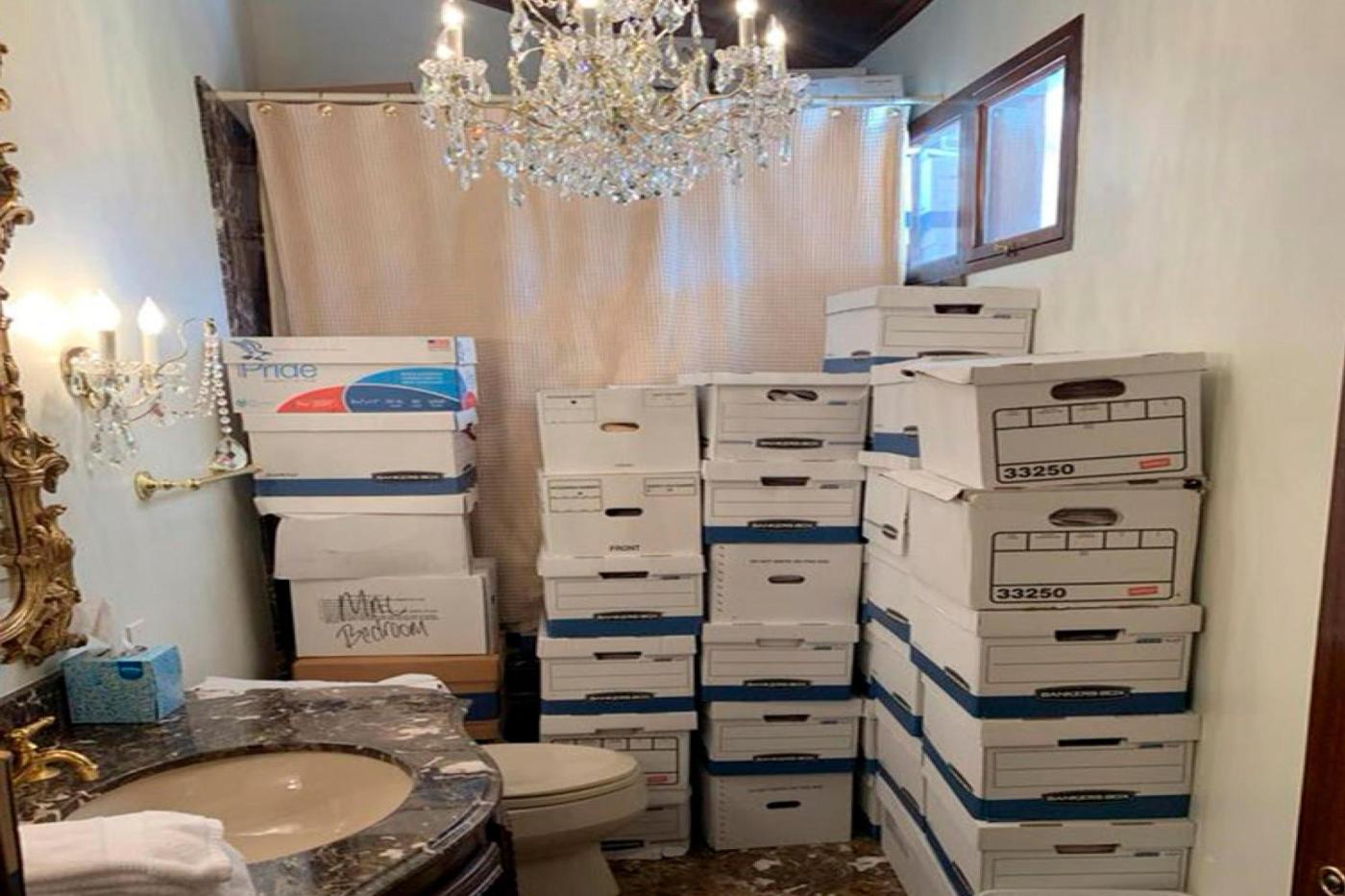
The 24-page order centers on a dispute between special counsel Jack Smith’s team and lawyers for Trump over how much information about witnesses and their statements could be made public ahead of trial. The disagreement, which had been pending for weeks, was one of many that had piled up before Cannon and had slowed the pace of the case against Trump — one of four prosecutions he is confronting.

The case remains without a firm trial date, though both sides have said they could be ready this summer. Cannon, who earlier faced blistering criticism over her decision to grant Trump’s request for an independent arbiter to review documents obtained during an FBI search of Mar-a-Lago, made clear her continued skepticism of the government’s theory of prosecution, saying Tuesday that the case raised “still-developing and somewhat muddled questions.”

In reconsidering an earlier order and siding with prosecutors on the protection of witness identities, Cannon likely averted a dramatic exacerbation of tensions with Smith’s team, which last week called a separate order from the judge “fundamentally flawed.”

The issue surfaced in January when defense lawyers filed in partially unredacted form a motion that sought to require prosecutors to turn over a trove of documents that they said would bolster their claim that the Biden administration had sought to “weaponize” the government in charging Trump.

Defense lawyers asked permission to file the motion, which included as attachments information that they had obtained from prosecutors, in mostly unredacted form. But prosecutors objected to unsealing the motion to the extent that it would reveal the identity of any potential government witness.

Cannon then granted the defense request for the motion and its exhibits to be filed in unredacted form as long as the personal identifying information of witnesses remained sealed. Smith’s team asked her to reconsider, saying that witnesses could be exposed to threats and harassments if publicly identified.

In agreeing Tuesday for the witness names to remain redacted, she wrote, “Although the record is clear that the Special Counsel could have, and should have, raised its current arguments previously, the Court elects, upon a full review of those newly raised arguments, to reconsider its prior Order.”

Still, the order was not a complete win for prosecutors.

Cannon rejected a request by Smith’s team to seal from pretrial motions the substance of all witness statements, with the exception of information that could be used to identify witnesses.

“As for legal authority, the cases cited in the Special Counsel’s papers do not lend support to this sweeping request; nor do they appear to have been offered as such,” Cannon wrote. “And based on the Court’s independent research, granting this request would be unprecedented: the Court cannot locate any case — high-profile or otherwise — in which a court has authorized anything remotely similar to the sweeping relief sought here.”

New York City to end its relationship with embattled migrant services contractor

posted in: Society | 0

By ANTHONY IZAGUIRRE (Associated Press)

ALBANY, N.Y. (AP) — New York City will end its relationship with a medical services company tasked with housing and caring for a recent influx of international migrants, following scrutiny over the company’s lucrative deal with the city and the quality of its humanitarian services.

Mayor Eric Adams’ office on Tuesday said the city would not renew its contract with DocGo before it expires on May 5 and will instead search for a new housing provider for migrants.

DocGo, which previously worked with the city to provide COVID-19 testing, was awarded a $432 million no-bid emergency contract last year to help the city manage a massive new population of migrants.

The arrangement drew questions from city Comptroller Brad Lander, who in reviewing the contract determined there wasn’t enough detail to justify the cost and that it wasn’t clear how the company had the expertise to transport, house and feed thousands of migrants.

News reports from the New York Times and Albany Times Union also detailed alleged mistreatment of migrants under the company’s care, including issues with health care and food waste, among other things. Its chief executive officer resigned after he admitted to lying about his educational record.

DocGo currently provides care for 3,600 migrants, half in the city and half in upstate New York, officials said.

The company will continue to provide services for migrants who were relocated upstate until a new vendor is picked. The city will use an existing contract with the company Garner Environmental Services to care for migrants in the metropolitan area, until another vendor is selected.

“This will ultimately allow the city to save more money and will allow others, including non-profits and internationally-recognized resettlement providers, to apply to do this critical work, and ensures we are using city funds efficiently and effectively,” Camille Joseph Varlack, chief of staff for the mayor, said in a statement.

In a statement, a DocGo spokesperson said the company is “immensely proud of the exceptional work that our team has accomplished and continues to perform in aiding the City’s response to this unprecedented crisis.”

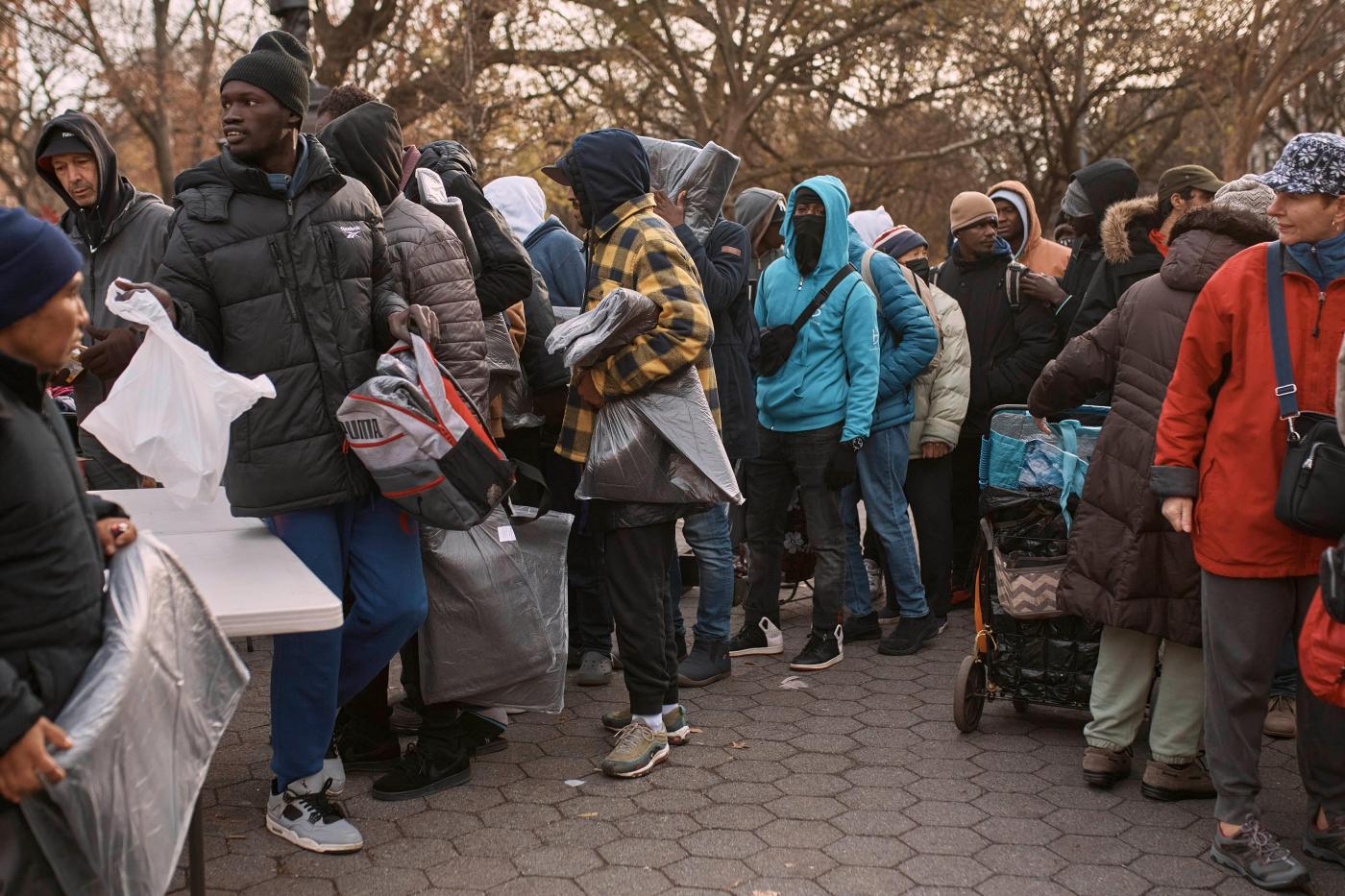
New York has struggled to handle an influx of international migrants who have arrived in the city since 2022, with more than 187,000 people coming through its intake system seeking shelter.

Politico first reported the news of the city declining to renew its contract with DocGo.

MN Department of Public Safety names director of Murdered and Missing Black Women and Girls Office

posted in: News | 0

The Minnesota Department of Public Safety has named the inaugural director of its new Murdered and Missing Black Women and Girls Office, which is billed as the first of its kind in the nation.

Kaleena Burkes spent nearly seven years working with the state’s Guardian ad Litem Board, where she led organizational development by implementing racial equity and advocacy initiatives. She also implemented training for state employees with the goal of improving outcomes for families and children involved in juvenile and family courts.

Burkes “has what is needed to use proven analytics to start this important office” and “a much-needed, empathetic soul, ready to bring solutions and attention” to the new office, said DPS Commissioner Bob Jacobson, in a statement.

Burkes holds master’s and bachelor’s degrees in criminal justice from the University of Alabama and a doctorate in criminology from Florida State University. She is a former research associate with the Robina Institute of Criminal Law and Criminal Justice at the University of Minnesota Law School.

Legislation to establish the Murdered and Missing Black Women and Girls Office was signed into law by Gov. Tim Walz last year with the goal of addressing “systemic barriers that perpetuate the disparate violence that Black women experience,” said DPS, in a written statement.

Black women are three times more likely to be killed than their white counterparts, and Black women make up 7 percent of the population in Minnesota but 40 percent of domestic violence victims.

Related Articles

News |


Former Minnesota Sen. Calvin Larson dies at 93

News |


Mercury emissions from cremation rise in Minnesota

News |


3 months after launch, sales of Minnesota blackout plates near 50,000

News |


Total solar eclipse wows North America

News |


Corrections officials, inmates say MN prison conditions a matter of public safety

Why trekking poles are the most underrated piece of outdoor gear

posted in: News | 0


The first time I ever used trekking poles, they felt cumbersome, clunky and, at times, downright annoying.

It was February 2017 and my then-boyfriend (now husband) had convinced me to trade a day riding on the slopes in Telluride for a snowshoeing adventure. I had never snowshoed before and recall feeling like a newborn deer, shakily trying to navigate the placement of my large foot apparatuses alongside my poles.

“Right foot, left hand. Left foot, right hand,” I repeated under my breath as I tried to avoid stepping on one piece of equipment or another, and attempted to keep both my balance and my cool ascending several hundred feet up the Jud Wiebe Trail.

I was inexperienced for sure – there are pictures to prove I wore jeans during the excursion – but also frustrated. Why would anyone use these seemingly impractical poles that only added chaos when hiking?

Turns out there are a lot of reasons, from increasing stability to alleviating pressure from knees and joints to achieving a full-body workout. The use of trekking poles increases hikers’ heart rates, several studies have found, and some researchers suggest that it also increases blood flow to the upper extremities.

This last point has recently transformed me into a pole evangelist. When I hike without them, my fingers bloat — and painfully so —  as though they’re latex gloves blown up like balloon animals. With hiking poles, my hands feel great. Simple as that.

My revelation about the benefits of trekking poles is, of course, nothing new. Walking sticks and staves “have been around in many forms for as long as people have been walking,” said Rachel Gross, an assistant professor of history at the University of Colorado Denver and co-director of the school’s Public History Program. Throughout history, walking sticks, staves and canes were also used as tools for self-defense, storytelling and as status symbols.

“In that sense, this is an old technology with new materials, and it looks different but serves the same function as it did before, which is extra support and easing the weight on joints,” she said.

For her new book, “Shopping All the Way to the Woods: How the Outdoor Industry Sold Nature to America,” Gross researched the history of recreational gear and its cultural significance. She said guidebooks from the 1950s through the 1980s suggest poles were historically seen as luxuries – not necessities. Most referred to using a single walking stick and often suggested picking up a piece of bamboo or wood at the trailhead to suffice.

“The terminology is pretty new because ‘trekking poles’ doesn’t exist in any of those materials. Usually, ‘walking staff’ is the preferred terminology from the 1950s to ‘80s. That indicates something important, which is trekking poles are used in pairs and walking sticks and staves are used singularly,” Gross said.

That’s why Gross also credits cross-country skiing, in particular, with helping evolve the accessory from an optional tool to a sought-after commercial product sometime in the late-20th century.

Perhaps not-so-coincidentally, ski poles were also made of bamboo in the mid-1900s, and mountaineers, especially in Europe, sometimes used them to hike alpine terrain. According to Sven Brunso, spokesperson for pole manufacturer LEKI, it wasn’t until 1978 that people began taking their utility seriously.

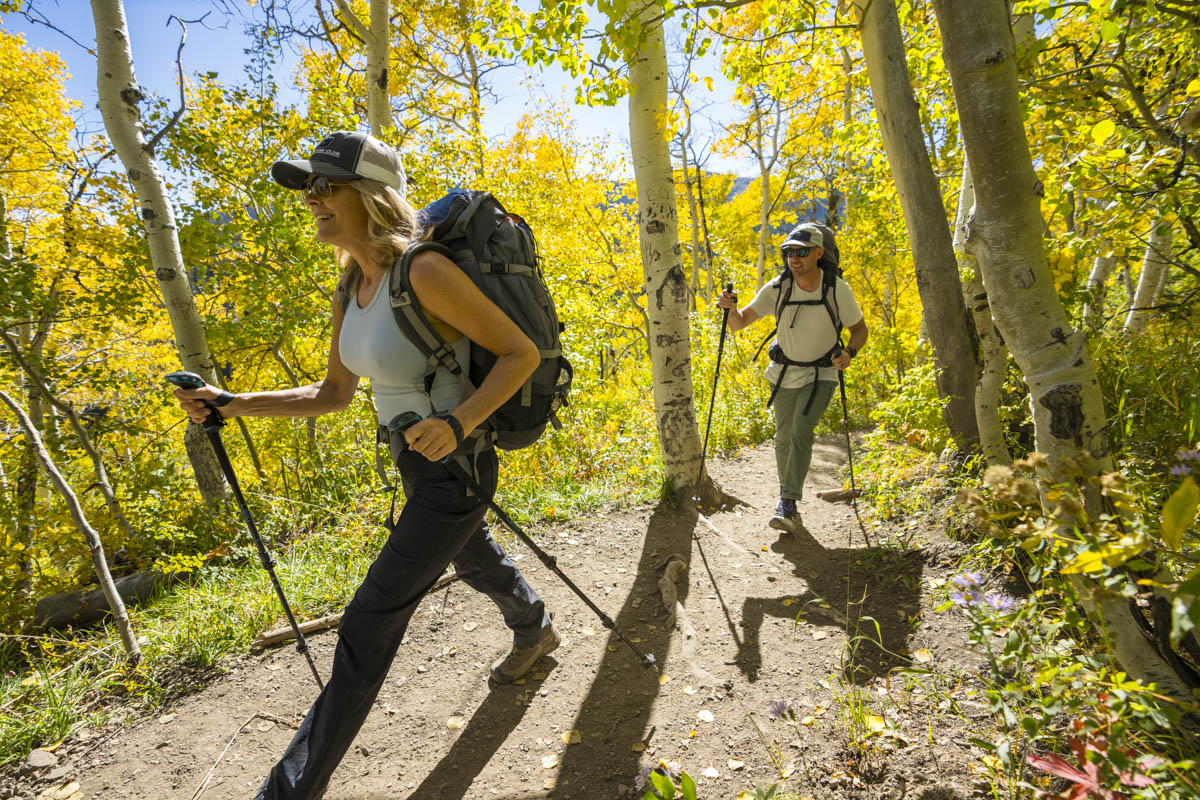
While the basics of the hiking pole have remained constant, LEKI has experimented with various types of grips to alleviate hand cramping, prevent blisters and wick moisture. (Provided by Scott Markewitz)

That year, mountaineers Reinhold Messner and Peter Habeler climbed Mount Everest using a pair of LEKI poles, engineered in 1974 from aluminum. (The company still makes that model, the Makalu, to this day.) Their expedition was notable not only for that, but also because they were the first adventurers to climb Everest without using contained oxygen.

“A lot of people thought using poles was kind of a crutch. That (expedition) launched the platform for us,” Brunso said.

Using poles for everyday hiking and mountaineering took off in the Alps in the 1970s and ’80s, Brunso said, and that may also be where the modern vernacular originated.

“It started in mountaineering and trickled down into ‘trekking,’ which is the European term for what we call hiking,” he said.

Since its inception in 1948, LEKI has created dozens of different poles as technology and materials have evolved. Brunso maintains that the basics of hiking poles have not changed much in the last 50 years, but the company has innovated to make the equipment more comfortable and useful.

One of its proudest innovations was the integration of the speed lock, which enabled poles to be adjusted on the fly. That way hikers can shorten their poles when climbing uphill and lengthen them going downhill to maintain the ergonomic benefits.

Over the years, the company also experimented with various types of grips to alleviate hand cramping, prevent blisters and wick moisture, and created numerous tips to make poles appropriate in more settings, even indoors. Brunso said LEKI sells more than 50 pole models designed for trekking, trail running and Nordic walking.

“It’s all about giving you the feeling you’re comfortable and supported,” he said.

I don’t have a specific brand that I prefer. There are innumerable styles and weights; some fold down to fit in backpacks and others remain a static height. It’s really up to your personal preference and budget, as well as the outdoor activities you plan to use them for.

Brunso, however, said that you get what you pay for in this space. Depending on what the poles are made of, they could be at risk of bending under stress, he said. And if you’re traveling by airplane to a recreation destination, the poles need to fold down to fit in your checked luggage.

He suggested testing or renting a pair at your local outdoor outfitter and ensuring they are the right size before buying.

Or, as Gross notes, there’s always the option to pick up a stick at the trailhead.