New DNA analysis underscores peril facing Minnesota’s state bee

posted in: News | 0

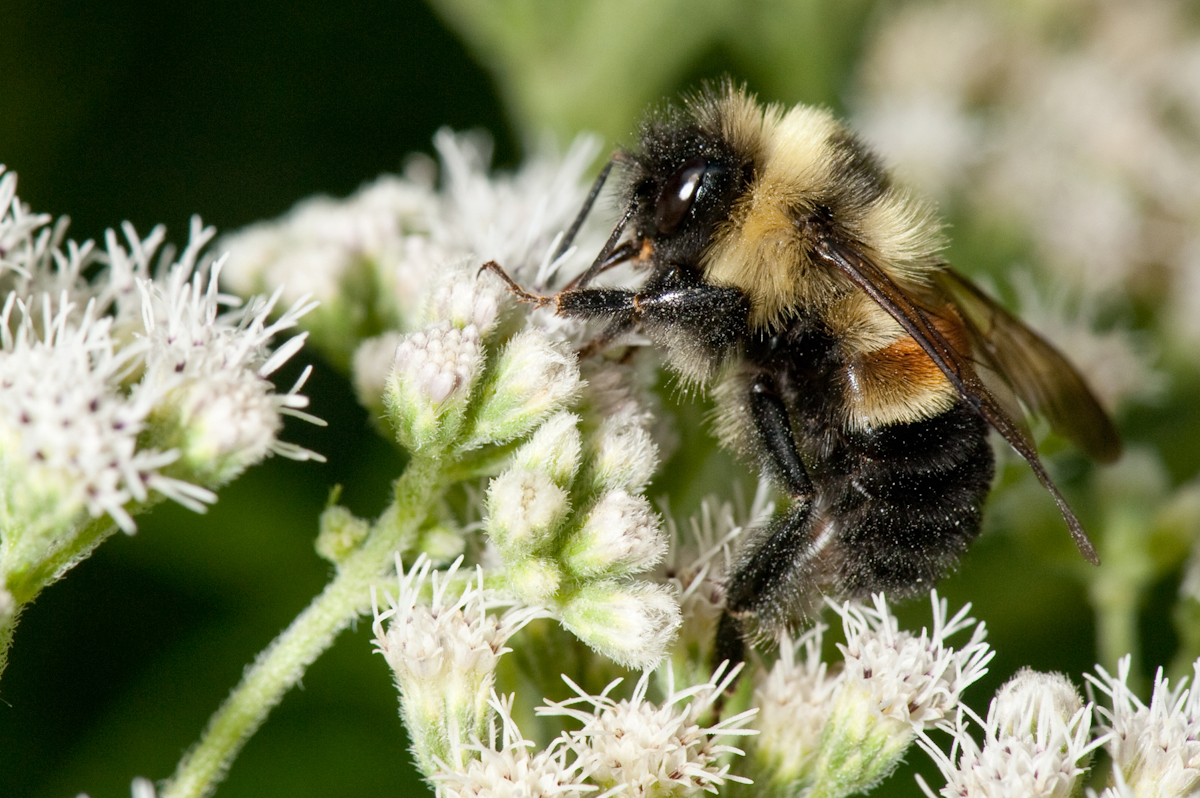
For the first time, researchers have analyzed the DNA of rusty patched bumble bees across the insect’s range. The results add urgency to efforts to conserve the endangered species.

Using a non-lethal technique, scientists collected tiny leg sections from bees to determine their genetic makeup. They found low genetic diversity, and inbreeding.

“The numbers of colonies that those individuals represent are much lower than expected,” said lead author John Mola from Colorado State University. “Even in areas like the Upper Midwest, where the rusty patched bumblebee, at least insofar as insects can become famous, has become a little bit emblematic as a stronghold, this species is still at risk.”

The rusty patched bumble bee was once common from Minnesota to the northeastern U.S. and in the Appalachian Mountains.

Starting about 25 years ago, the bumble bee experienced a precipitous 90% population decline.

It was listed as endangered in 2017. In 2019, the rusty patched bumble bee was named the Minnesota state bee.

One of the remaining known populations is found around the Twin Cities.

University of Minnesota researcher Elaine Evans has been observing rusty patched bumble bees for 20 years.

This DNA analysis reinforced her concern that just adding more habitat might not be enough to save the species.

“As bee conservationists, we all just want to think about the bees out there living their best lives out in the wild, having enough habitat out there to do what they need to do,” Evans said. “But the reality of the situation might be they might get to a point where to keep the species going, they might need to be brought inside by people and captively raised.”

The study found genetic differences among isolated populations. The Appalachian bees are different genetically from Midwest bees, and the Minnesota bees had genetic variations from other Midwest bees.

Mola said that means conservation efforts should not mix genetically distinct populations.

The finding of low colony numbers also has implications for management decisions. Burning habitat produces better food for bees in the long term.

“What are the short-term consequences for that?” Molna asked. “Do we run a large risk of killing colonies when we burn? And if so, how do we find that balance between the long-term benefits of burning versus that short-term risk of mortality?”

That’s just one of the questions raised by this study that needs more research. But now bee conservationists have the baseline data to begin developing the strategy to save the endangered bee.

Related Articles

Environment |


MN Department of Public Safety names director of Murdered and Missing Black Women and Girls Office

Environment |


Former Minnesota Sen. Calvin Larson dies at 93

Environment |


Mercury emissions from cremation rise in Minnesota

Environment |


3 months after launch, sales of Minnesota blackout plates near 50,000

Environment |


Total solar eclipse wows North America
Anthony Edwards scores career-high 51 points in Timberwolves’ win over Wizards

posted in: News | 0

The Timberwolves didn’t necessarily stumble out of the gates Tuesday. It was more like they sat at the start line for quite some time after the ball was tipped.

Minnesota was asleep at the wheel for the first quarter — perhaps its worst frame of the season — falling behind hapless Wizards by as many as 21 points Wednesday.

The Wolves trailed by 10 at the break. Then water returned to its level.

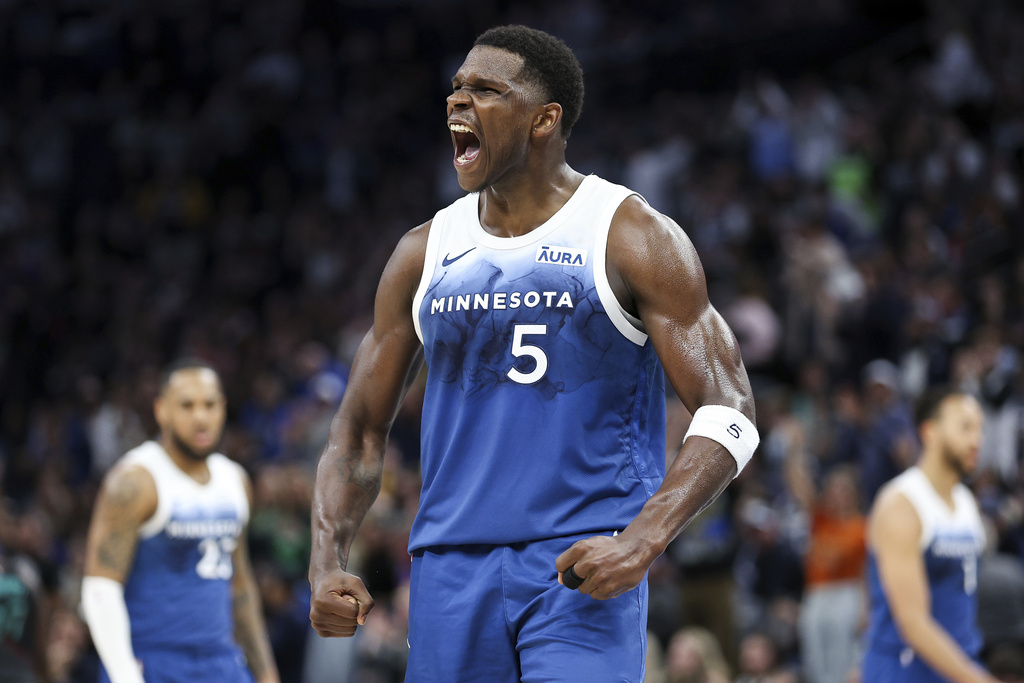
Minnesota cranked up the intensity in the third quarter and didn’t look back. Anthony Edwards led the charge, finishing with a career-high 51 points as the Wolves downed Washington 130-121 at Target Center.

The unfortunate part for Minnesota was that its haphazard start meant it had to play so much meaningful basketball down to the bitter end. Edwards and Rudy Gobert each played 38 minutes. That’s not ideal when the Wolves play in Denver on Wednesday in the game that will likely determine who gets the No. 1 seed in the West playoffs.

Denver did also play on Tuesday in Utah. So both squads will play in the game of the regular season on zero days rest.

Edwards’ performance Tuesday was a continuation of his recent efforts to play hard against cellar dwellers — something he failed to do in the past.

“Usually these games I come out and don’t have no energy and look like I don’t want to be here, and Finchy been gettin on my (butt) about that the last couple games,” Edwards said after a recent win over Toronto. “So I tried to come out with the approach that I would take as if we was playing a team that was super good. I think it was a great way of handling business tonight.”

Edwards was aggressive from the opening tip Tuesday. Even as Washington waltzed to whatever shot attempt it wanted early, draining one triple after another as the Wolves lacked any defensive intensity, Edwards was making a point to generate offense on the other end.

He captained the third quarter explosion, netting 17 points in the frame. Then, down the stretch in the fourth, Edwards smelled his personal record. He attacked Washington’s defense with hyper-aggression. His previous career high was 49 points, and he’d attempted to push for 50, often to only be denied by circumstance and some suspect shot selection.

To the guard’s credit, he decided to get to 50 Tuesday by attacking the rim. Sitting at 47, Edwards did pull up for one long three that clanked off the iron. The next three possessions, he went to the rack.

When Edwards finally converted a layup to get to 51 with two minutes to play, the 22-year-old guard held up a “50” with five fingers on one hand and a closed fist on the other as the crowd greeted him with a standing ovation.

But there’s little time to celebrate. Minnesota may need an equally strong performance Wednesday to all-but lock up the No. 1 seed. Edwards was asked on the floor after the game if the team would be ready.

“Hell yeah,” he said.

Minnesota House OKs election policy bill

posted in: Adventure | 0

The Minnesota House approved an election policy bill on Monday that would grant voters the ability to sue over potentially discriminatory practices, creating a state response to a court decision that upended a similar federal law.

The 8th Circuit U.S. Court of Appeals ruled last year that the federal Voting Rights Act doesn’t give individuals the right to sue since they’re not explicitly named in law. Because Minnesota is in the circuit, it is covered by that federal ruling.

That’s why Rep. Emma Greenman, DFL-Minneapolis, said it’s important for Minnesota to pass its own provisions to help voters.

“Enshrining these protections in Minnesota law has always been important, but it is now critical given the 8th Circuit decision that upended decades of precedent and held that voters themselves no longer can challenge racially discriminatory laws and redistricting plans under the VRA,” she told colleagues before the 69-62 vote.

State courts would be able to consider several factors when determining if a law or ordinance is discriminatory, including whether people in a protected class have difficulty obtaining ballots or would be unduly held back from winning office.

Republicans said it’s not the state’s place to weigh in. Rep. Harry Niska, R-Ramsey, tried unsuccessfully to strike the Voting Rights Act measure from the bill.

“What this does is takes our disagreement — or the majority’s disagreement, at least — with the federal interpretation of law and tries to import that or create a state law,” he said. “The problem with creating an analogue to federal law is that the analogy doesn’t work.”

A companion bill is also nearing a floor vote in the Senate.

The broader election policy bill approved by the House also:

Clarifies definitions and stiffens penalties for those violating a prohibition around campaign-related deepfake material meant to interfere with elections. That would include disqualification from violators holding appointed or elective office.
Makes it easier for college students to register to vote when living on or near a college campus.
Updates the state’s law around language translation of voting materials in polling places with many residents who speak something other than English as a primary language.
Sets clearer standards around exit polling done by news media outside voting locations.
Makes clear that any request for a recount in the presidential race be done within a day of the official canvass completion. That recount would have to happen within a week.
It would also count people who are incarcerated at their last known address before entering state or federal prison for redistricting purposes. That varies from the current system that counts those individuals in the census block where they are incarcerated.

Related Articles

Politics |


Former Minnesota Sen. Calvin Larson dies at 93

Politics |


3 months after launch, sales of Minnesota blackout plates near 50,000

Politics |


Marijuana law modifications are on tap before legal sales take root in Minnesota

Politics |


For ‘public safety crisis’ of copper wire theft, MN legislators proposing licenses for sellers

Politics |


Corrections officials, inmates say MN prison conditions a matter of public safety


Twins wake up a little too late in 6-3 loss to Dodgers

posted in: News | 0

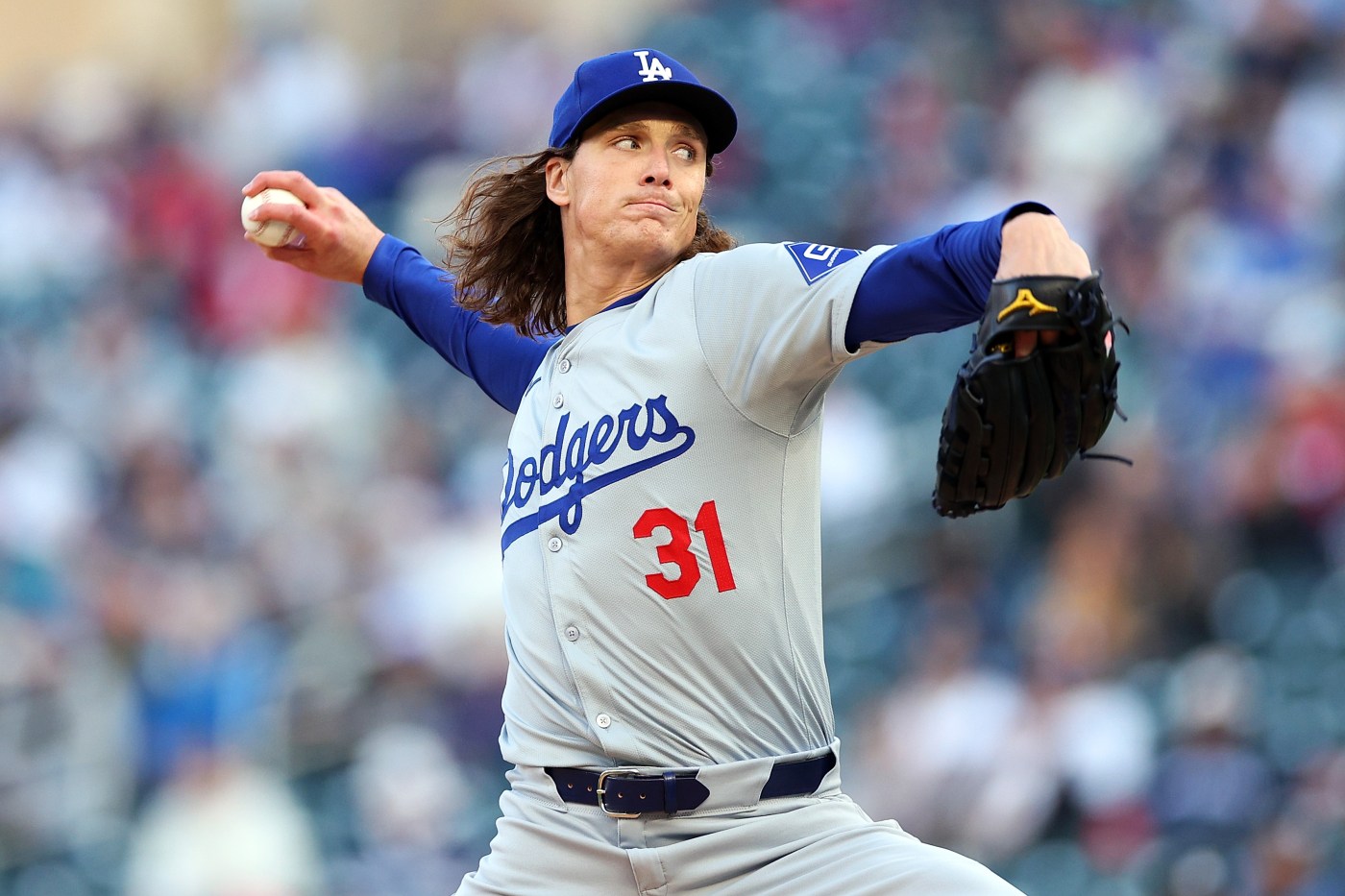
Maybe things would’ve gone differently for the Twins on Tuesday night at Target Field if bonafide ace Tyler Glasnow wasn’t pitching for the Los Angeles Dodgers on the other end.

After looking completely overmatched against Glasnow for most of the game, the Twins woke up down the stretch, though it proved to be too little, too late in a 6-3 loss to the Dodgers.

It was an incredible effort from Glasnow on the mound as he mowed down batter after batter, going seven innings without allowing a run, while tying a career high with 14 strikeouts.

The only reprieve for the Twins came when Glasnow finally got lifted for the game in favor of the bullpen.

That provided a small opening, and catcher Ryan Jeffers almost immediately took advantage with a solo home run off of reliever Alex Vesia in the eighth inning. That gave the offense a spark, and it carried over as shortstop Carlos Correa and first baseman Alex Kirilloff went back-to-back off of reliever Connor Brogdon in the ninth inning.

On the flip side, even though Glasnow didn’t need much run support given how nasty his stuff looked, he got everything he needed via a three-run homer from center fielder James Outman in the fifth inning, and a three-run homer from catcher Will Smith in the sixth inning.

The home runs from the Dodgers came after St. Paul native Louie Varland left a pair of fastballs in the middle of the plate.

Minnesota Twins’ Carlos Correa gestures while running the bases after hitting a solo home run during the ninth inning of a baseball game against the Los Angeles Dodgers, Tuesday, April 9, 2024, in Minneapolis. (AP Photo/Abbie Parr)

Related Articles

Minnesota Twins |


Twins acquire relief pitcher Michael Tonkin in trade with Mets

Minnesota Twins |


Shohei Ohtani puts on a show to lead Dodgers past Twins

Minnesota Twins |


Twins recall infielder Jose Miranda for some added offensive firepower

Minnesota Twins |


Twins-Guardians series finale washed out by rain

Minnesota Twins |


Twins bullpen an early bright spot as team awaits return of trio of arms