Stillwater Area Public Schools taps former St. Paul, Rochester administrator for assistant superintendent

posted in: News | 0

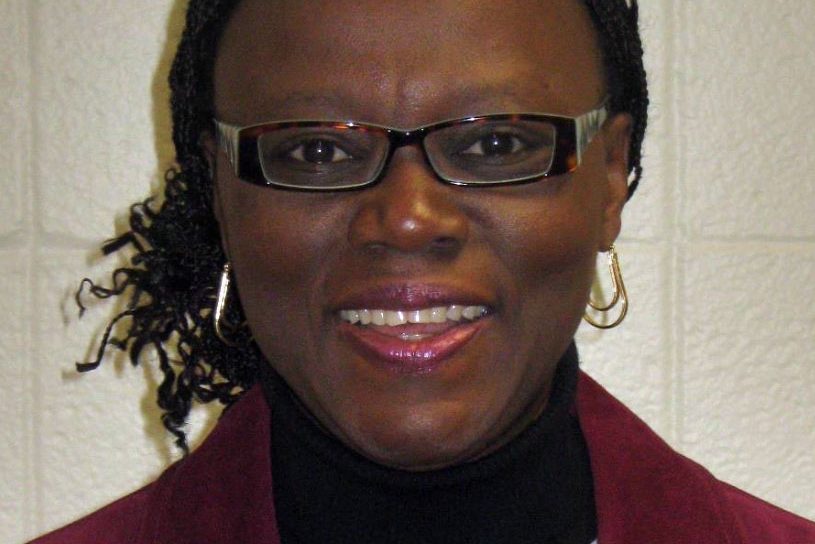
Efe Agbamu has been selected as the assistant superintendent for Stillwater Area Public Schools, pending school board approval.

She will begin her new role on July 1.

Efe Agbamu (Courtesy of Stillwater Area Public Schools)

Since 2022, Agbamu has been serving as the chief academic officer for Rochester Public Schools.

Prior to that, she spent more than 10 years as an assistant superintendent, district administrator and principal in St. Paul Public Schools. She won Minnesota High School Principal of the Year in 2011 while at Park High School in Cottage Grove.

“Dr. Agbamu brings tremendous knowledge, skills and experience to her work, and will be a great addition to our leadership team,” said Superintendent Mike Funk. “She will help us continue to move the district forward in a positive direction.”

In addition to her leadership experience, Agbamu has experience in multilingual learning, language-immersion schools, curriculum and instruction, as well as oversight of special education, he said.

As assistant superintendent at Stillwater, Agbamu will lead the Teaching and Learning team and be responsible for curriculum and instruction, professional development, language immersion, multilingual instruction and other special programming.

Agbamu holds a doctorate in education from Hamline University and master’s and bachelor’s degrees from the University of Ibadan in Nigeria.

Related Articles

Education |


Salmonella cases, including four in Minnesota, linked to organic basil sold at Trader Joe’s

Education |


With new PFAS limits, some east metro cities have big water cleanup jobs ahead

Education |


Nicole Miller tapped to be new Lake Elmo city administrator

Education |


Sentencing set for Nicolae Miu in fatal stabbing of Stillwater teen on Apple River

Education |


In new Marine on St. Croix studio, artists Emily Anderson and Katy Helen aim to connect with nature — and neighbors

‘The Jinx – Part Two’ review: A filmmaker continues his investigation into accused killer Robert Durst

posted in: Society | 0

When it premiered on HBO a decade ago, the true crime docuseries “The Jinx: The Life and Deaths of Robert Durst” stood out mainly because of Durst’s willingness to appear on camera. The wealthy New York real estate heir was suspected of killing three people: His first wife Kathleen McCormack in 1982; his close friend Susan Berman in 2000; and an elderly Texas neighbor Morris Black in 2001. At the time, he had only stood trial for the murder of Black (whom he also dismembered) and was acquitted. Surprisingly, Durst agreed to be interviewed by filmmaker Andrew Jarecki about all of it. Perhaps Durst thought his steadfast denials would be convincing. But the series finale featured a stunning hot-mic moment in which Durst excused himself to the restroom and muttered the seemingly damning words: “Killed them all.”

During the course of his research for the series, Jarecki uncovered additional evidence relating to Berman’s death and passed it along to the authorities. That led to the arrest of Durst a day before the last episode aired.

Now Jarecki is back with “The Jinx – Part Two,” which picks up where he left off. In 2021, Durst was convicted of Berman’s murder and the six-episode sequel aims to fill in the gaps between the lead-up to his arrest in March 2015 and his death in January 2022 (just three months after he was sentenced to life without parole). Jarecki accomplishes this by piecing together prosecutor John Lewin’s case and detailing the zigs and zags of the trial itself.

Purveyors of true crime can be fueled by all kinds of conflicting motivations. Sincere curiosity sometimes curdles into exploitation, and gruesome tragedy is transformed into entertainment. With unsolved cases, there’s a tendency to play investigator. Jarecki isn’t immune to any of this. But notably missing in his latest effort is introspection about his own role in Durst’s fate.

“Part Two” is straightforward about the fact that Jarecki reached out to law enforcement — an unusual  scenario for documentary filmmakers — but he remains silent about why he made that decision. You could argue it was the right one, but he doesn’t walk us through his thought process. Why be so coy? “Normally, your obligation is to protect your subject,” he told Vanity Fair in a recent interview. “But what happens when your subject becomes the enemy?” Good question. Too bad he had no desire to engage with it in his own project.

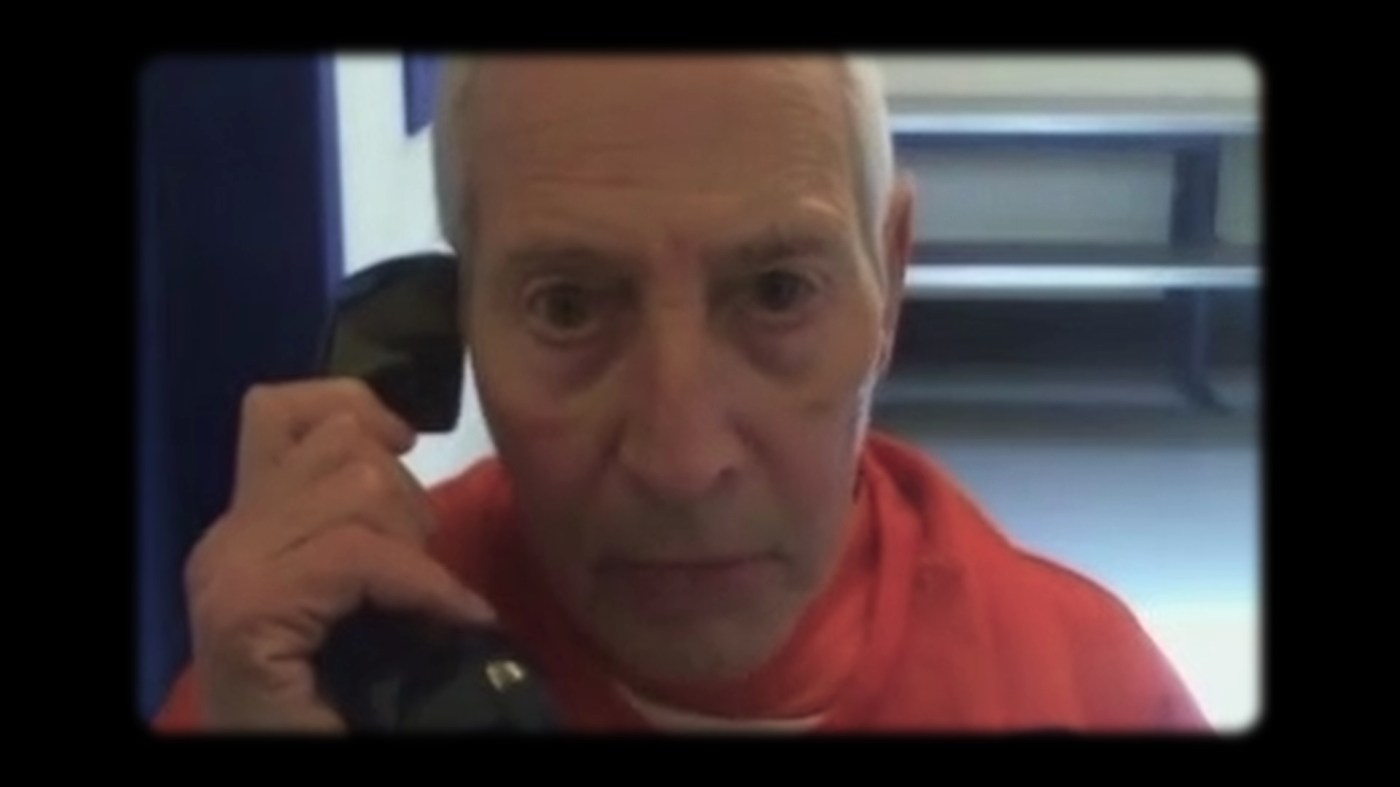
Despite its self-congratulatory tone, Jarecki’s follow-up is gripping all the same. It includes the same out-of-focus recreations as the original, which serves to amplify the visuals beyond talking head interviews and archival footage and photos. Durst had regular visitors in jail and Jarecki obtained recordings of those visits as well as Durst’s phone calls, and we see a man who is mentally sharp but manipulative and deeply annoying. Journalist Lisa DePaulo tells Jarecki: “When Bob has a friend, he expects blind loyalty. Like, unconditional loyalty. He expected his friends to toe the line, and a lot of them did — for a long time.” Lewin, the prosecutor, explains it this way: “It turns out that when you have a whole lot of money, people are willing to do things for you because they think some of that money might go their way.”

One of those close friends is Nick Chavin, a singer-turned-advertising executive whose music genre of choice in his younger days was something called “country porn.” Jarecki asks him, “Did it bother you when you found out what (Durst) did in Galveston?” Chavin replies: “Well, what isn’t in my mind is ‘Jesus Christ, he cut up Morris Black and got away with it.’ That just didn’t have any impact on me. I don’t have that same moral hatred of murder and murderers.” If that doesn’t give you pause, I don’t know what will. By contrast, Chavin’s wife is no-nonsense and blunt about her distaste for Durst. How that marriage works is a mystery all its own. If nothing else, Jarecki has a knack for unearthing the strange and uninhibited.

The cast of characters here also include enthusiastic twin brother law clerks hired by Lewin to sift through the endless paperwork (if a broadcast network doesn’t turn this premise into a case-of-the-week legal drama called “Brothers in Law,” they’re missing a real opportunity). “Friendships die hard,” someone else says at one point, and it’s the kind of observation that has so many different connotations in this context. All of this is captured thanks to Jarecki’s instincts. Even though we know the outcome, he finds room for suspense and intrigue.

A deeply serious filmmaker, he also tends to undercut that with questionable choices, including a vainglorious quote from a cop who boasts: “Homicide detectives have a saying: We work for God.” As a documentarian, Jarecki brings no skepticism to police work, or any other aspect of how the criminal justice system functions.

Why do people do such horrible things to one another? Who is often allowed to get away with these crimes and why? Compelling enough questions that we keep coming back for more.

“The Jinx – Part Two” — 2.5 stars  (out of 4)

Where to watch: 9 p.m. Sundays on HBO (streaming on Max)

Nina Metz is a Tribune critic.

Filip Gustavsson on future with Minnesota Wild: ‘We’ll see’

posted in: News | 0

Filip Gustavsson hasn’t lost the plot. He knows that when Bill Guiern re-signed Marc-Andre Fleury one final NHL season, the Wild’s goaltending plans became complicated.

Certainly, playing the Gustavsson/Fleury tandem for another season makes sense. Fleury is a future hall of famer who, at 39, showed he remains one of the NHL’s most athletic goalies; and while Gustavsson, 26, wasn’t as consistent as he was last season, he finished with three shutouts and his share of terrific starts, including a 24-save effort in a 3-1 victory Monday against the playoff-bound Kings in Los Angeles.

On the other hand, Minnesota needs to bolster its forward corps. Kirill Kaprizov, Joel Eriksson Ek and Matt Boldy, the team’s top line for most of the season’s second half, accounted for 42 percent of the team’s goals in a season that finished short of the postseason.

With goalie prospect Jesper Wallstedt getting a pair of quality victories late this season, the Wild suddenly have a trade asset — and it’s likely Gustavsson, who finished this season 20-18-4 with a 3.06 goals-against average and .899 save percentage but was one of the NHL’s best two goaltenders in 2022-23, 22-9-7 with a 2.10 GAA and .931 save percentage.

On locker cleanout/exit interview day at Xcel Energy Center, Gustavsson met reporters and was asked pretty quickly if he expects to be back in 2024-25.

“We’ll see,” he said. “There is always a business side to hockey, too. I like it here and would love to be back next year and try to redeem what happened this year. We’ll see.”

Wallstedt and the Wild were overmatched in his NHL debut, a 7-0 loss at Dallas on Jan. 10, but in two starts on the Wild’s last road trip he went 2-0 with a shutout, 1.01 GAA and .962 save percentage in starts against non-playoff teams in Chicago and San Jose.

Fleury this week signed a one-year, $2.5 million contract extension with a no move clause to finish his career in Minnesota.

“I was very happy when Flower resigned to play another year,” Gustavsson said. “It’s been awesome having him as a teammate. I look forward to playing with him more.”

We’ll see.

Related Articles

Minnesota Wild |


Wild’s ride on the ‘Gus Bus’ has been a bumpy one

Minnesota Wild |


Kaprizov, Gustavsson lead way in Wild’s 5-2 victory at Carolina

Sugar cravings could be caused by loneliness, study finds

posted in: News | 0

Ebony Williams | The Atlanta Journal-Constitution (TNS)

If you’ve spent a lonely night at home eating chocolates and/or ice cream, you shouldn’t feel guilty. That’s because loneliness can cause an intense desire for sugary foods, a new study found.

Published in JAMA Network Open, researchers linked brain chemistry from those who socially isolate to poor mental health, weight gain, cognitive decline and chronic diseases like Type 2 diabetes and obesity.

Related Articles

Health |


Emergency rooms refused to treat pregnant women, leaving one to miscarry in a lobby restroom

Health |


MPCA gives St. Paul foundry 30 days to reduce lead emissions

Health |


Salmonella cases, including four in Minnesota, linked to organic basil sold at Trader Joe’s

Health |


City-country mortality gap widens amid persistent holes in rural health care access

Health |


Lawsuit alleges Obamacare plan-switching scheme targeted low-income consumers

“While it is established that obesity is linked to depression and anxiety, and that binge eating is understood to be a coping mechanism against loneliness, I wanted to observe the brain pathways associated with these feelings and behaviors,” said senior study author Arpana Gupta, PhD, an associate professor and director of the G. Oppenheimer Center for Neurobiology of Stress and Resilience at the University of California in Los Angeles.

The researchers explored how brain chemistry is altered and how it processes food cues based on social settings in 93 premenopausal participants. Their findings revealed those who experienced loneliness or isolation had a higher percentage of body fat and displayed more poor eating behaviors, such as food addiction and uncontrolled eating.

Scientists used MRI scans to monitor how the participants responded to abstract images of sweet and savory foods. The results showed those who experienced isolation had the most activity in certain regions of the brain that play a key role in responding to sugar cravings. Those same participants showed a lower reaction in regions that deal with self-control.

“Social isolation can cause food cravings similar to the cravings for social connections,” Gupta said. “We show evidence for the fact that our social bonds are key in regard to how we eat unhealthy foods — especially highly calorie-dense foods and sweets.”

If you have social anxiety and tend to self-isolate, there are ways to overcome it, according to Calm.

Identify your triggers

Journaling what you don’t like about an event — including the atmosphere, people and activities — can help you create a plan to tackle each issue. For example, if you don’t like busy rooms, explore why with a therapist or a trusted friend. Instead of jumping full force into an all night rave, start small with a dinner party.

According to Better Up, identifying your triggers will force you to “face your vulnerabilities, which can reduce stress.”

Focus on others

According to Calm, most social anxiety comes from the fear of being judged. When you’re out and about, try not to focus on yourself and instead focus on the people around you. If you’re feeling down about yourself, give someone a compliment and strike up a conversation. Or, if you have to, take a break and find an area to do breathing exercises.

Replace negative thoughts

For every self-criticism, give yourself at least three or more compliments until those negative thoughts disappear. Here are a few examples from the Mayo Clinic.

•Instead of this: “It’s too complicated.” Try this: “I’ll tackle it from a different angle.”

•Instead of this: “I don’t have the resources.” Try this: “Necessity is the mother of invention.”

•Instead of this: “I’m too lazy to get this done. Try this: “I couldn’t fit it into my schedule, but I can re-examine some priorities.”

If you’re experiencing social anxiety or self-isolation, it’s important to seek help and a trusted community to help you overcome the fear. Unchecked overthinking and pessimistic self-talk can lead to anxiety disorders or depression.

©2024 The Atlanta Journal-Constitution. Visit at ajc.com. Distributed by Tribune Content Agency, LLC.