
Andreas Kluth: At Davos, the world rebalanced against a bully

posted in: All news | 0

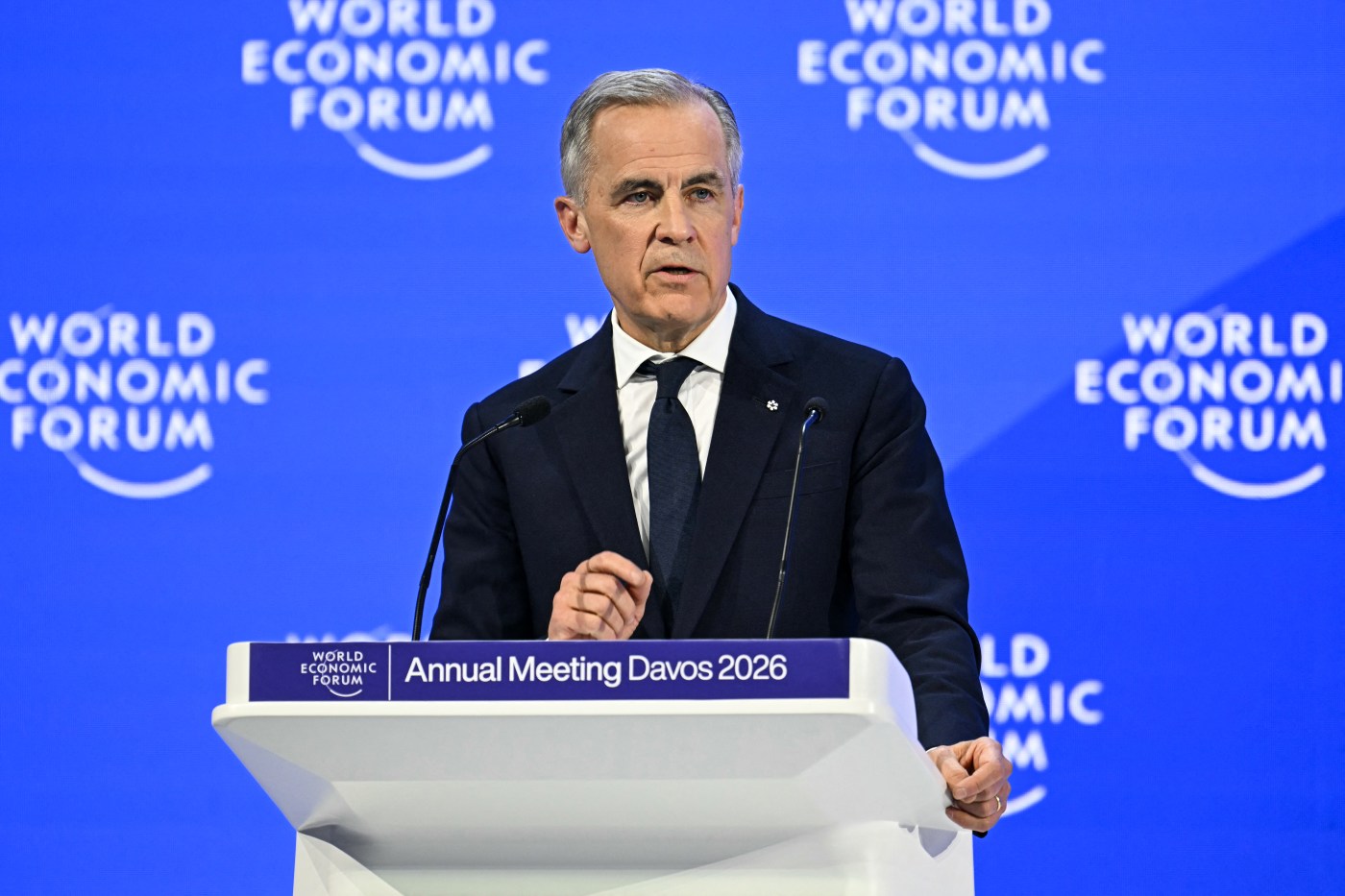
Better late than never: One year into the second presidency of Donald Trump, the world has reached an inflection point, as Canada’s prime minister, Mark Carney, made explicit in his speech at an economic summit in Davos. Having tried and failed to appease Trump’s imperialist bullying, middle powers such as his own country must and will instead “act together, because if we’re not at the table, we’re on the menu.”

Acting together, Carney said, will take the form of “variable geometries.” Countries, whether traditional friends or foes of the United States, may form ad hoc coalitions to pursue specific interests, trade pacts to replace commercial links to the U.S. that Trump has damaged or severed, cooperation in new or existing multilateral forums or even new military alliances.

Predictable results

This reaction to Trumpism is exactly what international-relations theory predicted. In the 1980s, the realist scholar Stephen Walt, nowadays at the Harvard Kennedy School, formulated the “balance of threat” hypothesis of world affairs. It said that states tend to form alliances to counter countries that are simultaneously mighty and hostile.

At the time, Walt’s insight addressed a shortcoming in conventional wisdom, which stipulated that a balance of power was the default tendency in world politics. That theory fit the 19th century, for example. The problem was that it couldn’t explain the Cold War, when one of the superpowers, the United States, attracted rather than repelled many middle and small powers, with no counterbalancing to speak of. The dissonance became even starker after the Cold War, when the U.S. became a hyperpower and still kept adding allies, totaling about 70.

What made the U.S. historically unusual, of course, is that for about eight decades it was a controversial but largely benevolent hegemon of the international system, one that provided global public goods such as open trade, international law and a modicum of order. To countries from Canada to Denmark and South Korea, America looked powerful but protective rather than threatening.

Flipped

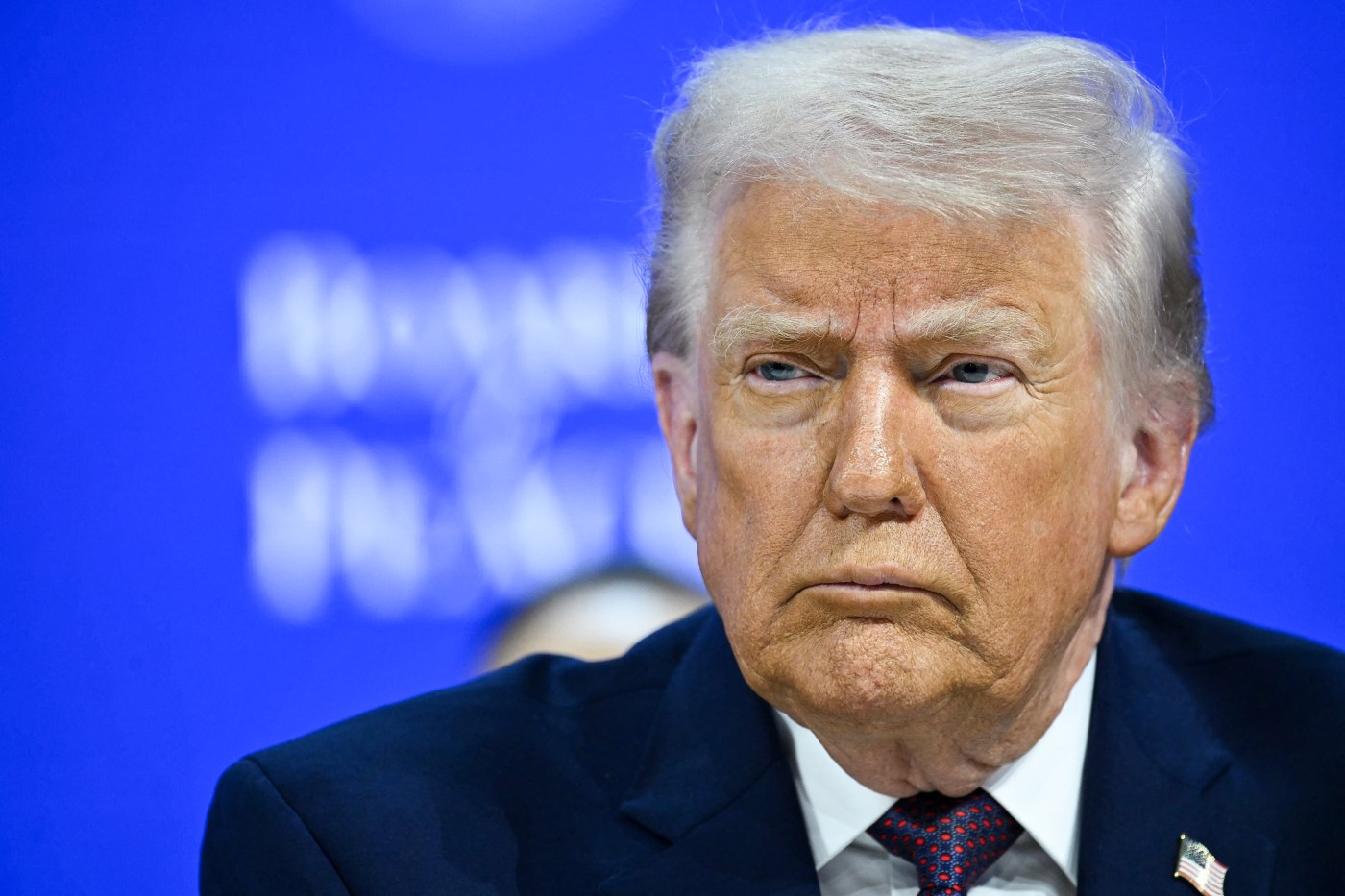
Trump, as you may have noticed, flipped that stance into powerful and menacing. Not only is he fond of what Jake Sullivan and Jon Finer, the top national security advisors to Trump’s predecessor, call “flamboyant violence” — force for show rather than long-term strategic advantage, as in Venezuela recently. Trump also threatens middle powers that are close allies, such as Canada and Danish Greenland, with annexation — even if this week he seemed to tone down his tariff assault against Europe over Greenland.

The enigma of the past year was that this new phenomenon of an aggressive America did not cause a balance of threat. Aside from the autocrats of China and Russia, who either stared Trump down or strung him along, most leaders from Europe to the Middle East and Asia tried to flatter and kowtow to the American president. They’ve gifted him golden crowns, luxury jets and crypto deals; nominated him for a Nobel Peace Prize; or simply fawned as though trying to win an Oscar. The leader of NATO went so far as to call Trump “daddy.”

I asked Walt whether he was surprised that his balance-of-threat theory didn’t kick in for a while. Not really, he told me, because “reacting against the U.S. as a threat is costly,” and the countries that Trump has offended or economically harassed are numerous enough to pose a “collective-action problem.” It’s only now dawning on allies that “accommodation isn’t working” because Trump is a “predatory hegemon,” and “there is no such thing as a lasting deal with a predatory hegemon.”

The rebalancing has begun

Now, though, the penny has dropped and the rebalancing has begun. Some countries are forming new security pacts, as Saudi Arabia and Pakistan recently did.

The European Union and Mercosur, a South American trade bloc, accelerated talks about a mega-deal after decades of being stuck.

India, whose leader used to be chummy with Trump, is warming up ties to China and others.

And a whole succession of leaders from countries that are nominally still American allies — Britain, Germany, South Korea — are wooing rather than shunning Beijing to deepen economic cooperation. (China, incidentally, just clocked its biggest trade surplus ever, despite Trump’s tariffs, after more than replacing its lost exports to the U.S. with exports to the rest of Asia, Europe and other places.)

Carney’s Canada is a good example. He has been opening commercial and diplomatic doors from Europe to India. He even visited China, after a brief ice age in bilateral relations since 2018 (when Canada arrested a Chinese executive who was wanted in the U.S. and China retaliated by detaining two Canadians). Now Beijing and Ottawa have a “strategic partnership.” The goal, Carney has said, is to wean Canada from its big American neighbor.

Placating didn’t work

The hardest and slowest threat balancing is the military sort, because America’s preponderance in hard power is so overwhelming. “I don’t see a non-U.S. NATO forming an alliance with China,” Walt told me. But as countries in Europe and Asia re-arm, they may start thinking twice about buying their kit from the Americans, and may even consider building their own nuclear arsenals now that the U.S. “umbrella” seems leaky.

America First will sooner or later become America Alone, I predicted about a year ago. The world, after trying in vain to placate its predatory hegemon, now seems to have started the hard work of rebalancing.

Andreas Kluth is a Bloomberg Opinion columnist covering U.S. diplomacy, national security and geopolitics. Previously, he was editor-in-chief of Handelsblatt Global and a writer for the Economist.
Ronald Brownstein: What’s the endgame for Trump’s offensive against blue cities?

posted in: All news | 0

The siege of Minneapolis represents a fitting, if foreboding, capstone to the first year of President Donald Trump’s second term. Since returning to office one year ago, Trump has pursued no goal more passionately or persistently than breaking the ability of blue jurisdictions and their leaders to resist him.

In the process, he is straining the nation’s fundamental cohesion in ways that may escalate beyond his control.

Trump’s pressure campaign against blue states and cities is advancing along three major tracks.

Physical force

The most visible is his use of physical force against blue municipalities. In Democratic-run cities including Los Angeles, Chicago, Portland, Charlotte and Minneapolis, heavily armed and masked federal immigration agents have swarmed neighborhoods and mustered for symbolic shows of force at prominent landmarks (such as MacArthur Park in Los Angeles and Michigan Avenue in Chicago), in a manner reminiscent of an occupying army.

Although immigrant communities have absorbed the brunt of this offensive, thousands of U.S. citizens and protesters have been swept up, too. Not since the segregationist Southern states deployed dogs, fire hoses and nightsticks against civil rights activists in the early 1960s has any government entity in the U.S. wielded force against its own citizens to this extent.

Looming over all of this is an even heavier club: the possibility that Trump might deploy the military into U.S. cities. After the Supreme Court stopped Trump from seizing control of state National Guard forces, he quickly pivoted to threatening Minneapolis with the deployment of active-duty troops under the Insurrection Act.

Funding

The second prong of Trump’s offensive against blue places is fiscal. The administration has sought to terminate federal funding to blue states and cities for virtually every major domestic purpose — including education, public health, infrastructure, transportation and law enforcement — unless they adopt a succession of conservative policies (on such issues as diversity, LGBTQ rights, abortion and, above all, complete cooperation with immigration enforcement) that they have rejected.

Courts have almost universally blocked these attempts as violating the underlying statutes establishing the federal programs. But the administration has responded by constantly devising new means of withholding money — for instance, by freezing child-care and welfare funds while they investigate fraud solely in five Democratic-controlled states. “They are forcing everyone who wants to uphold the rule of law to play a game of Whac-a-Mole with them,” says Jill Habig, founder and CEO of the Public Rights Project, a nonpartisan legal firm working with cities targeted by the administration.

Prosecutions

Trump’s third front has been prosecutions of blue-state officials. The administration has already arrested a judge, a mayor, a U.S. representative and a city comptroller, all in Democratic cities, for allegedly physically interfering with immigration enforcement, either at protests or in other encounters.

The criminal investigation into Minneapolis Mayor Jacob Frey and Minnesota Gov. Tim Walz raises the stakes by formally probing local officials over their words and policies — a step the administration threatened, but did not pursue, against Democratic Govs. JB Pritzker and Gavin Newsom during the enforcement blitzes in Chicago and Los Angeles. This replicates a common tactic of authoritarian leaders: prosecuting dissenting local officials to signal to ordinary citizens that anyone who speaks out is vulnerable.

The intensity of Trump’s moves against the parts of the country that have resisted him is without exact precedent in American history. (The closest parallel may be President Andrew Johnson, who favored the South over the North when he ascended to the presidency following Abraham Lincoln’s assassination at the Civil War’s end in 1865.)

Eric Schickler, a political scientist at the University of California at Berkeley, points out that presidents more typically try to woo the places that voted against them. “I don’t think we have seen anything like that — where a president openly views the duly elected leaders of a series of states as just enemies … and those territories as not entitled to revenues,” said Schickler, co-author of Partisan Nation, a 2024 book on how partisan polarization has distorted the constitutional system. “I can’t imagine Franklin Roosevelt saying, ‘Maine and Vermont didn’t vote for me in 1936, therefore sorry — you are out of the New Deal.’”

A deeper and darker dimension

Trump is inverting that electoral strategy: rather than courting blue places, he energizes his base by demonizing them. But his posture toward blue jurisdictions has a deeper and darker dimension. Trump and his top aides routinely describe Democratic officials as threats to the nation’s security and even survival — “the enemy from within,” in the president’s words. Deputy Attorney General Todd Blanche last week accused Walz and Frey of “terrorism.” Deputy White House Chief of Staff Stephen Miller, echoing his earlier comments about California and Illinois Democrats, told Fox they had “deliberately, willfully, and purposefully incited this violent insurrection.” In fact, the overwhelming evidence on the ground is that ordinary citizens in Minneapolis have peacefully exercised their First Amendment right to protest government actions.

Susan Stokes, director of the Center on Democracy at the University of Chicago, says it is likely no coincidence that Trump talked at length about his deployment of federal forces to Los Angeles and other cities at the press conference when he announced the capture of Venezuelan President Nicolas Maduro. “They are creating an equivalence between their antagonists in American cities and their antagonists in foreign countries,” Stokes says. “All of whom are criminals, presumably, and are therefore the rightful objects of repression, imprisonment, prosecution.”

In their multifront offensive against blue states and cities, the president and his aides clearly believe they hold what military planners call escalation dominance — the unilateral ability to control the intensity of the conflict. But that’s a delusion.

Trump’s drive to subjugate blue places has triggered a progression of protest, violent repression and greater protest that will almost certainly intensify over time. “You are asking for a cycle that spirals out of control,” said Schickler. In all these actions, Trump is recklessly unraveling the threads that bind together America. The scariest part is that even he cannot know in advance when he’s gone too far to turn back.

Ronald Brownstein is a Bloomberg Opinion columnist covering politics and policy. He is a CNN analyst and the author or editor of seven books.


Abby McCloskey: Too many kids already know someone who’s been deepfaked

posted in: All news | 0

The pre-AI world is gone. Estimates suggest that already, as many as one in eight kids personally knows someone who has been the target of a deepfake photo or video, with numbers rising to one in four who have seen a sexualized deepfake of someone they recognize, either a friend or a celebrity. This is a real problem, and it’s one that lawmakers are suddenly waking up to.

In the 1980s, when I was a kid, it was a picture of a missing child on a milk carton from across the country that encapsulated parental fears. In 2026, it’s an AI-generated suggestive image of a loved one.

The increasing availability of AI nudification tools, such as those associated with Grok, has fueled skyrocketing reports of AI-generated child sexual abuse material — from roughly 4,700 in 2023 to over 440,000 in the first half of 2025 alone, according to the National Center on Missing and Exploited Children.

This is horrific, grimy stuff. It’s particularly difficult to read about — and write about — as a mom, because the ability to shield your child from it feels so beyond your control. Parents already struggle just to keep kids off social media, get screens out of classrooms or lock up household devices at night. And that’s after a decade’s worth of data on social media’s impact on kids.

Before we’ve even solved that problem, AI is taking the world by storm — especially among the young. Nearly half (42%) of American teens report talking to AI chatbots as a friend or companion. The vast majority of students (86%) report using AI during the school year, according to Education Week. Even kids ages 5 to 12 are using generative AI. In several high-profile cases, parents say AI chatbots encouraged their teens to commit suicide.

Too many parents are out of the loop. Polling from Common Sense Media shows that parents consistently underestimate their children’s use of AI. Schools, too. The same survey found that few schools had communicated — or arguably even developed — an AI policy.

But there’s a shared sense of foreboding: Americans remain far more concerned (50%) than excited (10%) about the increased use of AI in daily life, and the vast majority believe that they have little to no ability to control it (87%).

Policymakers are on the move. This month, the Senate unanimously passed a bill, the Defiance Act, to allow victims of deepfake porn to sue the people who created the images. The UK and EU are investigating whether Grok was used to generate sexually explicit deepfake images of women and children without their consent, violating their Online Safety Act.

In the U.S., the Take It Down Act, signed into law by Congress last year, criminalized sexual deepfakes and requires platforms to remove the images within 48 hours; sharers could face prison time.

In my home state of Texas, we have some of the most aggressive AI laws in the country. The Securing Children Online through Parental Empowerment (SCOPE) Act of 2024, among other things, requires platforms to implement a strategy to prevent minors from being exposed to “harmful material.” It’s been illegal since Sept. 1, 2025 to create or distribute any sexually suggestive images without consent. Punishments range from felony charges and imprisonment to recurring fines. And starting this year, the Texas Responsible AI Governance Act (TRAIGA) goes into effect banning AI development with the sole intent to create deepfakes.

Texas might not be known for its bipartisanship, but these efforts have been pushed in a bipartisan manner and framed (correctly) as protecting Texas children and parental rights. “In today’s digital age, we must continue to fight to protect Texas kids from deceptive and exploitative technology,” said Attorney General Ken Paxton, announcing his investigation into Meta AI studio and Character.AI.

But we don’t know yet if these laws will be effective. For one, it’s all still so new. For another, the technology keeps changing.

And it doesn’t help that the creators of AI are tight with Washington. Big tech companies are the big boys in DC these days; their lobbying has grown significantly. Closer to home, Texas Democrats are concerned that Paxton might not push Musk over the Grok debacle given the billionaire’s thick GOP connections.

Under the Trump Administration, the Federal Trade Commission launched a formal inquiry into Big Tech, asking them to detail how they test and monitor for potential negative impacts of chatbots on kids. But that’s essentially self-disclosing; these same companies haven’t exactly inspired confidence on that score with social media, or in the case of Grok, in deepfake child nudes.

More outside accountability is required. To that end, a multi-prong approach is required. I’d like to see Health and Human Services incorporate AI’s challenge to kids’ well-being as part of the MAHA movement. A bipartisan commission could explore AI age limits, school policies and children’s relational skills. (Concerningly, there was little mention of AI in MAHA’s comprehensive report on child health last year.)

But even with federal and state action, the reality is that much of the AI world will be navigated by parents ourselves. While there are steps that could limit children’s exposure to AI at younger ages, avoidance alone is not the answer. We are only at the beginning, and already AI technology is unavoidable. It’s in our computers, homes, schools, toys, and work and the AI age is only just beginning.

More scaffolding is required. The deep work will fall to parents. Parents have always needed to raise children with strong spines, thick skins and moral virtue. The struggles of each era change, but that doesn’t. We will now need to raise children who have the sense of purpose, critical-thinking abilities and relational know-how to live with this new and already ubiquitous technology — with its great promise and dangers.

It’s a brave new world out there, indeed.

Abby McCloskey is a columnist, podcast host, and consultant. She directed domestic policy on two presidential campaigns and was director of economic policy at the American Enterprise Institute.

In Chicago, Tre Jones blossoms into player Timberwolves could target in trade talks

posted in: All news | 0

Chicago’s status as a middling team with abundant guard depth has created a situation where the Bulls may be active sellers at the trade deadline.

The Timberwolves could be on the other end of the deal.

Coby White is the name that garners the most attention, as he’s the most prolific scorer seemingly available of the Bulls’ bench. But Ayo Dosunmu’s versatility and reliability is also intriguing.

And then there’s another name that’s recently entered the fold — Tre Jones.

Minnesota has been linked to all three players recently by the Chicago Sun-Times. Jones is a name with which local basketball fans are quite familiar, given his high school dominance at Apple Valley.

And, frankly, the player Jones was while donning an Eagles jersey somewhat closely resembles who he’s been for Chicago in recent weeks.

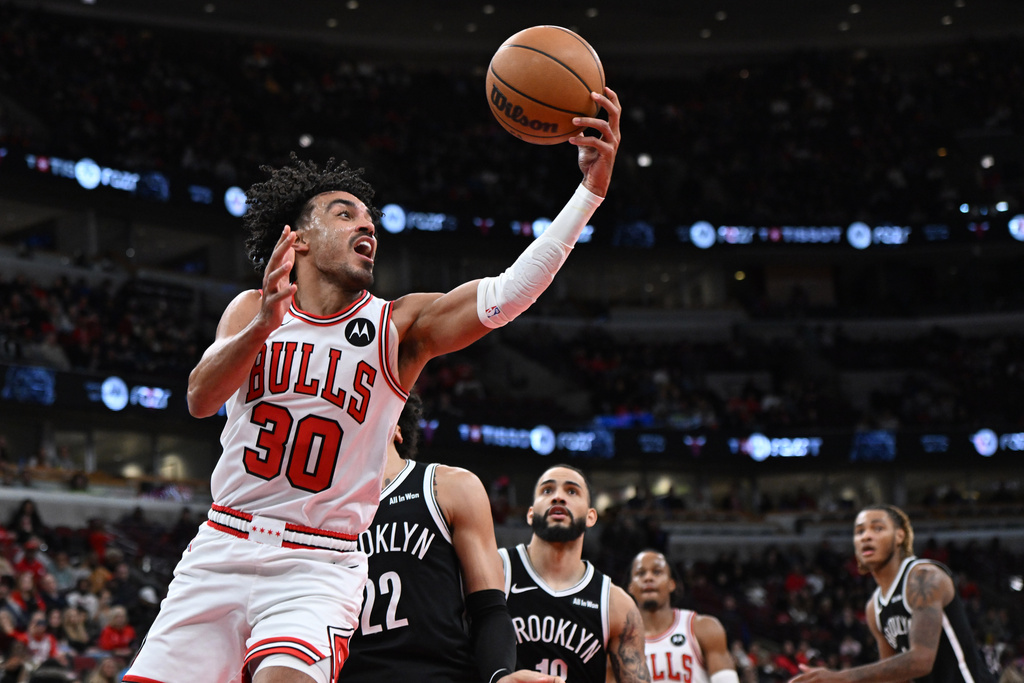
In a win Tuesday over the Clippers, Jones recorded 15 points, 10 assists and eight rebounds. Two days prior, he had 10 points and 10 assists in a win over Brooklyn. He had four steals last week in a win over Utah.

Over his last 18 games heading into Thursday’s tilt in Minnesota, Jones was averaging 12.3 points and 6.8 assists per game while shooting 39% from distance. Those are numbers any team would be attracted to, but especially the Wolves, who could use one more two-way player in their rotation, particularly at the guard spot.

Frankly, on a team where the point guard spot is in flux in the near and long term, Jones is intriguing. While not an identical player, his ability to impact both ends of the floor more closely resembles the impact Nickeil Alexander-Walker had for Minnesota off the bench than anyone currently on the roster can provide.

He’s also ascending. The 26 year old hit his stride the moment he landed in Chicago via trade last season. Over his final 12 games with the Bulls before injury ended his season, Jones averaged 14.3 points, 6.2 assists and 3.8 rebounds.

He re-signed with Chicago on a three-year, $24 million deal in the offseason and has proven invaluable for the Bulls while star guard Josh Giddey was out with an injury.

Jones credits part of his current success to what he learned during his first four and a half seasons with the Spurs, about being a professional who’s ready for any opportunity. He learned the value of impacting the game in any minutes you get, regardless of role, as well as the value of culture building.

Chicago’s up-tempo approach has fit Jones like a glove, and the guard lauded Bulls coach Billy Donovan for the belief he’s preached in the point guard, allowing Jones’ confidence to blossom.

That, he noted, is what made everything “click.”

The result is the well-rounded, two-way player those in the Minnesota basketball scene watched grow up locally, and always assumed would reach these heights.

“It’s definitely been a lot of fun to be able to produce on the court like I know how to,” Jones said. “But I think the most joy I get is when we win games. Doesn’t really matter the numbers, I guess. As long as we’re winning, I’m happy. So that’s what sticks out to me.”

Jones admitted he gets a sense of satisfaction from stacking productive years and contracts at the sport’s highest level — evidence that the former second-round draft pick’s work is paying off.

“It’s been a lot of fun,” Jones said.

And he only just now seems to be getting started.

Related Articles


Some Timberwolves’ season-ticket renewal price hikes spike north of 30%


Chris Finch usually sticks with struggling Timberwolves’ vets. Will he do the same with Mike Conley?


Timberwolves season-ticket renewal prices are rising. Here’s why


Timberwolves give up double-digit fourth-quarter lead, lose to Jazz


Frederick: With the game is on the line, opposing defenses can’t stop Ant