Top US trading partners pledged to invest $5 trillion in America. These researchers have doubts.

posted in: All news | 0

By PAUL WISEMAN, Associated Press Economics Writer

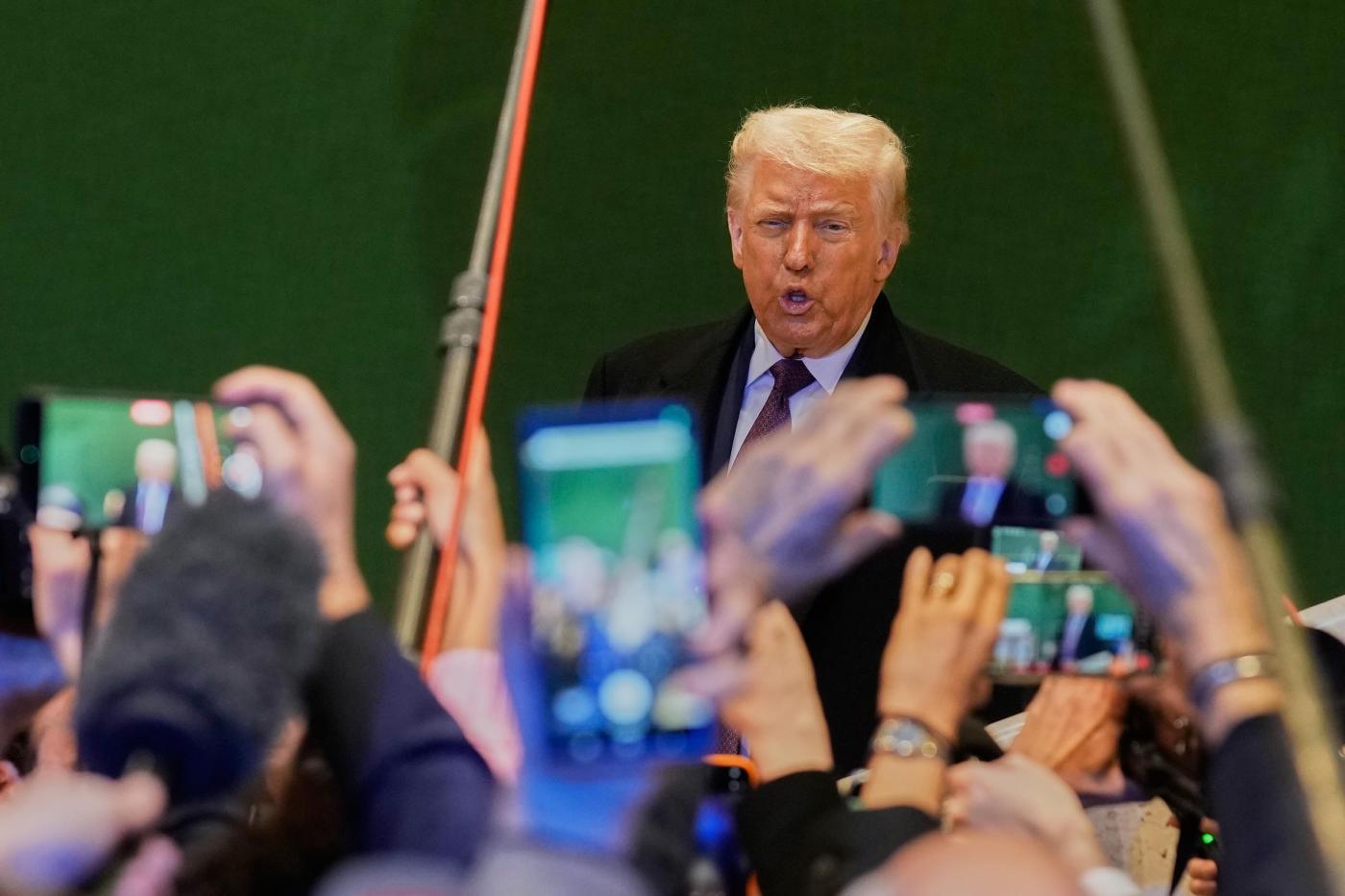
WASHINGTON (AP) — President Donald Trump has strong-armed many of America’s biggest trading partners into pledging trillions of dollars of investment in the United States. But a study out Tuesday raises doubts about whether the money will actually materialize and questions how it would be spent if it did.

Related Articles


Trump administration’s trust and credibility tested in wake of Pretti’s death in Minneapolis


Watch: NTSB hearing underway to highlight what led to a deadly midair collision near Washington, DC


Trump’s about-face in Minnesota after Pretti’s death is latest in pattern of sudden shifts


Trump visits Iowa trying to focus on affordability during fallout over nurse’s Minneapolis shooting


Feds seek action against Minnesota Department of Education, Minnesota State High School League over Title IX

“How realistic are these commitments?’’ write Gregory Auclair and Adnan Mazarei of the Peterson Institute for International Economics, a nonpartisan think tank that supports free trade. “The short answer is that they are clouded with uncertainty.’’

They looked at more than $5 trillion in investment commitments made last year by the European Union, Japan, South Korea, Taiwan, Switzerland, Liechtenstein and the Persian Gulf states of Saudi Arabia, Qatar, Bahrain and the United Arab Emirates.

Trump used the threat of punitive tariffs – import taxes – to pry concessions out of those trading partners, including the investment pledges.

The White House has published an even higher investment figure – $9.6 trillion – that includes public and private investment commitments from other countries. Trump himself, never one to undersell his achievements, has put the number far higher — $17 trillion or $18 trillion — though Auclair and Mazarei note that “the basis for his claim is not clear.’’

All the numbers are huge. Total private investment in the United States was most recently running at a $5.4 trillion annual pace. In 2024, the last year for which figures are available, total foreign direct investment in the United States amounted to $151 billion. Direct investment includes money sunk into such things as factories and offices but not financial investments like stocks and bonds.

“The pledged amounts are large,’’ Auclair and Mazarei write, “but their time horizon varies, and the metrics for measuring and thus verifying the pledges are generally unclear.’’ They note, for example, that the European Union’s pledge to invest $600 billion in the United States “carries no legally binding commitment.’’

The report also finds that some countries would strain to meet their pledges. For the Gulf countries, “the commitments are large relative to their financial resources,” the researchers write.

“Saudi Arabia appears capable of meeting its targets, with some difficulty.’’ The United Arab Emirates and Qatar would find it even harder and might have to finance the investments by borrowing. “In all three cases, the commitments are nonbinding, and investments from these countries could fall well below headline numbers,’’ they write.

Moreover, “these agreements have been reached under duress,’’ Mazarei, a former deputy director of the International Monetary Fund, said in an interview. “It’s not necessarily being done willingly.’’

So trading partners could look for ways to escape their commitments – especially if the Supreme Court strikes down the tariffs Trump used to negotiate the one-sided agreements. A ruling is expected as early as February. “Other countries may find a way to wiggle out,’’ Mazarei said.

Still, the Trump administration can turn to alternative tariffs if the justices rule the current tariffs illegal.

“President Trump agreed to lower tariffs on countries we have trade deals with in exchange for investment commitments and other concessions,’’ White House spokesman Kush Desai said. “The president reserves the right to revisit tariff rates if other countries renege on their commitments, and anyone who doubts President Trump’s willingness to put his money where his mouth is should ask Nicolas Maduro and Iran for their thoughts.”

U.S. troops overthrew and arrested Venezuelan President Maduro early this month, and Trump ordered the United States to join Israel in bombing Iran last year.

Auclair and Mazarei agree that the investment Trump lands could end up creating jobs, spurring economic growth and making supply chains more secure by bringing production to America.

Trump, they note, is in some ways taking a similar approach to Biden, using government “industrial policy’’ to encourage more manufacturing in the United States.

But Biden tapped taxpayer dollars to finance infrastructure projects and incentives for companies to invest in green technology and semiconductors. Trump is using the tariff threat to get foreign countries – and their companies – to pick up the tab. And he has dropped the push to encourage clean energy, focusing instead on promoting fossil fuels.

In their report, the Peterson researchers worry about how the investment decisions would get made and whether they would reflect sound economics. “This approach may yield real investments and jobs,’’ they write, “but it raises familiar industrial policy concerns: opaque projection selection, weak accountability, and the risk that political criteria crowd out economic efficiency.’’
Trump’s use of AI images pushes new boundaries, further eroding public trust, experts say

posted in: All news | 0

By KAITLYN HUAMANI, Associated Press Technology Writer

LOS ANGELES (AP) — The Trump administration has not shied away from sharing AI-generated imagery online, embracing cartoonlike visuals and memes and promoting them on official White House channels.

Related Articles


Trump administration’s trust and credibility tested in wake of Pretti’s death in Minneapolis


Watch: NTSB hearing underway to highlight what led to a deadly midair collision near Washington, DC


Trump’s about-face in Minnesota after Pretti’s death is latest in pattern of sudden shifts


Trump visits Iowa trying to focus on affordability during fallout over nurse’s Minneapolis shooting


Feds seek action against Minnesota Department of Education, Minnesota State High School League over Title IX

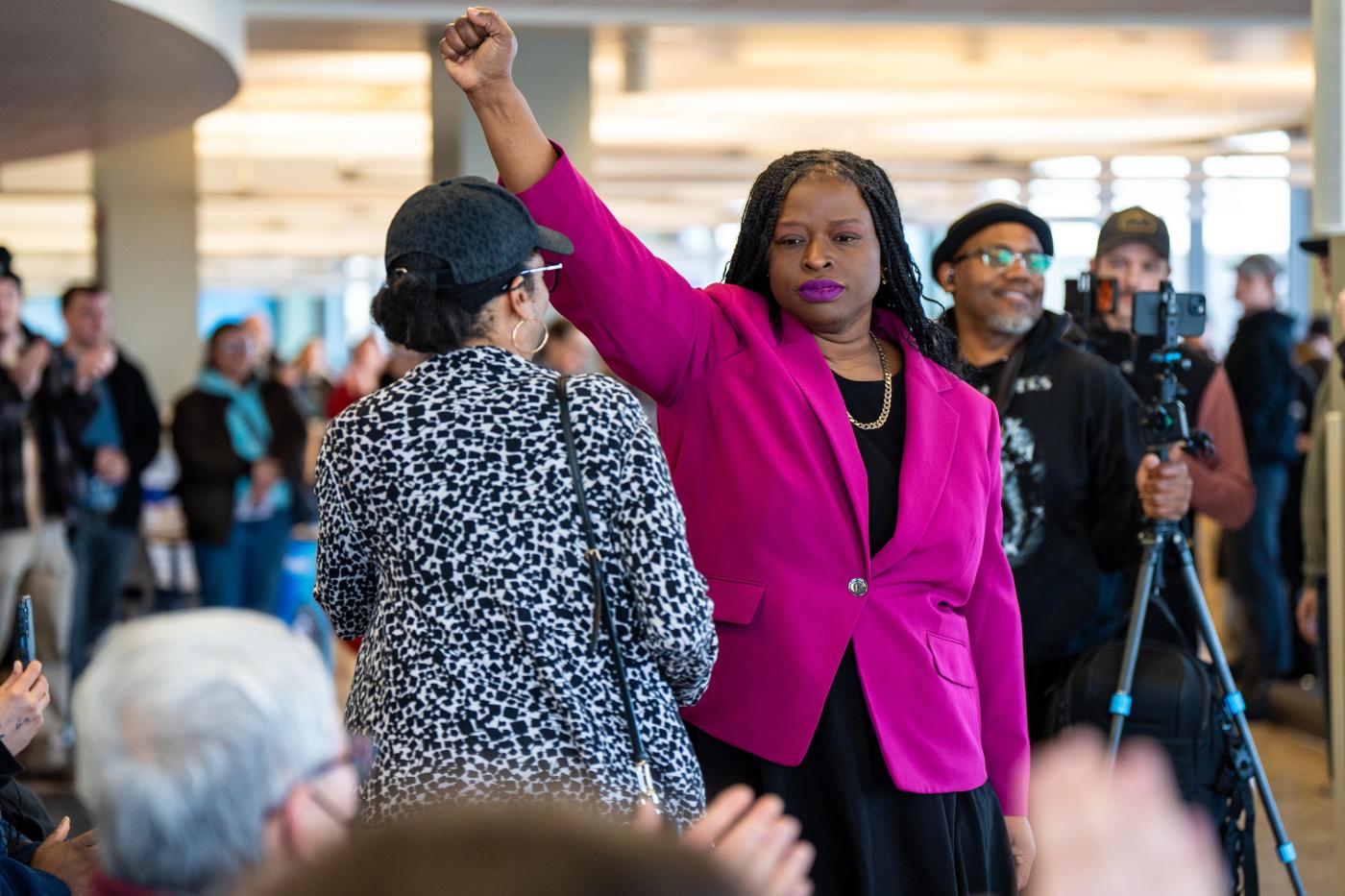
But an edited — and realistic — image of civil rights attorney Nekima Levy Armstrong in tears after being arrested is raising new alarms about how the administration is blurring the lines between what is real and what is fake.

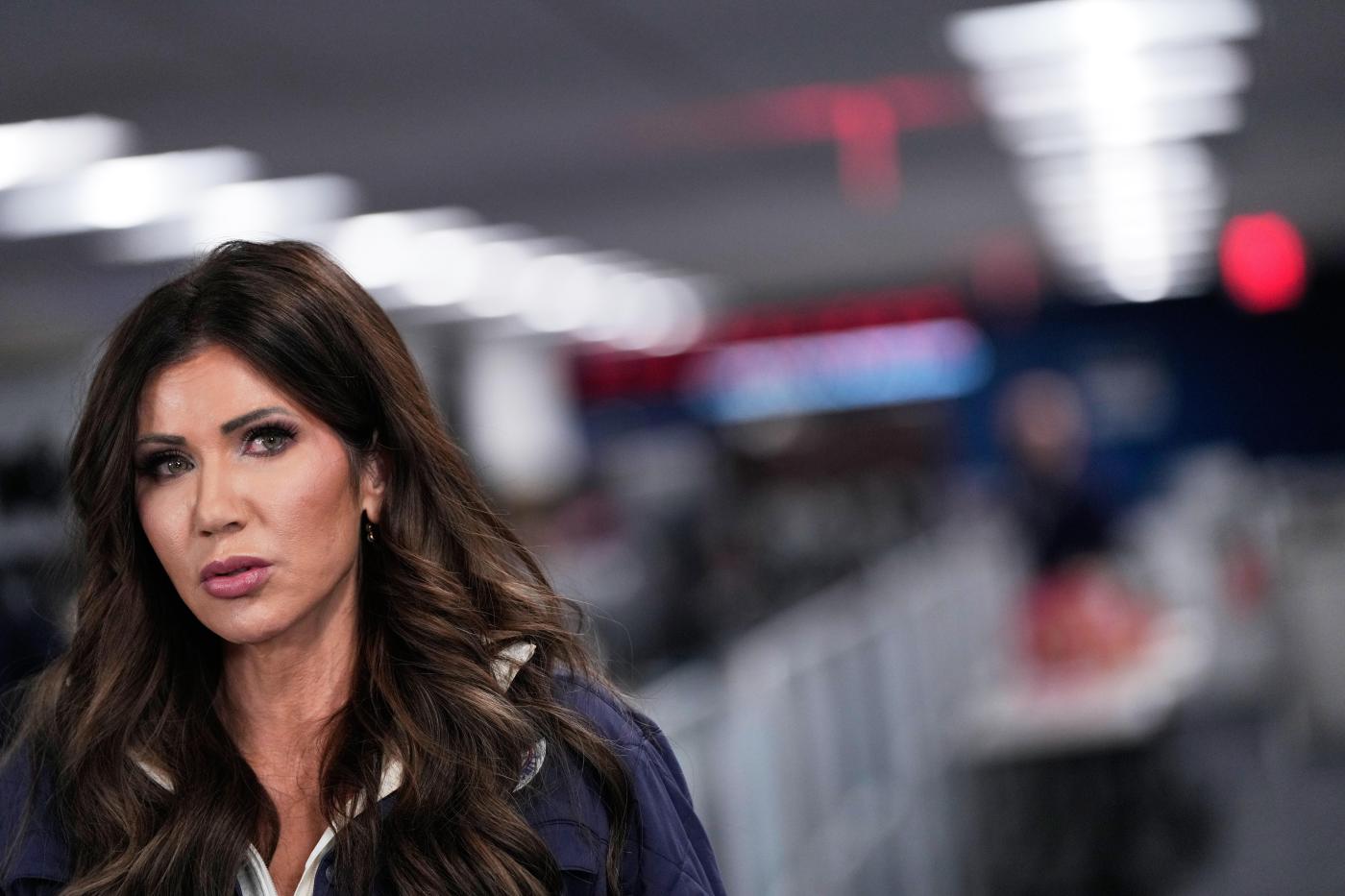
Homeland Security Secretary Kristi Noem’s account posted the original image from Levy Armstrong’s arrest before the official White House account posted an altered image that showed her crying. The doctored picture is part of a deluge of AI-edited imagery that has been shared across the political spectrum since the fatal shootings of Renee Good and Alex Pretti by U.S. Border Patrol officers in Minneapolis

However, the White House’s use of artificial intelligence has troubled misinformation experts who fear the spreading of AI-generated or edited images erodes public perception of the truth and sows distrust.

In response to criticism of the edited image of Levy Armstrong, White House officials doubled down on the post, with deputy communications director Kaelan Dorr writing on X that the “memes will continue.” White House Deputy Press Secretary Abigail Jackson also shared a post mocking the criticism.

David Rand, a professor of information science at Cornell University, says calling the altered image a meme “certainly seems like an attempt to cast it as a joke or humorous post, like their prior cartoons. This presumably aims to shield them from criticism for posting manipulated media.” He said the purpose of sharing the altered arrest image seems “much more ambiguous” than the cartoonish images the administration has shared in the past.

Memes have always carried layered messages that are funny or informative to people who understand them, but indecipherable to outsiders. AI-enhanced or edited imagery is just the latest tool the White House uses to engage the segment of Trump’s base that spends a lot of time online, said Zach Henry, a Republican communications consultant who founded Total Virality, an influencer marketing firm.

“People who are terminally online will see it and instantly recognize it as a meme,” he said. “Your grandparents may see it and not understand the meme, but because it looks real, it leads them to ask their kids or grandkids about it.”

All the better if it prompts a fierce reaction, which helps it go viral, said Henry, who generally praised the work of the White House’s social media team.

The creation and dissemination of altered images, especially when they are shared by credible sources, “crystallizes an idea of what’s happening, instead of showing what is actually happening,” said Michael A. Spikes, a professor at Northwestern University and news media literacy researcher.

“The government should be a place where you can trust the information, where you can say it’s accurate, because they have a responsibility to do so,” he said. “By sharing this kind of content, and creating this kind of content … it is eroding the trust — even though I’m always kind of skeptical of the term trust — but the trust we should have in our federal government to give us accurate, verified information. It’s a real loss, and it really worries me a lot.”

Spikes said he already sees the “institutional crises” around distrust in news organizations and higher education, and feels this behavior from official channels inflames those issues.

Ramesh Srinivasan, a professor at UCLA and the host of the Utopias podcast, said many people are now questioning where they can turn to for “trustable information.” “AI systems are only going to exacerbate, amplify and accelerate these problems of an absence of trust, an absence of even understanding what might be considered reality or truth or evidence,” he said.

Srinivasan said he feels the White House and other officials sharing AI-generated content not only invites everyday people to continue to post similar content but also grants permission to others who are in positions of credibility and power, like policymakers, to share unlabeled synthetic content. He added that given that social media platforms tend to “algorithmically privilege” extreme and conspiratorial content — which AI generation tools can create with ease — “we’ve got a big, big set of challenges on our hands.”

An influx of AI-generated videos related to Immigration and Customs Enforcement action, protests and interactions with citizens has already been proliferating on social media. After Renee Good was shot by an ICE officer while she was in her car, several AI-generated videos began circulating of women driving away from ICE officers who told them to stop. There are also many fabricated videos circulating of immigration raids and of people confronting ICE officers, often yelling at them or throwing food in their faces.

Jeremy Carrasco, a content creator who specializes in media literacy and debunking viral AI videos, said the bulk of these videos are likely coming from accounts that are “engagement farming,” or looking to capitalize on clicks by generating content with popular keywords and search terms like ICE. But he also said the videos are getting views from people who oppose ICE and DHS and could be watching them as “fan fiction,” or engaging in “wishful thinking,” hoping that they’re seeing real pushback against the organizations and their officers.

Still, Carrasco also believes that most viewers can’t tell if what they’re watching is fake, and questions whether they would know “what’s real or not when it actually matters, like when the stakes are a lot higher.”

Even when there are blatant signs of AI generation, like street signs with gibberish on them or other obvious errors, only in the “best-case scenario” would a viewer be savvy enough or be paying enough attention to register the use of AI.

This issue is, of course, not limited to news surrounding immigration enforcement and protests. Fabricated and misrepresented images following the capture of deposed Venezuelan leader Nicolás Maduro exploded online earlier this month. Experts, including Carrasco, think the spread of AI-generated political content will only become more commonplace.

Carrasco believes that the widespread implementation of a watermarking system that embeds information about the origin of a piece of media into its metadata layer could be a step toward a solution. The Coalition for Content Provenance and Authenticity has developed such a system, but Carrasco doesn’t think that will become extensively adopted for at least another year.

“It’s going to be an issue forever now,” he said. I don’t think people understand how bad this is.”

Associated Press writers Jonathan J. Cooper in Phoenix and Barbara Ortutay in San Francisco contributed to this report.

Trump administration’s trust and credibility tested in wake of Pretti’s death in Minneapolis

posted in: All news | 0

By STEVEN SLOAN

WASHINGTON (AP) — Sen. Bill Cassidy didn’t simply criticize the immigration crackdown in Minneapolis.

Following the killing of Alex Jeffrey Pretti by a U.S. Border Patrol officer, the Louisiana Republican warned of broader implications for the federal government.

“The credibility of ICE and DHS are at stake,” Cassidy wrote in a social media post, referring to Immigration and Customs Enforcement and the Department of Homeland Security. “There must be a full joint federal and state investigation. We can trust the American people with the truth.”

Trust is one of a president’s most valuable currencies, especially in a time of crisis. During his second term, President Donald Trump has persistently undermined the trust and credibility of major universities, national law firms and media and taken punitive actions against them. His supporters largely either endorsed those actions or stayed mum.

Now the credibility question is aimed at his administration. While the criticism is not directly aimed at the president by his supporters, it is a sign that trust is eroding over some of his most important policies. Administration officials gave one account of the shooting in Minneapolis and contemporaneous video provided a decidedly different one.

In the hours after Pretti’s killing, top Trump officials including Homeland Security Secretary Kristi Noem were quick to cast Pretti as an instigator who “approached” officers with a gun and acted violently. But videos from the scene show Pretti being pushed by an officer before a half-dozen agents descend on him.

During the scuffle, he held a phone but is never seen brandishing the 9mm semiautomatic handgun police say he was licensed to carry. The administration has said investigations are ongoing, though information hasn’t yet emerged to support some of the provocative initial claims.

“We trust our national leaders to tell us accurately about the world that we don’t experience directly but about which they have knowledge,” said Kathleen Hall Jamieson, the director of the Annenberg Public Policy Center at the University of Pennsylvania. “If someone is credible in that role, then their description of reality should match your perception of reality if you’re a dispassionate, fair individual.”

The White House seemed to try to ease the conflict Monday. Trump and Minnesota Gov. Tim Walz spoke and both suggested their conversation was productive. Border Patrol commander Greg Bovino, who has been at the center of the administration’s aggressive immigration enforcement surge nationwide, is expected to soon leave Minneapolis.

White House press secretary Karoline Leavitt, meanwhile, sought to distance Trump from some of the initial claims about Pretti — including allegations that he was a domestic terrorist — noting they didn’t come from the president himself.

Still, lawmakers from both parties — including many Republicans — called for independent investigations and, perhaps most importantly, trust.

In calling for a “transparent, independent investigation,” Sen. John Curtis, R-Utah, wrote to constituents online that “you’ve trusted me, and maintaining that trust matters.”

“I disagree with Secretary Noem’s premature DHS response, which came before all the facts were known and weakened confidence,” he wrote.

Sen. Tammy Duckworth, D-Ill., is pushing an amendment to a DHS funding bill that would force independent probes of DHS, ICE and Customs and Border Patrol. She hasn’t yet won GOP support for the measure but said in a statement “this isn’t a red or blue issue.”

“It’s about truth and accountability,” she said.

Feeding social media platforms with content

Trump and his team have spent much of his second term studiously feeding content to social media platforms to engage their most loyal supporters in ways that independent fact checkers have found to be distorted or baseless. During its immigration crackdown, the administration’s accounts have posted unflattering images of people being taken into custody.

The extent of efforts to manipulate images became clear last week when the White House posted a picture on its X page of civil rights attorney Nekima Levy Armstrong crying with her hands behind her back as she was escorted by a blurred person wearing a badge. The photo was captioned in all caps: “Arrested far-left agitator Nekima Levy Armstrong for orchestrating church riots in Minnesota.”

A photo posted by Noem’s account showed the same image with Levy Armstrong wearing a neutral expression.

During the 2024 campaign, Trump and his running mate, JD Vance, fueled false claims online that Haitians in an Ohio community were abducting and eating pets. Pressed on the issue, Vance said he was amplifying the claims to draw attention to immigration policies advocated by Democrats.

“If I have to create stories so that the American media actually pays attention to the suffering of the American people, then that’s what I’m going to do,” Vance said at the time, quickly clarifying that he “created the focus that allowed the media to talk about this story and the suffering caused by policies.”

Trump is hardly the first president to face questions about trust.

Presidents and credibility

President Lyndon B. Johnson’s administration was undone by his handling of the Vietnam War, which ushered in an era of broad skepticism about Washington. Just 38% of Americans said last year that they trusted the federal government’s ability to handle domestic problems at least a fair amount, according to Gallup polling. That’s down from 70% in 1972.

Once they leave the White House, presidents are often candid about mistakes that eroded their credibility. In his memoir, President George W. Bush wrote about the failure to find weapons of mass destruction in Iraq, which was a predicate for launching a deadly and costly war there.

“That was a massive blow to our credibility — my credibility,” he wrote. “No one was more shocked or angry than I was when we didn’t find the weapons. I had a sickening feeling every time I thought about it. I still do.”

Related Articles


Watch: NTSB hearing underway to highlight what led to a deadly midair collision near Washington, DC


Trump’s about-face in Minnesota after Pretti’s death is latest in pattern of sudden shifts


Trump visits Iowa trying to focus on affordability during fallout over nurse’s Minneapolis shooting


Feds seek action against Minnesota Department of Education, Minnesota State High School League over Title IX


The shootings in Minneapolis are upending the politics of immigration in Congress

President Joe Biden’s botched withdrawal from Afghanistan marked a turning point in his administration. And in her memoir of the 2024 campaign, his vice president, Kamala Harris, wrote of rejecting the Biden campaign’s talking points after his dismal debate performance.

“I was not about to tell the American people that their eyes had lied,” she wrote. “I would not jeopardize my own credibility.”

But none of that compares to the credibility challenge facing Trump, according to Barbara Perry, the co-director of the Presidential Oral History Program at the University of Virginia’s Miller Center, who noted the sheer volume of lies and exaggerations that have emerged from his administration.

“Donald Trump is unique,” she said. “If you count up all of the times he has prevaricated, it would have to outweigh all other presidencies.”

A Casino is Coming to Queens. Critics Say It’s Wrong for the Flood-prone Site.

posted in: All news | 0

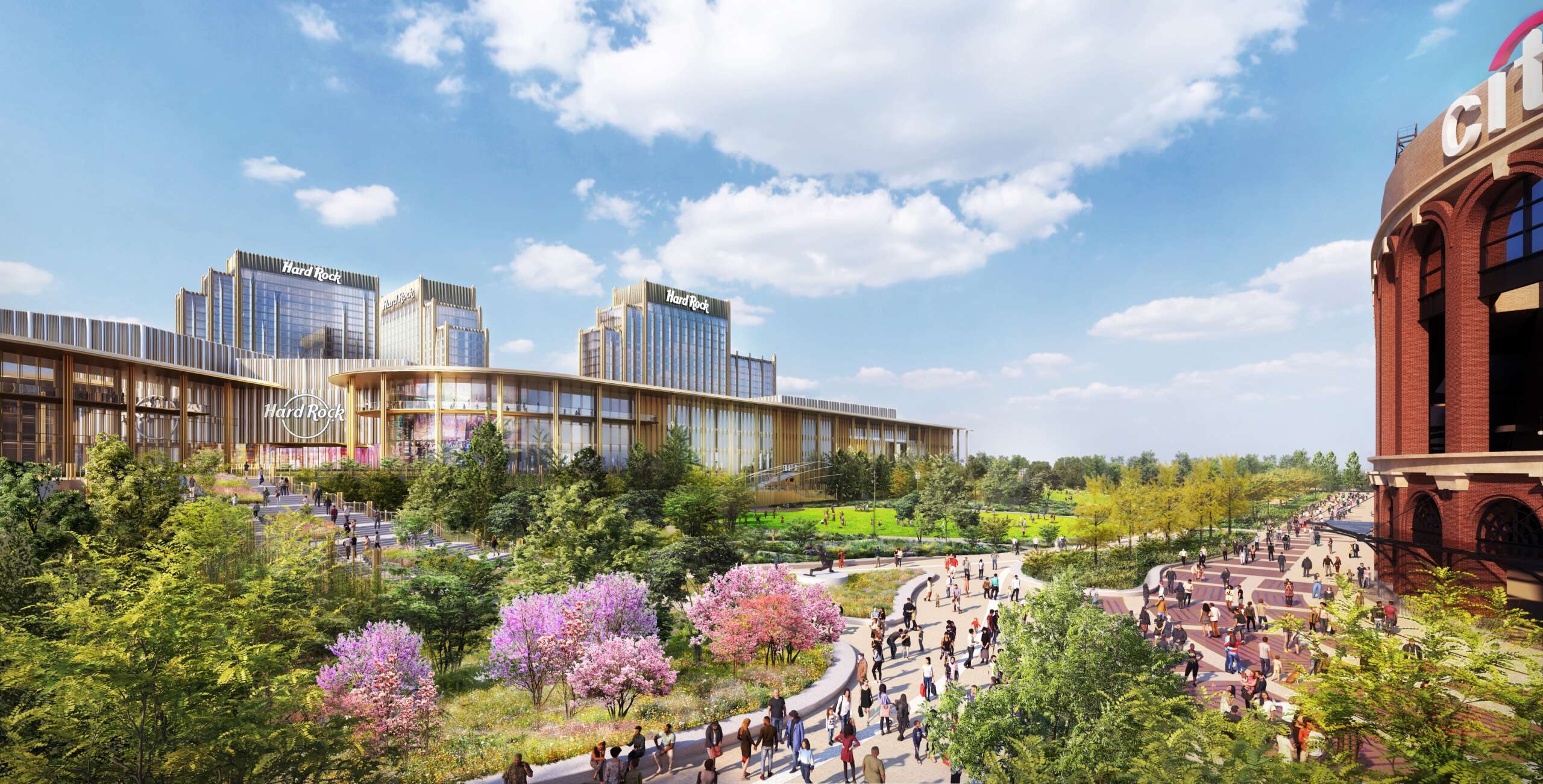
Advocates opposed to the casino say the 50-acre parking lot should be a climate-resilient park instead. “Floodplains could serve as green buffers that absorb stormwater, not as sites for massive new structures,” said Rebecca Pryor, executive director of Guardians of Flushing Bay.

A rendering of the Metropolitan Park casino. The developers say it will transform what’s now a parking lot next to CitiField, bringing jobs and green space. Critics want the 50-acre site used as a flood-absorbing park. (Rendering via NYCEDC / SHoP Architects LLP + Field Operations)

“Shame on you John Liu! Shame on you John Liu!” was the spontaneous chant from a crowd of about 200 protesters who showed up Oct. 19 at the Muslim Center of New York in Flushing to protest the plan to build a large casino complex next to Citi Field, home of the Mets. 

The protesters were directing their ire at State Sen. Liu because of an about-face he made that opened this land—a parking lot which for decades had been zoned as parkland—to development. It was one of many rallies held by climate activists and residents of Flushing-Corona, Queens, over the $8 billion project known as Metropolitan Park.

One of three downstate casino proposals approved by the New York Gaming Facility Location Board last month, it would transform what is now an empty 50-acre asphalt parking lot in Willets Point into a casino, hotel, food hall and entertainment venue that supporters say will bring tens of thousands of jobs.

But many have raised concerns because the low-lying area, hemmed in by Flushing Bay and Flushing Creek, is flood-prone. As climate change intensifies, bringing sea level rise and extreme weather, it will only become more so in the coming years, critics say. 

Neighbors and advocates warn that placing a large-scale commercial complex here—instead of dedicating this area to water absorption and drainage—could increase flooding risks for surrounding communities as well. They point to the city’s own comprehensive waterfront plan,  which aims to reduce development in the floodplain and help people relocate from high-risk areas.

“The city keeps approving new buildings in those same flood zones,” said Rebecca Pryor, the executive director of Guardians of Flushing Bay, a local advocacy group opposed to the casino. “It feels like we’re stuck in a game of ping-pong between conflicting policies.” 

A youth group held up signs at rally against the casino on Oct. 19, 2025 in Flushing, Queens. (Photo by Ilvea Lezama)

Parkland in a floodplain

The empty parking lot where Metropolitan Park is planned has been designated as public parkland since the World’s Fair in 1939, and not zoned for development.

After initially opposing the casino project, Liu, who represents Flushing, changed his position, introducing a bill to rezone the area from parkland to commercial. Liu’s bill passed in May 2025 and was signed into law in June by Gov. Kathy Hochul, making approval for the development nearly assured.

In exchange, the casino’s developers, Hard Rock Casino Development—backed by Mets owner Steve Cohen—agreed to create at least 25 acres of new parkland within the 50-acre project area, as well as a proposed public walkway and park, named Flushing Skypark. This elevated path for walking and biking would be like a High Line-kind of project that would help connect downtown Flushing to Willets Point with greenery and places to sit.   

“For over 80 years, this area has been nothing but parking lots. Metropolitan Park will finally transform this asphalt into 25 acres of actual public park space and help to address the climate issues facing the area,” said Karl Rickett, a spokesperson for  the Metropolitan Park project. “Environmental advocates, unions, elected officials, and the local community all overwhelmingly support Metropolitan Park.”

City Limits reached out multiple times to Sen. Liu for comment, but did not receive a response. In an interview with the news site Hell Gate in March, he pointed to the benefits pledged by the developers, and said the majority of constituents in his Flushing district favor the project. 

For city officials, the justification to turn this parkland to commercial use is for economic growth. The gaming and entertainment complex is supposed to generate significant economic activity, create about 23,000 union jobs, and enhance recreational opportunities in the borough. 

A map of the site, hemmed in by Flushing Bay and Flushing Creek. (NYCEDC / SHoP Architects LLP + Field Operations)

But opponents say the site should instead be turned into water-absorbing parkland. The area is at high risk for flooding, according to the official FEMA flood map and the casino developer’s own design materials. The area is designated Flood Zone AE, which currently has a 1 percent annual chance of flooding. 

But as climate change intensifies and the melting of distant glaciers and ice sheets cause sea levels to rise, this area is expected to experience a significantly increased amount of flooding over the next 30 years. The First Street Flood Model, which predicts current and future flooding risk across the U.S., designates 151 properties in the Flushing Meadows-Corona area, approximately 96 percent, as already vulnerable. 

During intense rainstorms, which are becoming more frequent, the Whitestone Expressway and Grand Central Parkway, two major roadways that border the site, become waterlogged and nearly impassable. In 2012 the New York Times reported on the closing of both highways after two inches of rain fell in central Queens. 

Corona and Flushing already suffer from severe sewage overflow and flooding during heavy storms, as seen in events like Hurricane Ida and most recently with the October 2025 Nor’easter that brought significant rain to New York City, causing a state of emergency. 

“These are not turn of the century storms anymore,” said State Sen. Jessica Ramos, who represents district 13, in which a majority of the Metropolitan Park project would sit. She opposes the plan, as does fellow former Queens State Sen. Tony Avella.  

Experts say siting the casino in a floodplain is not a viable long-term strategy. “You don’t build for today’s weather, you build assuming climate change continues,” said civil engineer Dr. Reza Khanbilvardi, a professor at the Grove School of Engineering at CUNY. “Parts of the site could eventually be underwater, especially the parking lots in low-lying areas.” 

Citi Field was originally natural marshland before it was filled in and used as a garbage dump in the 1910s. Marshlands sit at a low point where the ground is already saturated, which means they naturally collect water, Dr. Khanbilvardi said. “This makes drainage poor and flooding common. The land’s topography must also be carefully studied to understand how water naturally flows and pools in the area.” 

Building at elevation 

Despite those criticisms, state and city officials say the project completed all required siting, environmental and resiliency assessments before the final vote last month.

According to findings from the Office of the Deputy Mayor for Housing, Economic Development and Workforce, the project would not cause major negative effects in most areas, including land use, zoning, community facilities, open spaces, air quality, noise, and public health. The only potential significant impacts relate to transportation and construction, officials found. 

The developers’ own planning materials acknowledge the site’s climate vulnerability, saying it  “currently sits within the floodplain so the program needs to be elevated.”

Planning materials for the project note its vulnerability to floods. (NYCEDC / SHoP Architects LLP + Field Operations)

They’ve promised to address flooding concerns by situating all indoor facilities intended for the public—including restaurants, the casino and stores—at a height of at least 12 feet above ground level. To meet state environmental rules, the developers promise to create garden-like areas that will soak up and filter excess water in a process called biofiltration. 

Flooding at the site comes from two sources: intense rainfall, often from weather events known as cloudbursts, and “sunny day flooding,” which is when sea level rise causes saltwater to pool on land at high tide. Biofiltration is a natural way to reduce and clean rainwater, but it can’t prevent flooding from tidal water or coastal inundation. 

Guardians of Flushing Bay supports added density and affordable housing in appropriate locations, but opposes building large structures like Metropolitan Park in floodplains. 

“It’s not about building higher, it’s about building smarter,” Pryor said. “Floodplains could serve as green buffers that absorb stormwater, not as sites for massive new structures; these spaces must be designed to absorb water during intense rainfall.”

Other major Queens assets located in the floodplain, such as LaGuardia Airport, experience problematic flooding. In 2022, an $8 billion redevelopment was approved for the airport that includes strategies to prevent floods caused by rising sea levels.

In 2024, a neighborhood group, Flushing for Equitable Development and Urban Planning (FED-UP), proposed an alternative for the area where the casino is to be built. Their Phoenix Meadows Vision Plan would transform the site into a large public park with space for small businesses, as well as pedestrian and bike connections. 

The proposal calls for green infrastructure capable of absorbing all on-site stormwater, such as  the rain garden parking lot at Queens Botanical Garden. This unique project is laid out with finger-like parking bays of permeable pavers, which allow rainwater to soak into the ground through three layers of bluestone gravel beneath. This design captures stormwater by acting as a sponge, filtering runoff from hard, impervious surfaces like roads and rooftops that would otherwise enter the sewer system, reducing pollution and flood risk. 

“You can pave over wetlands, but nature always finds a way to come back to what’s rightfully its own,” said Alexis Kaloyanides, a resident and community activist in Jackson Heights, Queens. 

Construction of the casino is slated to break ground soon, with a targeted completion by 2030.

To reach the editor, contact Jeanmarie@citylimits.org

Want to republish this story? Find City Limits’ reprint policy here.

The post A Casino is Coming to Queens. Critics Say It’s Wrong for the Flood-prone Site. appeared first on City Limits.