5 airport lines you can ditch (and how to skip them for free)

posted in: News | 0

By Sally French | NerdWallet

At the airport, long lines for check-in, security screenings and even getting food can feel like a giant waste of time — and potentially disrupt even the most meticulously planned itinerary.

But with planning, you can skip some of the most annoying lines, and in some cases, get reimbursed if the line-skipping privilege requires an application fee. Here are five common airport bottlenecks and how to avoid them for free or cheap.

1. Check in

It is the year 2024, which means there’s a mobile version of all sorts of travel services. That includes the ability to check in to your flight without standing in line at the airline counter.

Most airlines allow you to check in for your flight directly through their mobile app or website within 24 hours of departure, allowing you to bypass the desk and proceed directly to security if you are flying with only carry-on luggage.

Even if you plan to check bags, checking in online via the airline app or website can help speed up the process so all you will have to do at the airport is print the bag tags at a kiosk and then hand the luggage off at the bag drop.

One way to avoid the checked-bags line altogether is to check your bag at the gate. Many airlines offer complimentary gate-checked baggage services on full flights, but it doesn’t hurt to ask the gate agent even if it’s not offered outright.

This trick doesn’t work if you’re packing common items that can’t go through the security screening, like pocket knives or liquids greater than 3.4 ounces. But assuming your stuff will pass through the security screening and you don’t need it during the flight, it might be worth waiting to check it at the gate.

2. Airport security ID check

An expedited Clear lane at San Francisco International Airport. (Photo by Sally French)

U.S. airport security technically consists of two lines: the line to get your identity checked, and the line to get you (and your stuff) screened.

You can get through airport security fast and skip to the front of the identity verification line with Clear, which is a private biometric screen company operating at more than 55 airports nationwide. Clear says it has more than 20 million members.

Once you pay for a Clear membership (which typically costs $189 per year), you can scan your fingerprints or eyes at Clear’s kiosks instead of having a Transportation Security Administration (TSA) agent look at your ID. From there, a Clear employee escorts you straight to the physical security screening, allowing you to cut in front of everyone else waiting to have their boarding pass or identification checked.

Though Clear membership fees are high, you might not actually have to pay them. Certain American Express credit cards offer annual statement credits to cover the cost.

3. Baggage screening

The standard TSA screening process can be slow, as most people have to remove their jackets and shoes, plus large electronics, from their bags. But with TSA PreCheck, you can leave your shoes and jackets on — and keep your laptops tucked away.

Most airports have two separate screening lanes for your carry-on luggage — one for TSA PreCheck and one for standard screening. According to the TSA, 99% of TSA PreCheck passengers wait less than 10 minutes (while it’s not uncommon for the standard line to take about 30 minutes).

To access those TSA PreCheck lines, you’ll need to submit an application and pay the fee, which starts at $78 and covers five years of membership. More than 4 million people enrolled in the program in 2023, bringing the total to more than 18 million active members.

There are ways to get TSA PreCheck for free, including holding a credit card that offers TSA PreCheck statement credit or redeeming rewards from certain hotel and airline loyalty programs.

4. Ordering food

At certain airports, Starbucks allows ordering through its mobile app. (Photo by Sally French)

Many airport eateries now offer mobile food ordering, where you can place an order before you arrive, and pick it up before you catch your flight.

Some restaurants, such as Starbucks, offer mobile ordering through an app. Starbucks began rolling out mobile order functionality in 2022, making it possible to order ahead and pay on the Starbucks app at participating airport outposts.

Other airports offer websites or apps that allow you to order food and beverages from participating airport restaurants. For example, the SFO2Go website allows you to order food from one of about a dozen restaurants at San Francisco International Airport. Food is typically ready within about 10-20 minutes.

5. Customs

International travelers returning to the U.S. must pass through a Customs and Border Inspection site before leaving the airport, which typically entails yet another long line.

If you hold Global Entry, which is an expedited clearance program for preapproved, low-risk travelers, you can skip the customs line. Program members get access to specific Global Entry lanes where their photo is taken to verify their membership. The process is generally much faster than the standard line — so fast that you pause only briefly on your way out of the terminal.

To get Global Entry, you’ll need to fill out an application and pay a $100 fee, which is nonrefundable (even if your application is denied). Avoid that fee by paying on one of the myriad credit cards that will cover your Global Entry application fee. Global Entry also includes TSA PreCheck benefits, so if you travel internationally, it’s better to pay the slightly higher fee for Global Entry to get access to both special lanes.


Sally French writes for NerdWallet. Email: sfrench@nerdwallet.com. Twitter: @SAFmedia.

CHS Field to host Viking C.J. Ham’s charity softball game

posted in: News | 0

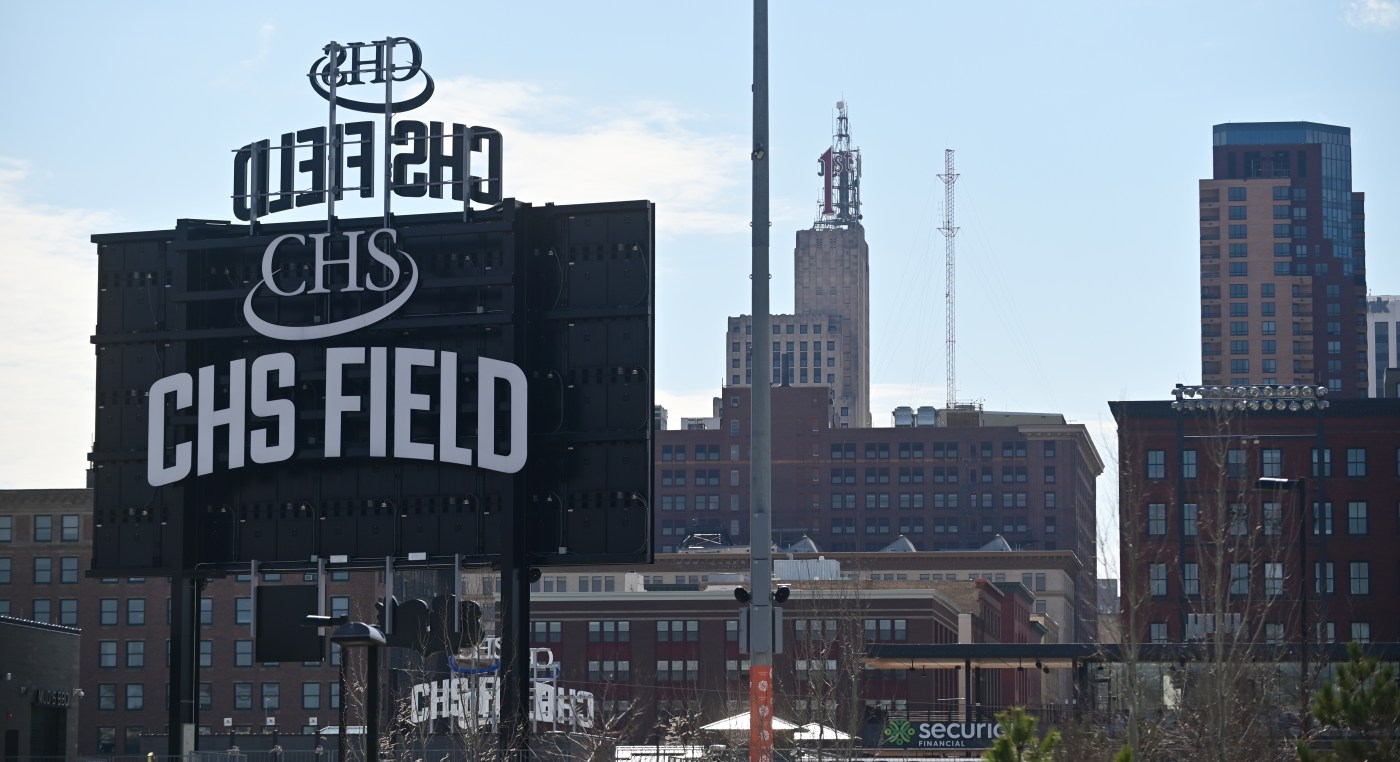
The annual Thielen Foundation Softball Game is returning to CHS Field — this year hosted by Minnesota Vikings fullback C.J. Ham — and presented by Choice Bank, titled the UNRL Celebrity Softball Game.

Taking place May 30 at CHS Field, gates will open at 4:30 p.m. and the event will begin with a home run derby at 6 p.m. The game begins at 7 p.m., including in-game giveaways, a silent auction and a raffle. Tickets range in price from $5 to $50 each, and sponsorships are also available for purchase, including tickets to the VIP reception and a meet and greet with Ham after the game.

In 2023, Vikings safety Harrison Smith hosted the game after Adam Thielen was signed by the Carolina Panthers and could no longer attend. The game will continue to raise support for Thielen Foundation, and also the Ham Family Scholarship Fund.

Ham and his wife Stephanie created the Ham Family Scholarship Fund in 2022 to support students of color in the Duluth-Superior area, where Ham is from, to pursue higher education and improve BIPOC retention and graduation rates through financial aid.

“I had a blast playing in the game last year,” said Ham in a statement. “I’m honored to be hosting this year and am looking forward to engaging with fans who are giving back to this community by attending.”

For more information about the celebrity-filled charity softball game or to purchase tickets, visit thielenfoundation.org.

Related Articles

Things to Do |


Speak Out And Lead to host Youth Arts Festival in St. Paul’s Frogtown

Things to Do |


Stillwater Area Public Schools taps former St. Paul, Rochester administrator for assistant superintendent

Things to Do |


Letters: Minnesota needs a task force on reckless motorcycle riders

Things to Do |


MPCA gives St. Paul foundry 30 days to reduce lead emissions

Things to Do |


St. Paul Regional Water Services names Racquel Vaske new general manager

Review: Lily Gladstone and Riley Keough shine in Hulu’s dark true-crime drama ‘Under the Bridge’

posted in: News | 0

Robert Lloyd | Los Angeles Times (TNS)

“Based on a true story” — why do we care? Does it matter whether the events of a dramatic work “really happened,” or sort of happened, more or less in the way we’re being told? Is it a come-on to prurient interests, when the subject is dark or sensational? Is it to appear educational? Is it to advertise that things that seem too incredible to be true really are true, to make what’s shocking even more shocking, or to prop up a story that can’t stand on its own?

If I had a definite answer for you, there wouldn’t have been so many question marks in the preceding paragraph. All of the above, maybe.

“Dragnet” changed the names to protect the innocent, but nowadays it’s the fashion to keep the names, while the facts, found wanting on their own, might get a fictional assist. In “Under the Bridge,” a limited series based on Rebecca Godfrey’s well-received 2005 book about the 1997 murder of 14-year-old Reena Virk in green and watery Victoria, British Columbia, some of the names are the same; others have been changed, as they were on the page, in accordance with Canadian law protecting the identities of young people accused or convicted of a crime; and yet other names have been made up, along with the characters who wear them.

Godfrey’s book falls under the rubric of true crime, if of a particularly literary sort; she was interviewed about it in the Paris Review, and Mary Gaitskill wrote the introduction to its 2019 rerelease. Still, unless you feel it’s imperative that this story of a teenager fatally set upon other teenagers has a basis in reality, it might be best to regard the TV adaptation as fiction clear through — “Lord of the Flies” wasn’t based on anything, after all — something like the fifth season of “True Detective,” perhaps, especially given Riley Keough and Lily Gladstone are in starring roles.

Godfrey isn’t a presence in “Under the Bridge,” but, played by Keough, she’s become a major character in the series — a subject nearly, an active participant, a person with her own measure of trauma to address. Developed by Quinn Shephard, whose 2017 film “Blame” is also a story of toxic teenhood, the adaptation is true to the facts of the case itself, as reported by Godfrey and others. Much of what surrounds it, however, has been invented or altered for your entertainment — especially as it concerns the investigation, in which the author, returning home to Victoria for the first time in 10 years, becomes an unofficial detective, if one with mixed motives.

She has come, coincidentally, to write a book, on “the misunderstood girls of Victoria,” of which she was once one, when these characters fall into her lap.

Vritika Gupta plays Reena, an outsider desperate to belong, a child awkwardly attempting to imitate an adult, chafing at the strictures of her conservative Jehovah’s Witness parents (Archie Panjabi as Suman and Ezra Faroque Khan as Manjit). To her happy surprise, she finds herself recruited into a tribe of more sophisticated girls — which is to say, they smoke and drink and take drugs. Their leader, Josephine (Chloe Guidry), wears John Gotti’s picture in a locket and controls a legion of “minions” who shoplift on her behalf. (They call themselves the Crip Mafia Cartel, while the police refer to them as “Bic” girls, as in the lighter, “’cause we’re disposable.”) Her lieutenants are Kelly (Izzy G.), Jo’s best friend, and Dusty (Aiyana Goodfellow), who is relatively nice. After a honeymoon period, a series of unfortunate events will lead to the even more unfortunate event that has brought us all here.

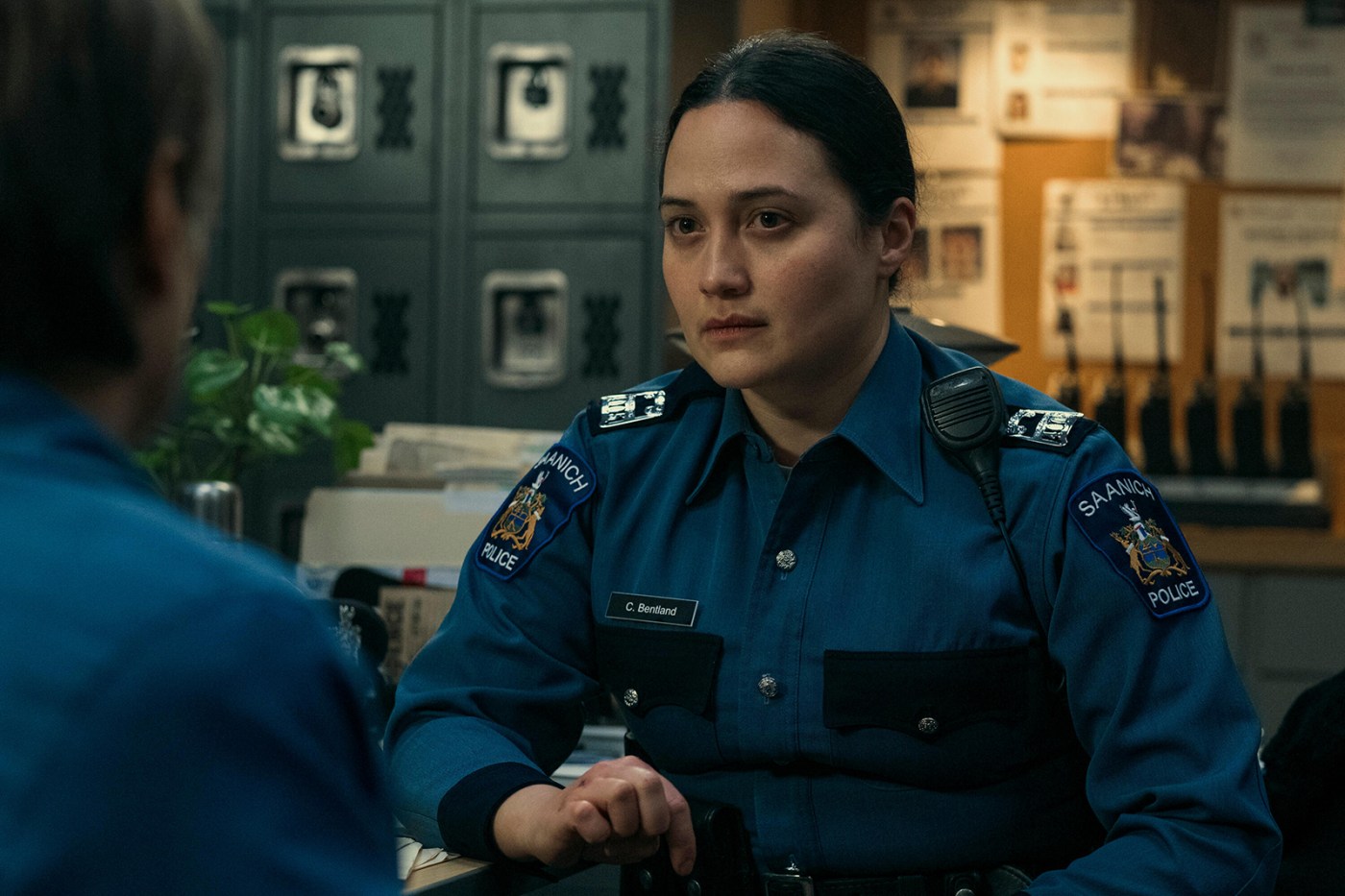
Rebecca’s return to town has its own measure of friction. (She doesn’t get along with her mother, either.) Significantly, it brings her back into contact with local police officer Cam (Gladstone), with whom Rebecca and her late brother once were close. (Just how close is hinted at, but never explored.) When Reena’s father and her uncle Raj (Anoop Desai) come to file a missing persons report, Cam is ready at first — along with the rest of the department, including her adoptive father (Matt Craven), the police chief — to write her off as a runaway. But she’ll change her tune and wind up spearheading the investigation, while she wars with Rebecca over her intentions and intrusions and questionable journalistic ethics.

“Perry Smith told Capote things he never told anyone else,” says Rebecca, suggesting she can get the kids to talk.

“So you think you’re writing ‘In Cold Blood,’ eh?” implying she isn’t.

Reena’s family background, going back two generations, is explored in a dedicated episode, but there is little context given the other young characters; we get bits of information that lead us to understand they’re products of parental fecklessness, pop cultural influence or brain chemistry without belaboring the point. That’s good, in a way — explicit psychologizing of behavior is a dramatic dead end. But it doesn’t add up to much more than the sorry fact that kids, with their developing brains, can make bad decisions, and compound bad decisions with worse decisions, and take actions that aren’t the product of any decisions at all.

The performances alone make “Under the Bridge” worth watching. Keough, who resembles Godfrey a little, is a world away from Daisy Jones, held together by her literary project, inhabiting the ghost of the bad kid she once was, or pretends to have been, to gain the teenagers’ trust. (She becomes an accomplice, almost.) Gladstone does a lot with a character whose main quality is stolidity; I wish they’d gone a little more into her relationship with Rebecca, but this is a show with a lot on its plate.

And then there are the kids, who are astonishingly good. As Reena, Gupta, heartbreaking in her hopefulness, is especially good. But all the young actors — including Javon Walton as Warren, the odd boy out — are original and human in roles that could easily invite cliche.

Apart from the performances, which alone make the series worth watching, and the overall authenticity of the production, what to make of these eight hours of nearly unrelieved sadness? (The closest the series comes to unalloyed joy, untainted by the knowledge of tragedy to come, is the minute or so in which Rebecca and Cam dance to Siouxsie and the Banshees’ cover of Iggy Pop’s “The Passenger,” though even that will be alloyed soon enough.)

The conventional crime-solving aspects of the drama drive “Under the Bridge” in the earlier episodes, as does Rebecca’s prodigal’s return plotline. But we wind up mostly with a mess of loss. The characters are too particular on the one hand, and the mean girls trope too familiar on the other, to usefully generalize into a statement about the plight of teenage girls. Though there are many well-written scenes — the performances would not be so impressive if there weren’t — over eight episodes, the series, with its shifting attention and skips back and forth in time, loses emotional force; it sustains one’s interest, certainly, but less so one’s sympathies.

A little light does break in at the end. Justice is served, as the series switches briefly into a courtroom drama — though Rebecca has her doubts about whether it’s truly being served. There’s a late-series development that indicates a different future for Cam (with a quickly passing nod to Canada’s institutional racist history). Rebecca will go on to write her book — she has a contract for it before the series ends — and, sometime after the series ends, sell it to the screen. (A closing title card notes that Godfrey was involved in the series’ development before her death in 2022.)

And here we are.

‘UNDER THE BRIDGE’

Rating: TV-MA

How to watch: Hulu

Speak Out And Lead to host Youth Arts Festival in St. Paul’s Frogtown

posted in: News | 0

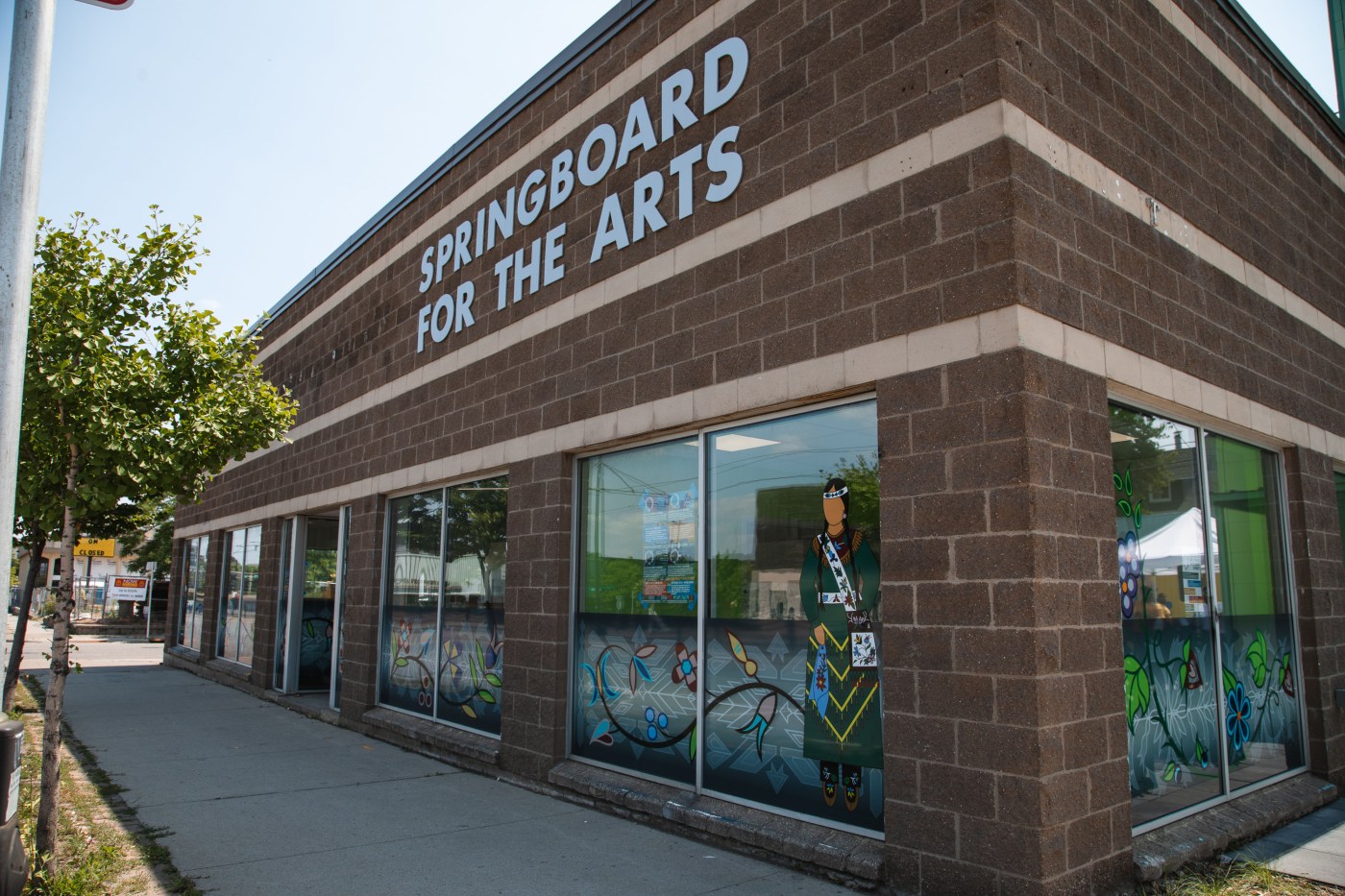
Speak Out And Lead, a “Youth Led” music and arts festival, is taking place from noon to 5 p.m. on May 19, hosted by the Victoria Theater Arts Center at Springboard for the Arts at 262 University Ave. W. in St. Paul.

The Victoria Theater Arts Center’s goal is to unify local artists in resilience, expression and leadership within the Frogtown and Rondo communities.

Speak Out And Lead centers around young individuals’ passions for the arts, music and performance and will showcase work of artists aged 13 to 21 from around the Twin Cities. The event will include live performances, workshops and an interactive arts market. Attendees will have the opportunity to acquire original artwork directly from the artists.

The event was planned by the Victoria Theaters Youth Art Leadership Team, including Marquan Harper, the team’s spokesperson.

“We are deeply enthusiastic about broadening our scope and amplifying youth voices within the vibrant Frogtown and Rondo community,” Harper said in a statement.

The cost of admission will be $2 to $5 for youth, $5 to $20 for ages 21 and up, and those under the age of 13 are free. No one will be turned away for lack of funds, according to organizers.

For more information, visit victoriatheater.org.

Related Articles

Arts |


Letters: Minnesota needs a task force on reckless motorcycle riders

Arts |


MPCA gives St. Paul foundry 30 days to reduce lead emissions

Arts |


St. Paul Regional Water Services names Racquel Vaske new general manager

Arts |


Salmonella cases, including four in Minnesota, linked to organic basil sold at Trader Joe’s

Arts |


St. Paul resident along path of Gold Line has asked Met Council to buy her out