
Movie review: ‘Unsung Hero’ more like band merch than insightful biopic

posted in: News | 0

Cinematic memoir can be a complex creative endeavor. Film is a collaborative medium, and memoir requires a certain acknowledgement of the author’s creation. Without that self-reflection, memoir can slip into murky, confusing territory. This space is where the new film “Unsung Hero” exists, which is billed as “A For King + Country Film.”

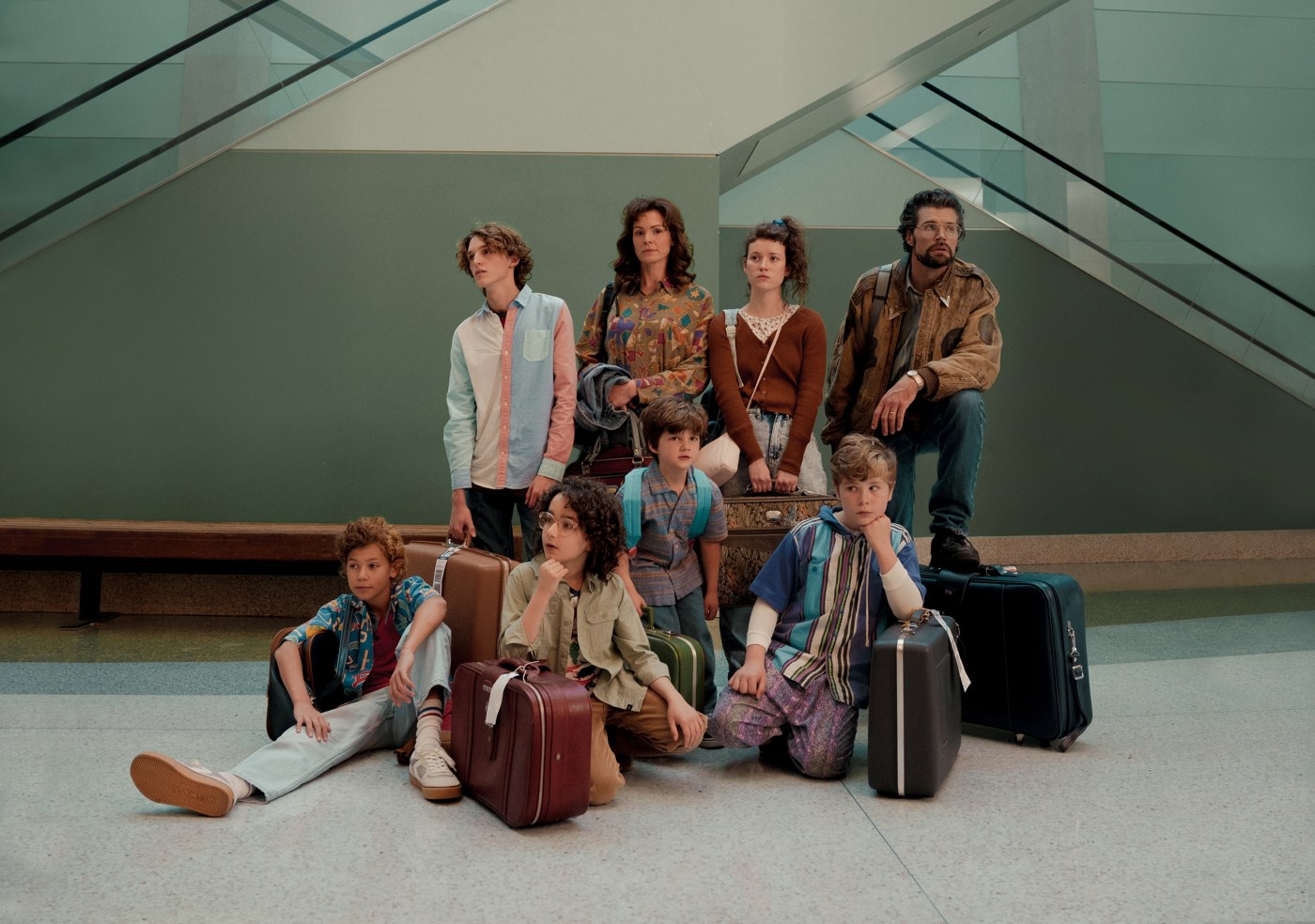
If you’re not yet aware of the Grammy winning Christian pop duo For King + Country, comprised of brothers Joel and Luke Smallbone, “Unsung Hero” will introduce you to their folksy family lore, if not their musical successes. The film is a biographical drama about the Smallbone family, a large brood from Australia who emigrated to Nashville, Tennessee, in the early 1990s, following father David’s dreams of working as a promoter in the music industry.

“Unsung Hero” is co-written and co-directed by Joel Smallbone (with Richard L. Ramsey), and he also stars in the film playing his own father, David, who eventually managed the music careers of For King + Country, and Joel’s sister Rebecca St. James. Their siblings work in the family business as managers, lighting directors and documentarians (they all make cameos in the film), and there’s a sense of can-do collaboration among the tight-knit Smallbone family. This theme runs throughout the film, and so it makes sense that Joel would undertake the telling of his family’s own story in such an intimate way.

Therefore, “Unsung Hero” is like a much more expensive extension of the camcorder home movies that serve as a running motif throughout. This isn’t just a music biopic or a family drama, it’s a presentation of a family narrative as told, and embodied, by the family themselves. A valid endeavor, to be sure, but important context when considering the work as a cultural product.

Joel Smallbone is an appealing actor, even if it is a bit distracting that he’s portraying his own father (he has described the experience as a “therapy session”). Joel is also a character in the film, as a child (Diesel La Torraca), while Daisy Betts plays Helen, the Smallbone matriarch and Joel’s mother. Helen is, of course, the unsung hero of this story, the heart and spine of the family who insists on keeping them together while David makes one last-ditch attempt to make it in the music industry in Nashville. Helen is the emotional center of the family and Betts is the emotional center of this film, her character unflagging in her determination, keeping spirits up as David’s dreams are slowly crushed.

The family of attractive Aussies arrive in the United States without a stick of furniture awaiting in their rental home, and they nest in beds of clothes while they get on their feet, with the help of a couple from their church (Lucas Black and Candace Cameron Bure). They clean houses and landscape yards, clip coupons and accept the charity that comes their way, reluctantly, on David’s part.

While David struggles with the dampening of his dreams, his daughter Rebecca (Kirrilee Berger) is just starting to embrace her musical aspirations. But she can’t chase them until her father gets over his own emotional obstacles and deep hurt at being rejected by the industry. It takes him some time to understand the advice given to him by his own father James (Terry O’Quinn) back in Australia, that his family isn’t in the way of what he wants, they are the way.

“Unsung Hero” follows a predictable narrative path of struggles and salvation, but it’s not a traditional music biopic — it doesn’t start with a record deal, it ends with one. The focus is on their hardships to get to that record deal, which is clearly what matters to filmmaker Joel Smallbone. It’s not the success, the Grammys, the stadium concerts, but the ways they stuck together, eked it out, allowed themselves to dream while sleeping on beds of clothing, thanks to their mother, who never let David’s challenges get in the way of her kids’ imaginations.

It’s a humble story, and it has the capacity to inspire in its simple message of perseverance, but the film itself, as an artistic product, feels limited in its observational scope, because the filmmaker doesn’t have any distance from the material. Smallbone is a fine actor, but alongside Ramsey, he’s a limited filmmaker. Their visual style is drab at best, and the storytelling lacks the kind of self-reflection that might elevate this project. As it is, “Unsung Hero” feels more like band merch than an insightful family portrait.

‘Unsung Hero’

2 stars (out of 4)

MPA rating: PG (for thematic elements)

Running time: 1:54

How to watch: In theaters Friday

Related Articles

Entertainment |


Bon Jovi’s long career documented, warts and all, in new Hulu series

Entertainment |


‘Fallout’ review: Walton Goggins as a swaggering, post-apocalyptic cowboy

Entertainment |


‘One with the Whale’ review: Climate change and animal activists threaten an Indigenous Alaskan community

Entertainment |


Mother’s Day inspiration: 3 elevated brunch cocktails for spring

Entertainment |


Column: AI moviemaking software ‘so easy an alien could do it.’ But where do visual effects go from here?
Zeynep Tufekci: This may be our last chance to halt bird flu in humans and we’re blowing it

posted in: Society | 0

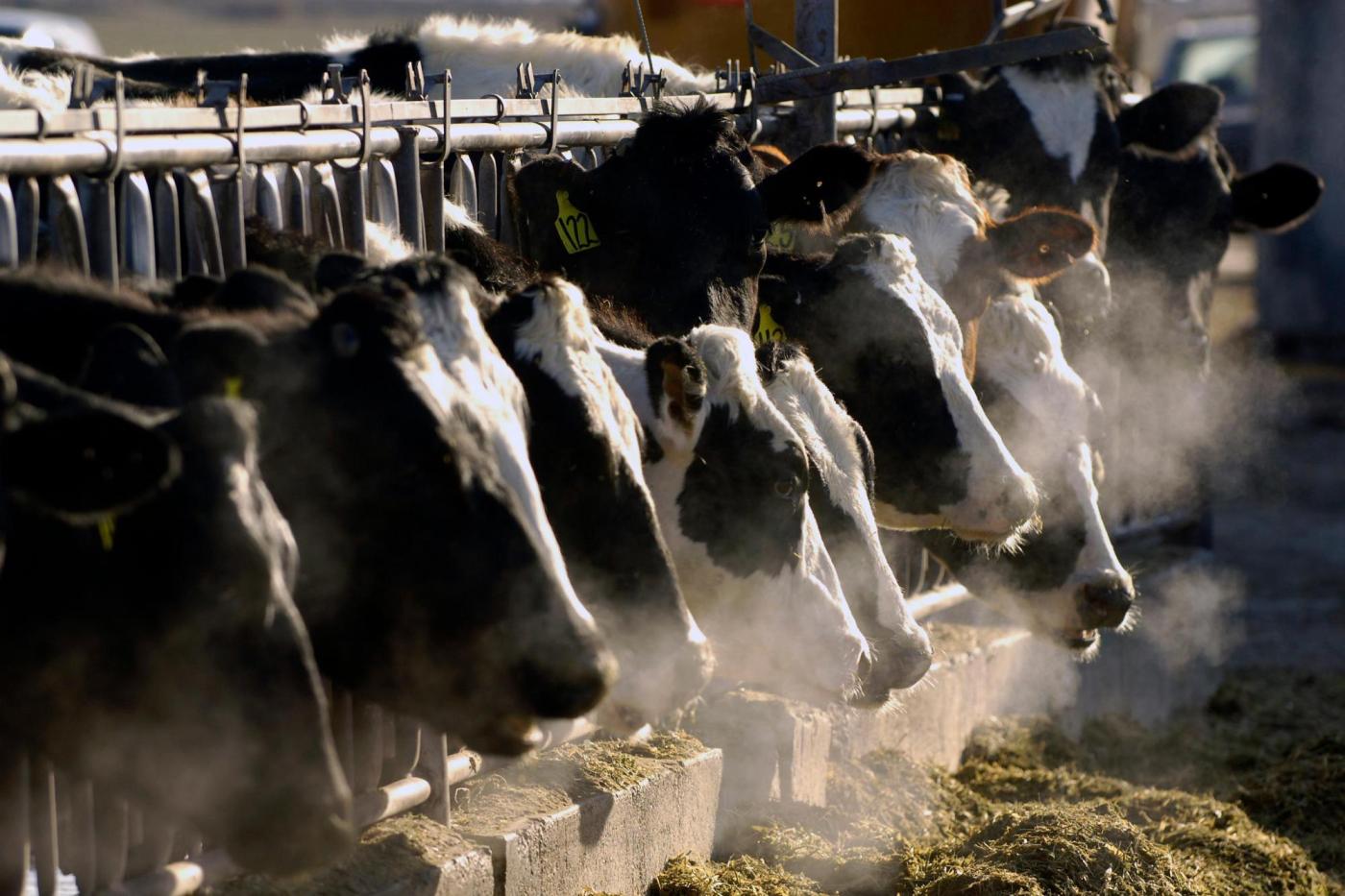
The outbreak of H5N1 avian influenza among U.S. dairy cows, first reported on March 25, has now spread to at least 33 herds in eight states. On Wednesday, genetic evidence of the virus turned up in commercially available milk. Federal authorities say the milk supply is safe, but this latest development raises troubling questions about how widespread the outbreak really is.

So far there is only one confirmed human case. Rick Bright, an expert on the H5N1 virus who served on President Joe Biden’s coronavirus advisory board, told me this is the crucial moment. “There’s a fine line between one person and 10 people with H5N1,” he said. “By the time we’ve detected 10, it’s probably too late” to contain.

That’s when I told him what I’d heard from Sid Miller, the Texas commissioner for agriculture. He said he strongly suspected that the outbreak dated back to at least February. The commissioner speculated that back then, as much as 40% of the herds in the Texas panhandle may have been infected.

Bright fell silent, then asked a very reasonable question: “Doesn’t anyone keep tabs on this?”

What we don’t know … and should

The H5N1 outbreak, already a devastating crisis for cattle farmers and their herds, has the potential to turn into an enormous tragedy for the rest of us. But having spent the past two weeks trying to get answers from our nation’s public health authorities, I’m shocked by how little they seem to know about what’s actually going on and how little of what they do know is being shared in a timely manner.

How exactly is the infection transmitted between herds? The U.S. Department of Agriculture, the Food and Drug Administration and the Centers for Disease Control and Prevention all say they are working to figure it out.

According to many public health officials, the virus load in the infected cows’ milk is especially high, raising the possibility that the disease is being spread through milking machines or from aerosolized spray when the milking room floors are power washed. Another possible route is the cows’ feed, owing to the fairly revolting fact that the U.S. allows farmers to feed leftover poultry bedding material — feathers, excrement, spilled seeds — to dairy and beef cattle as a cheap source of additional protein.

From dairy to poultry?

Alarmingly, the USDA told me that they have evidence that the virus has also spread from dairy farms back to poultry farms “through an unknown route.” Well, one thing that travels back and forth between cattle farms and chicken farms is human beings. They can also travel from cattle farms to pig farms, and pigs are the doomsday animals for human influenza pandemics. Because they are especially susceptible to both avian and human flu, they make for good petri dishes in which avian influenza can become an effective human virus. The damage could be vast.

The USDA also told me it doesn’t know how many farmers have tested their cattle and doesn’t know how many of those tests came up positive; whatever testing is being done takes place at the state level or in private labs. Just Wednesday, the agency made it mandatory to report all positive results, a long overdue step that is still — without the negative results alongside them — insufficient to give us a full picture. Also on Wednesday, the USDA made testing mandatory for dairy cattle that are being moved from one state to another. It says mandatory testing of other herds wouldn’t be “practical, feasible or necessarily informative” because of “several reasons, ranging from laboratory capacity to testing turnaround times.” The furthest the agency will go is to recommend voluntary testing for cattle that show symptoms of the illness — which not all that are infected do. Bright compares this to the Trump administration’s approach to COVID-19: If you don’t test, it doesn’t exist.

Do we know for sure that pasteurization works?

As for the FDA, it tells me it hasn’t completed specific tests to confirm that pasteurization would make milk from infected cows safe, though the agency considers it “very likely” based on extensive testing for other pathogens. (It is not yet clear whether the elements of the H5N1 virus that recently turned up in milk had been fully neutralized.) That testing should have been completed by now. In any case, unpasteurized milk remains legal in many states. Bright told me that “this is a major concern, especially given recent infections and deaths in cats that have consumed infected milk.”

Making matters worse, the USDA failed to share the genomes from infected animals in a timely manner, and then did so in an unwieldy format and without any geographic information, causing scientists to tear their hair out in frustration.

All this makes catching potential human cases so urgent. Bright says that given a situation like this, and the fact that undocumented farmworkers may not have access to health care, the government should be using every sophisticated surveillance technique, including wastewater testing, and reporting the results publicly. That is not happening. The CDC says it is monitoring data from emergency rooms for any signs of an outbreak. By the time enough people are sick enough to be noticed in emergency rooms, it is almost certainly too late to prevent one.

So far, the agency told me, it is aware of only 23 people who have been tested. That tiny number is deeply troubling. (Others may be getting tested through private providers, but if negative, the results do not have to be reported.)

Effort on the ground

On the ground, people are doing the best they can. Adeline Hambley, a public health officer in Ottawa, Michigan, told me of a farm whose herd had tested positive. The farm owner voluntarily handed over the workers’ cellphone numbers, and the workers got texts asking them to report all potential symptoms. Lynn Sutfin, a public information officer in the Michigan Department of Health and Human Services, told me that response rates to those texts and other forms of outreach can be as high as 90%. That’s heartening, but it’s too much to expect that a poor farmworker — afraid of stigma, legal troubles and economic loss — will always report even mild symptoms and stay home from work as instructed.

It’s entirely possible that we’ll get lucky with H5N1 and it will never manage to spread among humans. Spillovers from animals to humans are common, yet pandemics are rare because they require a chain of unlucky events to happen one after the other. But pandemics are a numbers game, and a widespread animal outbreak like this raises the risks. When dangerous novel pathogens emerge among humans, there is only a small window of time in which to stop them before they spiral out of control. Neither our animal farming practices nor our public health tools seem up to the task.

There is some good news: David Boucher, at the federal government’s Administration for Strategic Preparedness and Response, told me this virus strain is a close match for some vaccines that have already been formulated and that America has the capacity to manufacture and potentially distribute many millions of doses, and fairly quickly, if it takes off in humans. That ability is a little like fire insurance — I’m glad it exists, but by the time it comes into play your house has already burned down.

Trust us?

I’m sure the employees of these agencies are working hard, but the message they are sending is, “Trust us — we are on this.” One troubling legacy of the coronavirus pandemic is that there was too much attention on telling the public how to feel — to panic or not panic — rather than sharing facts and inspiring confidence through transparency and competence. And four years later we have an added layer of polarization and distrust to work around.

In April 2020, the Trump administration ousted Bright from his position as the director of the Biomedical Advanced Research and Development Authority, the agency responsible for fighting emerging pandemics. In a whistleblower complaint, he alleged this happened after his early warnings against the coronavirus pandemic were ignored and as retaliation for his caution against unproven treatments favored by Donald Trump.

Bright told me that he would have expected things to be much different during the current administration, but “this is a live fire test,” he said, “and right now we are failing it.”

Zeynep Tufekci writes for the New York Times.

Related Articles

Opinion |


Adam Minter: The cost of youth baseball rises and rises — and prices many kids out

Opinion |


Lisa Jarvis: You’re not imagining it. Your allergies are getting worse

Opinion |


Mark Gongloff: Wildfire smoke is coming for the U.S. again. We’re not ready.

Opinion |


Rebecca Haw Allensworth: You don’t need to own an iPhone for the government lawsuit against Apple to benefit you

Opinion |


Noah Feldman: Jan. 6 case will test the Supreme Court’s ‘textualist’ hypocrisy

Adam Minter: The cost of youth baseball rises and rises — and prices many kids out

posted in: News | 0

This month, 21 current and former Major League Baseball players invested their own money in youth baseball. If that sounds like a feel-good story in which baseball’s past paves the way for baseball’s future, think again.

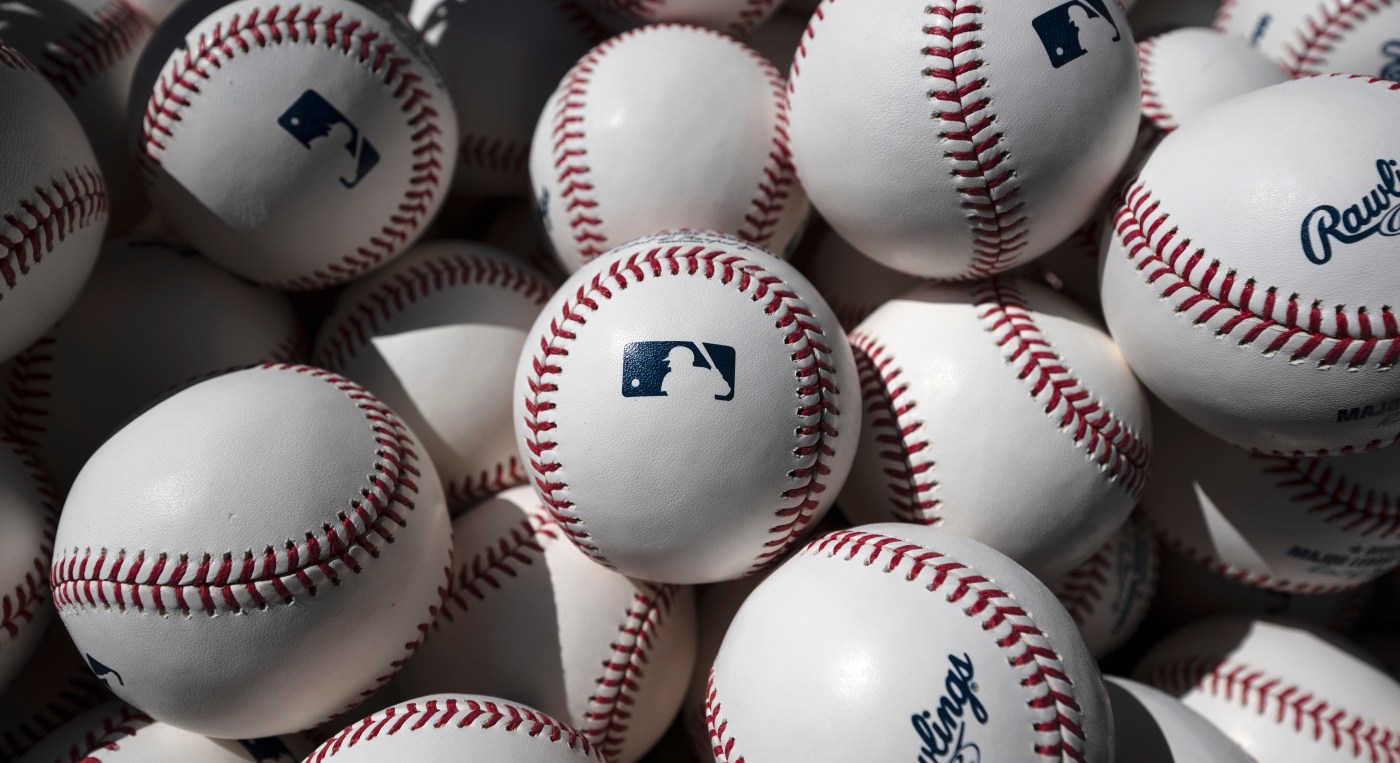
The MLB team invested in Perfect Game, a company that holds pricey tournaments and prospect showcases for college and professional scouts. But those events aren’t for everyone. For example, at a recent weekend tournament for Houston-area 8-year-olds, the company charged a $750 entry fee.

Can’t pay? Find somewhere else to play. And good luck with that because free or cheaper options across the country, such as Little League, have been reporting shrinkage for years. Pay-to-play models have replaced them.

The new way of doing things is good for operators, investors and families who can afford them. However, a large group of kids come from households with budgets that can’t accommodate the hefty prices or just want to play for fun.

The exclusion undermines the social and health benefits that youth sports have long offered.

There’s a lot to lose. Kids who are physically active have lower rates of obesity, better mental health and improved academic performance.

For decades, youth baseball served as a community-based initiative that helped kids achieve those goals. Children played for free in neighborhood sandlots and backyards. If they wanted a more organized experience, their families paid fees that ranged from $0 (or whatever they could afford) to $300 to join a local Little League chapter staffed by volunteer coaches (oftentimes parents). Later, if an athlete had promise and interest, a high school team might beckon.

So long as a child and family had the time, baseball was accessible.

Not anymore — and it’s not just baseball. According to a 2022 survey by Project Play and Utah State University, families pay an average of $883 per season for one child’s primary sport.

Higher costs are driven, in part, by the rise of privately run club and travel teams with more professional coaching. The New England Baseball Journal recently estimated that the average cost of travel baseball for kids between 8th and 12th grade in the Northeast is “north of $5,000 per year.” That’s not including travel costs. Between 2021 and 2022, the share of youths playing in travel sports doubled to 29%.

Participants have their reasons. Unlike Little League, which welcomes anyone, club and travel teams tend to require tryouts to secure better athletes and competition.

For parents (and their kids) dreaming of college scholarships and the pros, the expense is worth it — assuming they can afford it.

Often, paying to join an actual team is just the start.

Using Perfect Game as an example: For those who want to spend more on preparation before they showcase their talents, there is no shortage of private coaching and video analysis available. Aspen Institute data from 2022 shows that parents who make over $150,000 spent 83% more on sports travel than parents earning under $50,000.

That gap in spending doesn’t only affect who gets the best coaching and competition. Along with Little League and other community-based baseball dwindling, the domination of pay-to-play youth sports also lowers opportunities for kids of different backgrounds to develop friendships. That consequence goes hand-in-hand with another one: exacerbation of long-standing health and achievement inequities.

For example, physical inactivity is strongly correlated with low income levels. Due in large part to the widening racial wealth gap that limits discretionary spending, Black children play sports at lower rates than white kids. (It’s a problem made worse by long-standing issues with access to parks and other recreational facilities in urban neighborhoods.)

Ultimately that disparity shows up, among other places, in baseball at the college and professional level. The Racial and Gender Report Card study by the Institute for Diversity and Ethics in Sport at Central Florida found that in 2023, African Americans represented just 6.2% of Major League Baseball’s opening-day rosters. It was the lowest level since the study was first done in 1991, when Black players represented 18% of the rosters. If more Black kids played baseball, those numbers would certainly be higher. The drop correlates with the decline of high rates of Black youth participation in baseball in areas such as Oakland, California. A 2021 KTVU FOX 2 news report noted that in the ’80s and ’90s, the Oakland Babe Ruth League had 1,200 players, and 92% were Black. Nowadays, there are about 250 children, and 40% are Black.

Major League Baseball acknowledges the problem and has committed millions to providing access to higher-level scouts and coaching to Black children. Likewise, Perfect Game has a foundation to provide access to its elite events to underserved communities. Both programs are admirable. But they fail to provide the free-to-play community-based baseball that engages kids who don’t aspire to the Big Leagues.

Private equity can help. For example, the baseball side of Unrivaled, a holding company for youth sports businesses purchased by investors Josh Harris and David Blitzer, has hosted community-based championships for free.

Still, that’s a small part of what’s necessary to make up for the shift to pay-to-play sports. What Unrivaled gets right — the need for community-based baseball and other sports — will ultimately require funding commitments from traditional sources. Think of schools, parks and recreation departments and other levels of government that see value in health and active communities.

Pay-to-play has a role in youth sports, but it’s an unforced error to let it become the dominant player.

Adam Minter is a Bloomberg Opinion columnist covering the business of sports. He is the author, most recently, of “Secondhand: Travels in the New Global Garage Sale.”

Related Articles

Opinion |


Lisa Jarvis: You’re not imagining it. Your allergies are getting worse

Opinion |


Mark Gongloff: Wildfire smoke is coming for the U.S. again. We’re not ready.

Opinion |


Rebecca Haw Allensworth: You don’t need to own an iPhone for the government lawsuit against Apple to benefit you

Opinion |


Noah Feldman: Jan. 6 case will test the Supreme Court’s ‘textualist’ hypocrisy

Opinion |


Pamela Paul: At Columbia University, the grown-ups in the room take a stand

Lisa Jarvis: You’re not imagining it. Your allergies are getting worse

posted in: News | 0

If you’ve sensed that your allergies are getting worse each year, it’s not your imagination: Allergy season in the U.S. is getting longer and more intense. You can thank climate change for your misery. And yet we’re not doing enough — to slow down climate change, of course, but to recognize and respond to its very clear health effects.

These weigh on the economy, too. Estimates for direct costs, for things like antihistamines and inhalers, and indirect ones, for office absences or lower productivity, range in the billions of dollars. And while much of the research stems from an era when better allergy meds were just being introduced, one more recent study out of Sweden found that was costing the country of 9.5 million people upwards of 1.3 billion euros per year.

Allergies are a prime example of a common condition getting worse because of a warmer world. “When you turn up the temperatures on plants, especially in a controlled setting like a greenhouse, or you increase carbon dioxide concentrations, plants put out quite a bit more pollen,” explains William Anderegg, director of the Wilkes Center for Climate Science and Policy at the University of Utah.

Anderegg conducted an oft-cited study of pollen trends that found seasons now start 20 days earlier than they did in 1990, and last about eight days longer. Meanwhile, there’s about 20% more pollen filling the air. Much of that shift is due to climate change.

“Pollen is a really clear example of how climate change is with us here and now, in our backyards and already affecting our health,” he says.

That could have real ramifications for the quarter of adults and nearly 20% of children in the U.S. with seasonal allergies. They will be wheezier and sneezier for more of the year. And they might be caught unprepared when allergens appear earlier than expected (to be most effective, allergy medicine should be taken before exposure).

When the lungs are aggravated by pollen, it can make people more vulnerable to certain illnesses, like the common cold and sinus infections. And it’s downright dangerous for people with asthma: An analysis of asthma patients Maryland found that very early-onset spring led to a 17% increase in hospitalizations.

As the climate worsens, so too could pollen’s health effects. A 2019 study found that tree and grass pollen combined were responsible for some 35,000 to 60,000 emergency room visits each year, many of those cases in children. The researchers predicted climate change could push those numbers up by 14% by 2090, with grass pollen becoming a bigger problem, particularly in the Northeast, Midwest and Southern Great Plains regions.

Many more people could eventually be living in allergy misery. Each of us has an individual pollen threshold, above which the immune system is triggered and allergy symptoms appear, explains Kenneth Mendez, CEO and President of the Asthma and Allergy Foundation of America. A more intense pollen season will make someone with a lower threshold feel worse, and could tip people with higher thresholds into the ranks of allergy sufferers.

People with seasonal allergies should stay on top of their symptoms by starting their meds at the first signs of spring — even if those occur in February. Antihistamines need to be taken regularly for about two weeks before pollen season starts to be effective, Mendez says. If over-the-counter medicines seem to have lost their punch, see a specialist, who might recommend allergy shots.

Allergy sufferers should also lean into tried-and-true methods of lessening pollen exposure, like keeping windows shut and showering before bed, and getting a good home air purifier.

But it can’t just be on individuals to cope. Workplaces could ensure that indoor air quality, an issue that got attention during the peak pandemic years, continues to be a priority. And local and federal governments should be doing more to blunt the impact of longer allergy seasons.

A good starting place would be to do a better job of tracking pollen counts. Large swaths of the country, including some major cities and several states, don’t even have a pollen station, which are run and funded by volunteers in coordination with the National Allergy Bureau. Anderegg notes that only one exists for his entire home state of Utah. That lack of coverage makes it harder for people like him to effectively study long-term allergen patterns, as well as warn the public about signs of changes that could make them sicker. Cities or states could throw a few dollars at expanding this network.

City planners should also be taking pollen into account as they design vegetation to mitigate the effects of climate change. Increasing tree cover is a vital way to cool down urban heat islands. But tree pollen also is the primary driver of spring allergy woes (grass is typically the main culprit in the summer, and ragweed and mold in the fall), which means urban planners need to make smart planting choices. For decades, cities tended to plant male rather than female trees, as they don’t bear fruit that litters the ground. But male trees make much more pollen, meaning allergy sufferers pay a price for that botanical bias.

“There is a huge potential for trees to cool down cities and help us adapt to heat waves,” Anderegg says. “We just want to plant the right species in the right places for the right reasons.”

A bad allergy season not only results in human suffering, but in high costs for treatments, doctors’ visits and hospitalizations. People miss work due to hay fever and asthma. More often, they head into the office with symptoms and are less productive because of it. Without action, the toll on both our sinuses and the economy will only get worse.

Lisa Jarvis is a Bloomberg Opinion columnist covering biotech, health care and the pharmaceutical industry. Previously, she was executive editor of Chemical & Engineering News.

Related Articles

Opinion |


Mark Gongloff: Wildfire smoke is coming for the U.S. again. We’re not ready.

Opinion |


Rebecca Haw Allensworth: You don’t need to own an iPhone for the government lawsuit against Apple to benefit you

Opinion |


Noah Feldman: Jan. 6 case will test the Supreme Court’s ‘textualist’ hypocrisy

Opinion |


Pamela Paul: At Columbia University, the grown-ups in the room take a stand

Opinion |


Amanda Montell: Think life just keeps getting worse? Try being nostalgic — for the present