‘Judge Judy’ Sheindlin sues for defamation over National Enquirer, InTouch Weekly stories

posted in: News | 0

NEW YORK — “Judge Judy” Sheindlin sued the parent company of the National Enquirer and InTouch Weekly on Monday for a story that she said falsely claimed that she was trying to help the Menendez brothers get a retrial after they were convicted of murdering their parents.

The story was first published on InTouch Weekly’s website on April 10 under the headline “Inside Judge Judy’s Quest to Save the Menendez Brothers Nearly 35 Years After Their Parents’ Murder,” according to the lawsuit, filed in circuit court in Collier County, Florida.

A version of the story later appeared in the National Enquirer, a sister publication to InTouch Weekly also owned by Accelerate360 Media. The 1989 Menendez murders in Beverly Hills, California, was a case of some tabloid renown.

Sheindlin said she’s had nothing to say about the case. Her lawsuit speculated that the news outlets used statements in a Fox Nation docuseries made by “Judi Ramos,” a woman identified as an alternate juror in the first Menendez trial, and misattributed them to the television judge.

There was no immediate comment from Accelerate360, whose attempt to sell the National Enquirer last year fell through.

Sheindlin does not ask for a specific amount of damages, but made clear it wouldn’t be cheap.

“When you fabricate stories about me in order to make money for yourselves with no regard for the truth or the reputation I’ve spent a lifetime cultivating, it’s going to cost you,” she said in a statement. “When you’ve done it multiple times, it’s unconscionable and will be expensive. It has to be expensive so that you will stop.”

Sheindlin, who hosted the syndicated “Judge Judy” through 2021 and now hosts “Judy Justice,” has had run-ins with the Enquirer in the past.

In 2017, the newspaper retracted and apologized for stories that falsely claimed she suffered from Alzheimer’s disease and depression and had cheated on her husband.

Related Articles

Movies & TV |


Mixing games and education, Prince Harry and Meghan arrive in Nigeria to promote mental health

Movies & TV |


Police investigating shooting outside Drake’s mansion that left security guard wounded

Movies & TV |


Anna Wintour apologizes for 2024 Met Gala’s theme ‘confusion’

Movies & TV |


Photos: Best and worst looks from the 2024 Met Gala

Movies & TV |


What to know about the Met Gala: time, theme, guests, broadcast

Recipe: How to make Easy Chipotle Chicken Tacos

posted in: Adventure | 0

Chicken can make a delicious taco filling, but keep in mind that boneless, skinless chicken breasts can lack flavor bling. Poach the chicken breasts in a mixture augmented with minced chipotle chilies canned in adobo sauce; it adds flavor and aroma. The chicken comes out tender and delicious.

Serve the filling with warm tortillas (two per taco), shredded cabbage (or lettuce), diced tomatoes, and avocado. Add cheese if you like; shredded pepper jack or crumbled queso fresco are favorites.

Small cans of chipotle chilies packed in adobo sauce are available in most supermarkets in the Latin American specialty sections. Most recipes call for one or two of the chilies, generally designating that the chilies remain coated with the adobo sauce. After using one or two chilies, I freeze the remaining contents of the can, both chilies and sauce, in a labeled zipper-style bag. When I need a chipotle or two, I cut off a block from the frozen jumble and nothing goes to waste.

Easy Chipotle Chicken Tacos

Yield: 4 to 6 servings

INGREDIENTS

3 tablespoons butter

3 large garlic cloves, minced

1 minced canned chipotle chili in adobo sauce, about 2 teaspoons (or less if serving children)

3/4 cup chopped fresh cilantro, divided use

1/2 cup orange juice

Optional: 1 teaspoon sugar

1 tablespoon Worcestershire sauce

1 1/2 pound boneless, skinless chicken breasts (2 large breasts, cut in half lengthwise, or 3 smaller breasts)

1 teaspoon yellow mustard

Salt and pepper to taste

For serving: 14 (6-inch) corn tortillas, warmed; see cook’s notes

For serving: lime wedges, thinly sliced green cabbage, diced avocado and diced tomatoes, grated cheese

Cook’s notes: To warm tortillas, stack on microwave-safe plate. Cover with damp, clean dish towel. Microwave 60 to 90 seconds. Use potholders when removing from oven and open towel so that steam is directed away from you.

DIRECTIONS

1. Melt butter in a deep 12-inch skillet over medium-high heat. Add garlic and chipotle; cook about 30 seconds. Stir in 1/2 cup cilantro, orange juice, sugar if using, and Worcestershire. Bring to a simmer. Nestle chicken into sauce. Cover and reduce heat to medium-low. Cook until temperature registers 160 degrees, 12 to 16 minutes, turning chicken halfway through cooking. Transfer to plate and cover.

2. Increase heat to medium-high and cook liquid until reduced to about 1/4 cup, about 3 to 5 minutes. Off heat, whisk in mustard. Using two forks, shred chicken into bite-sized pieces and return to skillet. Add the remaining 1/4 cup cilantro and toss. Season with salt and pepper. Serve with warm tortillas, lime wedges, cabbage, avocado and tomatoes. If you like, top with grated cheese.Source: adapted from “America’s Test Kitchen’s The Best Mexican Recipes” from the Editors at American’s Test Kitchen

Award-winning food writer Cathy Thomas has written three cookbooks, including “50 Best Plants on the Planet.” Follow her at @CathyThomas Cooks.com.

Related Articles


Quick Fix: Ginger Soy Stir-Fried Fish


Weeknight wonders: Crispy cheddar chicken tacos and more


Quick Fix: Mac and Cheese Primavera


Five weeknight dishes: Creamy noodles drizzled with chile crisp, chicken fajitas in soft flour tortillas and more


Gretchen’s table: Mushroom chow mein is full of umami flavor

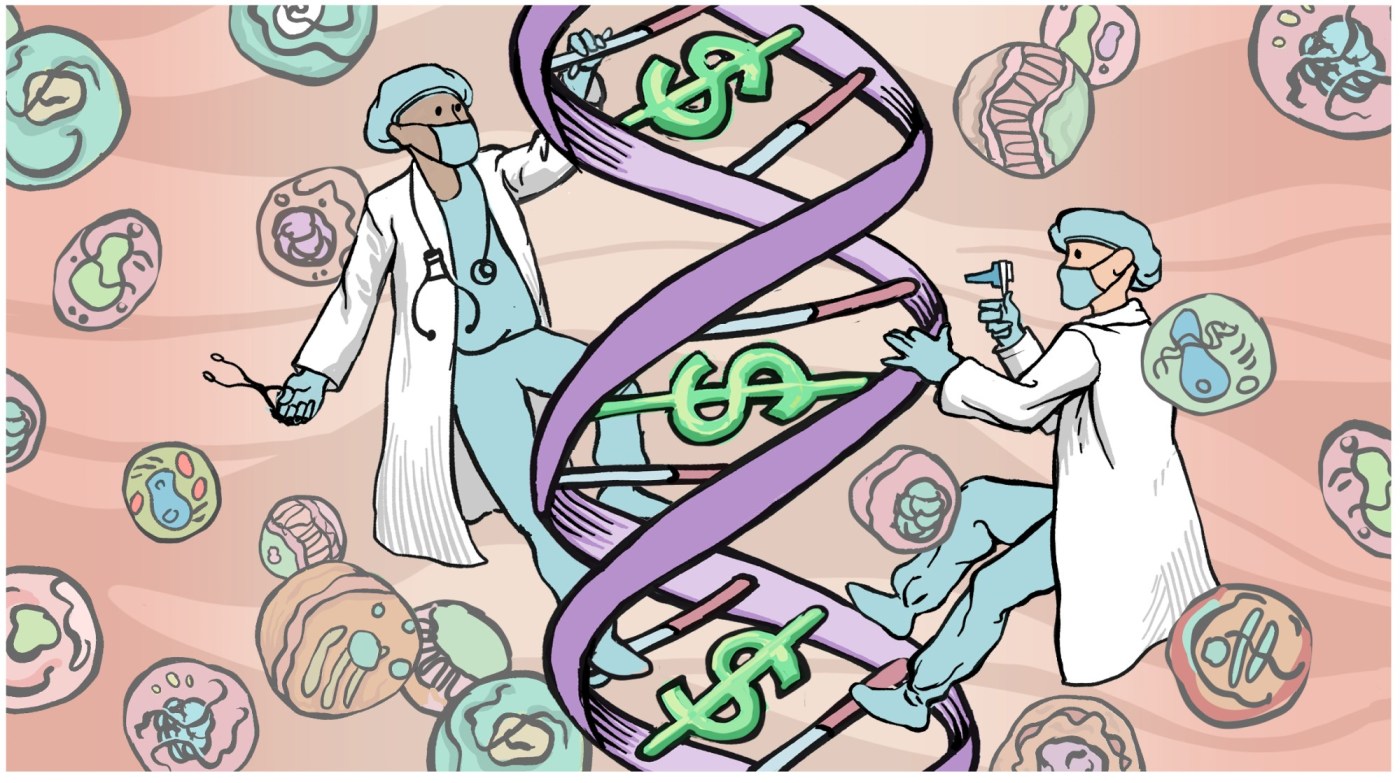
Breakthrough therapies are saving lives. Can we afford them?

posted in: News | 0

Harnessing the body’s own cells to fight disease, long a medical dream, is finally a reality.

Now comes the bill.

Last month, Stanford became the first hospital in the nation to use a new $515,000 cell therapy to treat a patient with advanced melanoma. A related approach, costing $420,000 to $475,000, is offering hope to patients with lethal blood cancers.

Meanwhile, cells fixed by gene therapy can slow, even stop, the progression of intractable diseases like sickle cell or beta thalassemia — for the extraordinary price of $2.1 million to $4.25 million each.

Stanford Health Care

Stanford cell therapy technologist Thomas Orozco thaws the treated immune cells from a patient with advanced melanoma. The cells are collected from the patient’s tumor and fortified in a laboratory to better fight the cancer.

This is the future of medicine, experts agree. But the cost of this new class of medical treatment is raising alarm about availability and affordability, even as its potential grows. It’s time to re-imagine our payment models, they said.

“Cell and gene therapies have the possibility to transform thousands of lives but only if we ensure sustainable access to them for all patients,” said Sarah Emond, president of the influential Institute for Clinical and Economic Review, a Boston-based nonprofit that assesses the value of medicines.

The prices aren’t yet unmanageable, because so few people are currently treated. Patients must travel to designated treatment centers, and too few are referred by community physicians. But demand should increase as more treatments are introduced that serve a wider population.

Most health insurers in the United States aren’t set up to support one-time personal therapies that deliver long-term benefits, at unprecedented prices.

“These are precision medicines,” said Dr. David Miklos, chief of the Stanford Bone Marrow and Cell Therapy Program, where hundreds of cancer patients have been treated with the CAR-T cell therapies. “It’s different than buying a pill at the CVS pharmacy that can work for anybody.”

It is a triumph decades in the making. The promise of cell and gene therapies has ​long intrigued scientists​, but progress was slow, with many setbacks. Now FDA-approved products are entering the clinic.

“The technology to bring it to life has finally caught up with the ideas behind it,” said Stanford assistant professor of medicine Dr. Allison Betof Warner, who is conducting Stanford’s melanoma trial.

Cell-based strategies are delivering the most celebrated cancer treatments to emerge in decades.

In one approach, called chimeric antigen receptor (CAR) T-cell therapy, patients’ immune cells are collected and genetically modified to better fight lymphoma, leukemia, and, most recently, multiple myeloma.

Another uses a different approach, enlisting tumor-infiltrating lymphocytes, or TILs. These immune cells are harvested from the tumor, fortified in the lab and then returned to the patient. In clinical trials, about 30% of patients had their incurable melanoma tumors shrink or disappear.

“I’m very happy that it’s here now. … I’ve been walking the tightrope and I didn’t fall off,” said a Stanford patient, who asked not to be identified.

Gene therapy also uses engineered cells, with genes replaced, deleted or inserted. On Wednesday, Kendric Cromer, a 12-year-old boy from a suburb of Washington, D.C., became the first person in the world with sickle cell disease to begin an FDA-approved gene therapy. Stanford and UCSF will both offer this treatment.

Stanford Health Care

Dr. Allison Betof Warner of Stanford Health Care provided a new cell-based therapy for a patient, who asked not to be identified, with metastatic melanoma. The one-time treatment, which costs $515,000, uses immune cells harvested from the patient’s tumor.

Scientists are now working to expand the therapies’ repertoire to attack solid tumors, autoimmune diseases, aging, HIV and more.

“It’s just the beginning of a new era,” said biochemist Wendell Lim, director of the UC San Francisco Cell Design Institute.

“It shows that we can take a living cell and change what it does, so it makes new sorts of decisions and carries out complex actions. It processes information, like a little computer,” he said. “This is very different from a static thing, like a chemical.”

It’s still early, and few patients are taking advantage of these new groundbreaking therapies, said physicians.

Why? Word hasn’t yet gotten out, so sick people aren’t getting referred from their community physicians, said Miklos. Treatment is risky. Or patients may live far away from the nation’s estimated 30 “centers of excellence,” like Stanford and UCSF, and are daunted by the cost of travel and housing.

Payment isn’t guaranteed; it’s decided on a case-by-case basis. Medicare and MediCal cover the cost of care when it is determined to be medically necessary.  So does Kaiser.

The great majority of private insurers cover treatments, although sometimes back-and-forth negotiations are needed, said Gary Goldstein, who oversees the business operations of Stanford’s Blood & Marrow Transplant Program.

The sticker price just covers parts — no labor, no warranty. Drug prices aren’t regulated, like utilities, and there is no cap on what a company can charge.

The total cost for gene therapies over the next decade has been estimated to reach an eye-popping $35 billion to $40 billion. The bill for future cell therapies, which could help a bigger pool of patients, will likely be higher.

Drug makers argue that the prices reflect the powerful clinical benefit and the risks and uncertainties of development. A one-time therapy for a chronic condition may actually save money, they add, by sparing a lifetime of care.

“We’ve never cured patients with a single treatment before,” said UCSF’s Dr. Greg Allen, who is designing immune cell therapies for notoriously difficult-to-treat tumors, like those of the pancreas and lung. “So it’s very exciting.”

For some patients, it may be their last best chance.

“I don’t think there’s a price on a life,” said Stanford’s Betof Warner. “These are patients who don’t have another option.”

If millions of people are helped, as hoped, it will create budget pressures on the federal government and larger payers, while smaller employers, state Medicaid plans, and regional health plans may find providing access financially impossible, warn economists. Health care costs are already outpacing inflation, climbing 7% this year.

“It’s going to put a lot of stress on the system,” said Edwin Park at the Georgetown University McCourt School of Public Policy.  “But the issue is critical because you don’t want the high price of these therapies to result in low-income people not being able to access them.”

Already, governments and commercial insurers are scrutinizing treatments’ effectiveness. Some are imposing strict restrictions on who is eligible. They’re asking manufacturers for discounts and rebates.

Related Articles

Health |


Skywatch: Star hopping in the spring sky

Health |


See photos and video of Minnesota’s stunning northern lights show

Health |


Skywatch: We’re getting dumped on

Health |


Skywatch: Springtime skies with a touch of summer

Health |


Skywatch: A memorable solar eclipse trip

Scientific advances could cut costs, said Lim. One idea is to design cells that are immunologically universal, so that a single source could treat many patients. Another is to build a large “cell bank” of precursor stem cells. A third is to ask the body to do its own manufacturing, by introducing an engineered virus that can fix cells.

If manufacturing is localized — making the cells at Stanford or UCSF, for instance, rather than at distant drug companies — that would bring costs down, said Miklos.

As competition grows, prices will fall, he predicted.

Meanwhile, the health care system must focus on finding innovative payment solutions, said Emond.

One proposal is to amortize how much insurers pay over time, like a home mortgage. Another is for drug companies to provide a prorated refund if a patient doesn’t improve — a “pay for performance” model. Yet another option would be a subscription-based approach, like Netflix, where insurers shell out a monthly fee to access however much therapy is needed.

Each condition, therapy and payer is unique, so a single solution won’t satisfy all situations.

“As we look to the future,” said Emond, “this is a moment where we can discuss how to do things differently.”


Mental Health Awareness Month: How to talk to kids when violent events happen

posted in: News | 0

When caregivers can’t shield kids from incidents of extreme violence around the world or near home, a Boston Medical Center psychiatrist explains to patients, talking openly about it may actually help.

“A lot of parents feel they have to have all of the answers prepared before they have a conversation with a kid about violence that may be happening in their community, as well as in other communities they may be hearing about in the news,” said Dr. Christine Crawford, an adult, child, and adolescent psychiatrist at BMC. “But really, it’s not about providing the answers and being a problem solver. It’s really about connecting with your kid, to understand how they understand the events that have been taking place around them and in the world.”

Information about extreme violence in the world — with wars in Ukraine and Gaza and record-high gun violence closer to home in the U.S. — is becoming more accessible than ever to children and teens. Events like these can cause “vicarious trauma” within families no matter where you are, Crawford said.

At the start of this Mental Health Awareness month, Crawford is encouraging more parents and caregivers to talk about it.

Many parents worry about how to have difficult conversations about violence with their kids, Crawford said. In these situations, she said, it’s important to be curious and focus on connecting with the kid.

“Say if there was an incident in (a kid’s) community, in which there was something related to gun violence, and it was pretty close,” Crawford said. “And that’s terrifying for anyone, right? Rather than starting the conversation by saying, ‘Oh, I know that has really affected you. That’s terrible. That’s scary.’ To say like, ‘I’m really curious, I wonder how you’re doing? How are things been going for you?’ So you’re connecting.”

From there, the psychiatrist added, parents can try to create space for kids to share their thoughts and reactions and then “model” ways to cope with stressful events.

“You can say, ‘To be honest with you, hearing about what happened in our community, it made me feel just really sad,’” said Crawford. “‘The way that I’ve been dealing with my sadness is I’ve been spending a lot of time talking to my friends and going to the gym, because it helps me feel a bit better.’ So not only are you modeling how to talk about your thoughts and feelings, but providing some examples of effective coping strategies for dealing with the intense emotions.”

Some kids may not be receptive or ready to talk about situations like these, Crawford said, and that’s ok. What’s important is to “plant the seed to communicate to your kid that you are willing and open to have this conversation” and maybe they will circle back, she added.

Crawford said caregivers should also consider reflecting on how they feel about the event to prepare and feel comfortable talking to a kid.

Caregivers can also keep an eye out for how a violent event or events may impact their kid’s behaviors and patterns over time, Crawford said. When kids are seeming to have persistent fears or stress or their ability to function is impacted, a pediatrician can be a good first point of contact for any emotional or behavioral concerns.

“So many things are happening in the world, but we’re not talking about how to talk about them in a meaningful way, and how to talk about it in a way that really centers the kid’s experience,” said Crawford. … “It’s really all about good social-emotional development for your child when you engage in these conversations about how to deal with difficult things.”